
Nurseled Triggers for GOC Discussions and Palliative Care

- Slides: 39
Nurse-led Triggers for GOC Discussions and Palliative Care Consultations in the TSICU Suzanne Emil, Lisa Marr, Jasmeet Paul, Sonlee West, Alex Schevchuck (Teri Heynekamp, Ed Alas, MLA) (Deepti Rao, Hospitalist) Medical Leadership Academy
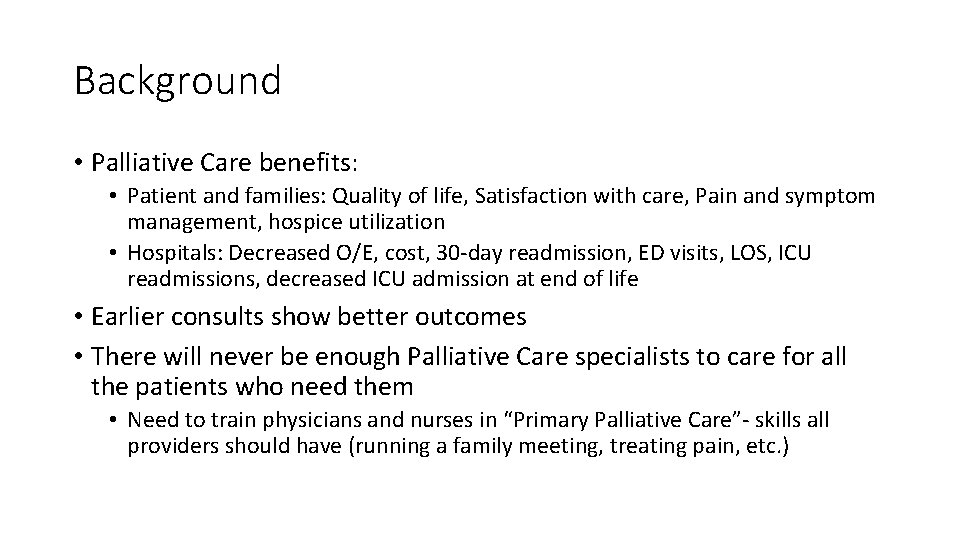
Background • Palliative Care benefits: • Patient and families: Quality of life, Satisfaction with care, Pain and symptom management, hospice utilization • Hospitals: Decreased O/E, cost, 30 -day readmission, ED visits, LOS, ICU readmissions, decreased ICU admission at end of life • Earlier consults show better outcomes • There will never be enough Palliative Care specialists to care for all the patients who need them • Need to train physicians and nurses in “Primary Palliative Care”- skills all providers should have (running a family meeting, treating pain, etc. )
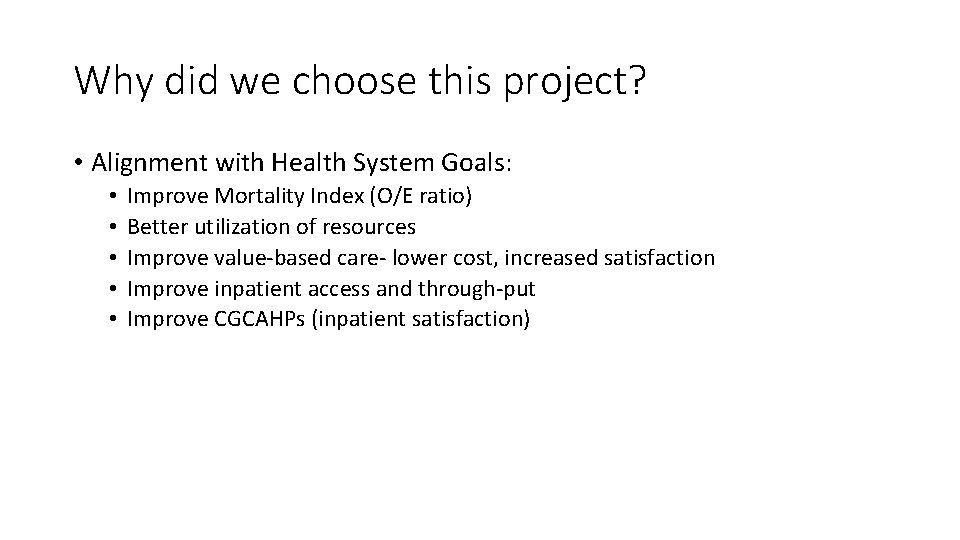
Why did we choose this project? • Alignment with Health System Goals: • • • Improve Mortality Index (O/E ratio) Better utilization of resources Improve value-based care- lower cost, increased satisfaction Improve inpatient access and through-put Improve CGCAHPs (inpatient satisfaction)
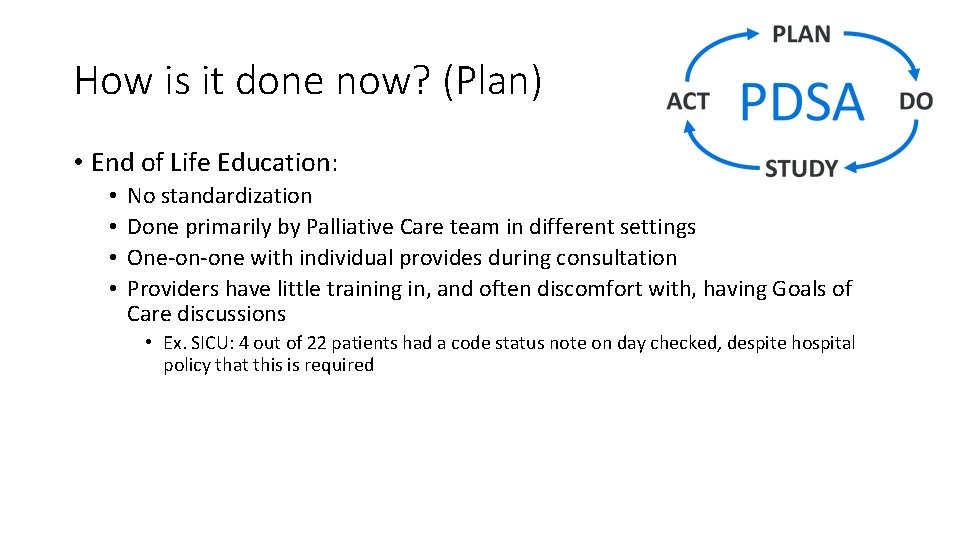
How is it done now? (Plan) • End of Life Education: • • No standardization Done primarily by Palliative Care team in different settings One-on-one with individual provides during consultation Providers have little training in, and often discomfort with, having Goals of Care discussions • Ex. SICU: 4 out of 22 patients had a code status note on day checked, despite hospital policy that this is required
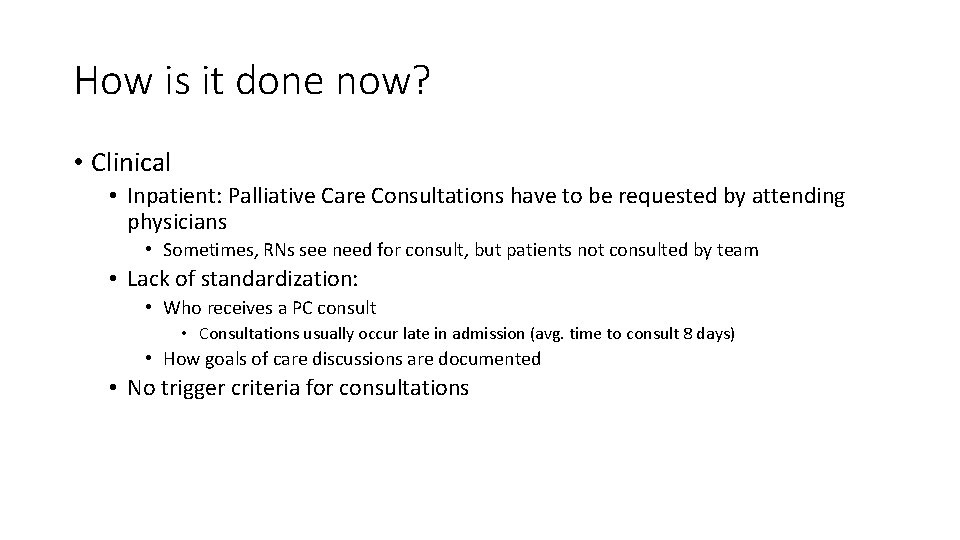
How is it done now? • Clinical • Inpatient: Palliative Care Consultations have to be requested by attending physicians • Sometimes, RNs see need for consult, but patients not consulted by team • Lack of standardization: • Who receives a PC consult • Consultations usually occur late in admission (avg. time to consult 8 days) • How goals of care discussions are documented • No trigger criteria for consultations
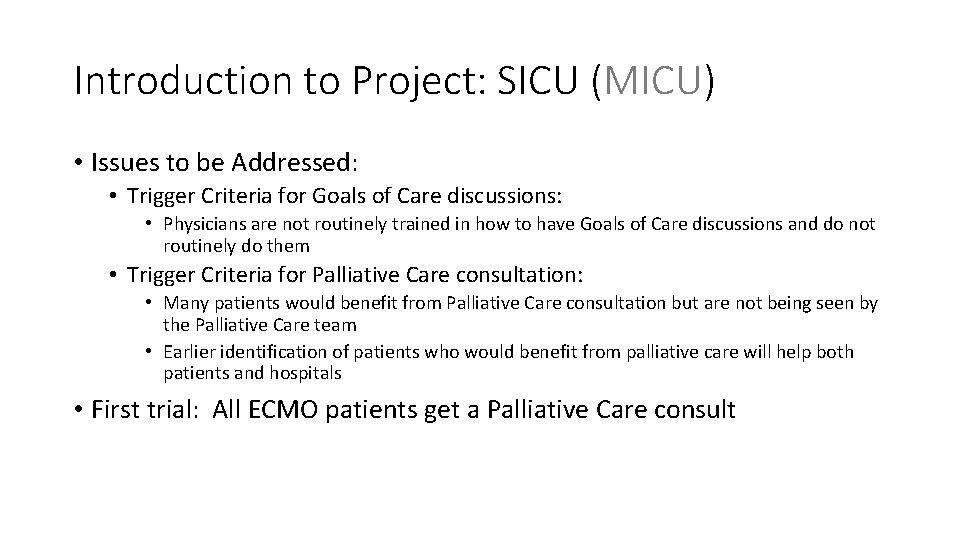
Introduction to Project: SICU (MICU) • Issues to be Addressed: • Trigger Criteria for Goals of Care discussions: • Physicians are not routinely trained in how to have Goals of Care discussions and do not routinely do them • Trigger Criteria for Palliative Care consultation: • Many patients would benefit from Palliative Care consultation but are not being seen by the Palliative Care team • Earlier identification of patients who would benefit from palliative care will help both patients and hospitals • First trial: All ECMO patients get a Palliative Care consult
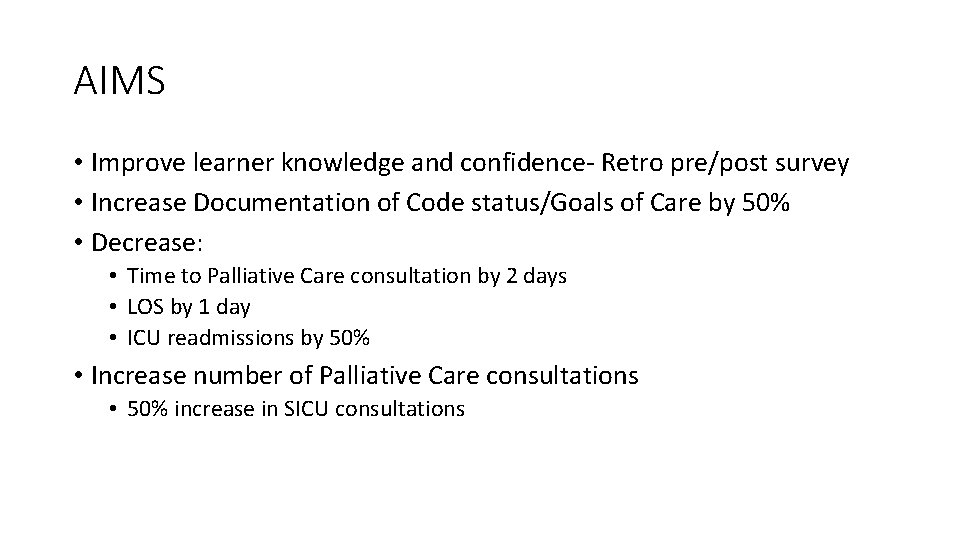
AIMS • Improve learner knowledge and confidence- Retro pre/post survey • Increase Documentation of Code status/Goals of Care by 50% • Decrease: • Time to Palliative Care consultation by 2 days • LOS by 1 day • ICU readmissions by 50% • Increase number of Palliative Care consultations • 50% increase in SICU consultations
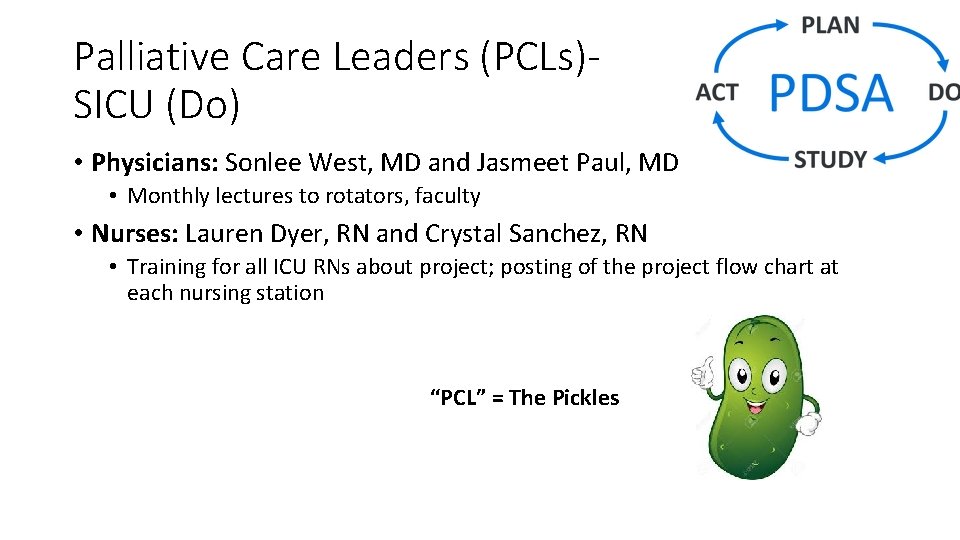
Palliative Care Leaders (PCLs)SICU (Do) • Physicians: Sonlee West, MD and Jasmeet Paul, MD • Monthly lectures to rotators, faculty • Nurses: Lauren Dyer, RN and Crystal Sanchez, RN • Training for all ICU RNs about project; posting of the project flow chart at each nursing station “PCL” = The Pickles
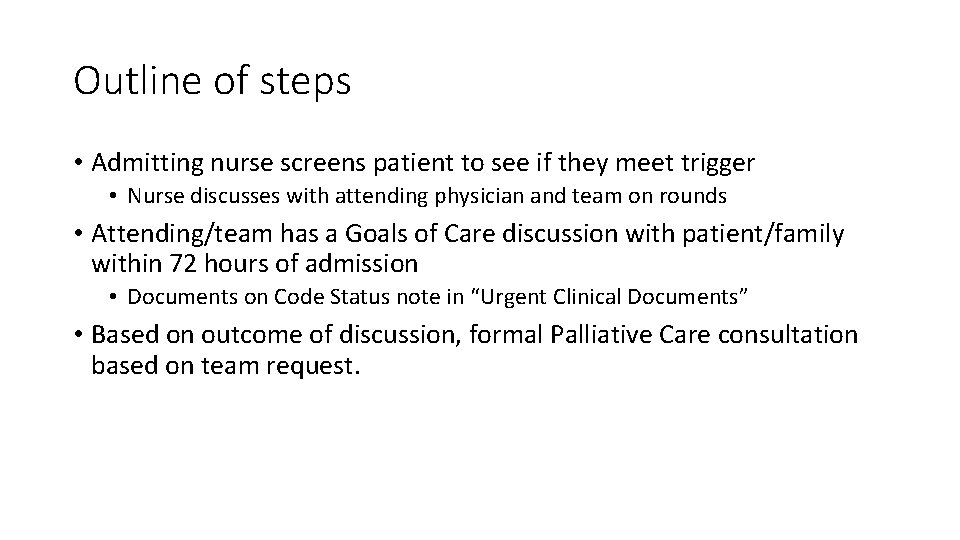
Outline of steps • Admitting nurse screens patient to see if they meet trigger • Nurse discusses with attending physician and team on rounds • Attending/team has a Goals of Care discussion with patient/family within 72 hours of admission • Documents on Code Status note in “Urgent Clinical Documents” • Based on outcome of discussion, formal Palliative Care consultation based on team request.
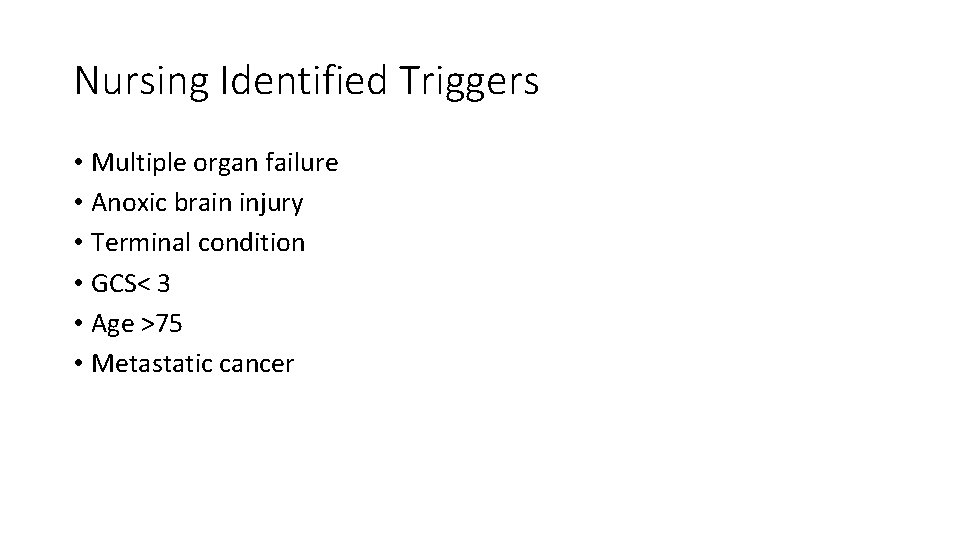
Nursing Identified Triggers • Multiple organ failure • Anoxic brain injury • Terminal condition • GCS< 3 • Age >75 • Metastatic cancer
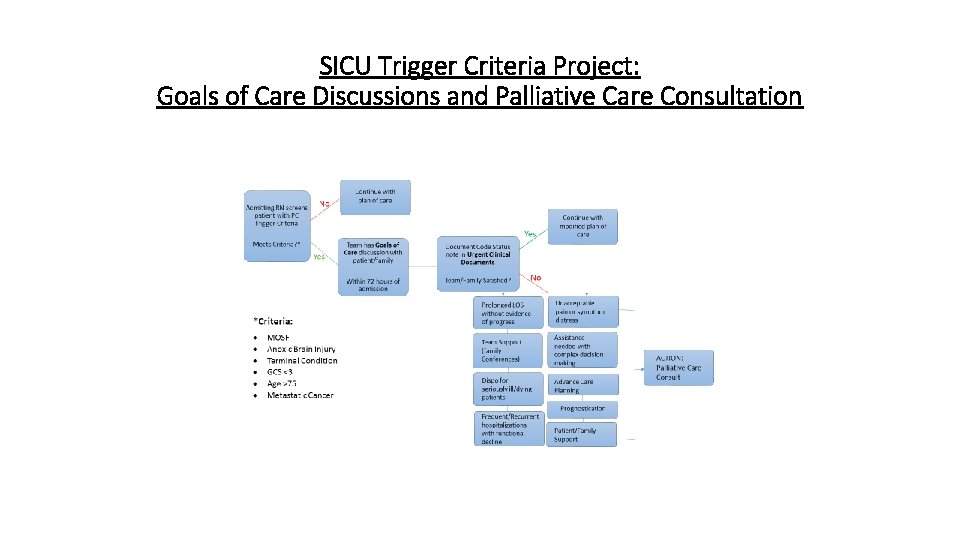
SICU Trigger Criteria Project: Goals of Care Discussions and Palliative Care Consultation
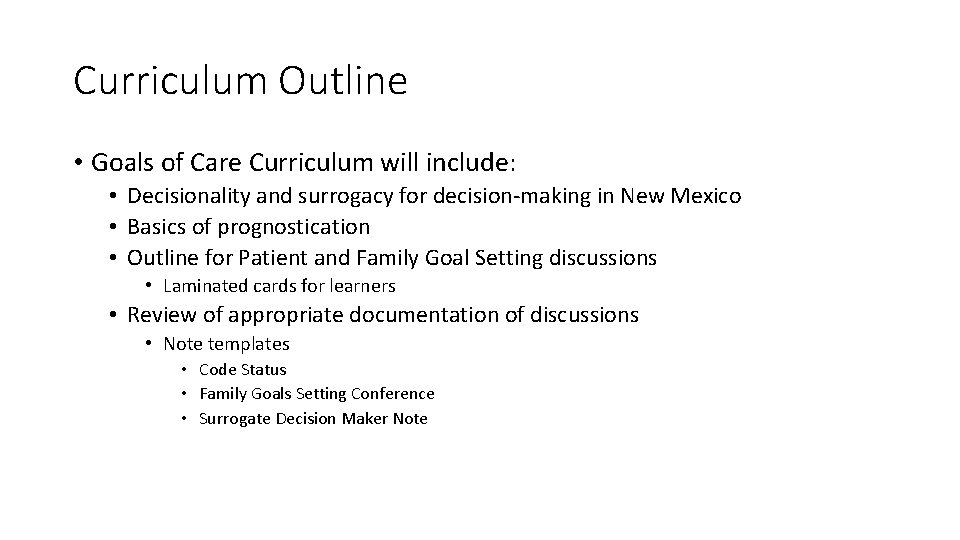
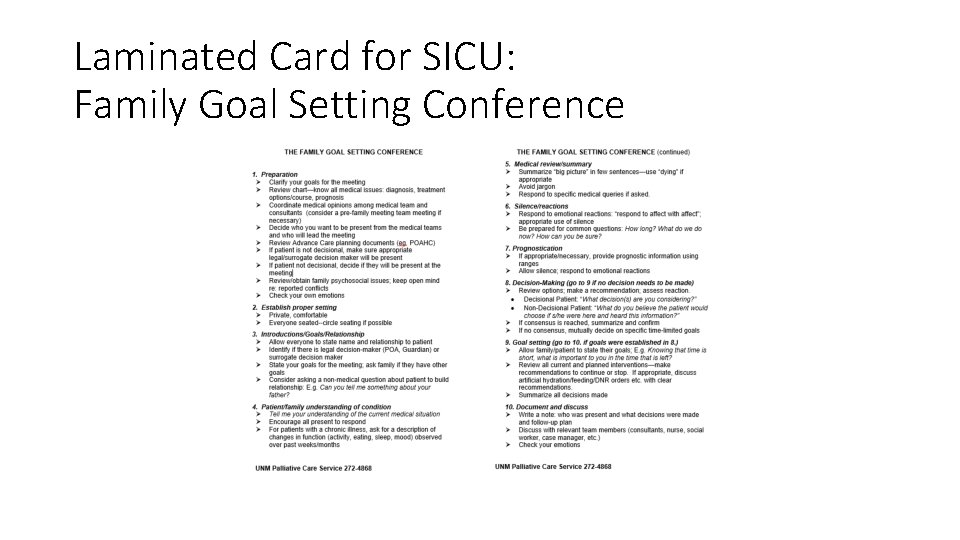
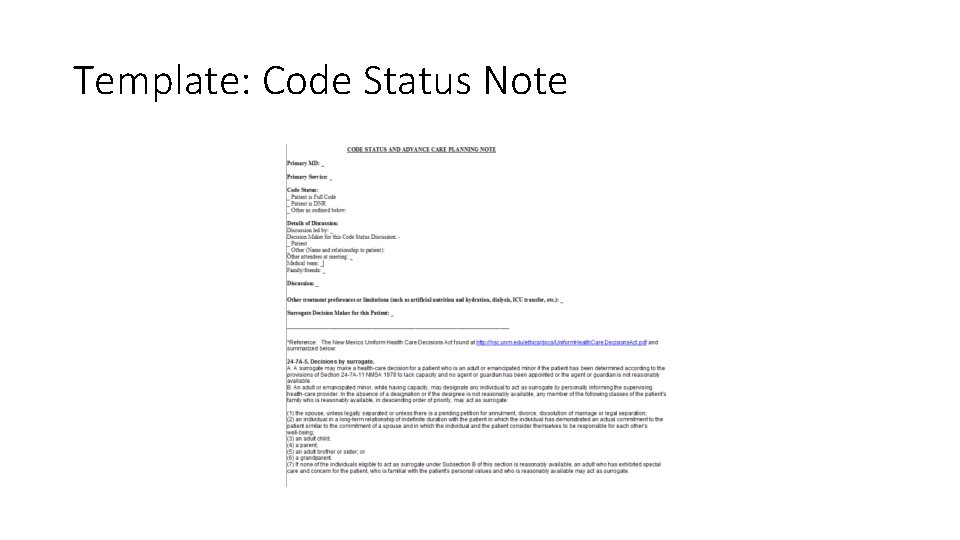
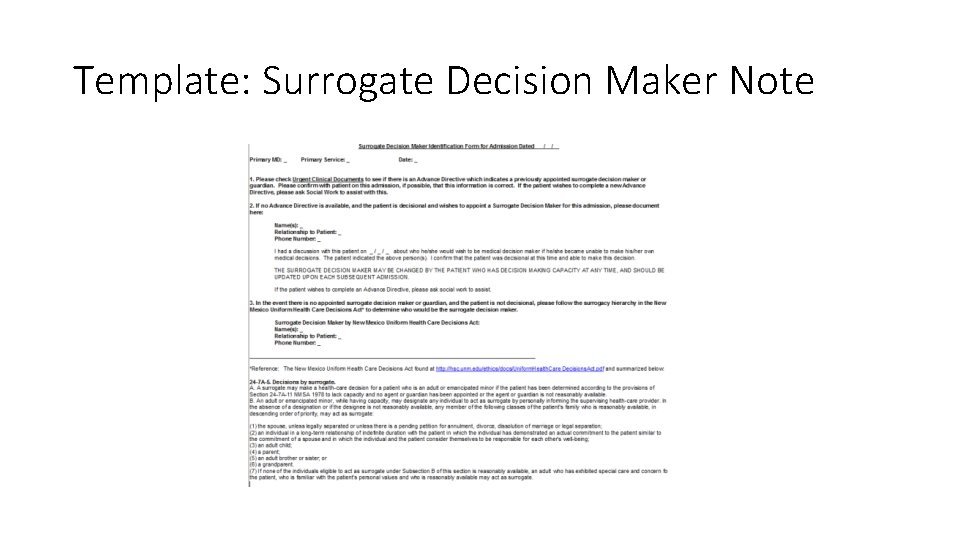
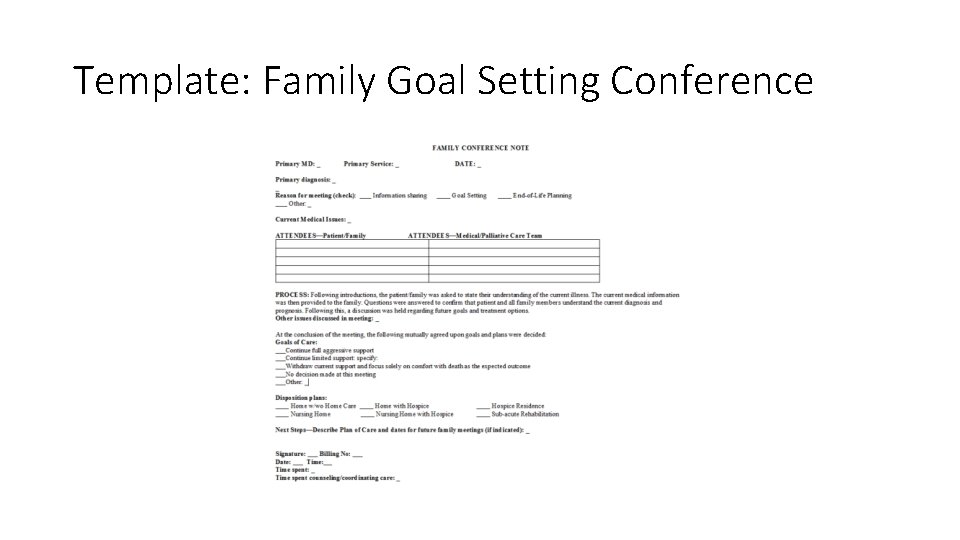
Curriculum Outline • Goals of Care Curriculum will include: • Decisionality and surrogacy for decision-making in New Mexico • Basics of prognostication • Outline for Patient and Family Goal Setting discussions • Laminated cards for learners • Review of appropriate documentation of discussions • Note templates • Code Status • Family Goals Setting Conference • Surrogate Decision Maker Note
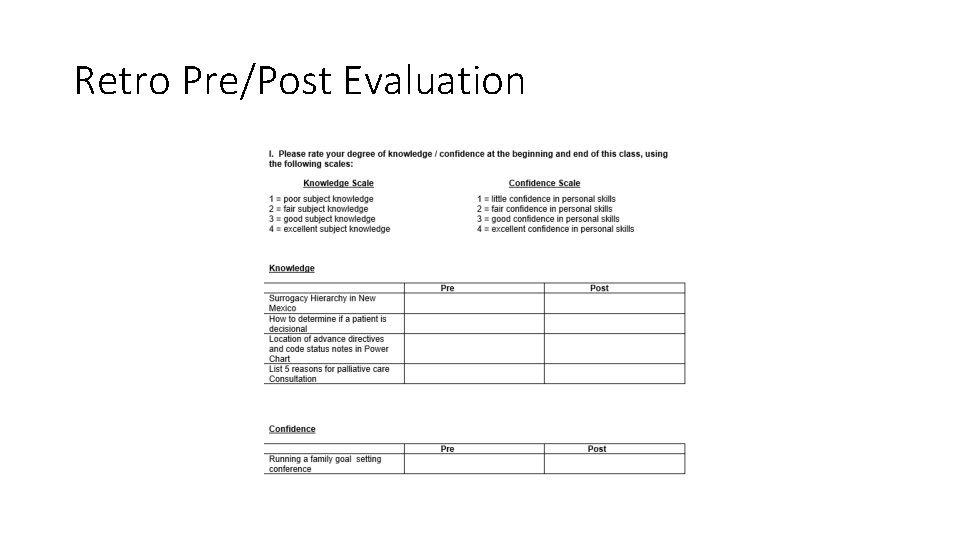
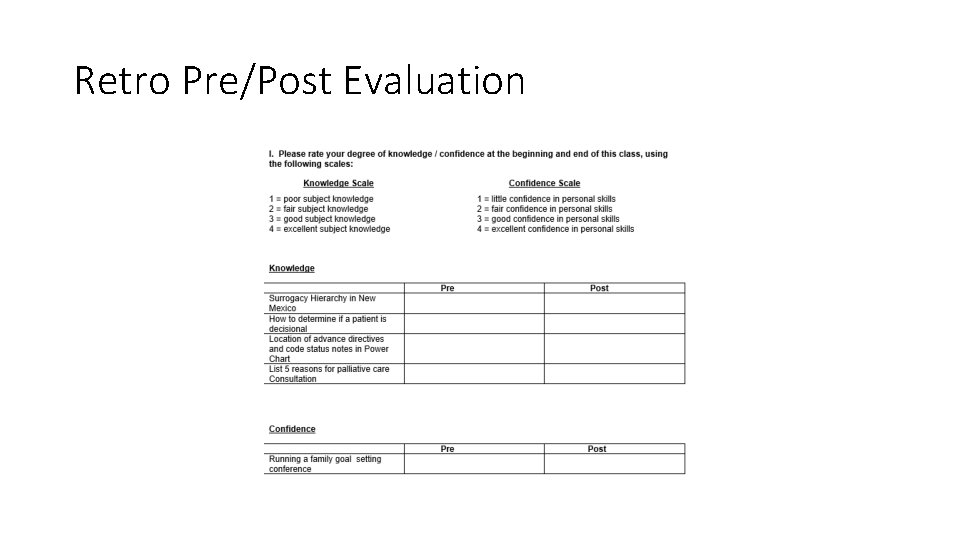
Retro Pre/Post Evaluation
Laminated Card for SICU: Family Goal Setting Conference
Template: Code Status Note
Template: Surrogate Decision Maker Note
Template: Family Goal Setting Conference
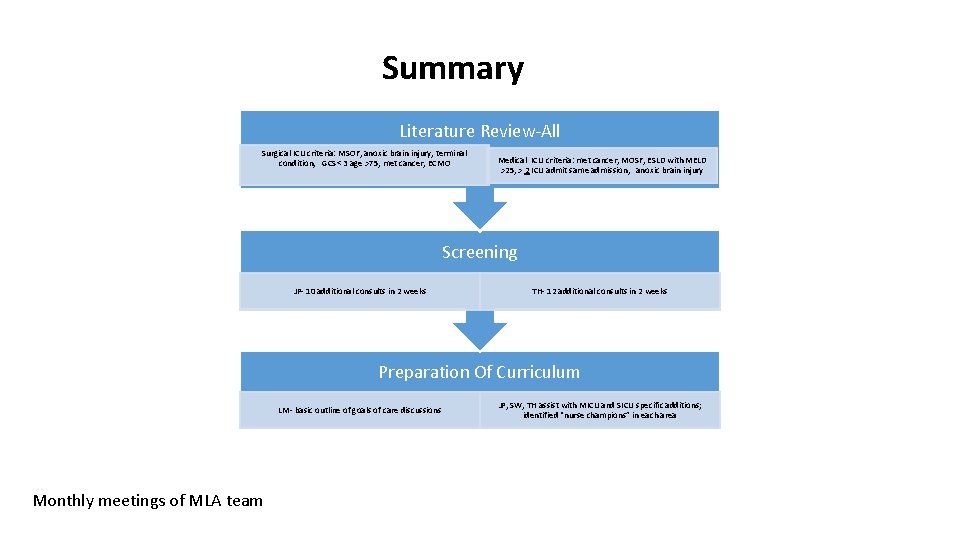
Summary Literature Review-All Surgical ICU criteria: MSOF, anoxic brain injury, terminal condition, GCS< 3 age >75, met cancer, ECMO Medical ICU criteria: met cancer, MOSF, ESLD with MELD >25, > 2 ICU admit same admission, anoxic brain injury Screening JP- 10 additional consults in 2 weeks TH- 12 additional consults in 2 weeks Preparation Of Curriculum LM- basic outline of goals of care discussions Monthly meetings of MLA team JP, SW, TH assist with MICU and SICU specific additions; identified “nurse champions” in each area
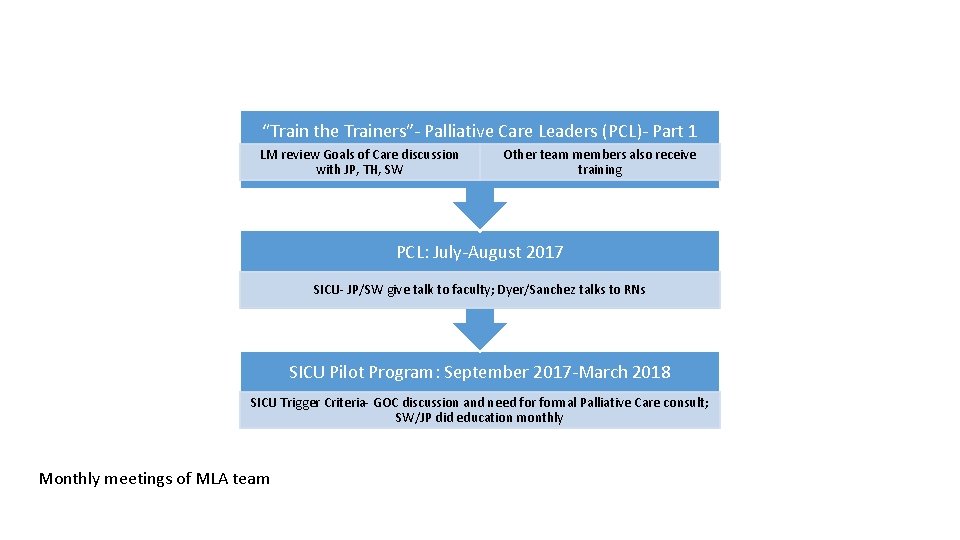
“Train the Trainers”- Palliative Care Leaders (PCL)- Part 1 LM review Goals of Care discussion with JP, TH, SW Other team members also receive training PCL: July-August 2017 SICU- JP/SW give talk to faculty; Dyer/Sanchez talks to RNs SICU Pilot Program: September 2017 -March 2018 SICU Trigger Criteria- GOC discussion and need formal Palliative Care consult; SW/JP did education monthly Monthly meetings of MLA team
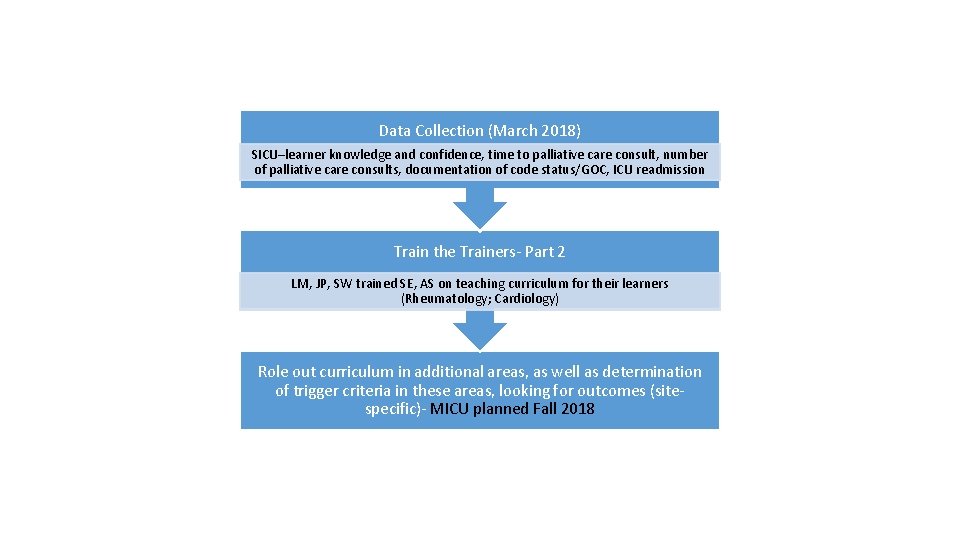
Data Collection (March 2018) SICU–learner knowledge and confidence, time to palliative care consult, number of palliative care consults, documentation of code status/GOC, ICU readmission Train the Trainers- Part 2 LM, JP, SW trained SE, AS on teaching curriculum for their learners (Rheumatology; Cardiology) Role out curriculum in additional areas, as well as determination of trigger criteria in these areas, looking for outcomes (sitespecific)- MICU planned Fall 2018
Results (Study)
Education Outcomes
Retro Pre/Post Evaluation
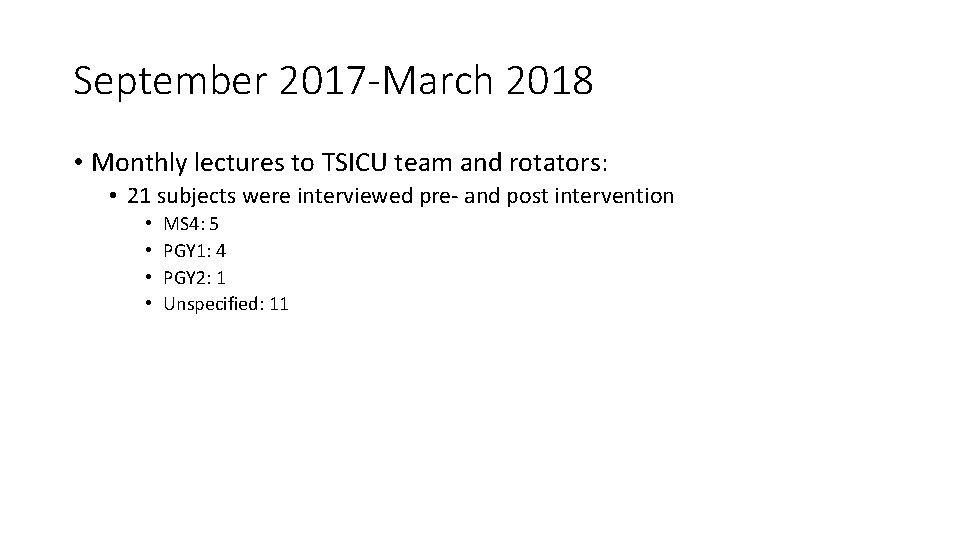
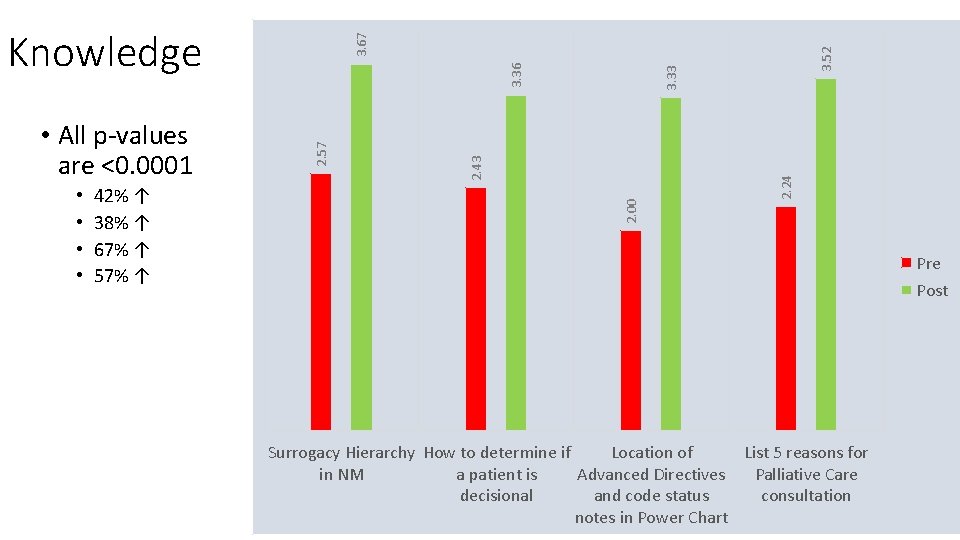
September 2017 -March 2018 • Monthly lectures to TSICU team and rotators: • 21 subjects were interviewed pre- and post intervention • • MS 4: 5 PGY 1: 4 PGY 2: 1 Unspecified: 11
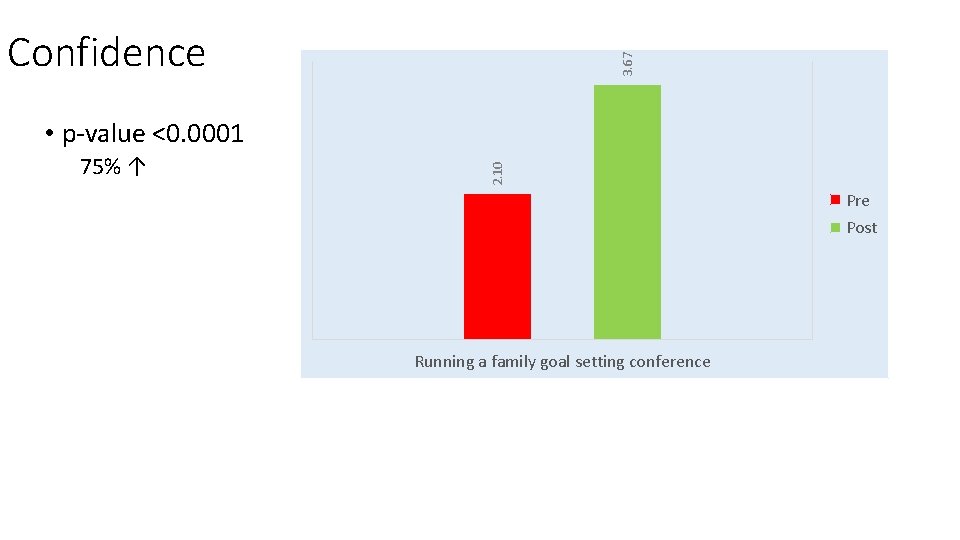
Statistical analysis • Paired two-tailed t-test for means
3. 52 3. 33 3. 36 2. 43 2. 24 42% ↑ 38% ↑ 67% ↑ 57% ↑ 2. 00 • • 2. 57 • All p-values are <0. 0001 3. 67 Knowledge Pre Post Surrogacy Hierarchy How to determine if Location of List 5 reasons for in NM a patient is Advanced Directives Palliative Care decisional and code status consultation notes in Power Chart
3. 67 Confidence 75% ↑ 2. 10 • p-value <0. 0001 Pre Post Running a family goal setting conference
Clinical Outcomes
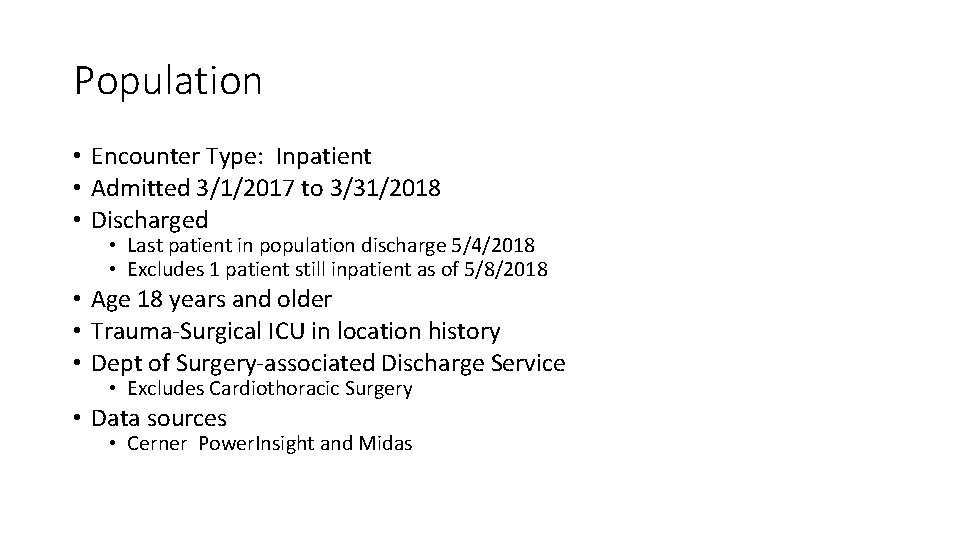
Population • Encounter Type: Inpatient • Admitted 3/1/2017 to 3/31/2018 • Discharged • Last patient in population discharge 5/4/2018 • Excludes 1 patient still inpatient as of 5/8/2018 • Age 18 years and older • Trauma-Surgical ICU in location history • Dept of Surgery-associated Discharge Service • Excludes Cardiothoracic Surgery • Data sources • Cerner Power. Insight and Midas
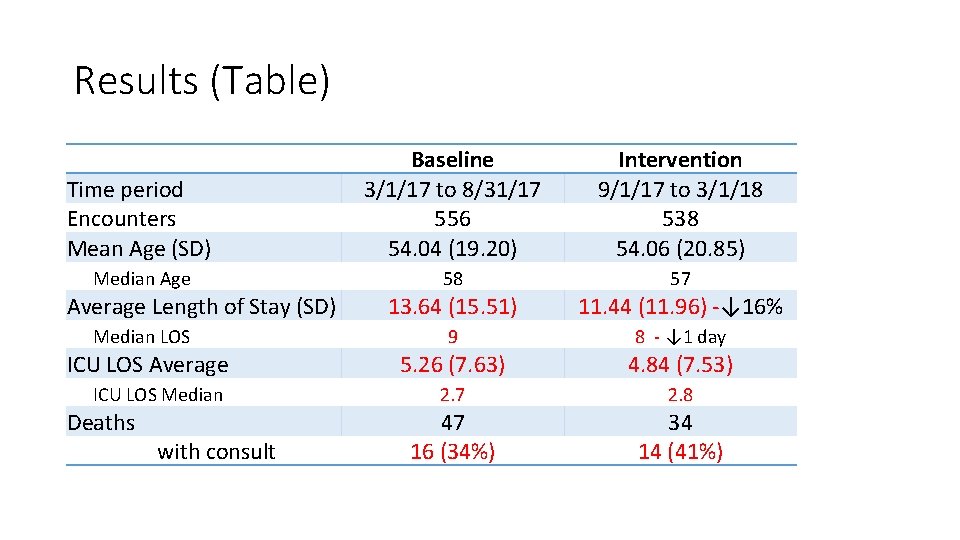
Results (Table) Time period Encounters Mean Age (SD) Baseline 3/1/17 to 8/31/17 556 54. 04 (19. 20) Intervention 9/1/17 to 3/1/18 538 54. 06 (20. 85) Median Age 58 57 13. 64 (15. 51) 11. 44 (11. 96) -↓ 16% Median LOS 9 8 - ↓ 1 day ICU LOS Average 5. 26 (7. 63) 4. 84 (7. 53) 2. 7 2. 8 47 16 (34%) 34 14 (41%) Average Length of Stay (SD) ICU LOS Median Deaths with consult
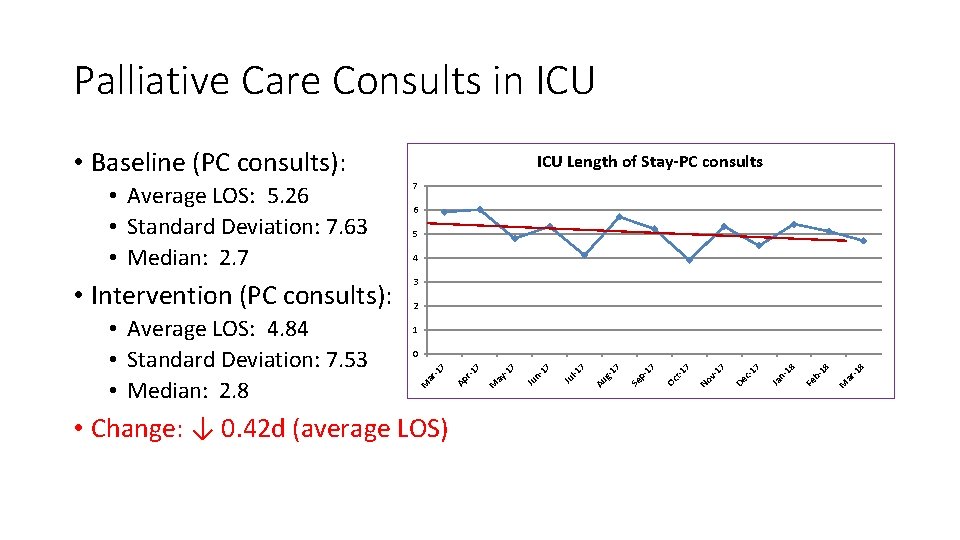
Palliative Care Consults in ICU • Baseline (PC consults): 5 4 3 2 1 • Change: ↓ 0. 42 d (average LOS) -1 8 ar M b 18 Fe 8 n 1 Ja 17 c. De v 17 No 7 t-1 Oc Se p 17 17 Au g- 7 l-1 Ju 7 n 1 Ju -1 7 ay M Ap r-1 7 0 -1 7 • Average LOS: 4. 84 • Standard Deviation: 7. 53 • Median: 2. 8 6 ar • Intervention (PC consults): 7 M • Average LOS: 5. 26 • Standard Deviation: 7. 63 • Median: 2. 7 ICU Length of Stay-PC consults
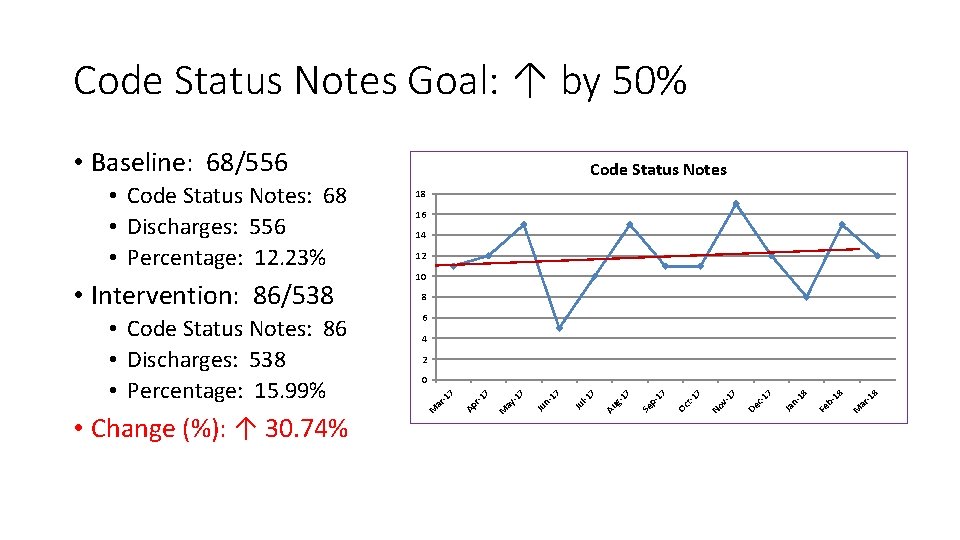
Code Status Notes Goal: ↑ by 50% • Baseline: 68/556 12 10 8 6 4 2 -1 8 ar M b 18 Fe 8 n 1 Ja 17 c. De v 17 No 7 t-1 Oc Se p 17 17 Au g- 7 l-1 Ju 7 n 1 Ju -1 7 ay M r-1 7 0 Ap • Change (%): ↑ 30. 74% 14 -1 7 • Code Status Notes: 86 • Discharges: 538 • Percentage: 15. 99% 16 ar • Intervention: 86/538 18 M • Code Status Notes: 68 • Discharges: 556 • Percentage: 12. 23% Code Status Notes
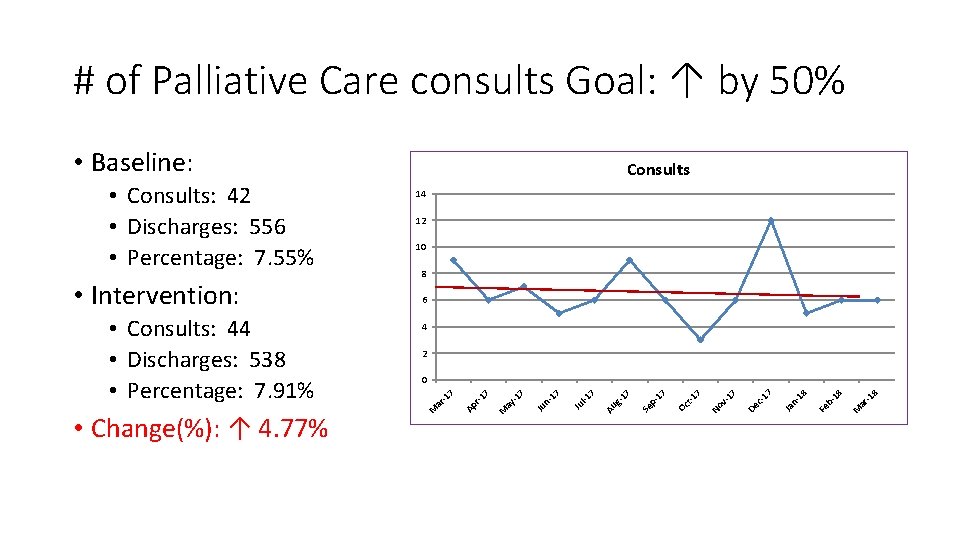
# of Palliative Care consults Goal: ↑ by 50% • Baseline: 8 6 4 2 -1 8 ar M b 18 Fe 8 n 1 Ja 17 c. De v 17 No 7 t-1 Oc Se p 17 17 Au g- 7 l-1 Ju 7 n 1 Ju -1 7 ay M r-1 7 0 Ap • Change(%): ↑ 4. 77% 10 -1 7 • Consults: 44 • Discharges: 538 • Percentage: 7. 91% 12 ar • Intervention: 14 M • Consults: 42 • Discharges: 556 • Percentage: 7. 55% Consults
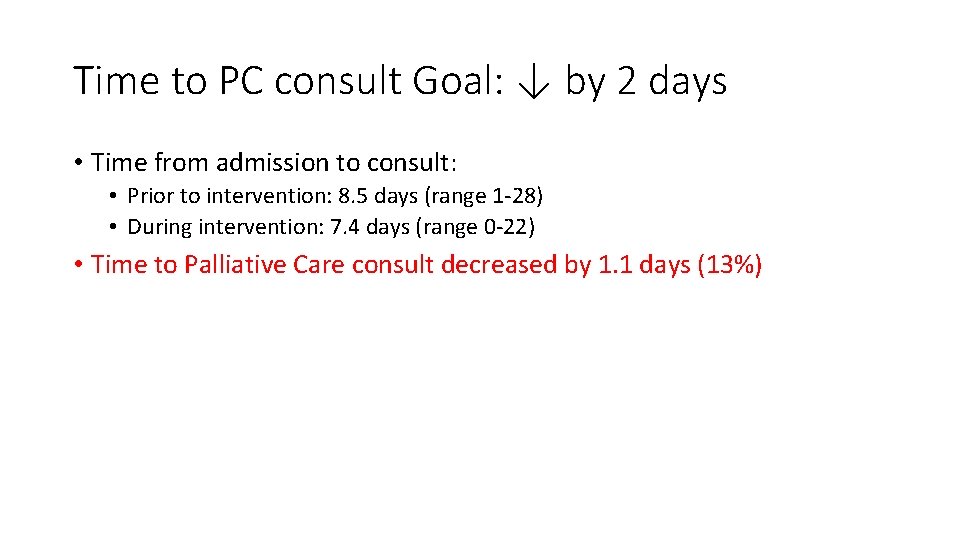
Time to PC consult Goal: ↓ by 2 days • Time from admission to consult: • Prior to intervention: 8. 5 days (range 1 -28) • During intervention: 7. 4 days (range 0 -22) • Time to Palliative Care consult decreased by 1. 1 days (13%)
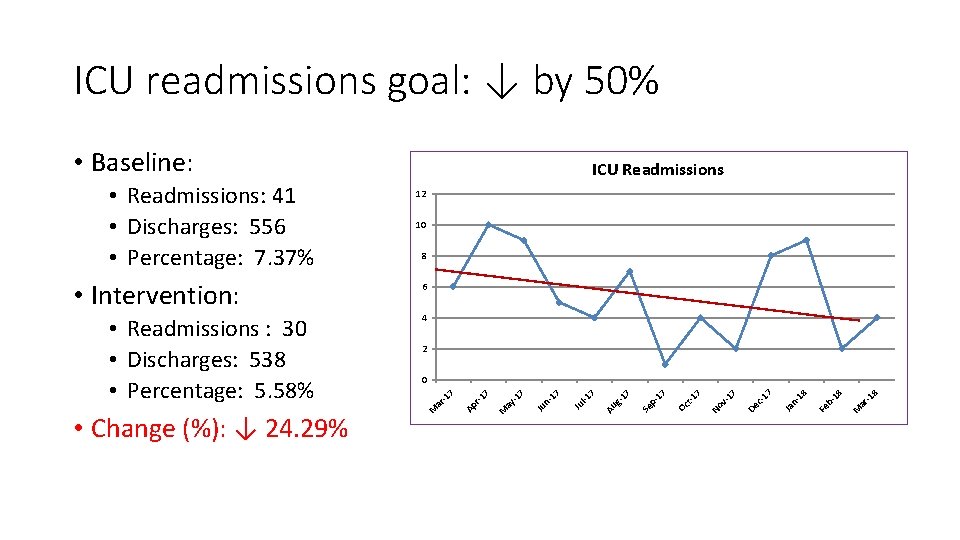
ICU readmissions goal: ↓ by 50% • Baseline: 6 4 2 -1 8 ar M b 18 Fe 8 n 1 Ja 17 c. De v 17 No 7 t-1 Oc Se p 17 17 Au g- 7 l-1 Ju 7 n 1 Ju -1 7 ay M r-1 7 0 Ap • Change (%): ↓ 24. 29% 8 -1 7 • Readmissions : 30 • Discharges: 538 • Percentage: 5. 58% 10 ar • Intervention: 12 M • Readmissions: 41 • Discharges: 556 • Percentage: 7. 37% ICU Readmissions
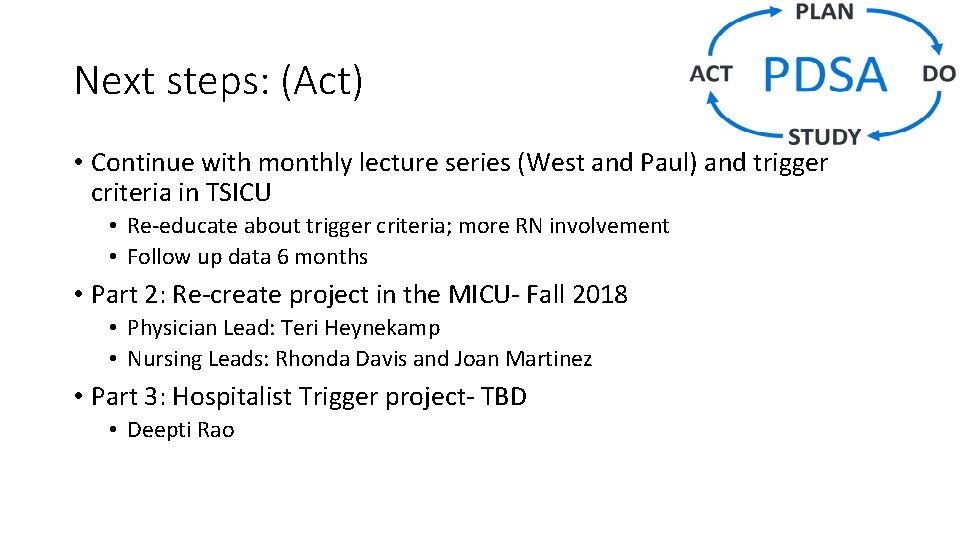
Next steps: (Act) • Continue with monthly lecture series (West and Paul) and trigger criteria in TSICU • Re-educate about trigger criteria; more RN involvement • Follow up data 6 months • Part 2: Re-create project in the MICU- Fall 2018 • Physician Lead: Teri Heynekamp • Nursing Leads: Rhonda Davis and Joan Martinez • Part 3: Hospitalist Trigger project- TBD • Deepti Rao
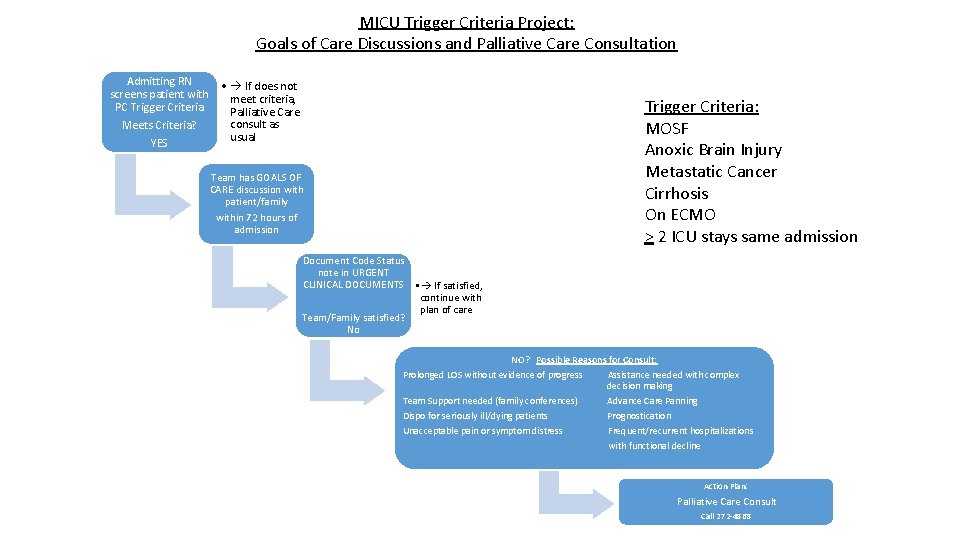
MICU Trigger Criteria Project: Goals of Care Discussions and Palliative Care Consultation Admitting RN screens patient with PC Trigger Criteria Meets Criteria? YES • If does not meet criteria, Palliative Care consult as usual Trigger Criteria: MOSF Anoxic Brain Injury Metastatic Cancer Cirrhosis On ECMO > 2 ICU stays same admission Team has GOALS OF CARE discussion with patient/family within 72 hours of admission Document Code Status note in URGENT CLINICAL DOCUMENTS • If satisfied, continue with plan of care Team/Family satisfied? No NO? Possible Reasons for Consult: Prolonged LOS without evidence of progress Team Support needed (family conferences) Dispo for seriously ill/dying patients Unacceptable pain or symptom distress Assistance needed with complex decision making Advance Care Panning Prognostication Frequent/recurrent hospitalizations with functional decline Action Plan: Palliative Care Consult Call 272 -4868
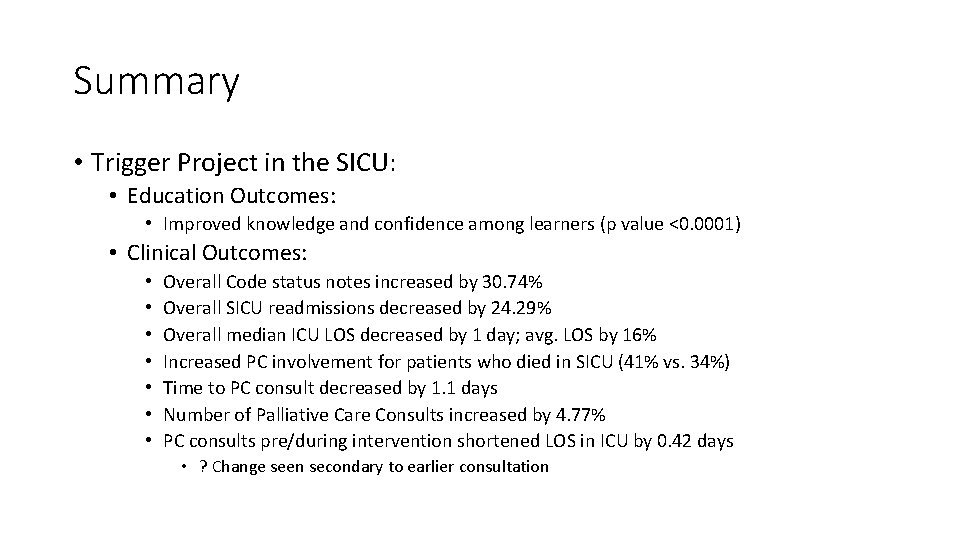
Summary • Trigger Project in the SICU: • Education Outcomes: • Improved knowledge and confidence among learners (p value <0. 0001) • Clinical Outcomes: • • Overall Code status notes increased by 30. 74% Overall SICU readmissions decreased by 24. 29% Overall median ICU LOS decreased by 1 day; avg. LOS by 16% Increased PC involvement for patients who died in SICU (41% vs. 34%) Time to PC consult decreased by 1. 1 days Number of Palliative Care Consults increased by 4. 77% PC consults pre/during intervention shortened LOS in ICU by 0. 42 days • ? Change seen secondary to earlier consultation
Thank you! • Dr. Rick Crowell, mentor • Renee Patton, data abstraction and analysis • Debbie Begay, for her patience!!