
Numerical Simulations of Silverpit Crater Collapse A Comparison
- Slides: 23
Numerical Simulations of Silverpit Crater Collapse: A Comparison of TEKTON and SALES 2 Gareth Collins, Zibi Turtle, and Jay Melosh LPL, Univ. of Arizona
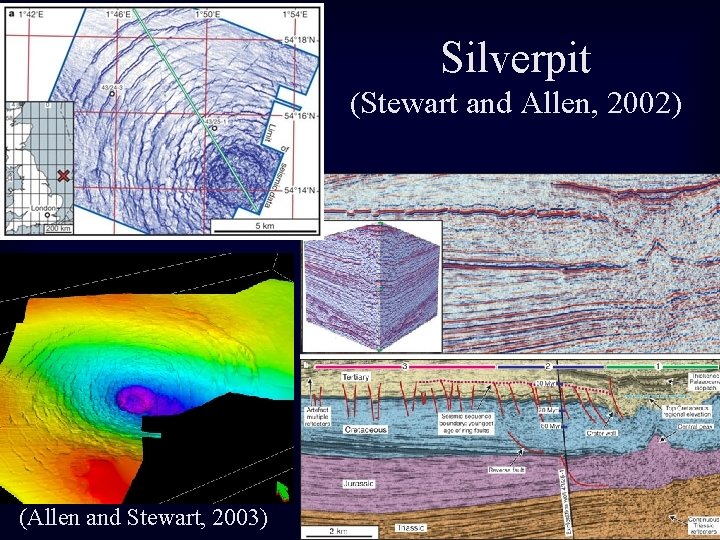
Silverpit (Stewart and Allen, 2002) (Allen and Stewart, 2003)
Objectives • Understand Silverpit • Ring formation • Compare 2 modeling techniques to assess: • Consistency • Limitations • Degree to which they are complementary
Finite-Element Method • Model structure as an assemblage of elements bounded by nodes • Specify: • Geometry • Material properties and rheologies • Boundary and initial conditions • Construct system of equations: • Solve simultaneously for displacements at nodes • Calculate stresses using constitutive equations
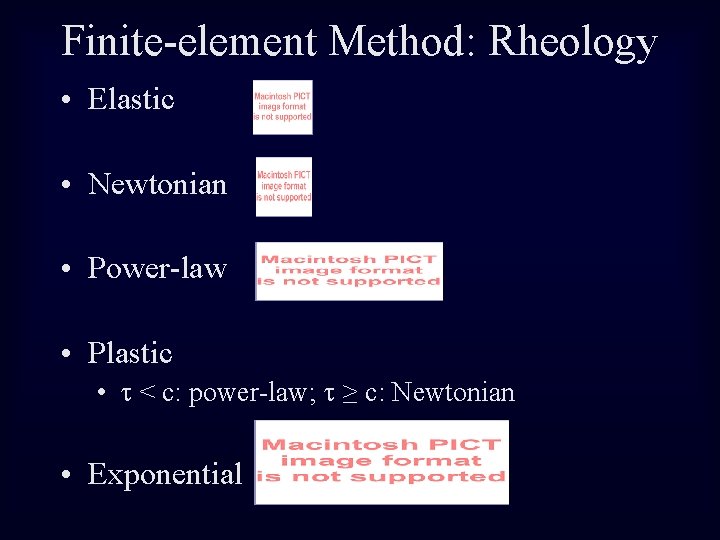
Finite-element Method: Rheology • Elastic • Newtonian • Power-law • Plastic • t < c: power-law; t ≥ c: Newtonian • Exponential
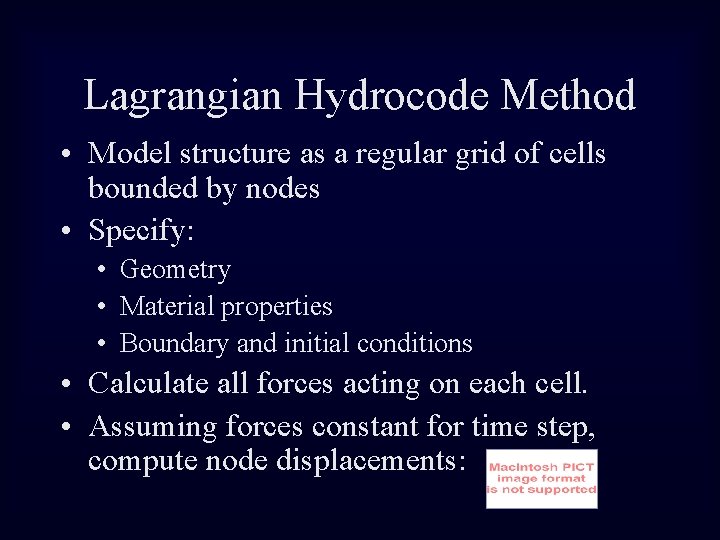
Lagrangian Hydrocode Method • Model structure as a regular grid of cells bounded by nodes • Specify: • Geometry • Material properties • Boundary and initial conditions • Calculate all forces acting on each cell. • Assuming forces constant for time step, compute node displacements:
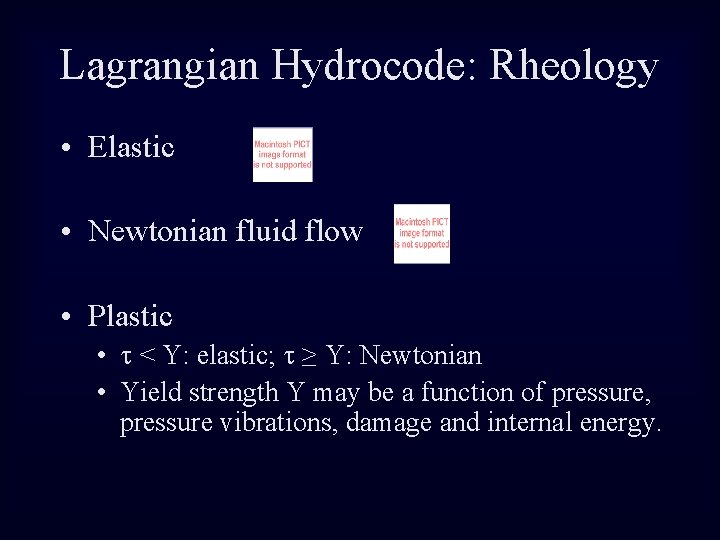
Lagrangian Hydrocode: Rheology • Elastic • Newtonian fluid flow • Plastic • t < Y: elastic; t ≥ Y: Newtonian • Yield strength Y may be a function of pressure, pressure vibrations, damage and internal energy.
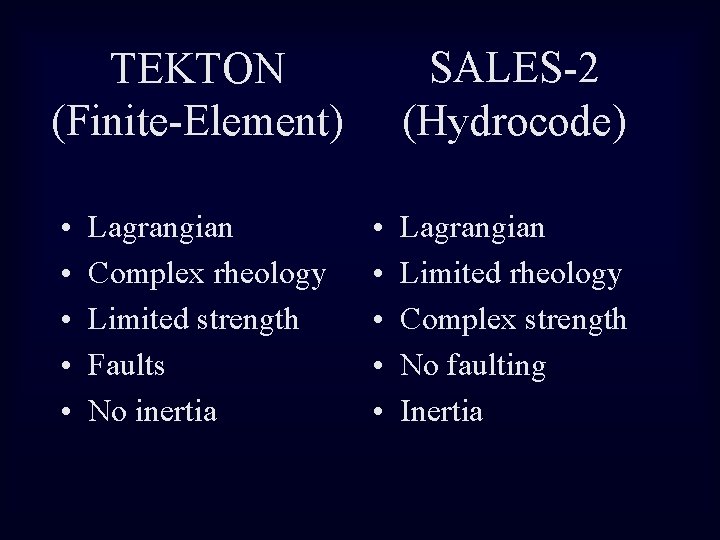
SALES-2 (Hydrocode) TEKTON (Finite-Element) • • • Lagrangian Complex rheology Limited strength Faults No inertia • • • Lagrangian Limited rheology Complex strength No faulting Inertia
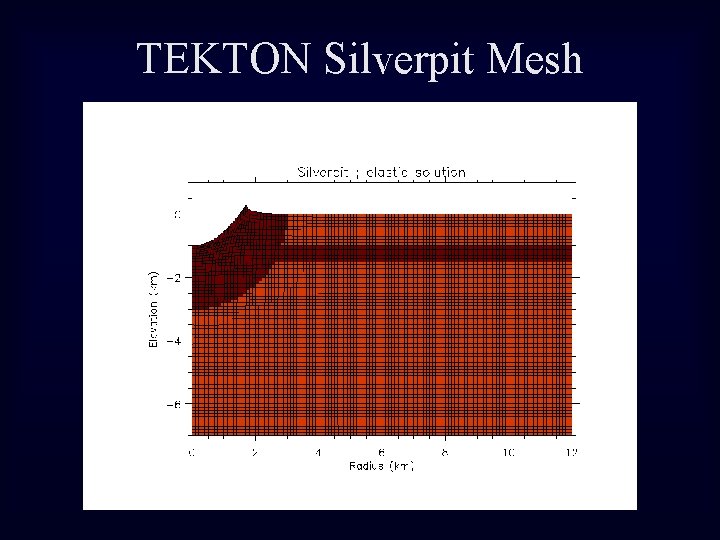
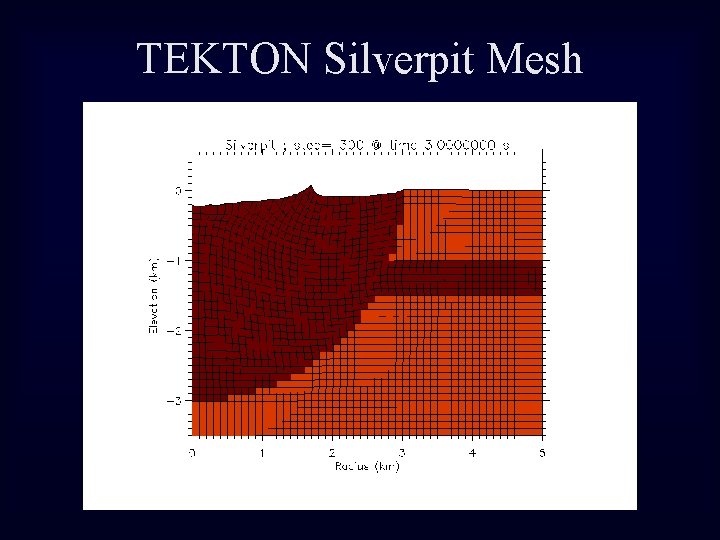
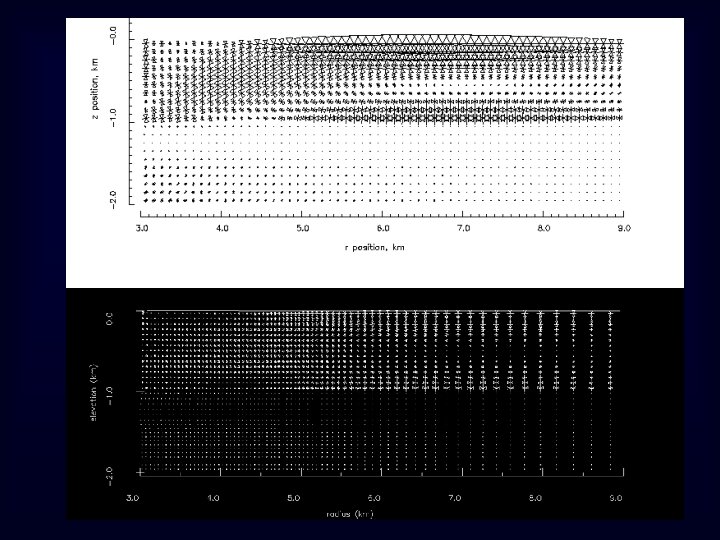
TEKTON Silverpit Mesh
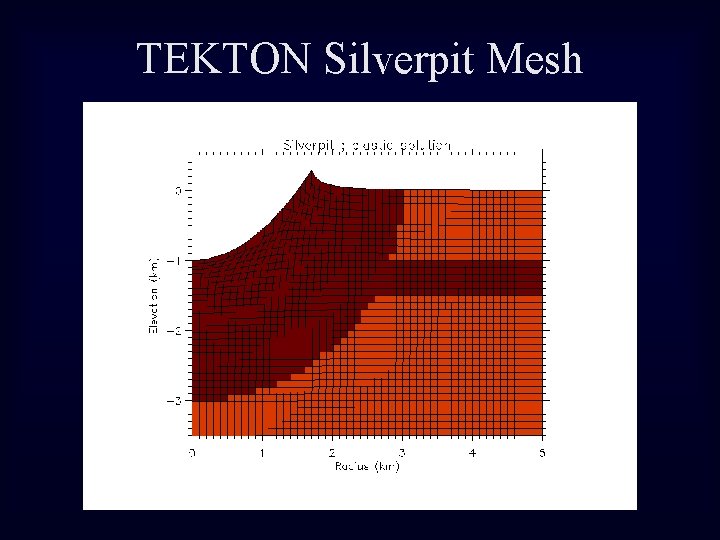
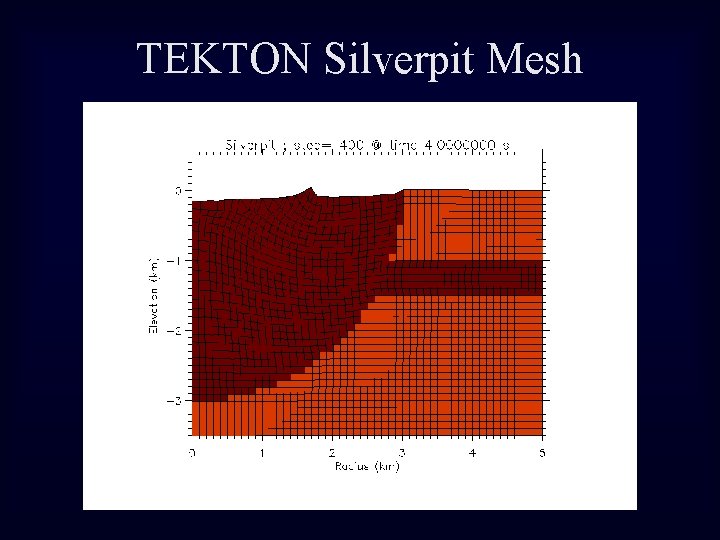
TEKTON Silverpit Mesh
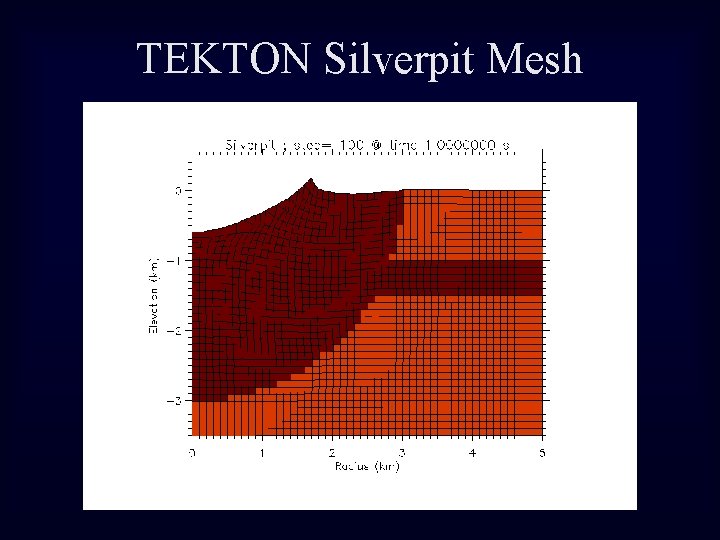
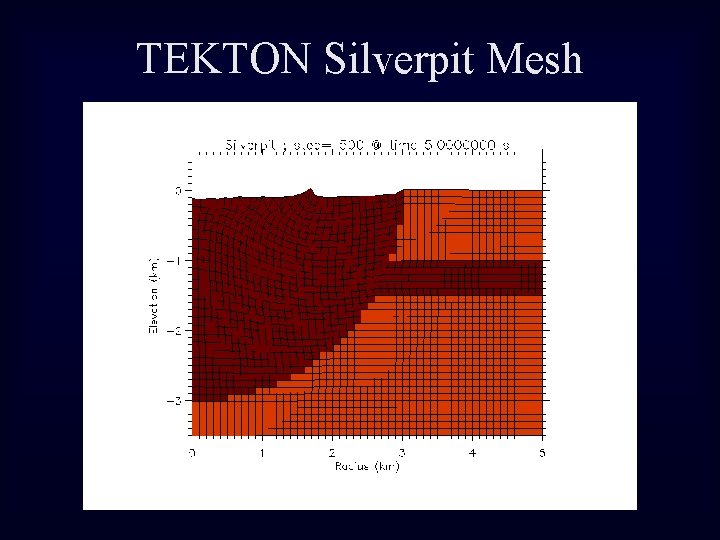
TEKTON Silverpit Mesh
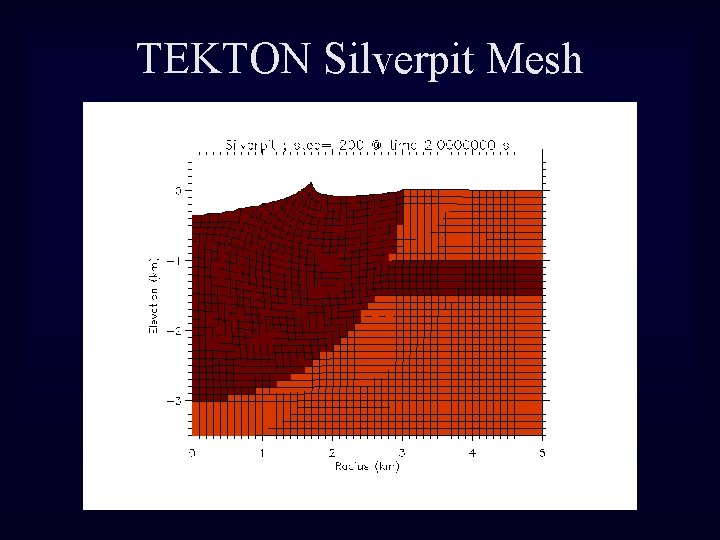
TEKTON Silverpit Mesh
TEKTON Silverpit Mesh
TEKTON Silverpit Mesh
TEKTON Silverpit Mesh
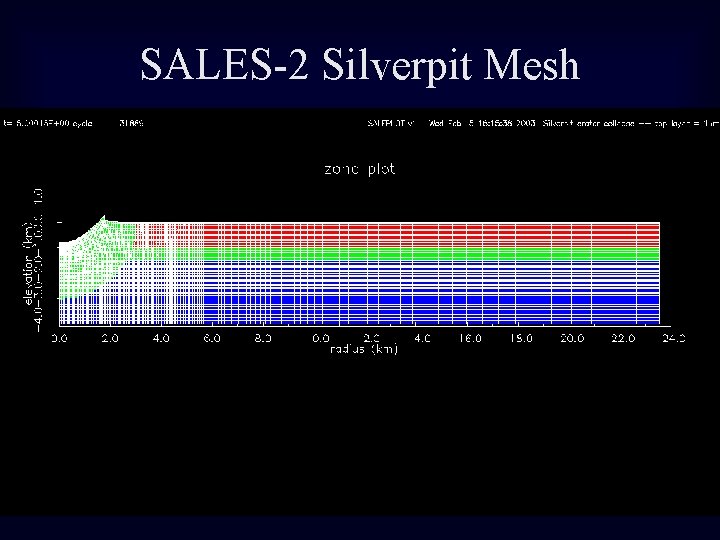
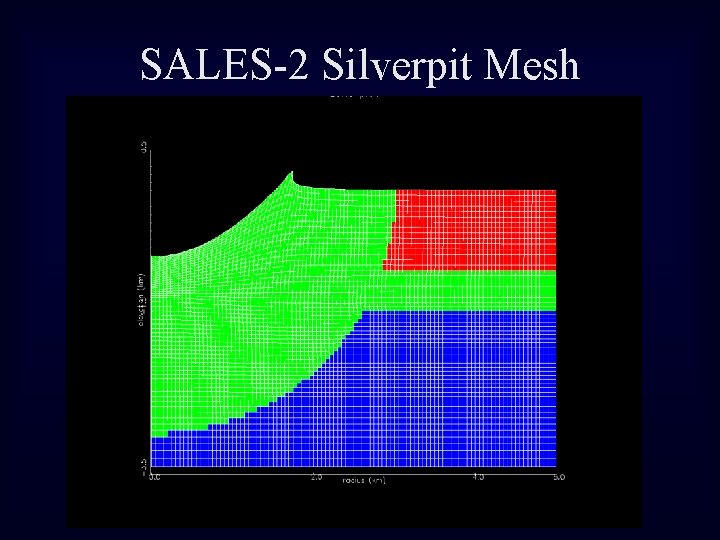
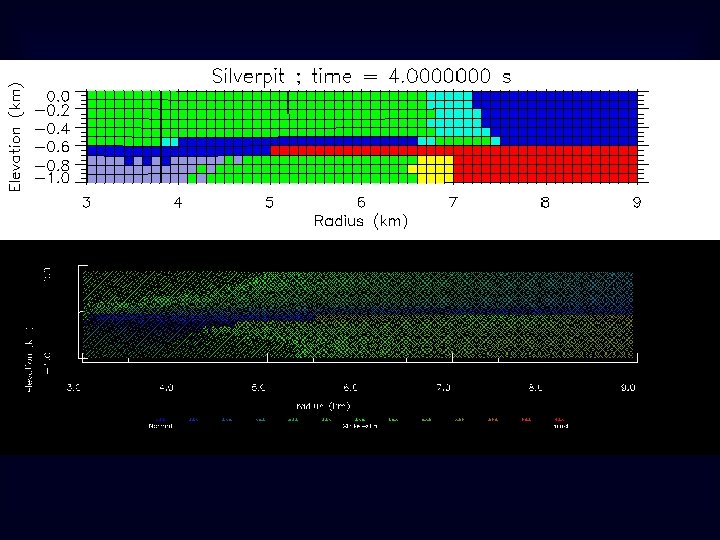
SALES-2 Silverpit Mesh
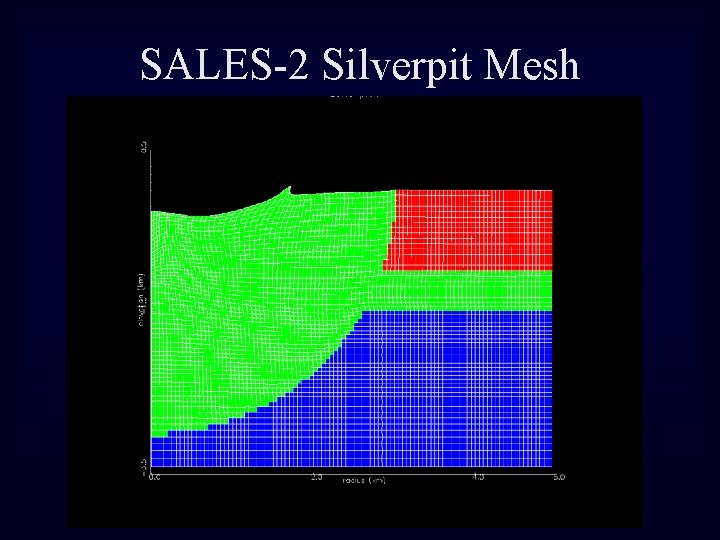
SALES-2 Silverpit Mesh
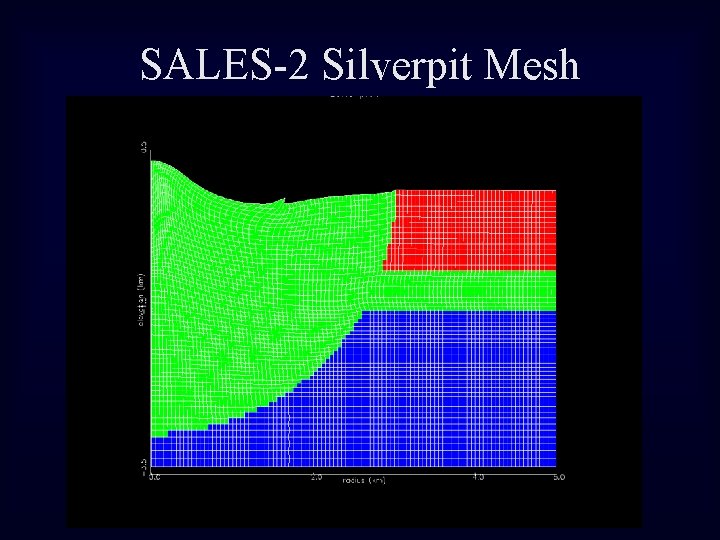
SALES-2 Silverpit Mesh
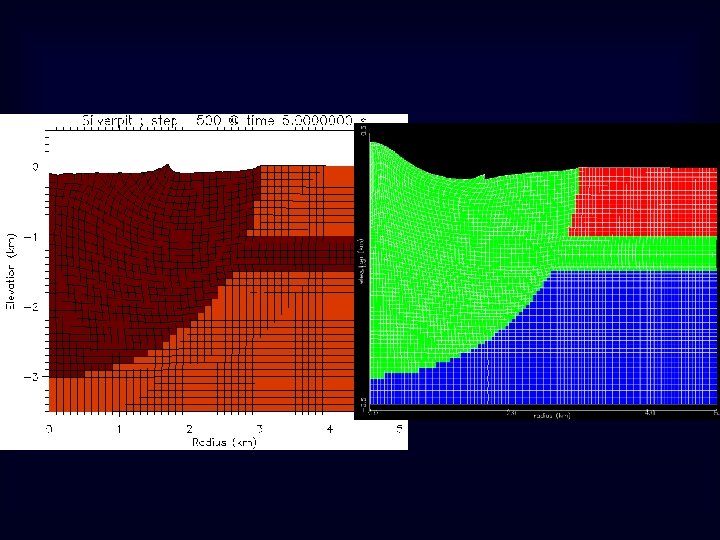
SALES-2 Silverpit Mesh
Results • • Central, near-surface, deformation differs Comparable uplift at depth, few hundred m Timescales for deformation differ Magnitudes and orientations of surface stresses outside of crater are consistent • Stress orientations and consequently fault types are broadly consistent with Silverpit observations