
Numerical Models Analysis Hydraulic Hydrologic Considerations in Planning
- Slides: 59
Numerical Models & Analysis Hydraulic & Hydrologic Considerations in Planning Chuck Shadie Jon Hendrickson Harry Friebel 2011 1
Objectives • Be able to: – Explain the importance of modeling & analysis in water resources management – Identify model types – Discuss model inputs/outputs 2
H&H Engineering Models • Purpose: To simulate and analyze physical processes, explore scenarios or do alternative analyses, and assist the decision makers in selecting from alternatives • H&H model results are used in many other types of models (e. g. sediment & nutrient transport, biological response models, statistical analysis) • Types: – Rivers – Coastal – Watersheds – Reservoirs & Lakes – Groundwater 3
Planning Models • EC 1105 -2 -407 provides the following definition of a planning model: “any models and analytical tools that planners use to define water resource management problems and opportunities, to formulate potential alternatives to address the problems and take advantage of the opportunities, to evaluate potential effects of alternatives and to support decision-making. ” 4
Certification of Models • Currently no certification of Engineering Software required • Engineering & Construction (E&C) – Science & Engineering Technology (SET) addressing engineering models & software • EC 1105 -2 -407, Planning Models Improvement Program: Model Certification • EC specifically for software used in USACE planning studies • Makes a distinction between “planning models” and “engineering models used in planning studies” 5
Computer models are based on • data • program algorithm (ie. model structure) • user experience & judgment 6
Garbage In/Out • Need interpretation - not blind acceptance of outputs “Models are for providing insight, not answers” - Tony Thomas
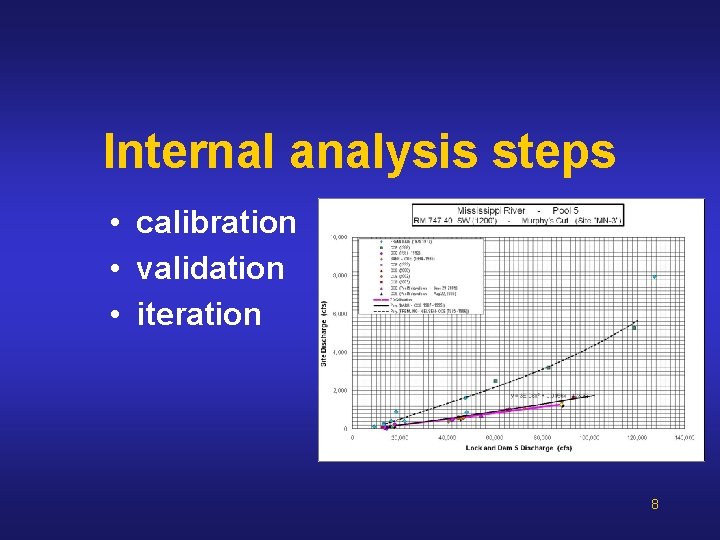
Internal analysis steps • calibration • validation • iteration 8
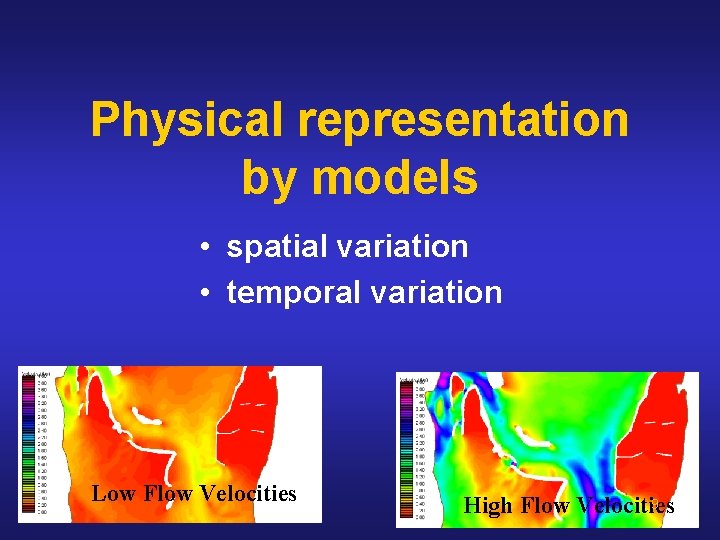
Physical representation by models • spatial variation • temporal variation Low Flow Velocities 9 High Flow Velocities
Modeling Steps • Modeling Existing Conditions – about 50 -70% of Effort – Data Collection – Initial Model Setup – Calibration/Verification to Existing Conditions • Modeling Future Without Project Conditions – about 10 -20% of effort • Alternative(s) Modeling – about 10 -20% of effort – Iterative Process to optimize designs – Involves initial hydraulic design of features – about 10 -20% of effort • Comparison of With and Without Project Conditions – Stage Reductions from Alternatives – Impacts to Study Area/Watershed Hydrology & Hydraulics and Ecosystem 10
Model Sources • Corps’ Hydrologic Engineering Center in Davis, California – HEC series (HEC-HMS, HEC-RAS, etc. ) • Engineering Research & Development Center – ERDC (ADH, CH 3 D, etc. ) – System Wide Water Resources Program (SWWRP) https: //swwrp. usace. army. mil/ • Private Sector and Academia (MIKE, ADCIRC, etc. ) 11
Science & Engineering Technology (SET) Initiative • Engineering & Construction (E&C) – Science & Engineering Technology (SET) addressing engineering models & software • Conducting inventories & assessments of model software in use • Developing process to document quality of commonly used models • ERDC models • HEC models • Well known & widely used models • Focus is on application • Tool Selection • Quality of Input Data • Model Calibration • Verification of Assumptions • Validation Done thru Agency Technical Review
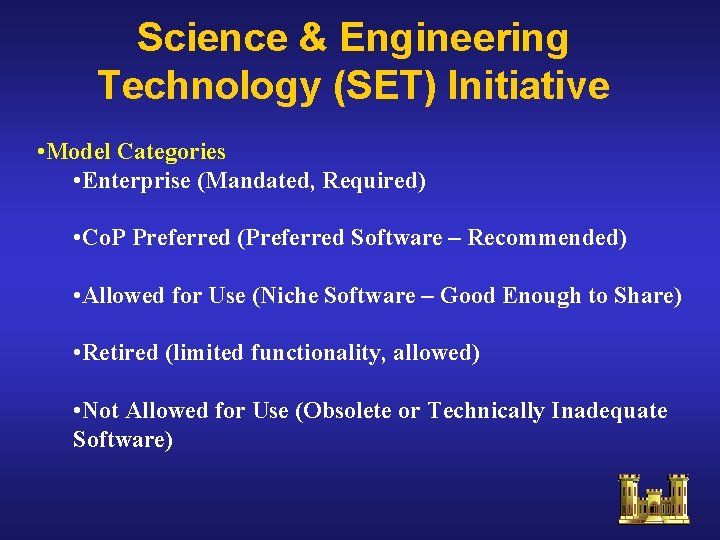
Science & Engineering Technology (SET) Initiative • Model Categories • Enterprise (Mandated, Required) • Co. P Preferred (Preferred Software – Recommended) • Allowed for Use (Niche Software – Good Enough to Share) • Retired (limited functionality, allowed) • Not Allowed for Use (Obsolete or Technically Inadequate Software)
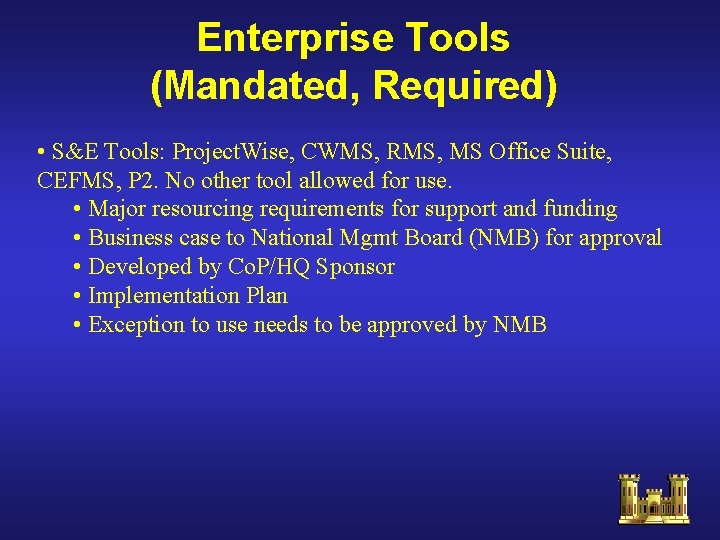
Enterprise Tools (Mandated, Required) • S&E Tools: Project. Wise, CWMS, RMS, MS Office Suite, CEFMS, P 2. No other tool allowed for use. • Major resourcing requirements for support and funding • Business case to National Mgmt Board (NMB) for approval • Developed by Co. P/HQ Sponsor • Implementation Plan • Exception to use needs to be approved by NMB
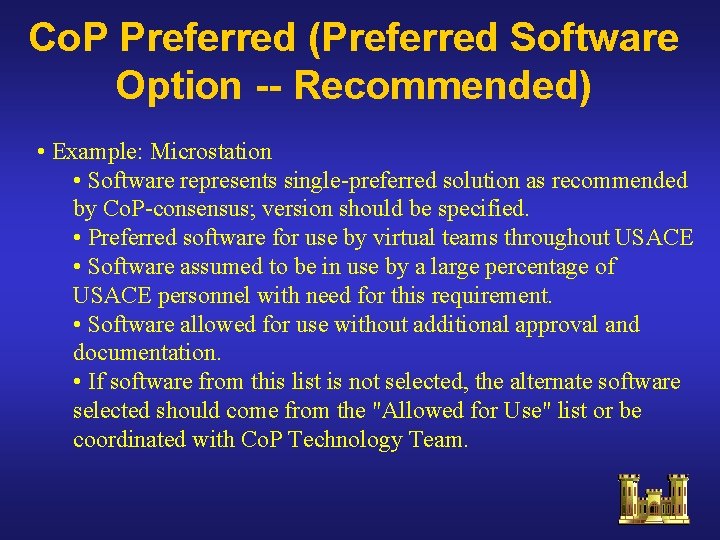
Co. P Preferred (Preferred Software Option -- Recommended) • Example: Microstation • Software represents single-preferred solution as recommended by Co. P-consensus; version should be specified. • Preferred software for use by virtual teams throughout USACE • Software assumed to be in use by a large percentage of USACE personnel with need for this requirement. • Software allowed for use without additional approval and documentation. • If software from this list is not selected, the alternate software selected should come from the "Allowed for Use" list or be coordinated with Co. P Technology Team.
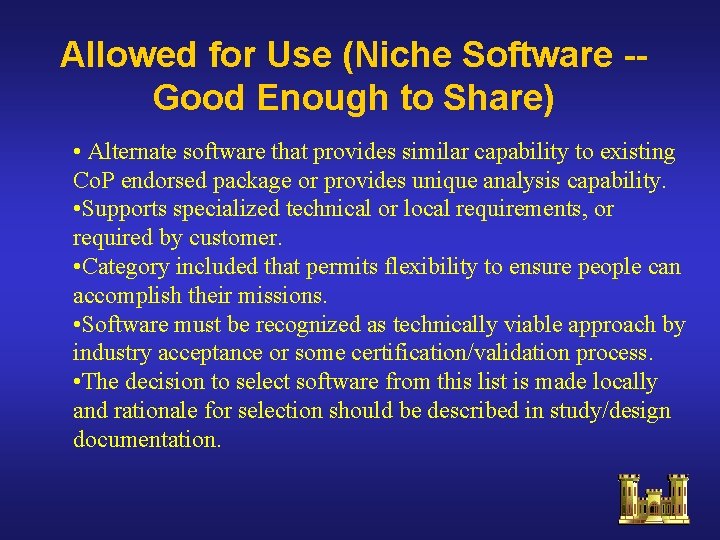
Allowed for Use (Niche Software -Good Enough to Share) • Alternate software that provides similar capability to existing Co. P endorsed package or provides unique analysis capability. • Supports specialized technical or local requirements, or required by customer. • Category included that permits flexibility to ensure people can accomplish their missions. • Software must be recognized as technically viable approach by industry acceptance or some certification/validation process. • The decision to select software from this list is made locally and rationale for selection should be described in study/design documentation.
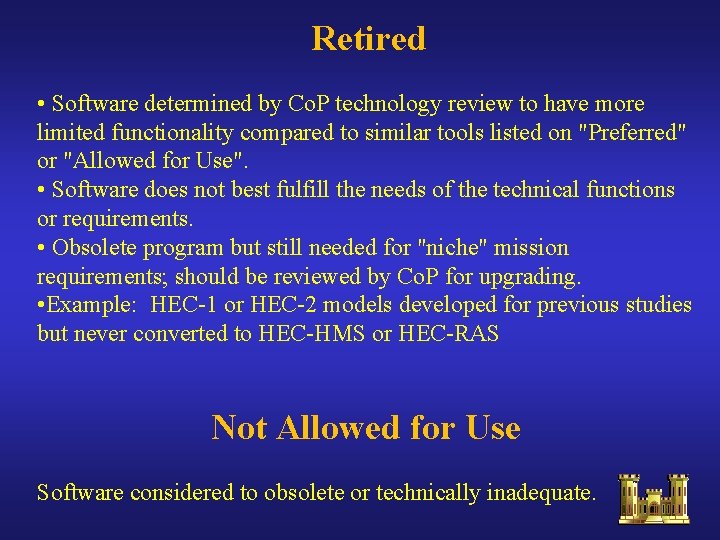
Retired • Software determined by Co. P technology review to have more limited functionality compared to similar tools listed on "Preferred" or "Allowed for Use". • Software does not best fulfill the needs of the technical functions or requirements. • Obsolete program but still needed for "niche" mission requirements; should be reviewed by Co. P for upgrading. • Example: HEC-1 or HEC-2 models developed for previous studies but never converted to HEC-HMS or HEC-RAS Not Allowed for Use Software considered to obsolete or technically inadequate.
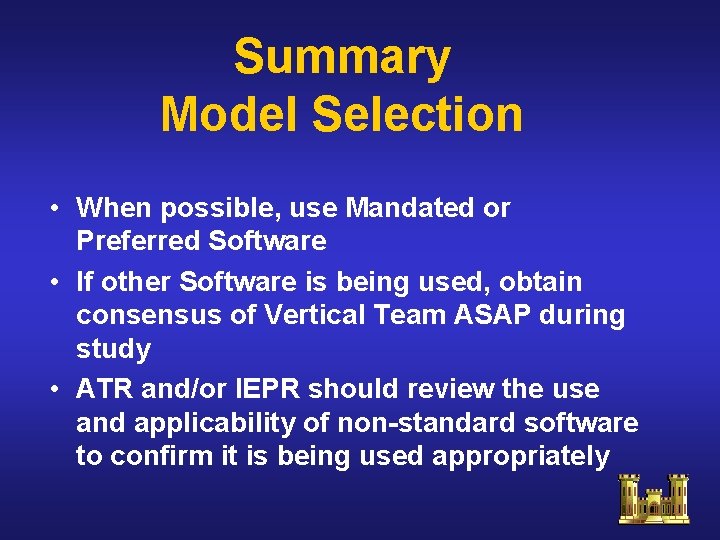
Summary Model Selection • When possible, use Mandated or Preferred Software • If other Software is being used, obtain consensus of Vertical Team ASAP during study • ATR and/or IEPR should review the use and applicability of non-standard software to confirm it is being used appropriately
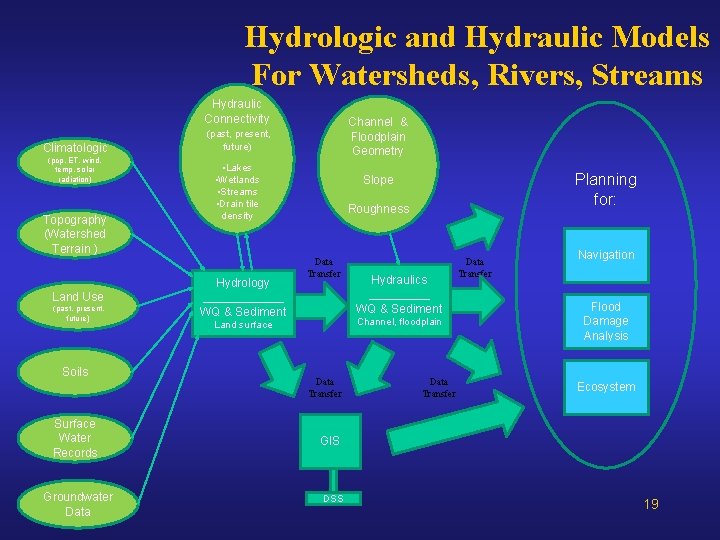
Hydrologic and Hydraulic Models For Watersheds, Rivers, Streams Hydraulic Connectivity (past, present, Climatologic (pcp, ET, wind, temp, solar radiation) Topography (Watershed Terrain ) Land Use (past, present, future) Soils Surface Water Records Groundwater Data Channel & Floodplain Geometry future) • Lakes • Wetlands • Streams • Drain tile density Hydrology ______ WQ & Sediment Planning for: Slope Roughness Data Transfer Hydraulics _____ WQ & Sediment Data Transfer Channel, floodplain Land surface Data Transfer Navigation Flood Damage Analysis Ecosystem GIS DSS 19
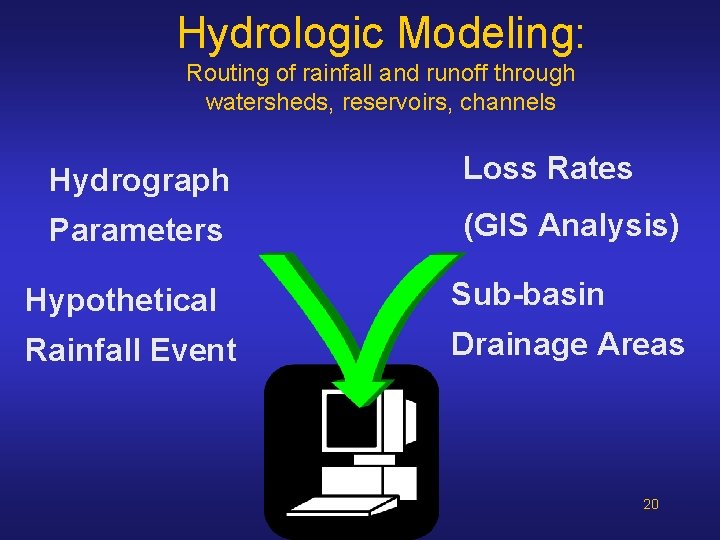
Hydrologic Modeling: Routing of rainfall and runoff through watersheds, reservoirs, channels Hydrograph Loss Rates Parameters (GIS Analysis) Hypothetical Sub-basin Rainfall Event Drainage Areas 20
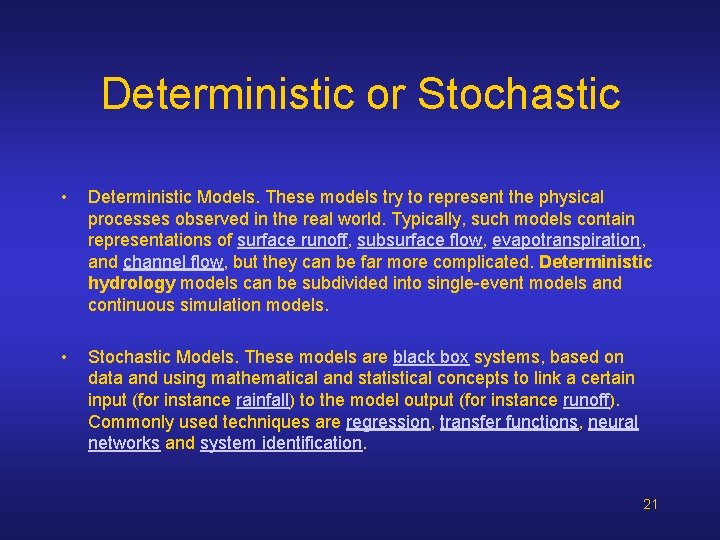
Deterministic or Stochastic • Deterministic Models. These models try to represent the physical processes observed in the real world. Typically, such models contain representations of surface runoff, subsurface flow, evapotranspiration, and channel flow, but they can be far more complicated. Deterministic hydrology models can be subdivided into single-event models and continuous simulation models. • Stochastic Models. These models are black box systems, based on data and using mathematical and statistical concepts to link a certain input (for instance rainfall) to the model output (for instance runoff). Commonly used techniques are regression, transfer functions, neural networks and system identification. 21
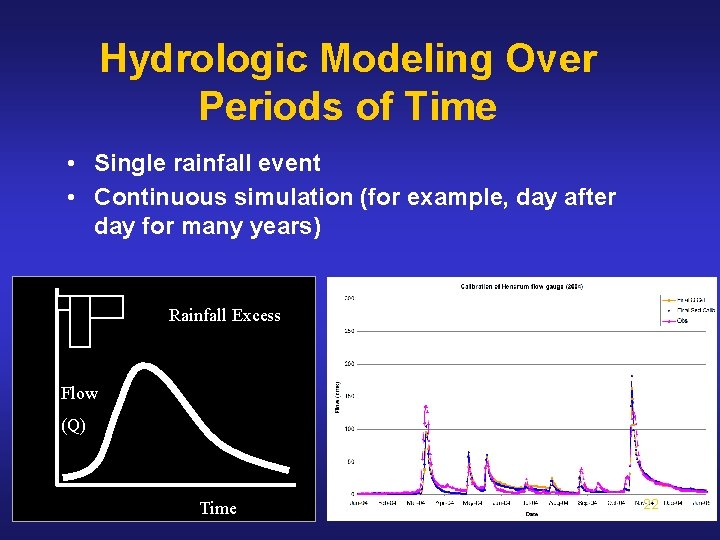
Hydrologic Modeling Over Periods of Time • Single rainfall event • Continuous simulation (for example, day after day for many years) Rainfall Excess Flow (Q) Time 22
Hydrologic Modeling Over Timesteps • Timesteps are used for single event and continuous simulation • The rainfall, runoff, and routing occurring during one time step is calculated 23
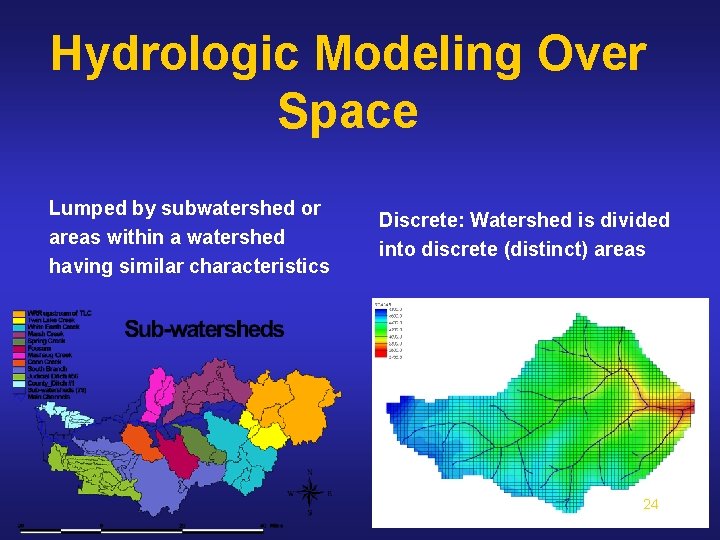
Hydrologic Modeling Over Space Lumped by subwatershed or areas within a watershed having similar characteristics Discrete: Watershed is divided into discrete (distinct) areas 24
Lumped Hydrologic Modeling Software • HEC-1 • HEC-Hydrologic Modeling System (HMS) • Products--hydrographs 25
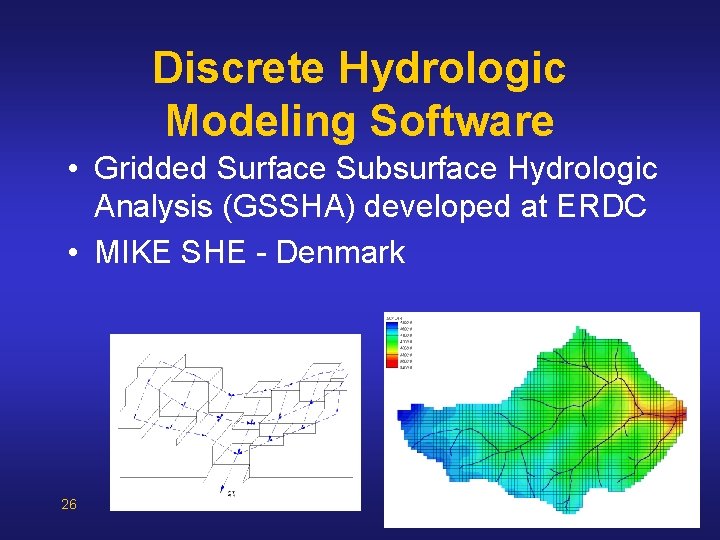
Discrete Hydrologic Modeling Software • Gridded Surface Subsurface Hydrologic Analysis (GSSHA) developed at ERDC • MIKE SHE - Denmark 26
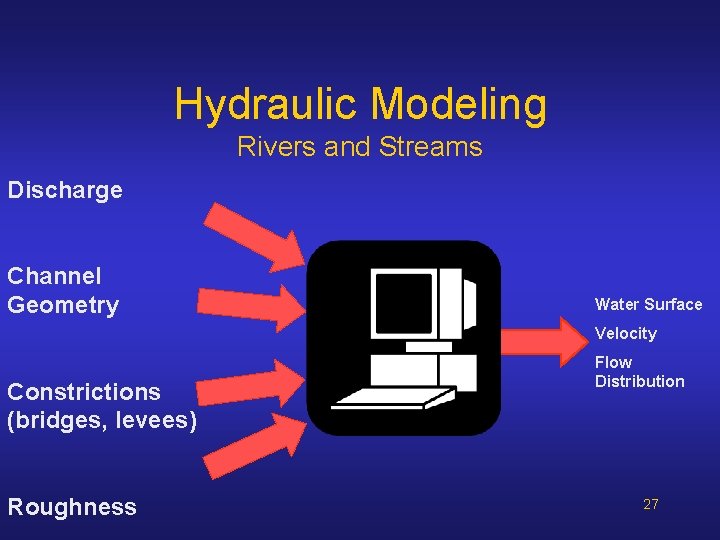
Hydraulic Modeling Rivers and Streams Discharge Channel Geometry Water Surface Velocity Constrictions (bridges, levees) Roughness Flow Distribution 27
Hydraulic Model Typical Uses (Open Channels) • • Capacity /stability flowlines Operation & Maintenance options Ecosystem physical conditions Input to sediment transport models 28
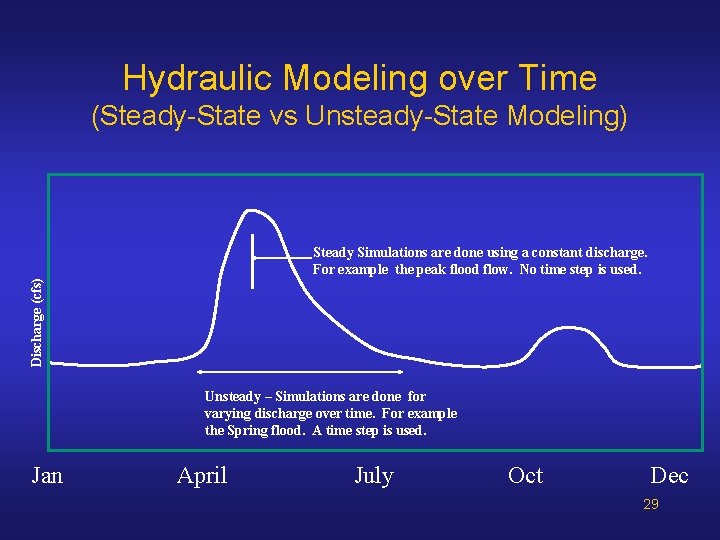
Hydraulic Modeling over Time (Steady-State vs Unsteady-State Modeling) Discharge (cfs) Steady Simulations are done using a constant discharge. For example the peak flood flow. No time step is used. Unsteady – Simulations are done for varying discharge over time. For example the Spring flood. A time step is used. Jan April July Oct Dec 29
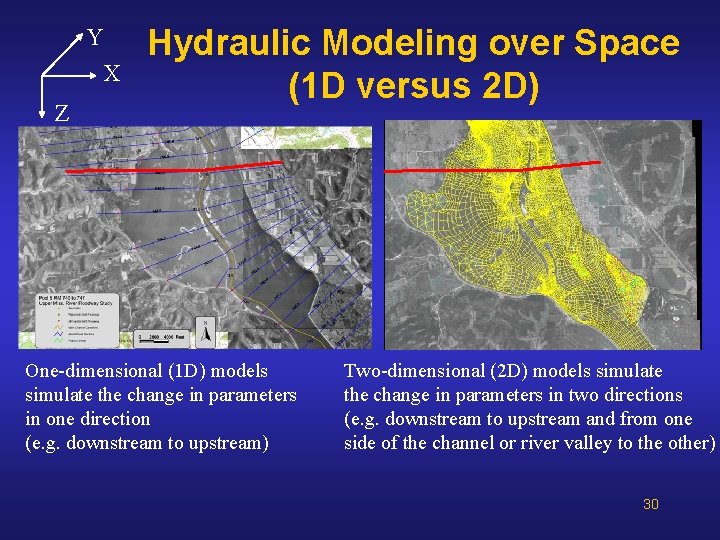
Y X Z Hydraulic Modeling over Space (1 D versus 2 D) One-dimensional (1 D) models simulate the change in parameters in one direction (e. g. downstream to upstream) Two-dimensional (2 D) models simulate the change in parameters in two directions (e. g. downstream to upstream and from one side of the channel or river valley to the other) 30
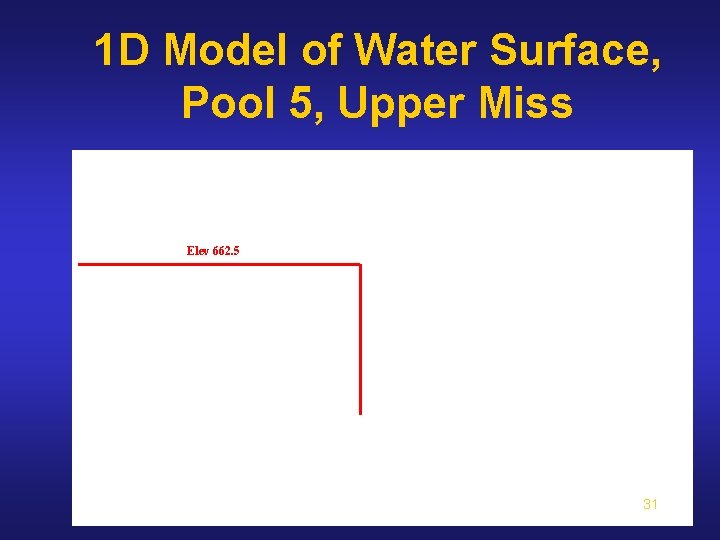
1 D Model of Water Surface, Pool 5, Upper Miss Elev 662. 5 31
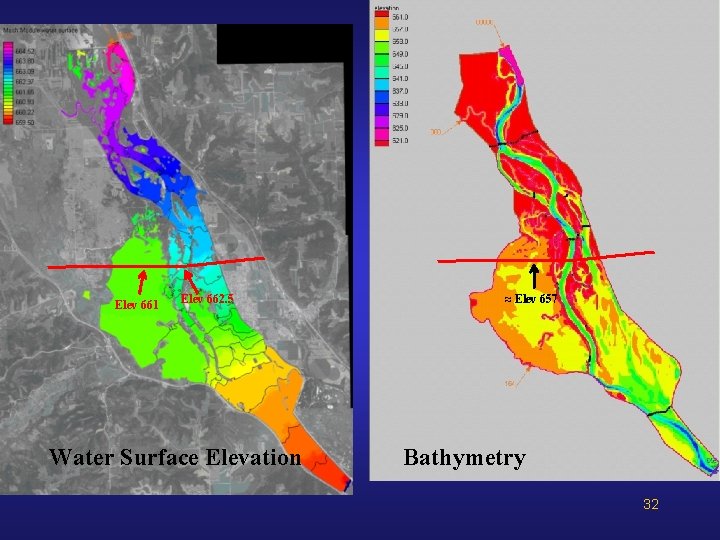
Elev 661 Elev 662. 5 Water Surface Elevation ≈ Elev 657 Bathymetry 32
1 -Dimensional Hydraulic Modeling Software (Open Channels) • HEC-RAS (River Analysis System) • HEC-2 • WSPRO (Federal Highways) 33
2 -Dimensional Hydraulic Modeling Software (Open Channels) • ADH (Adaptive Hydraulics) developed at ERDC through the SWWRP • FESWMS (Federal Highways) 34
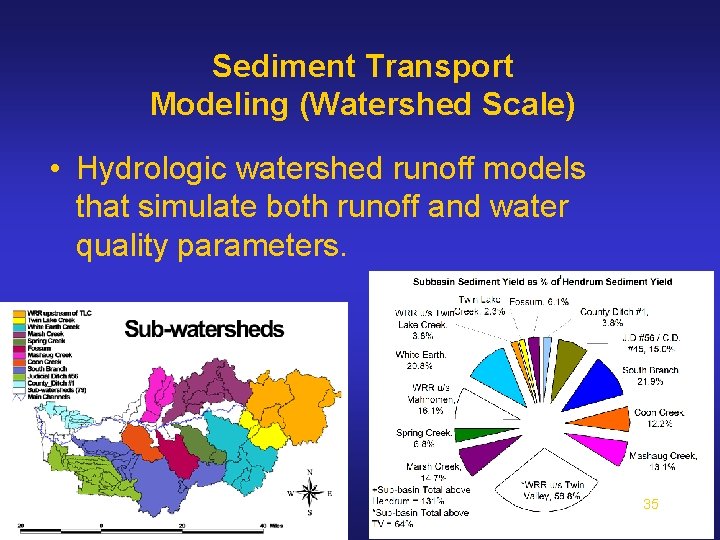
Sediment Transport Modeling (Watershed Scale) • Hydrologic watershed runoff models that simulate both runoff and water quality parameters. 35
Watershed Sediment Transport Modeling Software • • GSSHA (USACE, ERDC) HSPF (US EPA) SWAT (USDA-ARS) MIKE-SHE 36
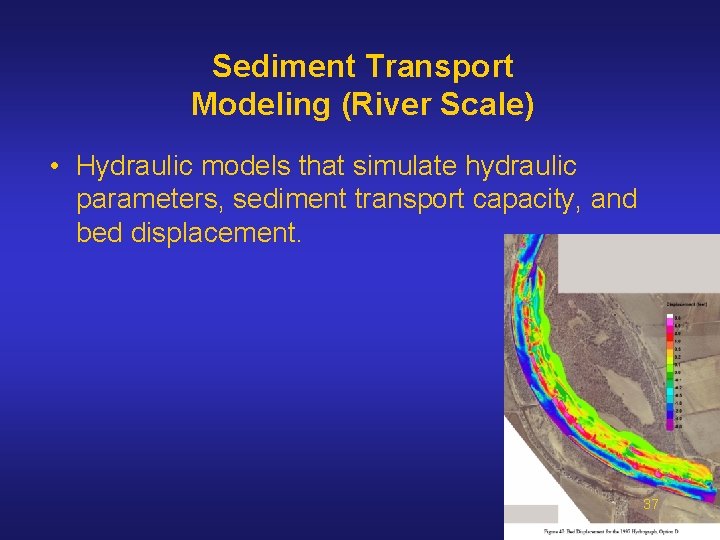
Sediment Transport Modeling (River Scale) • Hydraulic models that simulate hydraulic parameters, sediment transport capacity, and bed displacement. 37
Sediment Transport Model Typical Uses in Rivers • • • Channel stability Dredging requirements Water quality Pump station & diversion design Maintenance Ecosystem restoration 38
Channel Sediment Transport Modeling Software • • HEC-6 T HEC-RAS (with sediment) ADH 39
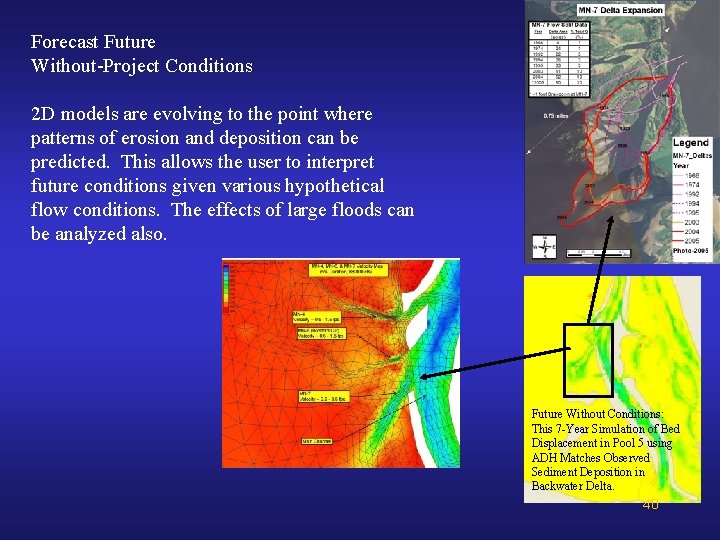
Forecast Future Without-Project Conditions 2 D models are evolving to the point where patterns of erosion and deposition can be predicted. This allows the user to interpret future conditions given various hypothetical flow conditions. The effects of large floods can be analyzed also. Future Without Conditions: This 7 -Year Simulation of Bed Displacement in Pool 5 using ADH Matches Observed Sediment Deposition in Backwater Delta. 40
Statistical Model Typical Uses • • Frequency Duration Timing Stochastic flow simulation 41
Statistical Modeling Software • HEC-FFA (frequency) • HEC-EFM (Ecosystem Functions Model) • IHA (Indicators of Hydrologic Alteration, TNC) 42
Model Time and Cost Model Review • Time and Cost to do the modeling – Many factors (1 D or 2 D, overbank flows, structure complexity) influence this. Here is a few examples • UMRS 2 D model for 2. 5 mile wide river valley, 10 mile reach of river, took 3 to 4 months and 50 K. • Small River 1 D model for sediment budget on 90 mile reach took 2 months and 15 K. • Culvert analysis 3 days and 2 or 3 K – Model costs are about 1% of a typical project cost • Model Review – Usually a District Quality Control Function 43 – The number of available reviewers is limited.
Coastal Models 44
Coastal Engineering Modeling Considerations • • • $$$ Site Characteristics Data Gathering Do we have enough engineering and science to make our results believable? Cost of Tools Appropriateness of Design Stakeholder Issues Environmental Constraints State of the art modeling changes over life or large feasibility study 45
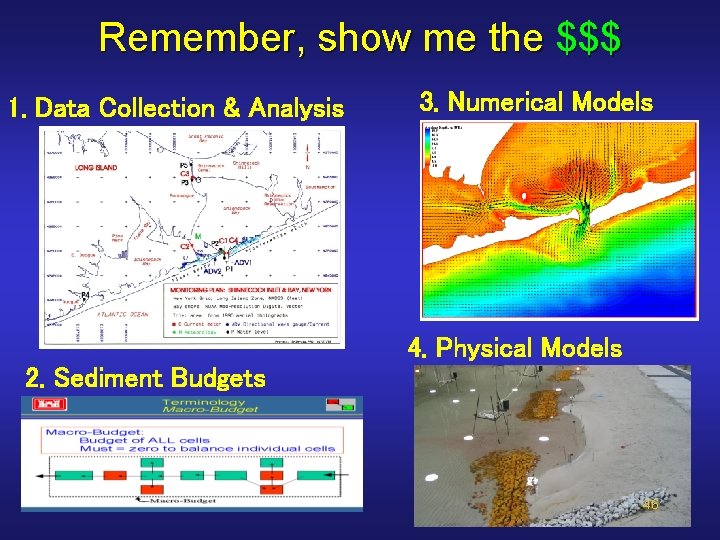
Remember, show me the $$$ 1. Data Collection & Analysis 3. Numerical Models 4. Physical Models 2. Sediment Budgets 46
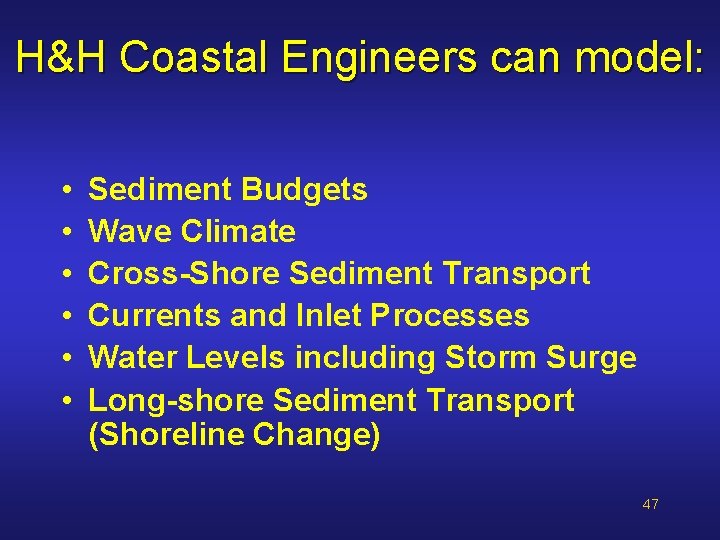
H&H Coastal Engineers can model: • • • Sediment Budgets Wave Climate Cross-Shore Sediment Transport Currents and Inlet Processes Water Levels including Storm Surge Long-shore Sediment Transport (Shoreline Change) 47
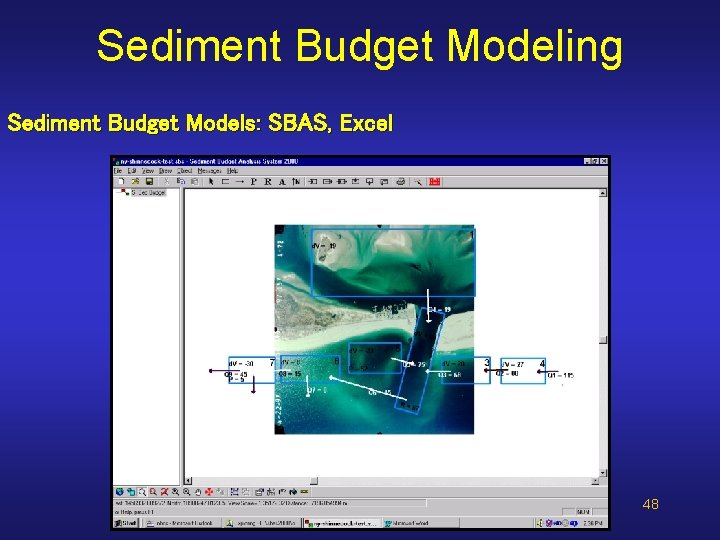
Sediment Budget Modeling Sediment Budget Models: SBAS, Excel 48
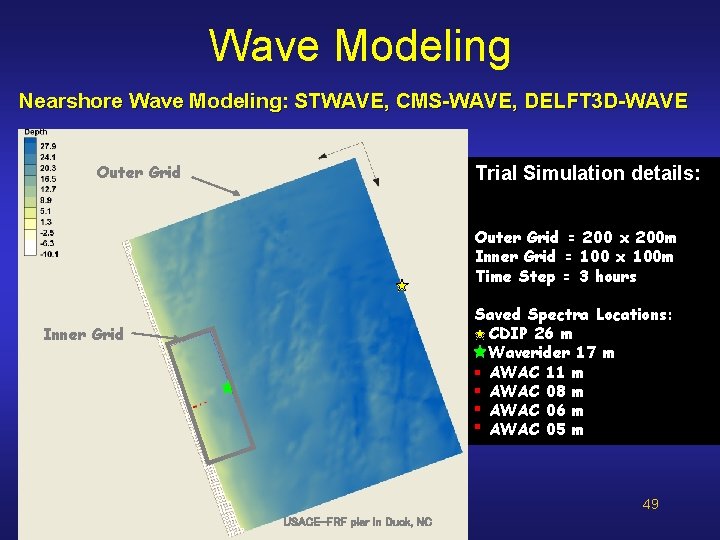
Wave Modeling Nearshore Wave Modeling: STWAVE, CMS-WAVE, DELFT 3 D-WAVE Outer Grid Trial Simulation details: Outer Grid = 200 x 200 m Inner Grid = 100 x 100 m Time Step = 3 hours Saved Spectra Locations: CDIP 26 m Waverider 17 m AWAC 11 m AWAC 08 m AWAC 06 m AWAC 05 m Inner Grid 49 USACE-FRF pier in Duck, NC
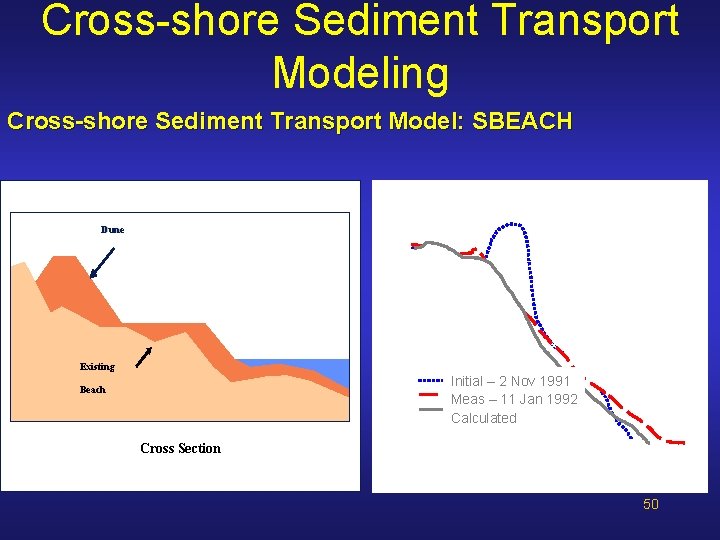
Cross-shore Sediment Transport Modeling Cross-shore Sediment Transport Model: SBEACH Dune Existing Initial – 2 Nov 1991 Meas – 11 Jan 1992 Calculated Beach Cross Section 50
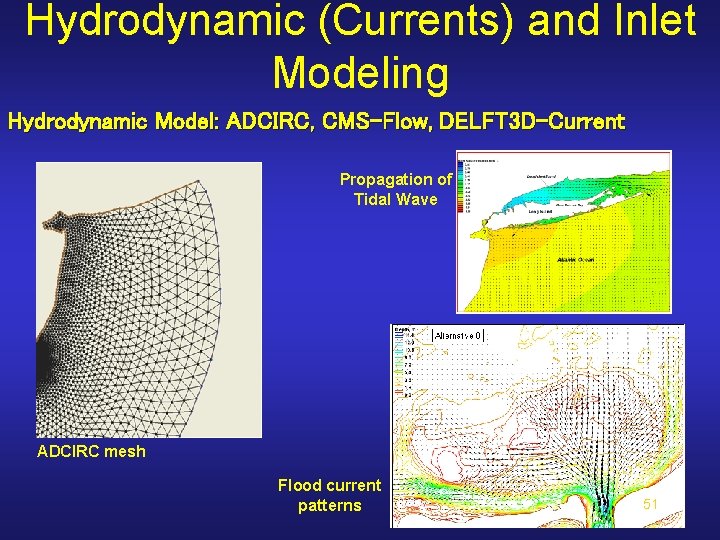
Hydrodynamic (Currents) and Inlet Modeling Hydrodynamic Model: ADCIRC, CMS-Flow, DELFT 3 D-Current Propagation of Tidal Wave ADCIRC mesh Flood current patterns 51
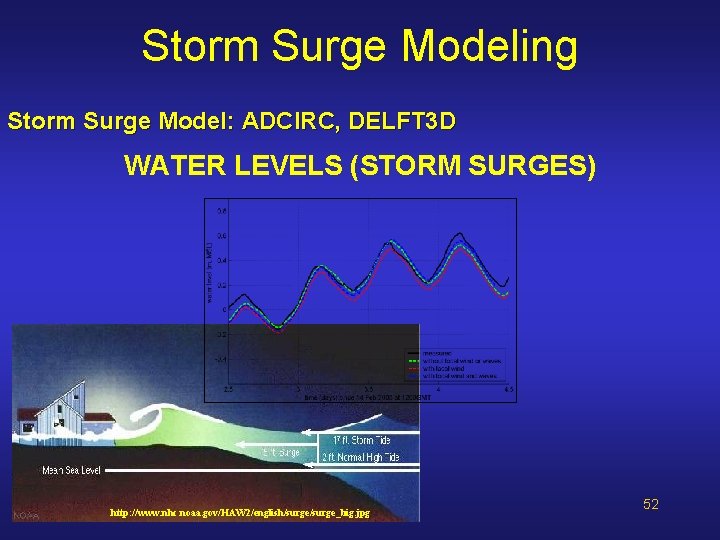
Storm Surge Modeling Storm Surge Model: ADCIRC, DELFT 3 D WATER LEVELS (STORM SURGES) http: //www. nhc. noaa. gov/HAW 2/english/surge_big. jpg 52
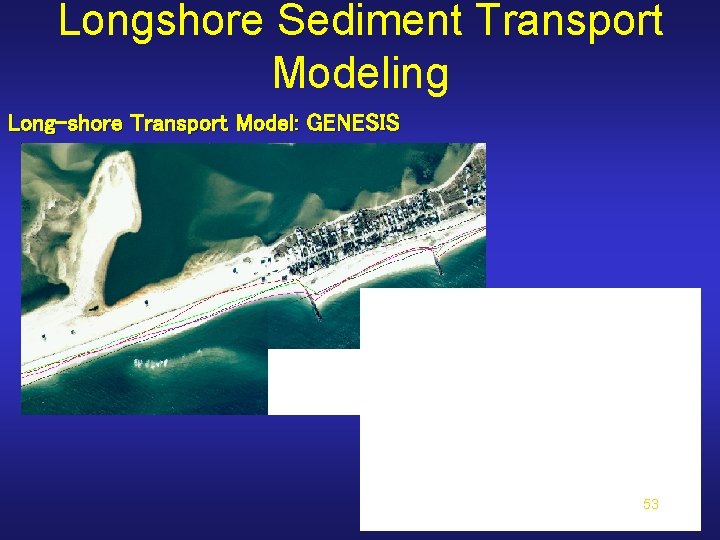
Longshore Sediment Transport Modeling Long-shore Transport Model: GENESIS 53
Question - What Storms to Model? Remember, each computer run can be time consuming (CPU time), thus not possible to model every possible storm scenario • SPH – Standard Project Hurricane • Probabilistic Approach – Monte Carlo simulation of all of the storm parameters 54
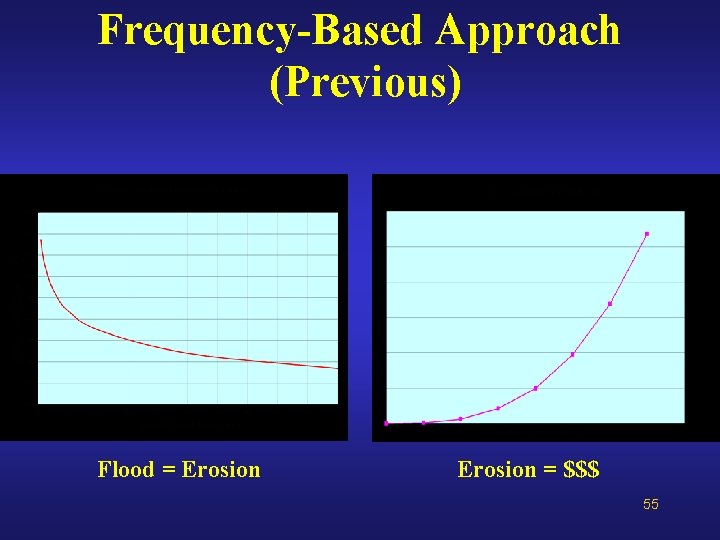
Frequency-Based Approach (Previous) Flood = Erosion = $$$ 55
New Approach (Beach-fx) Event-based Monte Carlo Life Cycle Model Engineering-Economic Planning Tool for Hurricane and Storm Damage Reduction Developed to: • Address analytical shortcomings of traditional, frequency-based approach • More realistic estimates of life-cycle benefits and costs • Generate science-based information to aid decision making • Develop information to communicate plan performance to stakeholders 56
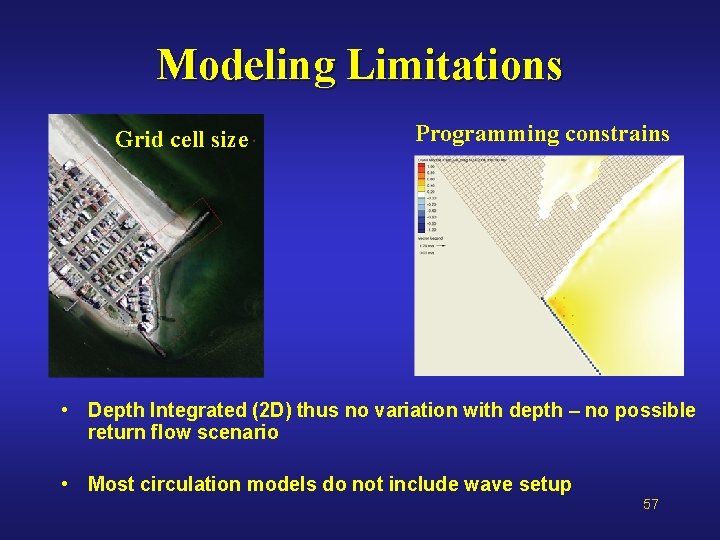
Modeling Limitations Grid cell size Programming constrains • Depth Integrated (2 D) thus no variation with depth – no possible return flow scenario • Most circulation models do not include wave setup 57
Summary • model is a simplified representation of reality • common analysis steps 58
Questions “Models are for providing insight, not answers” - Tony Thomas 59