
Numerical Example Numerical Example What should be the
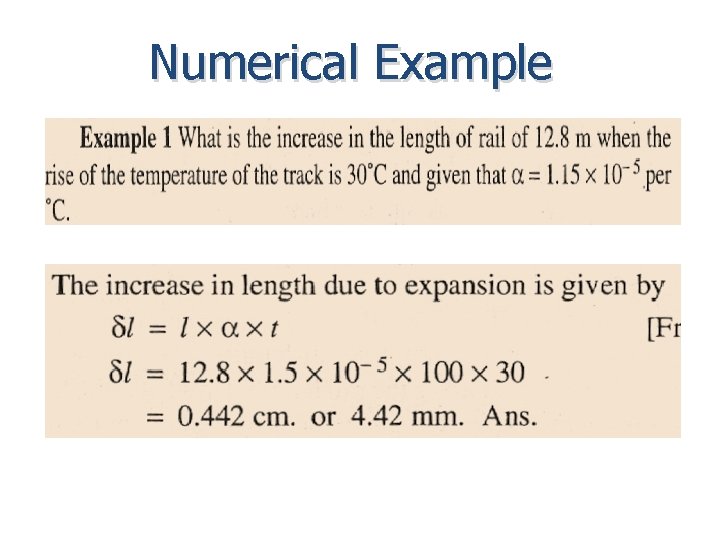
Numerical Example
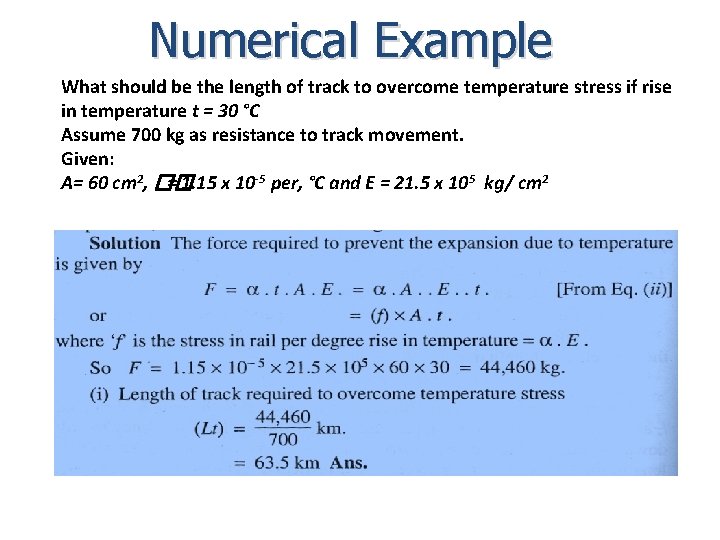
Numerical Example What should be the length of track to overcome temperature stress if rise in temperature t = 30 °C Assume 700 kg as resistance to track movement. Given: A= 60 cm 2, �� = 1. 15 x 10 -5 per, °C and E = 21. 5 x 10⁵ kg/ cm 2
Creep of Rails is defined as the longitudinal movement of rails with respect to sleepers in a track. Why Creep Takes Place? There are mainly six causes (mechanisms) behind creep defect: o Wave action. o Percussion action. o Drag action. o Starting, accelerating, slowing, or stopping of a train. o Expansion or contraction of rails due temperature. o Unbalanced traffic.
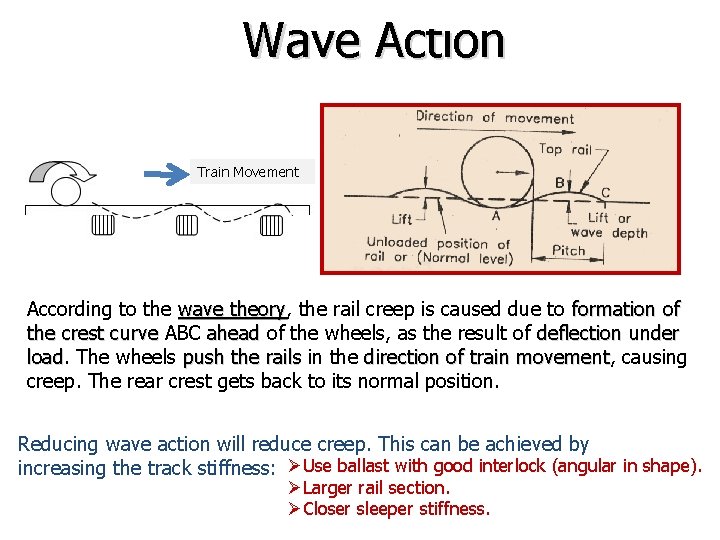
Wave Action Train Movement According to the wave theory, theory the rail creep is caused due to formation of the crest curve ABC ahead of the wheels, as the result of deflection under load The wheels push the rails in the direction of train movement, movement causing creep. The rear crest gets back to its normal position. Reducing wave action will reduce creep. This can be achieved by increasing the track stiffness: ØUse ballast with good interlock (angular in shape). ØLarger rail section. ØCloser sleeper stiffness.
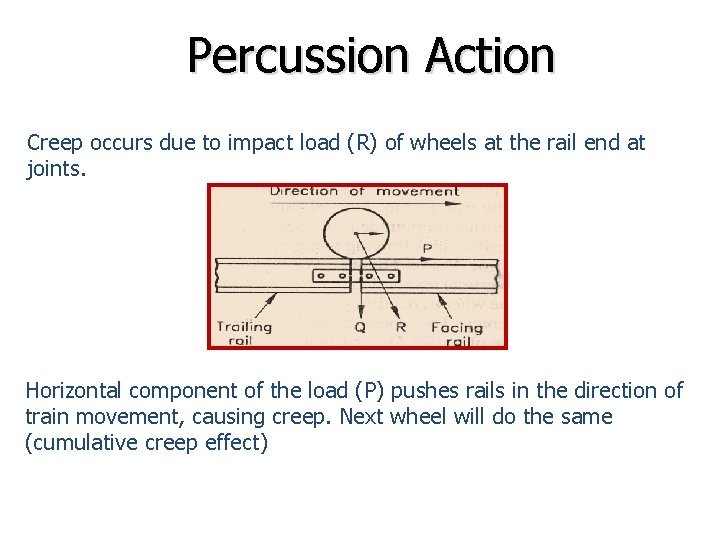
Percussion Action Creep occurs due to impact load (R) of wheels at the rail end at joints. Horizontal component of the load (P) pushes rails in the direction of train movement, causing creep. Next wheel will do the same (cumulative creep effect)
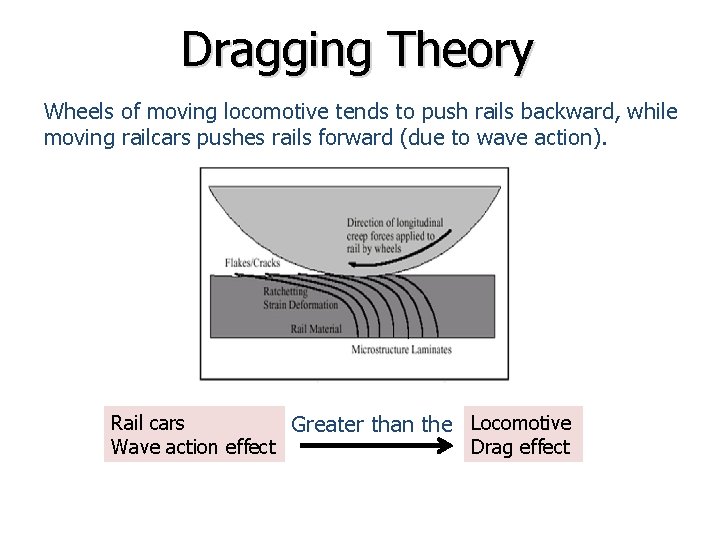
Dragging Theory Wheels of moving locomotive tends to push rails backward, while moving railcars pushes rails forward (due to wave action). Rail cars Greater than the Locomotive Wave action effect Drag effect
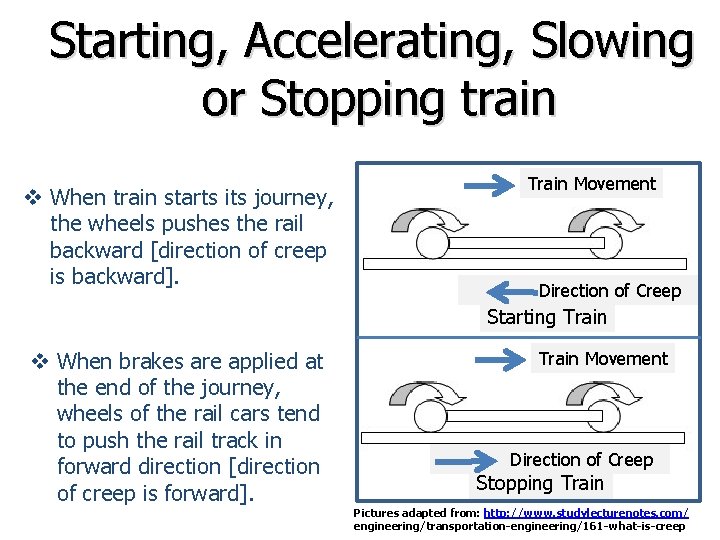
Starting, Accelerating, Slowing or Stopping train v When train starts its journey, the wheels pushes the rail backward [direction of creep is backward]. Train Movement Direction of Creep Starting Train v When brakes are applied at the end of the journey, wheels of the rail cars tend to push the rail track in forward direction [direction of creep is forward]. Train Movement Direction of Creep Stopping Train Pictures adapted from: http: //www. studylecturenotes. com/ engineering/transportation-engineering/161 -what-is-creep
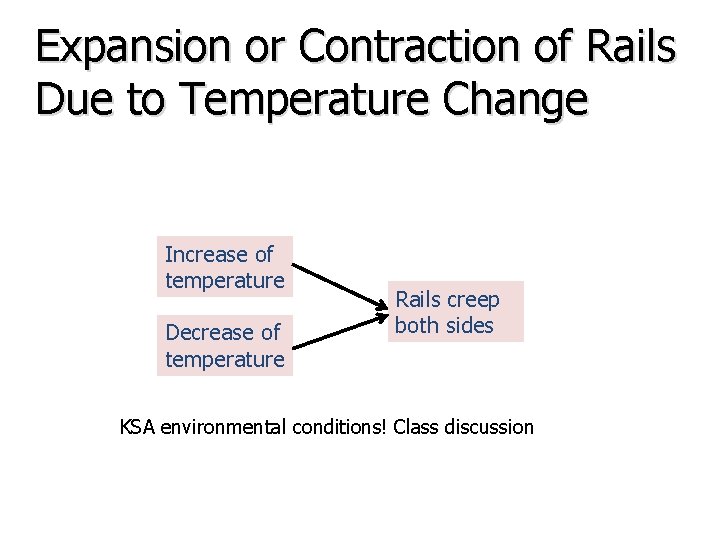
Expansion or Contraction of Rails Due to Temperature Change Increase of temperature Decrease of temperature Rails creep both sides KSA environmental conditions! Class discussion
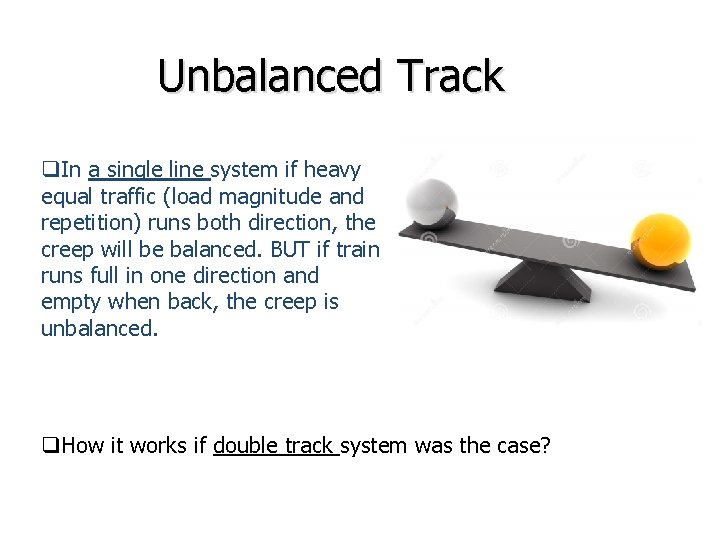
Unbalanced Track q. In a single line system if heavy equal traffic (load magnitude and repetition) runs both direction, the creep will be balanced. BUT if train runs full in one direction and empty when back, the creep is unbalanced. q. How it works if double track system was the case?
- Slides: 9