
Numeric and geometric patterns Chapter 4 Page 55
- Slides: 14
Numeric and geometric patterns Chapter 4, Page 55
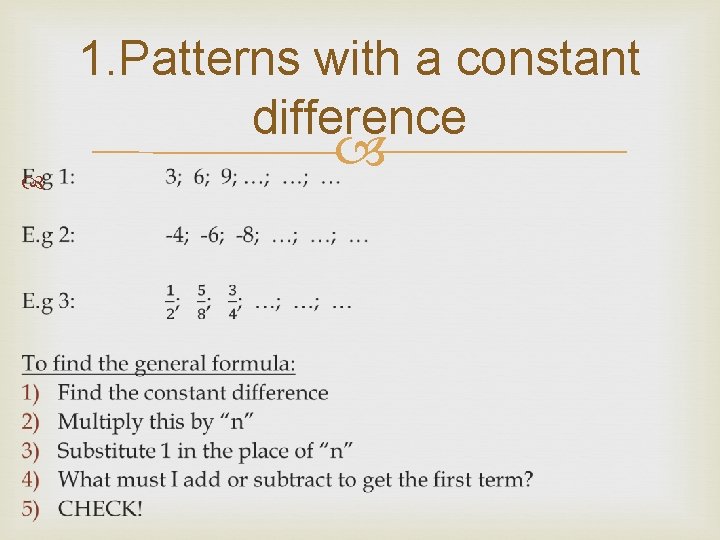
1. Patterns with a constant difference
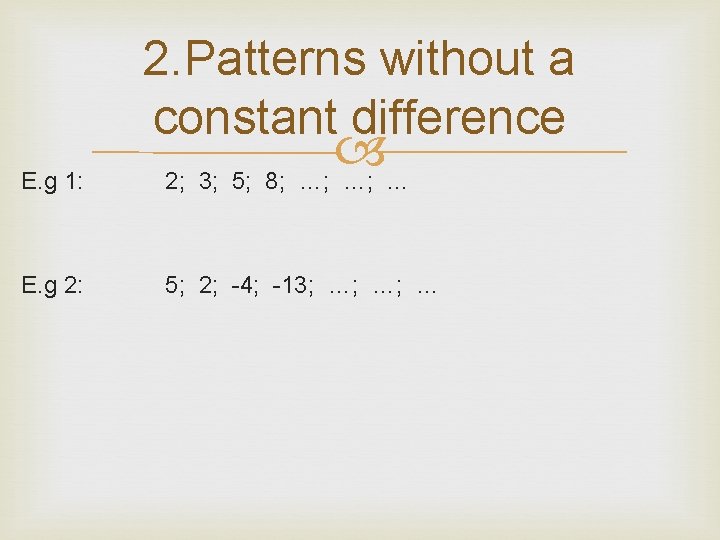
2. Patterns without a constant difference E. g 1: 2; 3; 5; 8; …; …; … E. g 2: 5; 2; -4; -13; …; …; …
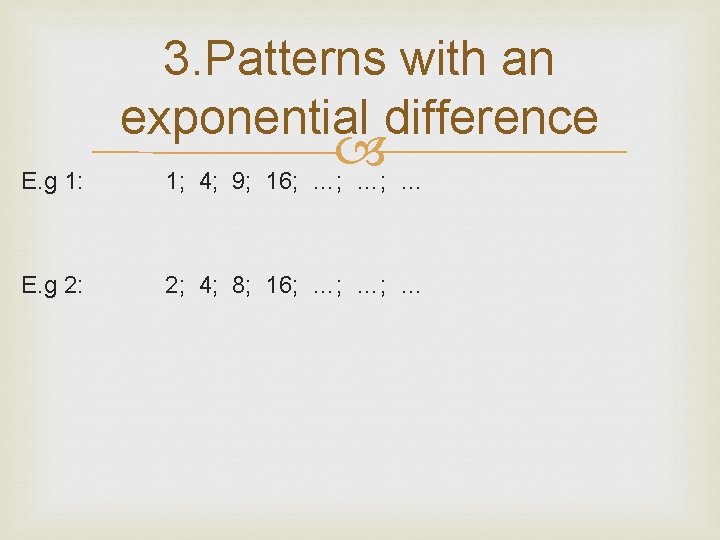
3. Patterns with an exponential difference E. g 1: 1; 4; 9; 16; …; …; … E. g 2: 2; 4; 8; 16; …; …; …
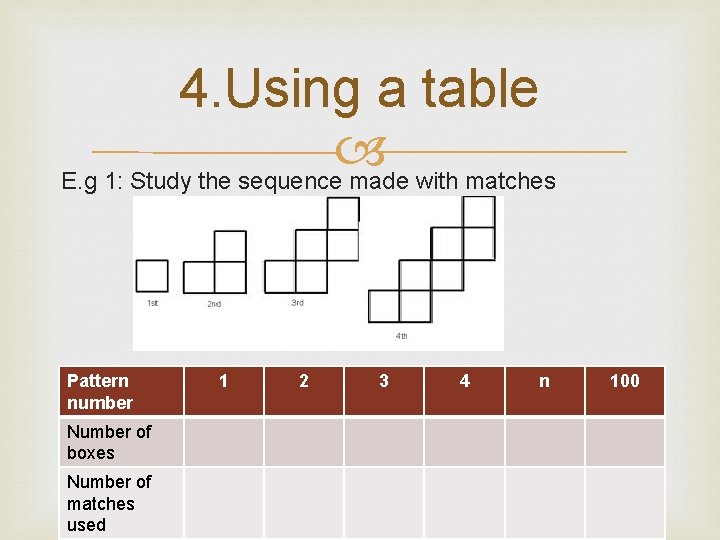
4. Using a table E. g 1: Study the sequence made with matches Pattern number Number of boxes Number of matches used 1 2 3 4 n 100
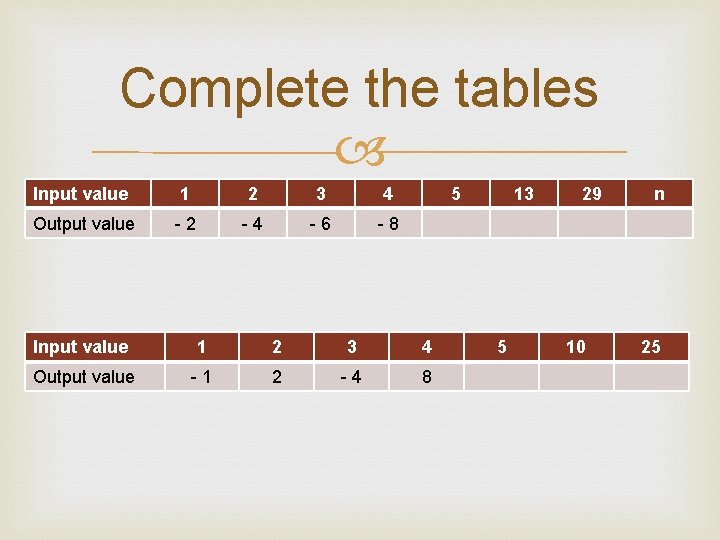
Complete the tables Input value 1 2 3 4 Output value -2 -4 -6 -8 5 Input value 1 2 3 4 Output value -1 2 -4 8 13 5 29 10 n 25
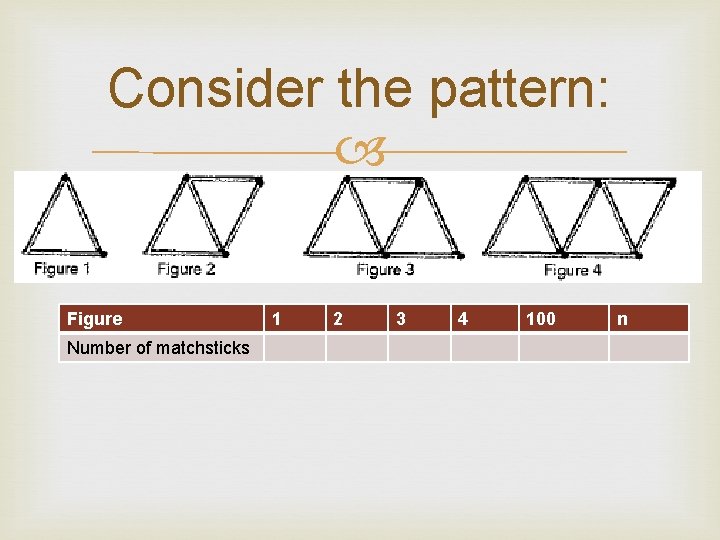
Consider the pattern: Figure Number of matchsticks 1 2 3 4 100 n
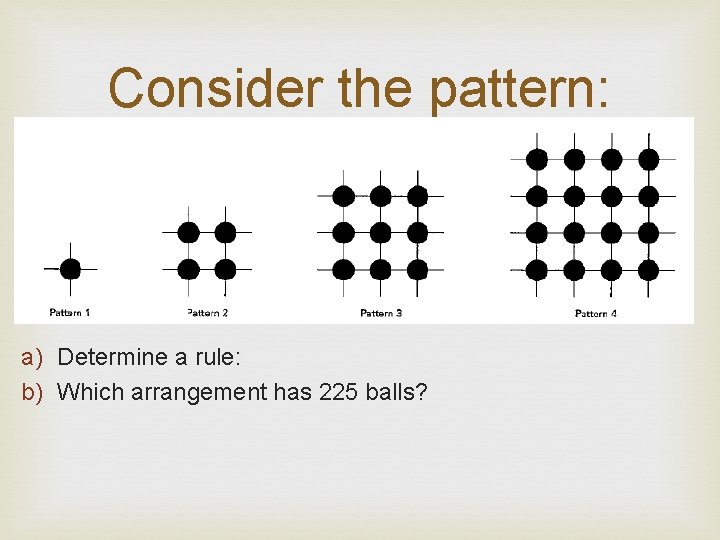
Consider the pattern: a) Determine a rule: b) Which arrangement has 225 balls?
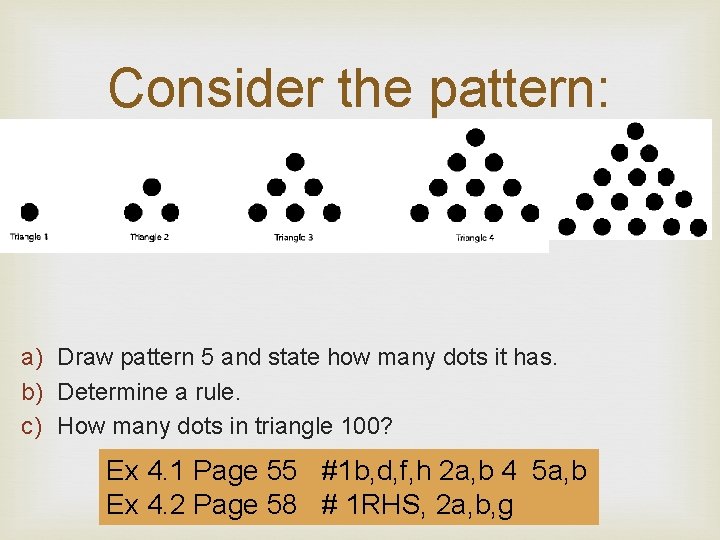
Consider the pattern: a) Draw pattern 5 and state how many dots it has. b) Determine a rule. c) How many dots in triangle 100? Ex 4. 1 Page 55 #1 b, d, f, h 2 a, b 4 5 a, b Ex 4. 2 Page 58 # 1 RHS, 2 a, b, g
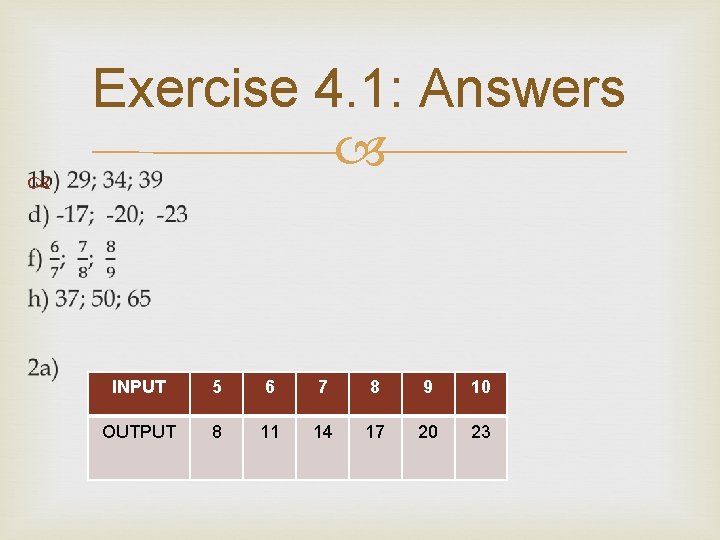
Exercise 4. 1: Answers INPUT 5 6 7 8 9 10 OUTPUT 8 11 14 17 20 23
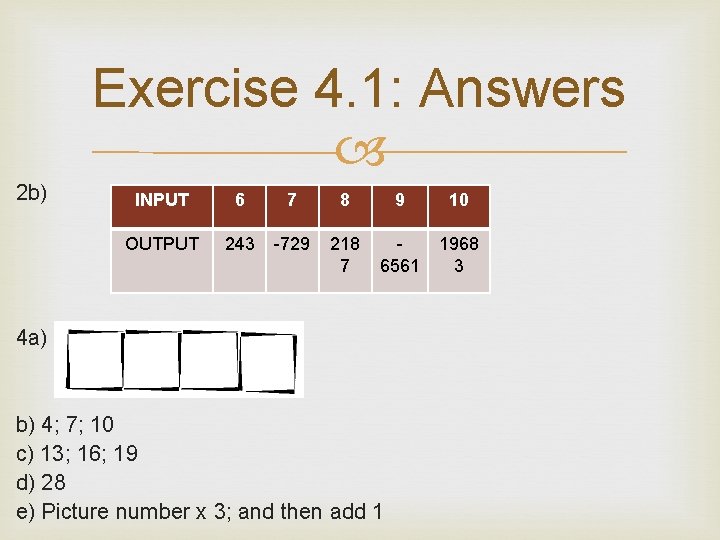
Exercise 4. 1: Answers 2 b) INPUT 6 7 8 9 10 OUTPUT 243 -729 218 7 6561 1968 3 4 a) b) 4; 7; 10 c) 13; 16; 19 d) 28 e) Picture number x 3; and then add 1
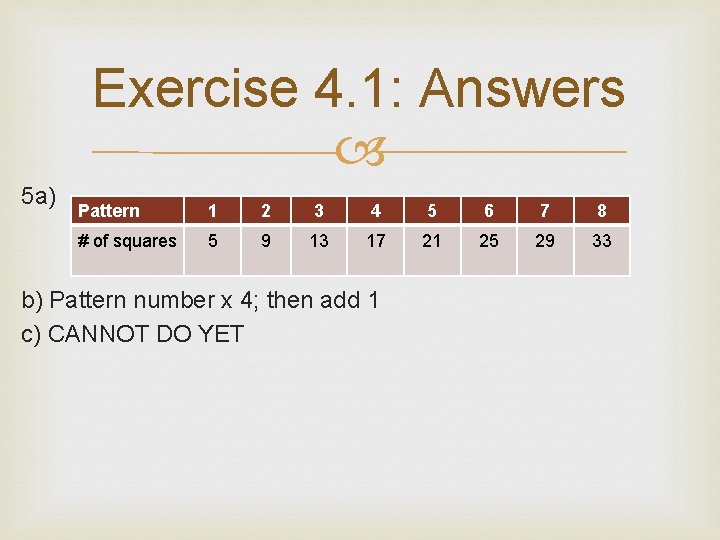
Exercise 4. 1: Answers 5 a) Pattern 1 2 3 4 5 6 7 8 # of squares 5 9 13 17 21 25 29 33 b) Pattern number x 4; then add 1 c) CANNOT DO YET
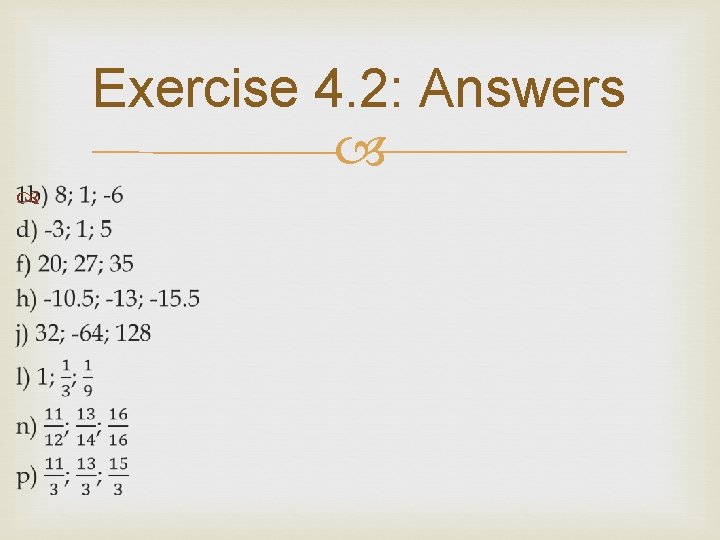
Exercise 4. 2: Answers
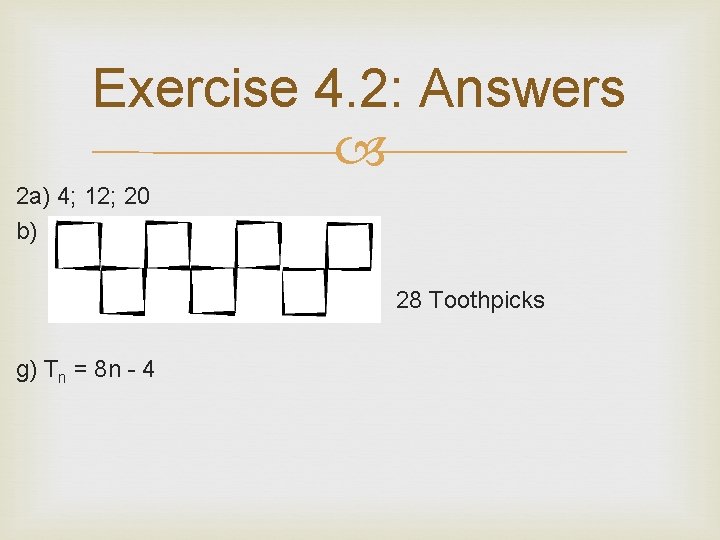
Exercise 4. 2: Answers 2 a) 4; 12; 20 b) 28 Toothpicks g) Tn = 8 n - 4