
Numeracy Time Building Understanding Lesson 2 Identifying events
Numeracy: Time - Building Understanding Lesson 2: Identifying events from daytime and night-time Lesson 2 of 4 Simon
What are we going to learn today? To know that some events happen during the day and some happen at night. To know that some events happen in the morning and some happen in the afternoon. To sort familiar events between daytime and night-time activities. Key Vocabulary daytime afternoon 2 nighttime events morning
For this lesson, you will need: Symbols or pictures which represent daytime, night-time, morning and afternoon. These could be written, hand drawn or printed. Symbols or pictures of events that happen throughout the day and night. Objects of reference would work well too. 3
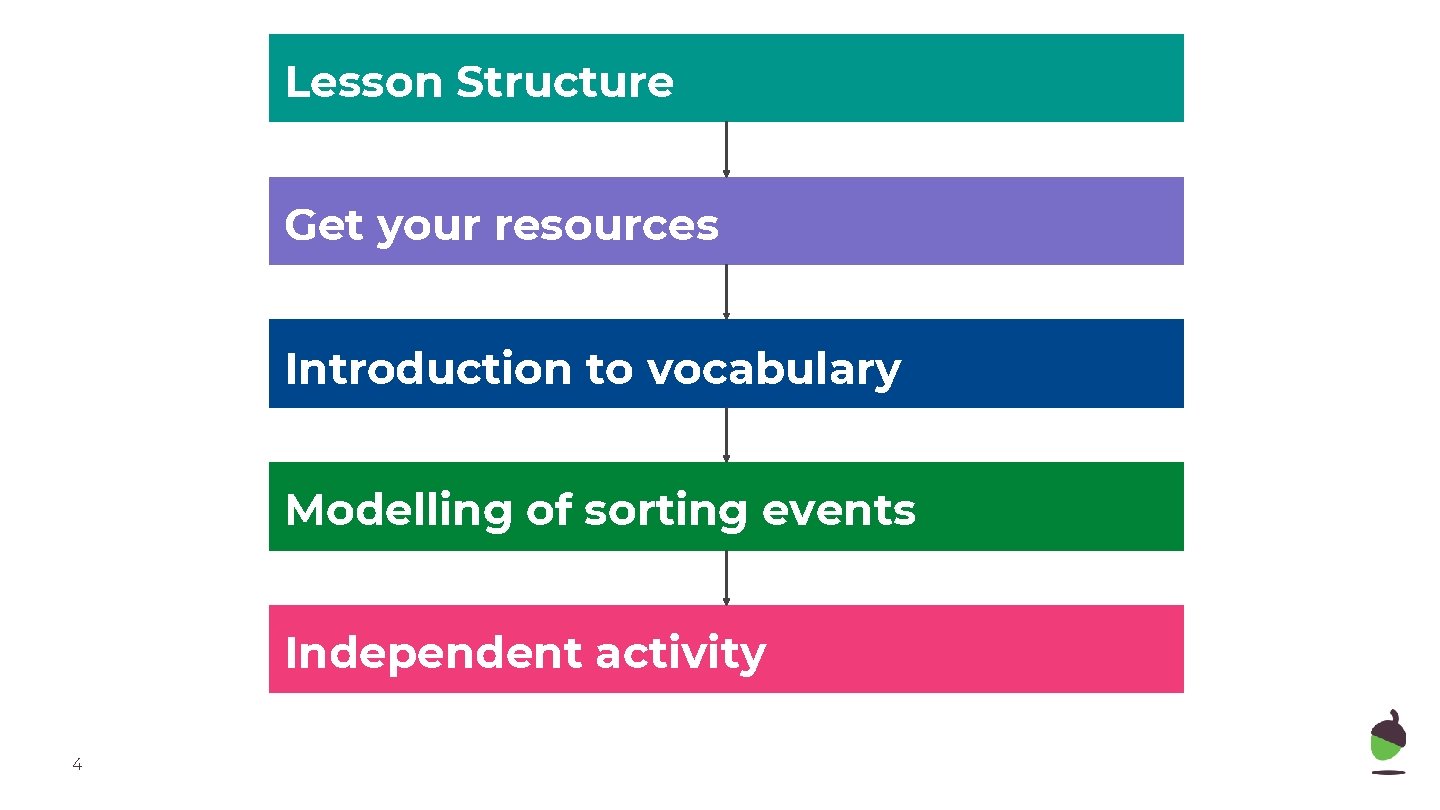
Lesson Structure Get your resources Introduction to vocabulary Modelling of sorting events Independent activity 4
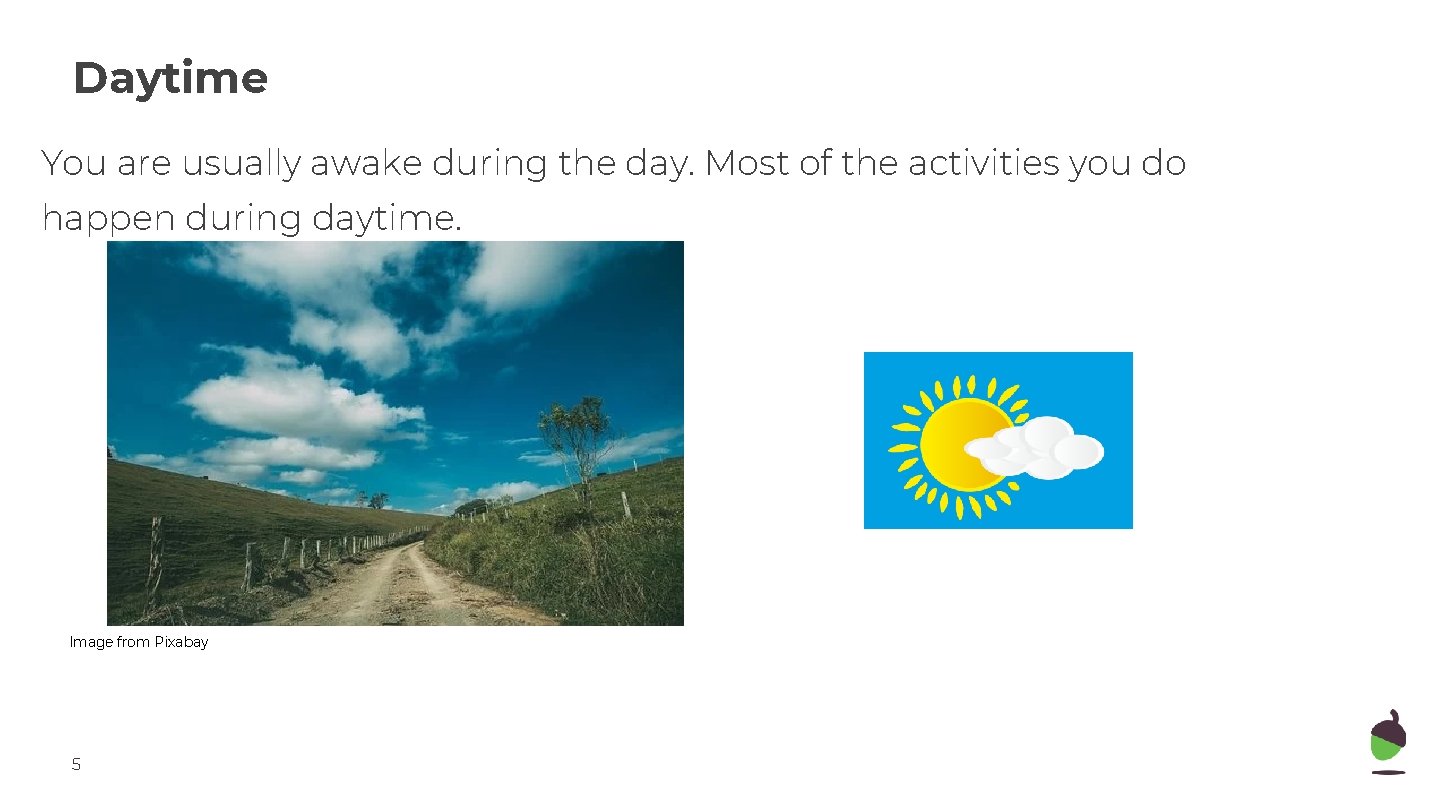
Daytime You are usually awake during the day. Most of the activities you do happen during daytime. Image from Pixabay 5

Daytime is divided into two parts - morning and afternoon. Before lunch 6 Morning (AM) Afternoon (PM) After lunch
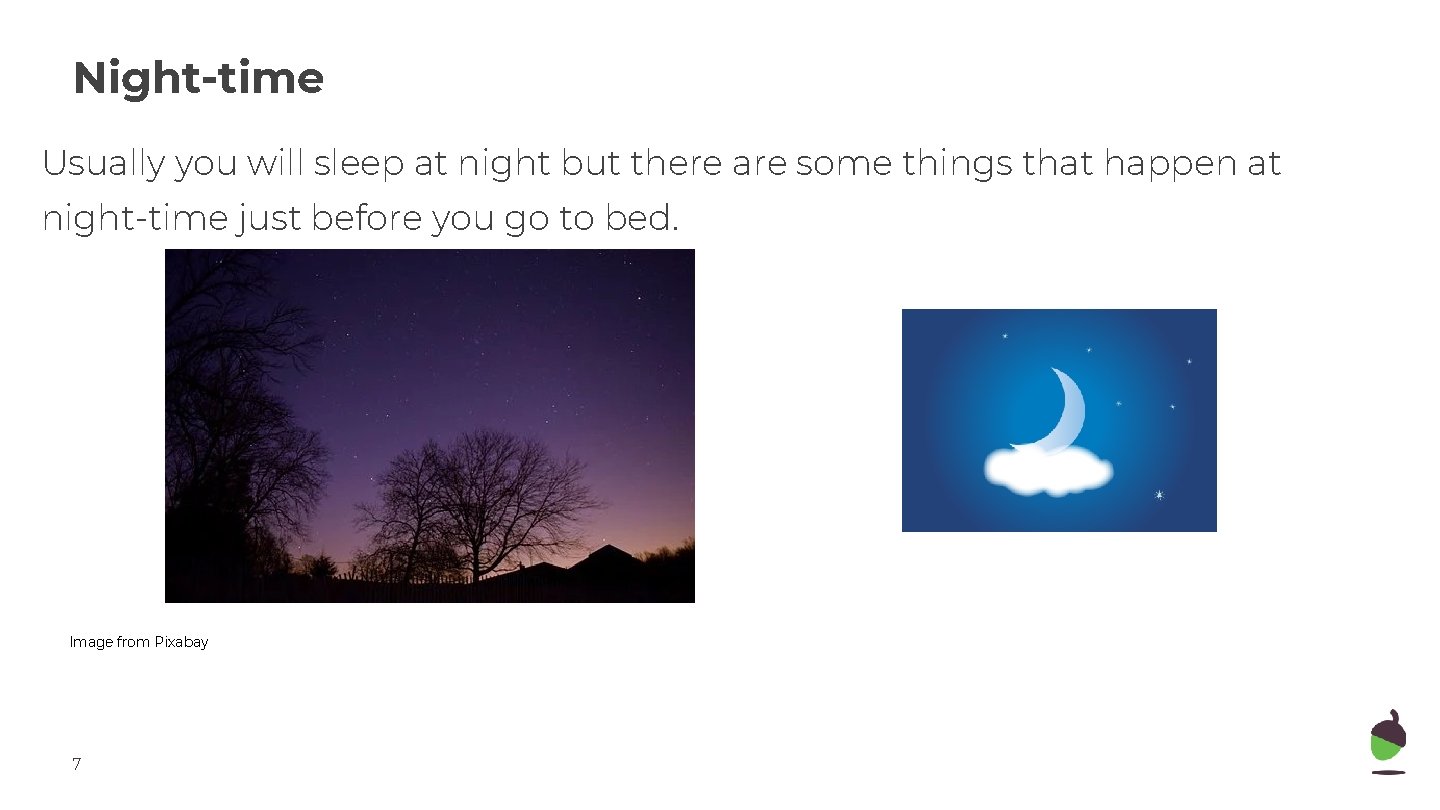
Night-time Usually you will sleep at night but there are some things that happen at night-time just before you go to bed. Image from Pixabay 7
Task - Start thinking about daytime and night-time Instruction Think for a few minutes about daytime and night-time. What do you think of? Suggestions Start with night-time. Is it light or dark? What can you see in the sky? What colours or sounds do you think of when you think of night-time? Now think about daytime. What is it like outside? What do you usually do in the daytime? 8
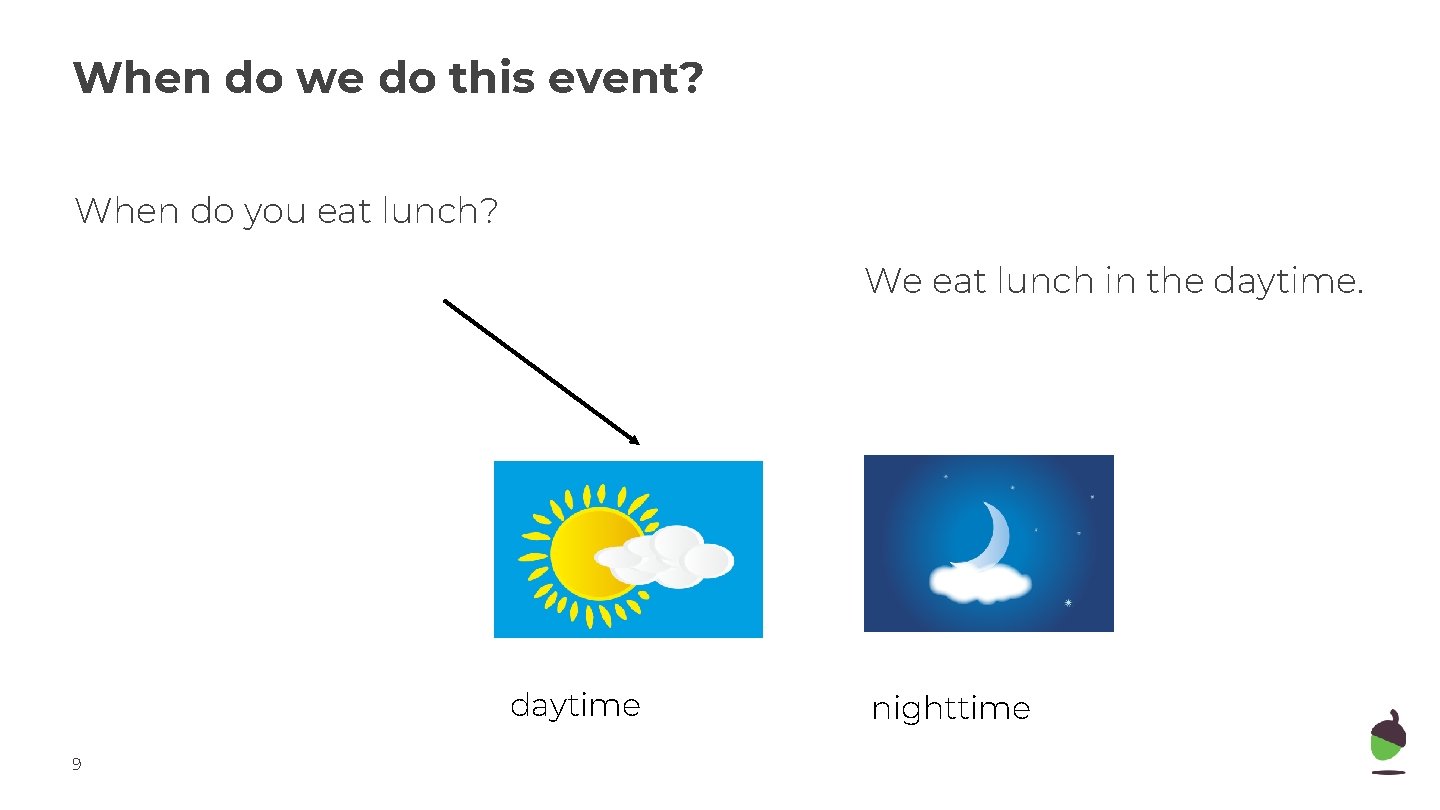
When do we do this event? When do you eat lunch? We eat lunch in the daytime 9 nighttime
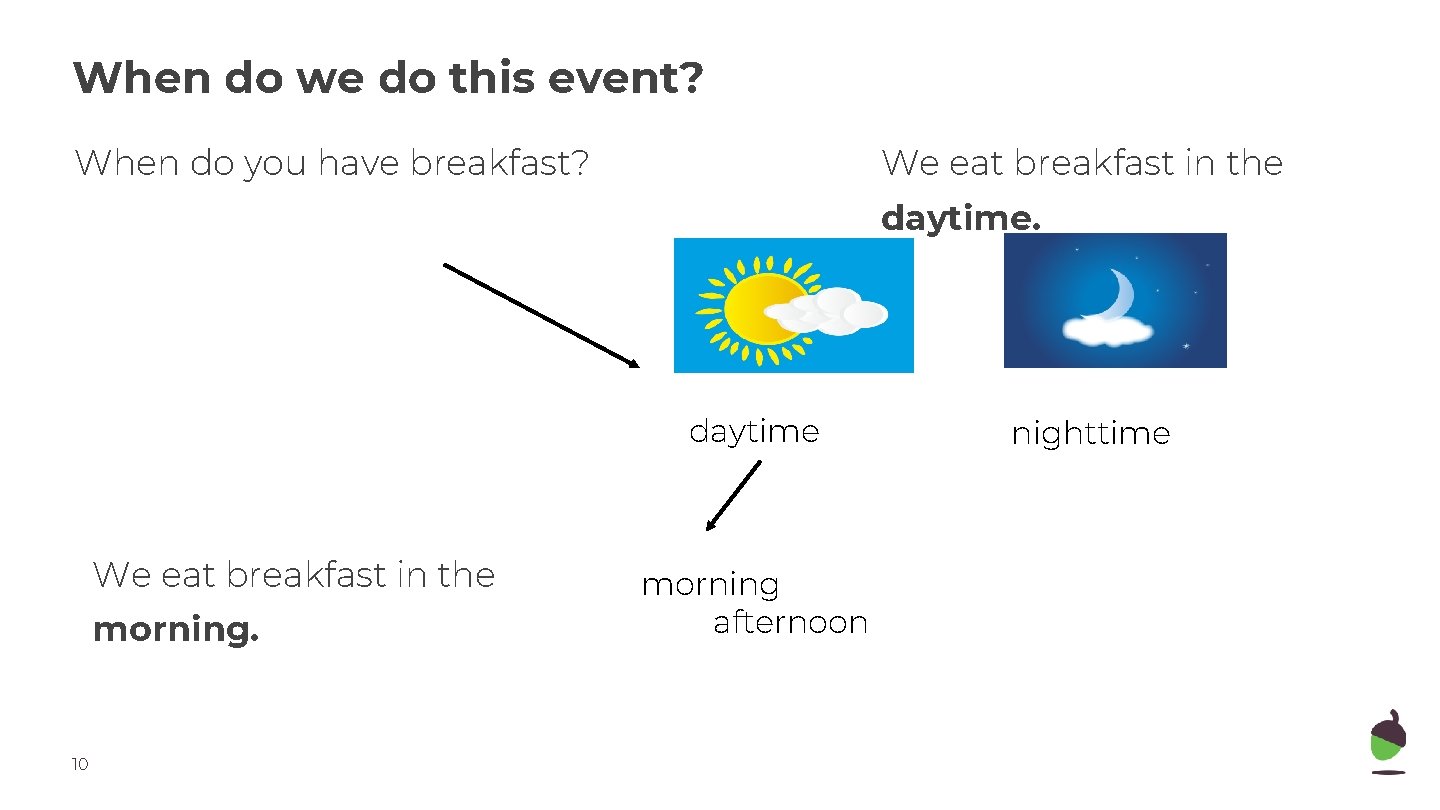
When do we do this event? When do you have breakfast? We eat breakfast in the daytime We eat breakfast in the morning. 10 morning afternoon nighttime
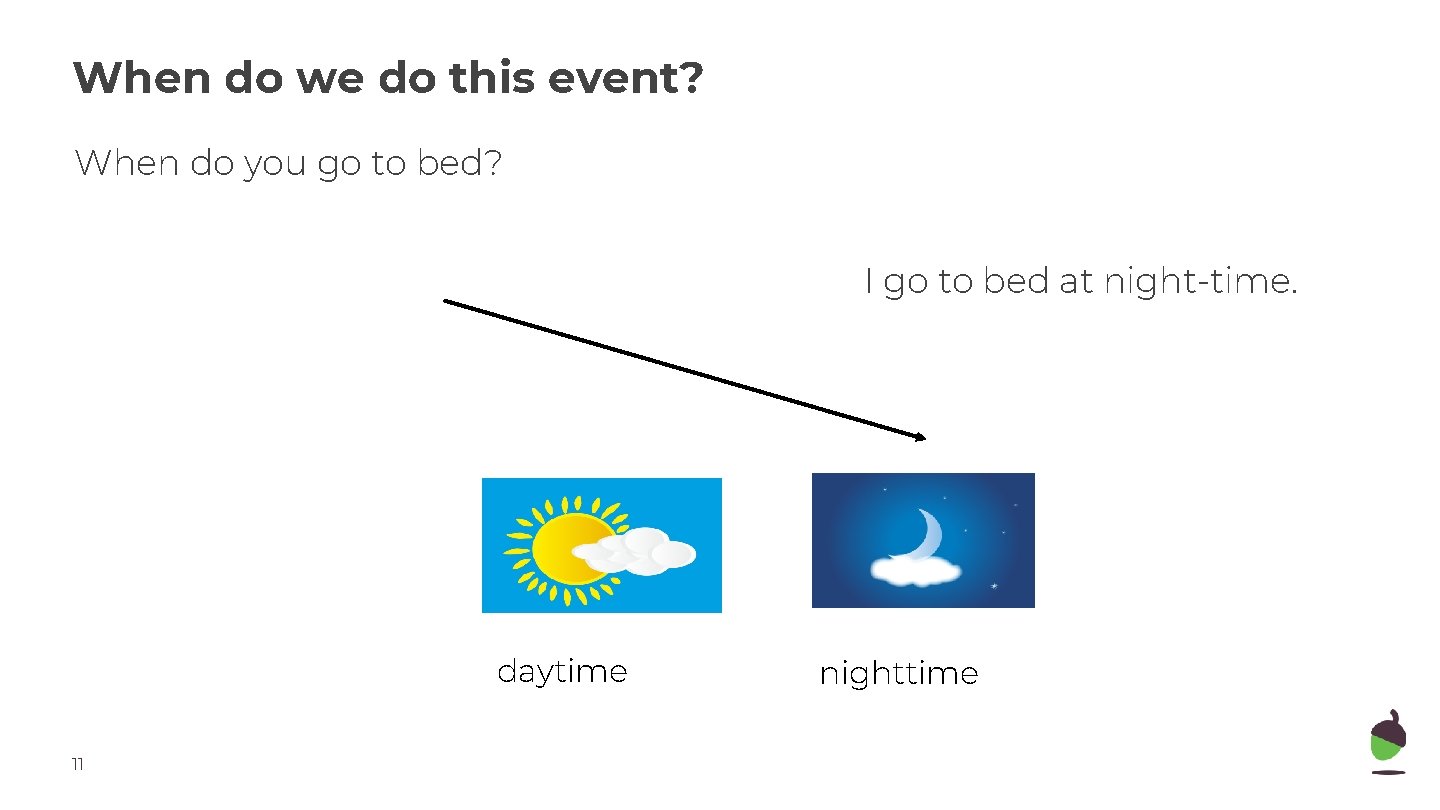
When do we do this event? When do you go to bed? I go to bed at night-time. daytime 11 nighttime
Task - Sorting events between daytime and night-time. Instruction Your parent or carer will say an event. You need to decide whether it happens in the daytime or night time. If you can, you could say if it happens in the morning or afternoon. Suggestions Try to say a sentence such as ‘I eat breakfast in the daytime’ or ‘in the morning, I eat breakfast. ’ Try completing a sentence that a parent or carer starts, such as ‘I eat lunch in… (the daytime)’. 12
Unit 4 Lesson 2: Identifying events from daytime and night-time Make it easier Make it harder Other ideas Start with a very small number of events. Make the activity as personalised as possible, so that very familiar activities are used. Try sequencing events within the daytime or night-time. Start with events starting first thing in the morning, and work towards bedtime. Think about which events happen everyday and which happen occasionally. Create a drawing or visual chart showing your sorted events and whether they happen during the day or at night. 13
Thank you! Well done ● Unit 4 Lesson 3: Linking meals to times of the day.
Share your work with Oak National If you'd like to, please ask your parent or carer to share your work on Instagram, Facebook or Twitter tagging @Oak. National and #Learnwith. Oak
- Slides: 15