
Numberblocks Support Materials Series 3 Episode 9 Peekaboo

Numberblocks Support Materials Series 3 Episode 9 Peekaboo A blue dot in the corner of a slide indicates that there are notes below the slide.
Practitioner Notes

Episode Description The Numberblocks take turns hiding behind each other in a song and dance all about bigger and smaller. Learn about comparing numbers with the Numberblocks.
Maths in the Episode Comparing numbers to 10 In this episode the Numberblocks try to hide behind one another. Some Numberblocks can be completely hidden when they stand behind another, but others cannot because they are taller or wider. The song uses the language of comparison including smaller than and bigger than. Different contexts for comparing length and height are also introduced. We are also reintroduced to the inequality symbols <> and the language of ‘greater than’ and ‘less than’.
Using Mathematical Language Use these stem sentences to rehearse the mathematical ideas in the programme: “<3> is smaller than <7>. ” “<3 and 1> together are smaller than <7>. ” “<7> is bigger than <3> and <1> together. ”

Talk and Discuss Together
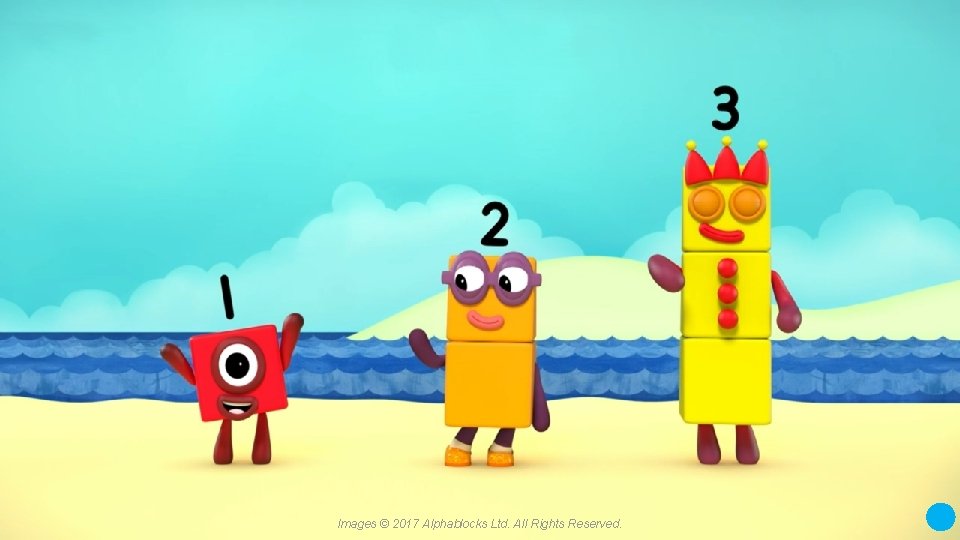
Talk and Discuss Together Watch the episode of Numberblocks. Use the following picture as a stimulus. First ask the children what they noticed about some of the Numberblocks when they stood behind another Numberblock. Can you find someone you can stand behind to hide? The following slides are designed to stimulate children and adults to talk about the episode and draw out some key aspects of the mathematics.


Enabling Environments in Reception
Enabling Environments Playing and Exploring Make small world characters play hide and seek: hide animals behind other animals or behind an object that is taller than it. Active Learning Look for opportunities in the block play area to see when the heights or lengths of the blocks are taller or longer. For example, when building a bridge, “I wonder if this pillar is taller than this one? ”. Creating and Thinking Critically Play Peekaboo hide and seek. Someone counts to ten while the other children have to arrange themselves to hide behind another person who is taller than them. The finder has to work out who is hiding behind a person. Make Numberblocks with cubes. Explore which Numberblocks can hide behind each other.

Learning Together in Y 1
Images © 2017 Alphablocks Ltd. All Rights Reserved.

Who is hiding behind Three? Peekaboo! Images © 2017 Alphablocks Ltd. All Rights Reserved.
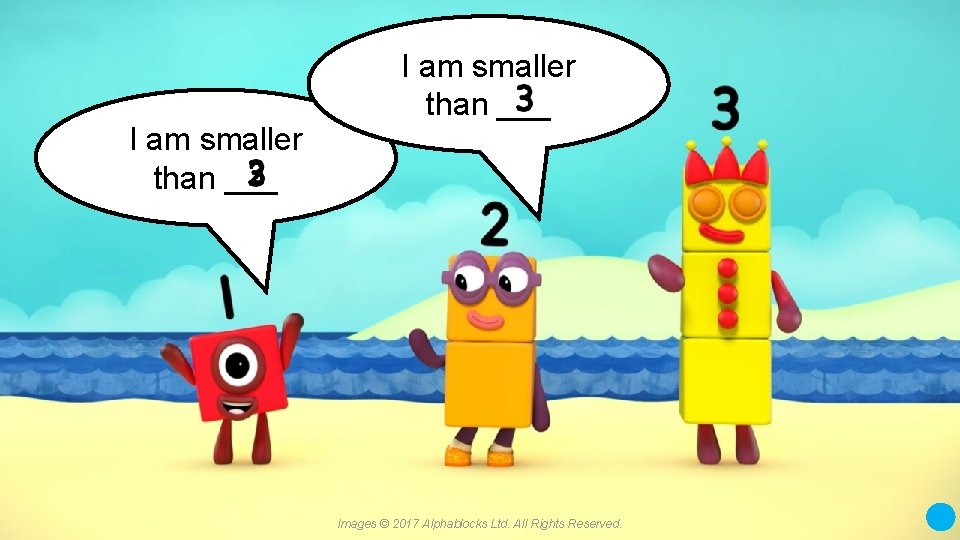
I am smaller than ___ Images © 2017 Alphablocks Ltd. All Rights Reserved.
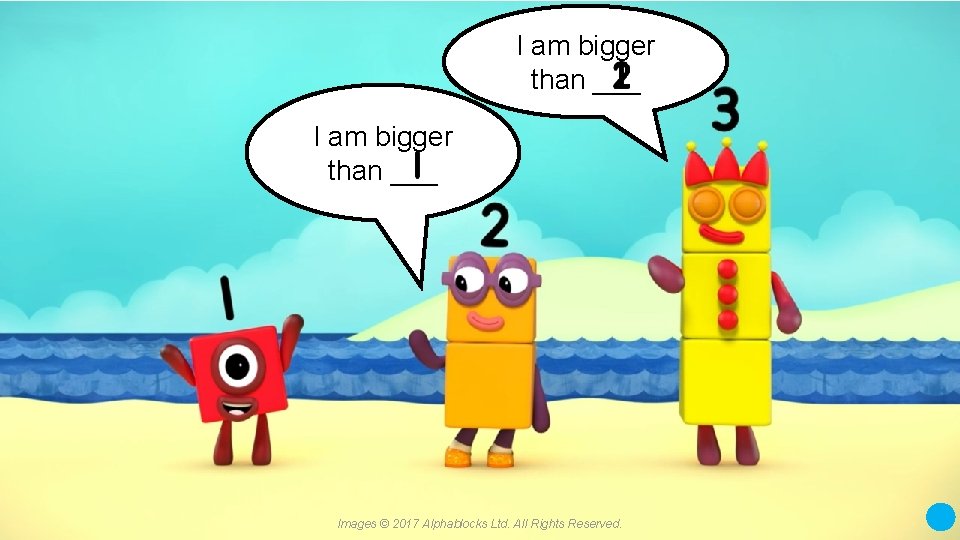
I am bigger than ___ Images © 2017 Alphablocks Ltd. All Rights Reserved.
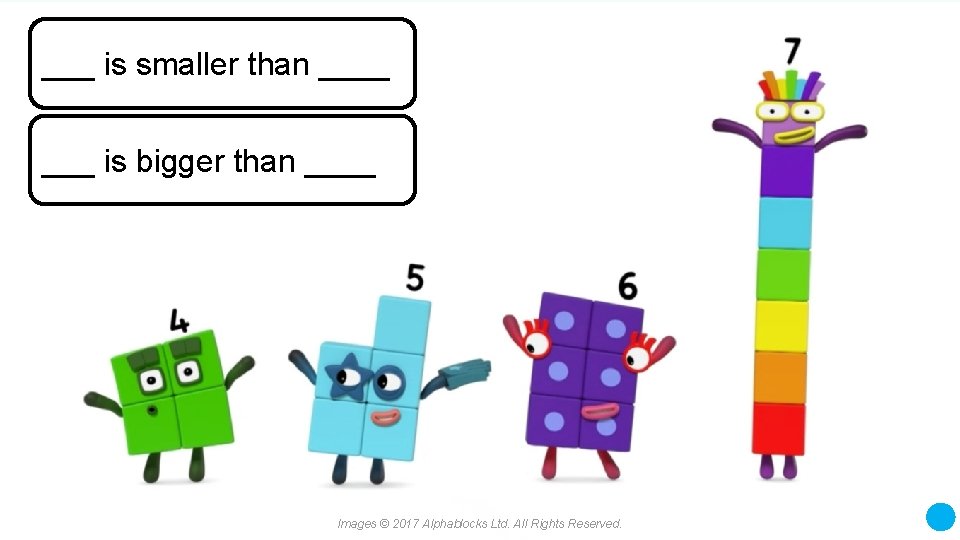
___ is smaller than ____ is bigger than ____ Images © 2017 Alphablocks Ltd. All Rights Reserved.
Further activities for Y 1 • Use a different pair of Numberblocks to compare. Use the Numberblocks (1 -wide) to say, complete or write compare sentences. • Extend thinking by asking children to find two Numberblocks where one is only a bit bigger/smaller than another one or quite a lot bigger/ smaller than another. • Use 2 -wide Numberblocks to show one Numberblock is more than another in a different shape. • Give children completed comparing sentences and ask them to make a Numberblocks model to match the sentence. Are there any pairs of sentences which need the same model? (For example, 5 is bigger than 3 and 3 is smaller than 5, so both need Numberblocks Three and Five. ) • Find 3 people you are taller than. Find 3 people you are shorter than.
Learning Together in Y 2
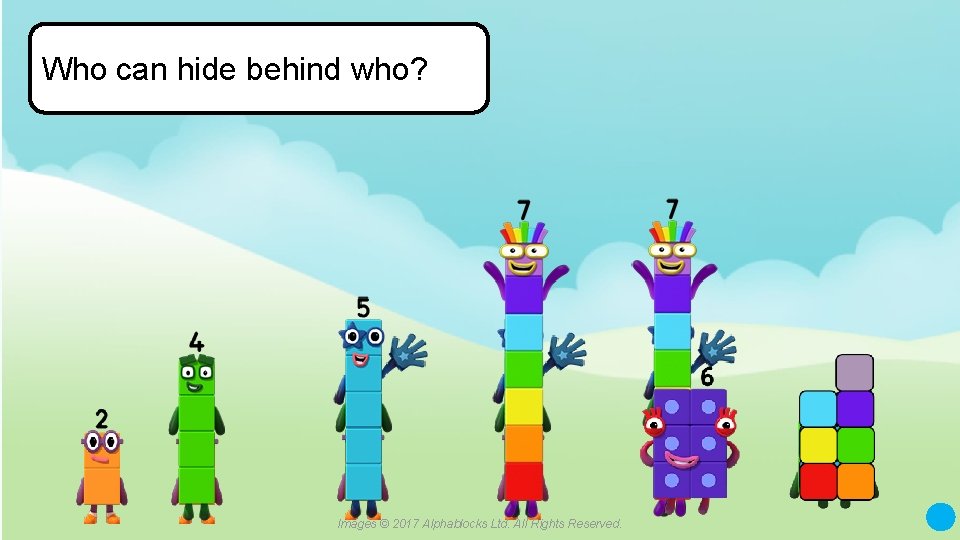
Who can hide behind who? Images © 2017 Alphablocks Ltd. All Rights Reserved.
Further activities for Y 2 • Explore combining 2 Numberblocks to compare with another Numberblock. For example, One and Two together are the same as Three or are smaller than Four. • Use a bar model to represent the comparison of two Numberblocks (this will help children move between the vertical towers of the blocks and the horizontal bars). • Extend thinking by exploring how the combination of two numbers is more or less than another number, and represent this with a bar model. • Investigate mathematical statements with the < and > symbols. Use cubes to support finding the missing numbers if needed. For example, make this equation correct: 2 + 3 > o; 2 + o < 8.
- Slides: 20