
Numberblocks Support Materials Series 3 Episode 6 Now
Numberblocks Support Materials Series 3 Episode 6 Now We are Six to Ten A blue dot in the corner of a slide indicates that there are notes below the slide.
Practitioner Notes
Episode Description Numberblocks 1 -9 sit on their beds waiting for Ten to read a bedtime story. Ten starts from chapter 6, each chapter featuring one of the Numberblocks 6 -9, including a count up to (and sometimes down from) their number. Then One appears and jumps on each Numberblock to make the next Numberblock. Eight and Nine keep changing from one to another as Nine sneezes his middle block out into the middle of Eight.
Maths in the Episode The ‘one more than/ less than’ relationship between consecutive numbers This emphasises the concept of ‘one more than’ a number making the next number in the counting sequence, focusing on numbers 6 -10. It also demonstrates how ‘one less than’ a number is the previous number in the counting sequence. For example, we see how 7 is made by adding 1 to 6 and how 8 is made by subtracting 1 from 9. This is also represented with equations.
Using Mathematical Language Use these stem sentences to rehearse the mathematical ideas in the programme: “One more than <6> is <7>. ” “One less than <7> is <6>. ” “<7> is one more than <6> and one less than <8>. ”
Talk and Discuss Together
Talk and Discuss Together Watch the episode of Numberblocks. Use the following picture as a stimulus. What did we find out about the Numberblocks Six, Seven, Eight, Nine and Ten? The following slides are designed to stimulate children and adults to talk about the episode and draw out some key aspects of the mathematics.

Images © 2017 Alphablocks Ltd. All Rights Reserved.
Enabling Environments in Reception
Enabling Environments Playing and Exploring Provide children with the equipment to make staircase patterns using large and small pieces of equipment, for example, using small blocks (all the same size) and larger blocks/reels. Leave out towers of cubes to represent the Numberblocks: what other Numberblocks can they turn the towers into if they ‘post’ a cube into a box, or put on another cube? Provide paper for them to represent both of the Numberblocks. Can their friend describe what they did to make the change? Active Learning Make staircase pattern prints with small blocks and paint. Match or write number labels to each ‘stair’ and help children notice that they needed to use the counting sequence to label their staircase. Creating and Thinking Critically Using coloured rods (for example Cuisenaire) explore how the rods that are equivalent to 6, 7, 8, 9 and 10 unit rods (for example, white rod) can be made from a white rod another rod. Explore the rods as a staircase (increasing by one unit rod). Model how to fit the unit rod on top of a rod to make them the same height as the adjacent rod.
Learning Together in Y 1
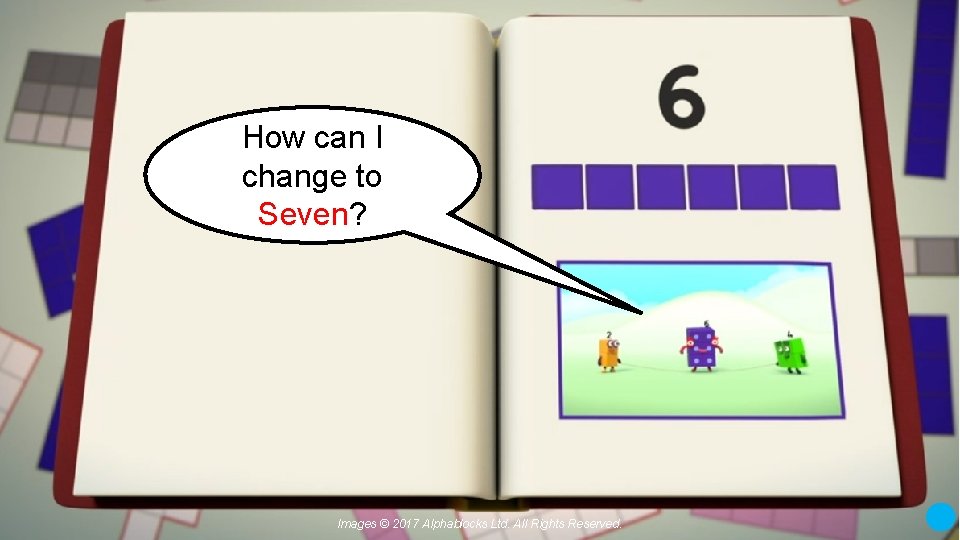
How can I change to Seven? Images © 2017 Alphablocks Ltd. All Rights Reserved.
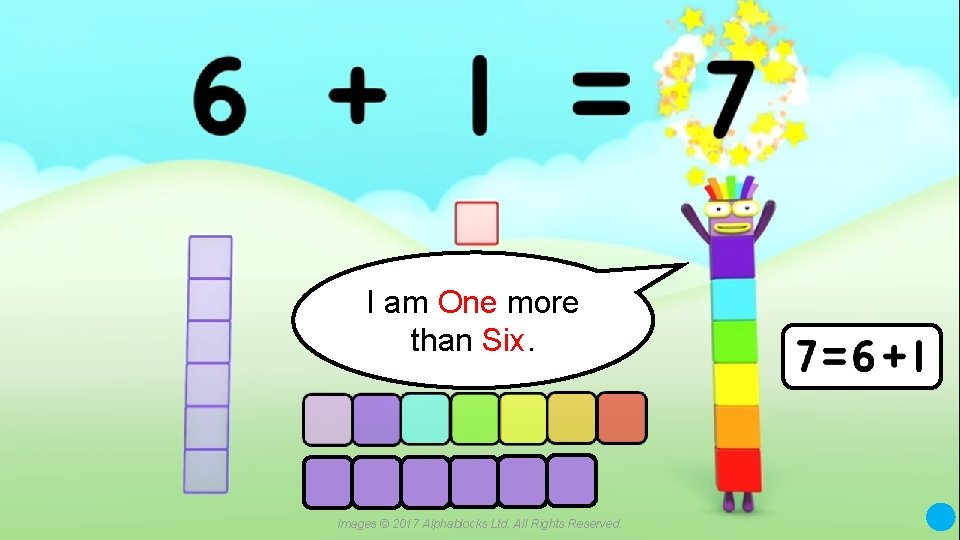
I am One more than Six. Images © 2017 Alphablocks Ltd. All Rights Reserved.
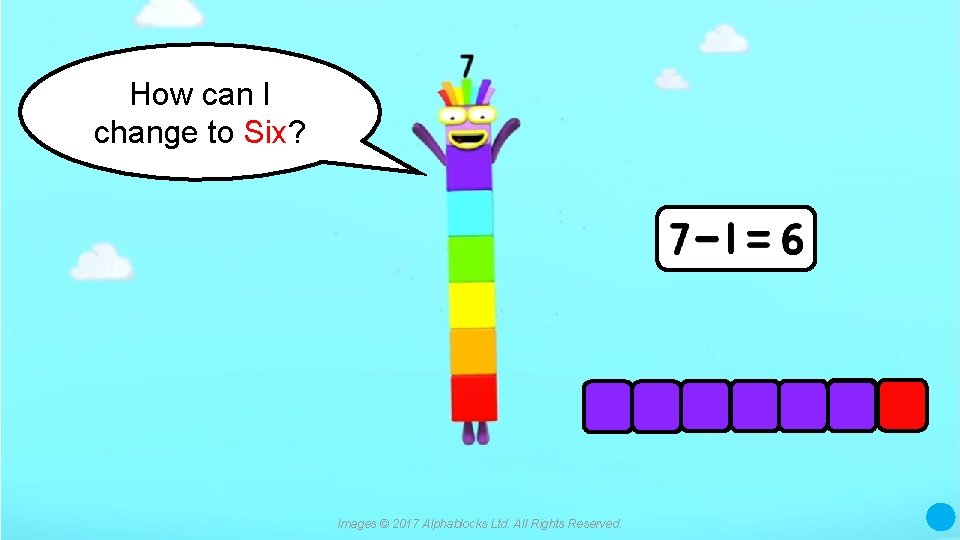
How can I change to Six? Images © 2017 Alphablocks Ltd. All Rights Reserved.
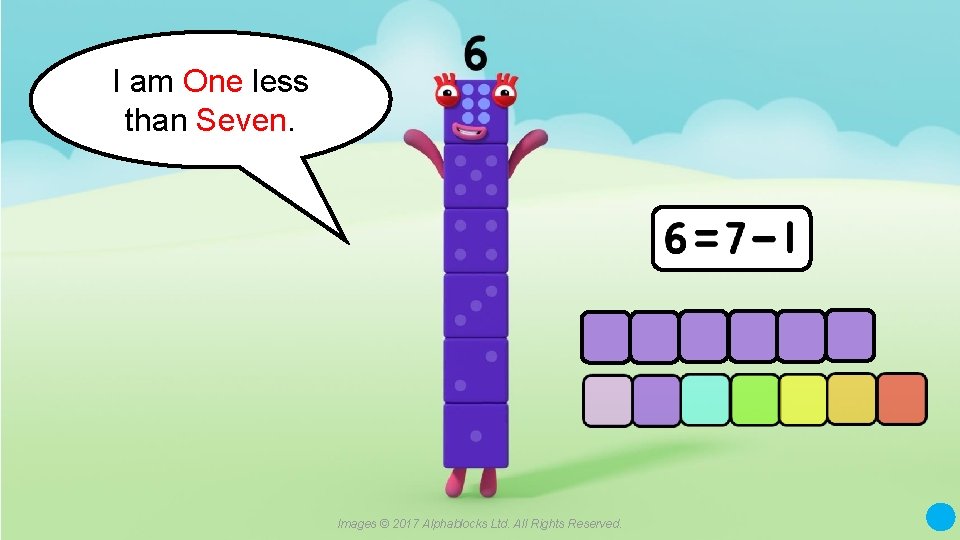
I am One less than Seven. Images © 2017 Alphablocks Ltd. All Rights Reserved.
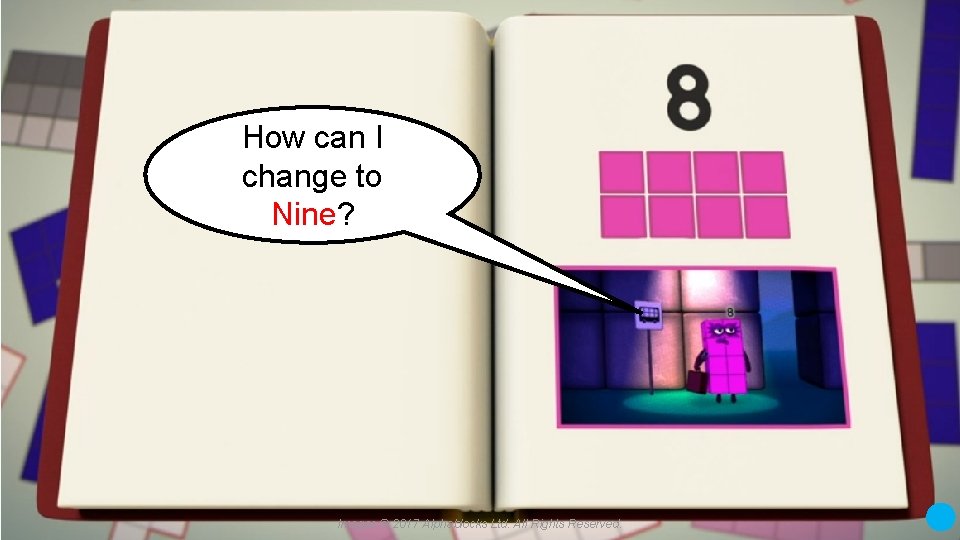
How can I change to Nine? Images © 2017 Alphablocks Ltd. All Rights Reserved.
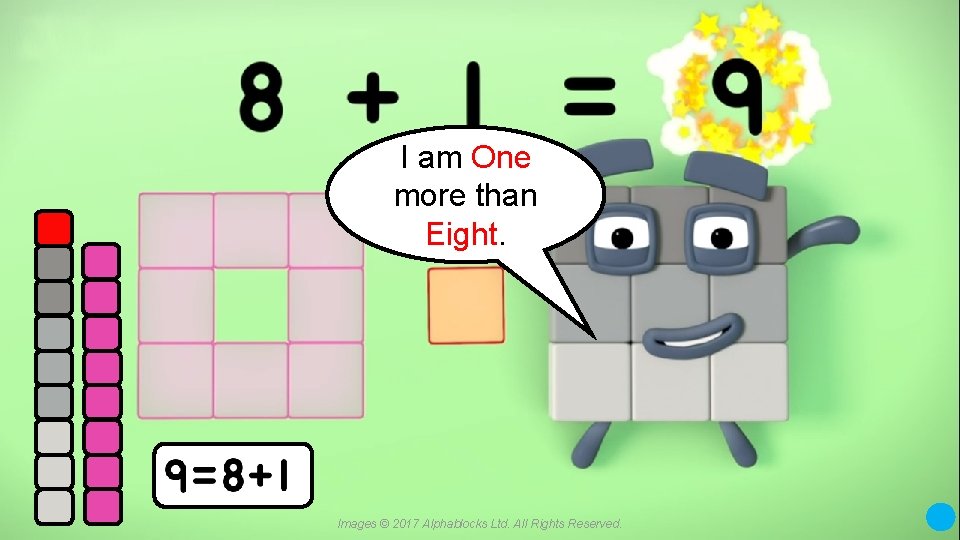
I am One more than Eight. Images © 2017 Alphablocks Ltd. All Rights Reserved.
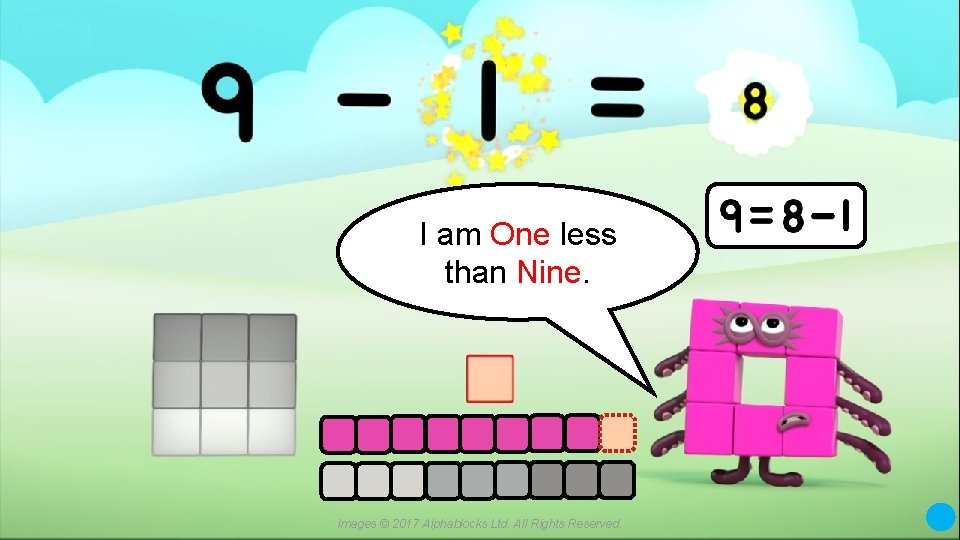
I am One less than Nine. Images © 2017 Alphablocks Ltd. All Rights Reserved.
Further activities for Y 1 • Explore ways of changing one quantity into another by adding 1 or removing 1 using different concrete and pictorial representations, for example, Numicon, tens frames. • Play a bingo game with numbers to 9. Call out “ 1 less than 8”, “ 1 more than 6”, etc. • Remove numbers from a number ‘washing line’. Can children ‘convince’ each other which number is missing by saying “ 8 is missing because it is one more than 7 and one less than 9”? • Play ‘Guess my number’: “I’m thinking of a number, it is one more than 5” or “it is one less than 10”. Encourage children to do this with a partner to increase fluency in ‘one more than/ less than’ facts.
Learning Together in Y 2
Images © 2017 Alphablocks Ltd. All Rights Reserved.
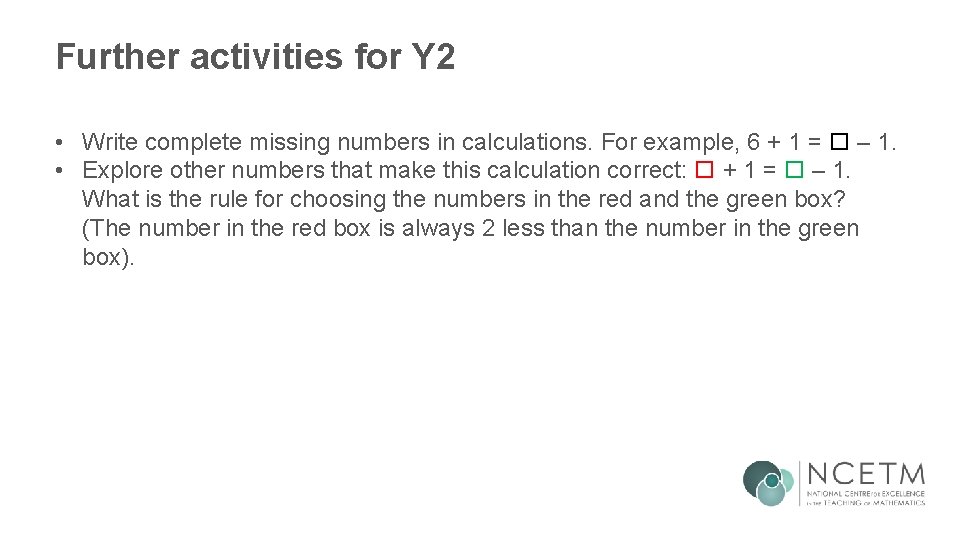
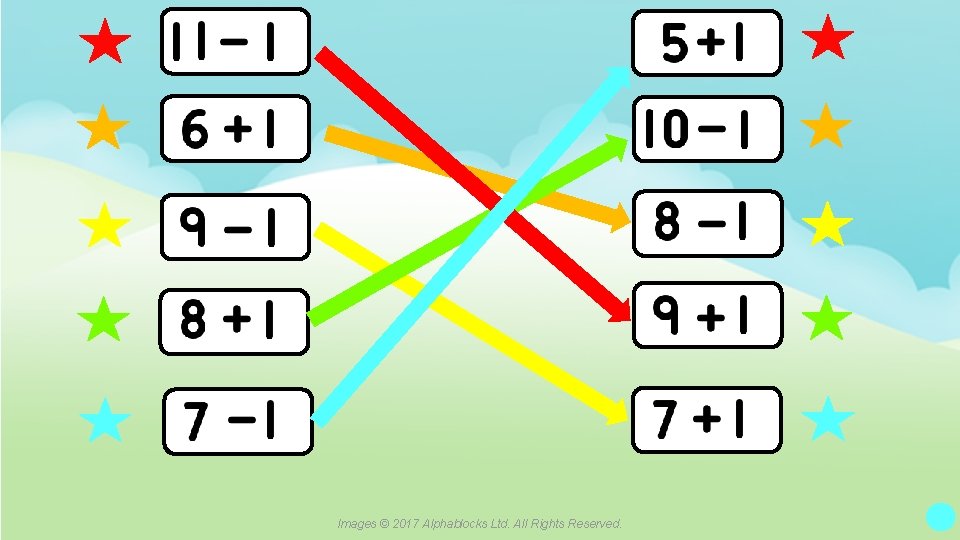
Further activities for Y 2 • Write complete missing numbers in calculations. For example, 6 + 1 = o – 1. • Explore other numbers that make this calculation correct: o + 1 = o – 1. What is the rule for choosing the numbers in the red and the green box? (The number in the red box is always 2 less than the number in the green box).
- Slides: 22