
Numberblocks Support Materials Series 3 Episode 30 Step
Numberblocks Support Materials Series 3 Episode 30 Step Squad A blue dot in the corner of a slide indicates that there are notes below the slide.

Practitioner Notes
Episode Description One loses her balloon and needs Step Squad to help her retrieve it. She discovers that there is actually more than one Step Squad. Every time she bumps into a new Numberblock, a new Step Squad is discovered and their balloons fly away too. Thankfully, Super-Special Step-Shaped Secret Agent Fifteen finally helps solve the problem to retrieve everyone's balloons.

Maths in the Episode Composition of step numbers/triangular numbers In this episode the children will see how some numbers are made from the sum of consecutive numbers, for example: 3=1+2 6=1+2+3 10 = 1 + 2 + 3 + 4 15 = 1 + 2 + 3 + 4 + 5 3, 6, 10 and 15 form steps when they are combined in order. These numbers also form a triangular pattern which is evident in the patterns on the trees in the episode.
Using Mathematical Language Use these stem sentences to rehearse the mathematical ideas in the programme: “I see a pattern of <1>, <2>, <3> …” “<3> is made from <1> and <2>. ” “Each step increases by 1. ”

Talk and Discuss Together
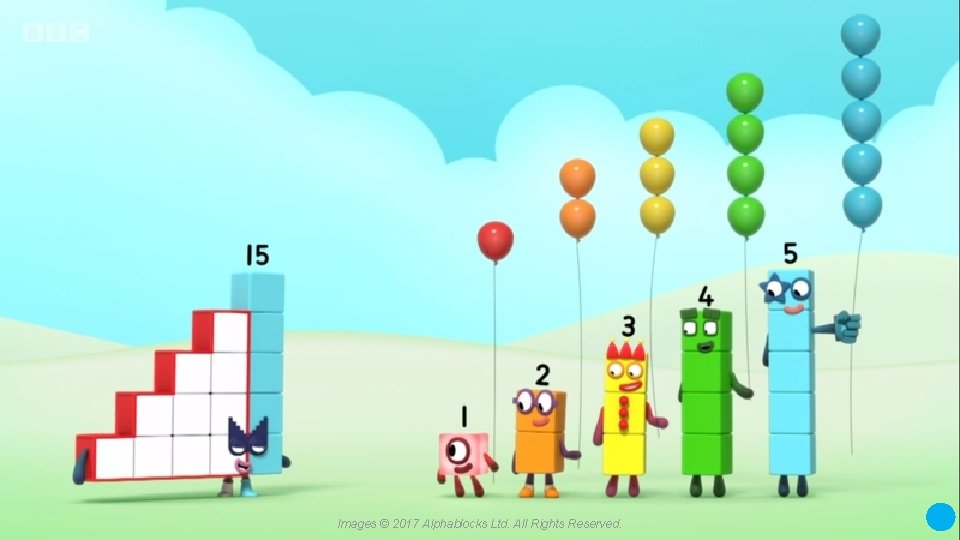
Talk and Discuss Together Watch the episode of Numberblocks. Use the following picture as a stimulus. Have you ever lost a balloon? Did you get it back? What do you notice about the balloons in the picture? The following slides are designed to stimulate children and adults to talk about the episode and draw out some key aspects of the mathematics.
Images © 2017 Alphablocks Ltd. All Rights Reserved.

Enabling Environments in Reception
Enabling Environments Playing and Exploring Challenge the children to use the block-play area outside to make steps to reach something that is too high for them at ground level. Count the blocks needed in each step. Active Learning Notice whether the children use the language of ‘one more’ to compare the different heights of step patterns. Model using language such as “I wonder how many blocks I need to make this step taller? ” Creating and Thinking Critically Use coloured unmarked rods (for example, Cuisenaire™ rods) that increase in length by 1 cube and put them in order by comparing their lengths. Play a game where one child or adult removes one of the rods and messes up the step pattern. What colour is missing? Where would it go?

Learning Together in Y 1
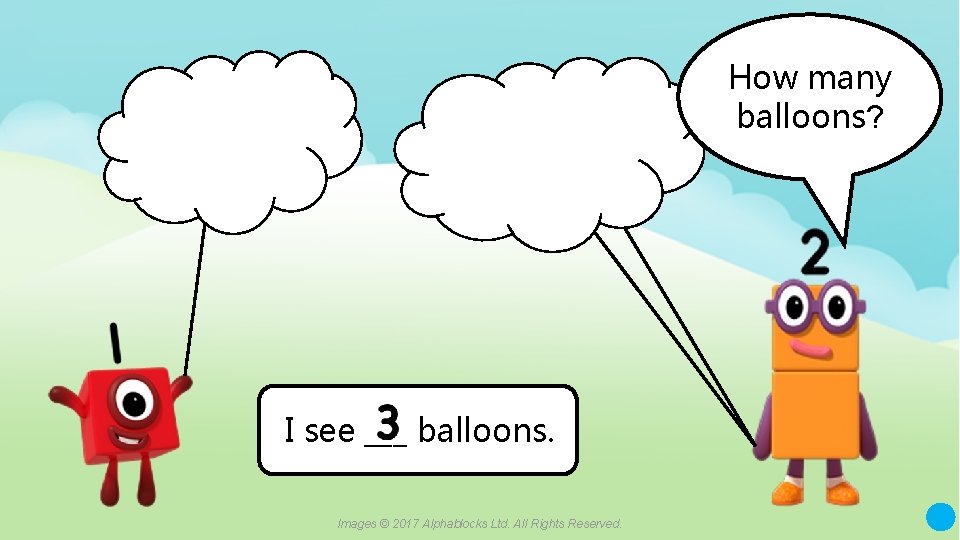
How many balloons? I see ___ balloons. Images © 2017 Alphablocks Ltd. All Rights Reserved.
Images © 2017 Alphablocks Ltd. All Rights Reserved.
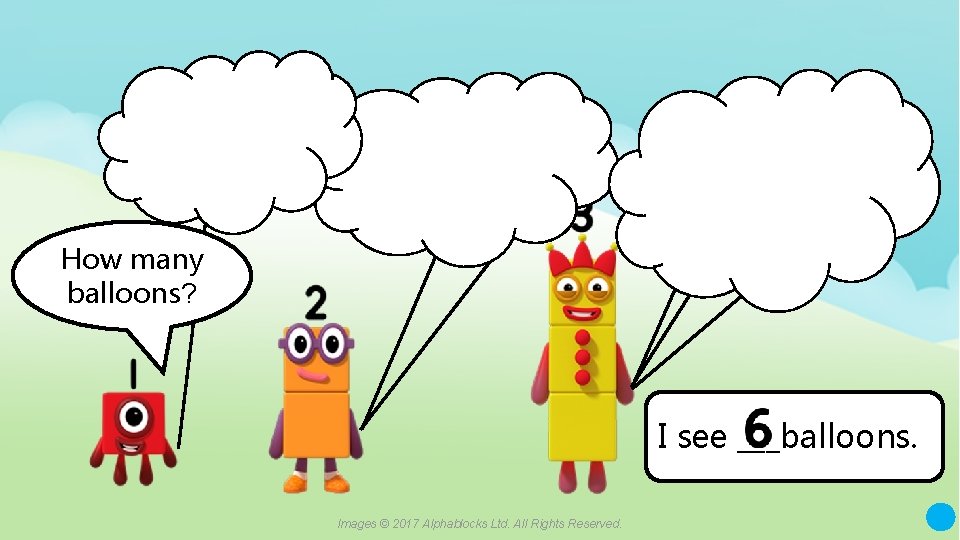
How many balloons? I see ___balloons. Images © 2017 Alphablocks Ltd. All Rights Reserved.
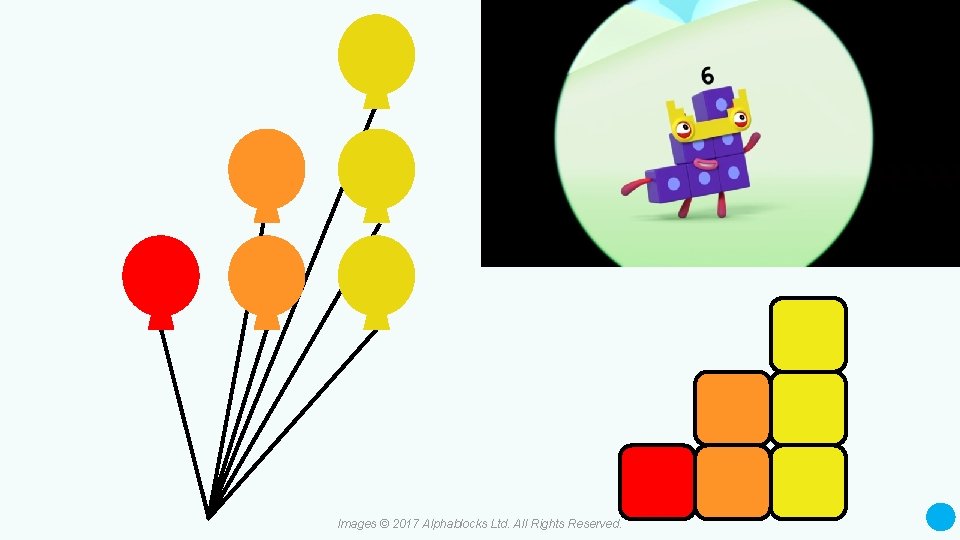
Images © 2017 Alphablocks Ltd. All Rights Reserved.
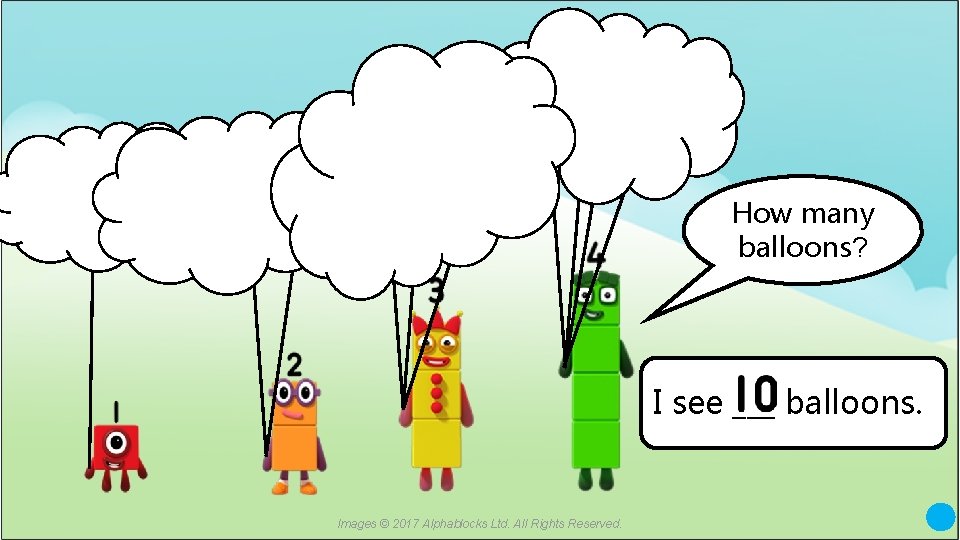
How many balloons? I see ___ balloons. Images © 2017 Alphablocks Ltd. All Rights Reserved.

Images © 2017 Alphablocks Ltd. All Rights Reserved.

There are ___ balloons. Images © 2017 Alphablocks Ltd. All Rights Reserved. How many balloons?
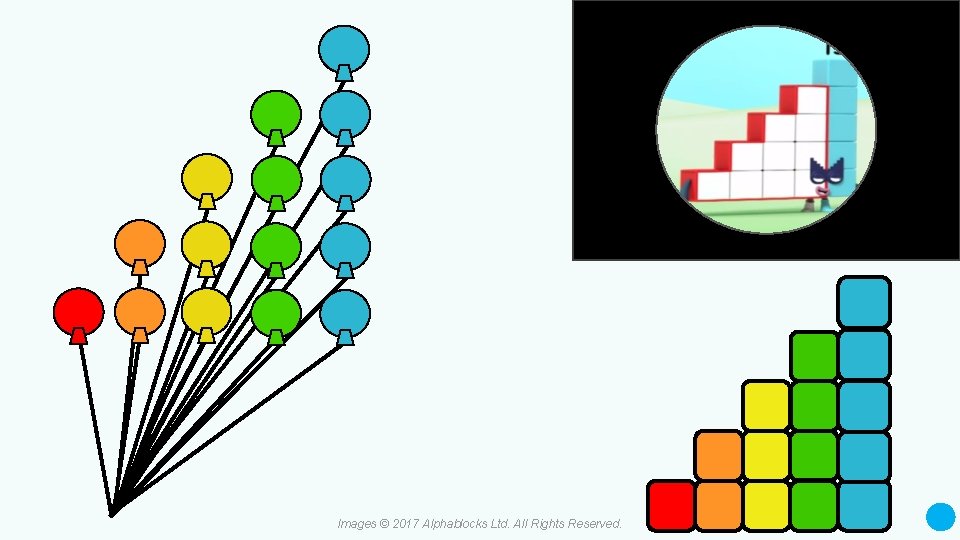
Images © 2017 Alphablocks Ltd. All Rights Reserved.
Further activities for Y 1 • Provide opportunities for children to use equipment (perhaps using connecting cubes or Cuisenaire™ rods) to create their own step patterns and to talk about what they have made. • Explore ways of representing how consecutive numbers are made of one more than the previous number. (For example, coins, Numicon-type shapes, Dienes blocks, connecting cubes, to show that 13 is one more than 12. )

Learning Together in Y 2
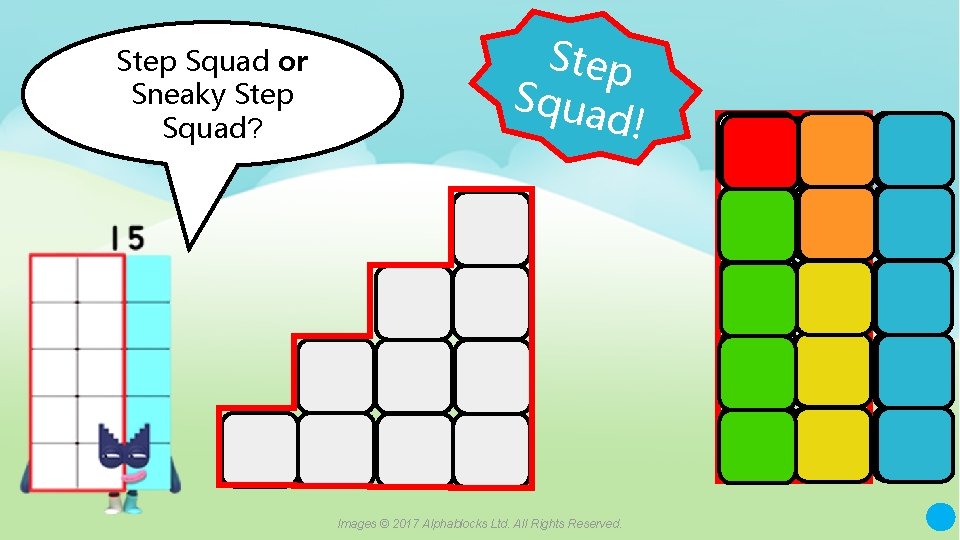
Step Squad or Sneaky Step Squad? Step Squa d! Images © 2017 Alphablocks Ltd. All Rights Reserved.
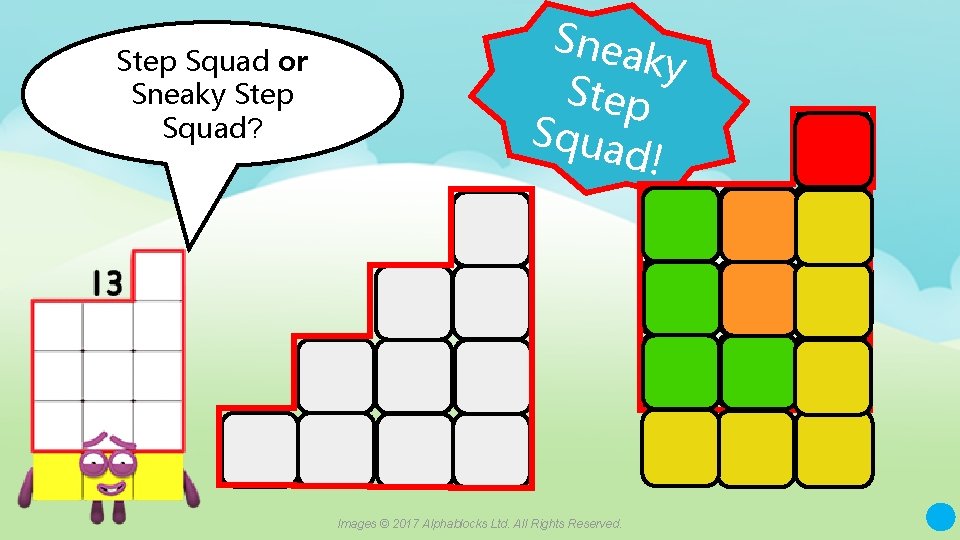
Step Squad or Sneaky Step Squad? Snea ky Step Squa d! Images © 2017 Alphablocks Ltd. All Rights Reserved.
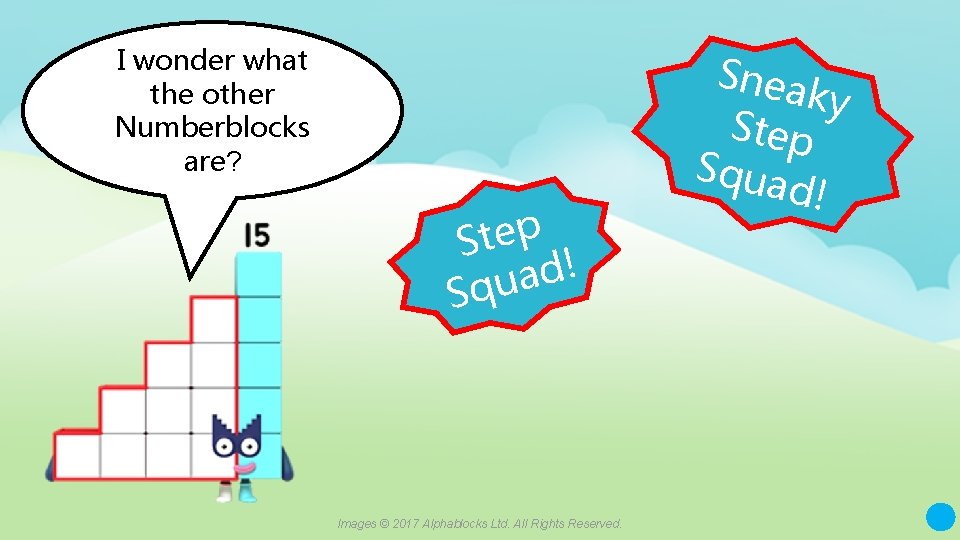
I wonder what the other Numberblocks are? p e t S ! d a Squ Images © 2017 Alphablocks Ltd. All Rights Reserved. Snea ky Step Squa d!
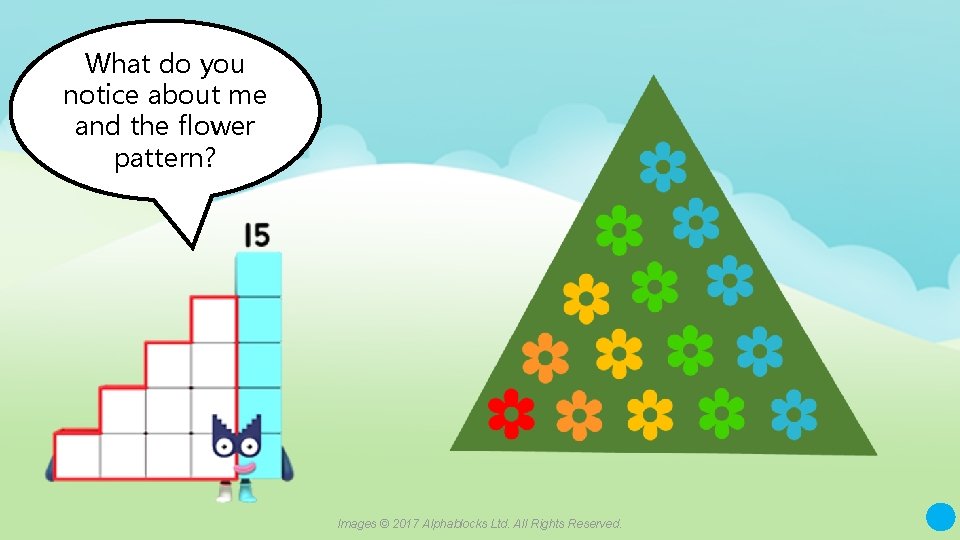
What do you notice about me and the flower pattern? Images © 2017 Alphablocks Ltd. All Rights Reserved.
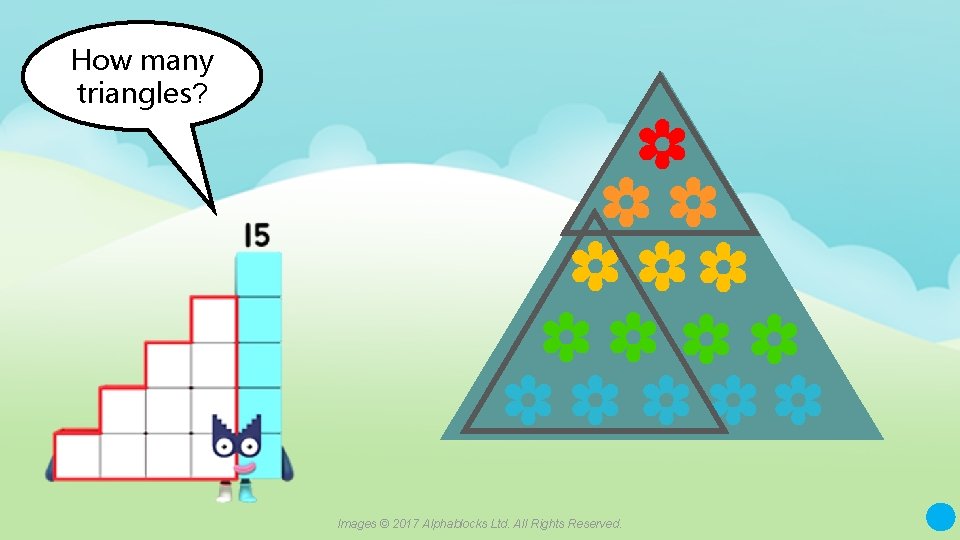
How many triangles? Images © 2017 Alphablocks Ltd. All Rights Reserved.
Further activities for Y 2 • Allow opportunities for children to continue looking for larger Step Squad members using equipment and talking about what they notice. • Look for examples where there are step arrangements or triangular arrangements in real life (for example, stacking cans at the fair, red snooker balls, pool, ten-pin bowling) • Draw the different sized steps on square grid paper. • Draw the different sized triangles on isometric dot paper by joining the dots. Check the number of dots in each layer.
- Slides: 27