
Numberblocks Support Materials Series 1 Episode 4 Three
Numberblocks Support Materials Series 1 Episode 4 Three A blue dot in the corner of a slide indicates that there are notes below the slide.
Practitioner Notes A blue dot in the corner of a slide indicates that there are notes below the slide.
Episode Description Numberblocks One and Two are bored. Two shows off a trick where he changes shape from tall to wide and tells One it's her turn. She tries changing the orientation of her shape and finds she can’t, but accidentally lands on top of Two to make Numberblock Three. She finds a magic mirror, and her copy splits back into One and Two, who meet her. Three is a born entertainer, and she sings a song (One, two, three, everybody look at me!) about how the best things come in threes - in games (Tic-tac-toe), stories (Musketeers, Blind Mice, Little Pigs, Goldilocks and the Three Bears), and in magic tricks. At one point, Two gently hip-bumps her and she changes block shape and briefly turns back into plain blocks - Two thinks he has 'broken' her but it turns out she is fine. She jumps up, carries on singing, juggles three balls and counts lots of threes of things. A blue dot in the corner of a slide indicates that there are notes below the slide.
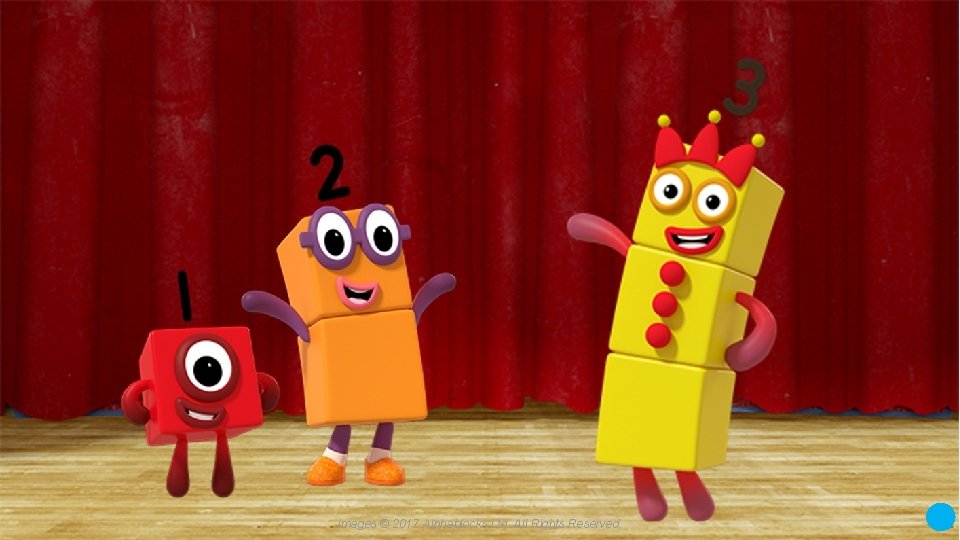
Maths in the Episode ‘Threeness’ of 3 This episode illustrates the part-whole structure of 3: combining 2 with 1 to make 3. At the beginning of the episode Two lies horizontally to illustrate that he is still Two even though he is in a different orientation. This idea is built on later when Three changes arrangement from a three-block tower to an L-shaped block. Three is also presented next to Two in a line from left to right. This places Three as one more than Two and Two as one more than One. The ‘staircase’ representation of One, Two and Three is a powerful image that helps children to see that the difference between adjacent counting numbers is 1. Counting to 3 Counting involves knowing the order of the number names and assigning one number tag to one object or event. This episode uses the counting sequence “one, two, three” to 3 objects and characters from well-known children’s stories. A blue dot in the corner of a slide indicates that there are notes below the slide.
Using Mathematical Language During this episode children will experience 3 in relationship to 2 and 1. Encourage the children to use a stem sentence to capture this relationship, e. g. : “One [object] and two [same objects] together make three [objects]”. “Two [objects] and one [same object] together make three [objects]”. Year 1 pupils may be ready to move to describing the relationship in a different way, e. g. : “Three [objects] is one more [object] than two [objects]”. “Two [objects] is one less [object] than three [objects]”. A blue dot in the corner of a slide indicates that there are notes below the slide.
Talk and Discuss Together A blue dot in the corner of a slide indicates that there are notes below the slide.
Talk and Discuss Together Watch the episode of Numberblocks. First ask the children what they noticed and allow them to talk to you and each other. The following slides are designed to stimulate children and adults to talk about the episode and draw out some key aspects of the mathematics. A blue dot in the corner of a slide indicates that there are notes below the slide.
A blue dot in the corner of a slide indicates that there are notes below the slide. Images © 2017 Alphablocks Ltd. All Rights Reserved.
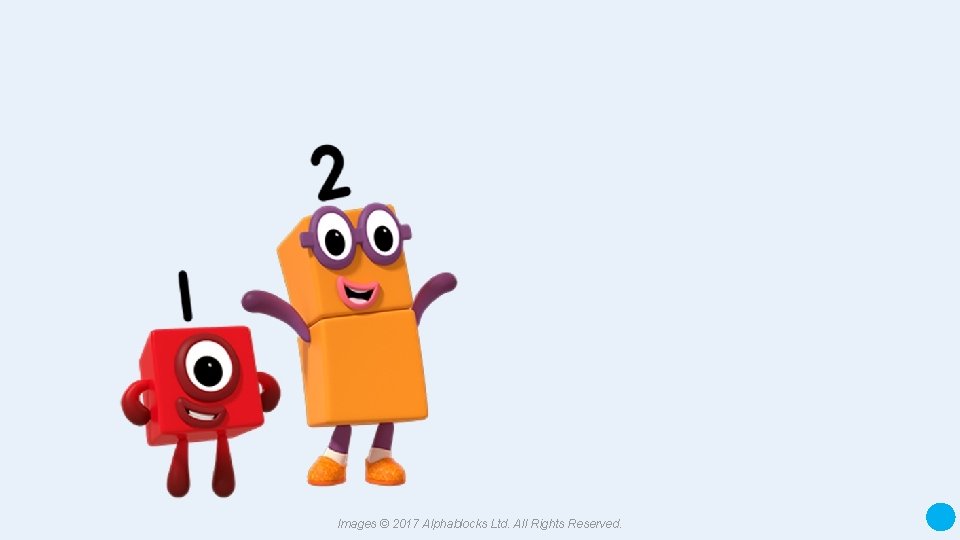
A blue dot in the corner of a slide indicates that there are notes below the slide. Images © 2017 Alphablocks Ltd. All Rights Reserved.
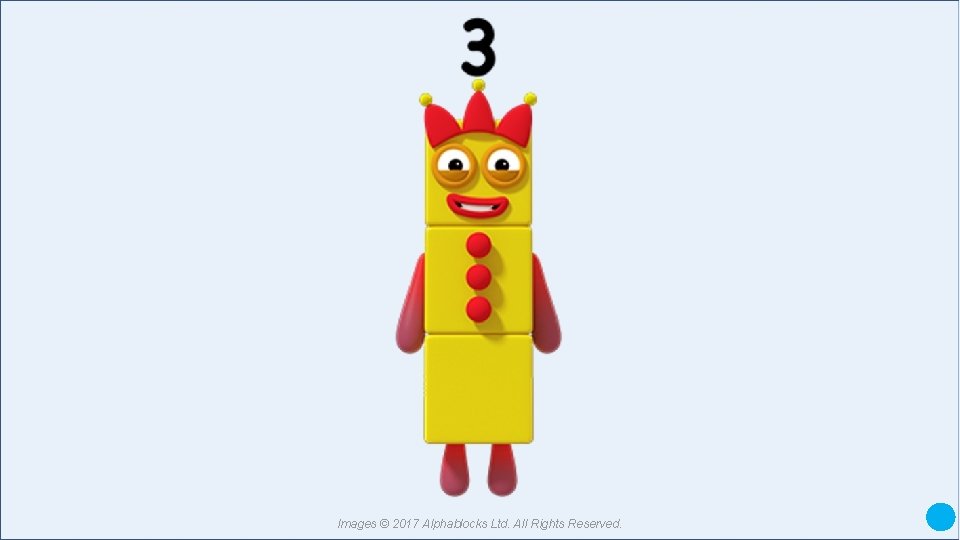
A blue dot in the corner of a slide indicates that there are notes below the slide. Images © 2017 Alphablocks Ltd. All Rights Reserved.
A blue dot in the corner of a slide indicates that there are notes below the slide.
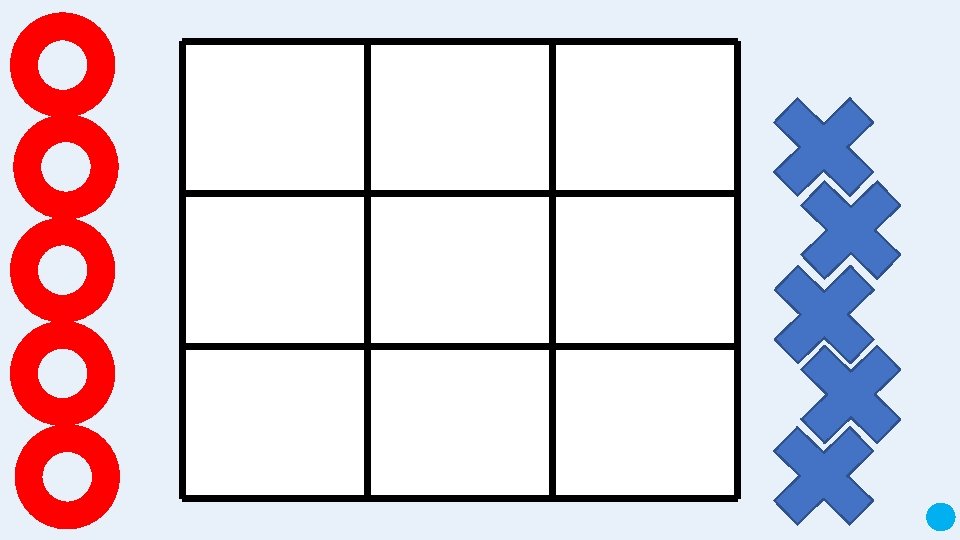
A blue dot in the corner of a slide indicates that there are notes below the slide.
Enabling Environments A blue dot in the corner of a slide indicates that there are notes below the slide.
Enabling Environments Playing and Exploring Enable the children to put on a play or puppet show of Goldilocks and the Three Bears using the ‘home corner’ as the Three Bears' house, with 3 of everything inside it. Collect the resources they need. Active Learning Notice when children choose to count 3 objects and find purpose for this skill and whether children re-count if they are not confident. Creating and Thinking Critically Suggest children explore how to order objects when there are 3 of something. Sing the song, When Goldilocks went to the House of the Bears which describes the relative sizes of each of the three things. Provide a box full of sets of three objects that could be ordered using the children’s own ideas. A blue dot in the corner of a slide indicates that there are notes below the slide.
Learning Together in Y 1 A blue dot in the corner of a slide indicates that there are notes below the slide.
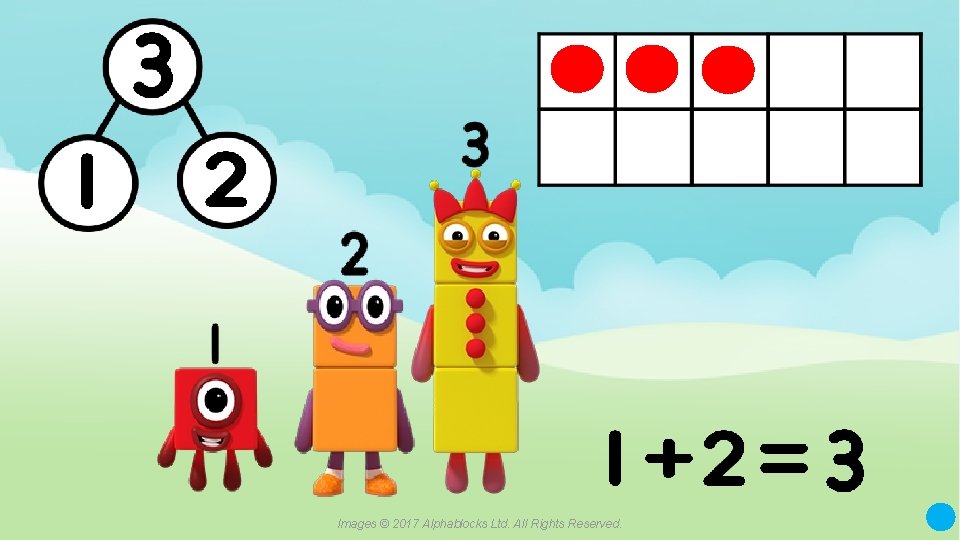
A blue dot in the corner of a slide indicates that there are notes below the slide. Images © 2017 Alphablocks Ltd. All Rights Reserved.
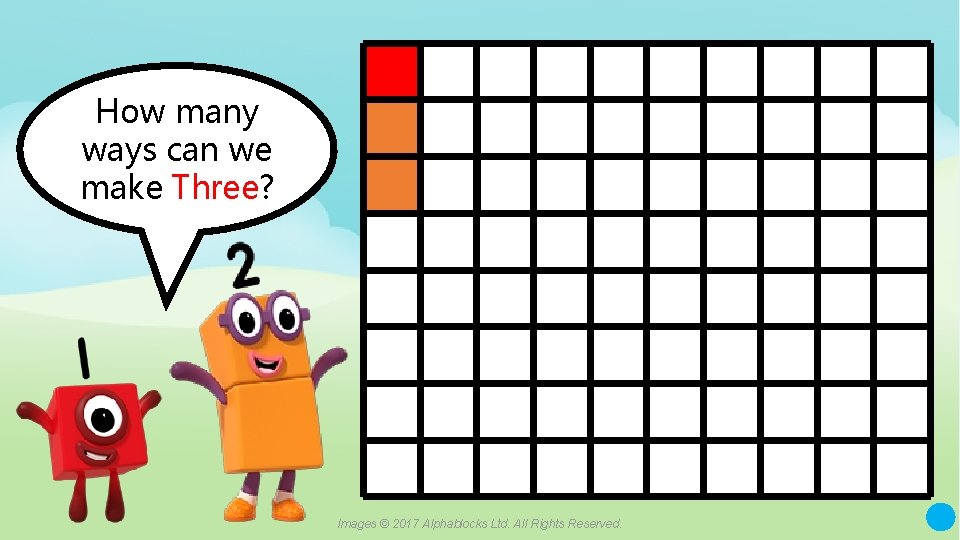
How many ways can we make Three? A blue dot in the corner of a slide indicates that there are notes below the slide. Images © 2017 Alphablocks Ltd. All Rights Reserved.
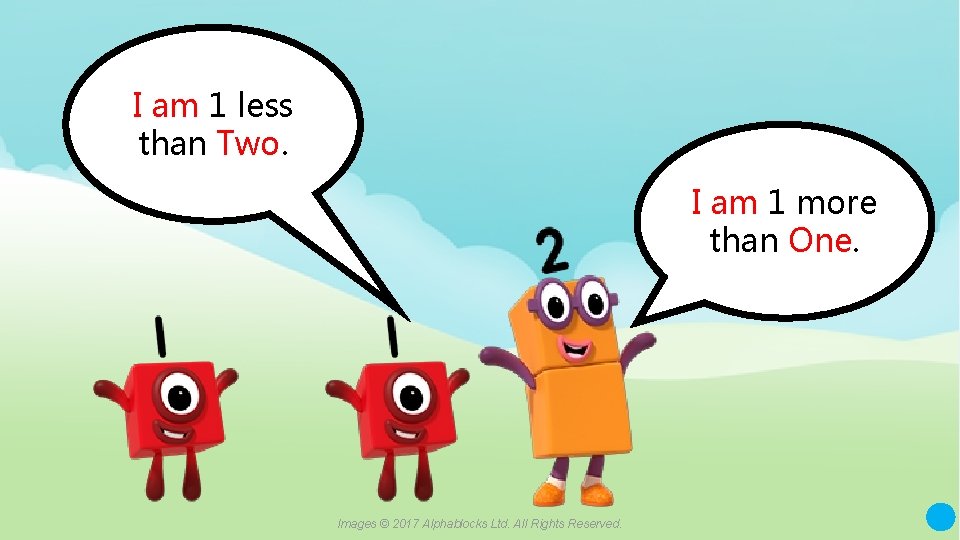
I am 1 less than Two. I am 1 more than One. A blue dot in the corner of a slide indicates that there are notes below the slide. Images © 2017 Alphablocks Ltd. All Rights Reserved.
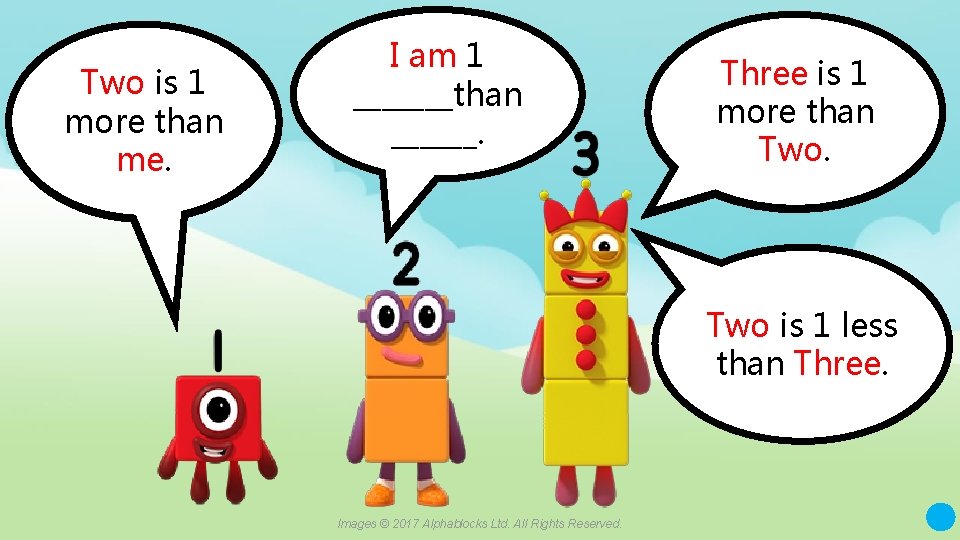
Two is 11 ____ is more than me. I am 1 _______than ______. Three is 1 II am more am __ 1 more than _____. Two is 1 less than Three. A blue dot in the corner of a slide indicates that there are notes below the slide. Images © 2017 Alphablocks Ltd. All Rights Reserved.
- Slides: 19