
Nucleus The Nucleus is the largest organelle in






- Slides: 16
Nucleus The Nucleus is the largest organelle in the cell and contains most of the cells DNA (deoxyribonucleic acid). The nucleus is found in most eukaryotic cells.
Nucleolous The Nucleolous is located inside the Nucleus and is sometimes referred to as a sub-organelle. Its function is to produce and assemble ribosomal components.
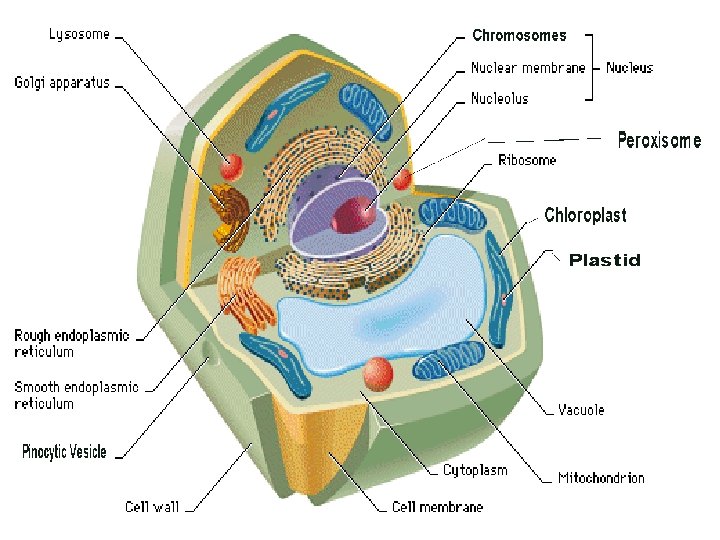
Golgi Apparatus The Golgi is made of membranebound stacks called cisternae. There are 5 -8 cisternae present. The main function of the Golgi apparatus is to package macromolecules such as lipids and proteins.
Ribosomes are complexes of RNA and protein that are found in all cells. The function of ribosomes is the assembly of proteins in a process called translation.
Lysosomes A membrane-bound sac that is found in all cells with a nucleus, containing digestive enzymes that break down complex molecules in the body. Lysosomes contain a lot of disease fighting white blood cells.
Endoplasmic Reticulum The Endoplasmic Reticulum is found in all eukaryotic cells, that is a network of tubules, vesicles and cisternae. The Rough Endoplasmic Reticulum is studded with protein manufacturing ribosomes which then gives it a rough appearance. The Smooth Endoplasmic Reticulum has functions in some metabolic processes such as synthesis of lipids, drug detoxification and more.
Mitochondria The Mitochondria are membraneenclosed organelles found in most eukaryotic cells. One of the functions of the Mitochondria is to create energy for the cell (ATP). Mitochondria creates the most ATP (Adenosine Triphosphate) for the cell which is used as a source of chemical energy.
Microtubules are one of the components of the cytoskeleton. Microtubules serve as structural components within cells. They are involved in processes like mitosis, cytokinesis and vesicular transport.
Cytoplasm is a gelatinous, semitransparent fluid that fills most cells. Eukaryotic cells contain a nucleus that is kept separate from the cytoplasm by a double membrane layer. Cell expansion, growth and replication are all carried out in the cytoplasm of the cell.
Plasma Membrane The plasma membrane is found in all cells. The plasma membrane surrounds the cytoplasm of a cell. The barrier is selectively permeable, meaning that it chooses what comes in and what goes out of the cell.
Plastids are major organelles found in plant cells. They often contain pigments used in photosynthesis. Plastids are responsible for photosynthesis, storage for products like starch and for synthesis of many molecules such as fatty acids and terpenes which are needed as cellular building blocks and for the function of the plant.
Vacuoles are found in most plant cells and some animal cells. They are membrane-bound compartments within some eukaryotic cells that can serve a variety of secretory, excretory, and storage functions.
Chloroplasts are organelles found in plant cells and eukaryotic algae that conduct photosynthesis. Chloroplasts capture light energy to conserve free energy in the form of ATP and reduce NADP to NADPH through a complex set of processes called photosynthesis.
By Cory Aka. $uper. Fly Thanks for watching