
Nucleotide Metabolism Biochemistry Free For All Nucleotide Metabolism
Nucleotide Metabolism Biochemistry Free For All

Nucleotide Metabolism • Introduction Nucleotides are the Building Blocks of the Nucleic Acids - DNA and RNA Cells Make Nucleotides by Two Pathways - de novo and Salvage Synthesis Purines are Made Separately from Pyrimidines d. NTPs are Made from Ribonucleoside Diphosphates Thymidine Nucleotides are Made from Uridine Nucleotides

Nucleotide Metabolism • Introduction Nucleotides Made from Very Simple Molecules - Amino Acids, One Carbon Donors, CO 2 Synthesis Very Tightly Regulated - Imbalances Favor Mutation Purine Synthesis Begins on the Ribose Sugar Pyrimidine Rings Synthesized Separate from Sugar and Then Attached Purine Atom Sources Pyrimidine Atom Sources

Purine Metabolism Overview
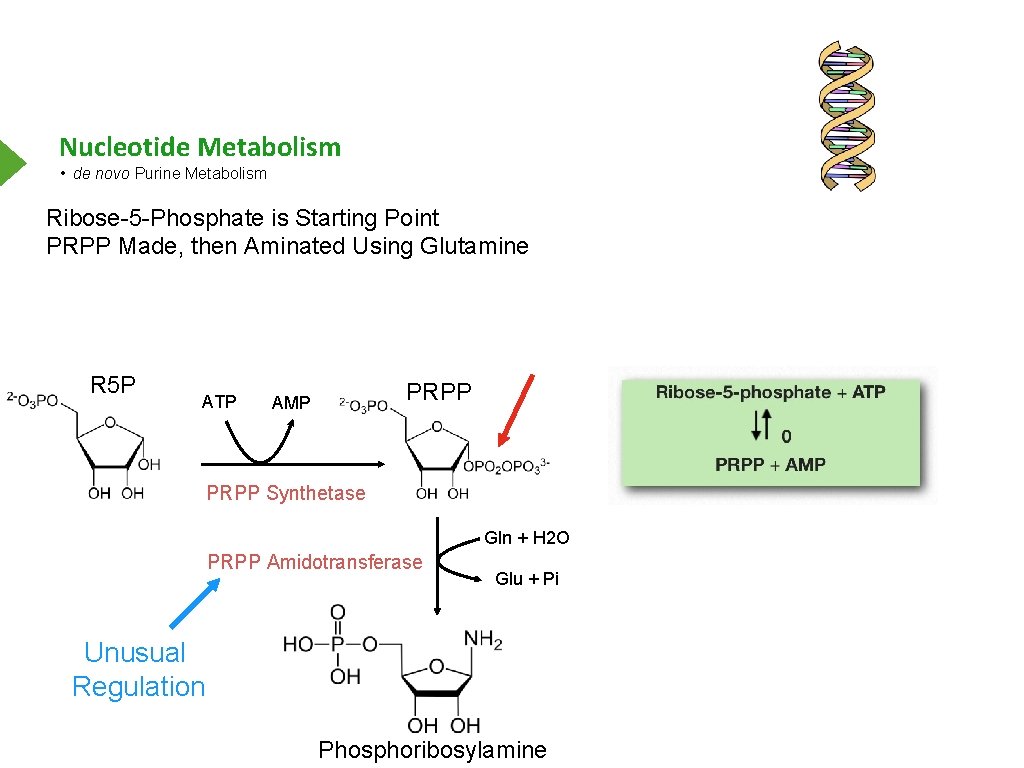
Nucleotide Metabolism • de novo Purine Metabolism Ribose-5 -Phosphate is Starting Point PRPP Made, then Aminated Using Glutamine R 5 P ATP PRPP AMP PRPP Synthetase Gln + H 2 O PRPP Amidotransferase Glu + Pi Unusual Regulation Phosphoribosylamine

Nucleotide Metabolism • Building a Purine Ring Phosphoribosylamine Glycine Aspartate

Nucleotide Metabolism • Paths to Guanine and Adenine Nucleotides Glutamine Glutamate + ATP + AMP + PPi NADH + H+ NAD+ + H 2 O GMP XMP GDP GMP Kinase GTP NDPK IMP Dehydrogenase IMP GTP + Aspartate GDP + Pi Adenylosuccinate Synthetase Adenylate Kinase Adenylosuccinate AMP Fumarate ADP NDPK ATP
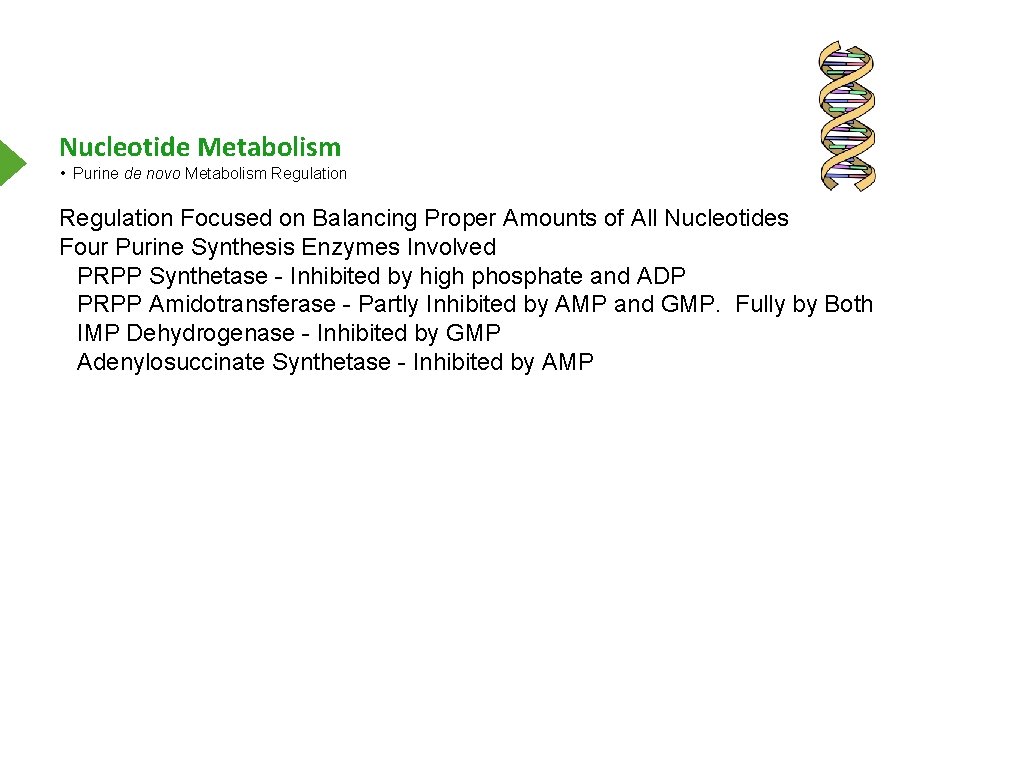
Nucleotide Metabolism • Purine de novo Metabolism Regulation Focused on Balancing Proper Amounts of All Nucleotides Four Purine Synthesis Enzymes Involved PRPP Synthetase - Inhibited by high phosphate and ADP PRPP Amidotransferase - Partly Inhibited by AMP and GMP. Fully by Both IMP Dehydrogenase - Inhibited by GMP Adenylosuccinate Synthetase - Inhibited by AMP

Nucleotide Metabolism • Purine de novo Metabolism Regulation Fully Inhibited by AMP & GMP Fully Inhibited by AMP Only Partly Inhibited by AMP or GMP Alone Fully Inhibited by GMP
Nucleotide Metabolism • Purine de novo Metabolism Summary Nucleotides are the Building Blocks of Nucleic Acids Nucleotide Metabolism Proceeds Through de novo and Salvage Pathways Purine Nucleotides are Built de novo Starting with Ribose-5 -phosphate PRPP is Made From it and Then it is Aminated Simple Compounds, Such as Amino Acids and 1 -Carbon Donors Make the Bases IMP is a Branch Point for Synthesis of GMP and AMP Synthesis Requires GTP Energy and is Self-regulating GMP Syntheis Requires ATP Energy and is Self-regulating Nucleotide Metabolism Uses Allosteric Controls to Balance Amounts of Nucleotides Nucleoside Monophosphate Kinases Turn NMPs to NDPs NDPK Converts NDPs to NTPs PRPP Amidotransferase is Partly Inhibited by AMP or GMP and Fully Inhibited by Both

Nucleotide Metabolism • Pyrimidine de novo Metabolism Ring Built First, Then Attached to Ribose -5 -P of PRPP Six Steps From Bicarbonate to UMP
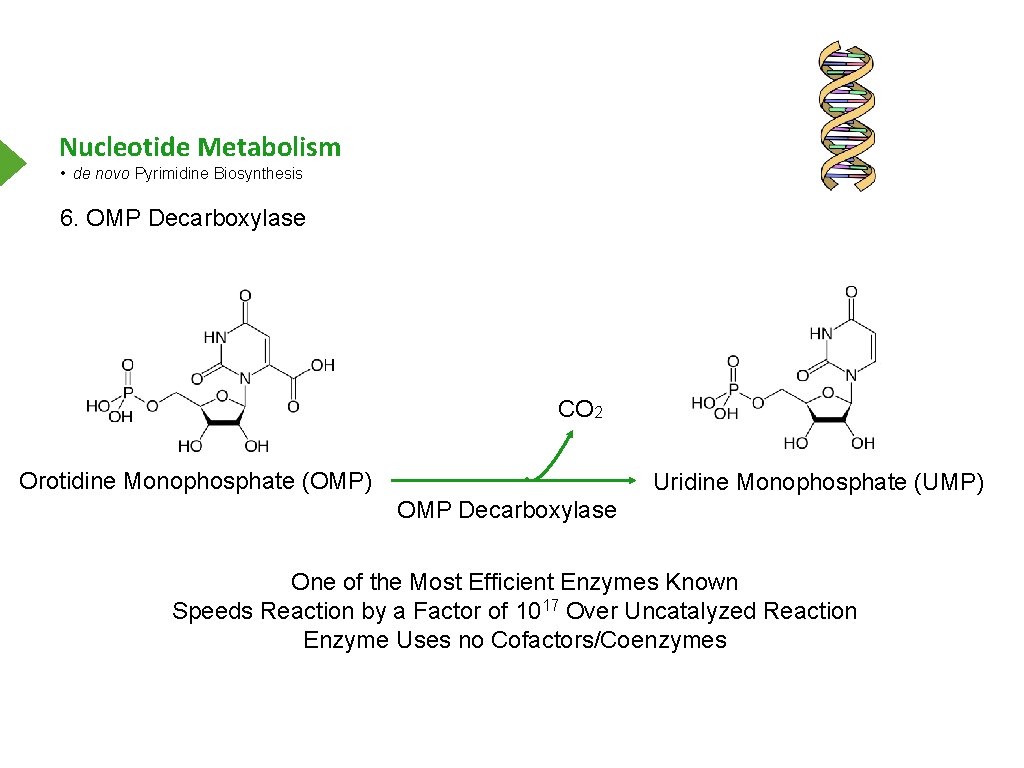
Nucleotide Metabolism • de novo Pyrimidine Biosynthesis 6. OMP Decarboxylase CO 2 Orotidine Monophosphate (OMP) Uridine Monophosphate (UMP) OMP Decarboxylase One of the Most Efficient Enzymes Known Speeds Reaction by a Factor of 1017 Over Uncatalyzed Reaction Enzyme Uses no Cofactors/Coenzymes
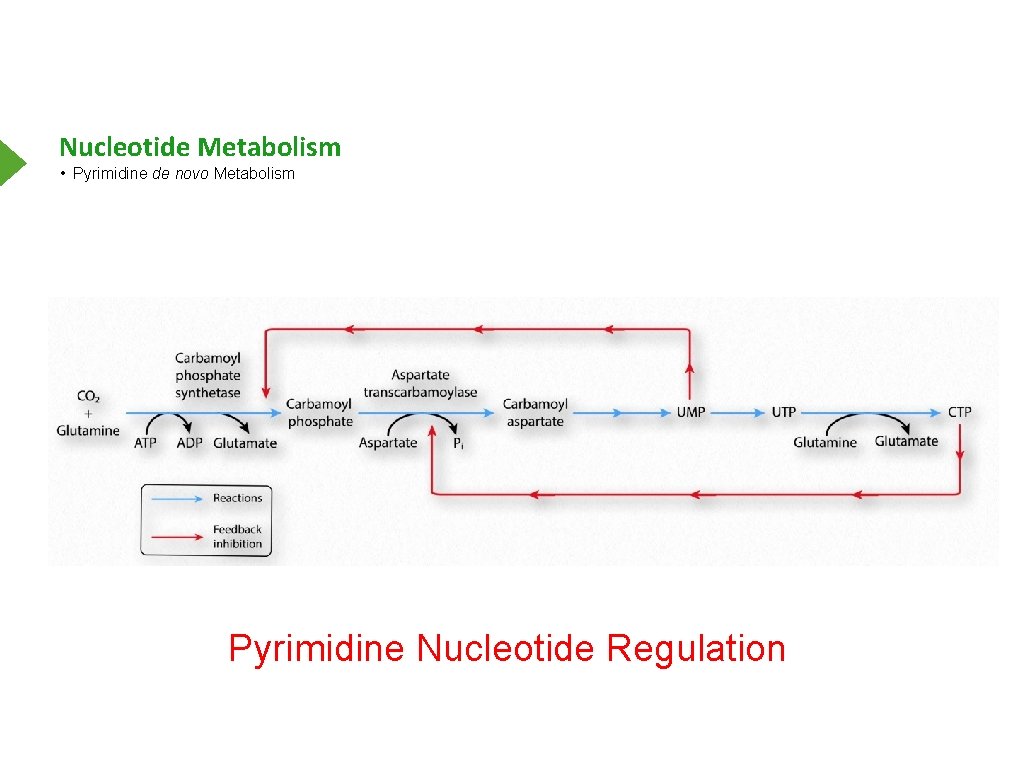
Nucleotide Metabolism • Pyrimidine de novo Metabolism Pyrimidine Nucleotide Regulation

Nucleotide Metabolism • Pyrimidine de novo Metabolism 2. ATCase Reaction Aspartate Pi Carbamoyl Aspartate Carbamoyl-P Ac tiv its (Purine) ib ATP h In at es ATCase CTP (Pyrimidine)

Nucleotide Metabolism • de novo Pyrimidine Biosynthesis Synthesis of UTP and CTP ADP UMP ATP ADP UMP/CMP Kinase UTP NDPK Glutamine + ATP CTP Synthetase Glutamate + ADP + Pi CTP
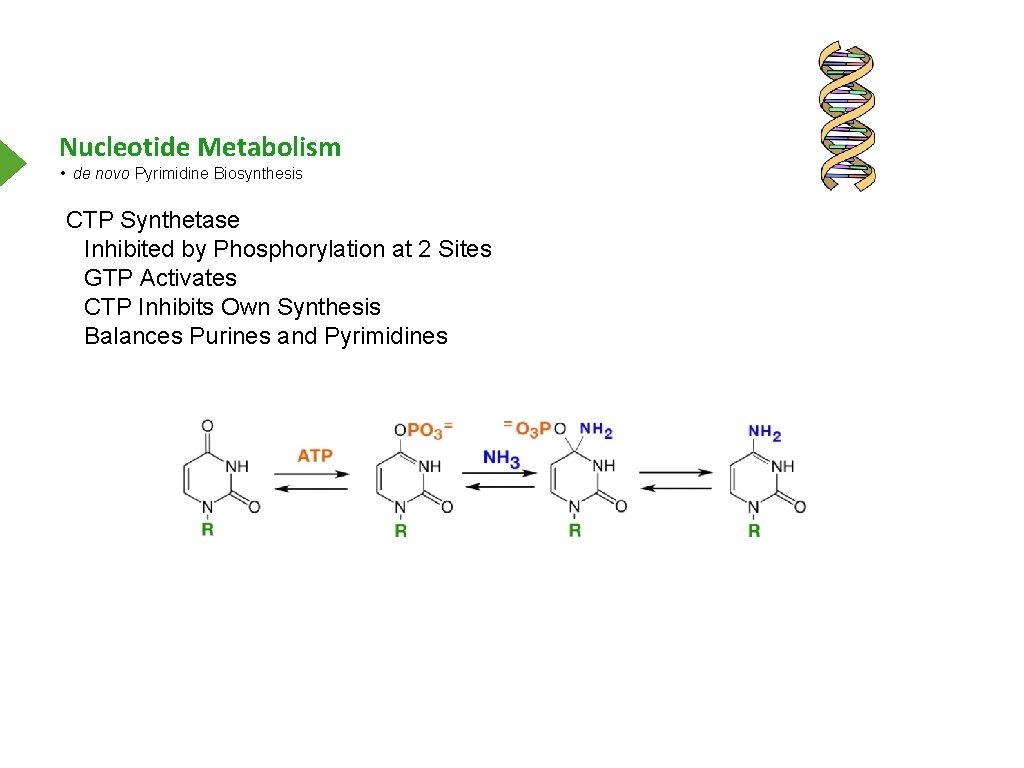
Nucleotide Metabolism • de novo Pyrimidine Biosynthesis CTP Synthetase Inhibited by Phosphorylation at 2 Sites GTP Activates CTP Inhibits Own Synthesis Balances Purines and Pyrimidines
Nucleotide Metabolism • de novo Pyrimidine Biosynthesis Summary Pyrimidine Ring Synthesis Occurs First and Then it is Attached to Ribose ATCase is a Major Regulator and Balance of Pyrimidine/Purine Nucleotides ATP Activates, Favors Pyrimidines. CTP Inhibits, Favors Purines Feedback Inhibition Occurs with CTP. OMP Decarboxylase is one of the Most Efficient Enzymes Known and Makes UMP CTP is Synthesized from UTP by CTP Synthetase Activated by GTP, Inhibited by CTP and Phosphorylation CTP Synthetase Helps to Balance Purines and Pyrimidines

Nucleotide Metabolism • Catabolism of Guanine Nucleotides in Nucleic Acids are Monophosphates Breakdown of RNA and DNA Taken up by Cell Starts with Nucleases RNA/DNA RNase Nucleases GMP Purine Nucleotidase Nucleoside Monophosphates Guanosine Nucleosides Nucleotidases Various Enzymes Purine Nucleoside Phosphorylase Bases + Sugars + Guanine Ribose-1 -P

Nucleotide Metabolism • Catabolism of Adenine Nucleotides Breakdown of AMP Similar to GMP, but With One Added Path RNA/DNA AMP RNase Adenosine Purine Nucleotidase Nucleosides Nucleoside Monophosphates AMP Deaminase Adenosine Deaminase Ribose-1 -P Nucleotidase Inosinic Acid (IMP) Purine Nucleoside Phosphorylase Inosine + Hypoxanthine
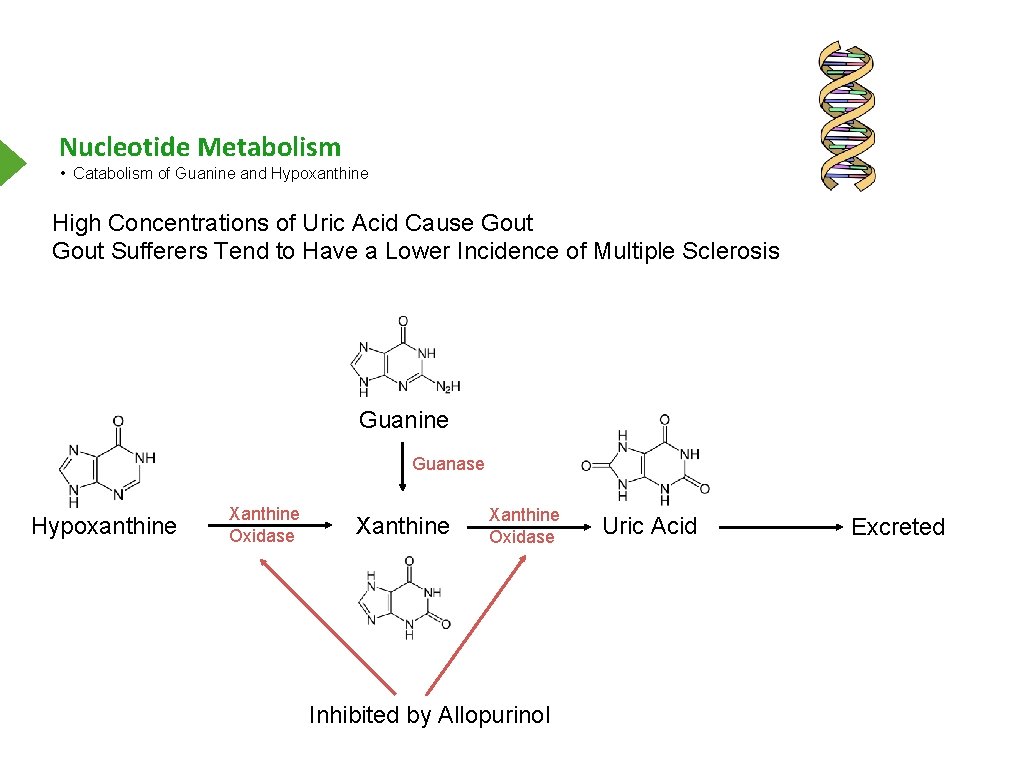
Nucleotide Metabolism • Catabolism of Guanine and Hypoxanthine High Concentrations of Uric Acid Cause Gout Sufferers Tend to Have a Lower Incidence of Multiple Sclerosis Guanine Guanase Hypoxanthine Xanthine Oxidase Inhibited by Allopurinol Uric Acid Excreted
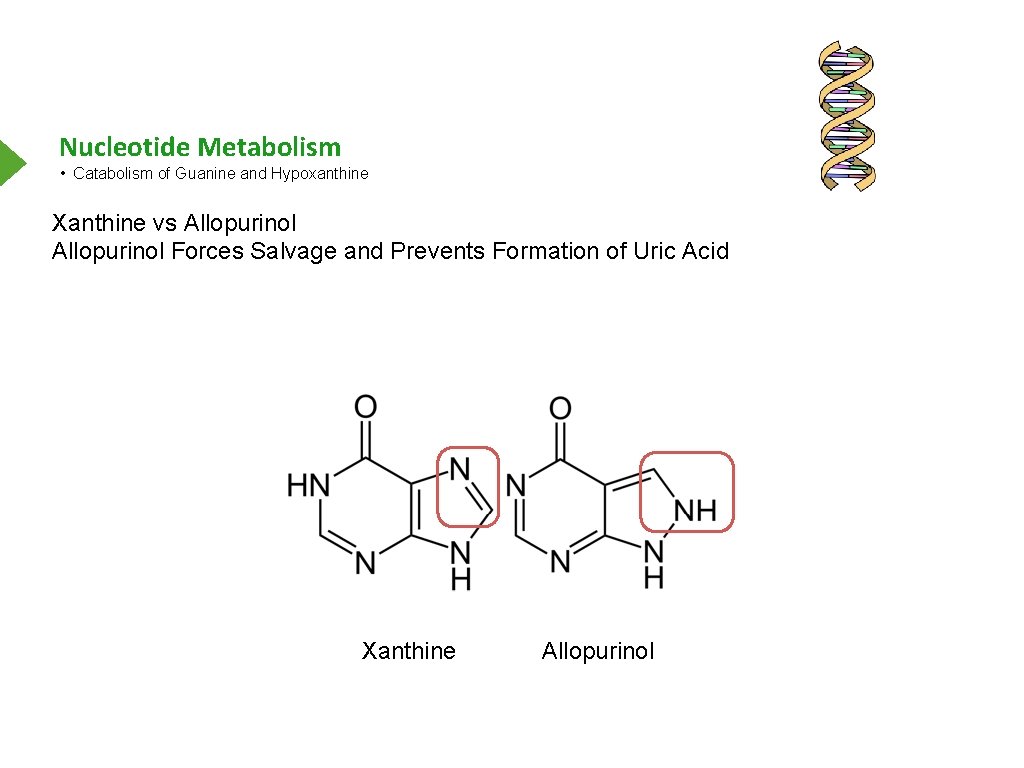
Nucleotide Metabolism • Catabolism of Guanine and Hypoxanthine Xanthine vs Allopurinol Forces Salvage and Prevents Formation of Uric Acid Xanthine Allopurinol
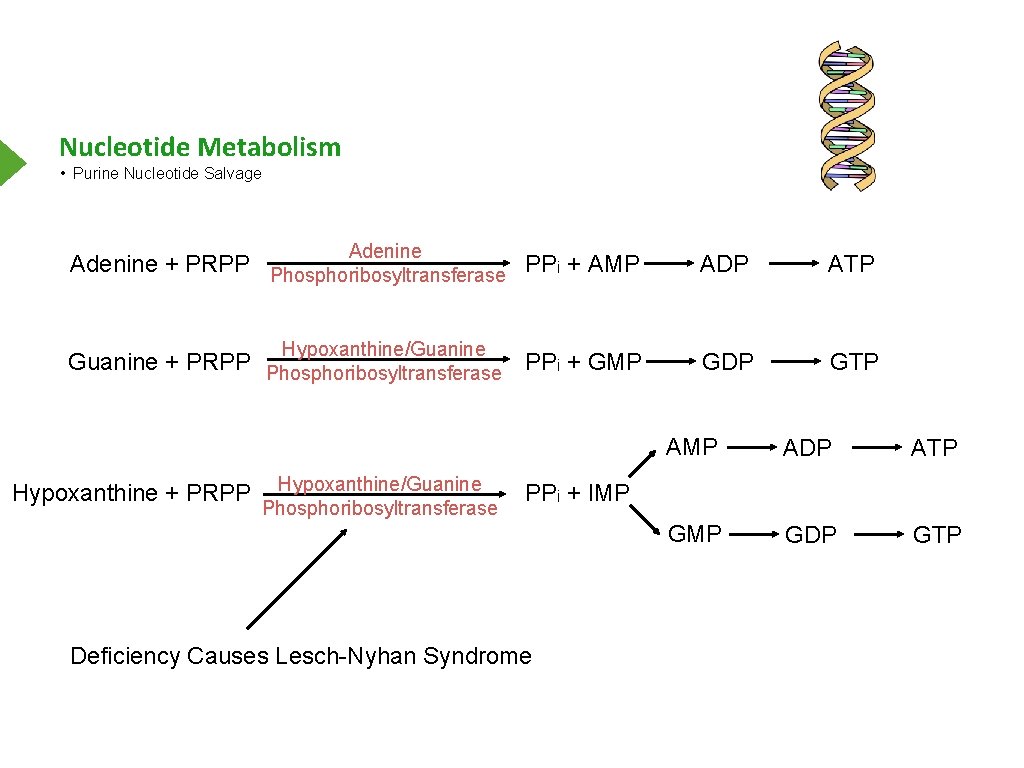
Nucleotide Metabolism • Purine Nucleotide Salvage Adenine ADP ATP Hypoxanthine/Guanine GDP GTP Adenine + PRPP Phosphoribosyltransferase PPi + AMP Guanine + PRPP Phosphoribosyltransferase PPi + GMP Hypoxanthine + PRPP Hypoxanthine/Guanine Phosphoribosyltransferase AMP ADP ATP GMP GDP GTP PPi + IMP Deficiency Causes Lesch-Nyhan Syndrome
Nucleotide Metabolism • Pyrimidine Catabolism and Salvage Reactions Catabolic and Salvage Pathways for Pyrimidines Overlap Easy Interconversion of Uracil- and Cytosine-Containing Nucleotides/Nucleosides Similar Breakdown Scheme to Purines Nucleases Break Nucleic Acids to Nucleoside Monophosphates Nucleotidases Convert Nucleoside Monophosphates to Nucleosides However, Nucleosidases Can Use Water to Hydrolyze Bases from Sugars Instead of Phosphorylases Many of the Same Enzymes Work on Cytosine and Uracil Nucleosides/Nucleotides Breakdown Converges on Production of Uracil Thymidine Nucleotides Handled Separately
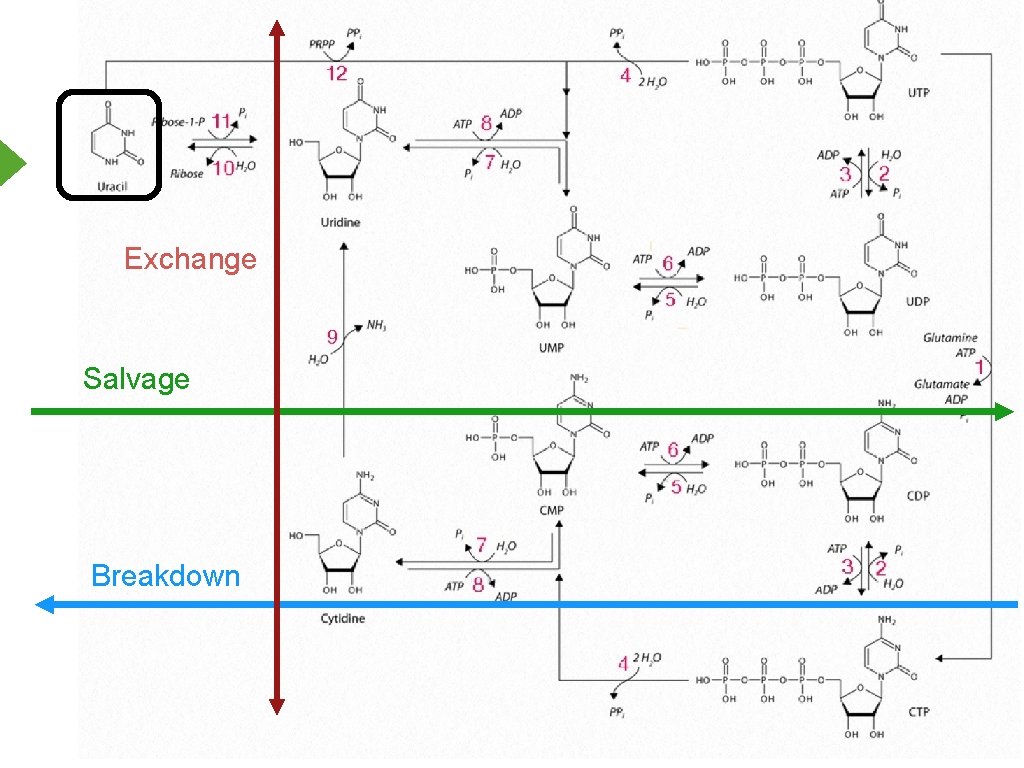
Exchange Salvage Breakdown

Nucleotide Metabolism • Catabolism of Uracil and Thymine
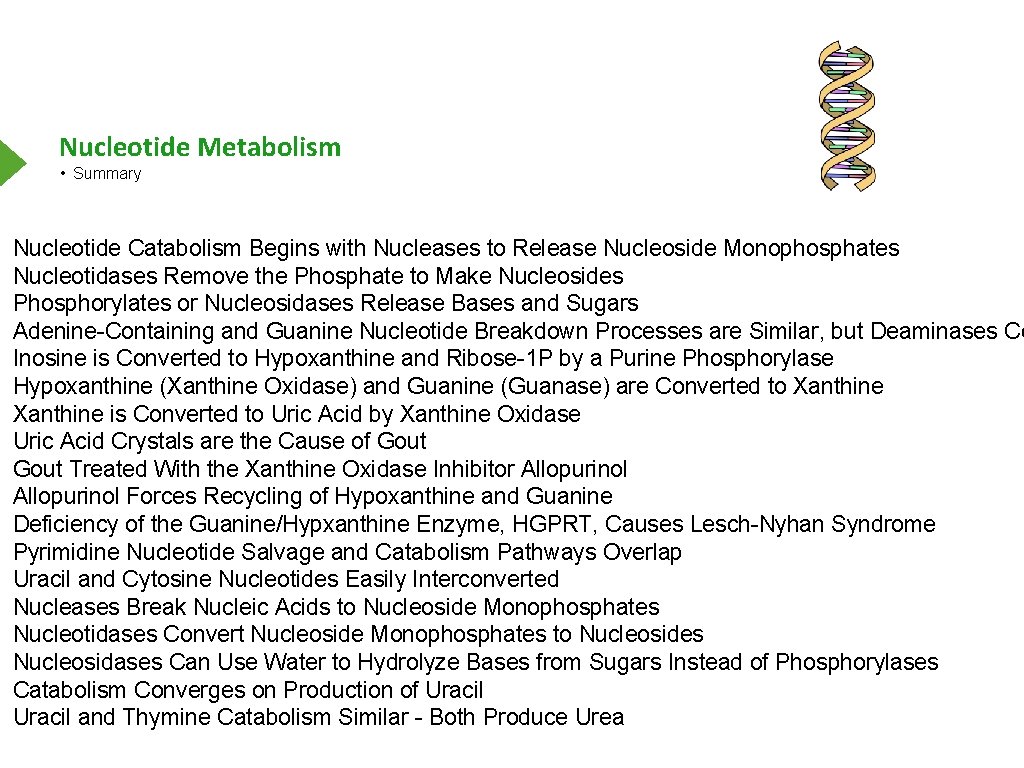
Nucleotide Metabolism • Summary Nucleotide Catabolism Begins with Nucleases to Release Nucleoside Monophosphates Nucleotidases Remove the Phosphate to Make Nucleosides Phosphorylates or Nucleosidases Release Bases and Sugars Adenine-Containing and Guanine Nucleotide Breakdown Processes are Similar, but Deaminases Co Inosine is Converted to Hypoxanthine and Ribose-1 P by a Purine Phosphorylase Hypoxanthine (Xanthine Oxidase) and Guanine (Guanase) are Converted to Xanthine is Converted to Uric Acid by Xanthine Oxidase Uric Acid Crystals are the Cause of Gout Treated With the Xanthine Oxidase Inhibitor Allopurinol Forces Recycling of Hypoxanthine and Guanine Deficiency of the Guanine/Hypxanthine Enzyme, HGPRT, Causes Lesch-Nyhan Syndrome Pyrimidine Nucleotide Salvage and Catabolism Pathways Overlap Uracil and Cytosine Nucleotides Easily Interconverted Nucleases Break Nucleic Acids to Nucleoside Monophosphates Nucleotidases Convert Nucleoside Monophosphates to Nucleosides Nucleosidases Can Use Water to Hydrolyze Bases from Sugars Instead of Phosphorylases Catabolism Converges on Production of Uracil and Thymine Catabolism Similar - Both Produce Urea

Nucleotide Metabolism • Deoxyribonucleotide Synthesis Deoxyribonucleotides are Made From Ribonucleoside Diphosphates ADP, CDP, GDP, and UDP The Enzyme Responsible is Ribonucleotide Reductase CDP d. CDP Ribonucleotide Reductase NDP Ribonucleotide Reductase Reduced d. NDP Ribonucleotide Reductase Oxidized H 2 O Thioredoxin Oxidized Thioredoxin Reduced NADPH
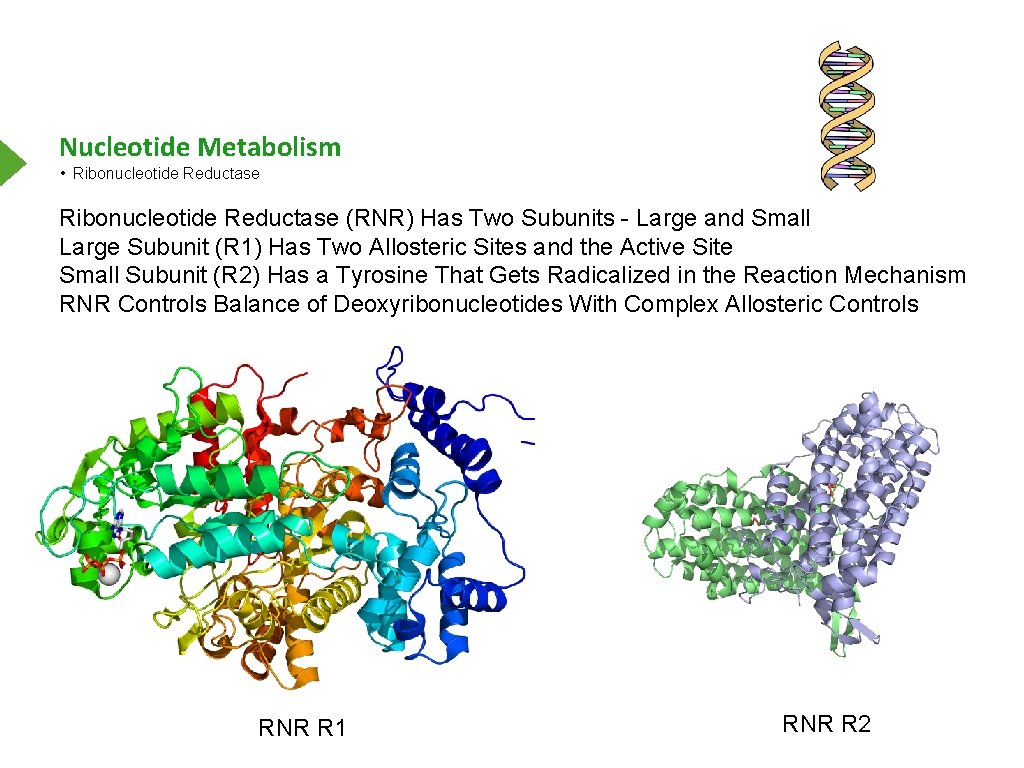
Nucleotide Metabolism • Ribonucleotide Reductase (RNR) Has Two Subunits - Large and Small Large Subunit (R 1) Has Two Allosteric Sites and the Active Site Small Subunit (R 2) Has a Tyrosine That Gets Radicalized in the Reaction Mechanism RNR Controls Balance of Deoxyribonucleotides With Complex Allosteric Controls RNR R 1 RNR R 2
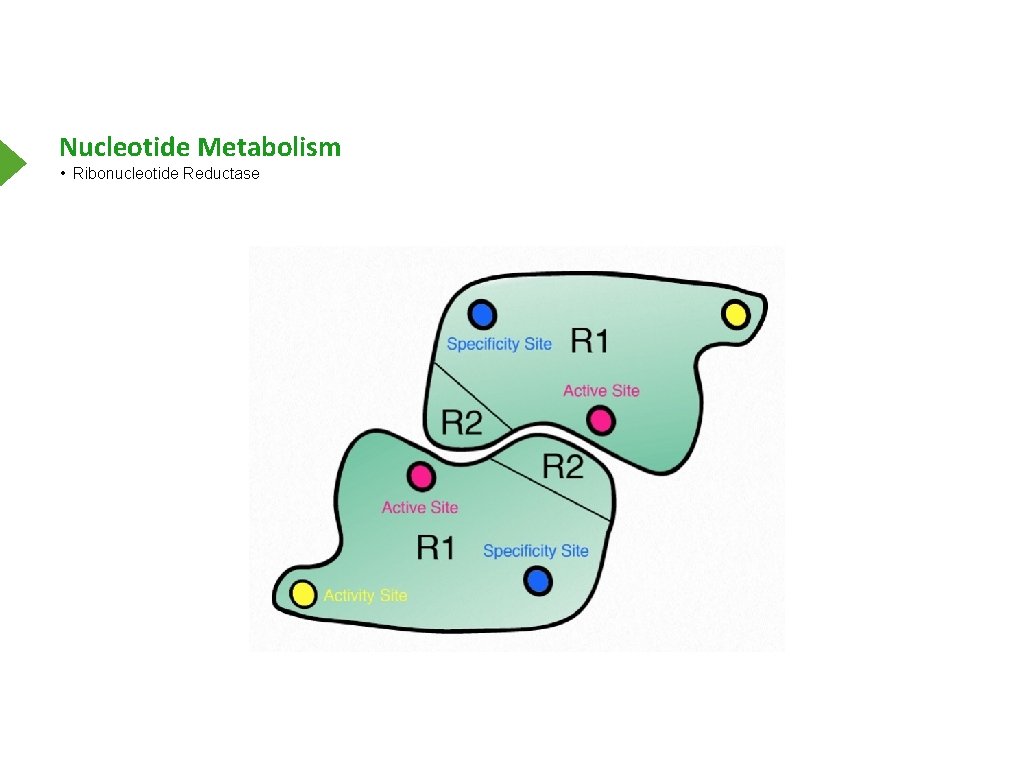
Nucleotide Metabolism • Ribonucleotide Reductase

Tyrosyl Radical Nucleotide Metabolism • RNR Reaction Mechanism RNR Reduced From Abstraction of Proton Loss of Water Regeneration of Radical Oxidation of Sulfhydryl RNR Oxidized From

Nucleotide Metabolism • Ribonucleotide Reductase Inactivate Activate
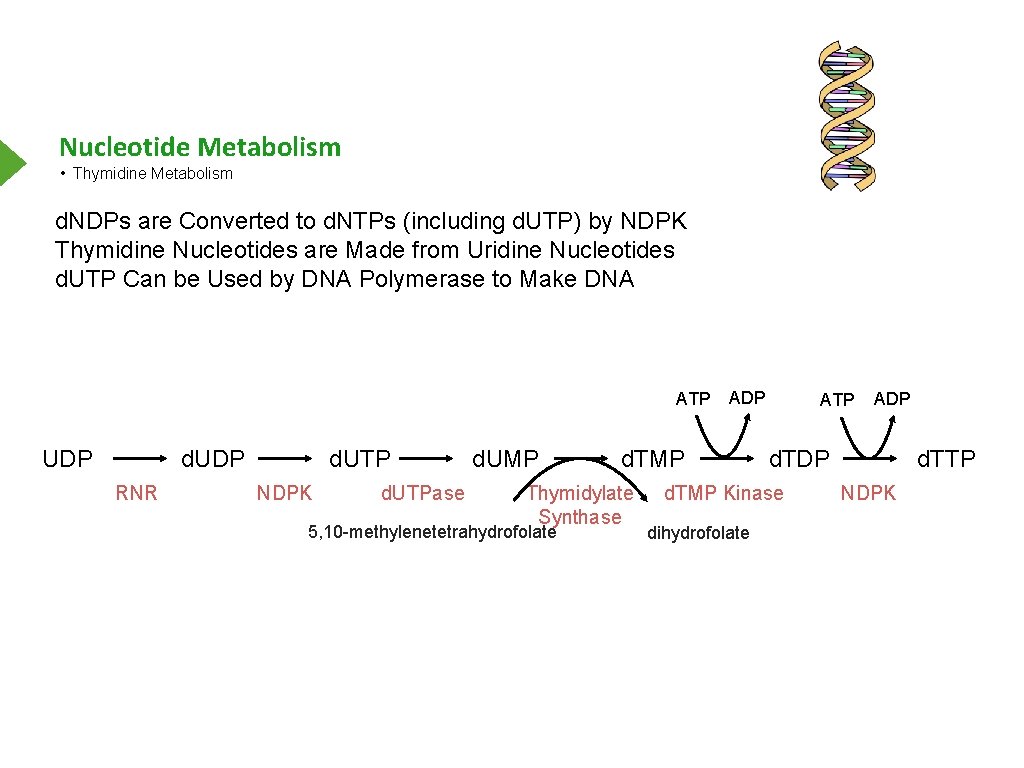
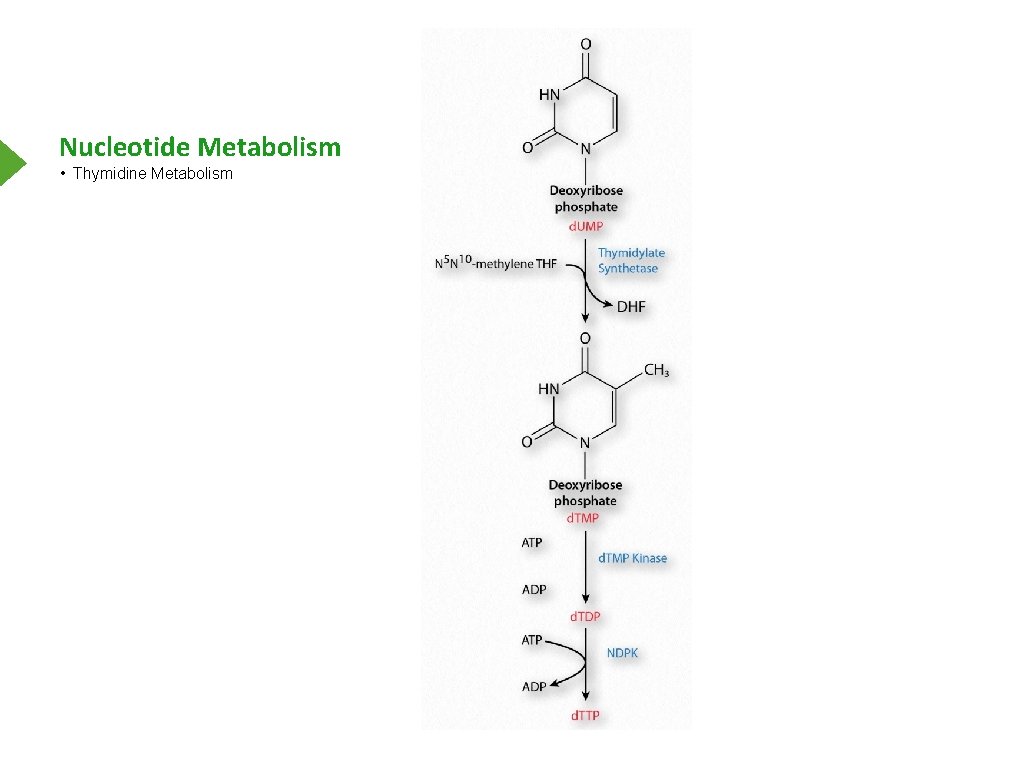
Nucleotide Metabolism • Thymidine Metabolism d. NDPs are Converted to d. NTPs (including d. UTP) by NDPK Thymidine Nucleotides are Made from Uridine Nucleotides d. UTP Can be Used by DNA Polymerase to Make DNA ATP UDP d. UDP RNR d. UTP NDPK d. UTPase d. UMP d. TMP Thymidylate Synthase 5, 10 -methylenetetrahydrofolate ADP ATP d. TDP d. TMP Kinase dihydrofolate ADP d. TTP NDPK
Nucleotide Metabolism • Thymidine Metabolism

Nucleotide Metabolism • Thymidylate Synthase 5 -Fluorouracil Anticancer Treatment Suicide Inhibitor d. UMP X Thymidylate Synthase 5, 10 -methylenetetrahydrofolate d. TMP dihydrofolate
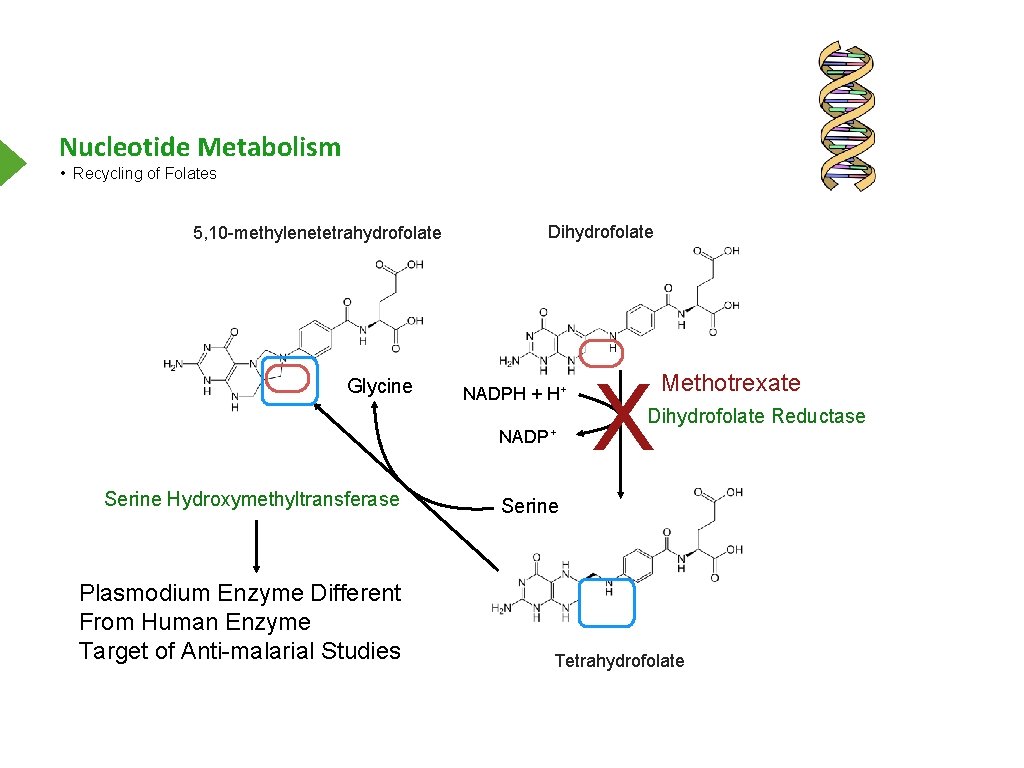
Nucleotide Metabolism • Recycling of Folates 5, 10 -methylenetetrahydrofolate Glycine Dihydrofolate NADPH + H+ NADP+ Serine Hydroxymethyltransferase Plasmodium Enzyme Different From Human Enzyme Target of Anti-malarial Studies X Methotrexate Dihydrofolate Reductase Serine Tetrahydrofolate
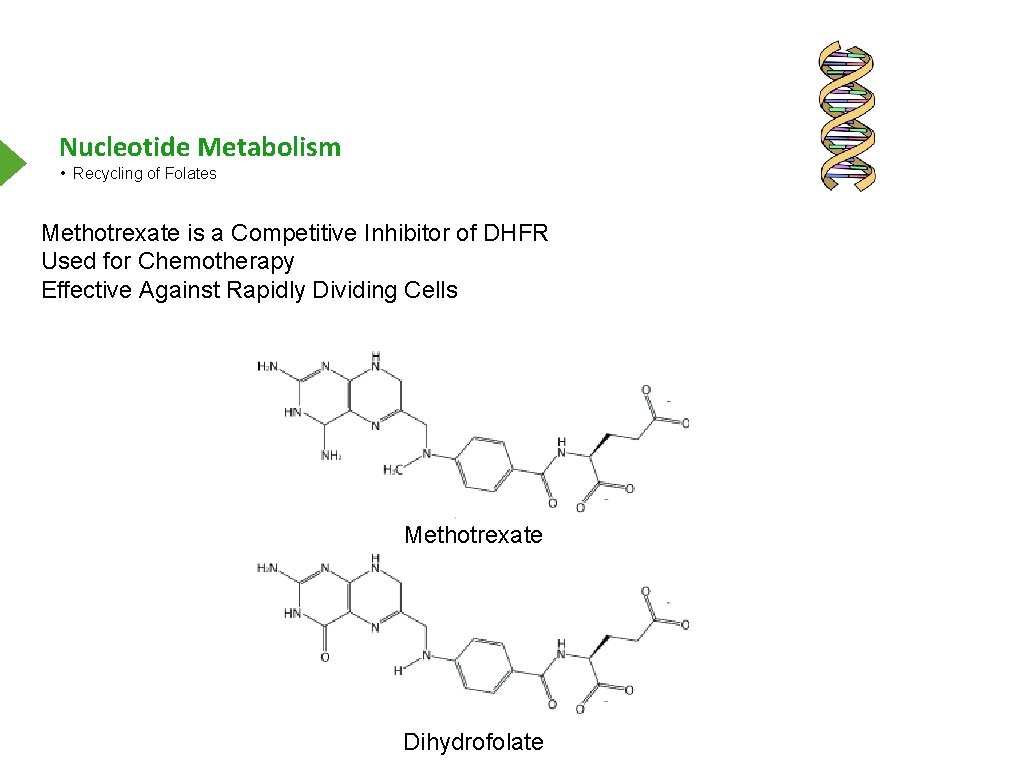
Nucleotide Metabolism • Recycling of Folates Methotrexate is a Competitive Inhibitor of DHFR Used for Chemotherapy Effective Against Rapidly Dividing Cells Methotrexate Dihydrofolate
Nucleotide Metabolism • Deoxyribonucleotide Metabolism Summary Deoxyribonucleotides are Made from Ribonucleoside Diphosphates Enzyme = Ribonucleotide Reductase (RNR) RNR is Oxidized in the Catalysis and Gets Reduced by Thioredoxin Ultimately is Reduced by NADPH RNR’s Large Subunit (R 1) Contains Two Allosteric Sites and the Active Site RNR’s Small Subunit (R 2) Contains the Tyrosine That Gets Radicalized RNR’s Allosteric Sites Control Levels of Production of Deoxyribonucleotides Oxidation of RNR Converts Two Sulfhydryls to a Disulfide That Must be Reduced RNR’s Activity Site Activates the Enzyme When Bound to ATP RNR’s Activity Site Inactivates the Enzyme When Bound to d. ATP Binding of Nucleotides Below to Specificity Site Favors Following Nucleotide Binding at the. Active Site d. ATP or ATP (UDP or CDP) d. GTP (ADP) d. TTP (GDP) d. TMP is Made from d. UMP by Thymidylate Synthase 5 -Fluorouracil Inhibits Thymidylate Synthase Methyl Carbon Donated by 5, 10 -methylenetetrahydrofolate, Forming Dihydrofolate Must be Converted to Tetrahydrofolate by Dihydrofolate Reductase Methotrexate Inhibits DHFR and is Used in Cancer Treatment
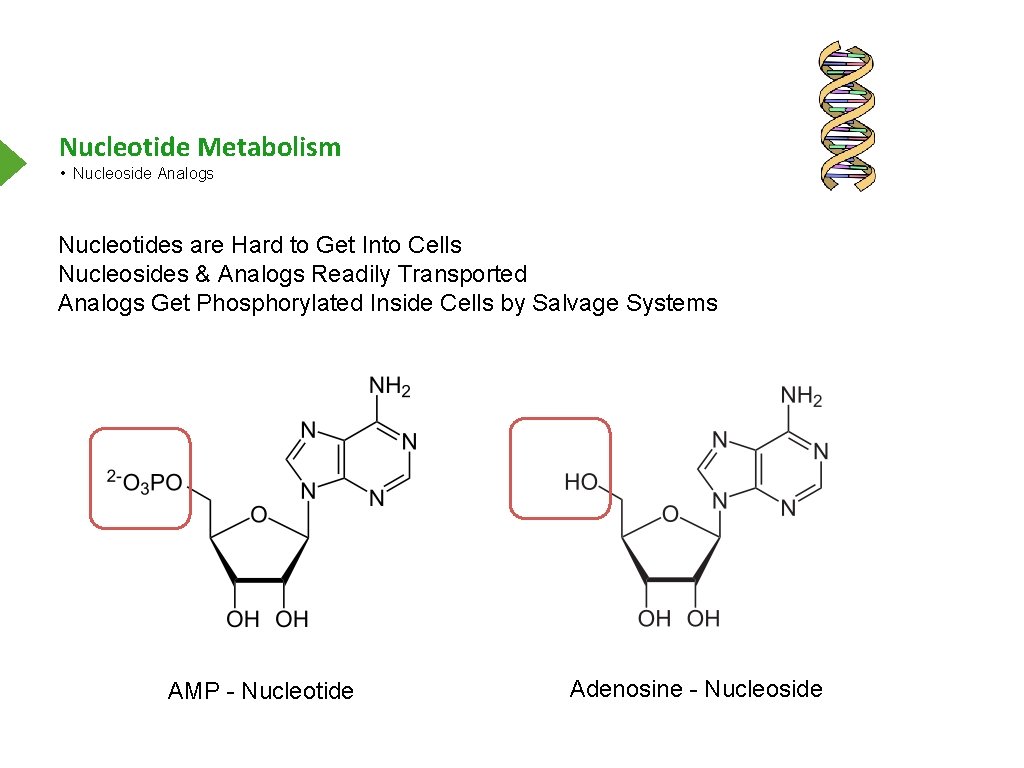
Nucleotide Metabolism • Nucleoside Analogs Nucleotides are Hard to Get Into Cells Nucleosides & Analogs Readily Transported Analogs Get Phosphorylated Inside Cells by Salvage Systems AMP - Nucleotide Adenosine - Nucleoside
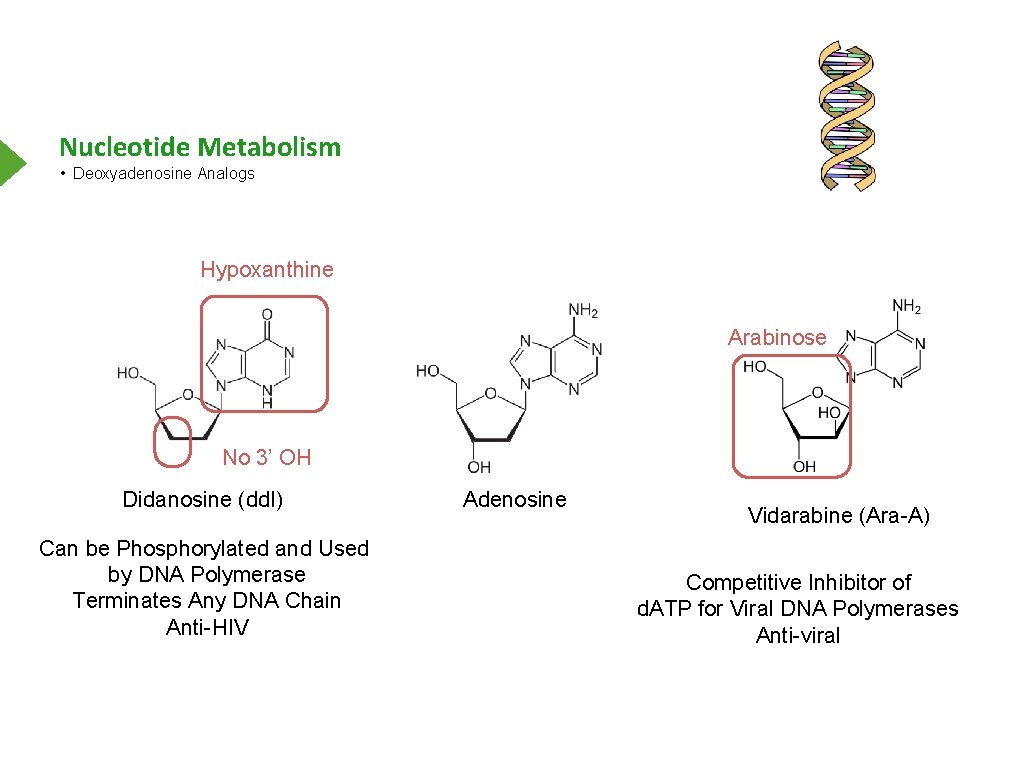
Nucleotide Metabolism • Deoxyadenosine Analogs Hypoxanthine Arabinose No 3’ OH Didanosine (dd. I) Can be Phosphorylated and Used by DNA Polymerase Terminates Any DNA Chain Anti-HIV Adenosine Vidarabine (Ara-A) Competitive Inhibitor of d. ATP for Viral DNA Polymerases Anti-viral
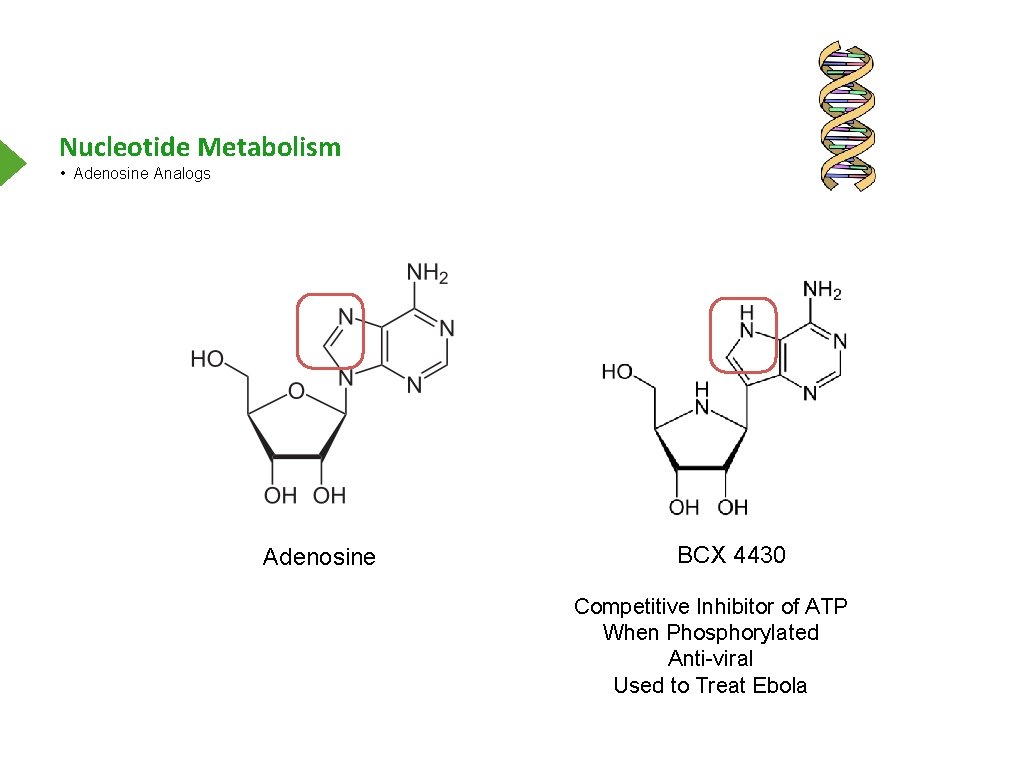
Nucleotide Metabolism • Adenosine Analogs Adenosine BCX 4430 Competitive Inhibitor of ATP When Phosphorylated Anti-viral Used to Treat Ebola
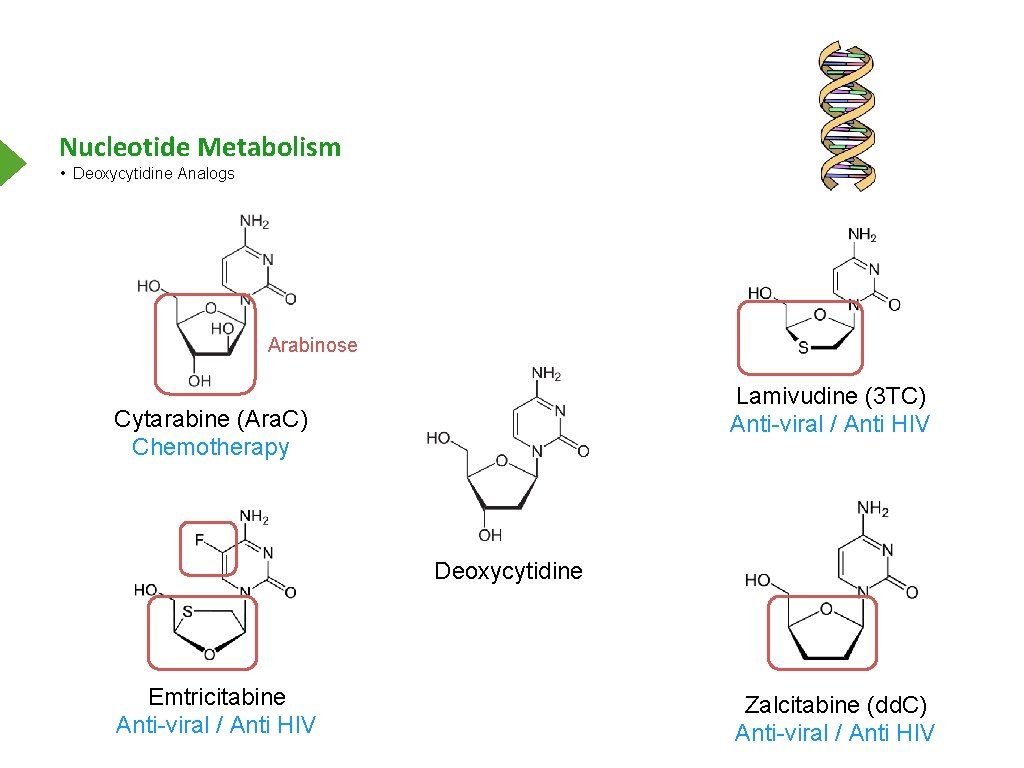
Nucleotide Metabolism • Deoxycytidine Analogs Arabinose Lamivudine (3 TC) Anti-viral / Anti HIV Cytarabine (Ara. C) Chemotherapy Deoxycytidine Emtricitabine Anti-viral / Anti HIV Zalcitabine (dd. C) Anti-viral / Anti HIV
- Slides: 41