
Nucleic Acids th the 4 Biological Macromolecu Concept
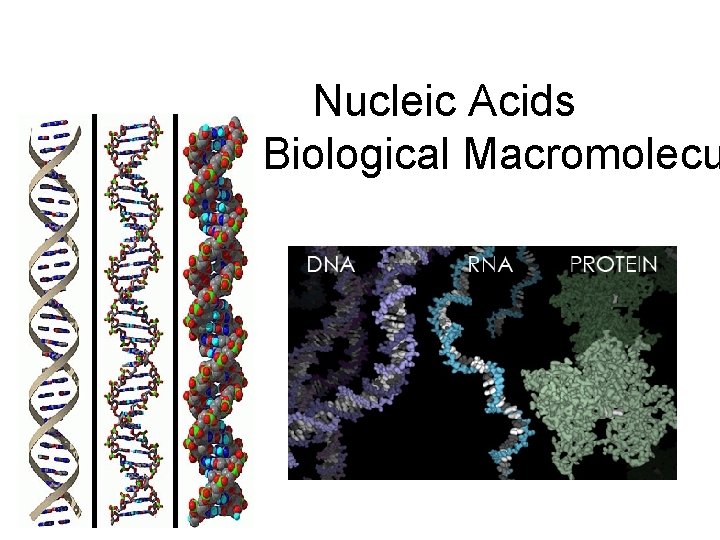
Nucleic Acids th the 4 Biological Macromolecu
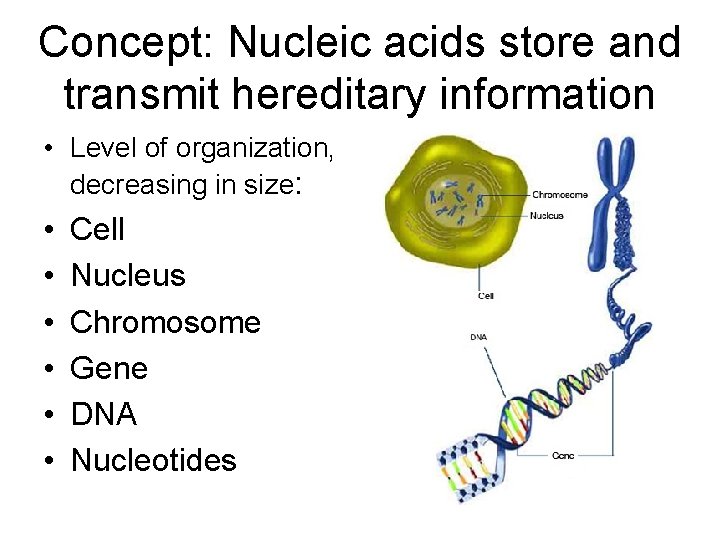
Concept: Nucleic acids store and transmit hereditary information • Level of organization, decreasing in size: • • • Cell Nucleus Chromosome Gene DNA Nucleotides
Amino acid sequence of a polypeptide is programmed by a gene • What exactly, is a gene? • A sequence of nucleotides in a DNA molecule necessary to synthesize a polypeptide. • Genes are made of DNA is one of two nucleic acids. What’s the other? • RNA- ribonucleic acid
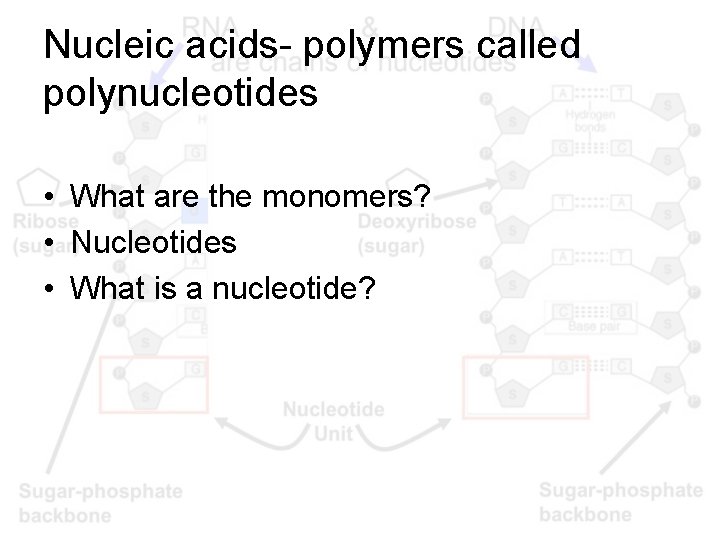
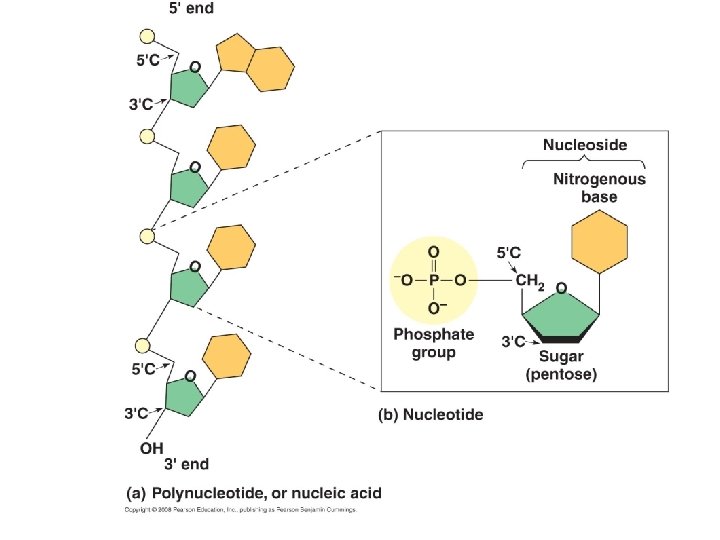
Nucleic acids- polymers called polynucleotides • What are the monomers? • Nucleotides • What is a nucleotide?
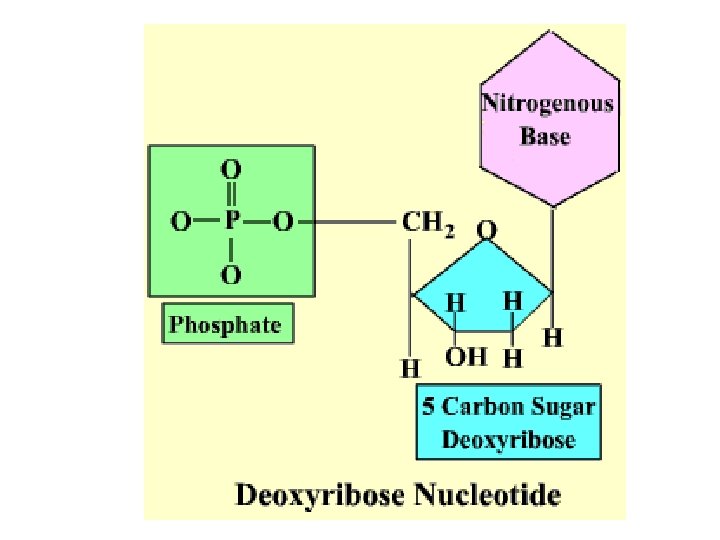
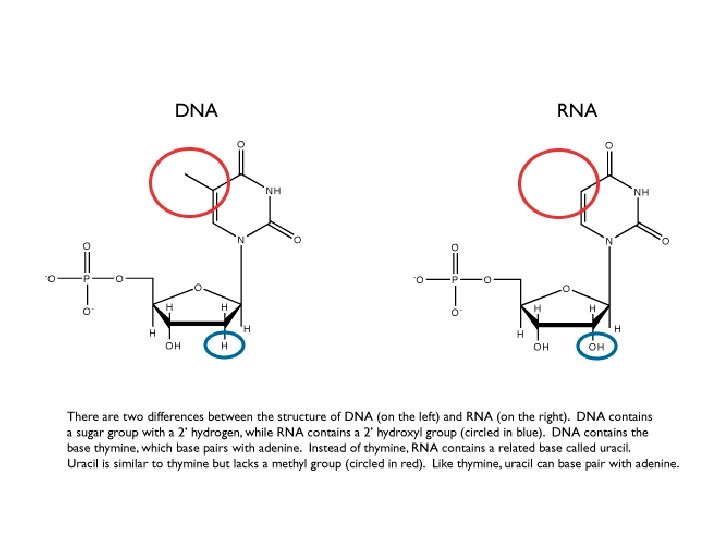
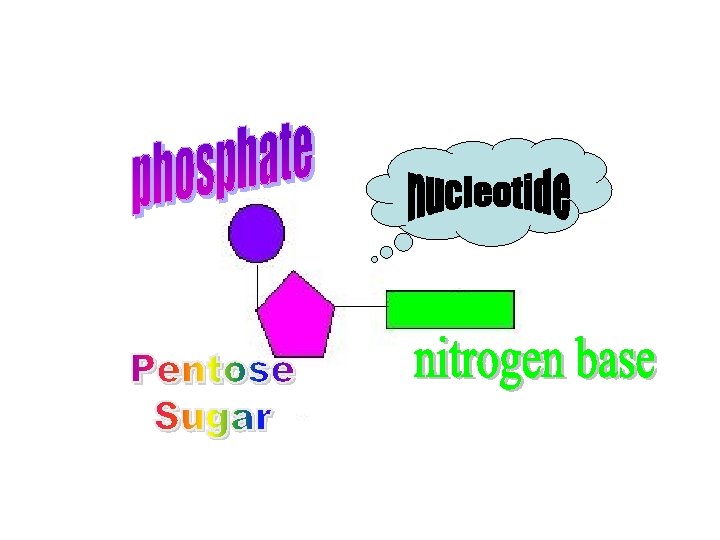
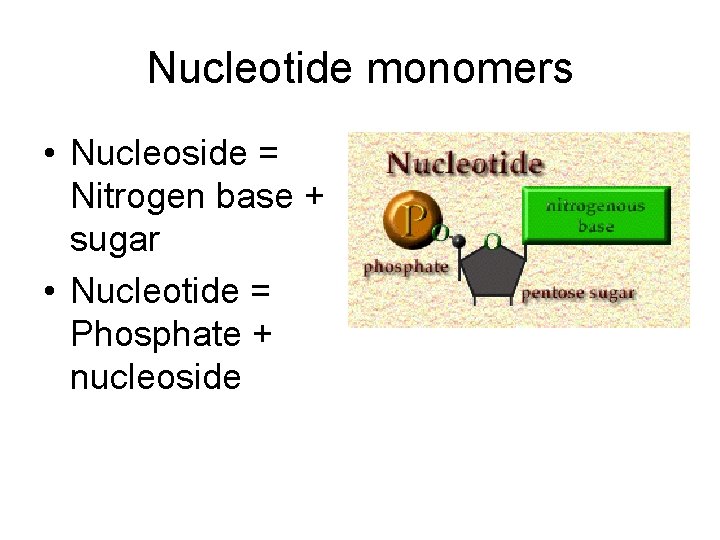
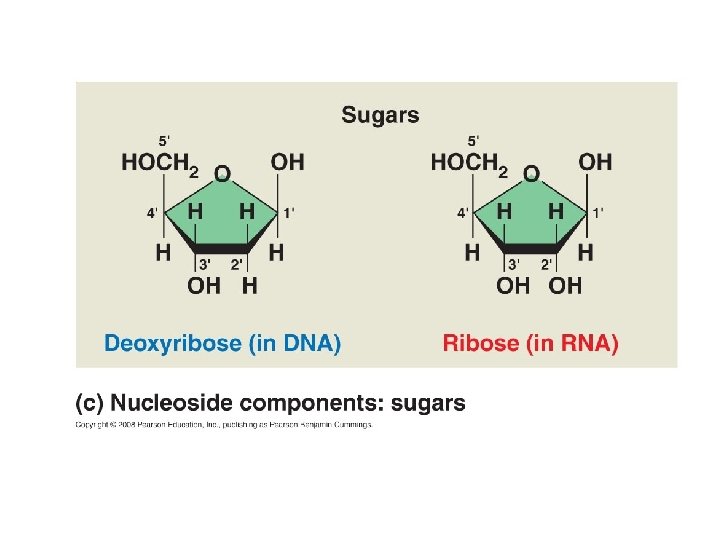
Nucleotide monomers • Nucleoside = Nitrogen base + sugar • Nucleotide = Phosphate + nucleoside
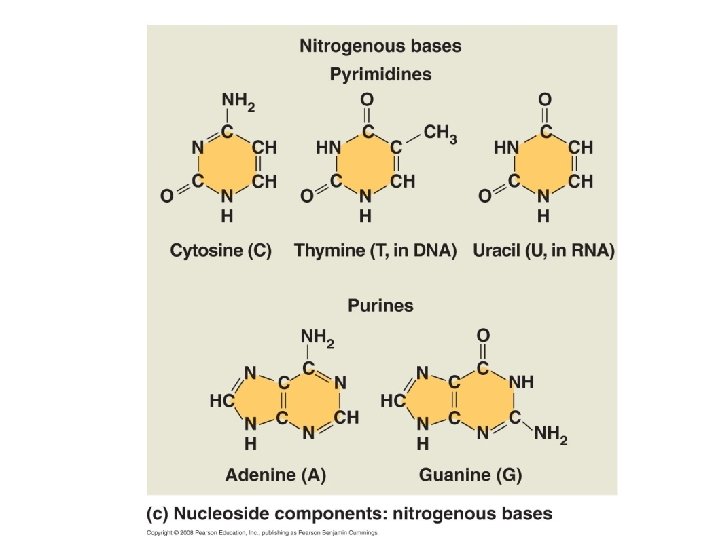
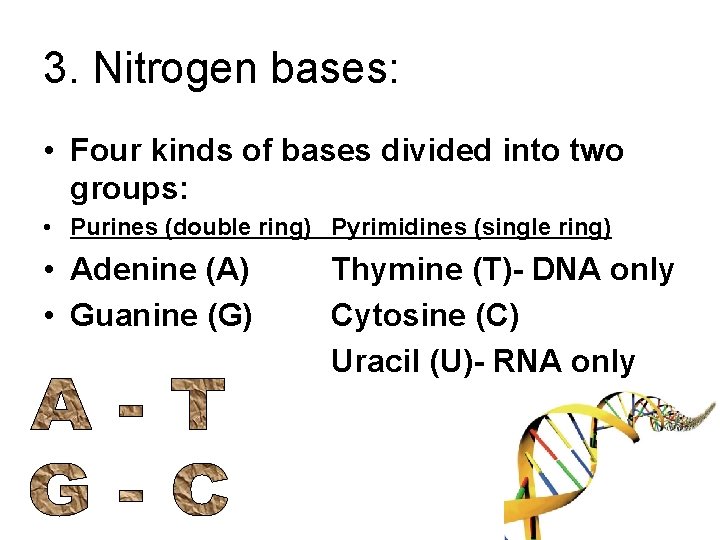
3. Nitrogen bases: • Four kinds of bases divided into two groups: • Purines (double ring) Pyrimidines (single ring) • Adenine (A) • Guanine (G) Thymine (T)- DNA only Cytosine (C) Uracil (U)- RNA only
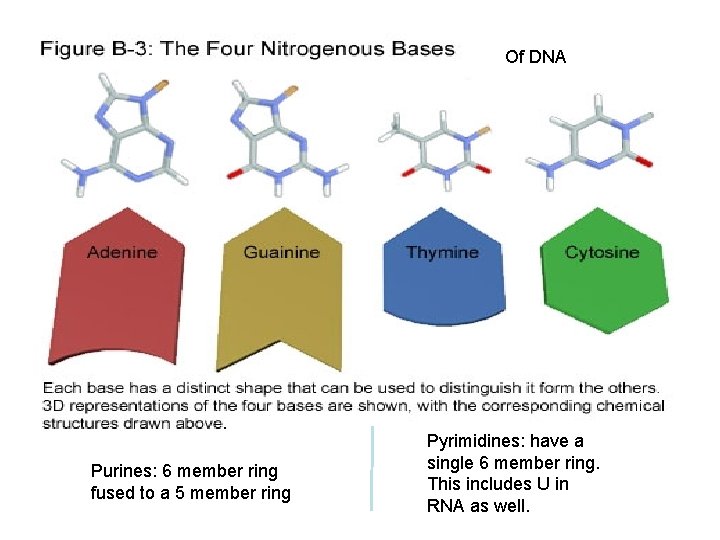
Of DNA Purines: 6 member ring fused to a 5 member ring Pyrimidines: have a single 6 member ring. This includes U in RNA as well.

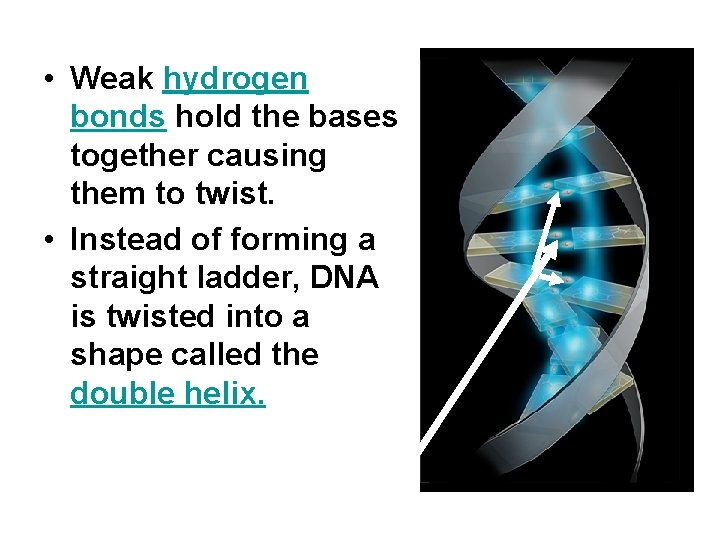
• Weak hydrogen bonds hold the bases together causing them to twist. • Instead of forming a straight ladder, DNA is twisted into a shape called the double helix.
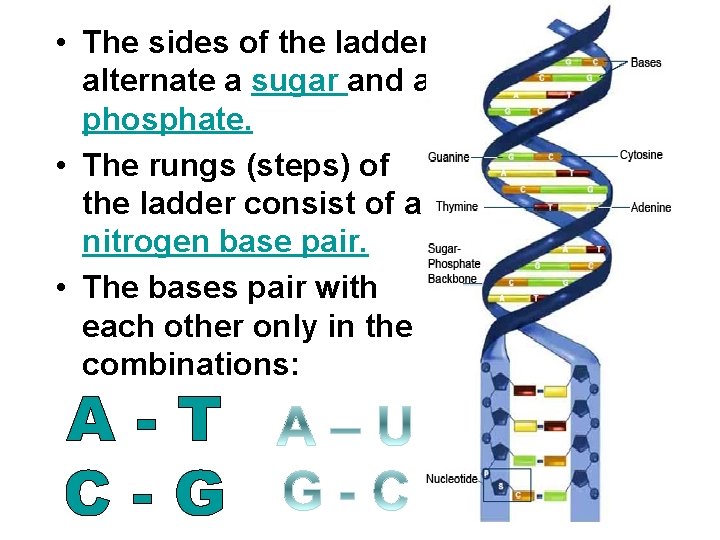
• The sides of the ladder alternate a sugar and a phosphate. • The rungs (steps) of the ladder consist of a nitrogen base pair. • The bases pair with each other only in the combinations:
DNA and proteins are considered the “tape measures” of evolution • The linear sequence of nucleotides in DNA are passed to offspring from parents. • Two closely related species are more similar in DNA than the distantly related species • Molecular biology is used to assess evolutionary relationships
Macromolecule Monomers or components Polymer or larger molecule Type of linkage
- Slides: 19