
Nucleic Acids Polymers of nucleotides Very specific cell
- Slides: 16
Nucleic Acids • Polymers of nucleotides • Very specific cell functions – DNA (deoxyribonucleic acid) • Double-stranded helical spiral (twisted ladder) • Serves as genetic information center • In chromosomes – RNA (ribonucleic acid) • Part single-stranded, part double-stranded • Serves primarily in assembly of proteins • In nucleus and cytoplasm of cell
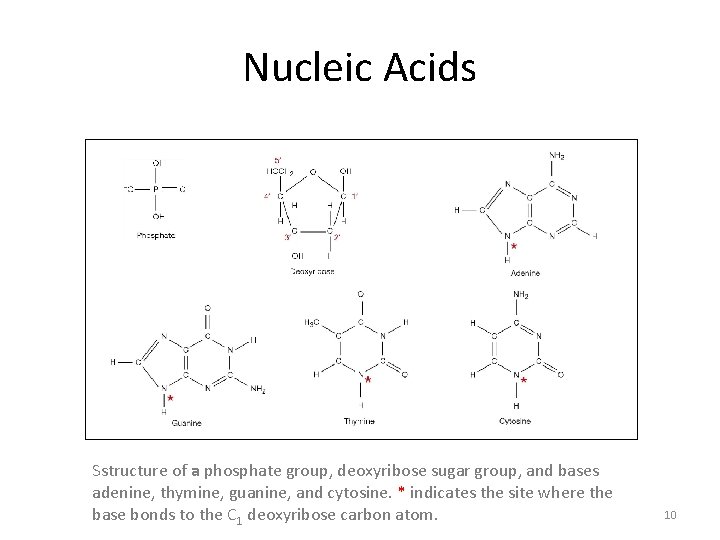
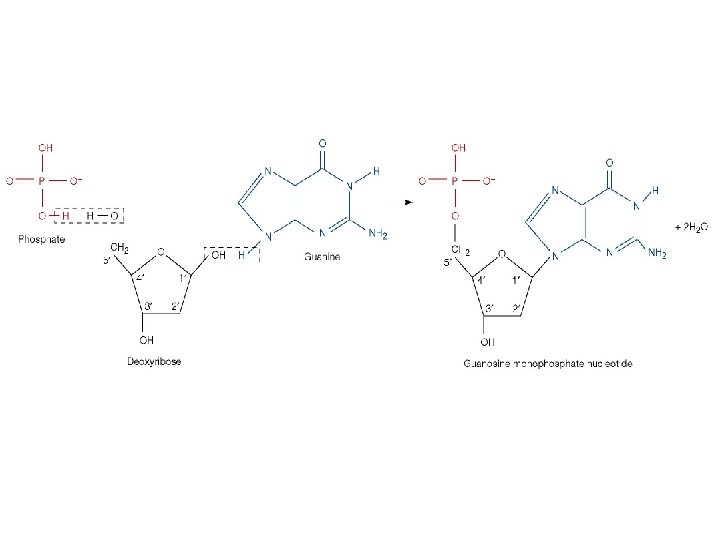
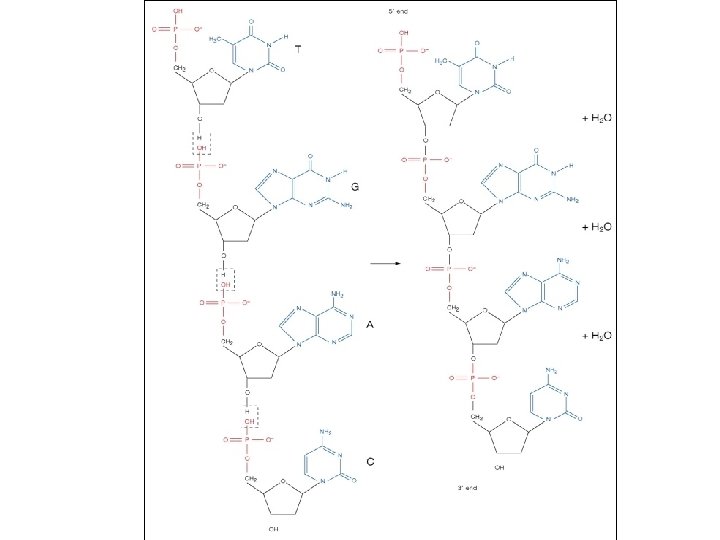
The Nucleotides of Nucleic Acids • Three components: • A phosphate group, • A pentose sugar (ribose or deoxyribose), and • A nitrogenous base (4 kinds in DNA, 3 kinds in RNA, 3 common to both) – Nucleotide subunits connected end-to-end to make nucleic acid – Sugar of one connected to the phosphate of the next – Sugar-phosphate backbone
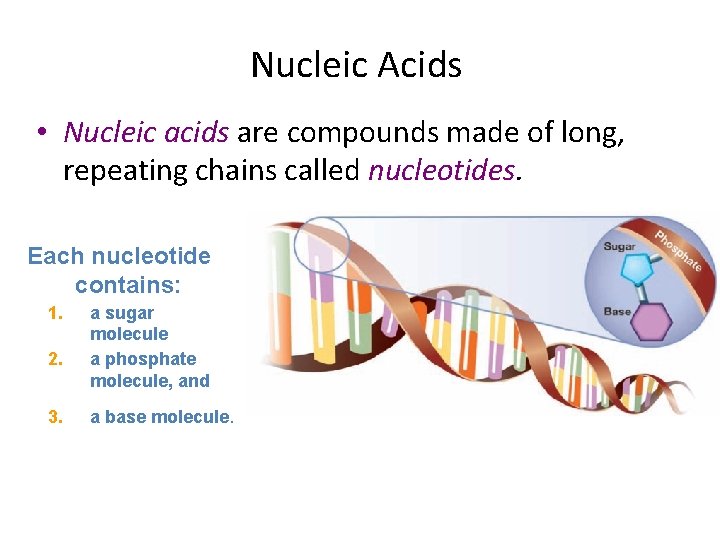
Nucleic Acids • Nucleic acids are compounds made of long, repeating chains called nucleotides. Each nucleotide contains: 1. 2. 3. a sugar molecule a phosphate molecule, and a base molecule.
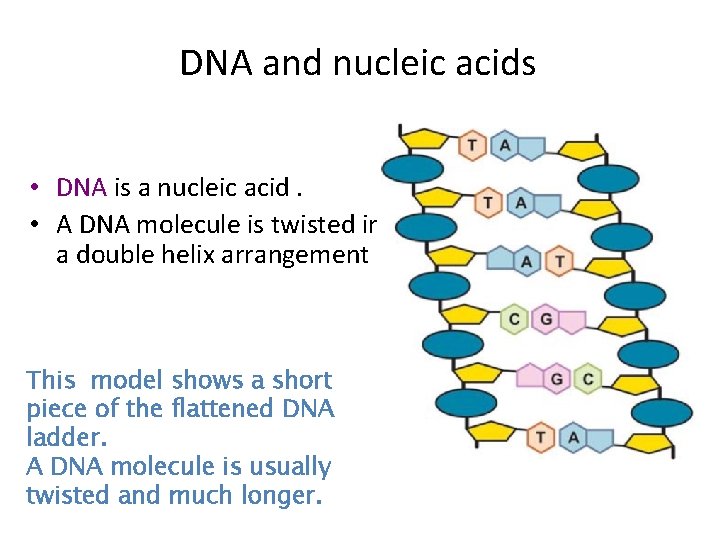
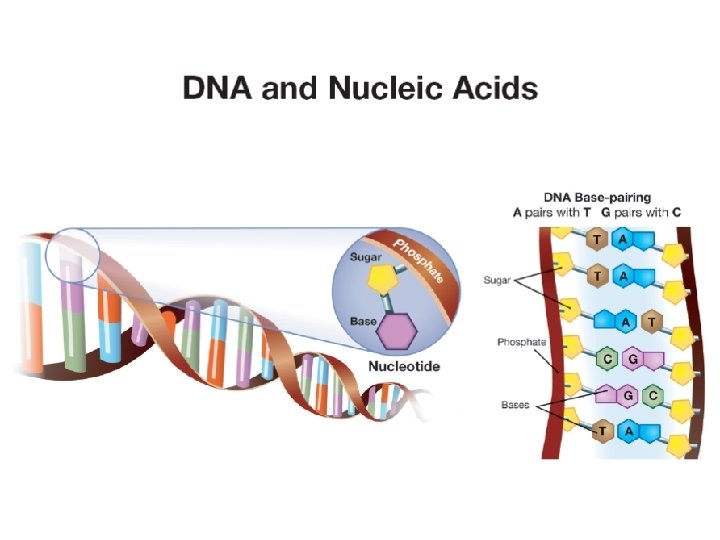
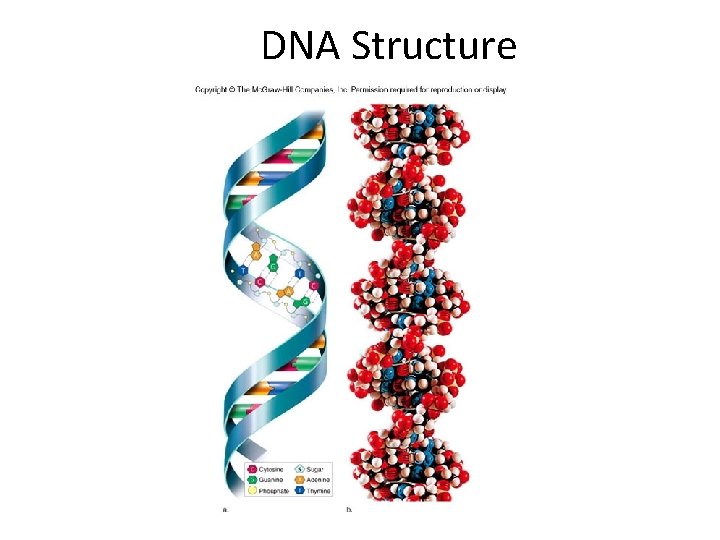
DNA and nucleic acids • DNA is a nucleic acid. • A DNA molecule is twisted in a double helix arrangement This model shows a short piece of the flattened DNA ladder. A DNA molecule is usually twisted and much longer.
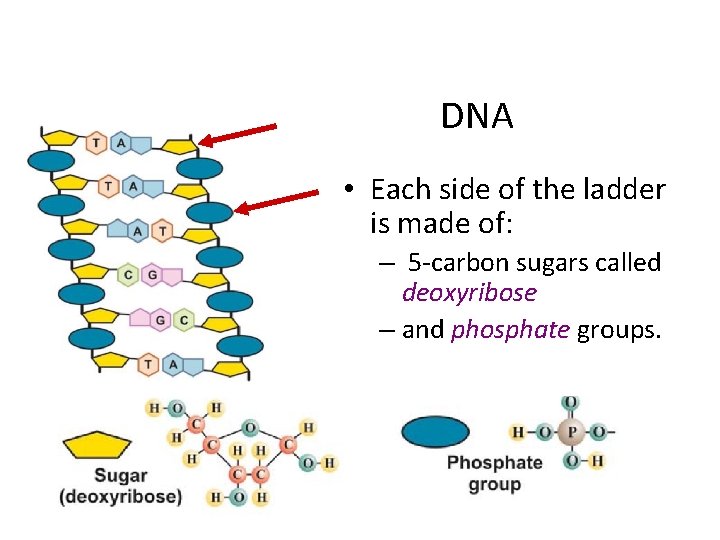
DNA • Each side of the ladder is made of: – 5 -carbon sugars called deoxyribose – and phosphate groups.
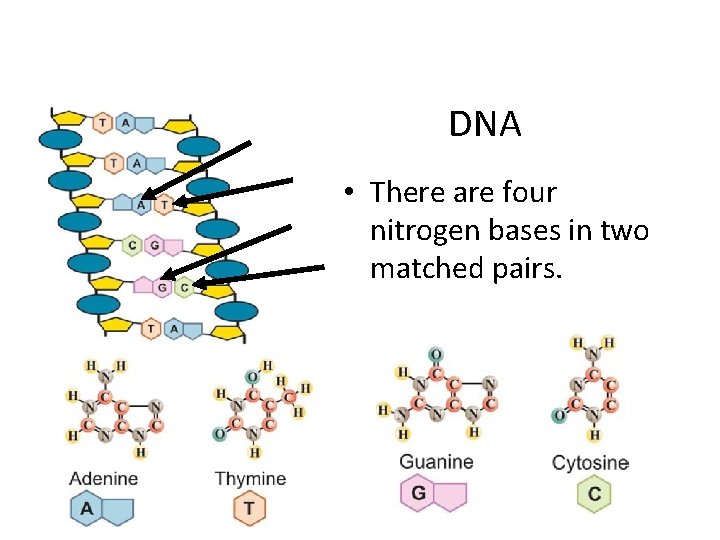
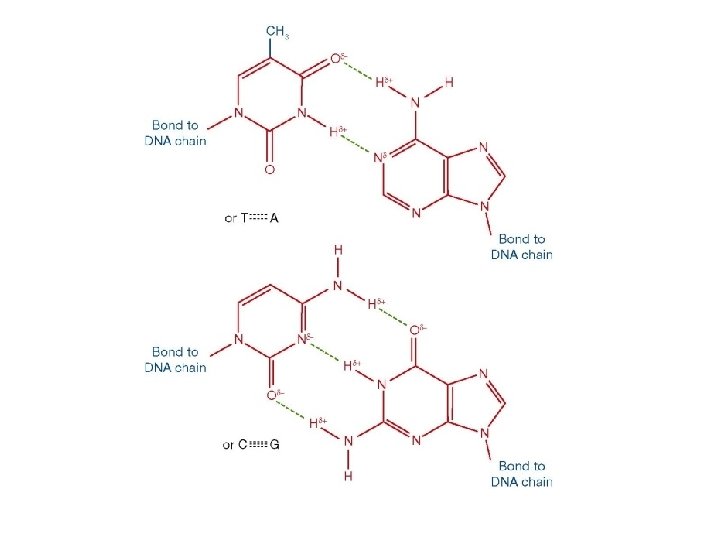
DNA • There are four nitrogen bases in two matched pairs.
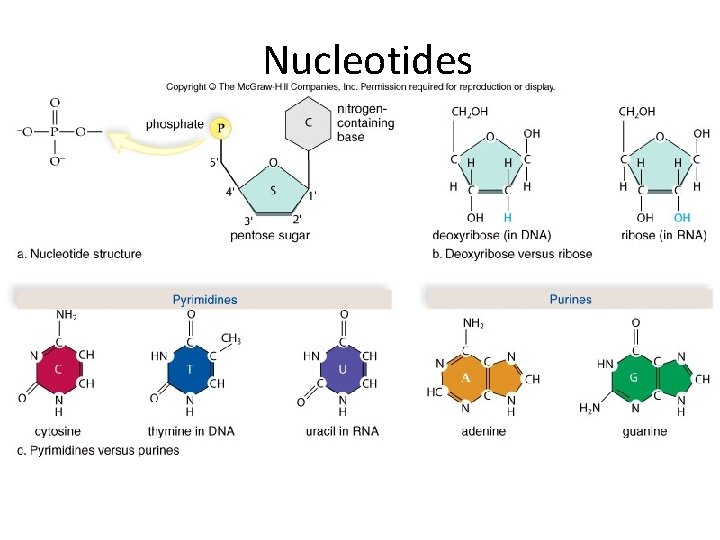
Nucleotides
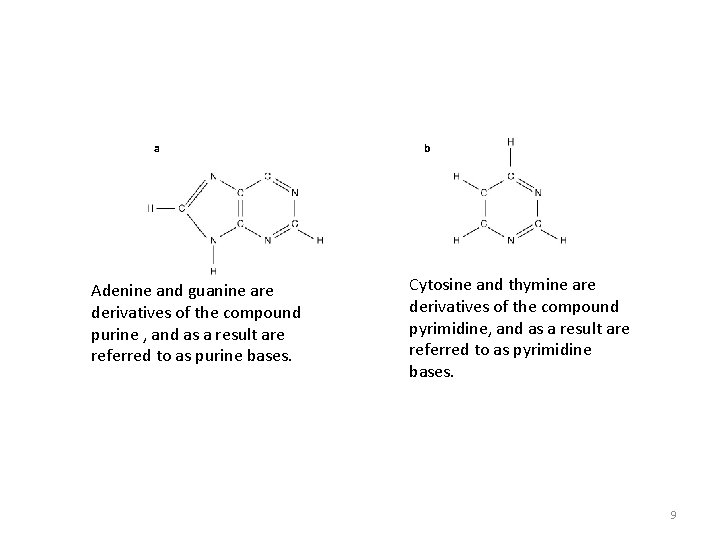
a Adenine and guanine are derivatives of the compound purine , and as a result are referred to as purine bases. b Cytosine and thymine are derivatives of the compound pyrimidine, and as a result are referred to as pyrimidine bases. 9
Nucleic Acids Sstructure of a phosphate group, deoxyribose sugar group, and bases adenine, thymine, guanine, and cytosine. * indicates the site where the base bonds to the C 1 deoxyribose carbon atom. 10
DNA Structure
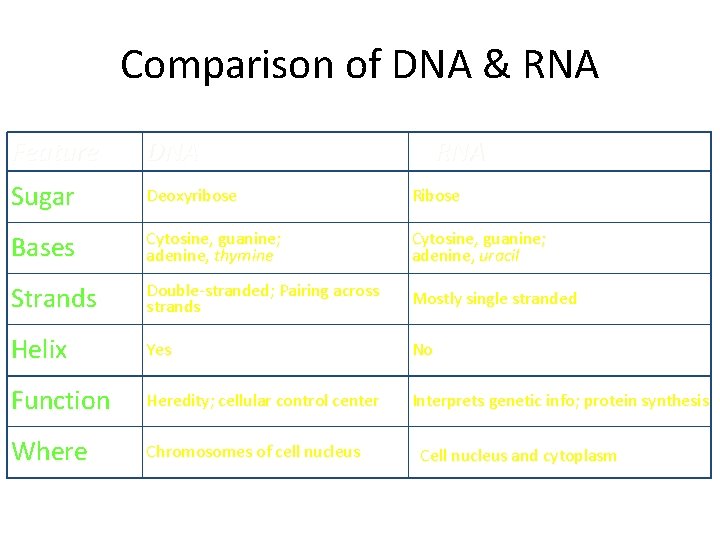
Comparison of DNA & RNA Feature DNA RNA Sugar Deoxyribose Ribose Bases Cytosine, guanine; adenine, thymine Cytosine, guanine; adenine, uracil Strands Double-stranded; Pairing across strands Mostly single stranded Helix Yes No Function Heredity; cellular control center Interprets genetic info; protein synthesis Where Chromosomes of cell nucleus Cell nucleus and cytoplasm
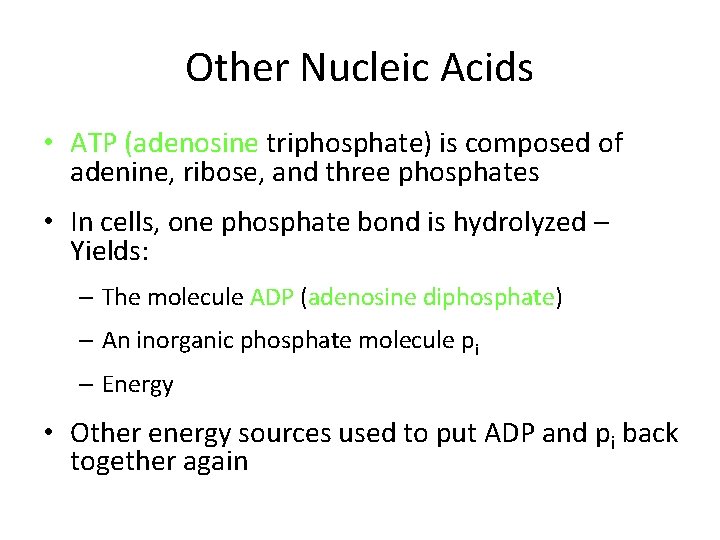
Other Nucleic Acids • ATP (adenosine triphosphate) is composed of adenine, ribose, and three phosphates • In cells, one phosphate bond is hydrolyzed – Yields: – The molecule ADP (adenosine diphosphate) – An inorganic phosphate molecule pi – Energy • Other energy sources used to put ADP and pi back together again