
Nucleic Acids Polymer Individual unit called a mononucleotide
- Slides: 16
Nucleic Acids • Polymer • Individual unit called a (mono)nucleotide • DNA is a type of nucleic acid – deoxyribonucleic acid
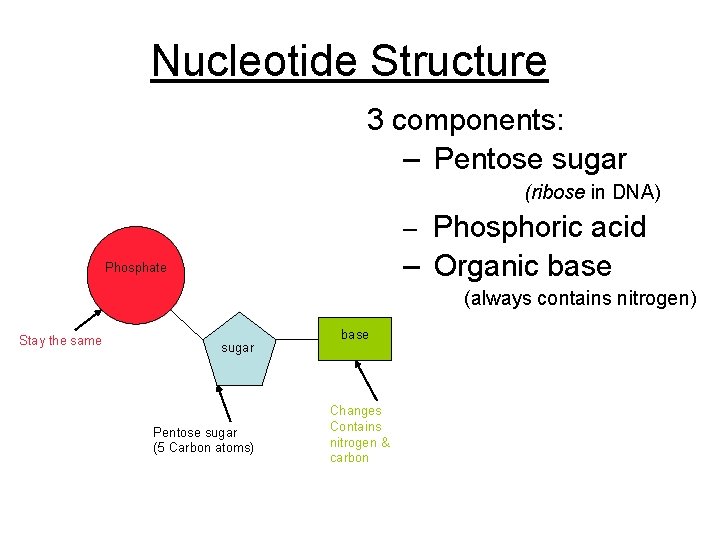
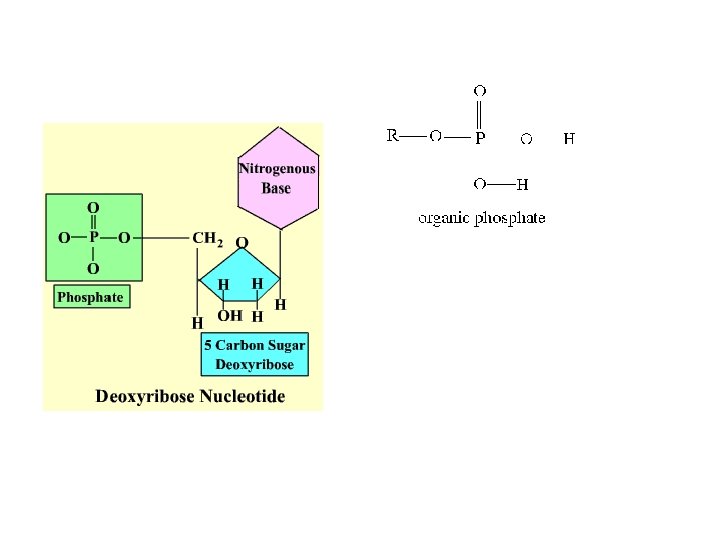
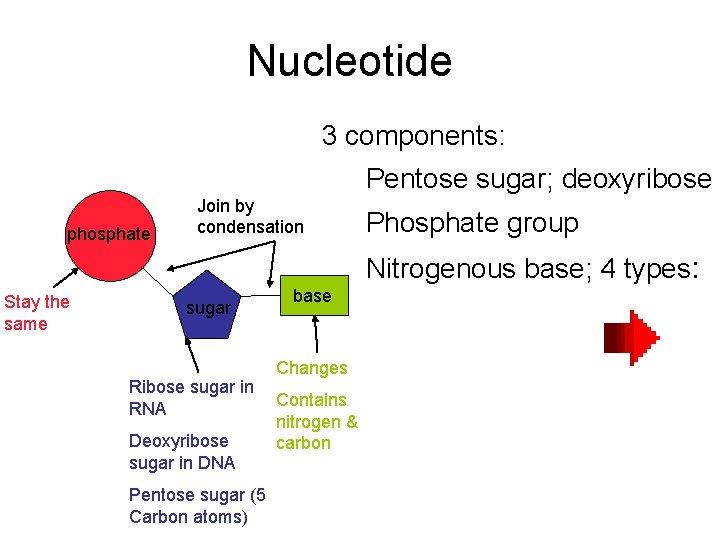
Nucleotide Structure 3 components: – Pentose sugar (ribose in DNA) – Phosphoric acid – Organic base Phosphate (always contains nitrogen) Stay the same sugar Pentose sugar (5 Carbon atoms) base Changes Contains nitrogen & carbon
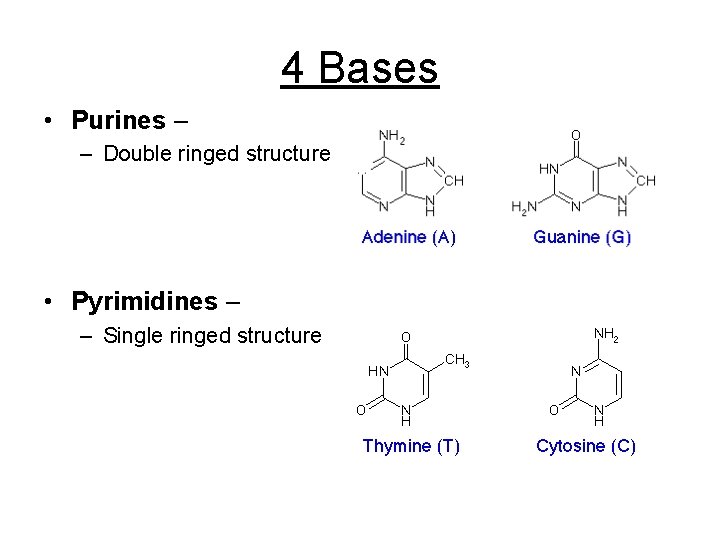
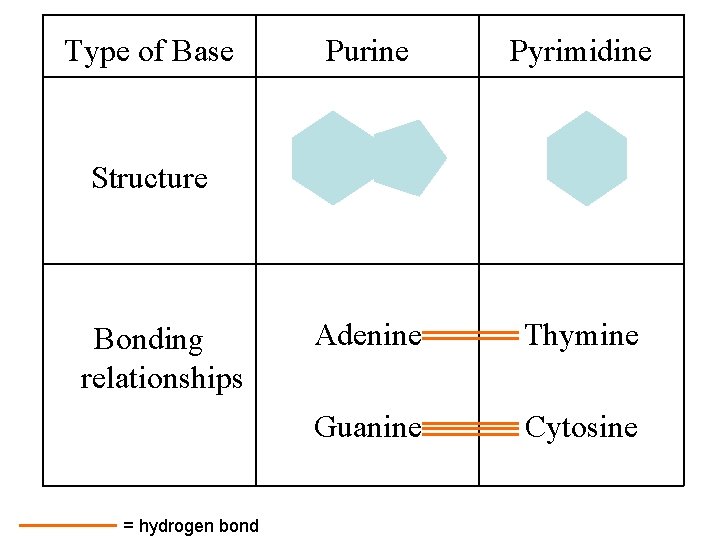
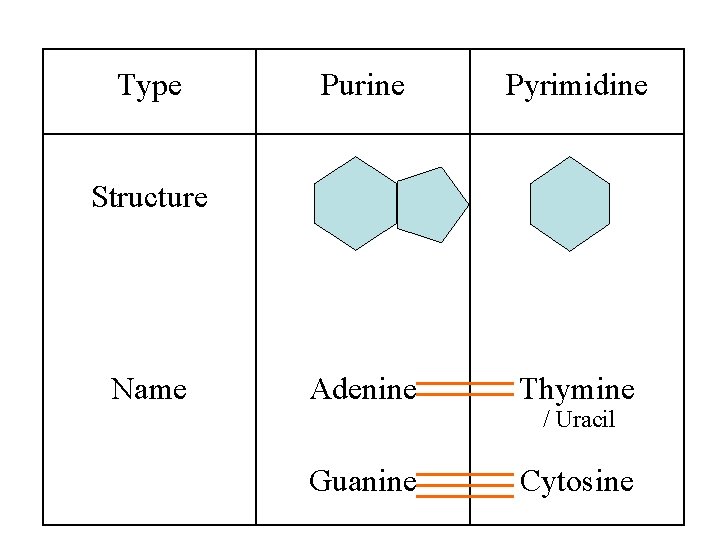
4 Bases • Purines – – Double ringed structure • Pyrimidines – – Single ringed structure
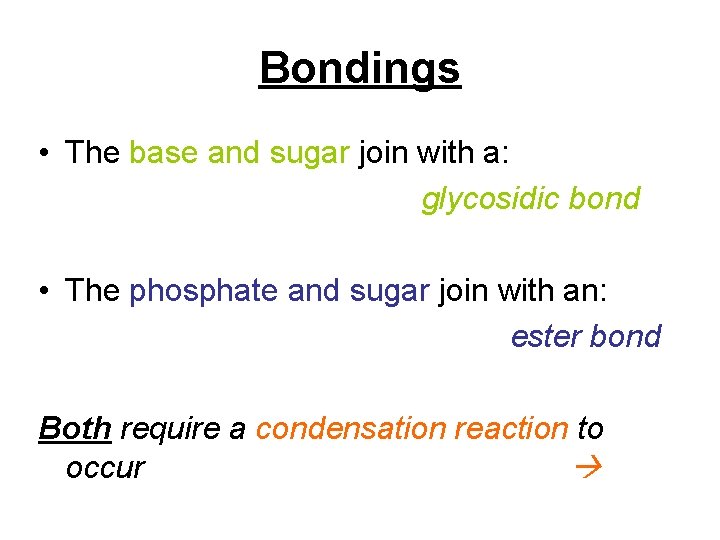
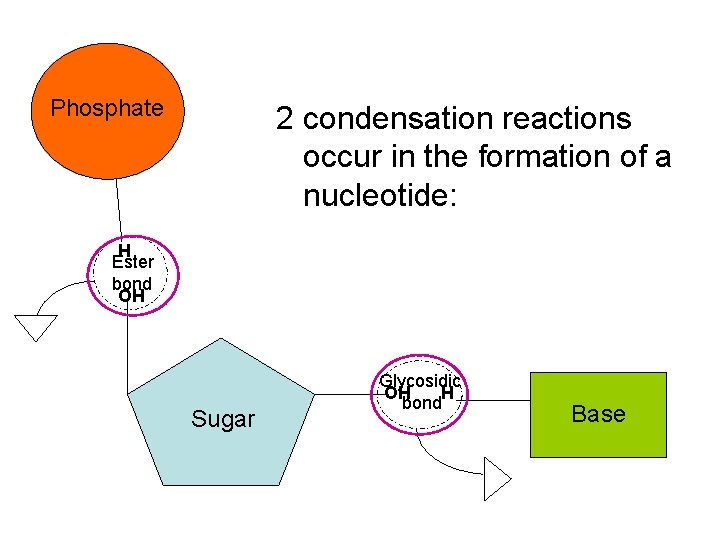
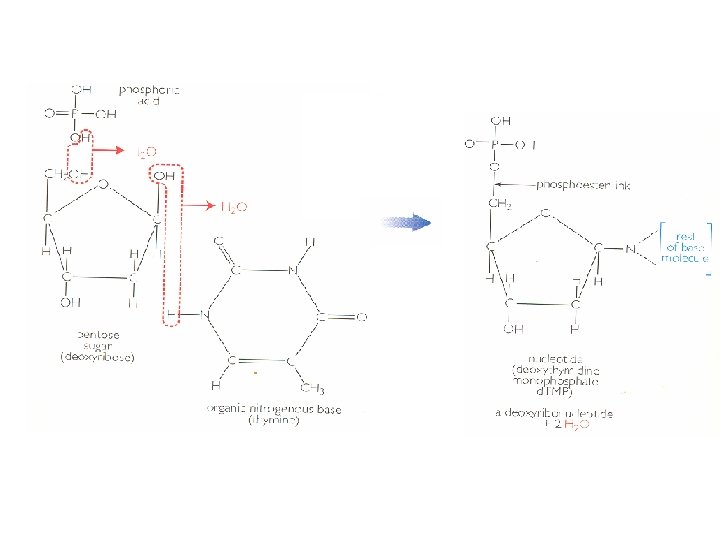
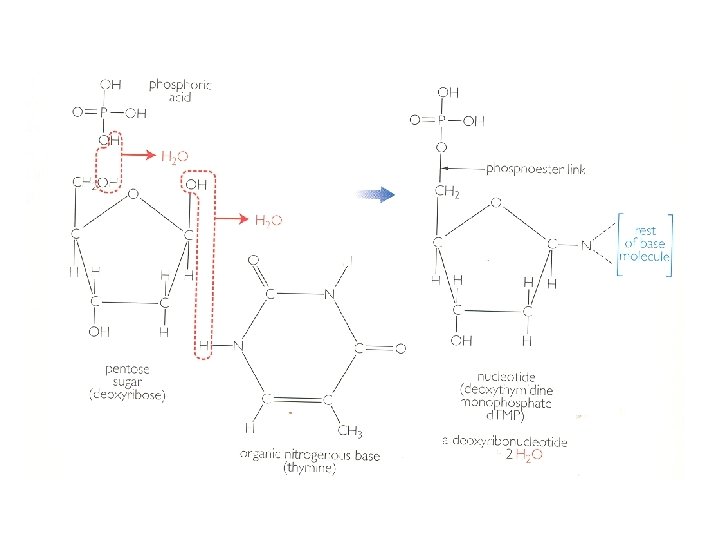
Bondings • The base and sugar join with a: glycosidic bond • The phosphate and sugar join with an: ester bond Both require a condensation reaction to occur
Phosphate 2 condensation reactions occur in the formation of a nucleotide: H Ester bond OH Sugar Glycosidic OH H bond Base
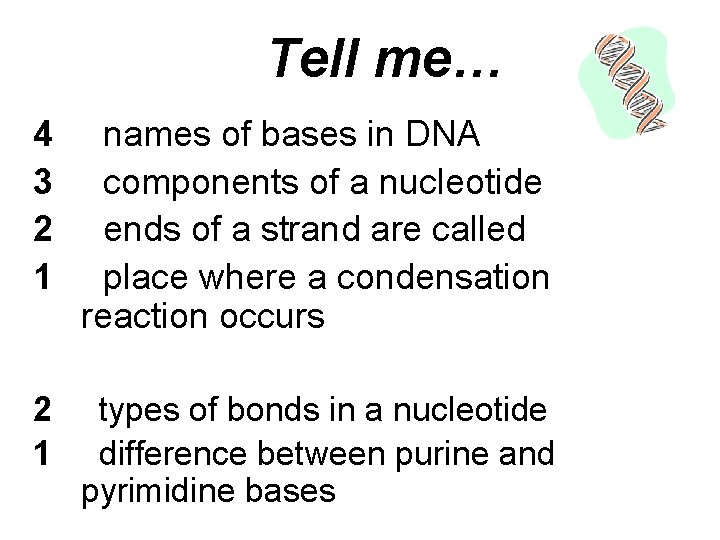
Tell me… 4 3 2 1 names of bases in DNA components of a nucleotide ends of a strand are called place where a condensation reaction occurs 2 1 types of bonds in a nucleotide difference between purine and pyrimidine bases
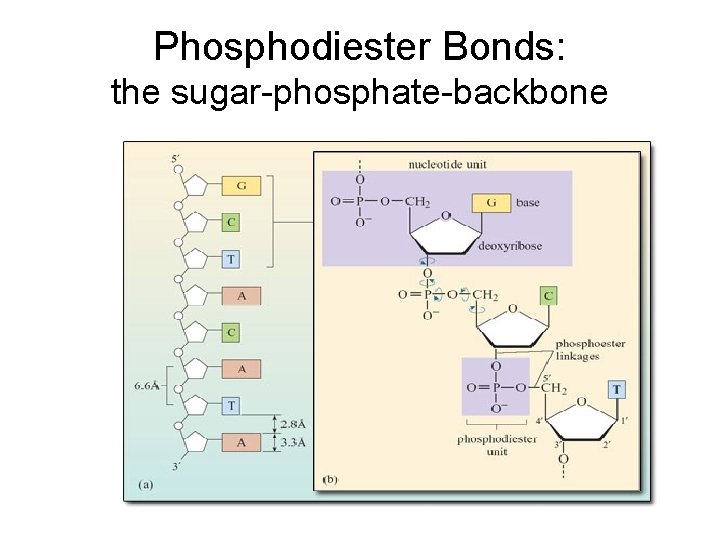
Phosphodiester Bonds: the sugar-phosphate-backbone
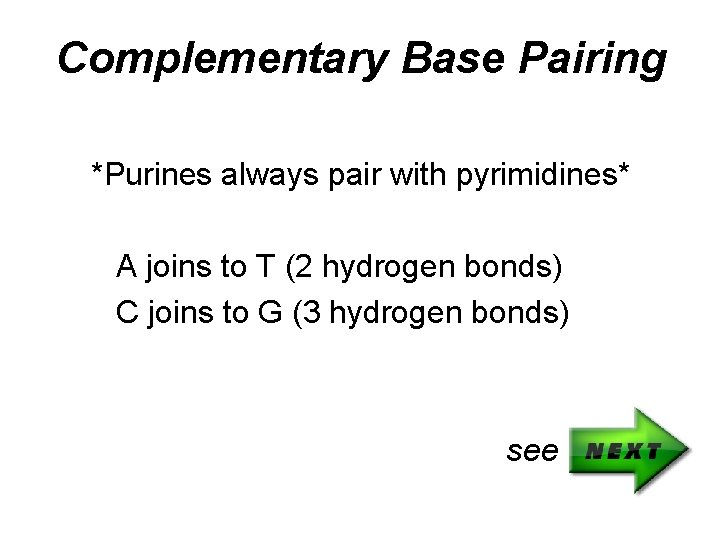
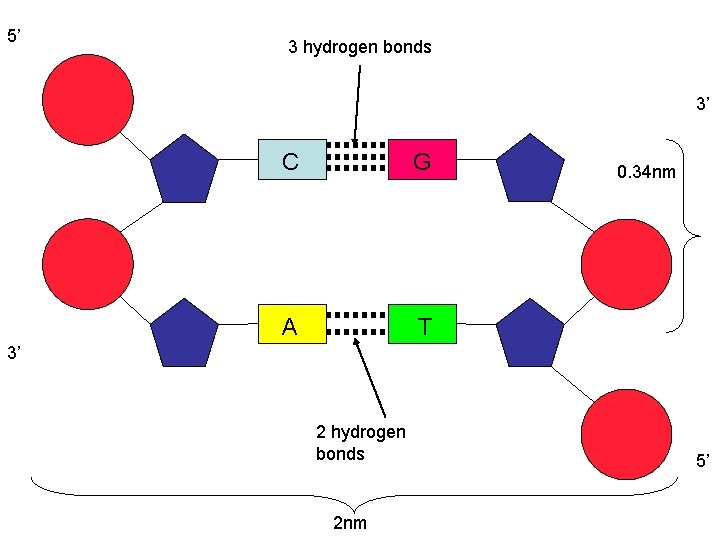
Complementary Base Pairing *Purines always pair with pyrimidines* A joins to T (2 hydrogen bonds) C joins to G (3 hydrogen bonds) see
5’ 3 hydrogen bonds 3’ C G A T 0. 34 nm 3’ 2 hydrogen bonds 2 nm 5’
Type of Base Purine Pyrimidine Adenine Thymine Guanine Cytosine Structure Bonding relationships = hydrogen bond
Type Purine Pyrimidine Adenine Thymine Structure Name / Uracil Guanine Cytosine
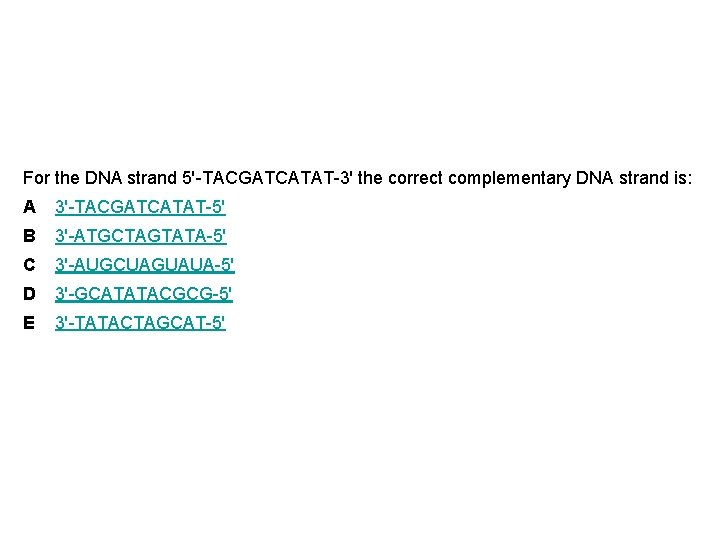
For the DNA strand 5'-TACGATCATAT-3' the correct complementary DNA strand is: A 3'-TACGATCATAT-5' B 3'-ATGCTAGTATA-5' C 3'-AUGCUAGUAUA-5' D 3'-GCATATACGCG-5' E 3'-TATACTAGCAT-5'
Nucleotide 3 components: Pentose sugar; deoxyribose phosphate Join by condensation Phosphate group Nitrogenous base; 4 types: Stay the same sugar Ribose sugar in RNA Deoxyribose sugar in DNA Pentose sugar (5 Carbon atoms) base Changes Contains nitrogen & carbon