
Nucleic Acids Overview Focus on Structure of DNARNA
- Slides: 58
Nucleic Acids Overview
Focus on: • Structure of DNA/RNA – can I draw it or interpret drawings • DNA Replication – can I describe the basic process • RNA Transcription – can I explain role of each type of RNA • Biosynthesis of Proteins – can I explain the basic process • Miscellaneous Topics – could I discuss each one • Cancer/Chemotherapy • Genetic Engineering • Human Genome Project • Genetic Code (Codons)
Structure 5 Bases
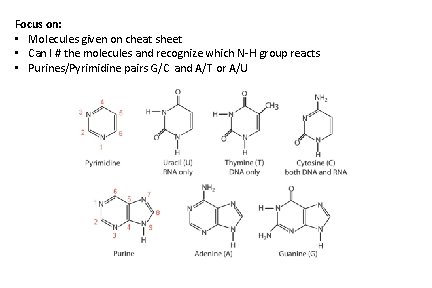
Focus on: • Molecules given on cheat sheet • Can I # the molecules and recognize which N-H group reacts • Purines/Pyrimidine pairs G/C and A/T or A/U
Structure Sugars
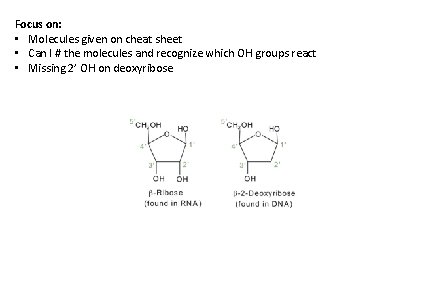
Focus on: • Molecules given on cheat sheet • Can I # the molecules and recognize which OH groups react • Missing 2’ OH on deoxyribose
Nucleosides
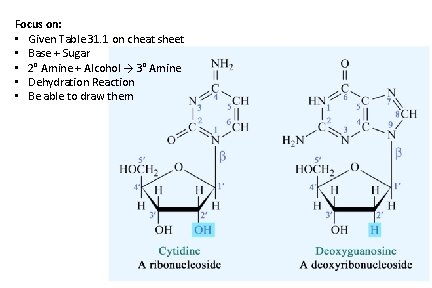
Focus on: • Given Table 31. 1 on cheat sheet • Base + Sugar • 2° Amine + Alcohol → 3° Amine • Dehydration Reaction • Be able to draw them
Nucleotides
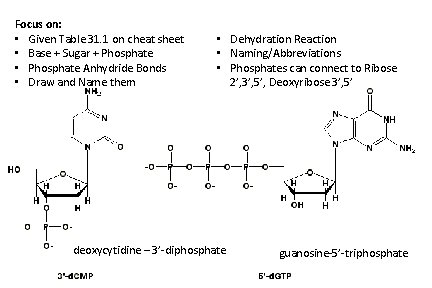
Focus on: • Given Table 31. 1 on cheat sheet • Base + Sugar + Phosphate • Phosphate Anhydride Bonds • Draw and Name them • Dehydration Reaction • Naming/Abbreviations • Phosphates can connect to Ribose 2’, 3’, 5’, Deoxyribose 3’, 5’ deoxycytidine – 3’-diphosphate guanosine-5’-triphosphate
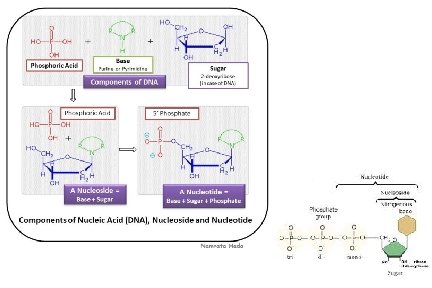
Parts of Nucleotide
DNA
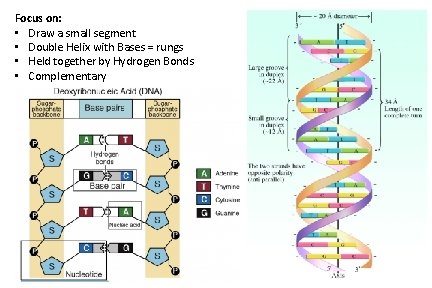
Focus on: • Draw a small segment • Double Helix with Bases = rungs • Held together by Hydrogen Bonds • Complementary
Complimentary Base Pairs
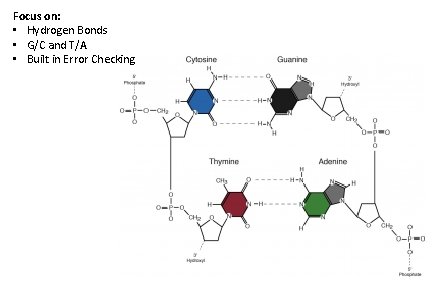
Focus on: • Hydrogen Bonds • G/C and T/A • Built in Error Checking
Replication
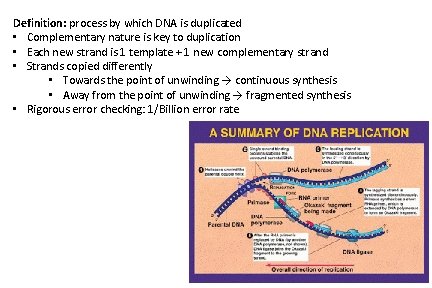
Definition: process by which DNA is duplicated • Complementary nature is key to duplication • Each new strand is 1 template + 1 new complementary strand • Strands copied differently • Towards the point of unwinding → continuous synthesis • Away from the point of unwinding → fragmented synthesis • Rigorous error checking: 1/Billion error rate
DNA vs RNA
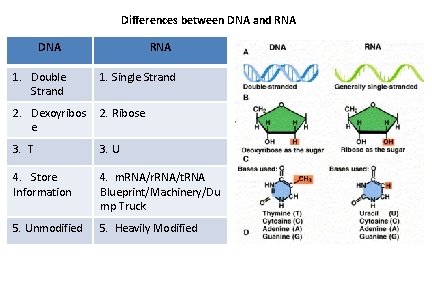
Differences between DNA and RNA DNA RNA 1. Double Strand 1. Single Strand 2. Dexoyribos e 2. Ribose 3. T 3. U 4. Store Information 4. m. RNA/r. RNA/t. RNA Blueprint/Machinery/Du mp Truck 5. Unmodified 5. Heavily Modified
RNA - General
RNA – Summary • 3 main types • r. RNA = ribosomal → machinery (80%) • m. RNA = messenger → blueprint • t. RNA = transfer → dump truck • Single Strand • U instead of T • Complimentary to DNA (HB) • Heavily Modified • Methylation (add CH 3) • Saturation of C=C • Isomerization of ribose
r. RNA
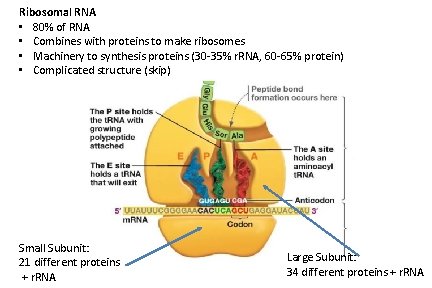
Ribosomal RNA • 80% of RNA • Combines with proteins to make ribosomes • Machinery to synthesis proteins (30 -35% r. RNA, 60 -65% protein) • Complicated structure (skip) Small Subunit: 21 different proteins + r. RNA Large Subunit: 34 different proteins + r. RNA
m. RNA
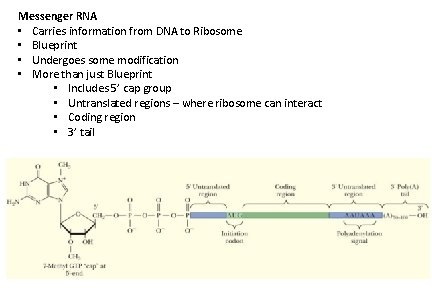
Messenger RNA • Carries information from DNA to Ribosome • Blueprint • Undergoes some modification • More than just Blueprint • Includes 5’ cap group • Untranslated regions – where ribosome can interact • Coding region • 3’ tail
t. RNA
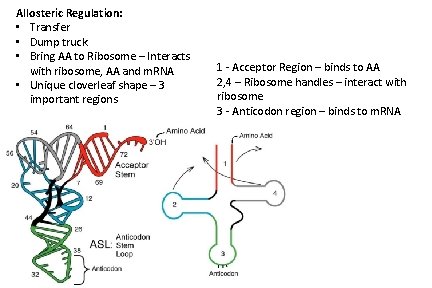
Allosteric Regulation: • Transfer • Dump truck • Bring AA to Ribosome – Interacts with ribosome, AA and m. RNA • Unique cloverleaf shape – 3 important regions 1 - Acceptor Region – binds to AA 2, 4 – Ribosome handles – interact with ribosome 3 - Anticodon region – binds to m. RNA
Other Types of RNA
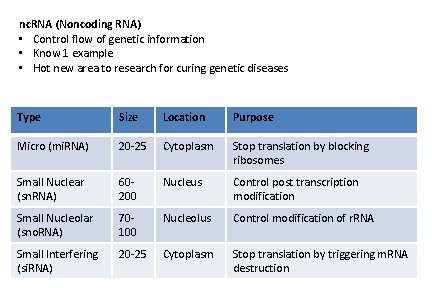
nc. RNA (Noncoding RNA) • Control flow of genetic information • Know 1 example • Hot new area to research for curing genetic diseases Type Size Location Purpose Micro (mi. RNA) 20 -25 Cytoplasm Stop translation by blocking ribosomes Small Nuclear (sn. RNA) 60200 Nucleus Control post transcription modification Small Nucleolar (sno. RNA) 70100 Nucleolus Control modification of r. RNA Small Interfering (si. RNA) 20 -25 Cytoplasm Stop translation by triggering m. RNA destruction
si. RNA
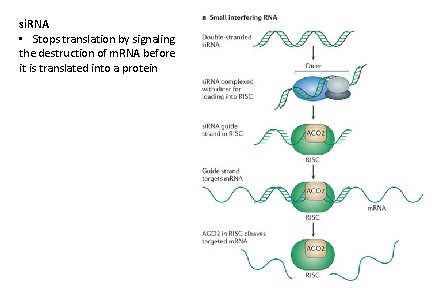
si. RNA • Stops translation by signaling the destruction of m. RNA before it is translated into a protein
Genetic Code
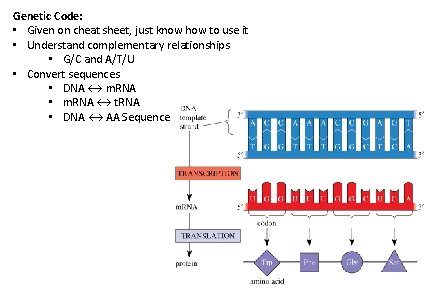
Genetic Code: • Given on cheat sheet, just know how to use it • Understand complementary relationships • G/C and A/T/U • Convert sequences • DNA ↔ m. RNA • m. RNA ↔ t. RNA • DNA ↔ AA Sequence
Cancer
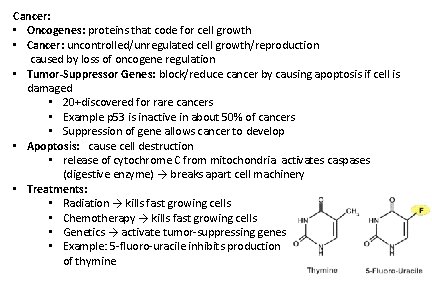
Cancer: • Oncogenes: proteins that code for cell growth • Cancer: uncontrolled/unregulated cell growth/reproduction caused by loss of oncogene regulation • Tumor-Suppressor Genes: block/reduce cancer by causing apoptosis if cell is damaged • 20+discovered for rare cancers • Example p 53 is inactive in about 50% of cancers • Suppression of gene allows cancer to develop • Apoptosis: cause cell destruction • release of cytochrome C from mitochondria activates caspases (digestive enzyme) → breaks apart cell machinery • Treatments: • Radiation → kills fast growing cells • Chemotherapy → kills fast growing cells • Genetics → activate tumor-suppressing genes • Example: 5 -fluoro-uracile inhibits production of thymine
Human Genome Project
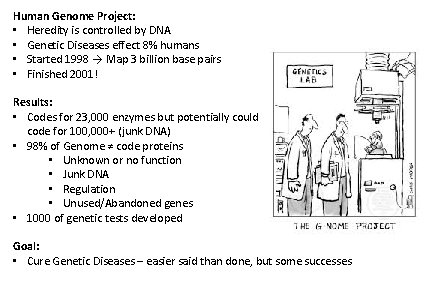
Human Genome Project: • Heredity is controlled by DNA • Genetic Diseases effect 8% humans • Started 1998 → Map 3 billion base pairs • Finished 2001! Results: • Codes for 23, 000 enzymes but potentially could code for 100, 000+ (junk DNA) • 98% of Genome ≠ code proteins • Unknown or no function • Junk DNA • Regulation • Unused/Abandoned genes • 1000 of genetic tests developed Goal: • Cure Genetic Diseases – easier said than done, but some successes
Genetic Engineering
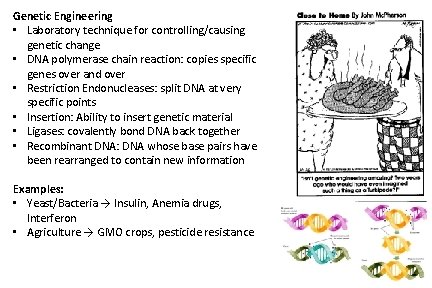
Genetic Engineering • Laboratory technique for controlling/causing genetic change • DNA polymerase chain reaction: copies specific genes over and over • Restriction Endonucleases: split DNA at very specific points • Insertion: Ability to insert genetic material • Ligases: covalently bond DNA back together • Recombinant DNA: DNA whose base pairs have been rearranged to contain new information Examples: • Yeast/Bacteria → Insulin, Anemia drugs, Interferon • Agriculture → GMO crops, pesticide resistance
Mutation
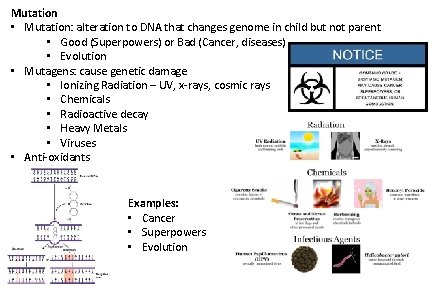
Mutation • Mutation: alteration to DNA that changes genome in child but not parent • Good (Superpowers) or Bad (Cancer, diseases) • Evolution • Mutagens: cause genetic damage • Ionizing Radiation – UV, x-rays, cosmic rays • Chemicals • Radioactive decay • Heavy Metals • Viruses • Anti-oxidants Examples: • Cancer • Superpowers • Evolution
Translation General (I)
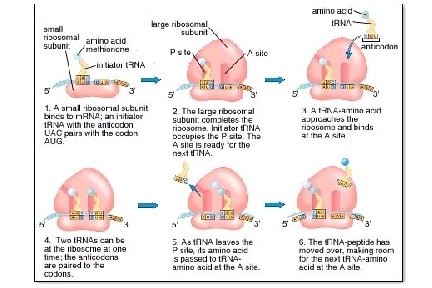
Translation – General • Dfn: Biosynthesis of Proteins (DNA → RNA → Protein) • Step 0: Preparation • Step 1: Initialization • Step 2: Elongation • Step 3: Termination • Know the roles of: • DNA • m. RNA, t. RNA, r. RNA • Ribosomes – 2 subunits, 3 binding sites (1 m. RNA, 2 -t. RNA) • AA • ATP
Translation General (II)
Translation Step 0 - Preparation
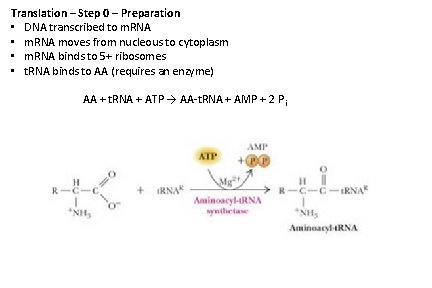
Translation – Step 0 – Preparation • DNA transcribed to m. RNA • m. RNA moves from nucleous to cytoplasm • m. RNA binds to 5+ ribosomes • t. RNA binds to AA (requires an enzyme) AA + t. RNA + ATP → AA-t. RNA + AMP + 2 P i
Translation Step 1 - Initiation
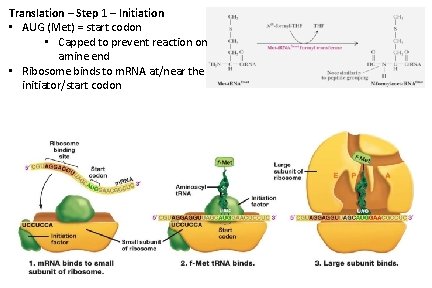
Translation – Step 1 – Initiation • AUG (Met) = start codon • Capped to prevent reaction on amine end • Ribosome binds to m. RNA at/near the initiator/start codon
Translation Step 2 - Elongation
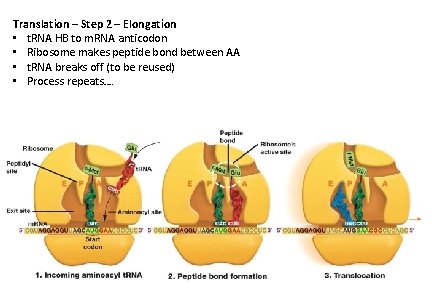
Translation – Step 2 – Elongation • t. RNA HB to m. RNA anticodon • Ribosome makes peptide bond between AA • t. RNA breaks off (to be reused) • Process repeats….
Translation Step 3 - Termination
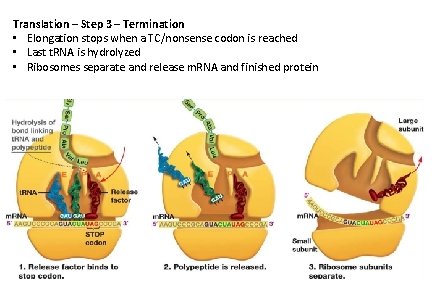
Translation – Step 3 – Termination • Elongation stops when a TC/nonsense codon is reached • Last t. RNA is hydrolyzed • Ribosomes separate and release m. RNA and finished protein
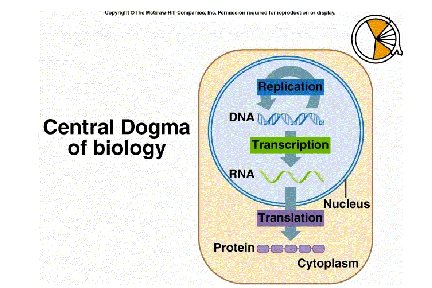
Big Picture: Central Dogma of Biology
Hydrogen Bonding
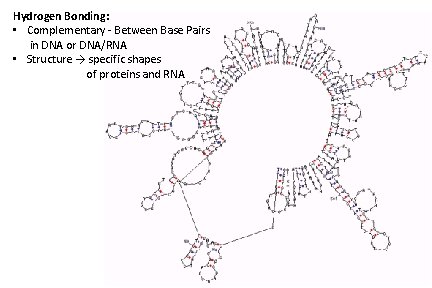
Hydrogen Bonding: • Complementary - Between Base Pairs in DNA or DNA/RNA • Structure → specific shapes of proteins and RNA