
Nucleic Acids Nucleic Acid Structure Polymer 4 th

- Slides: 22
Nucleic Acids
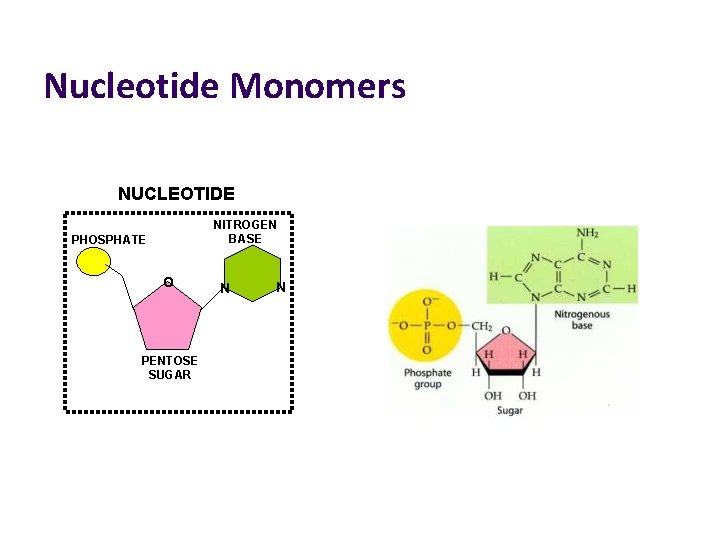
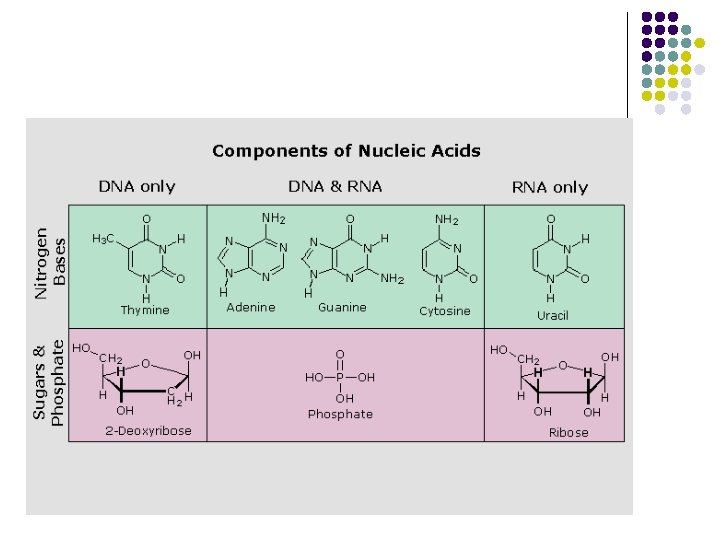
Nucleic Acid Structure Polymer (4 th macromolecule) l Monomer subunits are called nucleotides l Nucleotides have 3 components: l l 1) pentose sugar 2) phosphate group (PO 43 -) 3) nitrogenous base
Nucleotide Monomers NUCLEOTIDE NITROGEN BASE PHOSPHATE O PENTOSE SUGAR N N
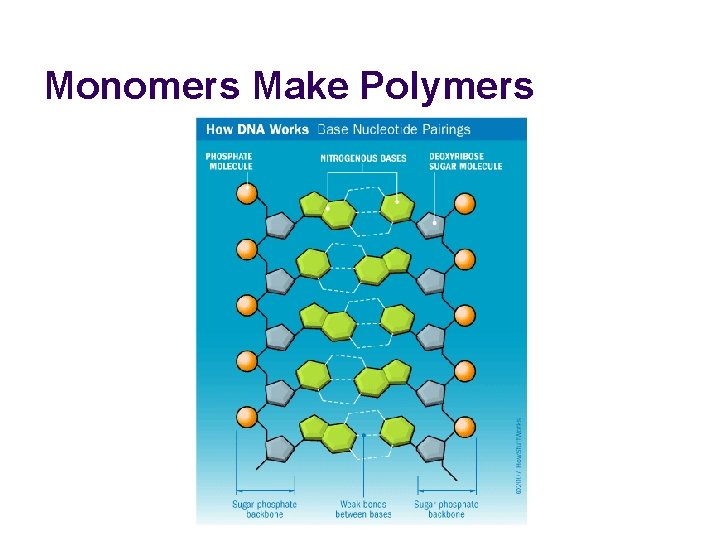
Monomers Make Polymers
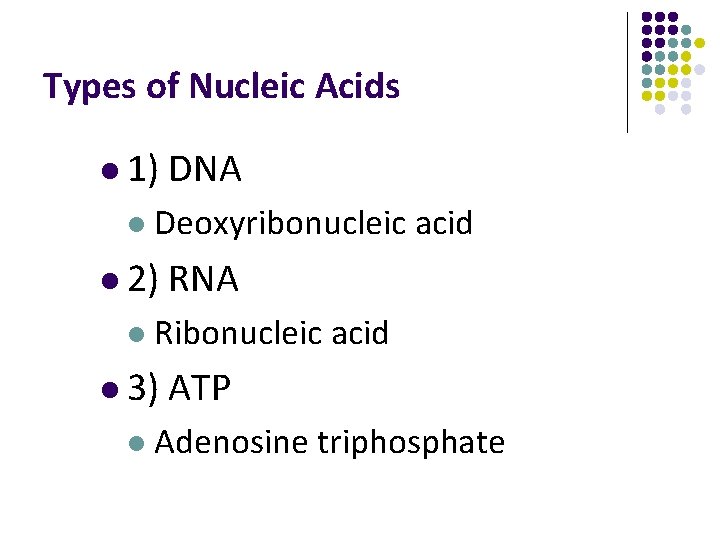
Types of Nucleic Acids l 1) l Deoxyribonucleic acid l 2) l RNA Ribonucleic acid l 3) l DNA ATP Adenosine triphosphate
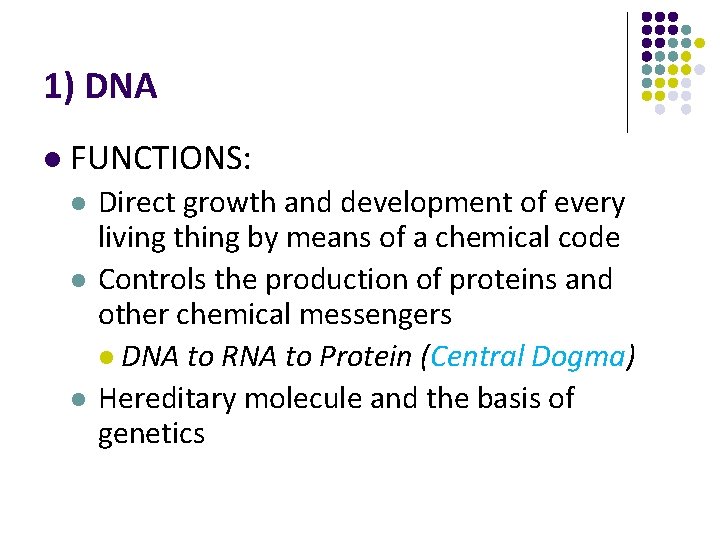
1) DNA l FUNCTIONS: l l l Direct growth and development of every living thing by means of a chemical code Controls the production of proteins and other chemical messengers l DNA to RNA to Protein (Central Dogma) Hereditary molecule and the basis of genetics
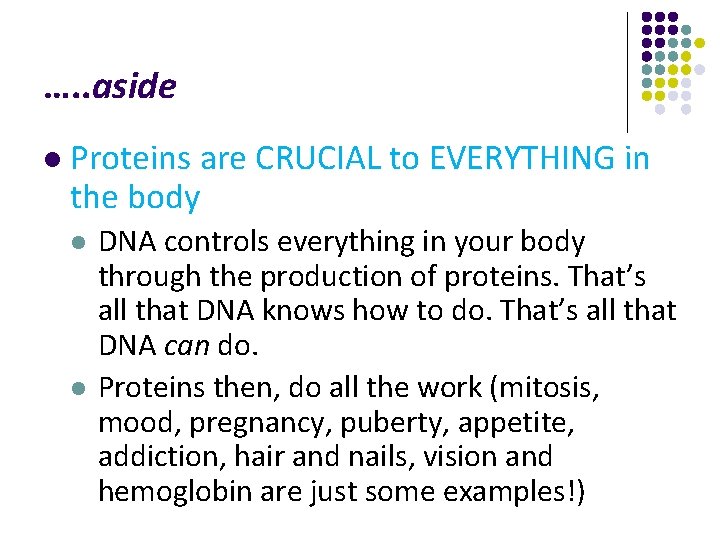
…. . aside l Proteins are CRUCIAL to EVERYTHING in the body l l DNA controls everything in your body through the production of proteins. That’s all that DNA knows how to do. That’s all that DNA can do. Proteins then, do all the work (mitosis, mood, pregnancy, puberty, appetite, addiction, hair and nails, vision and hemoglobin are just some examples!)
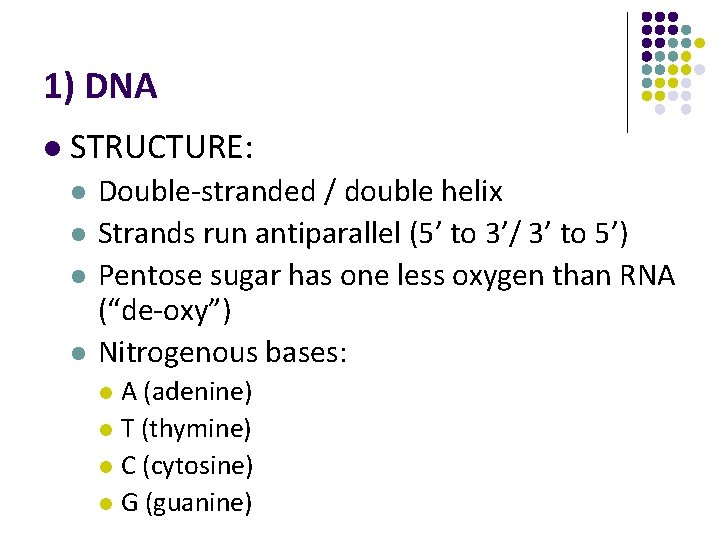
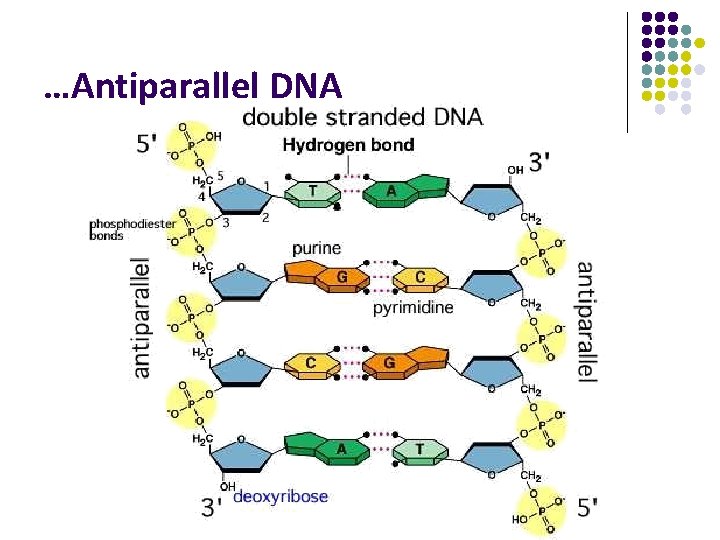
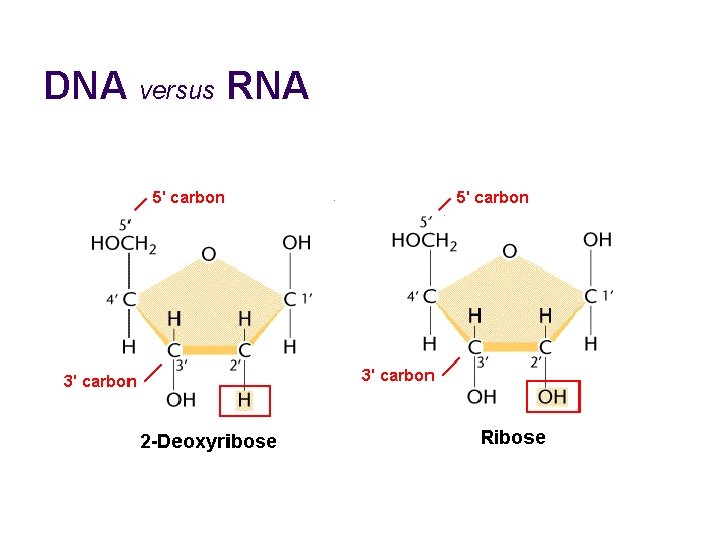
1) DNA l STRUCTURE: l l Double-stranded / double helix Strands run antiparallel (5’ to 3’/ 3’ to 5’) Pentose sugar has one less oxygen than RNA (“de-oxy”) Nitrogenous bases: A (adenine) l T (thymine) l C (cytosine) l G (guanine) l
…Antiparallel DNA
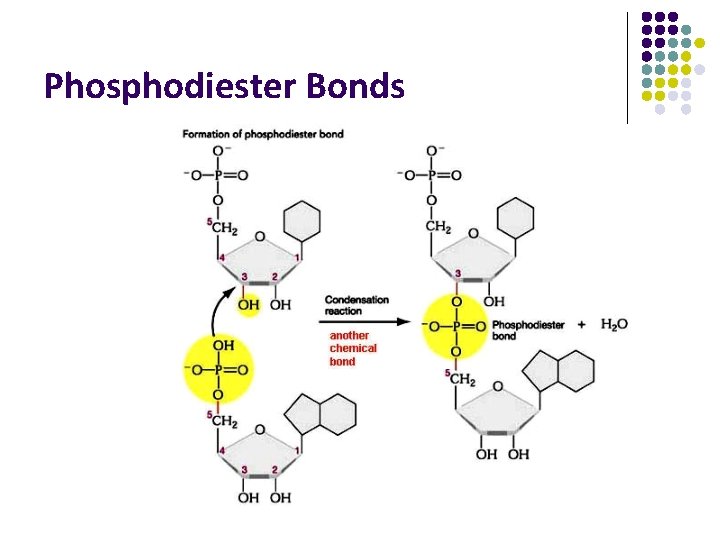
Phosphodiester Bonds
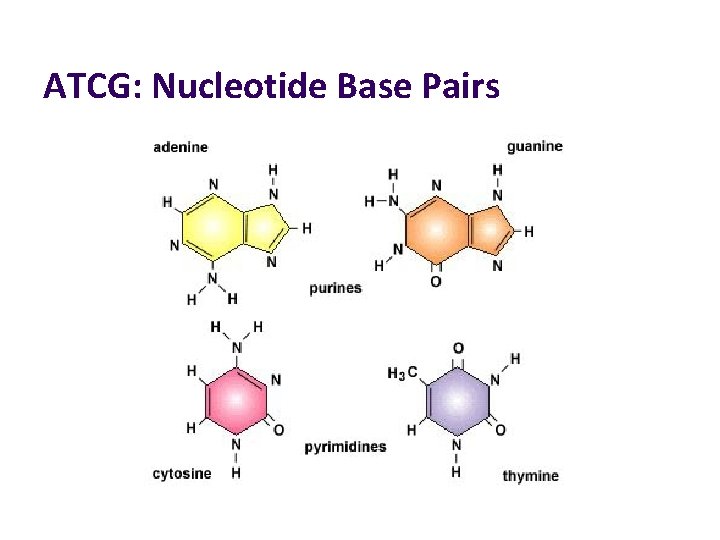
ATCG: Nucleotide Base Pairs
1) DNA l Strands formed by phosphodiester linkages l l 5’ carbon and 3’ carbon, 2 ester bonds Purines always pair with pyrimidines l PURINES: Adenine and Guanine l l Double rings PYRIMIDINES: Cytosine and Thymine l Single rings
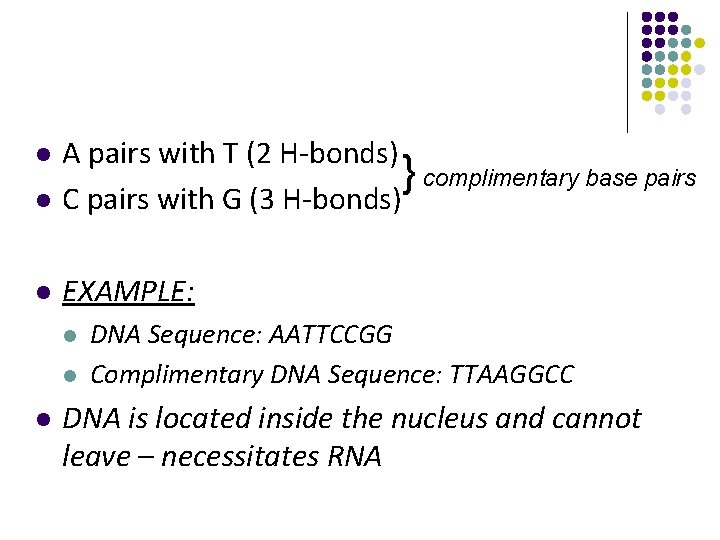
l A pairs with T (2 H-bonds) } complimentary base pairs C pairs with G (3 H-bonds) l EXAMPLE: l l DNA Sequence: AATTCCGG Complimentary DNA Sequence: TTAAGGCC DNA is located inside the nucleus and cannot leave – necessitates RNA
DNA versus RNA
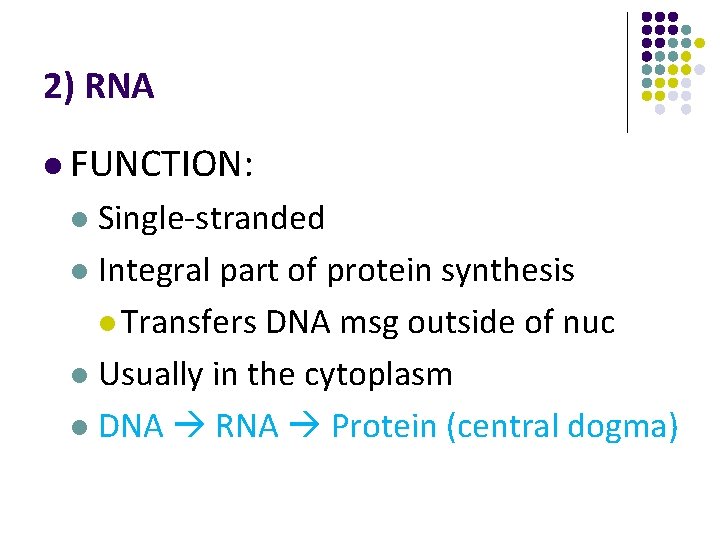
2) RNA l FUNCTION: Single-stranded l Integral part of protein synthesis l Transfers DNA msg outside of nuc l Usually in the cytoplasm l DNA RNA Protein (central dogma) l
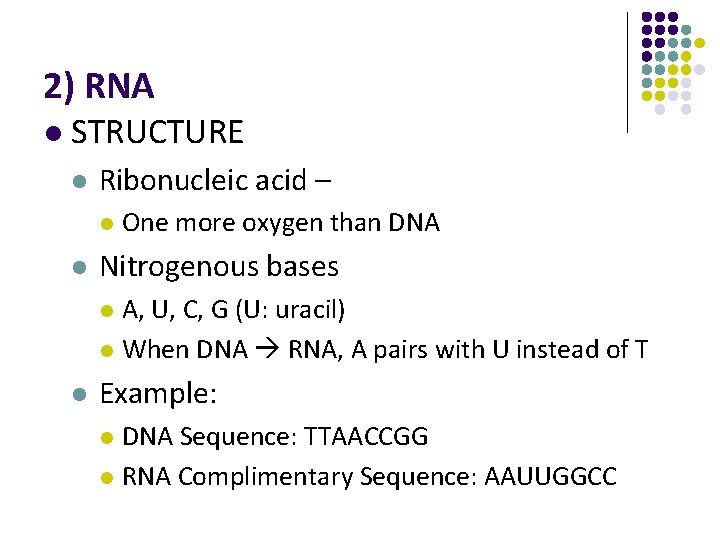
2) RNA l STRUCTURE l Ribonucleic acid – l l One more oxygen than DNA Nitrogenous bases A, U, C, G (U: uracil) l When DNA RNA, A pairs with U instead of T l l Example: DNA Sequence: TTAACCGG l RNA Complimentary Sequence: AAUUGGCC l
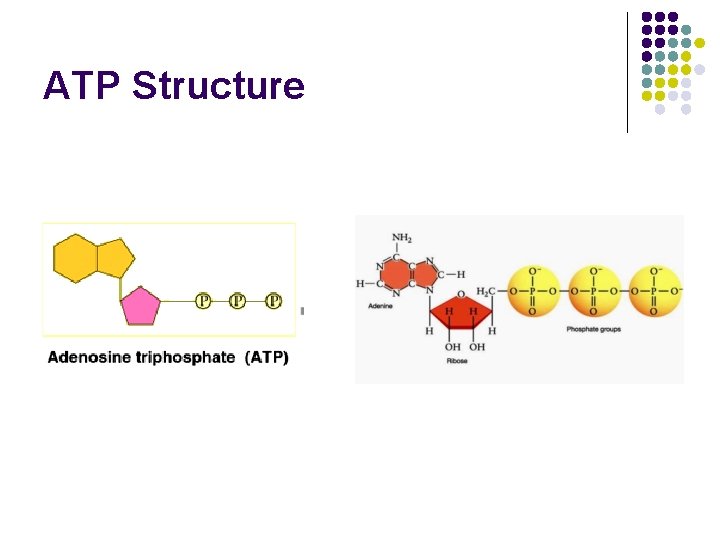
3) ATP Not a polymer like DNA and RNA l ATP is a monomer l l Adenine + Ribose + 3 Phosphate groups High-energy bonds b/w phosphate grps l ATP is the energy-storing molecule l
ATP Structure
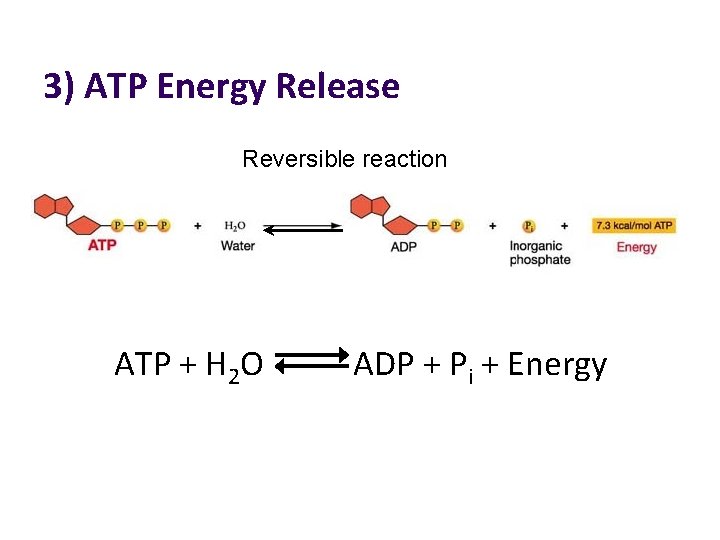
3) ATP Energy Release Reversible reaction ATP + H 2 O ADP + Pi + Energy
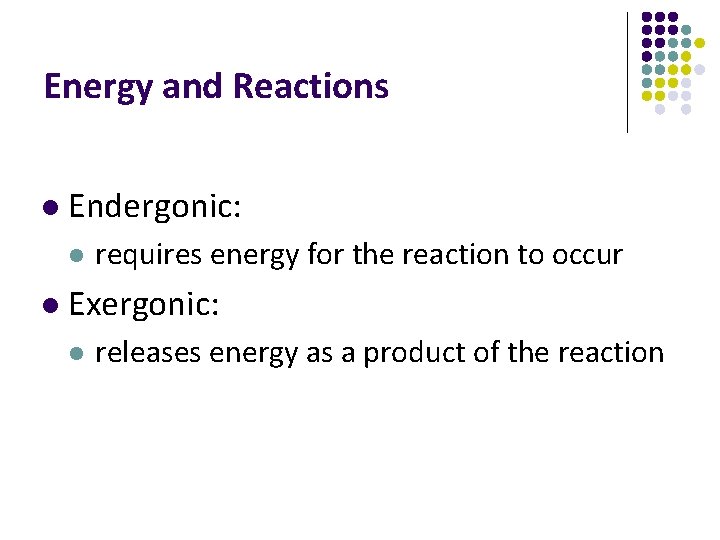
Energy and Reactions l Endergonic: l l requires energy for the reaction to occur Exergonic: l releases energy as a product of the reaction
HOMEWORK Review Notes l Refer to Pages 28 -30 l Problem set l