
Nucleic Acids Lab Biology Chapter 10 Honors Biology
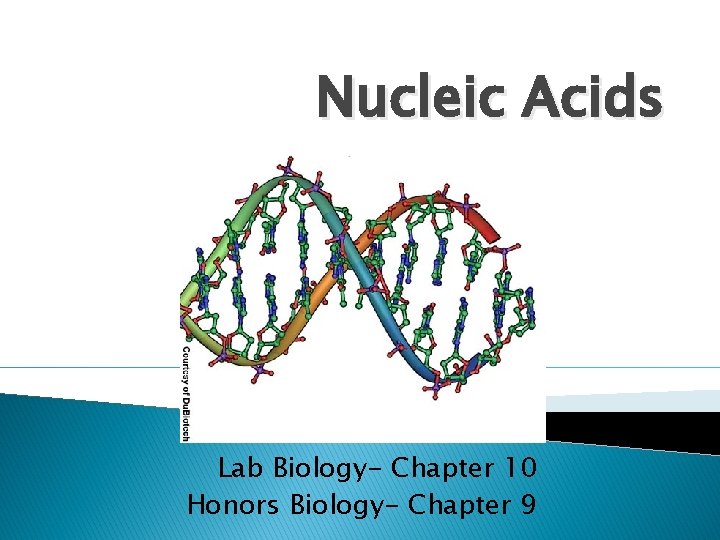
Nucleic Acids Lab Biology- Chapter 10 Honors Biology- Chapter 9
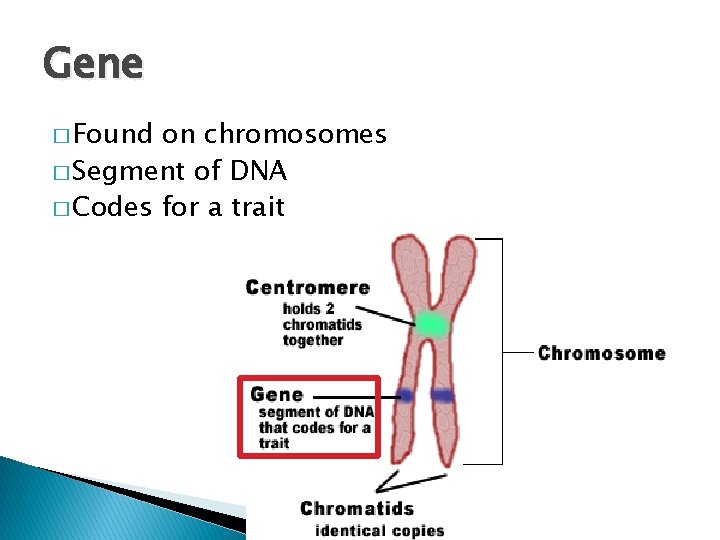
Gene � Found on chromosomes � Segment of DNA � Codes for a trait
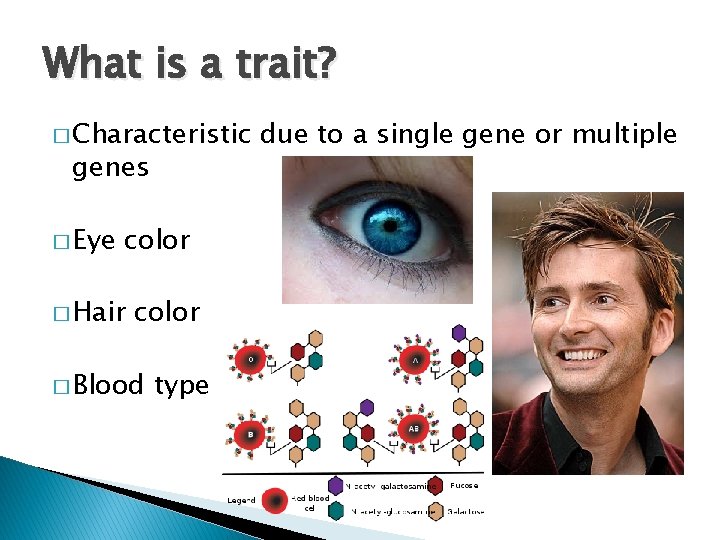
What is a trait? � Characteristic genes � Eye color � Hair color � Blood type due to a single gene or multiple

Structure of DNA � Deoxyribose � Phosphate � Nitrogen sugar group containing base ◦ Four possible bases

Purines � 2 rings of carbon and nitrogen � Adenine � Guanine

Pyrimidines � 1 ring of carbon and nitrogen atoms � Thymine � Cytosine
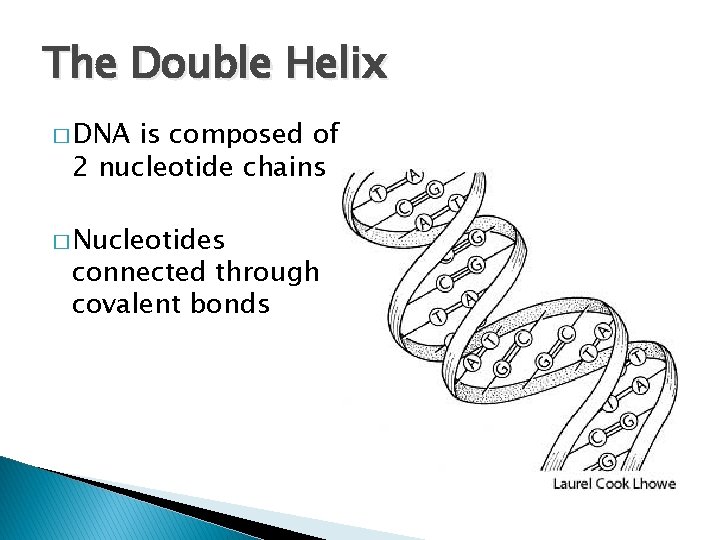
The Double Helix � DNA is composed of 2 nucleotide chains � Nucleotides connected through covalent bonds
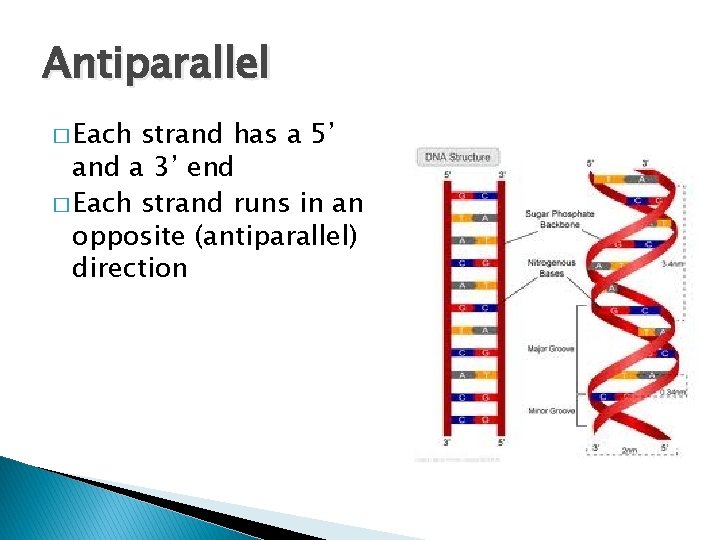
Antiparallel � Each strand has a 5’ and a 3’ end � Each strand runs in an opposite (antiparallel) direction
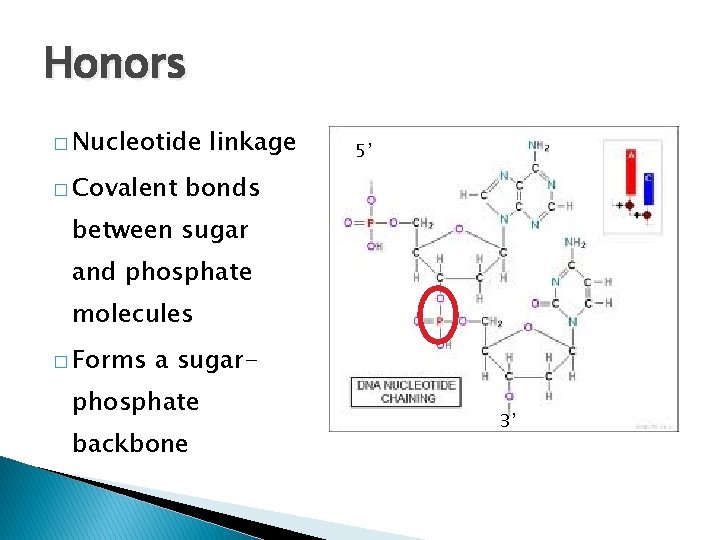
Honors � Nucleotide � Covalent linkage 5’ bonds between sugar and phosphate molecules � Forms a sugar- phosphate backbone 3’
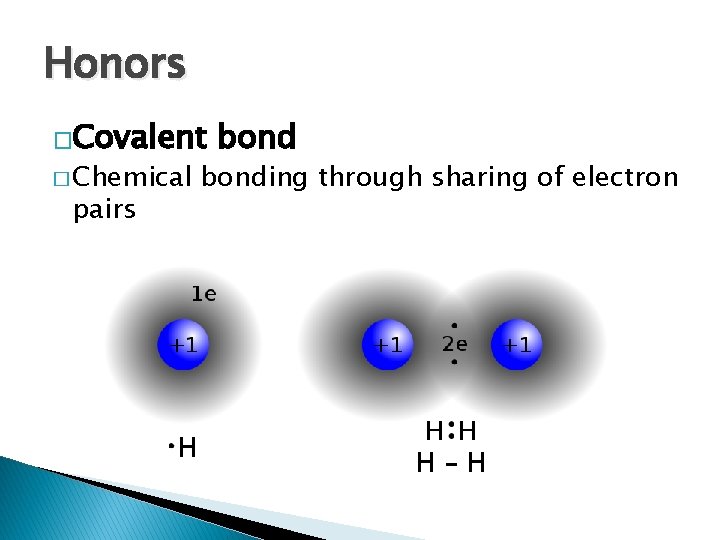
Honors �Covalent � Chemical pairs bonding through sharing of electron
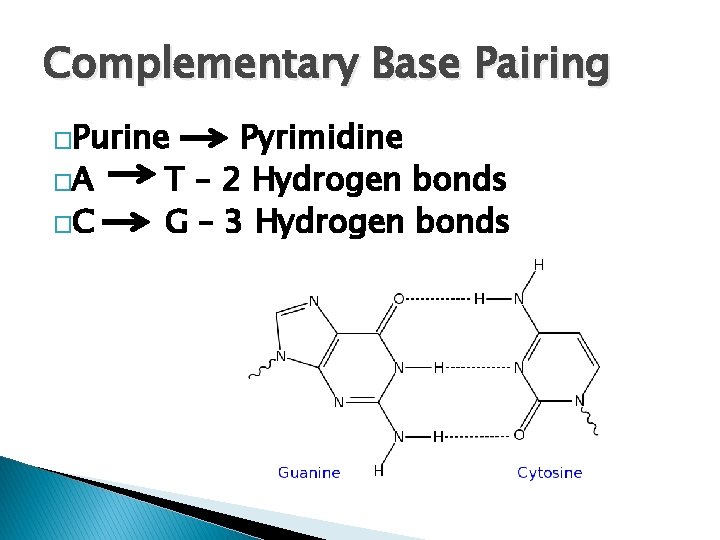
Complementary Base Pairing �Purine �A �C Pyrimidine T – 2 Hydrogen bonds G – 3 Hydrogen bonds
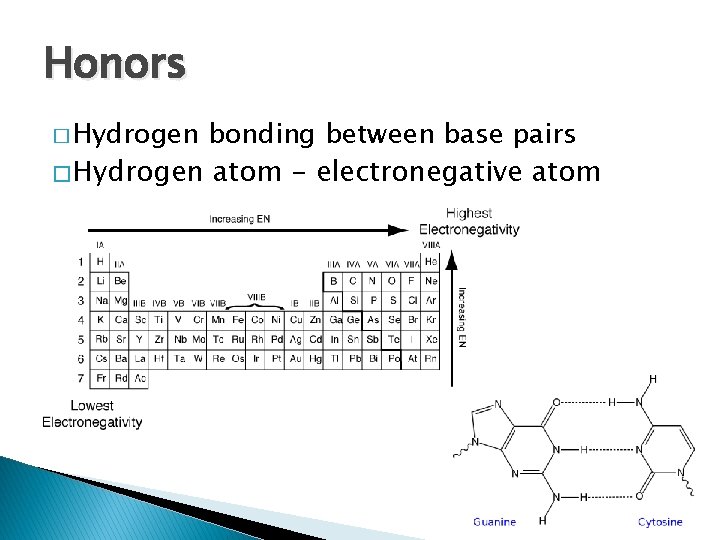
Honors � Hydrogen bonding between base pairs � Hydrogen atom - electronegative atom
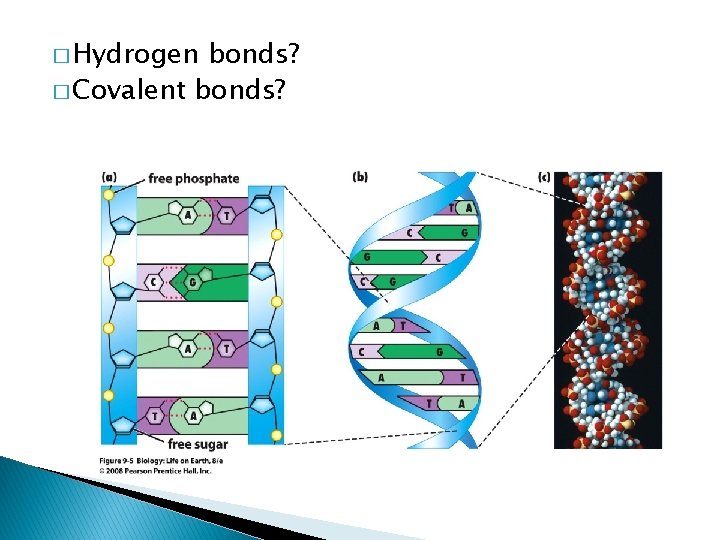
� Hydrogen bonds? � Covalent bonds?
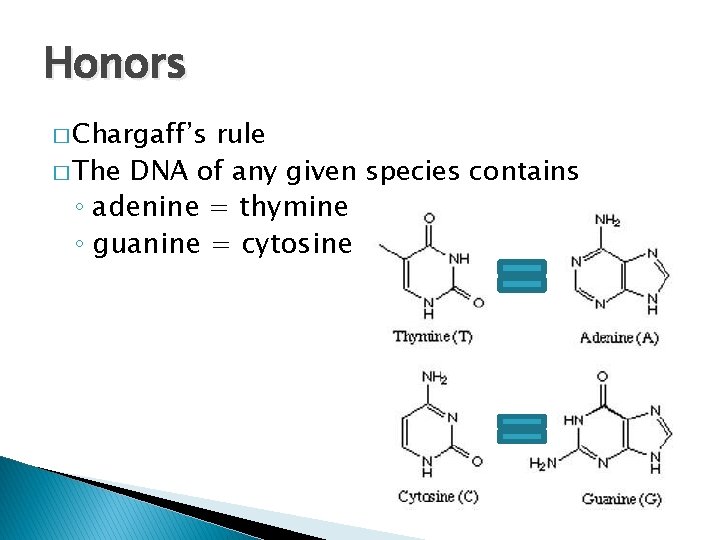
Honors � Chargaff’s rule � The DNA of any given species contains ◦ adenine = thymine ◦ guanine = cytosine
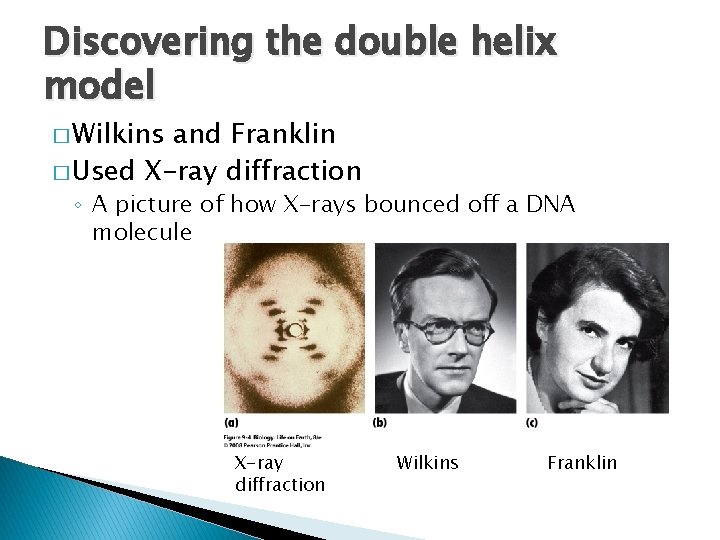
Discovering the double helix model � Wilkins and Franklin � Used X-ray diffraction ◦ A picture of how X-rays bounced off a DNA molecule X-ray diffraction Wilkins Franklin
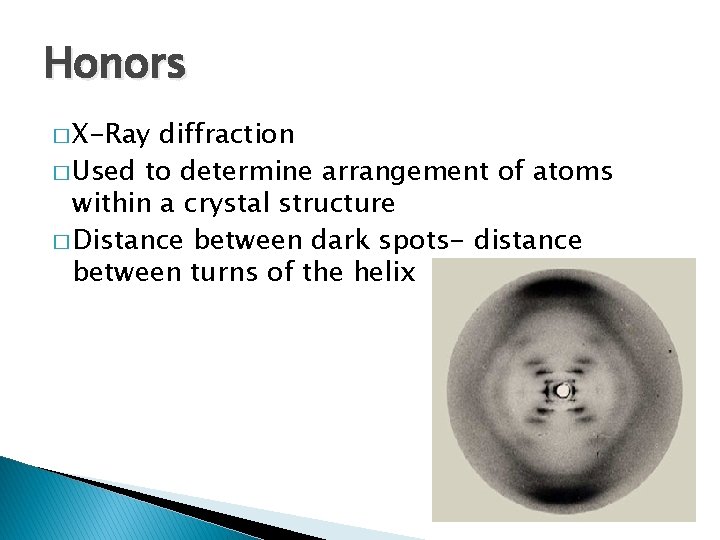
Honors � X-Ray diffraction � Used to determine arrangement of atoms within a crystal structure � Distance between dark spots- distance between turns of the helix
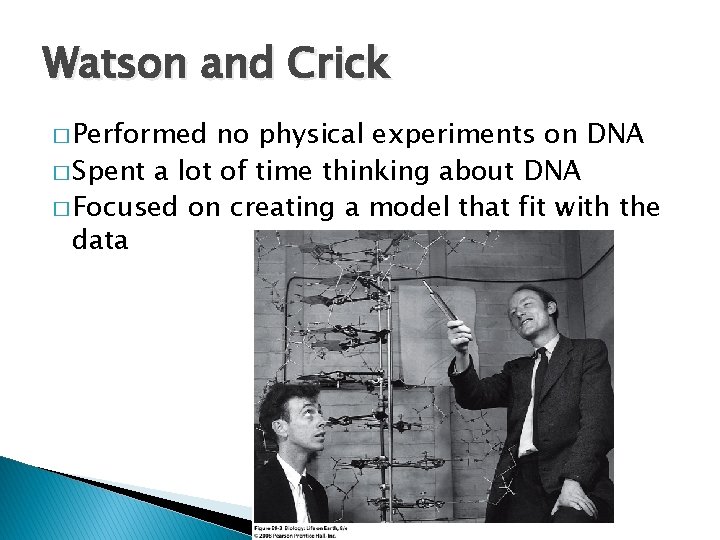
Watson and Crick � Performed no physical experiments on DNA � Spent a lot of time thinking about DNA � Focused on creating a model that fit with the data
Nobel Prize � Wilkins, Watson, and Crick received the Nobel Prize in 1962 � Franklin died in 1958 and was not recognized � Nobel Prize cannot be awarded posthumously
Homework � Write a two paragraph reflection on Rosalind Franklin. ◦ One paragraph should detail her contribution to the discovery of the structure of DNA. ◦ Second paragraph should state your answer to the questions: �Do you think Franklin deserved the Nobel Prize? �Why do you think she did not receive more recognition? ◦ Evidence must be provided to support your opinions. ◦ Complete this assignment on loose leaf paper.
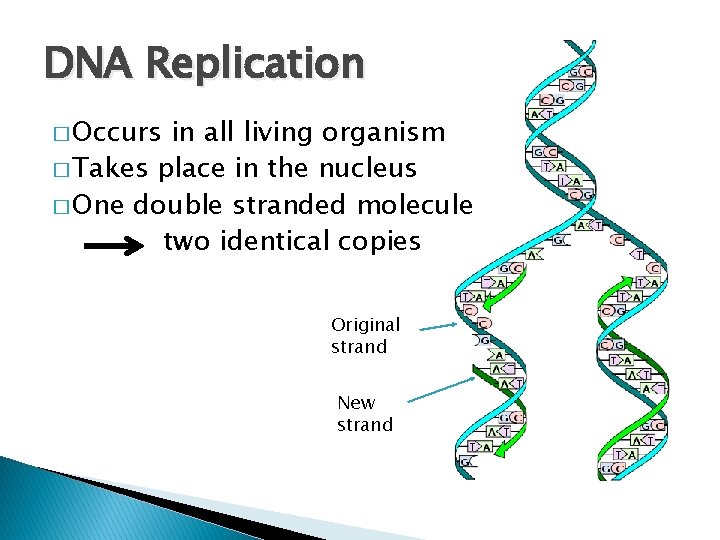
DNA Replication � Occurs in all living organism � Takes place in the nucleus � One double stranded molecule two identical copies Original strand New strand
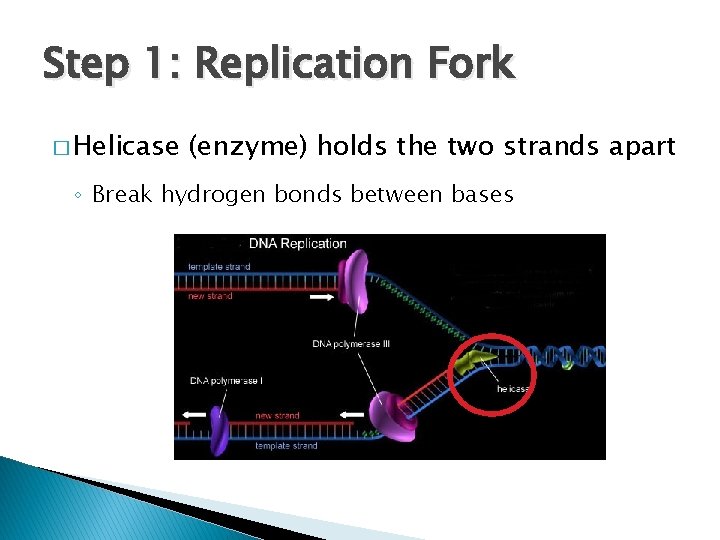
Step 1: Replication Fork � Helicase (enzyme) holds the two strands apart ◦ Break hydrogen bonds between bases
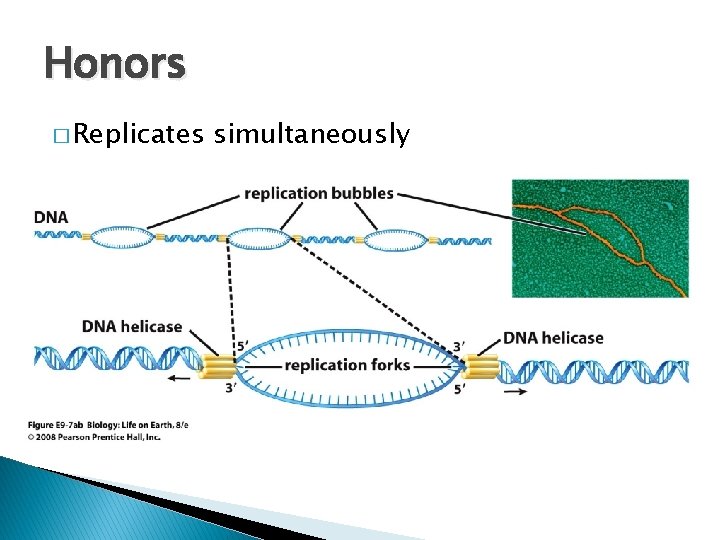
Honors � Replicates simultaneously
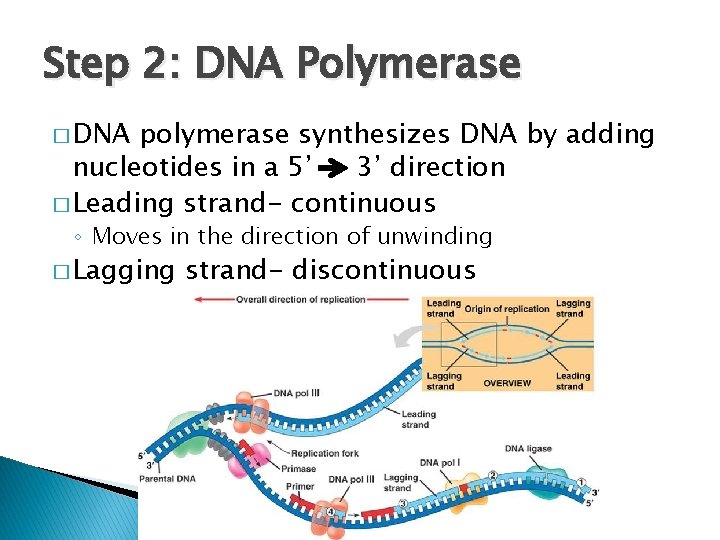
Step 2: DNA Polymerase � DNA polymerase synthesizes DNA by adding nucleotides in a 5’ 3’ direction � Leading strand- continuous ◦ Moves in the direction of unwinding � Lagging strand- discontinuous
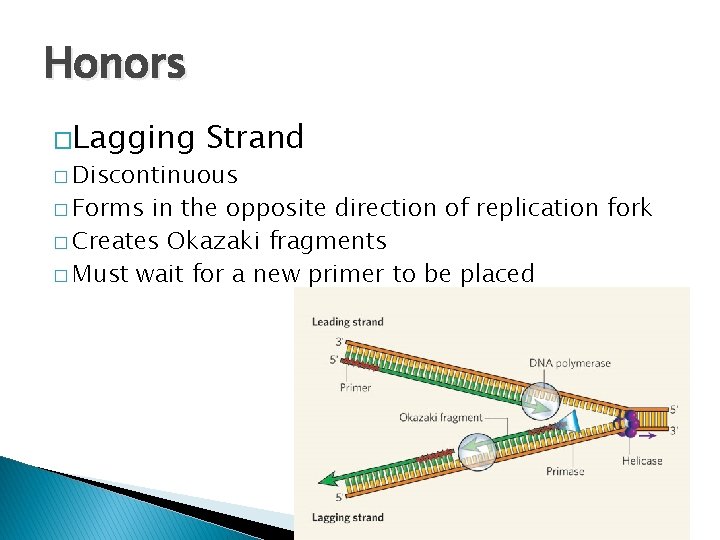
Honors �Lagging Strand � Discontinuous � Forms in the opposite direction of replication fork � Creates Okazaki fragments � Must wait for a new primer to be placed
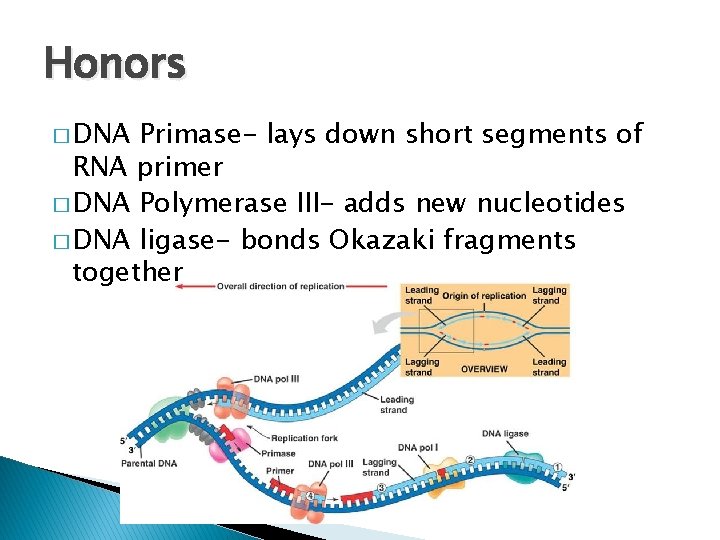
Honors � DNA Primase- lays down short segments of RNA primer � DNA Polymerase III- adds new nucleotides � DNA ligase- bonds Okazaki fragments together
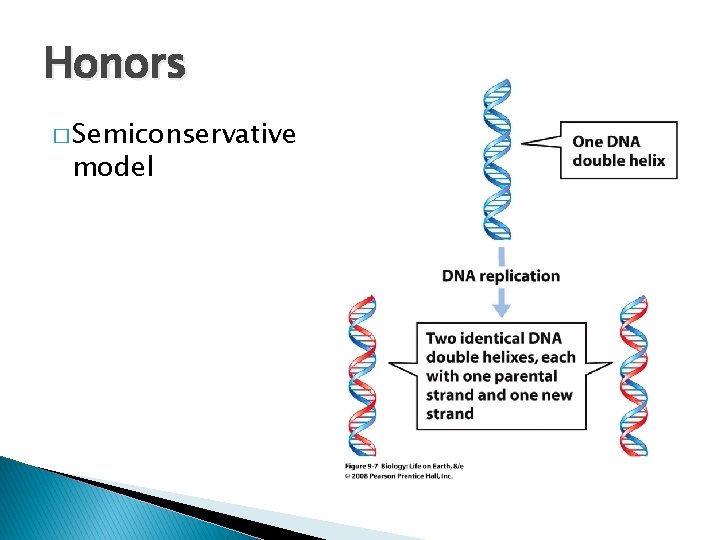
Honors � Semiconservative model
Mutations � What happens when DNA Polymerase makes a mistake? � Mutation- Change in nucleotide sequence � Can be repaired through DNA repair mechanisms
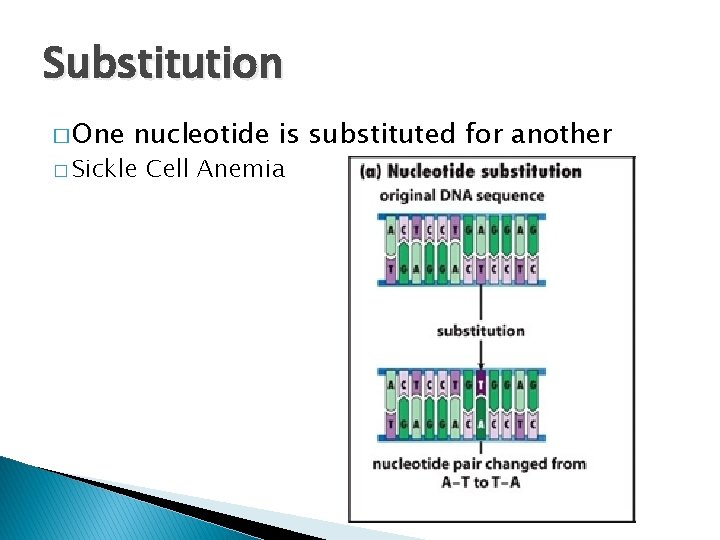
Substitution � One nucleotide is substituted for another � Sickle Cell Anemia
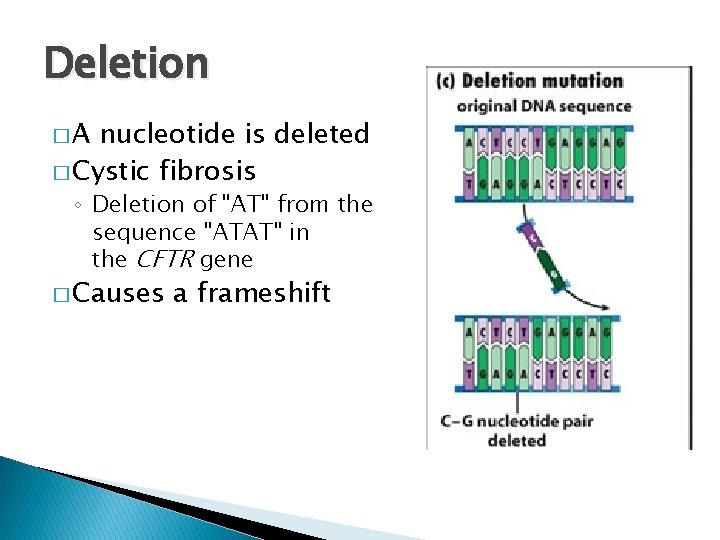
Deletion �A nucleotide is deleted � Cystic fibrosis ◦ Deletion of "AT" from the sequence "ATAT" in the CFTR gene � Causes a frameshift
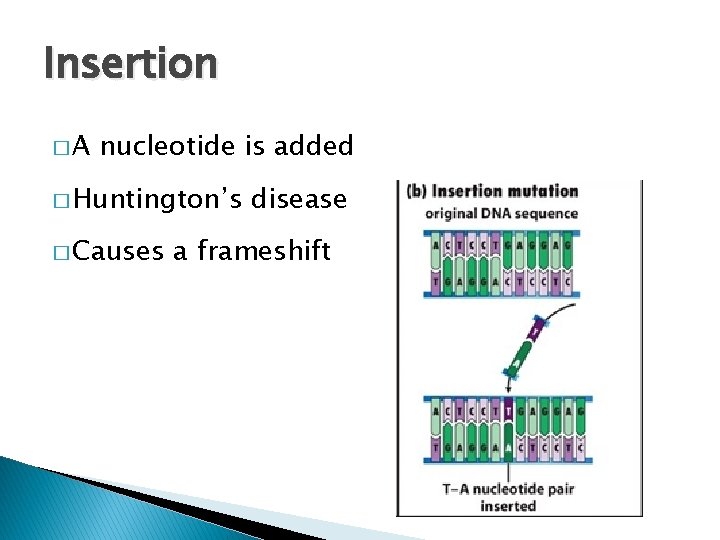
Insertion �A nucleotide is added � Huntington’s � Causes disease a frameshift
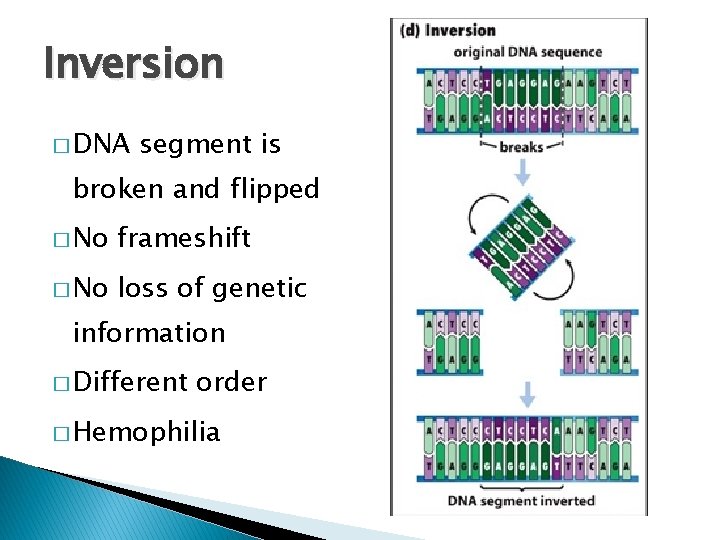
Inversion � DNA segment is broken and flipped � No frameshift � No loss of genetic information � Different order � Hemophilia
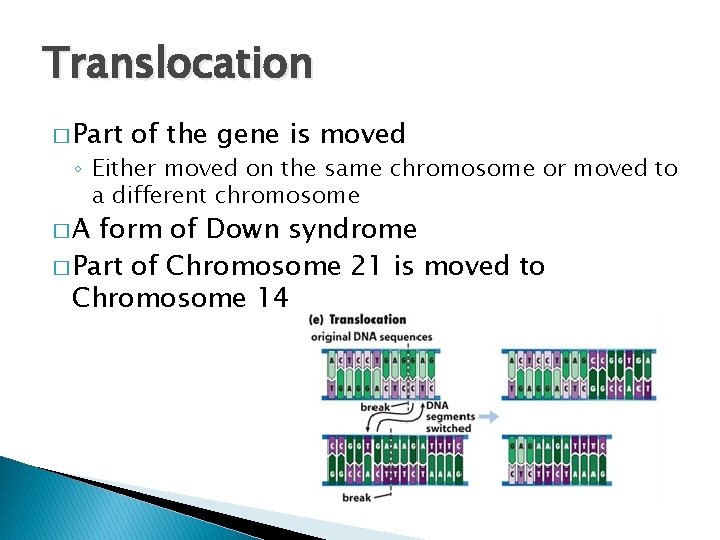
Translocation � Part of the gene is moved ◦ Either moved on the same chromosome or moved to a different chromosome �A form of Down syndrome � Part of Chromosome 21 is moved to Chromosome 14
Resources � DNA Replication Game � http: //www. nobelprize. org/educational/medi cine/dna_double_helix/dnahelix. html � Honors: DNA Replication � http: //www. wiley. com/college/pratt/047139 3878/student/animations/dna_replication/in dex. html � DNA Replication: � http: //www. mcb. harvard. edu/losick/images/t rombonefinald. swf
- Slides: 33