
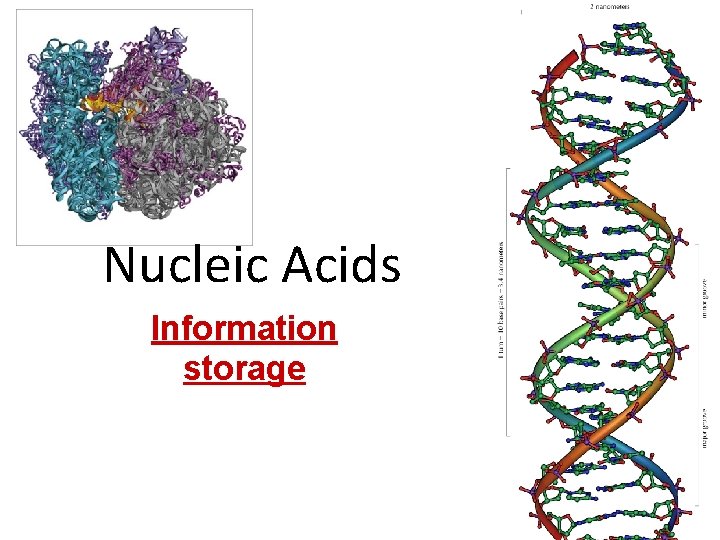
Nucleic Acids Information storage Function Nucleic Acids genetic

- Slides: 30
Nucleic Acids Information storage
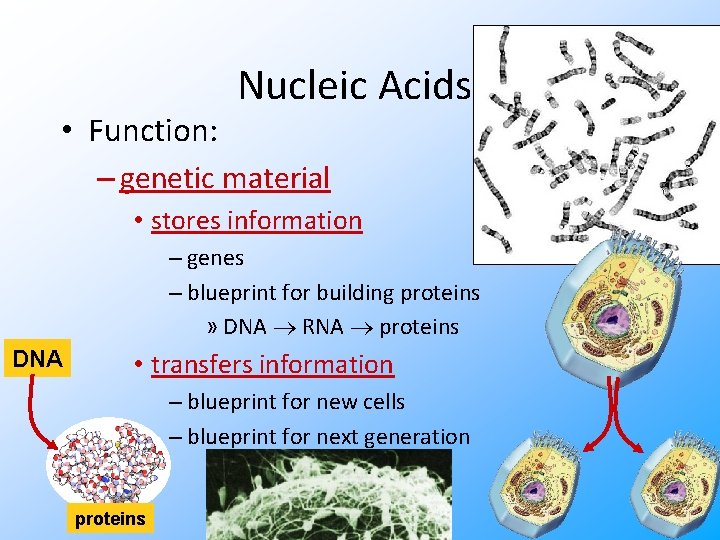
• Function: Nucleic Acids – genetic material • stores information – genes – blueprint for building proteins » DNA RNA proteins DNA • transfers information – blueprint for new cells – blueprint for next generation proteins
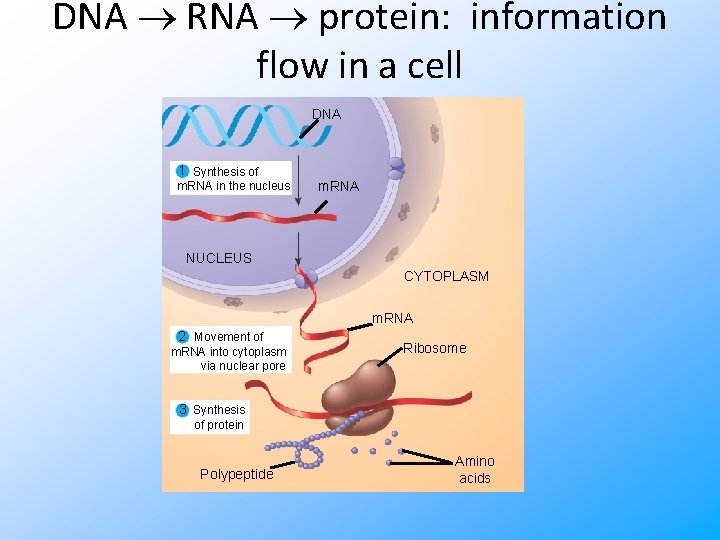
DNA RNA protein: information flow in a cell DNA 1 Synthesis of m. RNA in the nucleus m. RNA NUCLEUS CYTOPLASM m. RNA 2 Movement of m. RNA into cytoplasm via nuclear pore Ribosome 3 Synthesis of protein Polypeptide Amino acids
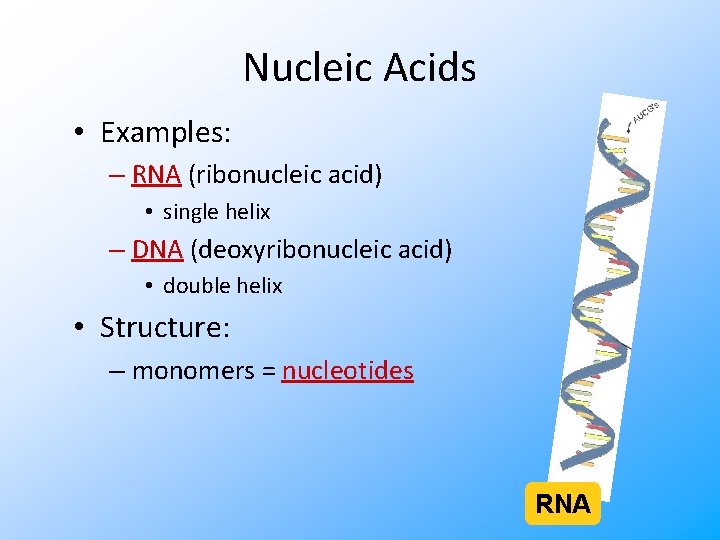
Nucleic Acids • Examples: – RNA (ribonucleic acid) • single helix – DNA (deoxyribonucleic acid) • double helix • Structure: – monomers = nucleotides RNA
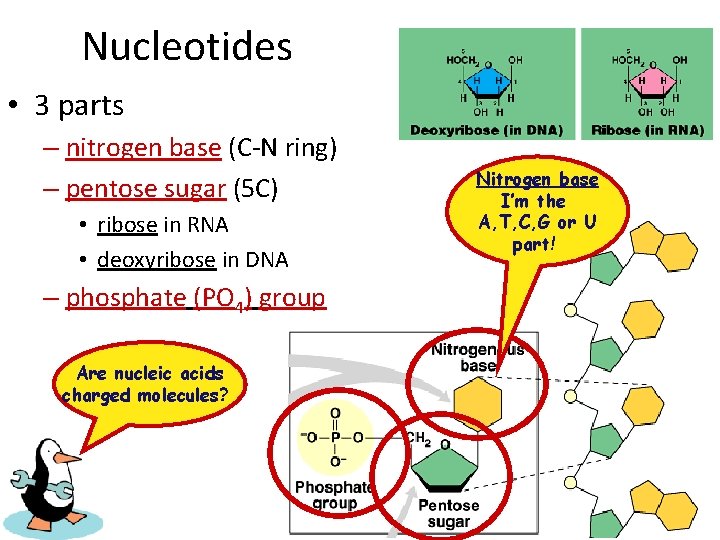
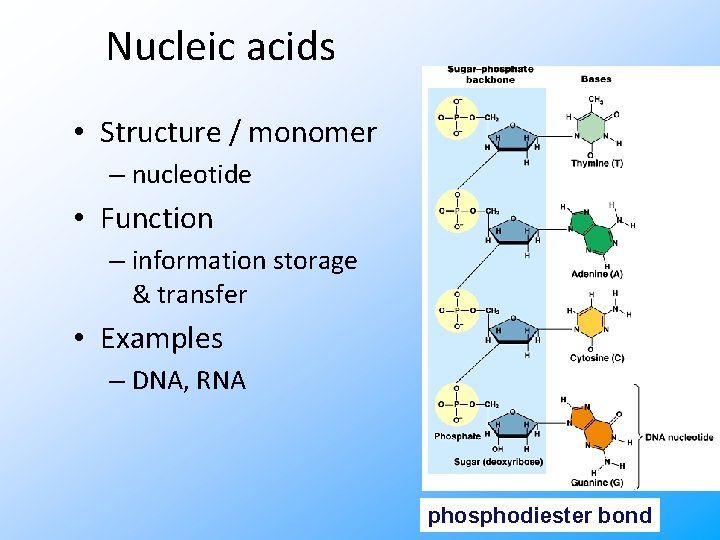
Nucleotides • 3 parts – nitrogen base (C-N ring) – pentose sugar (5 C) • ribose in RNA • deoxyribose in DNA – phosphate (PO 4) group Are nucleic acids charged molecules? Nitrogen base I’m the A, T, C, G or U part!
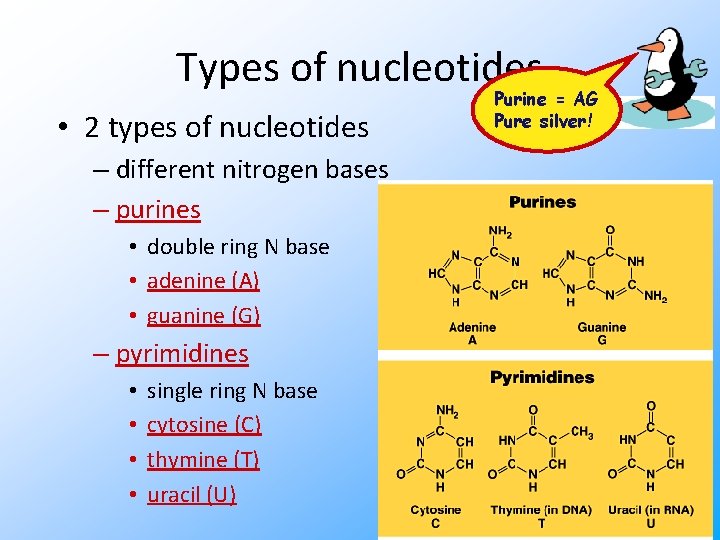
Types of nucleotides • 2 types of nucleotides – different nitrogen bases – purines • double ring N base • adenine (A) • guanine (G) – pyrimidines • • single ring N base cytosine (C) thymine (T) uracil (U) Purine = AG Pure silver!
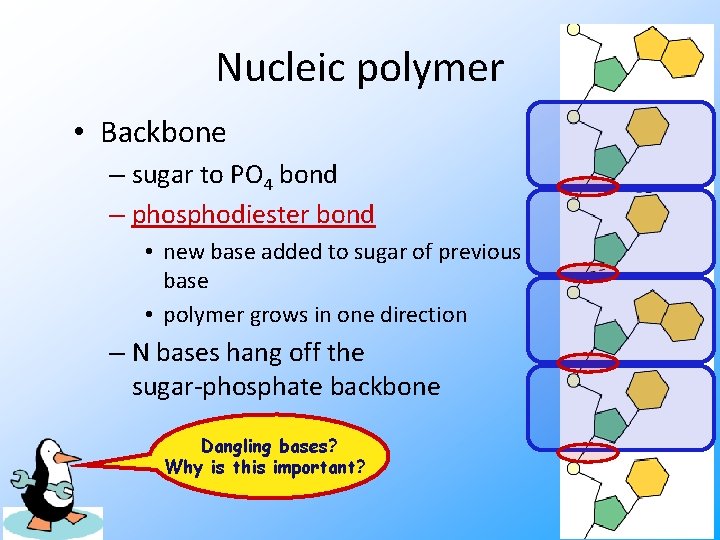
Nucleic polymer • Backbone – sugar to PO 4 bond – phosphodiester bond • new base added to sugar of previous base • polymer grows in one direction – N bases hang off the sugar-phosphate backbone Dangling bases? Why is this important?
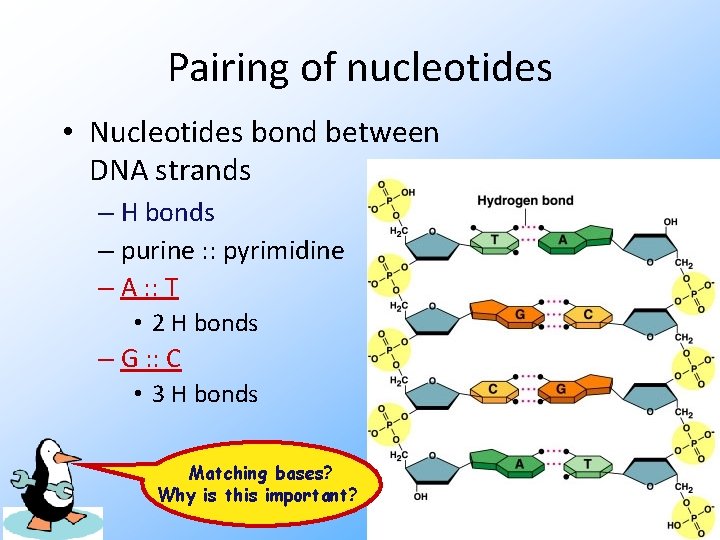
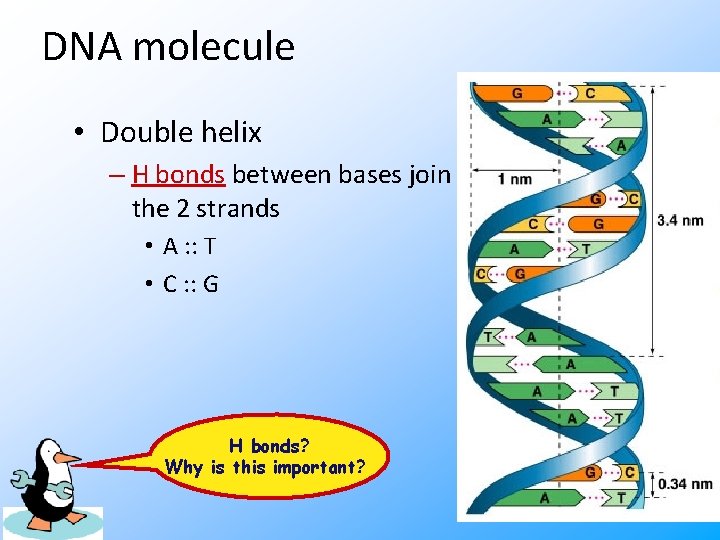
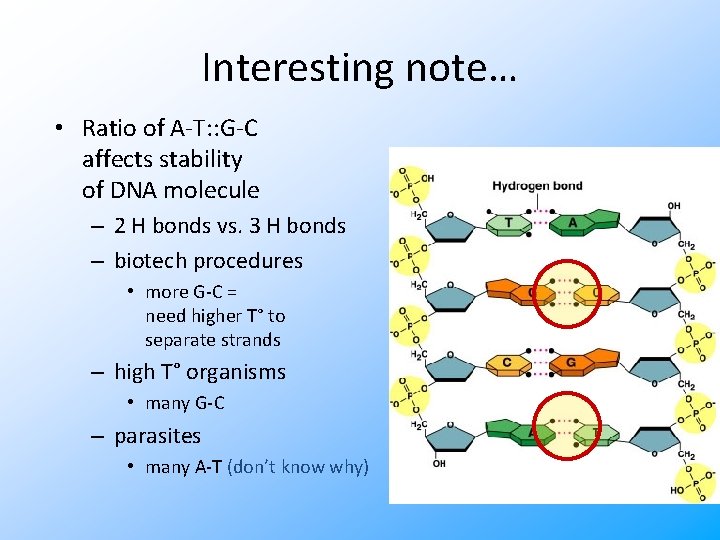
Pairing of nucleotides • Nucleotides bond between DNA strands – H bonds – purine : : pyrimidine – A : : T • 2 H bonds – G : : C • 3 H bonds Matching bases? Why is this important?
DNA molecule • Double helix – H bonds between bases join the 2 strands • A : : T • C : : G H bonds? Why is this important?
A brief, explanatory film strip
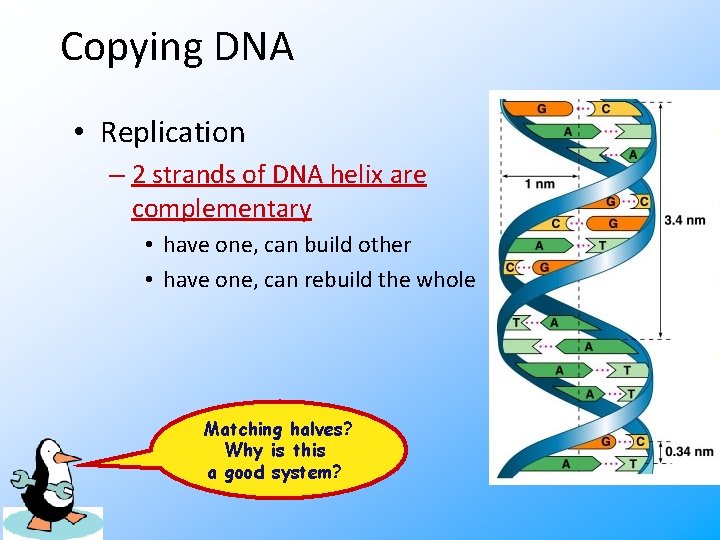
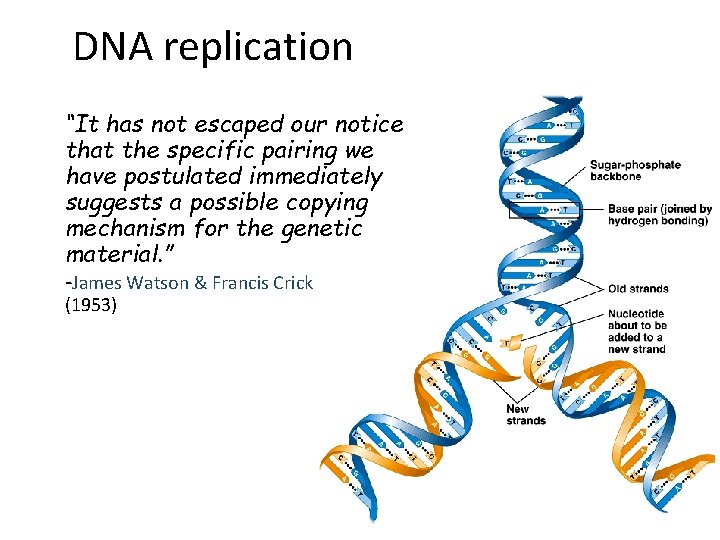
Copying DNA • Replication – 2 strands of DNA helix are complementary • have one, can build other • have one, can rebuild the whole Matching halves? Why is this a good system?
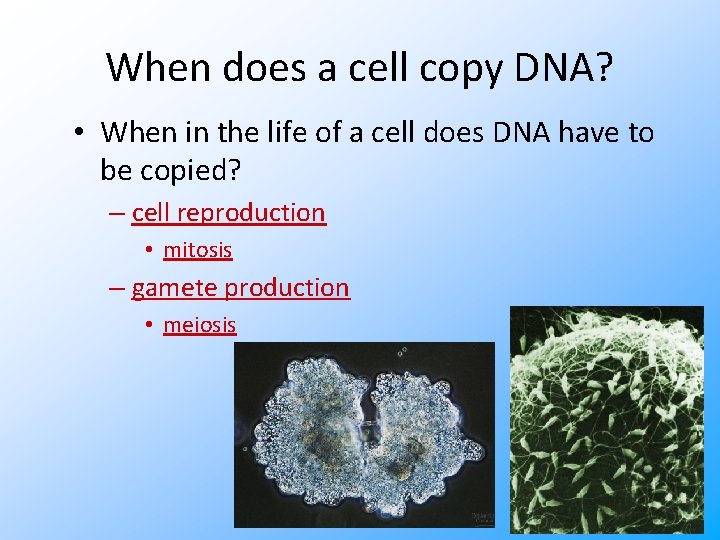
When does a cell copy DNA? • When in the life of a cell does DNA have to be copied? – cell reproduction • mitosis – gamete production • meiosis
DNA replication “It has not escaped our notice that the specific pairing we have postulated immediately suggests a possible copying mechanism for the genetic material. ” -James Watson & Francis Crick (1953)
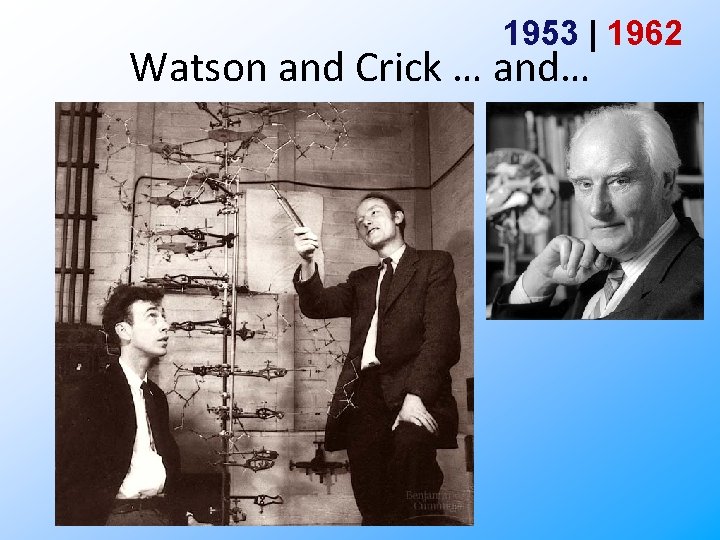
1953 | 1962 Watson and Crick … and…
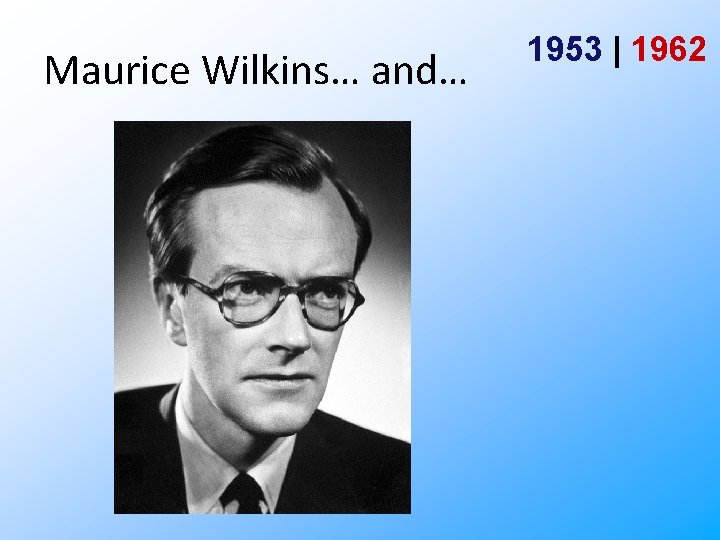
Maurice Wilkins… and… 1953 | 1962
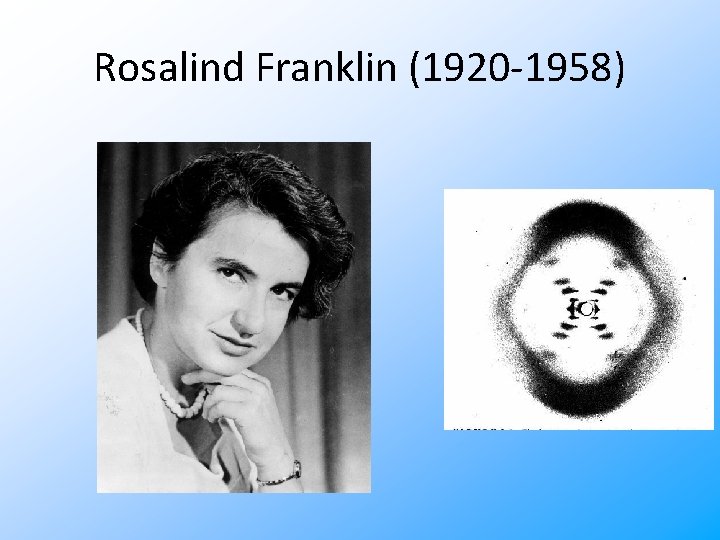
Rosalind Franklin (1920 -1958)
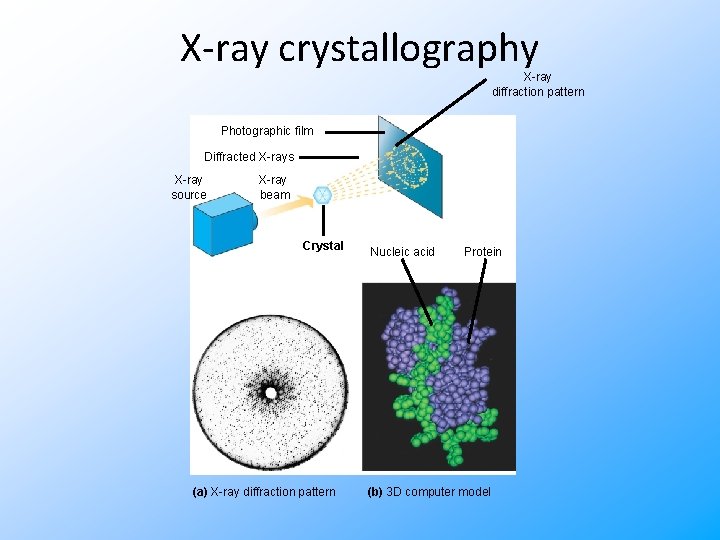
X-ray crystallography X-ray diffraction pattern Photographic film Diffracted X-rays X-ray source X-ray beam Crystal (a) X-ray diffraction pattern Nucleic acid Protein (b) 3 D computer model
James Watson Describes the Moment
Interesting note… • Ratio of A-T: : G-C affects stability of DNA molecule – 2 H bonds vs. 3 H bonds – biotech procedures • more G-C = need higher T° to separate strands – high T° organisms • many G-C – parasites • many A-T (don’t know why)
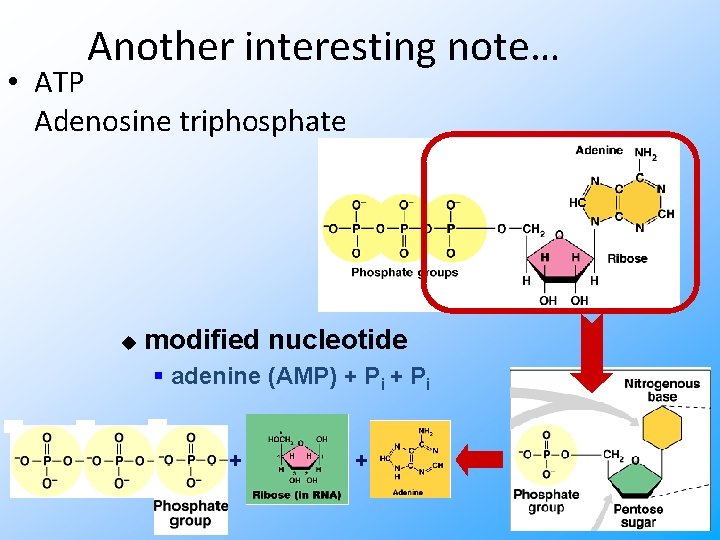
Another interesting note… • ATP Adenosine triphosphate u modified nucleotide § adenine (AMP) + Pi + +
Let’s build some DNA, baby!
Review Questions
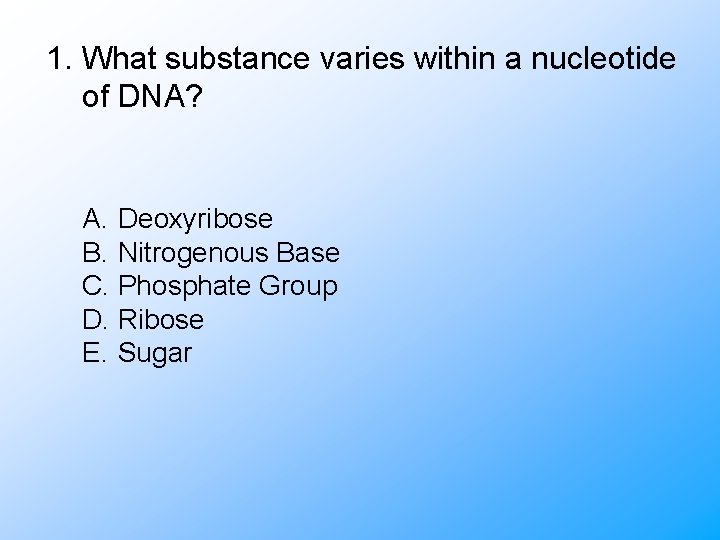
1. What substance varies within a nucleotide of DNA? A. Deoxyribose B. Nitrogenous Base C. Phosphate Group D. Ribose E. Sugar
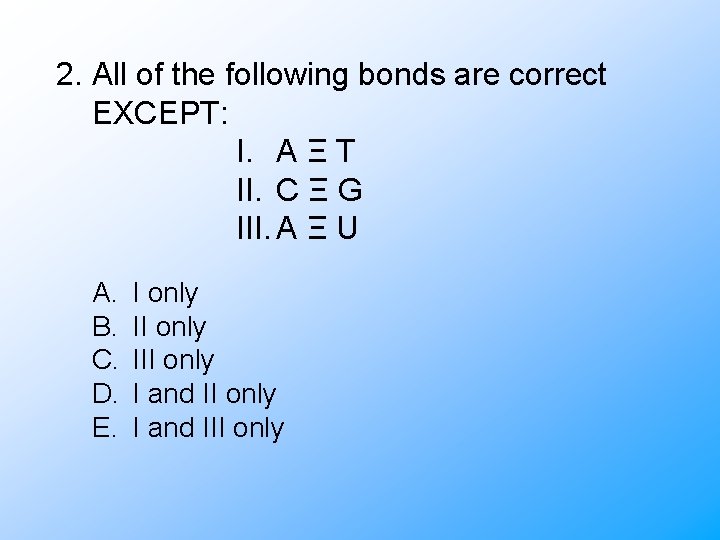
2. All of the following bonds are correct EXCEPT: I. A Ξ T II. C Ξ G III. A Ξ U A. B. C. D. E. I only III only I and III only
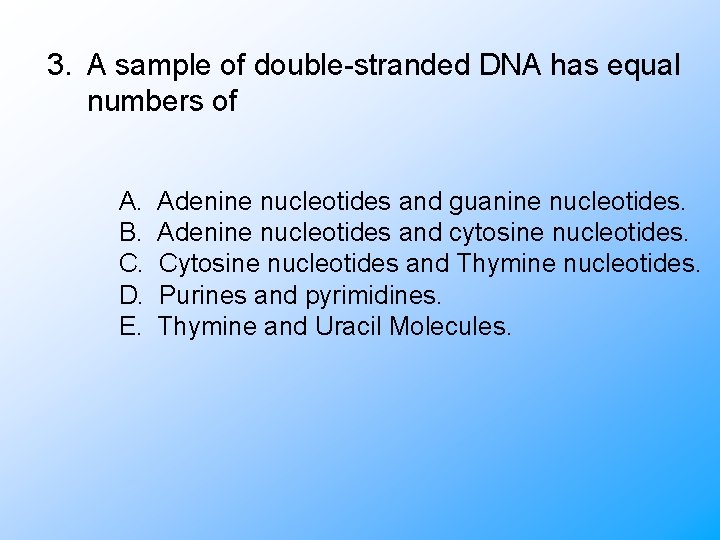
3. A sample of double-stranded DNA has equal numbers of A. B. C. D. E. Adenine nucleotides and guanine nucleotides. Adenine nucleotides and cytosine nucleotides. Cytosine nucleotides and Thymine nucleotides. Purines and pyrimidines. Thymine and Uracil Molecules.
Macromolecule Review
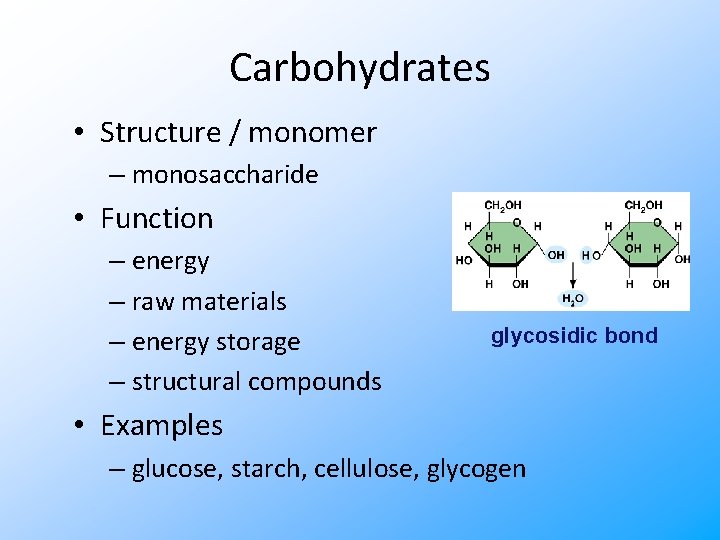
Carbohydrates • Structure / monomer – monosaccharide • Function – energy – raw materials – energy storage – structural compounds glycosidic bond • Examples – glucose, starch, cellulose, glycogen
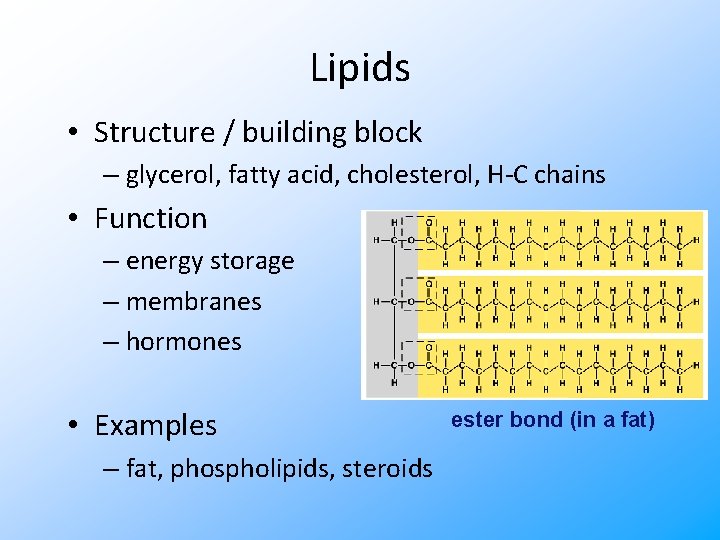
Lipids • Structure / building block – glycerol, fatty acid, cholesterol, H-C chains • Function – energy storage – membranes – hormones • Examples – fat, phospholipids, steroids ester bond (in a fat)
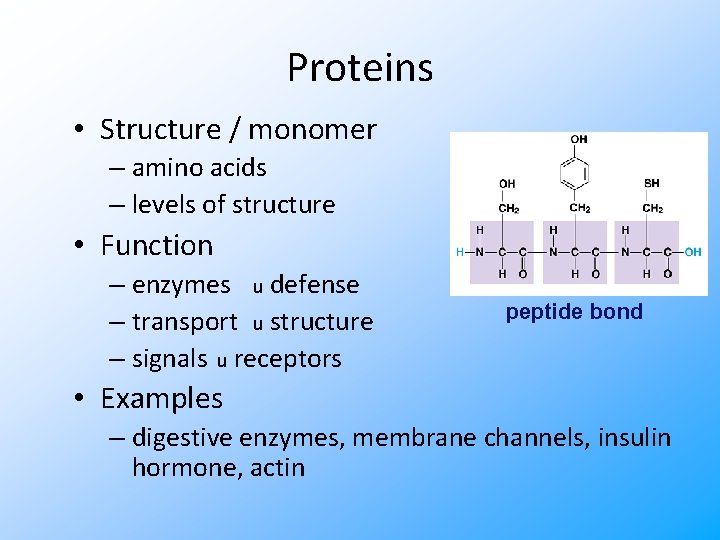
Proteins • Structure / monomer – amino acids – levels of structure • Function – enzymes u defense – transport u structure – signals u receptors peptide bond • Examples – digestive enzymes, membrane channels, insulin hormone, actin
Nucleic acids • Structure / monomer – nucleotide • Function – information storage & transfer • Examples – DNA, RNA phosphodiester bond