
NUCLEIC ACIDS AND PROTEIN SYNTHESIS CENTRAL DOGMA DNA
- Slides: 16
NUCLEIC ACIDS AND PROTEIN SYNTHESIS
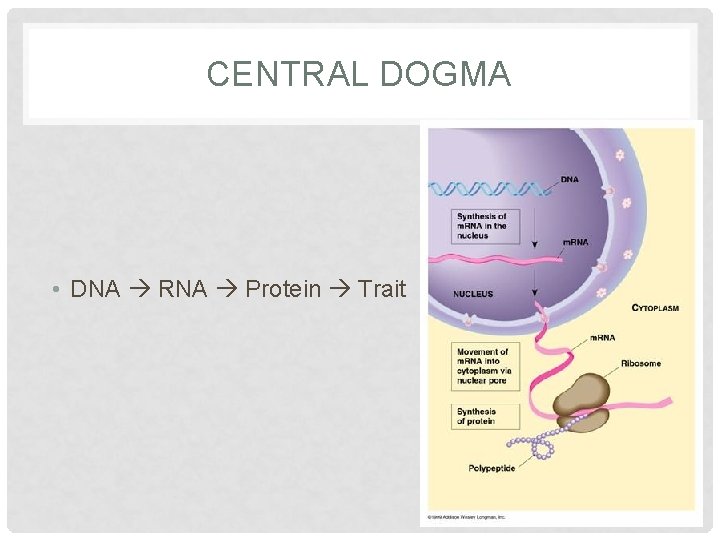
CENTRAL DOGMA • DNA RNA Protein Trait
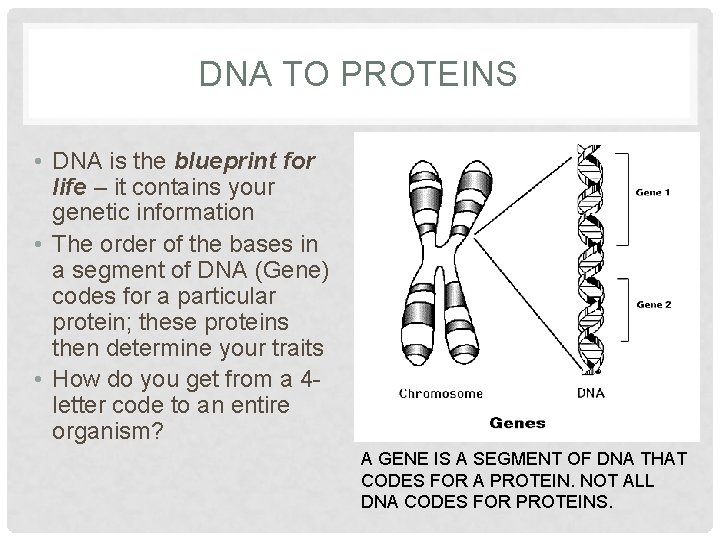
DNA TO PROTEINS • DNA is the blueprint for life – it contains your genetic information • The order of the bases in a segment of DNA (Gene) codes for a particular protein; these proteins then determine your traits • How do you get from a 4 letter code to an entire organism? A GENE IS A SEGMENT OF DNA THAT CODES FOR A PROTEIN. NOT ALL DNA CODES FOR PROTEINS.
DNA TO RNA: TRANSCRIPTION • In the first step of protein synthesis, the code of DNA is transcribed onto a molecule of RNA – this step of the process is known as Transcription • DNA is too big and too sensitive to leave the nucleus. However, proteins are made in the ribosomes, so the information in DNA must be transferred. • It will be transferred to a molecule of RNA • RNA is also used because it allows the genetic information to move from the nucleus (safe) to the cytoplasm (dangerous)
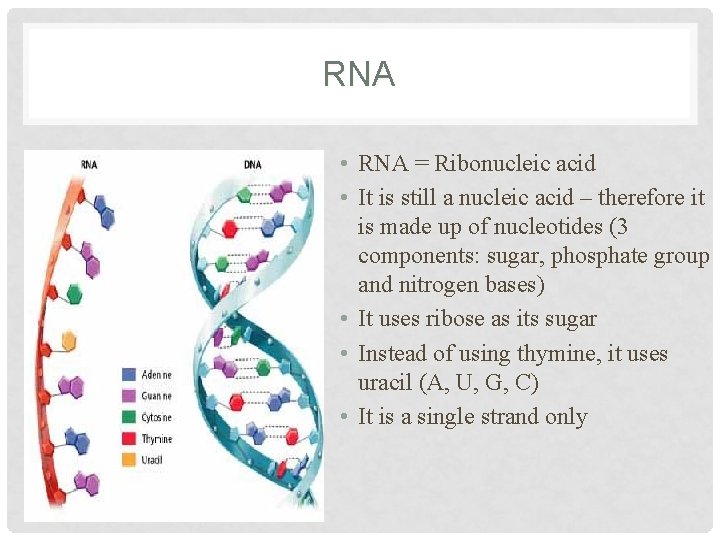
RNA • RNA = Ribonucleic acid • It is still a nucleic acid – therefore it is made up of nucleotides (3 components: sugar, phosphate group and nitrogen bases) • It uses ribose as its sugar • Instead of using thymine, it uses uracil (A, U, G, C) • It is a single strand only
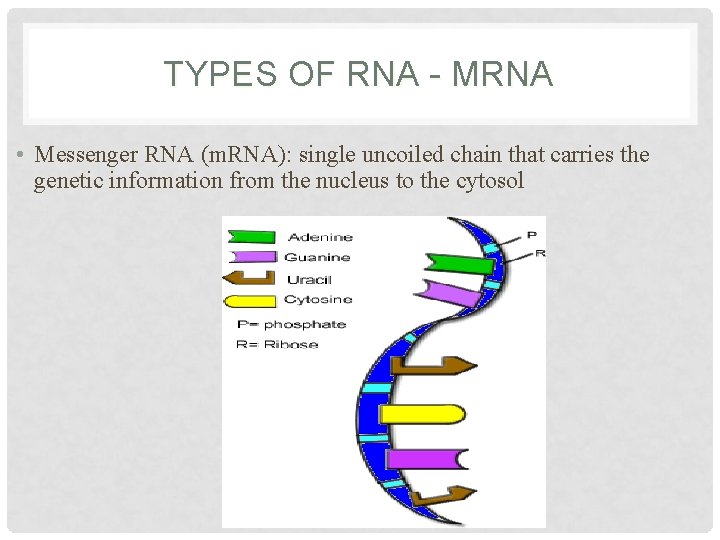
TYPES OF RNA - MRNA • Messenger RNA (m. RNA): single uncoiled chain that carries the genetic information from the nucleus to the cytosol
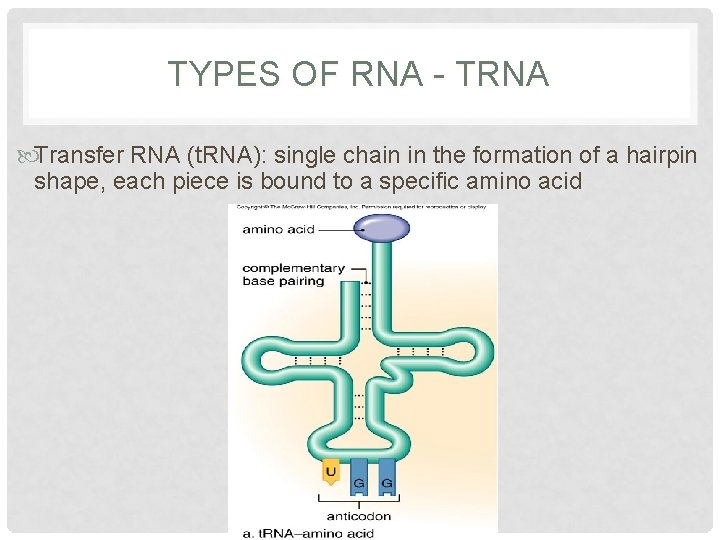
TYPES OF RNA - TRNA Transfer RNA (t. RNA): single chain in the formation of a hairpin shape, each piece is bound to a specific amino acid
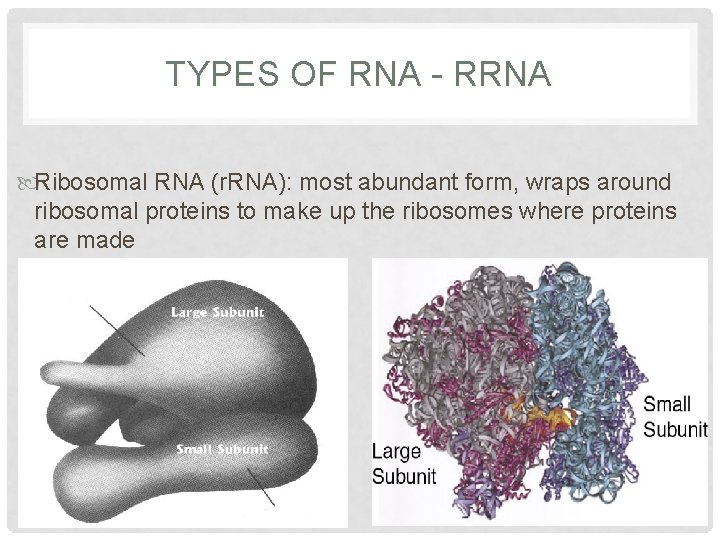
TYPES OF RNA - RRNA Ribosomal RNA (r. RNA): most abundant form, wraps around ribosomal proteins to make up the ribosomes where proteins are made
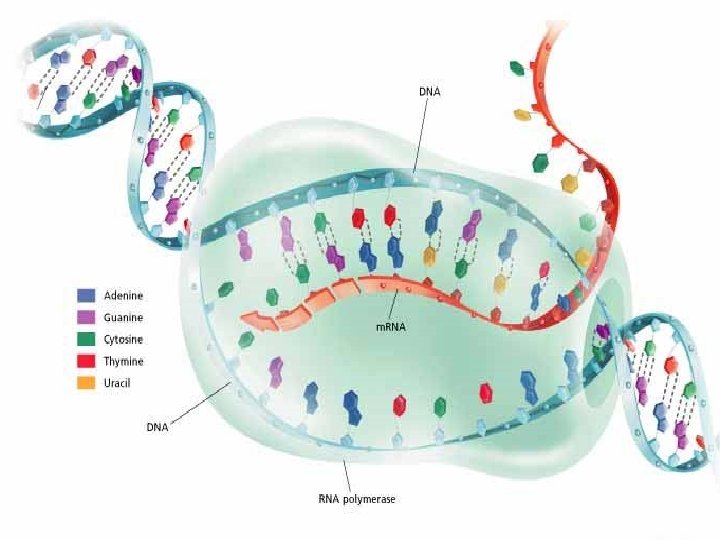
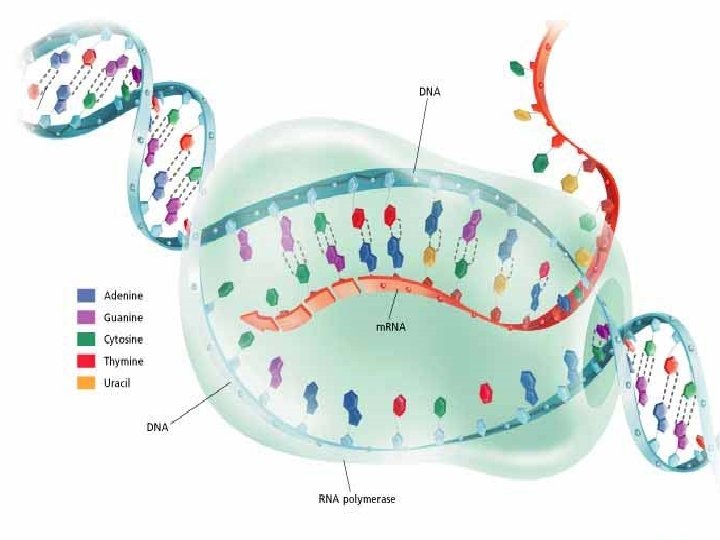
TRANSCRIPTION • Process by which genetic information is copied (transcribed) from DNA to RNA • RNA polymerase initiates transcription by binding to a specific area of DNA called promoters • What do you think a promoter is? • A promoter starts, or promoters the beginning of transcription • Where the polymerase binds, the DNA strands separate and a template is created upon which RNA is created
TRANSCRIPTION (CONTINUED) • RNA polymerase attaches to the first nucleotide and adds on complementary bases using uracil instead of thymine • Continues until the polymerase reaches the termination signal • What do you think a termination signal does? • Termination signal causes the polymerase to release the DNA and RNA
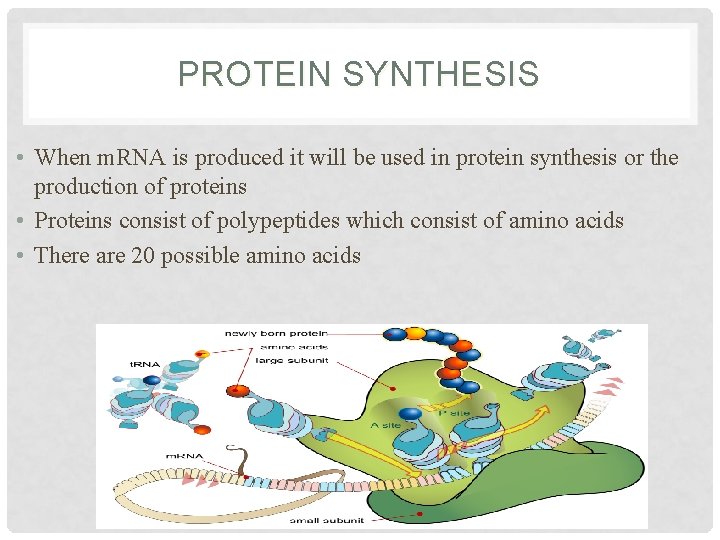
PROTEIN SYNTHESIS • When m. RNA is produced it will be used in protein synthesis or the production of proteins • Proteins consist of polypeptides which consist of amino acids • There are 20 possible amino acids
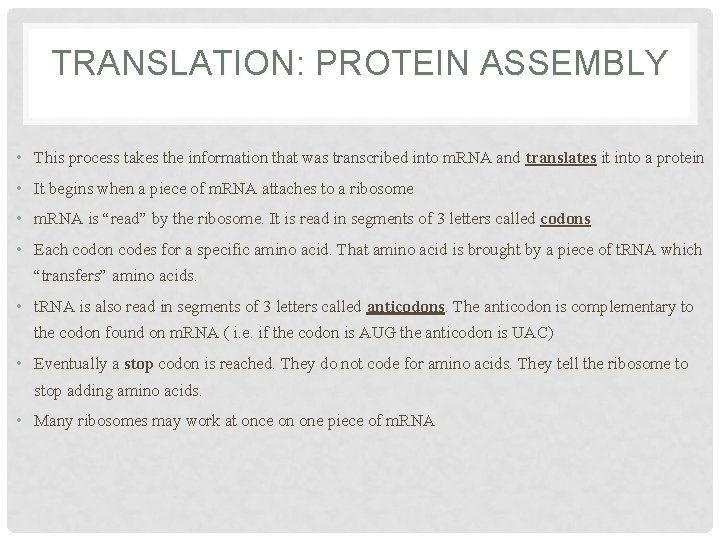
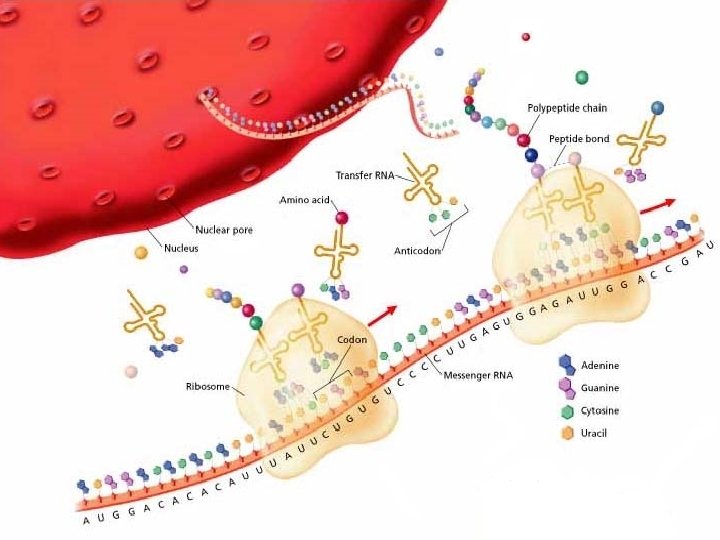
TRANSLATION: PROTEIN ASSEMBLY • This process takes the information that was transcribed into m. RNA and translates it into a protein • It begins when a piece of m. RNA attaches to a ribosome • m. RNA is “read” by the ribosome. It is read in segments of 3 letters called codons • Each codon codes for a specific amino acid. That amino acid is brought by a piece of t. RNA which “transfers” amino acids. • t. RNA is also read in segments of 3 letters called anticodons. The anticodon is complementary to the codon found on m. RNA ( i. e. if the codon is AUG the anticodon is UAC) • Eventually a stop codon is reached. They do not code for amino acids. They tell the ribosome to stop adding amino acids. • Many ribosomes may work at once on one piece of m. RNA
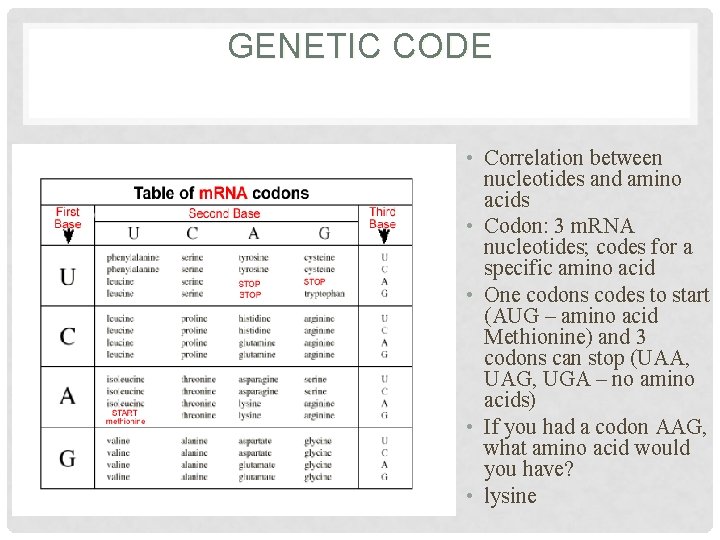
GENETIC CODE • Correlation between nucleotides and amino acids • Codon: 3 m. RNA nucleotides; codes for a specific amino acid • One codons codes to start (AUG – amino acid Methionine) and 3 codons can stop (UAA, UAG, UGA – no amino acids) • If you had a codon AAG, what amino acid would you have? • lysine