
Nucleic Acids 1 Store and transfer genetic information
- Slides: 16
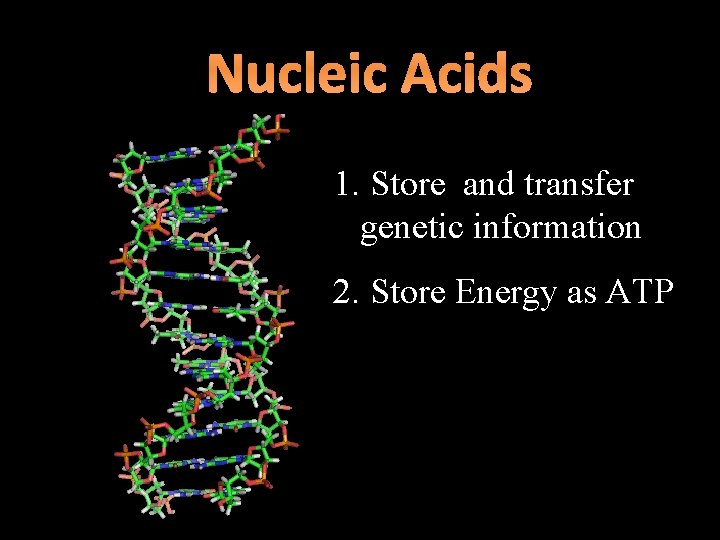
Nucleic Acids 1. Store and transfer genetic information 2. Store Energy as ATP
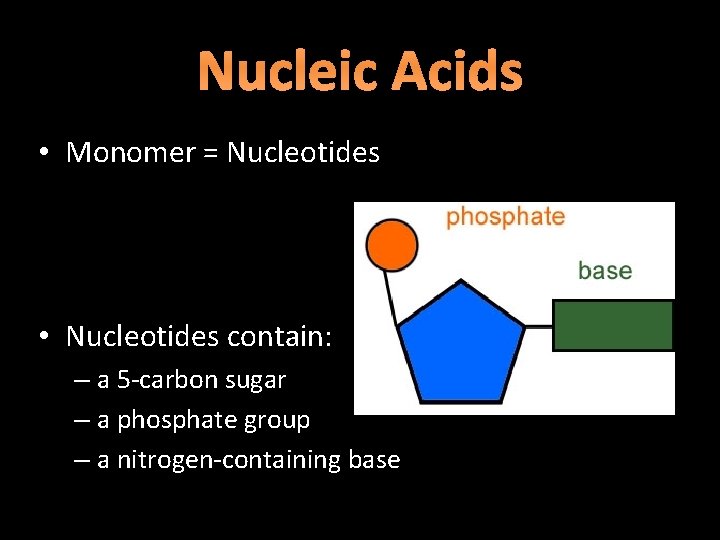
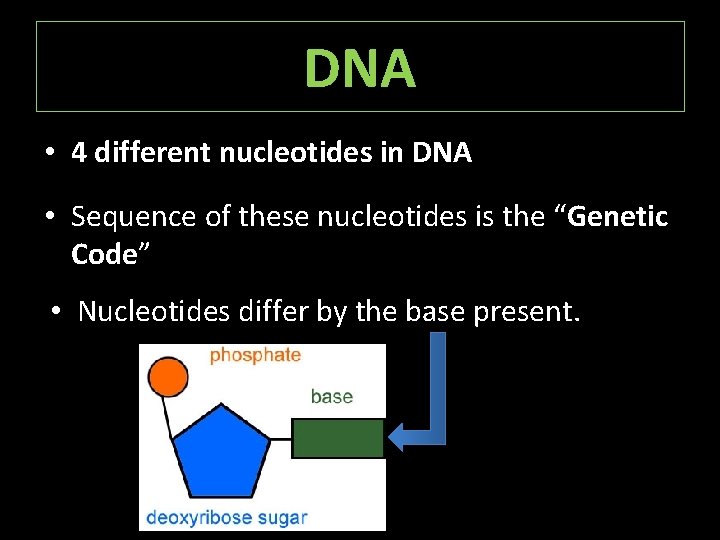
Nucleic Acids • Monomer = Nucleotides • Nucleotides contain: – a 5 -carbon sugar – a phosphate group – a nitrogen-containing base
Nucleic Acids There are two types: 1. DNA: Deoxyribonucleic Acid 2. RNA: Ribonucleic Acid Structures differ based on the pentose sugar present
Nucleic Acids DNA & RNA are… Huge, macromolecules that are polymers of nucleotides Form via dehydration synthesis between nucleotides.
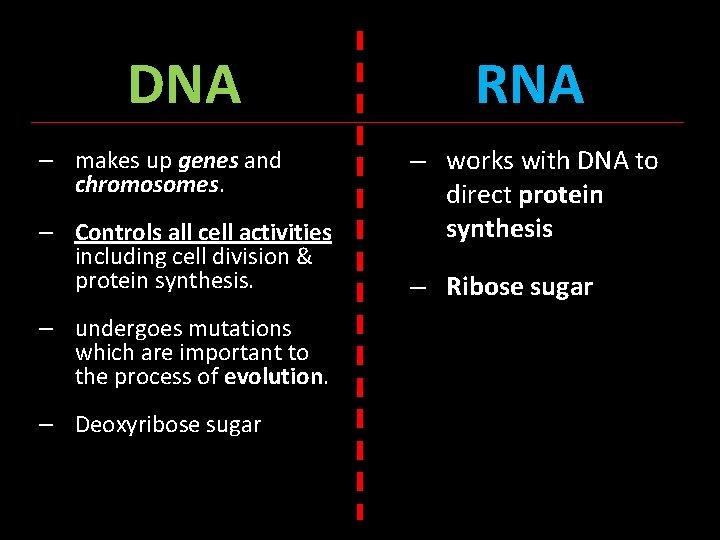
DNA – makes up genes and chromosomes. – Controls all cell activities including cell division & protein synthesis. – undergoes mutations which are important to the process of evolution. – Deoxyribose sugar RNA – works with DNA to direct protein synthesis – Ribose sugar
DNA • 4 different nucleotides in DNA • Sequence of these nucleotides is the “Genetic Code” • Nucleotides differ by the base present.
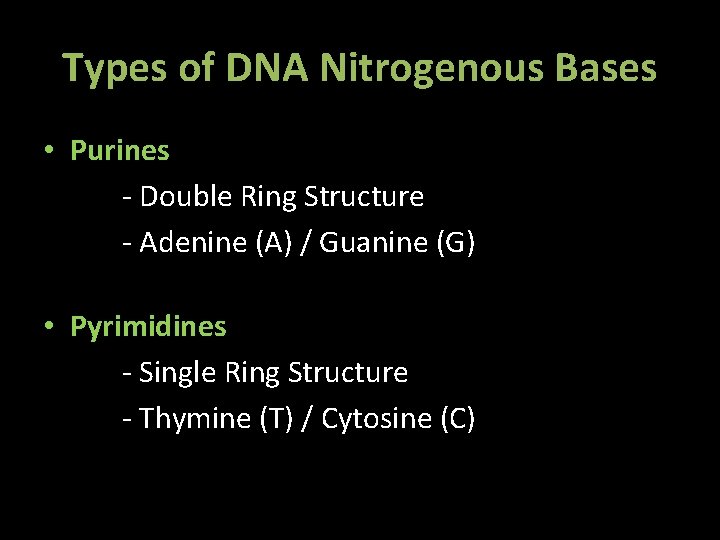
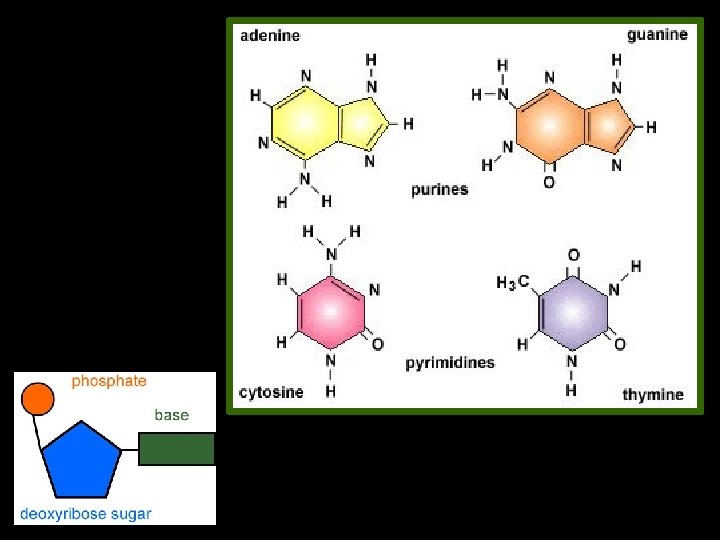
Types of DNA Nitrogenous Bases • Purines - Double Ring Structure - Adenine (A) / Guanine (G) • Pyrimidines - Single Ring Structure - Thymine (T) / Cytosine (C)
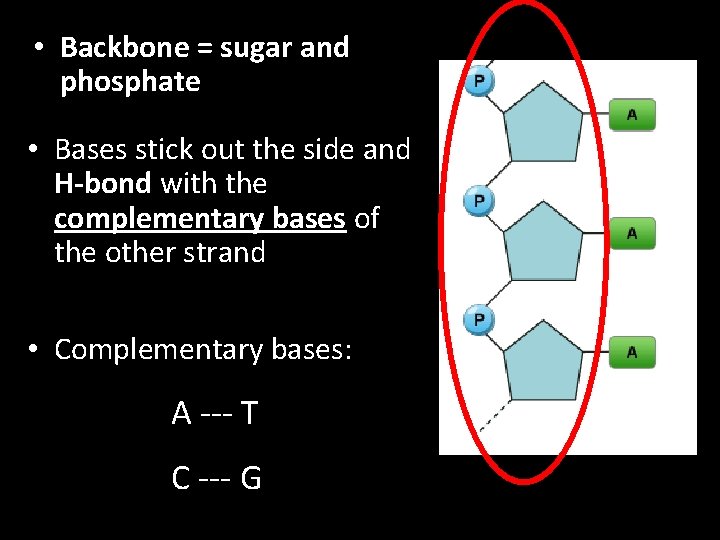
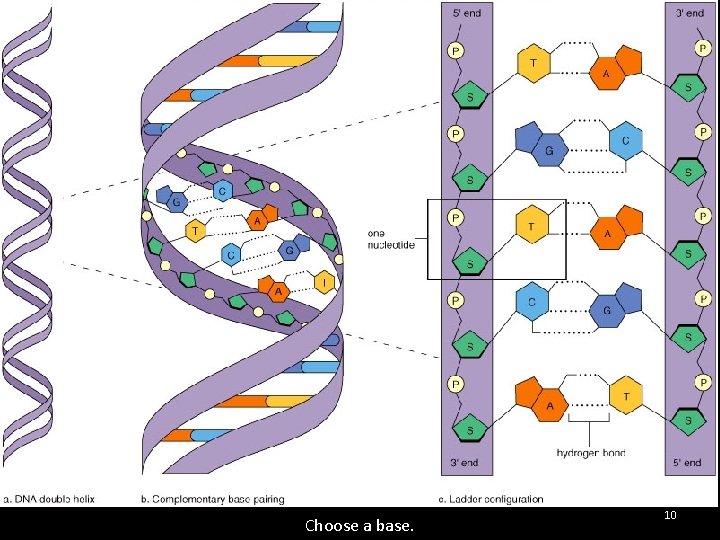
• Backbone = sugar and phosphate • Bases stick out the side and H-bond with the complementary bases of the other strand • Complementary bases: A --- T C --- G
Choose a base. 10
• Sections of DNA form functional units called GENES. A gene is one instruction for making one polypeptide, and is about 1000 nucleotides long, on average. • DNA is packaged into chromosomes, and is located in the nucleus. You have about 4 billion nucleotide pairs in each of your cells. Each of your 46 chromosomes contains one very long polymer of DNA around 85, 000 nucleotides long!
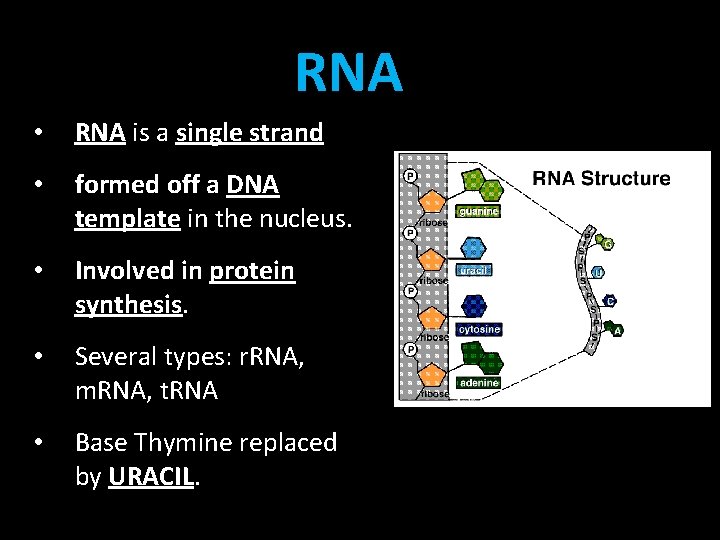
RNA • RNA is a single strand • formed off a DNA template in the nucleus. • Involved in protein synthesis. • Several types: r. RNA, m. RNA, t. RNA • Base Thymine replaced by URACIL.
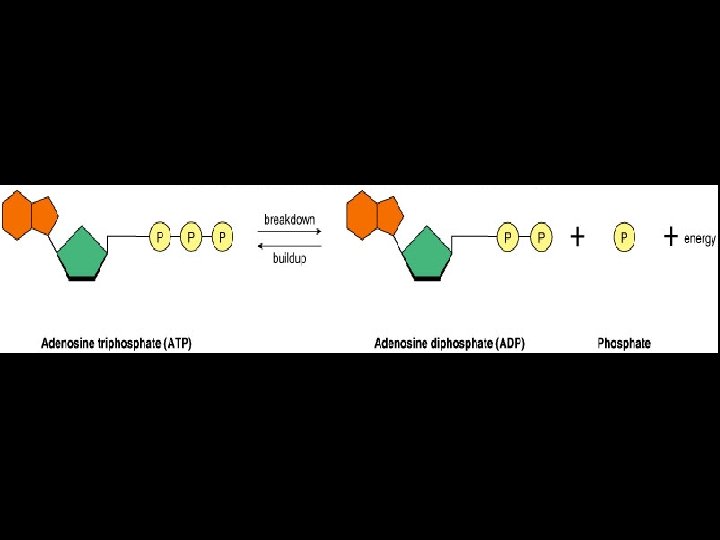
ATP - Adenosine Triphosphate Molecule of ENERGY • Type of nucleotide • primary ENERGY CURRENCY in cells • Consists of sugar Ribose with base Adenine & 3 phosphate groups
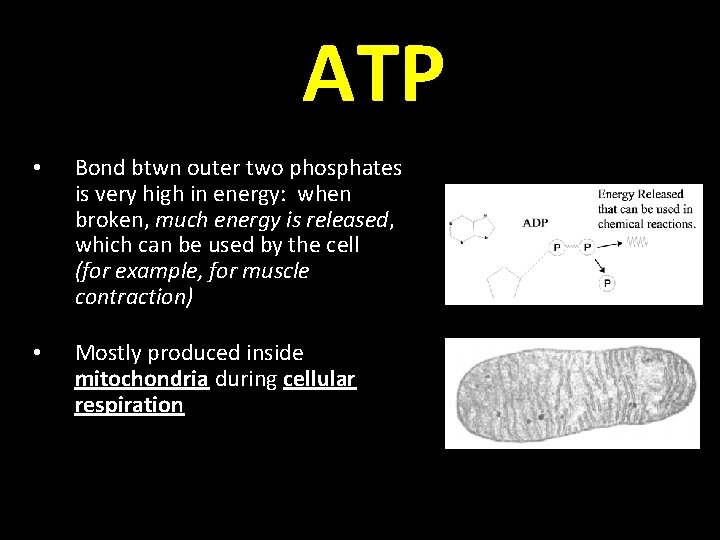
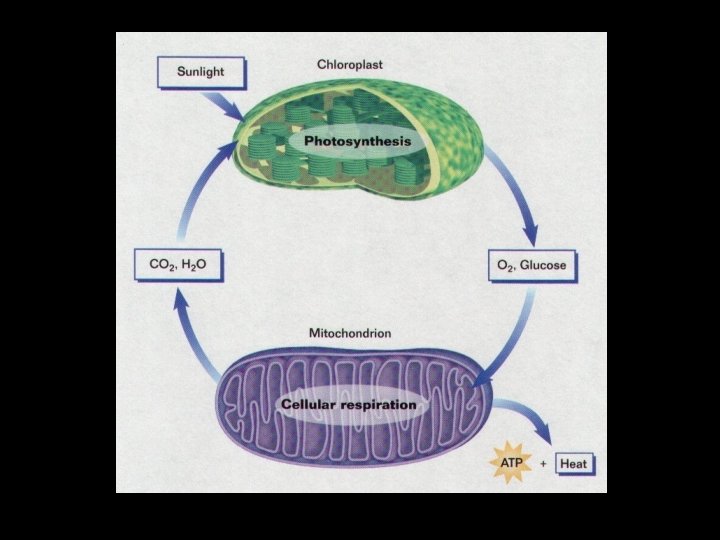
ATP • Bond btwn outer two phosphates is very high in energy: when broken, much energy is released, which can be used by the cell (for example, for muscle contraction) • Mostly produced inside mitochondria during cellular respiration