
Nucleic acidbased methods I Structure of DNA Complementality
Nucleic acid-based methods (I)
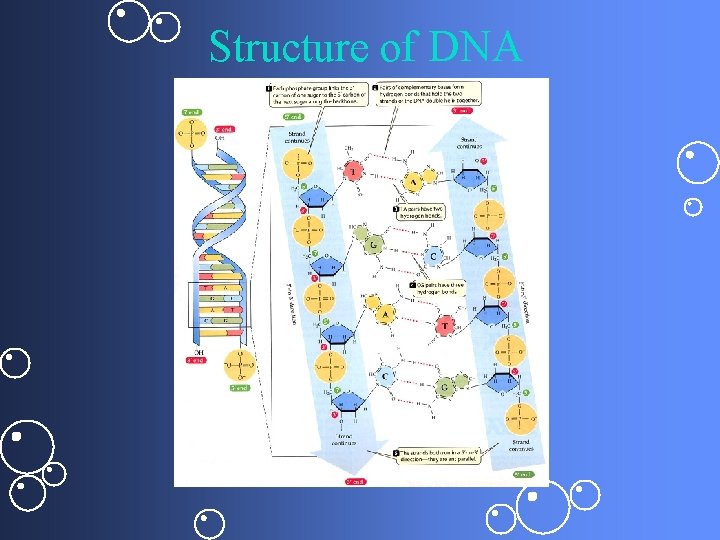
Structure of DNA
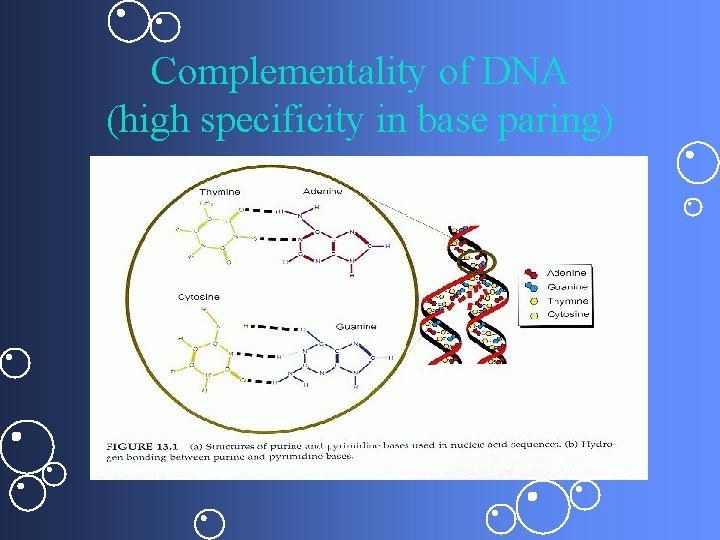
Complementality of DNA (high specificity in base paring)
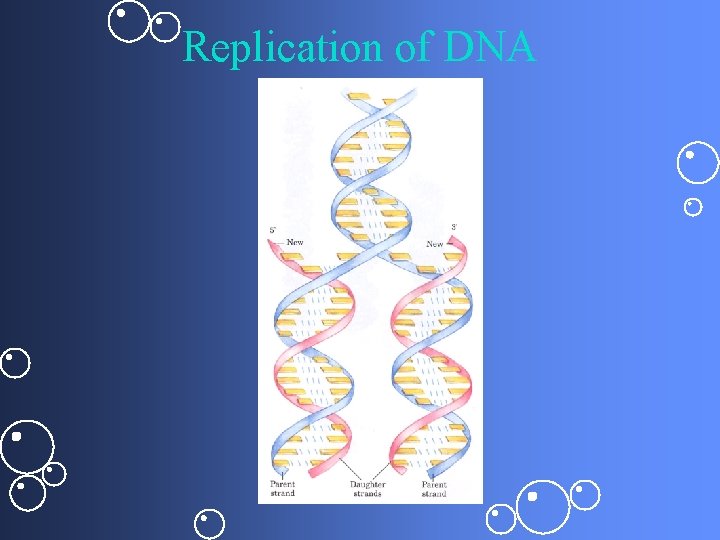
Replication of DNA
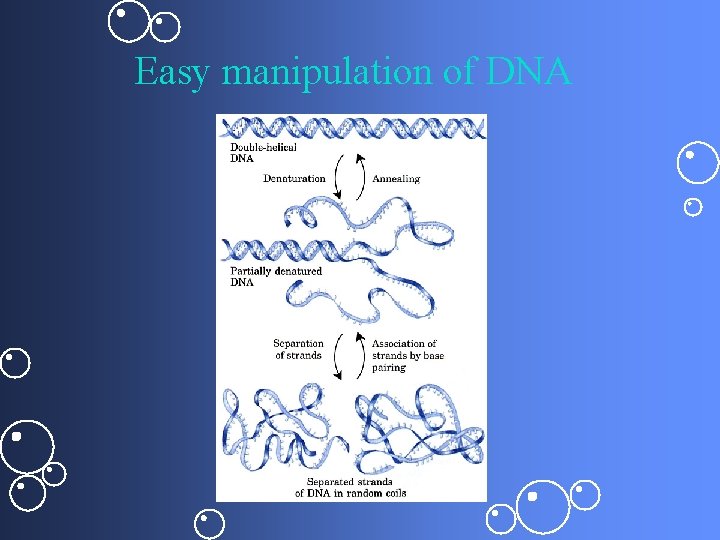
Easy manipulation of DNA
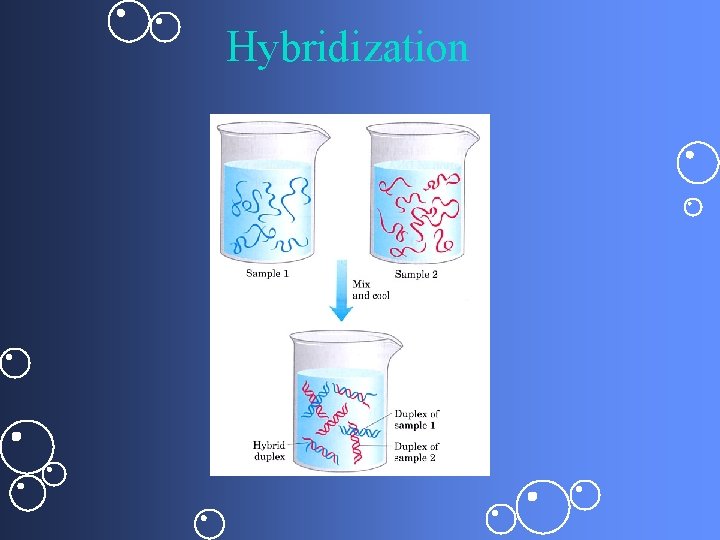
Hybridization
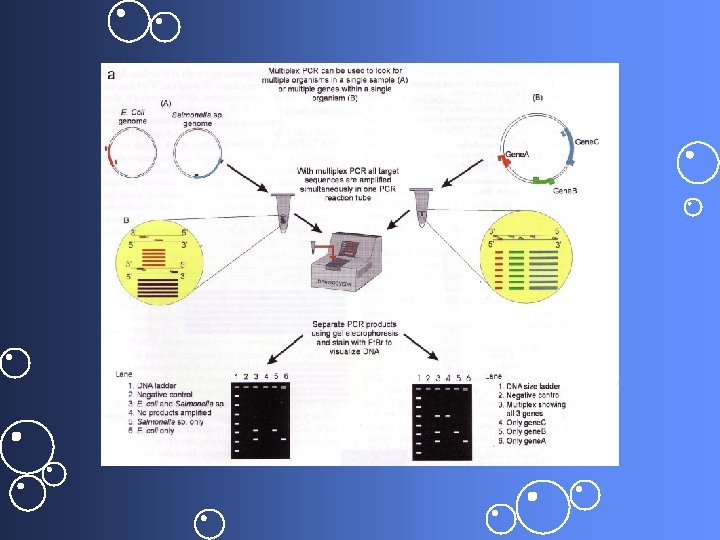
Nucleic acid-based methods • Gene probing – – – Colony hybridization Southern/Northern hybridization Microarray • Polymerase Chain Reaction (PCR) – – PCR RT-PCR Multiplex PCR Nested PCR
Gene probes • Small pieces of DNA complementary to the target sequence of interest • Labeling options – Radioactive chemicals – Nonradioactive alternatives (DIG, biotin, or fluorescein)
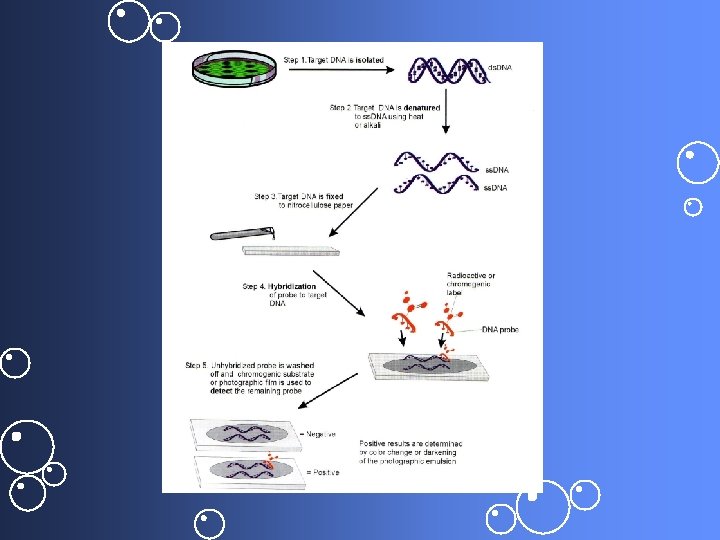

Gene probe detection
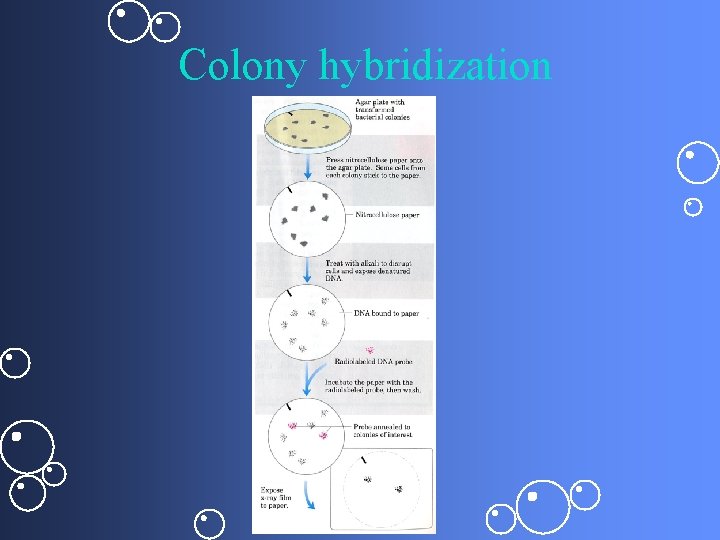
Colony hybridization
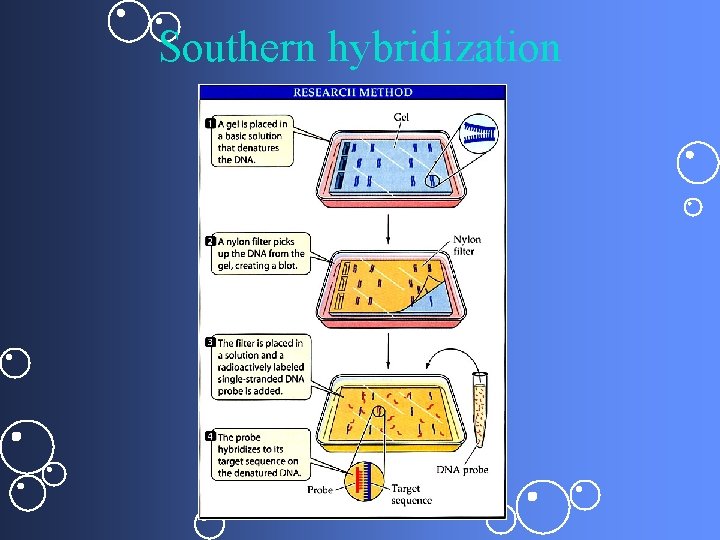
Southern hybridization
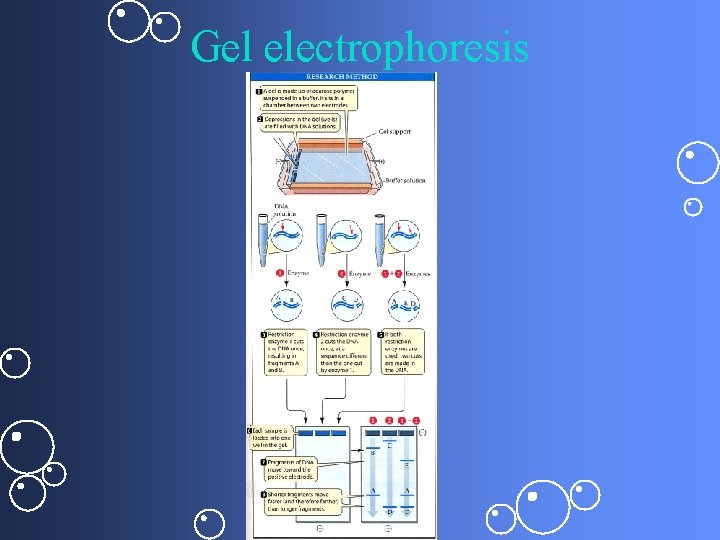
Gel electrophoresis
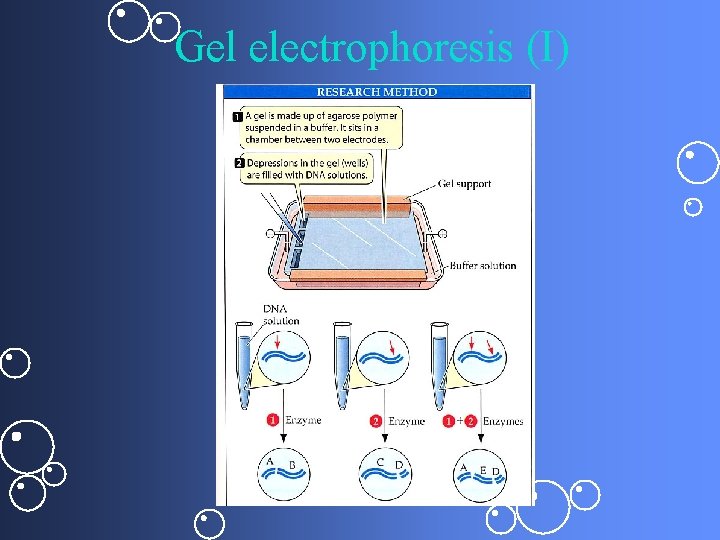
Gel electrophoresis (I)
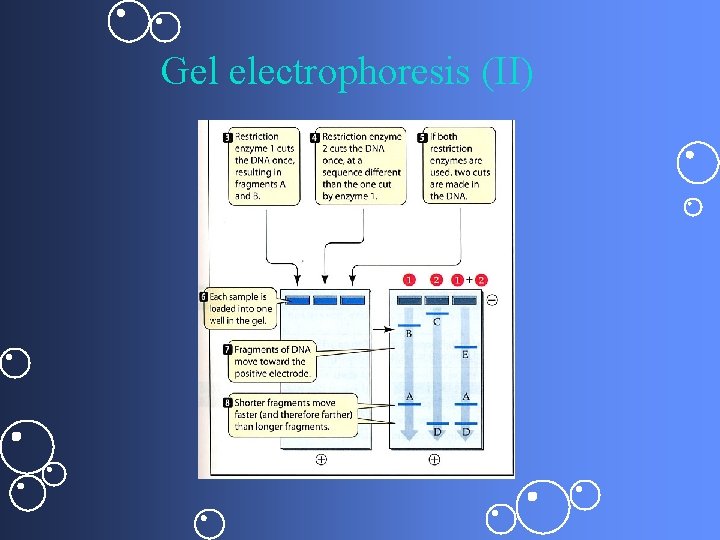
Gel electrophoresis (II)
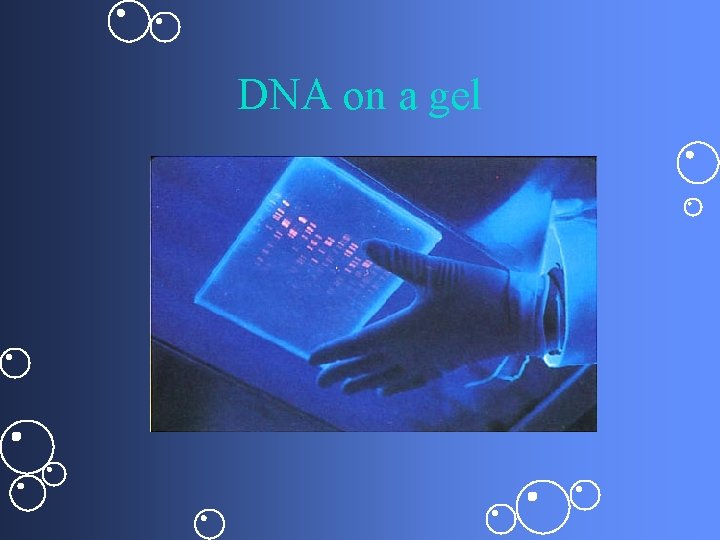
DNA on a gel
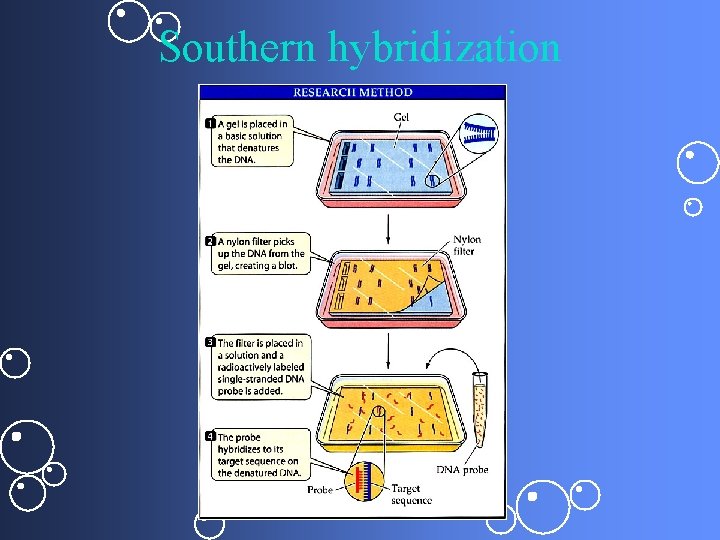
Southern hybridization
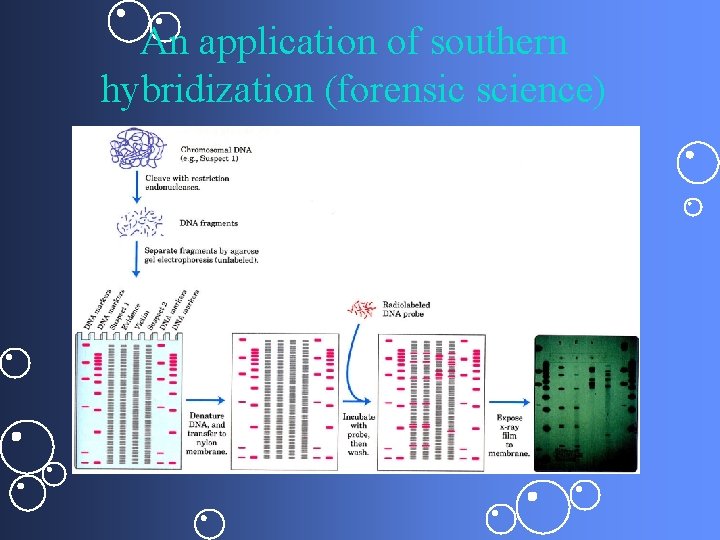
An application of southern hybridization (forensic science)
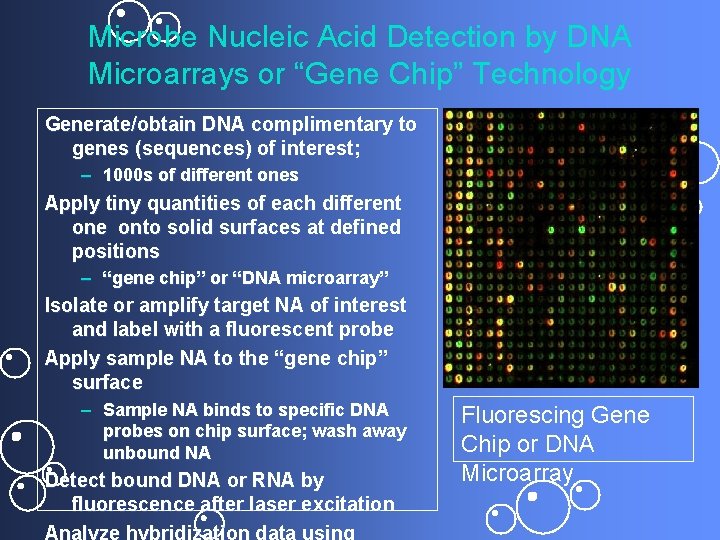
Microbe Nucleic Acid Detection by DNA Microarrays or “Gene Chip” Technology Generate/obtain DNA complimentary to genes (sequences) of interest; – 1000 s of different ones Apply tiny quantities of each different one onto solid surfaces at defined positions – “gene chip” or “DNA microarray” Isolate or amplify target NA of interest and label with a fluorescent probe Apply sample NA to the “gene chip” surface – Sample NA binds to specific DNA probes on chip surface; wash away unbound NA Detect bound DNA or RNA by fluorescence after laser excitation Fluorescing Gene Chip or DNA Microarray
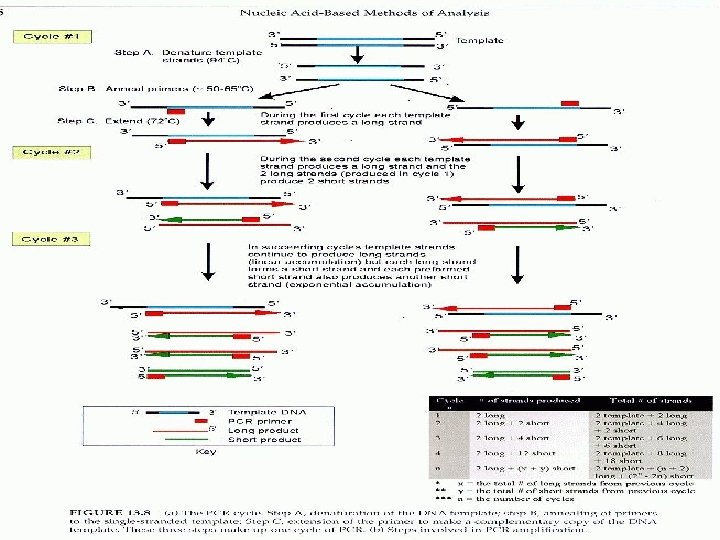
Polymerase Chain Reaction (PCR)

Primers and enzymes • Primers – Short nucleotides complementary to a target DNA – Upstream and downstream primers • Taq polymerase – Heat stable DNA-dependant DNA polymerase – Isolated from thermophilic bacteria (Thermus aquaticus) – Withstand temperature up to 98 o. C
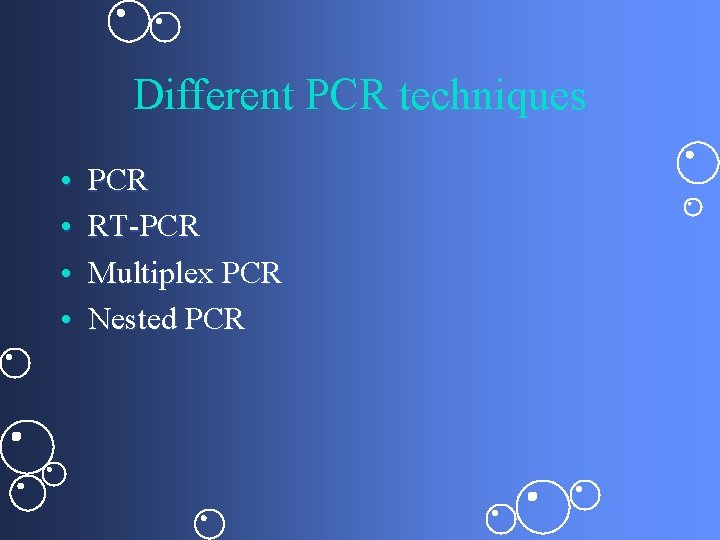
Different PCR techniques • • PCR RT-PCR Multiplex PCR Nested PCR


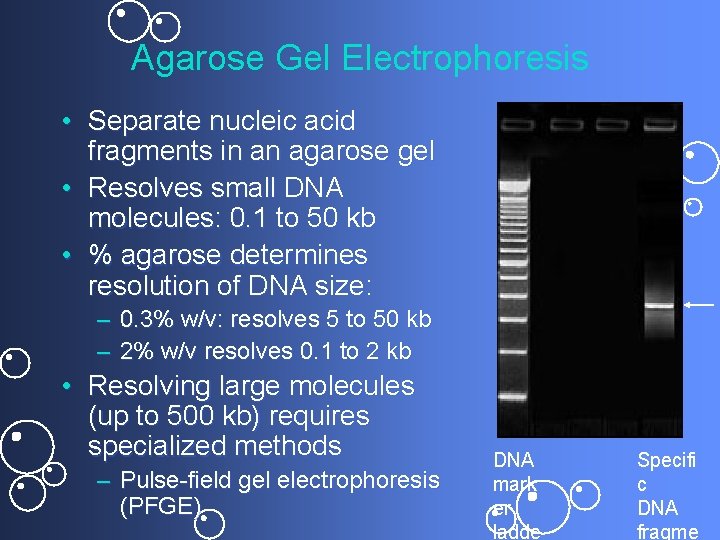
Agarose Gel Electrophoresis • Separate nucleic acid fragments in an agarose gel • Resolves small DNA molecules: 0. 1 to 50 kb • % agarose determines resolution of DNA size: – 0. 3% w/v: resolves 5 to 50 kb – 2% w/v resolves 0. 1 to 2 kb • Resolving large molecules (up to 500 kb) requires specialized methods – Pulse-field gel electrophoresis (PFGE) DNA mark er ladde Specifi c DNA fragme
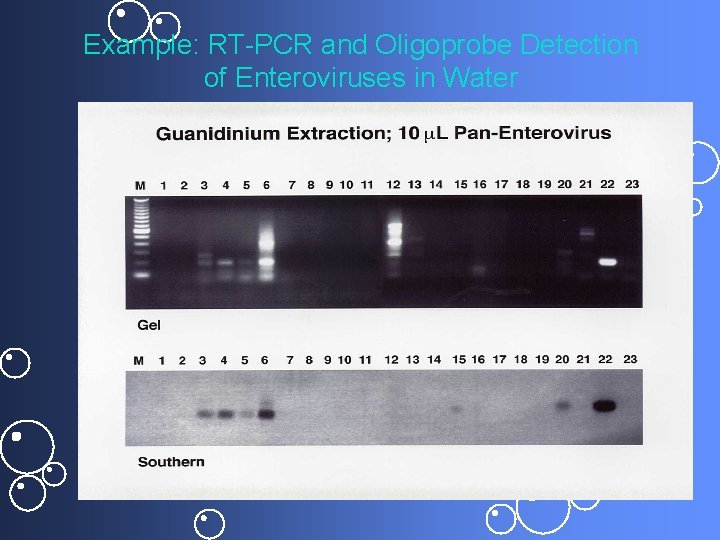
Example: RT-PCR and Oligoprobe Detection of Enteroviruses in Water
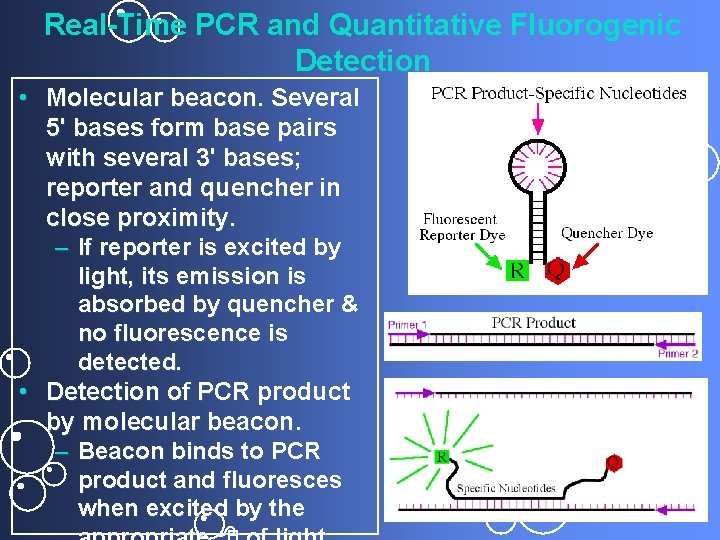
Real-Time PCR and Quantitative Fluorogenic Detection • Molecular beacon. Several 5' bases form base pairs with several 3' bases; reporter and quencher in close proximity. – If reporter is excited by light, its emission is absorbed by quencher & no fluorescence is detected. • Detection of PCR product by molecular beacon. – Beacon binds to PCR product and fluoresces when excited by the
- Slides: 30