
Nuclear Waste Radioactive Waste Unwanted or discarded items

- Slides: 29
Nuclear Waste
Radioactive Waste • Unwanted or discarded items that contain radioactive material. • Hazardous to life and the environment • Low Level Waste • High Level Waste
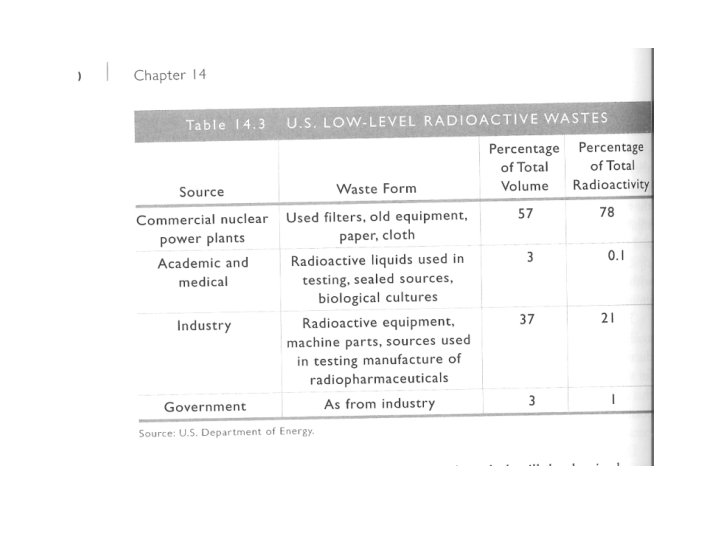
Low Level Waste • Articles contaminated with radioactive material, or that became radioactive because of exposure to neutron radiation. • Generally, low activity or small amounts • Examples: radio-chemicals, medical items, contaminated gloves, papers, machine parts etc.
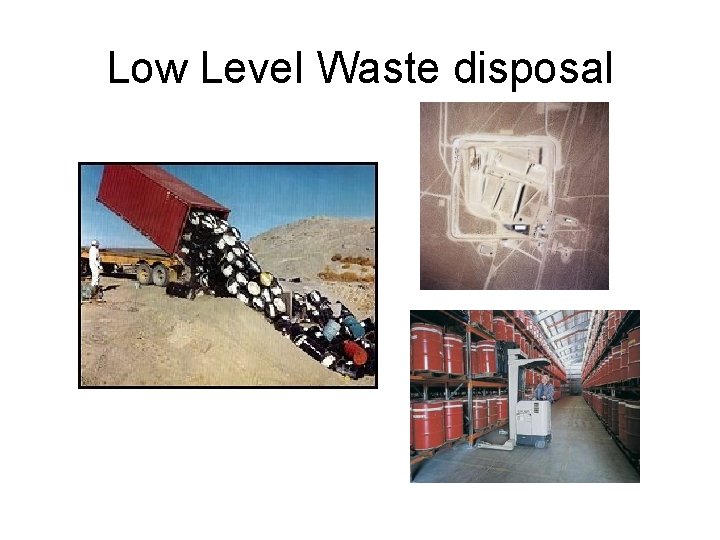
Low Level Waste • Stored on-site until activity has decayed to safe levels (becomes non-radioactive trash) or • Disposed of in shallow trenches at privately owned sites in Nevada, South Carolina, Utah and Washington.
Low Level Waste disposal
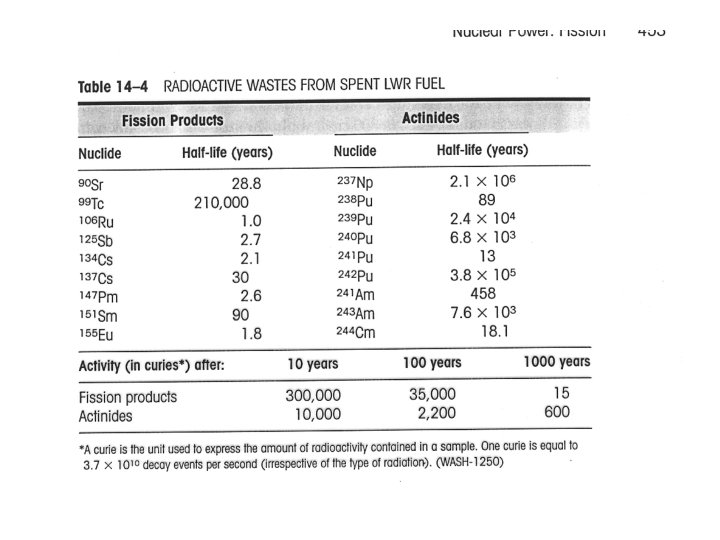
High Level Waste • Fission Products: elements that result from the fission process. A couple of important examples are 137 Cs and 90 Sr. • Actinides: Formed by neutron absorption by the original fuel. Elements with atomic numbers greater than 88. Extremely toxic chemically as well as being radioactive. Example: 239 Pu.
High Level Waste • Spent (no longer useful to generate electricity) reactor fuel • Waste materials left after fuel is reprocessed • Materials from nuclear weapons upgrades and decommissioning
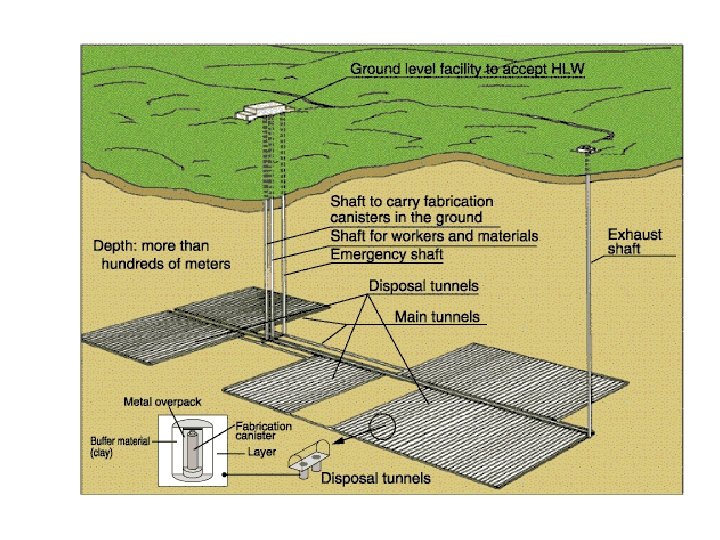
High Level Waste • Encapsulate it. • Store long term in dry, geologically stable sites until activity decays to safe levels.
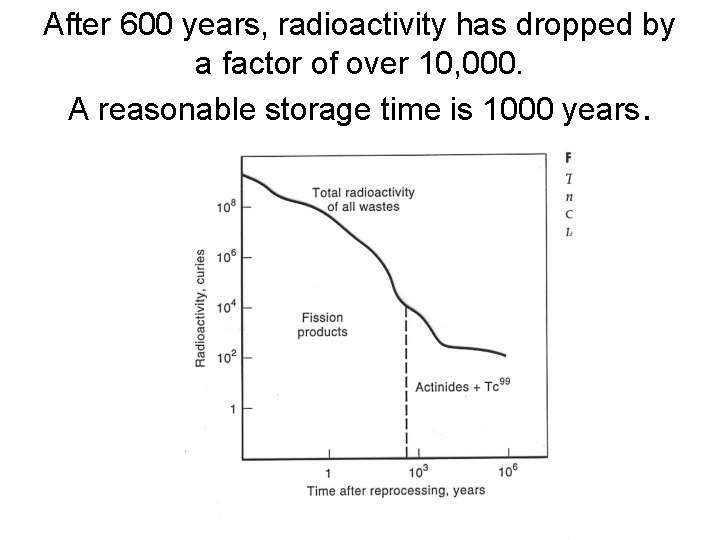
After 600 years, radioactivity has dropped by a factor of over 10, 000. A reasonable storage time is 1000 years.
• The largest producer of radioactive waste is the military defense programs • 80, 000 gallons of liquid waste are stored at Hanford, Washington. (500, 000 gallons leaked into the ground over a number of years. ) • The waste from 1 years operation of a 1000 MW plant is approximate 2 m 3.
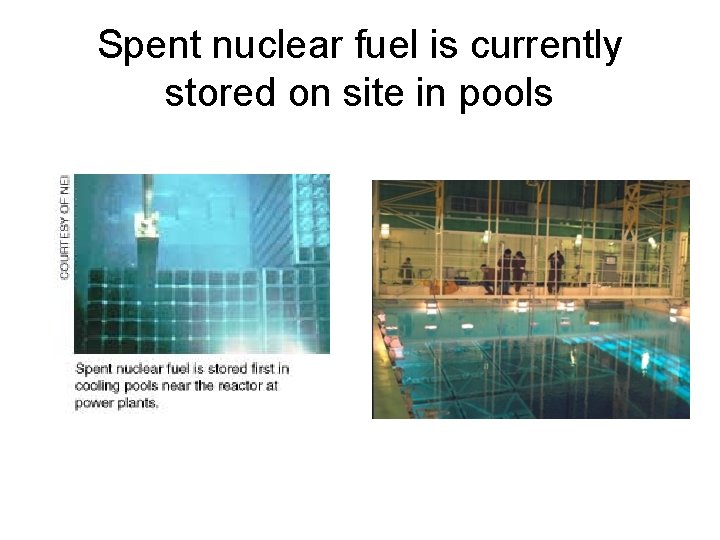
Spent nuclear fuel is currently stored on site in pools
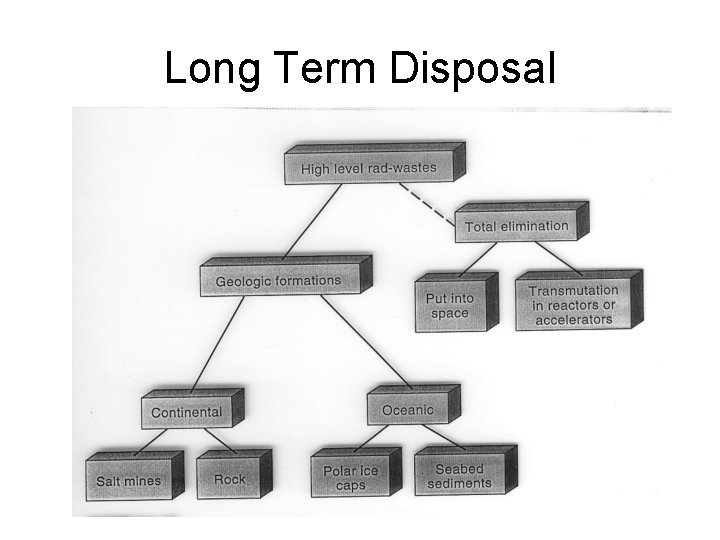
Long Term Disposal
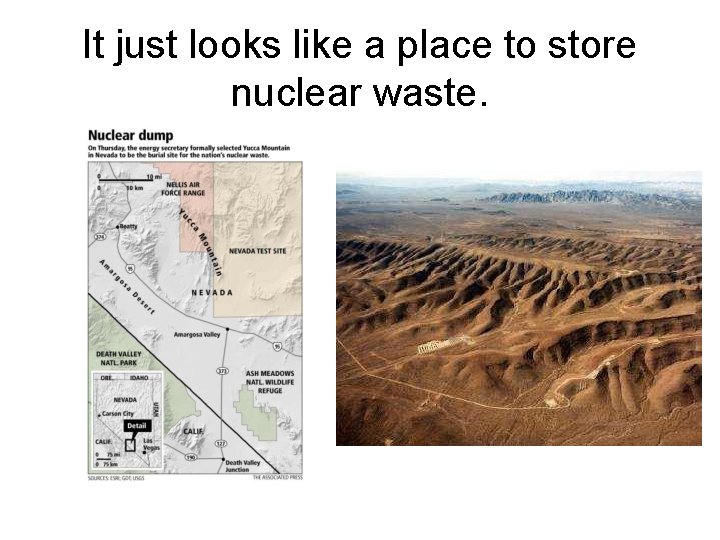
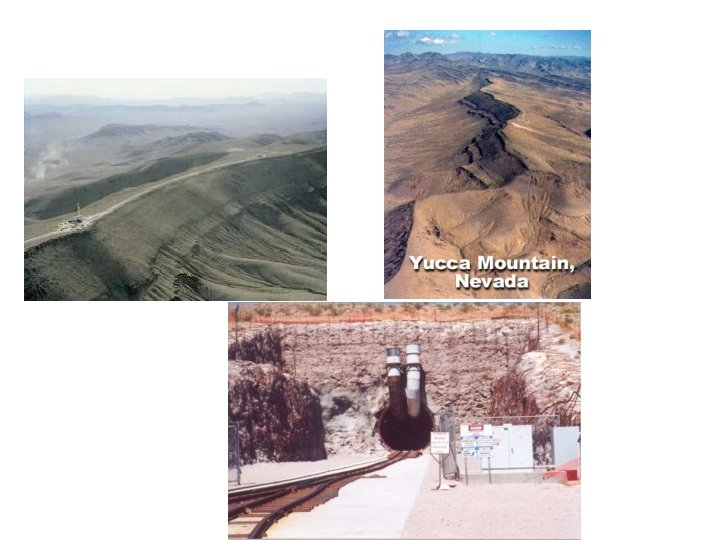
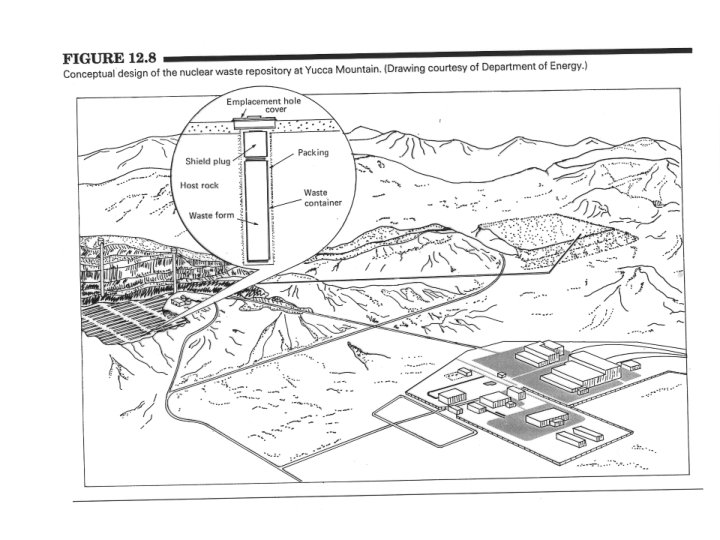
Yucca Mountain • The Nuclear Waste Policy Act (1982) and its Amendment Act (1987) established a national policy for nuclear waste disposal. • In 1987 the Yucca Mountain, Nevada site was selected as the primary candidate for the long term deposit site. • The site was extensively evaluated
It just looks like a place to store nuclear waste.
Basic Characteristics • The rock formation is 13 million year old volcanic tuff. • Very dry climate (less than 6 in of rain per year. ) • The water table is 1700 feet down. • Groundwater travel laterally about 1 mile in 3400 to 8300 years. • Nearest surface water is 30 miles away.
• Tuff can trap any radionuclides that may leak by adsorption within the rock. • The government already owns the site. • Funding ended for the site in 2011, and the site has been closed.
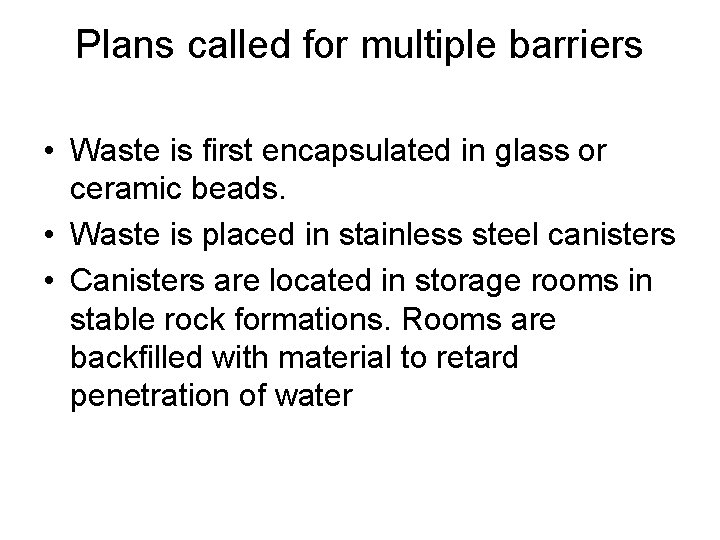
Plans called for multiple barriers • Waste is first encapsulated in glass or ceramic beads. • Waste is placed in stainless steel canisters • Canisters are located in storage rooms in stable rock formations. Rooms are backfilled with material to retard penetration of water
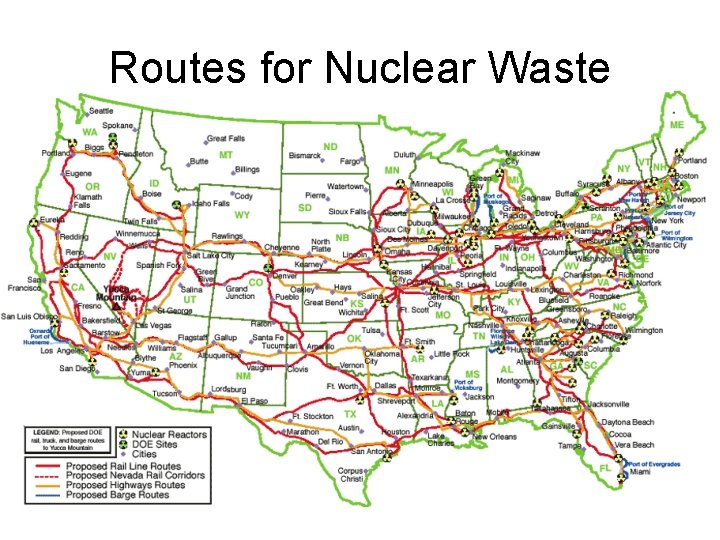
Routes for Nuclear Waste
• Funding ended for the site in 2011, and the site was been closed. • The Government Accountability Office (GAO) stated that the closure was for political reasons • In August 2015 work was resumed on evaluating the site.
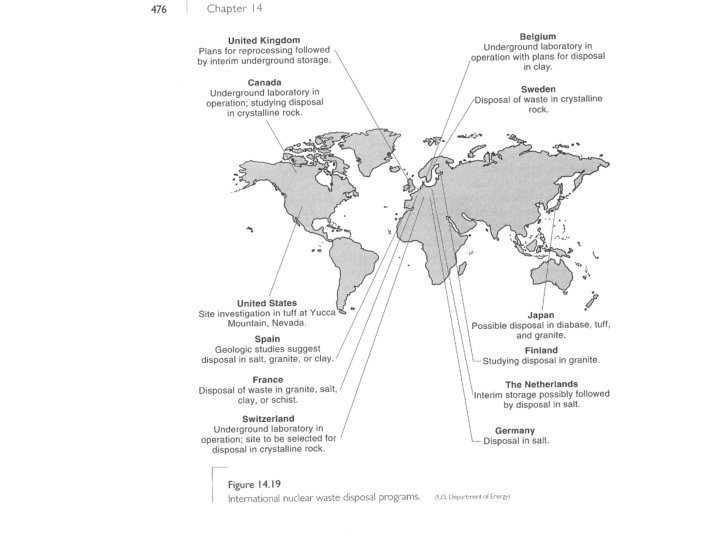
• Non US governmental organizations currently have no long term storage sites for high-level waste • The US government stores waste at the Waste Isolation Pilot Plant in New Mexico. • Other waste is stored on-site.
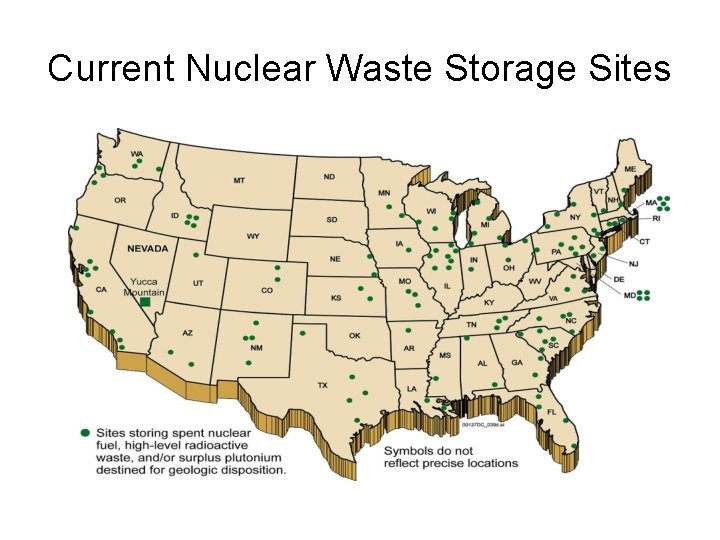
Current Nuclear Waste Storage Sites