
Nuclear Waste Long Term Storage The Failure of
- Slides: 19
Nuclear Waste Long Term Storage, The Failure of the Federal Government, and NIMBY
Overview The current methods of storage are running out of space and are not intended for longterm use The government was required by the Nuclear Waste Policy Act of 1982 to provide longterm storage for waste So far, the federal government has scrapped Yucca Mountain, and it is considering alternative storage methods
Fast Facts The US has more than 64, 000 metric tons of nuclear waste ◦ “Enough to cover a football field about seven yards deep” The half-life of the fuel is more than 1 million years Legal requirements: Nuclear Waste Policy Act of 1982
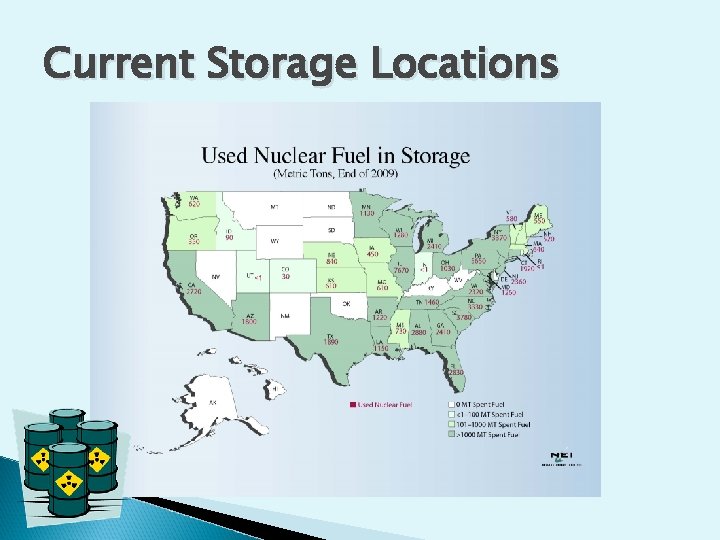
Current Storage Locations
Options Spent Fuel Pools Dry cask storage Long-term Storage: Yucca Mountain Reprocessing
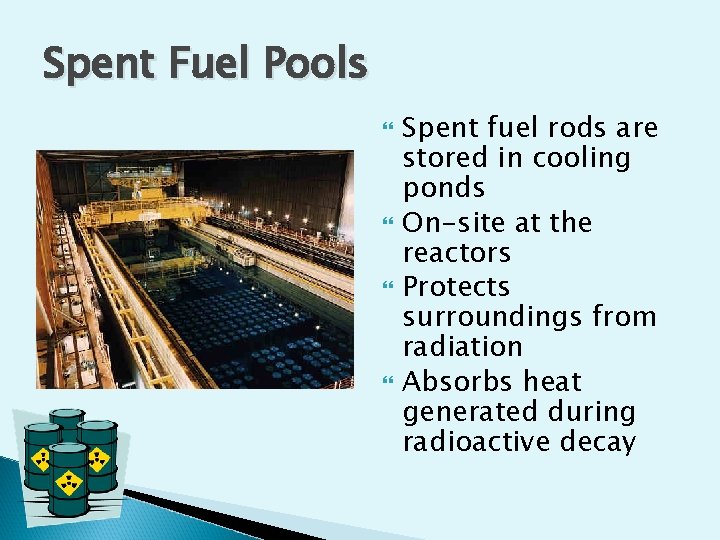
Spent Fuel Pools Spent fuel rods are stored in cooling ponds On-site at the reactors Protects surroundings from radiation Absorbs heat generated during radioactive decay
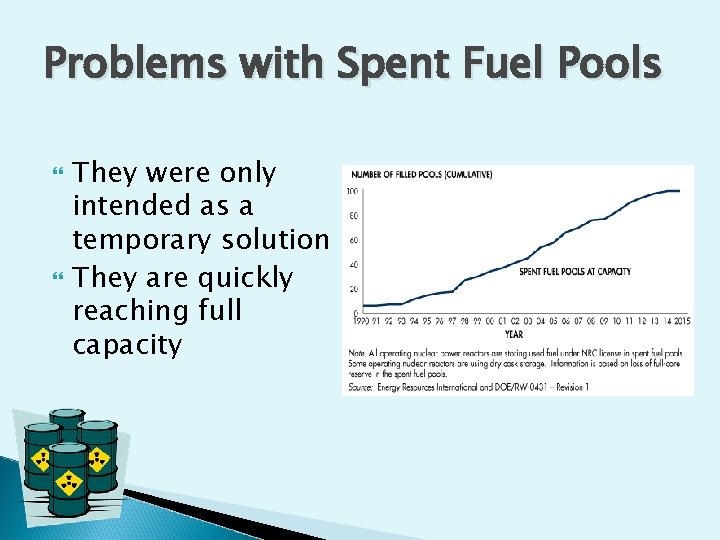
Problems with Spent Fuel Pools They were only intended as a temporary solution They are quickly reaching full capacity
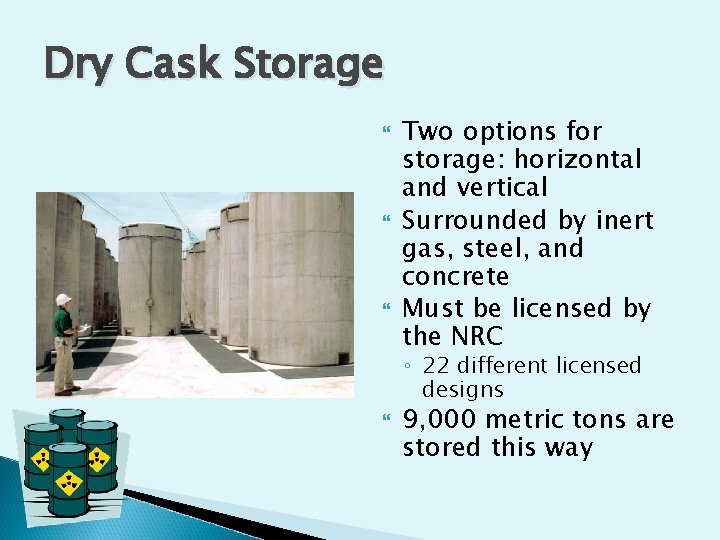
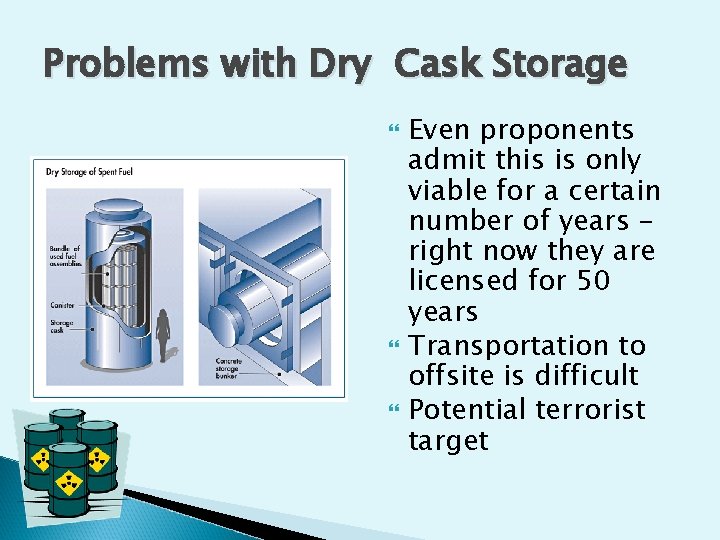
Dry Cask Storage Two options for storage: horizontal and vertical Surrounded by inert gas, steel, and concrete Must be licensed by the NRC ◦ 22 different licensed designs 9, 000 metric tons are stored this way
Problems with Dry Cask Storage Even proponents admit this is only viable for a certain number of years – right now they are licensed for 50 years Transportation to offsite is difficult Potential terrorist target
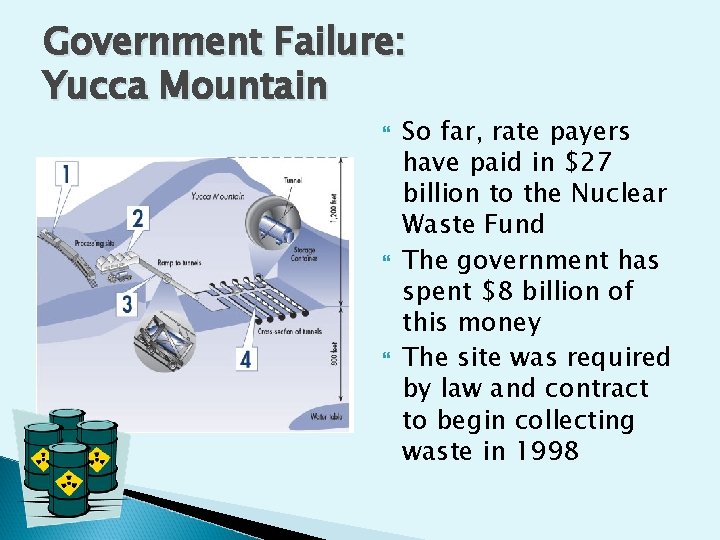
Government Failure: Yucca Mountain So far, rate payers have paid in $27 billion to the Nuclear Waste Fund The government has spent $8 billion of this money The site was required by law and contract to begin collecting waste in 1998
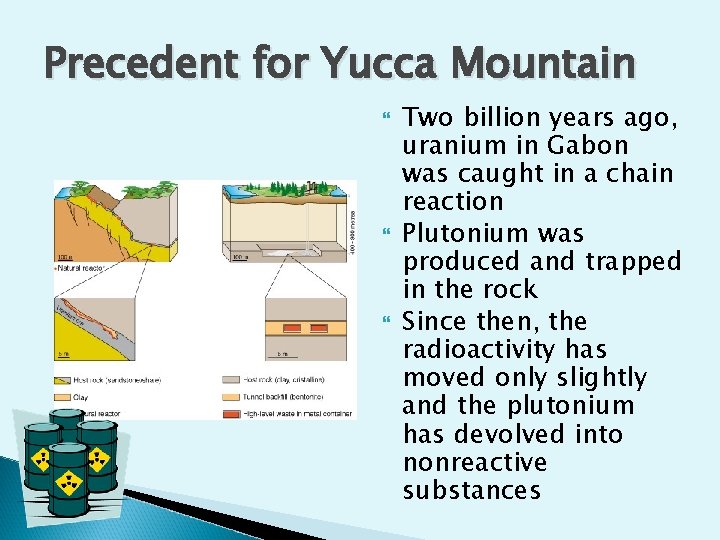
Precedent for Yucca Mountain Two billion years ago, uranium in Gabon was caught in a chain reaction Plutonium was produced and trapped in the rock Since then, the radioactivity has moved only slightly and the plutonium has devolved into nonreactive substances
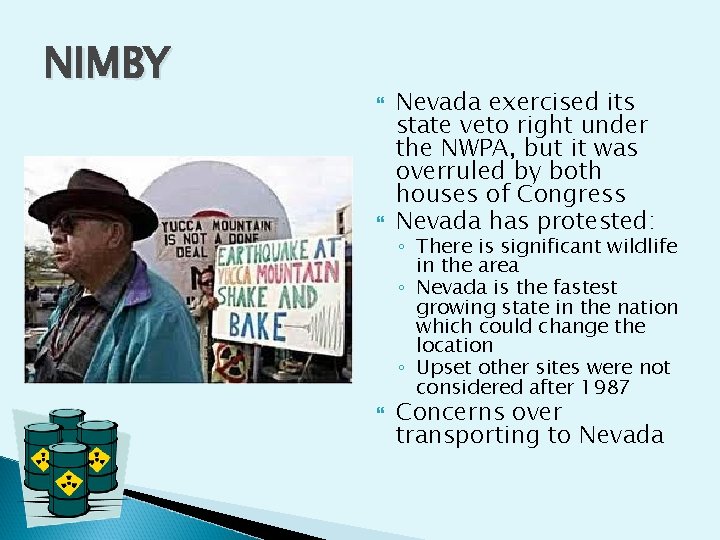
NIMBY Nevada exercised its state veto right under the NWPA, but it was overruled by both houses of Congress Nevada has protested: ◦ There is significant wildlife in the area ◦ Nevada is the fastest growing state in the nation which could change the location ◦ Upset other sites were not considered after 1987 Concerns over transporting to Nevada
Yucca Mountain’s Current Status Approved by Congress in 2002 Cancelled by Pres. Obama in 2009 Potential alternative sites are being considered There’s a Blue Ribbon Commission on America’s Nuclear Future
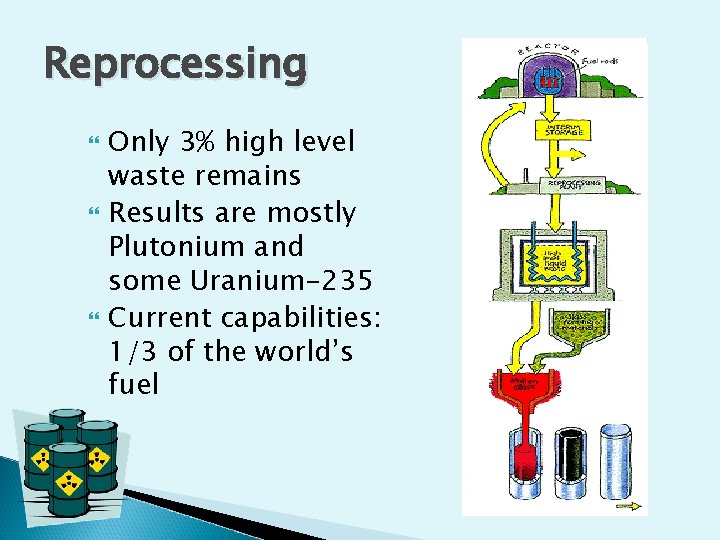
Reprocessing Only 3% high level waste remains Results are mostly Plutonium and some Uranium-235 Current capabilities: 1/3 of the world’s fuel
Problems with Reprocessing In spent fuel, Plutonium is trapped in bulky assemblies, but after reprocessing it is stored in powdered form Plutonium after reprocessing is significantly less radioactive It is hard to keep track of all of the material at a reprocessing facility Some storage and disposal is still required Would divert funds from a permanent storage facility Incredibly high price tag – perhaps $100 billion to reprocess the existing spent fuel
Counter Argument to the Security Threat from Reprocessing After reprocessing, there is little security threat The resulting Plutonium can be used in MOX fuel but not as easily in weapons
NWPA of 1982 § 302(a)(5). Contracts entered into under this section shall provide that— ◦ (A) following commencement of operation of a repository, the Secretary shall take title to the highlevel radioactive waste or spent nuclear fuel involved as expeditiously as practicable upon the request of the generator or owner of such waste or spent fuel; and ◦ (B) in return for the payment of fees established by this section, the Secretary, beginning not later than January 31, 1998, will dispose of the high-level radioactive waste or spent nuclear fuel involved as provided in this subtitle.
Federal Requirements Federal government was to begin collecting waste in 1998 under the NWPA Courts have found the DOE violated its contracts under the NWPA 65 claims have been filed for damages requesting $548 million. Delays past 2010 are estimated at $500 million a year State regulators have also sued over the nuclear waste fund containing billions of dollars ◦ They say to at a minimum stop collecting the $750 million a year Projected money owed is estimated to reach $7 billion by 2017 and $11 billion by 2020 Taxpayers are also being saddled with lawyers’ fees and damage expenses in the cases
Conclusions A federal repository as required by statute is likely a long way off because no one wants it in their state ◦ When plants are decommissioned, there is some material like parts of the plant that need to go into an underground repository Reprocessing provides an interim solution that would also provide fuel that can be used in some instances Even if Yucca Mountain is finished, it will only hold 70, 000 metric tons, so what currently exists would fill it up