
Nuclear Safety 202021 4 Concepts of Nuclear Safety
- Slides: 27
Nuclear Safety 2020/21: (4) Concepts of Nuclear Safety 1 Leon Cizelj Leon. Cizelj@ijs. si Phone secretary (01) 5885 330 Nuclear Safety 20/21: Concepts of Nuclear Safety 1 1
Outline • Safety Goals • Defence in Depth • Multiple barriers for radioactive materials • Formal levels of defence in depth • Plant States (or Conditions) • Major (Safety) Design Principles • Summary Nuclear Safety 20/21: Concepts of Nuclear Safety 1 2
Safety Goals Nuclear Safety 20/21: Concepts of Nuclear Safety 1 3
Safety Goals Prevent/mitigate Core melt SI: frequency lower than • 10 -5 for new plants • 10 -4 for Krško NPP Large or Early Release (of radiactive materials) SI: frequency lower than • 10 -6 for new plants • 5 • 10 -6 for large uncontrolled releases from Krško NPP Nuclear Safety 20/21: Concepts of Nuclear Safety 1 4
Fundamental Safety Functions • Control of reactivity • Removal of heat from the reactor and from the fuel store • Confinement of radioactive material, shielding against radiation and control of planned radiation releases, as well as limitation of accidental radioactive releases IAEA Safety Standards Series, SSR-2/1 (2016) Nuclear Safety 20/21: Concepts of Nuclear Safety 1 5
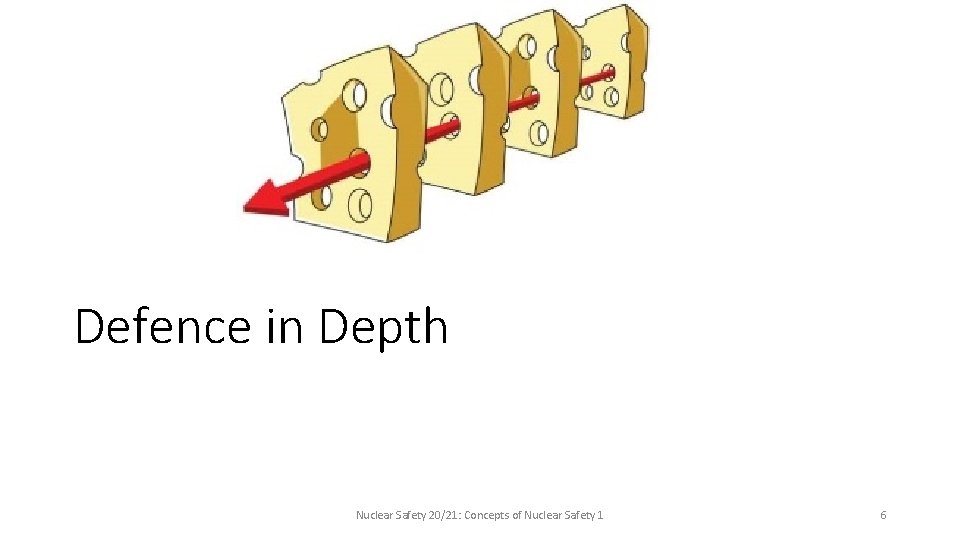
Defence in Depth Nuclear Safety 20/21: Concepts of Nuclear Safety 1 6
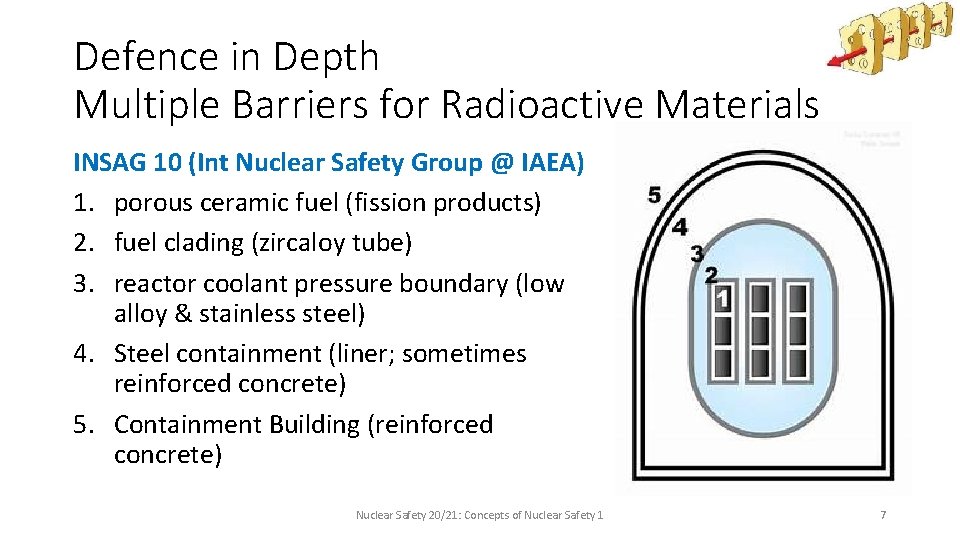
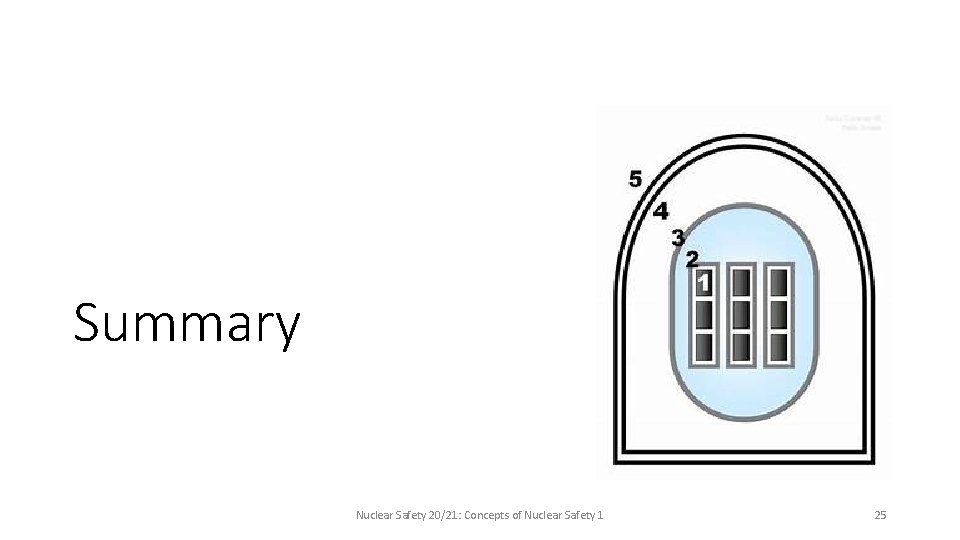
Defence in Depth Multiple Barriers for Radioactive Materials INSAG 10 (Int Nuclear Safety Group @ IAEA) 1. porous ceramic fuel (fission products) 2. fuel clading (zircaloy tube) 3. reactor coolant pressure boundary (low alloy & stainless steel) 4. Steel containment (liner; sometimes reinforced concrete) 5. Containment Building (reinforced concrete) Nuclear Safety 20/21: Concepts of Nuclear Safety 1 7
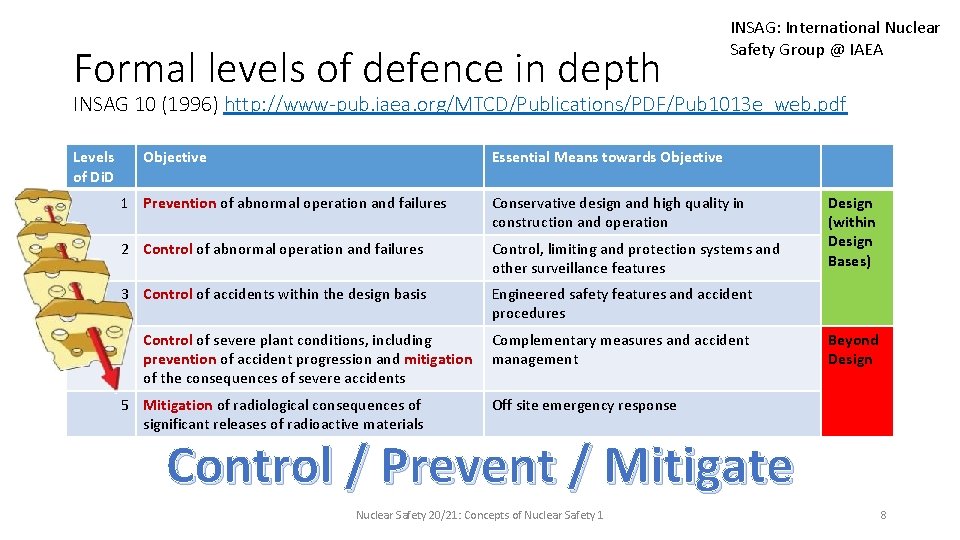
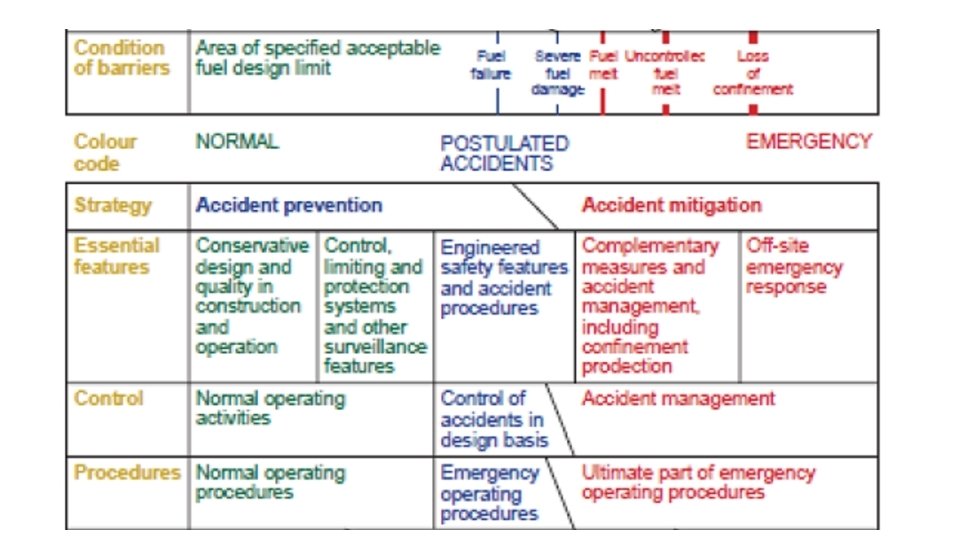
Formal levels of defence in depth INSAG: International Nuclear Safety Group @ IAEA INSAG 10 (1996) http: //www-pub. iaea. org/MTCD/Publications/PDF/Pub 1013 e_web. pdf Levels of Di. D Objective Essential Means towards Objective 1 Prevention of abnormal operation and failures Conservative design and high quality in construction and operation 2 Control of abnormal operation and failures Control, limiting and protection systems and other surveillance features 3 Control of accidents within the design basis Engineered safety features and accident procedures 4 Control of severe plant conditions, including prevention of accident progression and mitigation of the consequences of severe accidents Complementary measures and accident management 5 Mitigation of radiological consequences of significant releases of radioactive materials Off site emergency response Design (within Design Bases) Beyond Design Control / Prevent / Mitigate Nuclear Safety 20/21: Concepts of Nuclear Safety 1 8
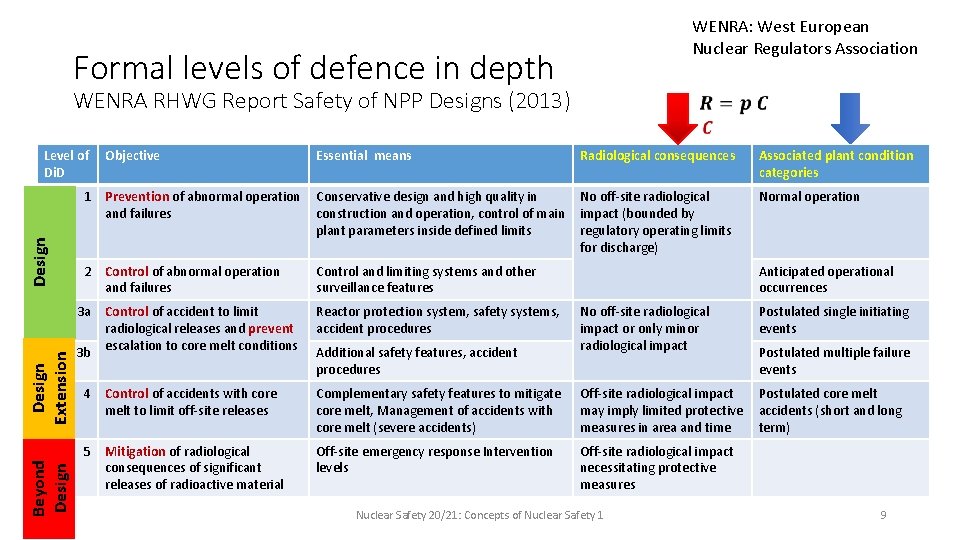
WENRA: West European Nuclear Regulators Association Formal levels of defence in depth WENRA RHWG Report Safety of NPP Designs (2013) Design Level of Di. D Objective Essential means Radiological consequences Associated plant condition categories 1 Prevention of abnormal operation and failures Conservative design and high quality in construction and operation, control of main plant parameters inside defined limits No off-site radiological impact (bounded by regulatory operating limits for discharge) Normal operation 2 Control of abnormal operation and failures Control and limiting systems and other surveillance features Control of accident to limit radiological releases and prevent escalation to core melt conditions Reactor protection system, safety systems, accident procedures 4 Control of accidents with core melt to limit off-site releases 5 Mitigation of radiological consequences of significant releases of radioactive material Beyond Design Extension 3 a 3 b Anticipated operational occurrences No off-site radiological impact or only minor radiological impact Postulated single initiating events Complementary safety features to mitigate core melt, Management of accidents with core melt (severe accidents) Off-site radiological impact may imply limited protective measures in area and time Postulated core melt accidents (short and long term) Off-site emergency response Intervention levels Off-site radiological impact necessitating protective measures Additional safety features, accident procedures Nuclear Safety 20/21: Concepts of Nuclear Safety 1 Postulated multiple failure events 9
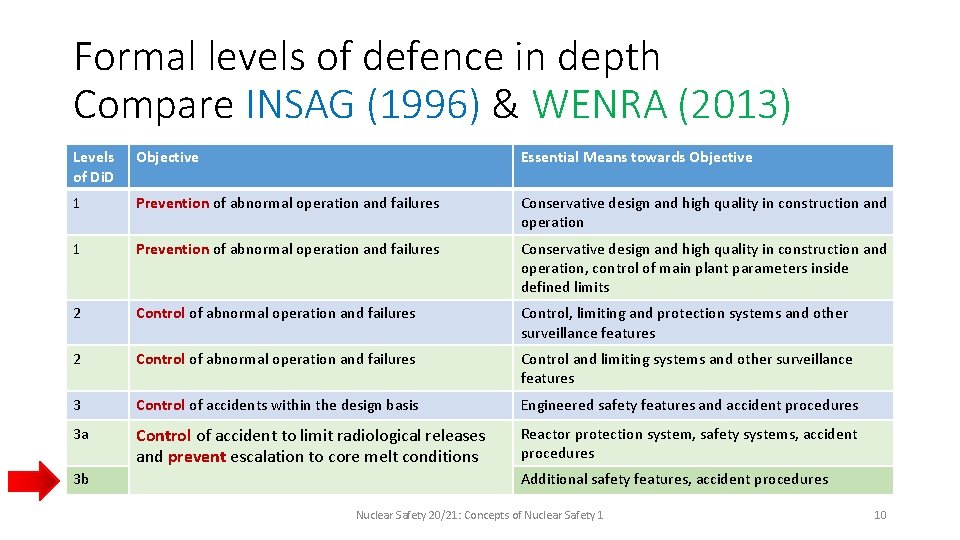
Formal levels of defence in depth Compare INSAG (1996) & WENRA (2013) Levels of Di. D Objective Essential Means towards Objective 1 Prevention of abnormal operation and failures Conservative design and high quality in construction and operation, control of main plant parameters inside defined limits 2 Control of abnormal operation and failures Control, limiting and protection systems and other surveillance features 2 Control of abnormal operation and failures Control and limiting systems and other surveillance features 3 Control of accidents within the design basis Engineered safety features and accident procedures 3 a Control of accident to limit radiological releases and prevent escalation to core melt conditions Reactor protection system, safety systems, accident procedures 3 b Additional safety features, accident procedures Nuclear Safety 20/21: Concepts of Nuclear Safety 1 10
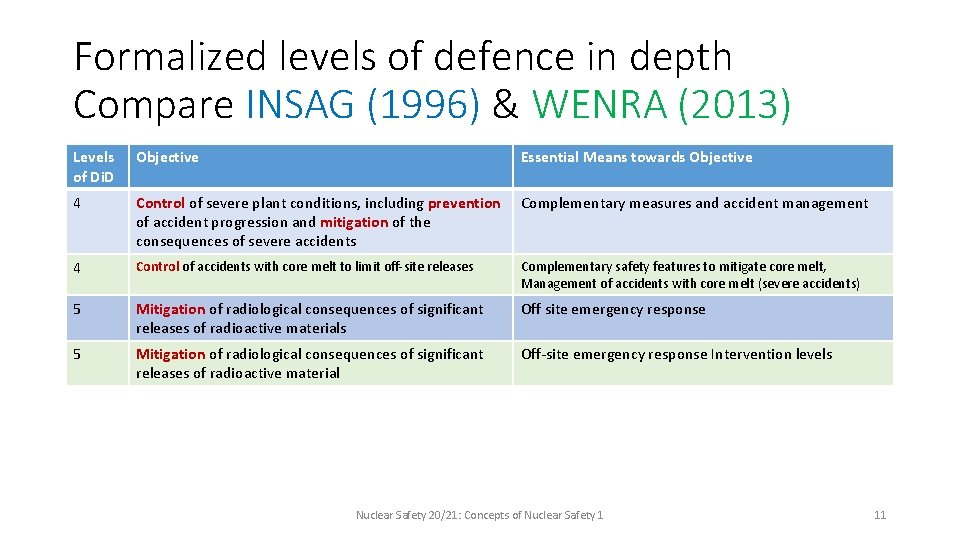
Formalized levels of defence in depth Compare INSAG (1996) & WENRA (2013) Levels of Di. D Objective Essential Means towards Objective 4 Control of severe plant conditions, including prevention of accident progression and mitigation of the consequences of severe accidents Complementary measures and accident management 4 Control of accidents with core melt to limit off-site releases Complementary safety features to mitigate core melt, Management of accidents with core melt (severe accidents) 5 Mitigation of radiological consequences of significant releases of radioactive materials Off site emergency response 5 Mitigation of radiological consequences of significant releases of radioactive material Off-site emergency response Intervention levels Nuclear Safety 20/21: Concepts of Nuclear Safety 1 11
Plant States (Conditions) Nuclear Safety 20/21: Concepts of Nuclear Safety 1 12
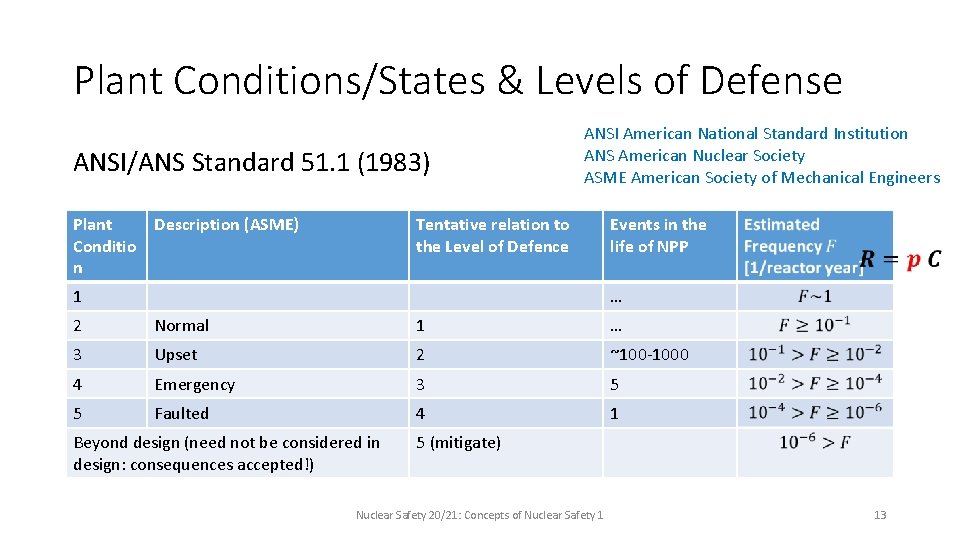
Plant Conditions/States & Levels of Defense ANSI/ANS Standard 51. 1 (1983) Plant Description (ASME) Conditio n ANSI American National Standard Institution ANS American Nuclear Society ASME American Society of Mechanical Engineers Tentative relation to the Level of Defence 1 Events in the life of NPP … 2 Normal 1 … 3 Upset 2 ~100 -1000 4 Emergency 3 5 5 Faulted 4 1 Beyond design (need not be considered in design: consequences accepted!) 5 (mitigate) Nuclear Safety 20/21: Concepts of Nuclear Safety 1 13
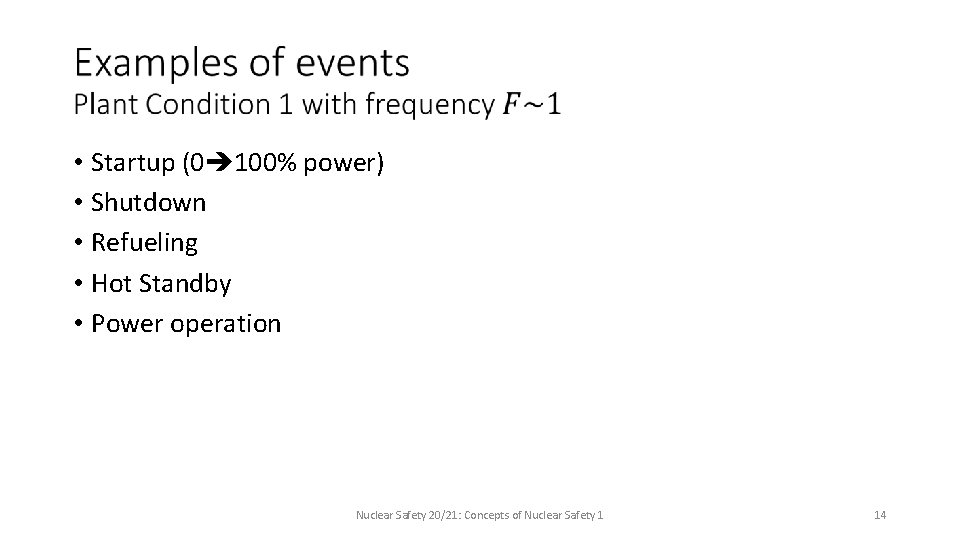
• Startup (0 100% power) • Shutdown • Refueling • Hot Standby • Power operation Nuclear Safety 20/21: Concepts of Nuclear Safety 1 14
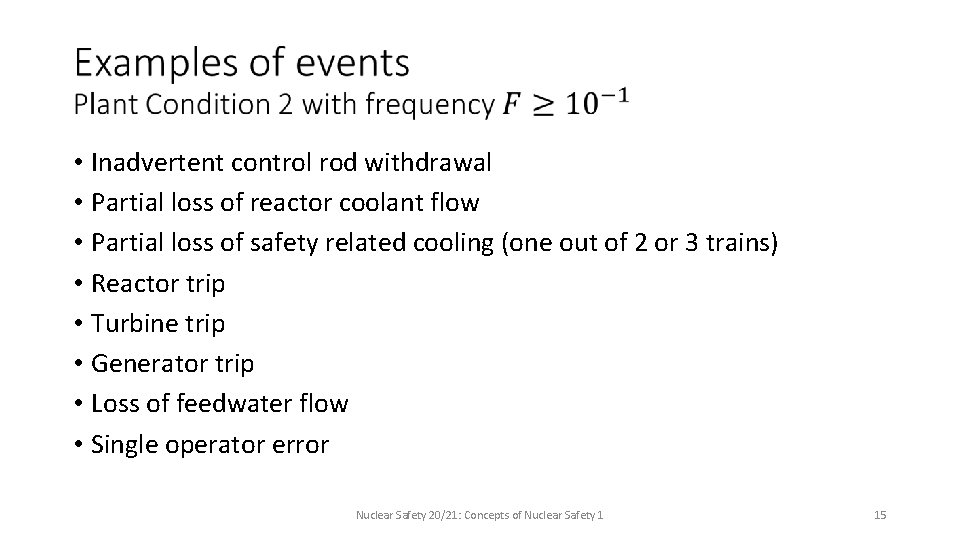
• Inadvertent control rod withdrawal • Partial loss of reactor coolant flow • Partial loss of safety related cooling (one out of 2 or 3 trains) • Reactor trip • Turbine trip • Generator trip • Loss of feedwater flow • Single operator error Nuclear Safety 20/21: Concepts of Nuclear Safety 1 15
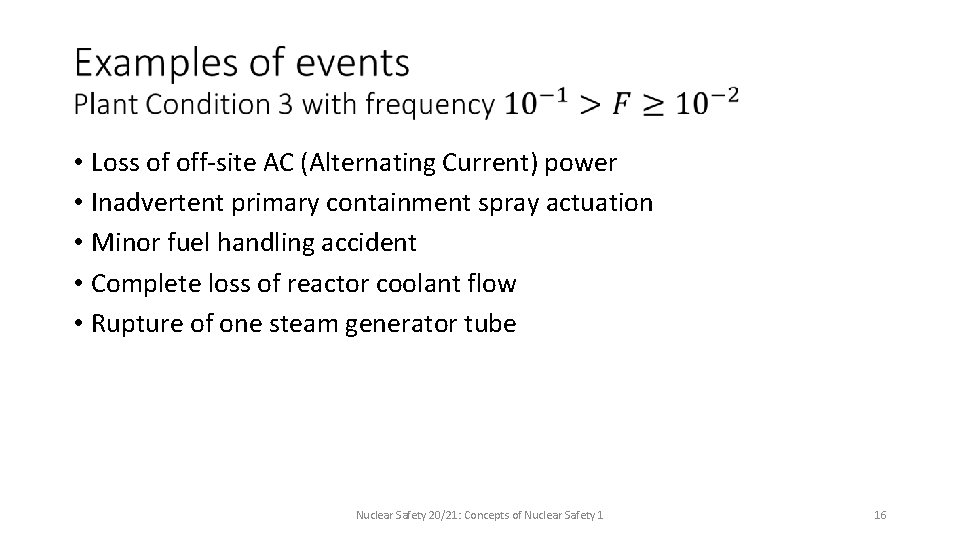
• Loss of off-site AC (Alternating Current) power • Inadvertent primary containment spray actuation • Minor fuel handling accident • Complete loss of reactor coolant flow • Rupture of one steam generator tube Nuclear Safety 20/21: Concepts of Nuclear Safety 1 16
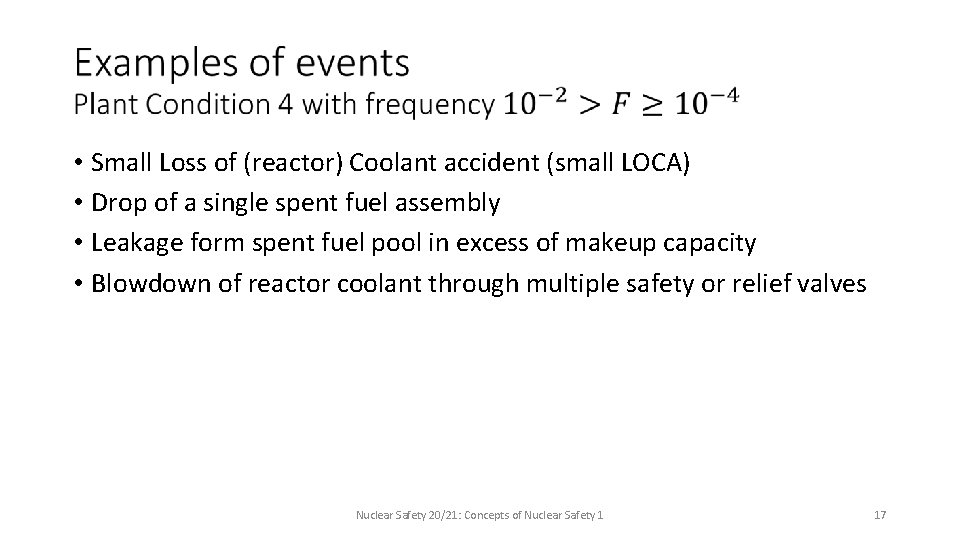
• Small Loss of (reactor) Coolant accident (small LOCA) • Drop of a single spent fuel assembly • Leakage form spent fuel pool in excess of makeup capacity • Blowdown of reactor coolant through multiple safety or relief valves Nuclear Safety 20/21: Concepts of Nuclear Safety 1 17
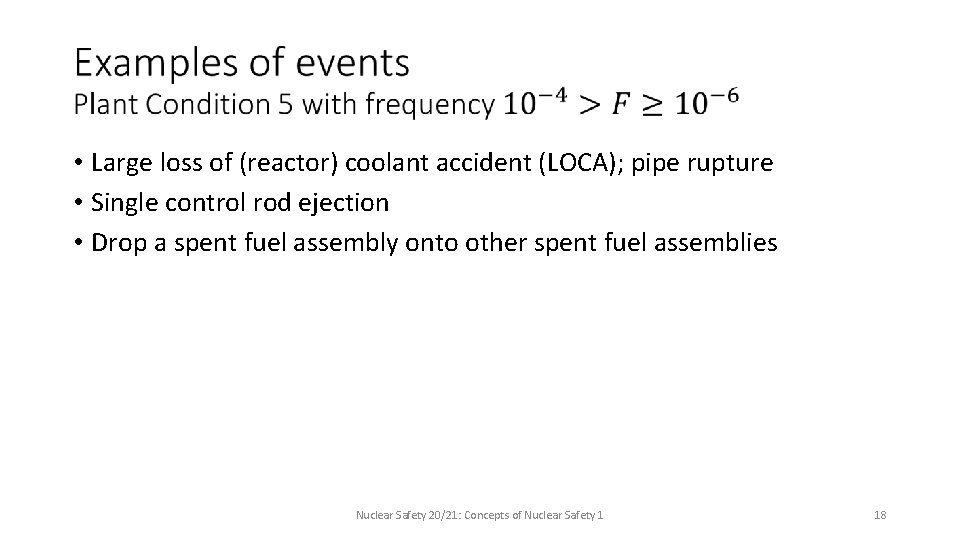
• Large loss of (reactor) coolant accident (LOCA); pipe rupture • Single control rod ejection • Drop a spent fuel assembly onto other spent fuel assemblies Nuclear Safety 20/21: Concepts of Nuclear Safety 1 18
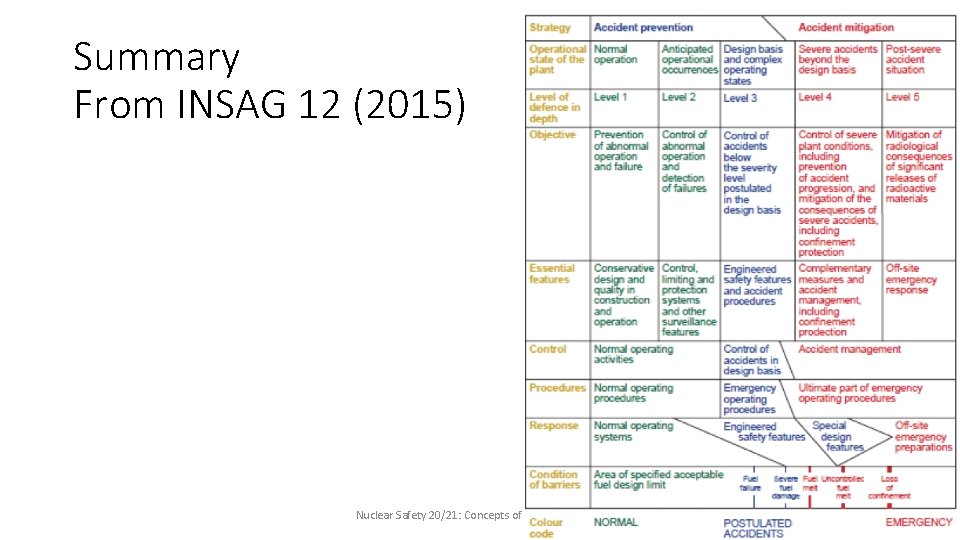
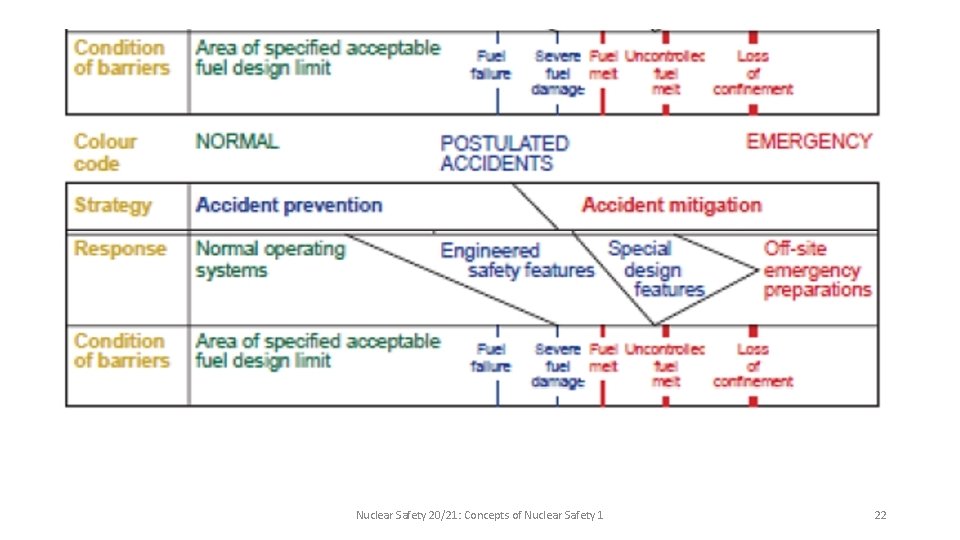
Summary From INSAG 12 (2015) Nuclear Safety 20/21: Concepts of Nuclear Safety 1 19
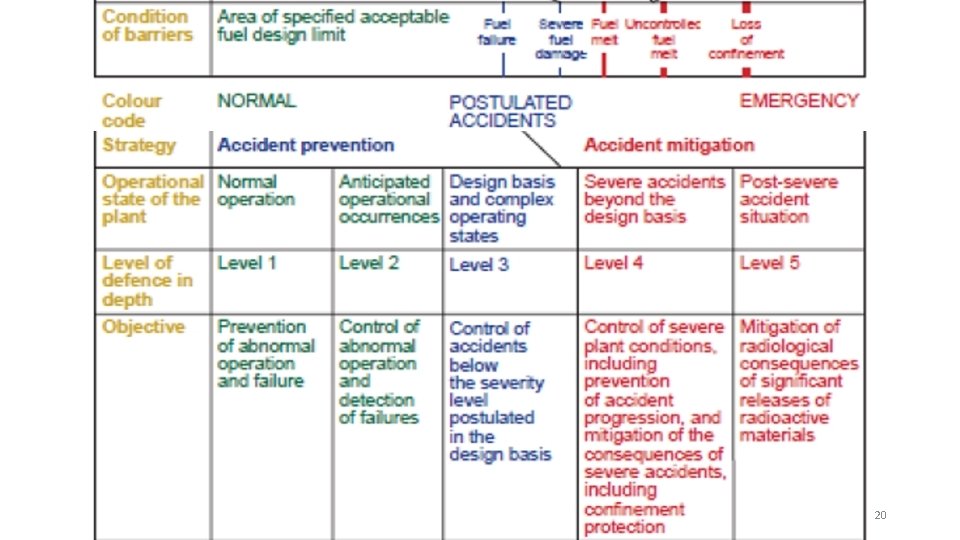
Nuclear Safety 20/21: Concepts of Nuclear Safety 1 20
Summary From INSAG 12 Nuclear Safety 20/21: Concepts of Nuclear Safety 1 21
Summary From INSAG 12 Nuclear Safety 20/21: Concepts of Nuclear Safety 1 22
Major (Safety) Design Principles Failure tolerance (~Safety) by Design Nuclear Safety 20/21: Concepts of Nuclear Safety 1 23
Major (Safety) Design Principles Preliminaries, details next time • Single Failure • Redundancy • Diversity • Independence • Physical Separation • Fail-Safe Use a combination of above Nuclear Safety 20/21: Concepts of Nuclear Safety 1 24
Summary Nuclear Safety 20/21: Concepts of Nuclear Safety 1 25
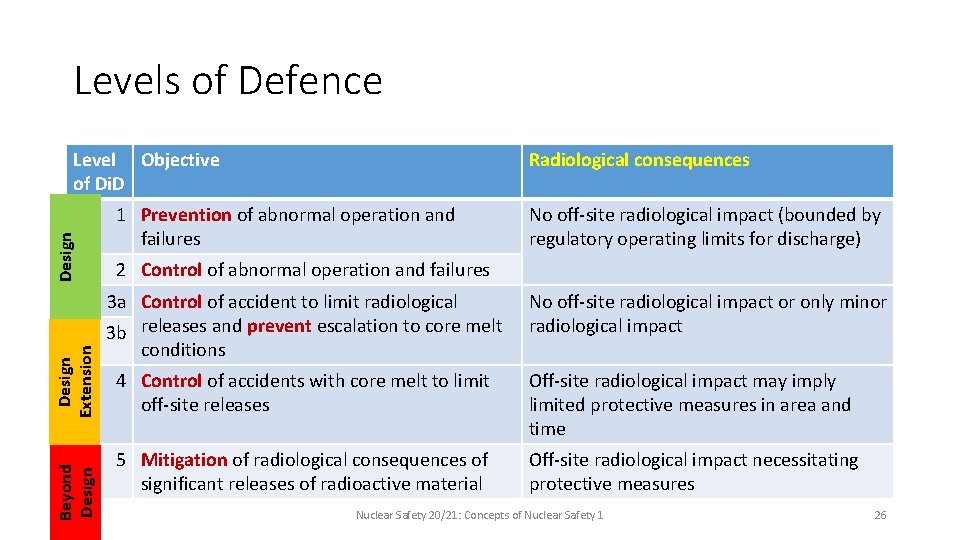
Levels of Defence Beyond Design Extension Design Level Objective of Di. D Radiological consequences 1 Prevention of abnormal operation and failures No off-site radiological impact (bounded by regulatory operating limits for discharge) 2 Control of abnormal operation and failures 3 a Control of accident to limit radiological 3 b releases and prevent escalation to core melt conditions No off-site radiological impact or only minor radiological impact 4 Control of accidents with core melt to limit off-site releases Off-site radiological impact may imply limited protective measures in area and time 5 Mitigation of radiological consequences of significant releases of radioactive material Off-site radiological impact necessitating protective measures Nuclear Safety 20/21: Concepts of Nuclear Safety 1 26
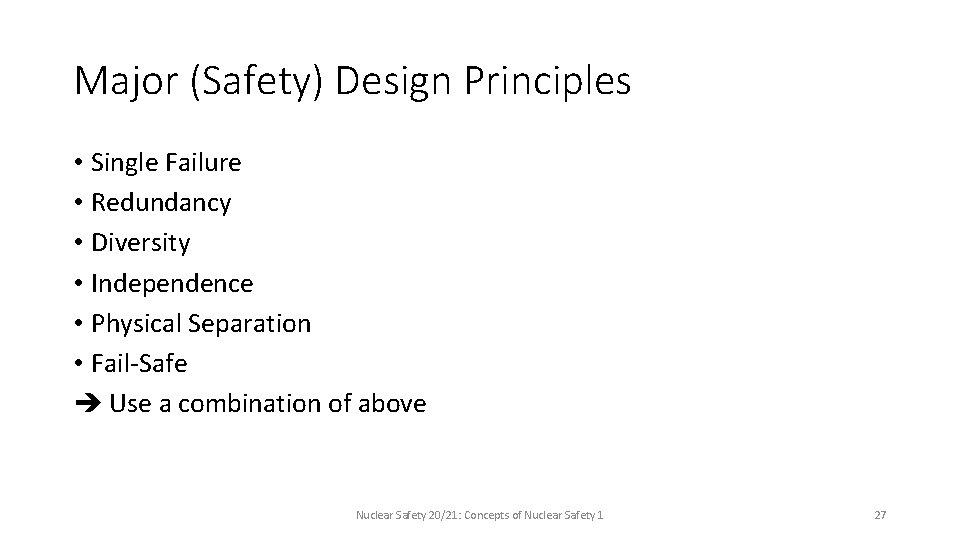
Major (Safety) Design Principles • Single Failure • Redundancy • Diversity • Independence • Physical Separation • Fail-Safe Use a combination of above Nuclear Safety 20/21: Concepts of Nuclear Safety 1 27