
Nuclear Reactors Chain reaction Fission of uranium nucleus
- Slides: 29
Nuclear Reactors
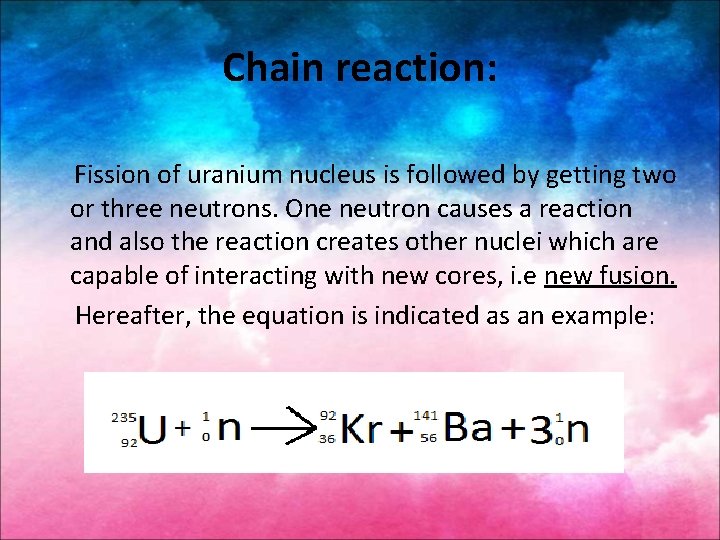
Chain reaction: Fission of uranium nucleus is followed by getting two or three neutrons. One neutron causes a reaction and also the reaction creates other nuclei which are capable of interacting with new cores, i. e new fusion. Hereafter, the equation is indicated as an example:
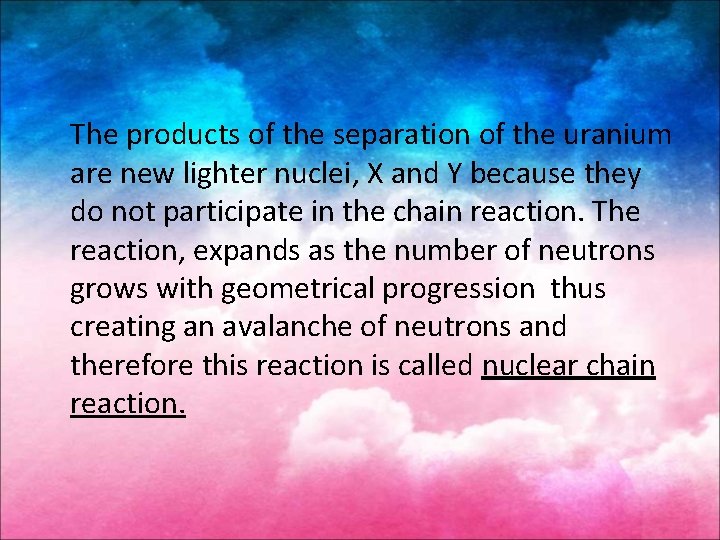
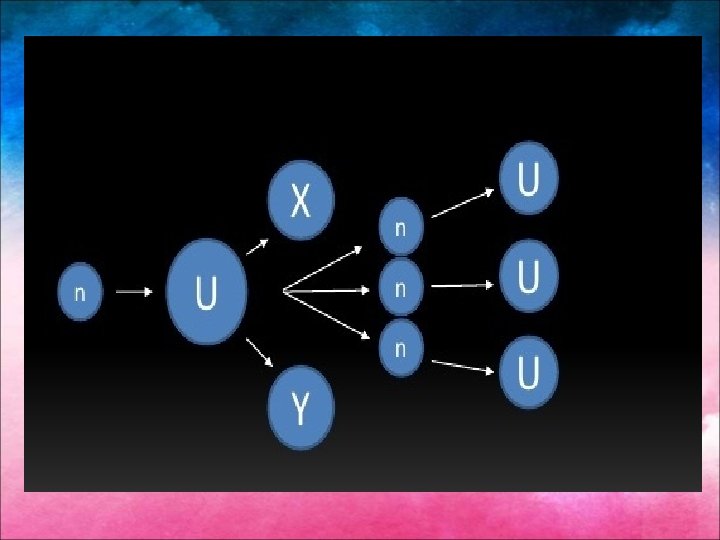
The products of the separation of the uranium are new lighter nuclei, X and Y because they do not participate in the chain reaction. The reaction, expands as the number of neutrons grows with geometrical progression thus creating an avalanche of neutrons and therefore this reaction is called nuclear chain reaction.
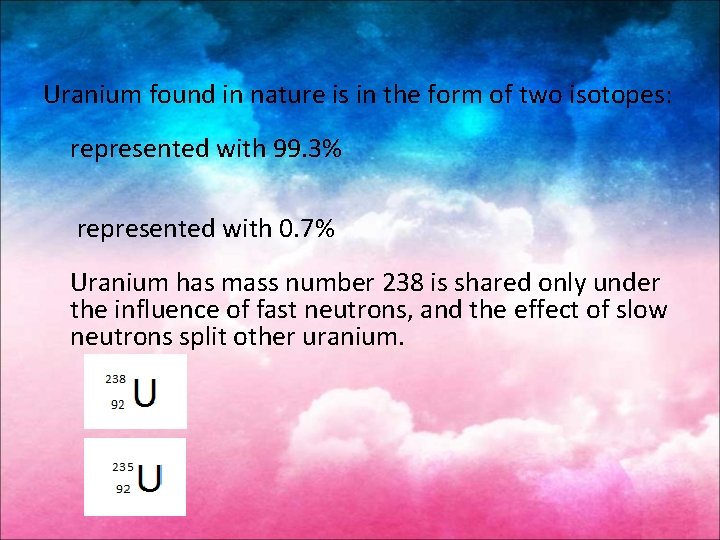
Uranium found in nature is in the form of two isotopes: represented with 99. 3% represented with 0. 7% Uranium has mass number 238 is shared only under the influence of fast neutrons, and the effect of slow neutrons split other uranium.
Possible way to ensure a chain reaction is to reduce the concentration of uranium with a higher mass number and increase the concentration of uranium with a smaller mass number. The process is called enrichment in which the byproduct of this process is called depleted uranium. Therefore the possibility the fission to be caused by slow neutrons increases.
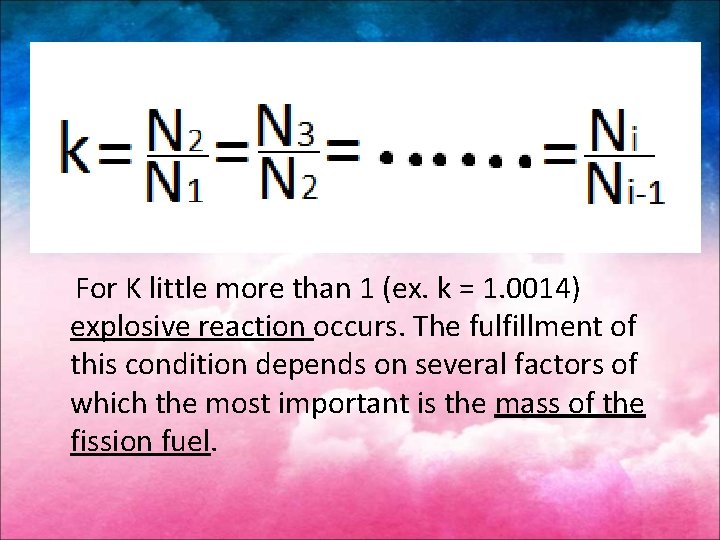
Coefficient neutron multiplication Basic condition for a chain reaction to occur is coefficient neutron multiplication (multiplication factor) k to be equal to or greater than one. Coefficient of the reproduction is the interaction between the number of neutrons from an i generation, with the number of neutrons in the previous ( i-1) generation.
For K little more than 1 (ex. k = 1. 0014) explosive reaction occurs. The fulfillment of this condition depends on several factors of which the most important is the mass of the fission fuel.
Critical mass indicates the minimum mass needed for chain reaction to happen, which is possible only if the mass of the uranium is equal or greater than the critical mass itself. Namely for the uranium it is a table with an order of magnitude of several kilograms, in the shape of a sphere with a radius of 15 cm.
Nuclear explosion If the mass of the fission fuel is greater than critical, then under the influence of avalanche multiplication of neutrons rapidly myriad of neutrons are created. Multiple fissions occur during this process, which releases an enormous amount of energy. Rapid fission process leads to a nuclear explosion. (Atomic bomb)
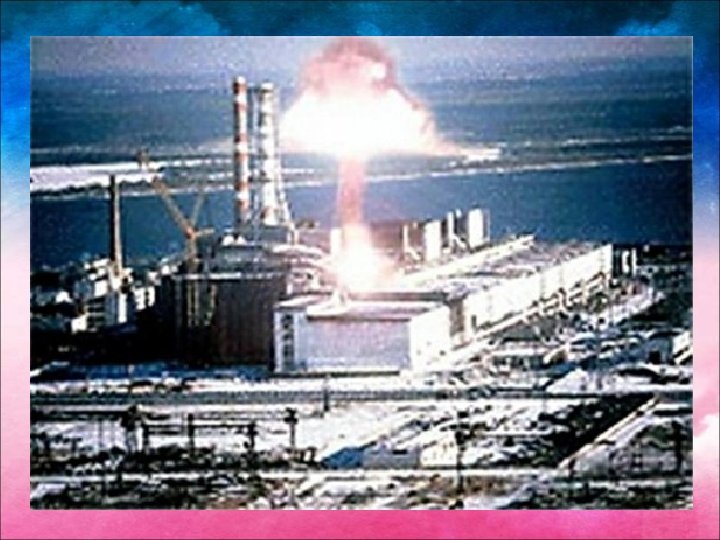
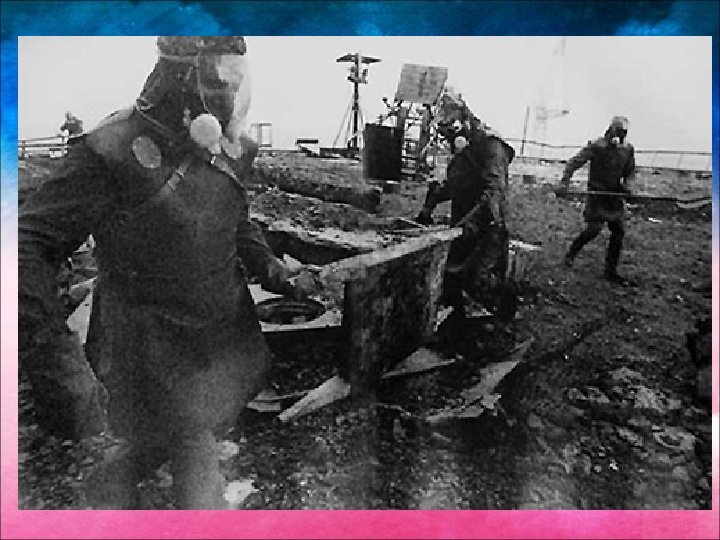
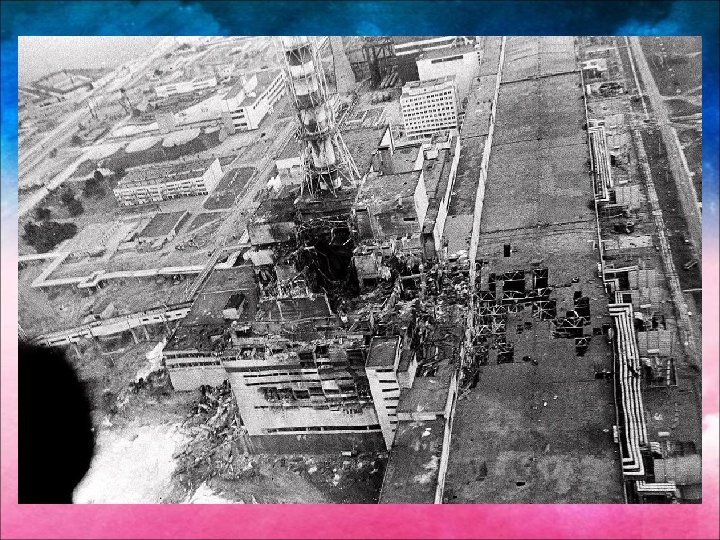
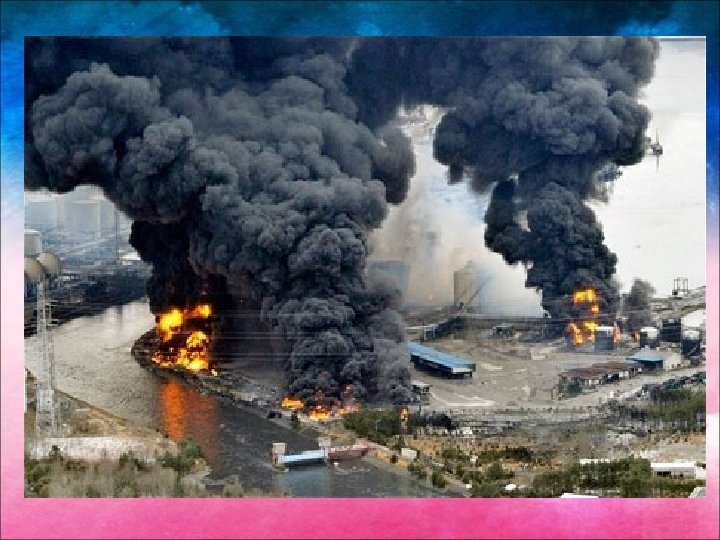
The Chernobyl accident which happened on April 26, 1986 was the greatest disaster in the history of nuclear power plant. After the first explosion in the nuclear plant in Chernobyl, there was a chain of several explosions and fires that created radioactive cloud into the atmosphere which was then spread over a wide geographical region. Radioactive cloud was 30 -40 times greater than the one experienced in Hiroshima.
• The blast occurred in the fourth reactor of the nuclear power plant "Lenjin". The main cause of the accident was primarily insufficiently examined technology of this type of the reactor and its instability at low power, but the human factor should not be neglected as well as bad management and lack of experience of the operator with the reactor. When the test began, operators began reducing the power of the reactor. The reactor ran a force of 200 megawatts and was very difficult to control.
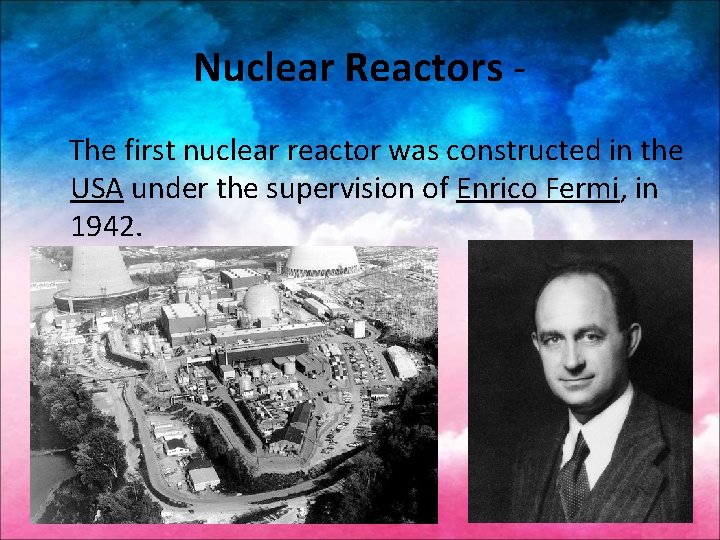
Nuclear Reactors The first nuclear reactor was constructed in the USA under the supervision of Enrico Fermi, in 1942.
Key parts of the nuclear reactor are: nuclear fuel (mostly uranium with greater mass than the critical) moderator reflector control rods (regulation of the process) cooling system protective system
• Nuclear fuel can be made of uranium or plutonium. The fuel is set in the immediate vicinity of the moderator that slows the neutrons. The moderator is set in graphite walls that act as a reflector for the neutrons. The control rods are the main part that enables the controlled fission. They are included or removed between nuclear fuel and in this way the coefficient of multiplication is regulated. These rods are made of cadmium and boron, which capture most of the neutrons.
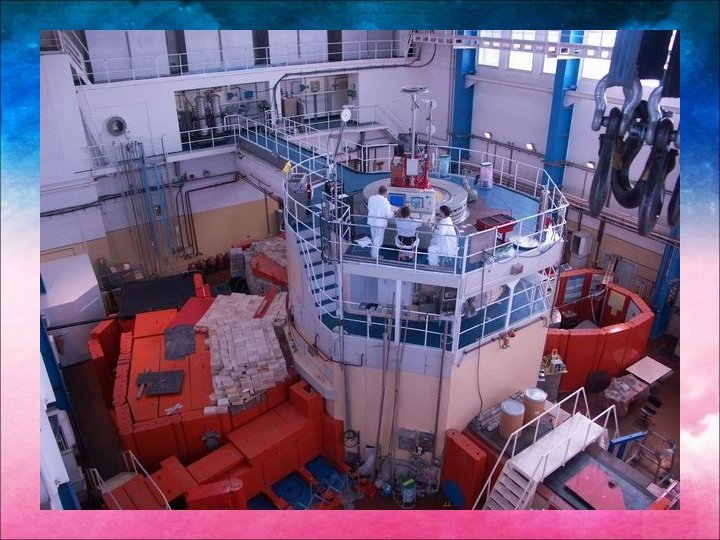
Nuclear reactors can be: nuclear research reactors (used for scientific purposes or devices used to yield various radioisotopes used in industry and medicine) nuclear energy reactors (an integral part of nuclear power plants)
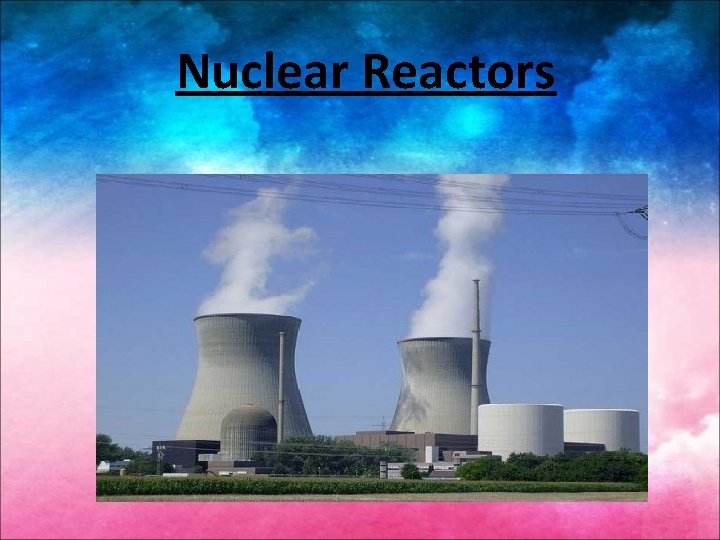
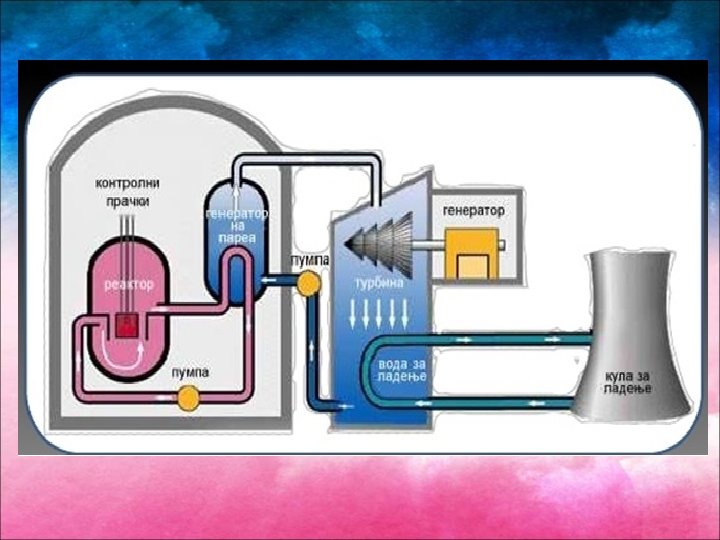
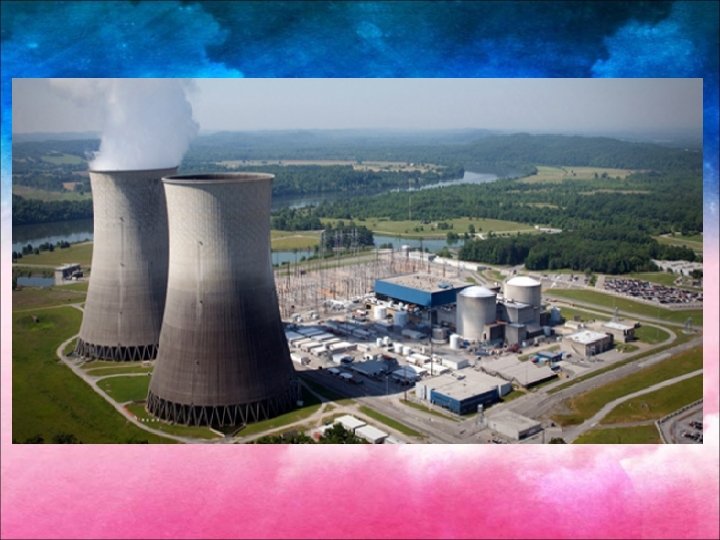
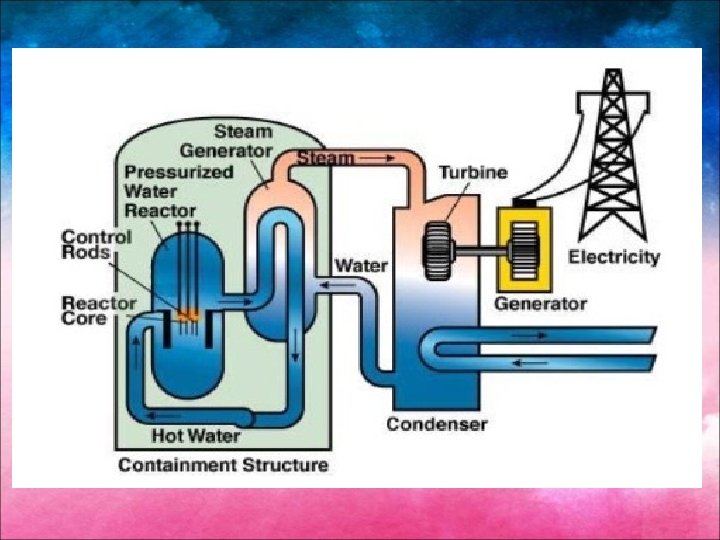
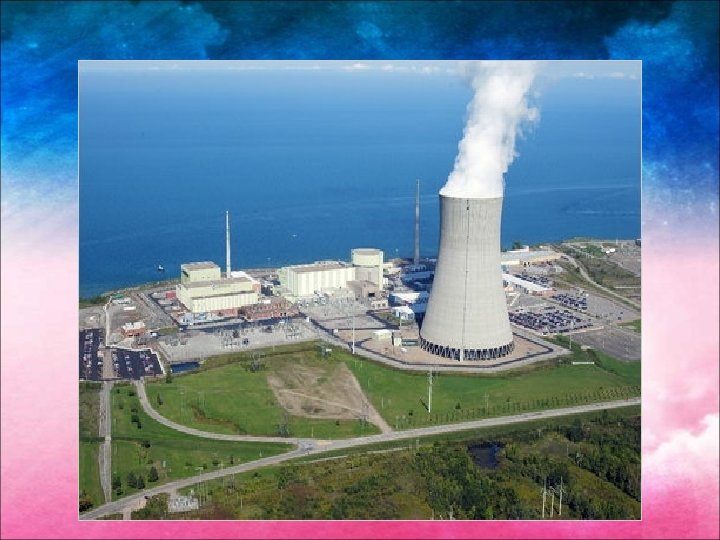
Nuclear power plants function At the core of the reactor large amount of energy is released that heats plain water that is in direct contact with the reactor core. To ensure the energy use, cold water is constantly drawn with pumps. Heated water hands over its energy to heat exchanger in which water steam is created. The water moves the turbine and steam transmits energy to the electric generator.
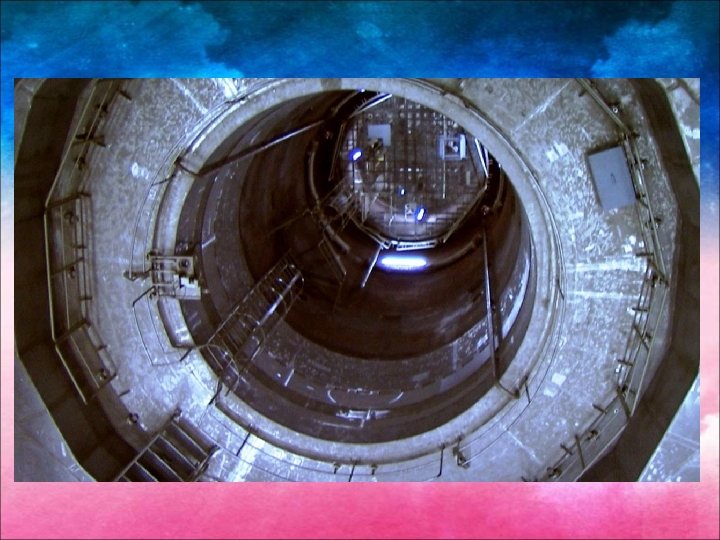
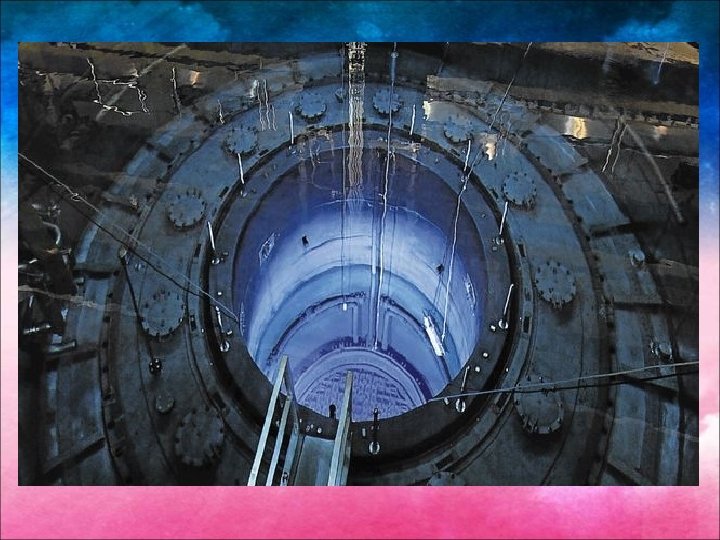
The active part of the core where processes of fission constantly occur is a powerful source of radiation. During fission smaller cores are established which are often radioactive. Neutrons and ɣ quanta are also released during fission which are the most dangerous for living organisms. In spite of the leaded covering, the active part of the reactor is coated with concrete walls and iron up to 2 meters in width. (protective layer)