
Nuclear Power Need and Future Outline n Economics
- Slides: 54
Nuclear Power – Need and Future
Outline n Economics of Nuclear Energy n Basics of a Power Plant n Heat From Fission n History of Nuclear Power n Current Commercial Nuclear Reactor n n Designs Nuclear Fuel Cycle Future Reactor Designs Policy Issues Conclusions
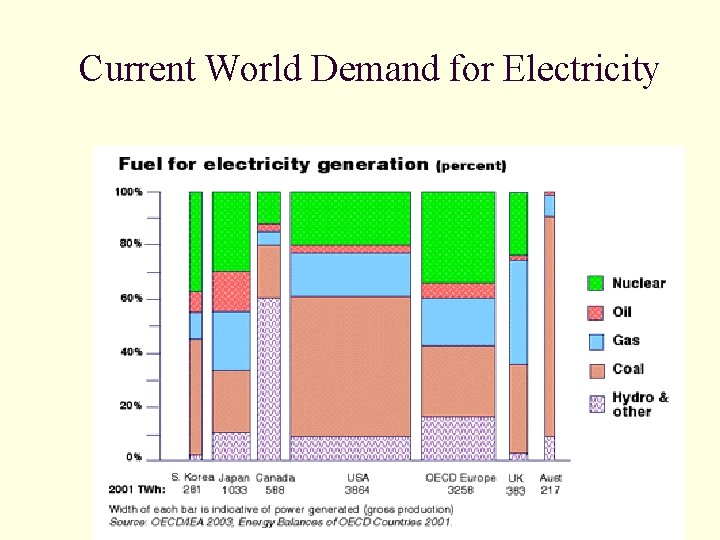
Current World Demand for Electricity
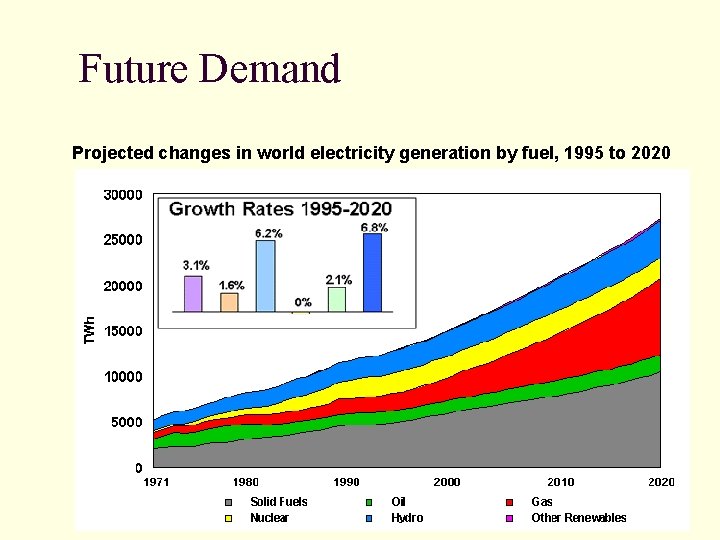
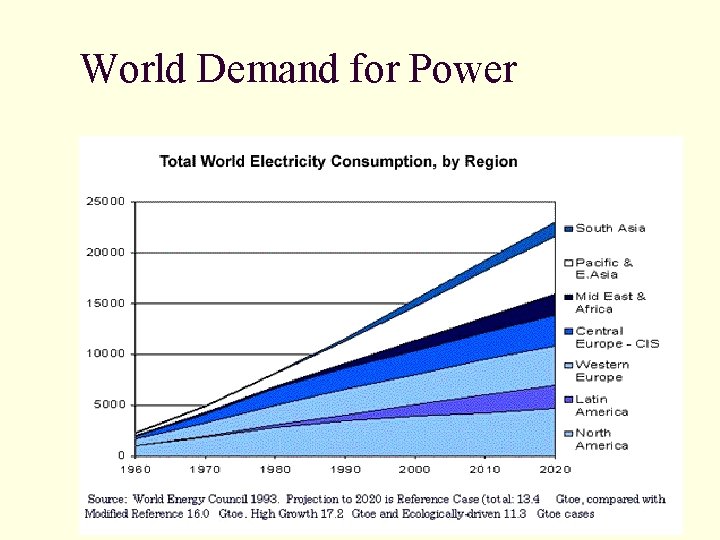
Future Demand Projected changes in world electricity generation by fuel, 1995 to 2020
World Demand for Power
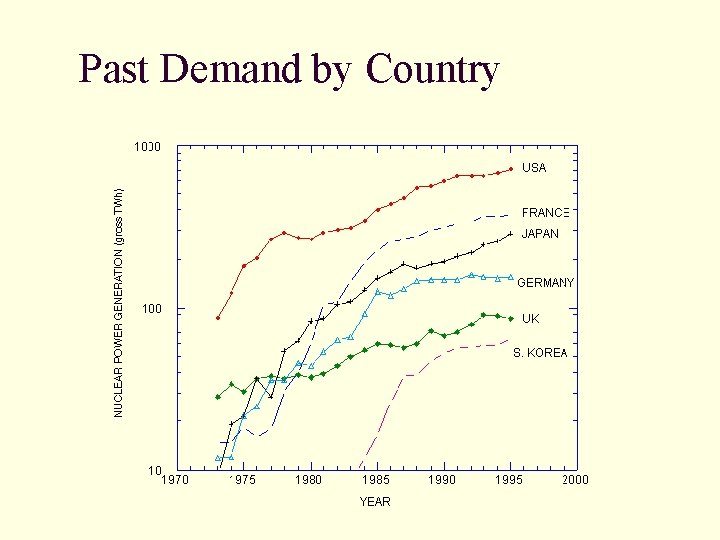
Past Demand by Country
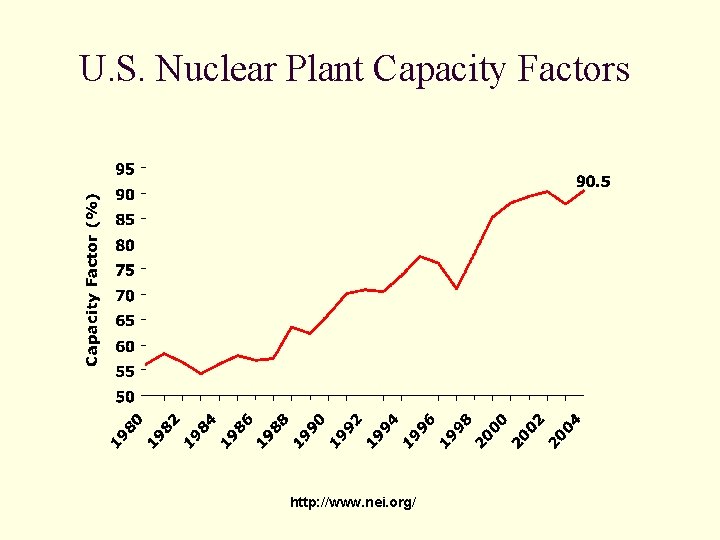
U. S. Nuclear Plant Capacity Factors http: //www. nei. org/
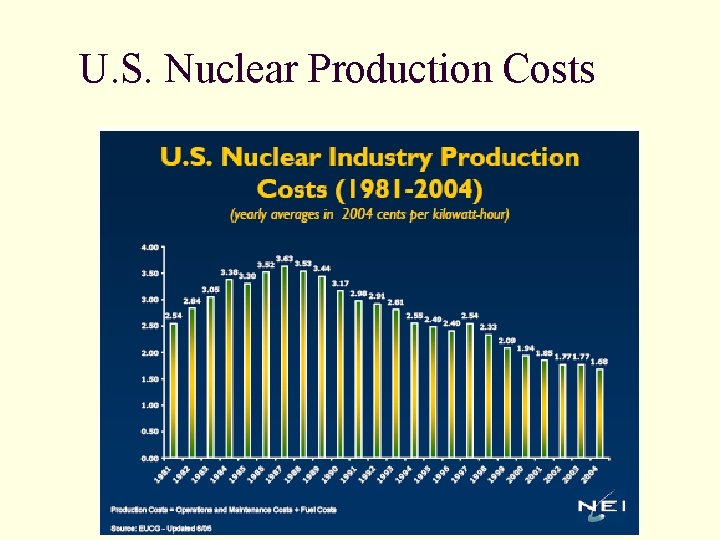
U. S. Nuclear Production Costs
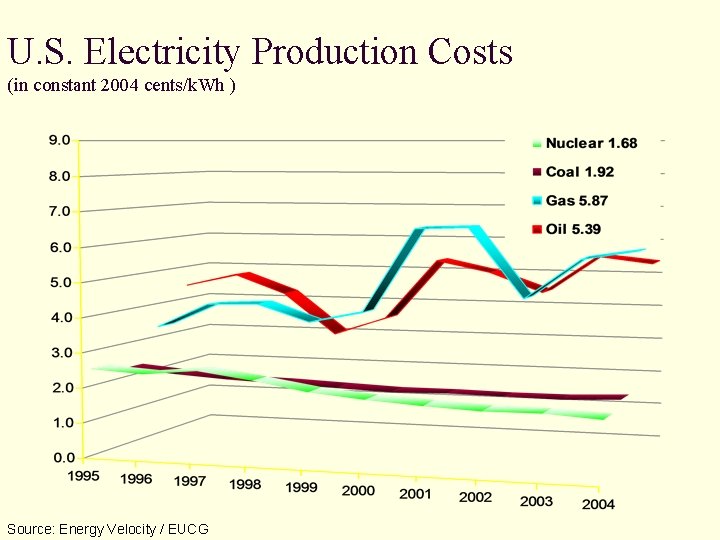
U. S. Electricity Production Costs (in constant 2004 cents/k. Wh ) Source: Energy Velocity / EUCG
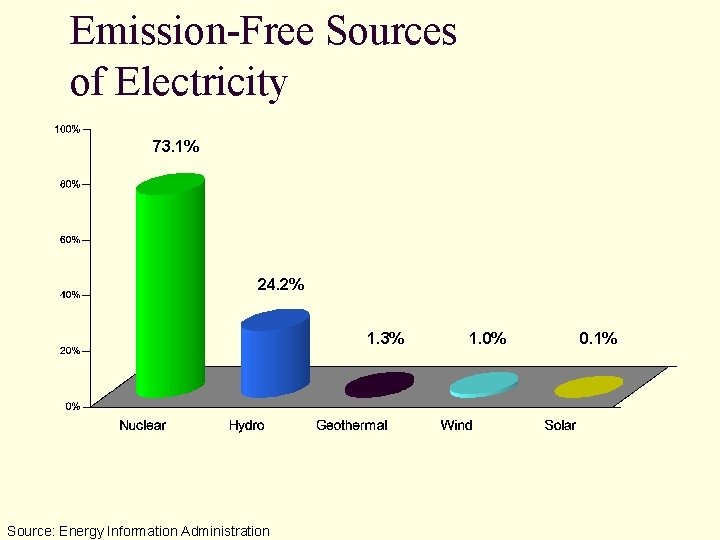
Emission-Free Sources of Electricity 73. 1% 24. 2% 1. 3% Source: Energy Information Administration 1. 0% 0. 1%
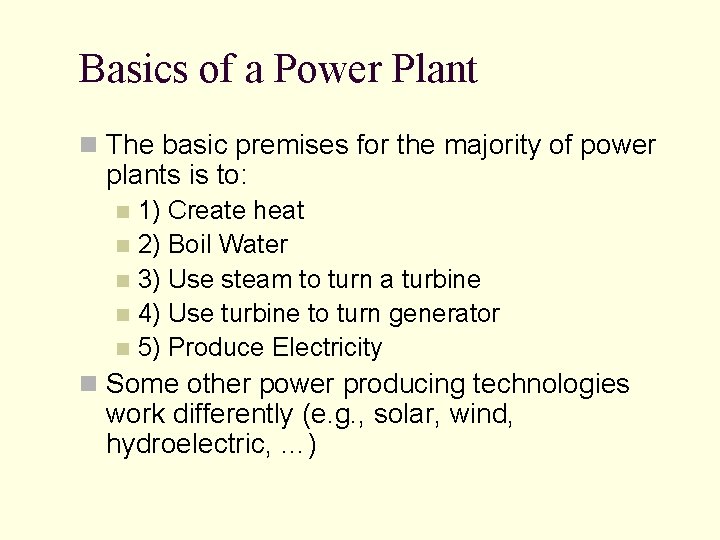
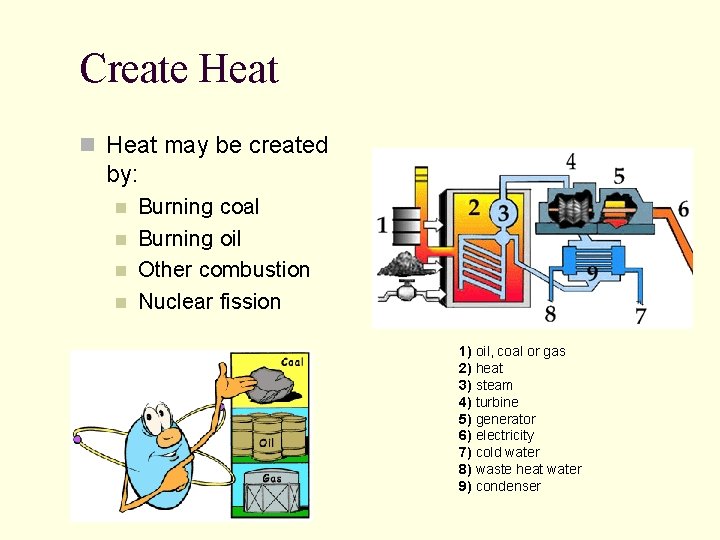
Basics of a Power Plant n The basic premises for the majority of power plants is to: 1) Create heat n 2) Boil Water n 3) Use steam to turn a turbine n 4) Use turbine to turn generator n 5) Produce Electricity n n Some other power producing technologies work differently (e. g. , solar, wind, hydroelectric, …)
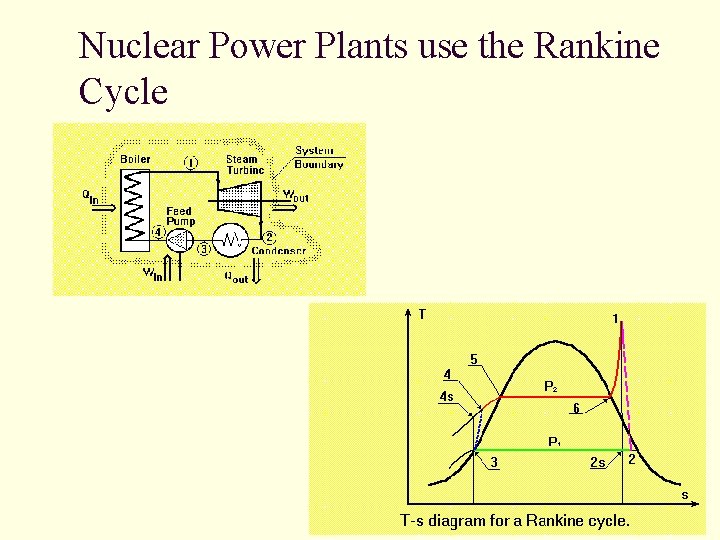
Nuclear Power Plants use the Rankine Cycle
Create Heat n Heat may be created by: n n Burning coal Burning oil Other combustion Nuclear fission 1) oil, coal or gas 2) heat 3) steam 4) turbine 5) generator 6) electricity 7) cold water 8) waste heat water 9) condenser
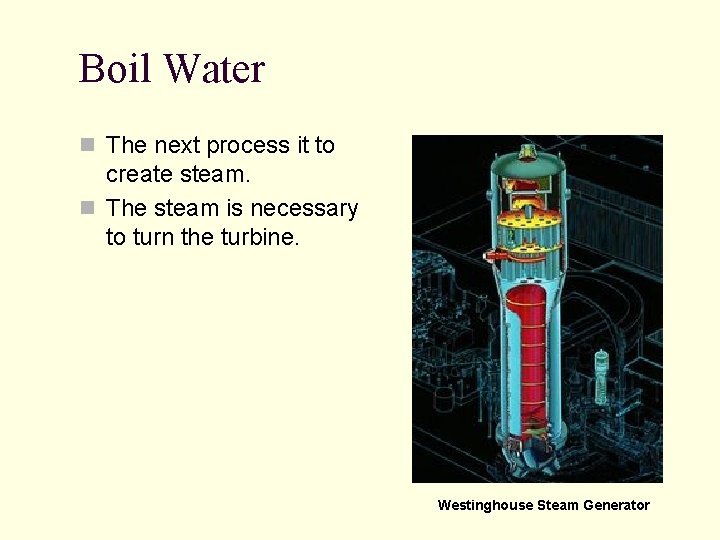
Boil Water n The next process it to create steam. n The steam is necessary to turn the turbine. Westinghouse Steam Generator
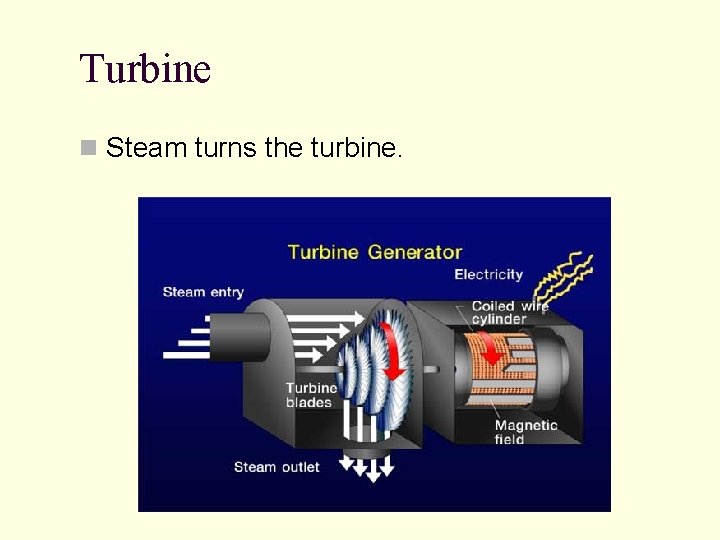
Turbine n Steam turns the turbine.
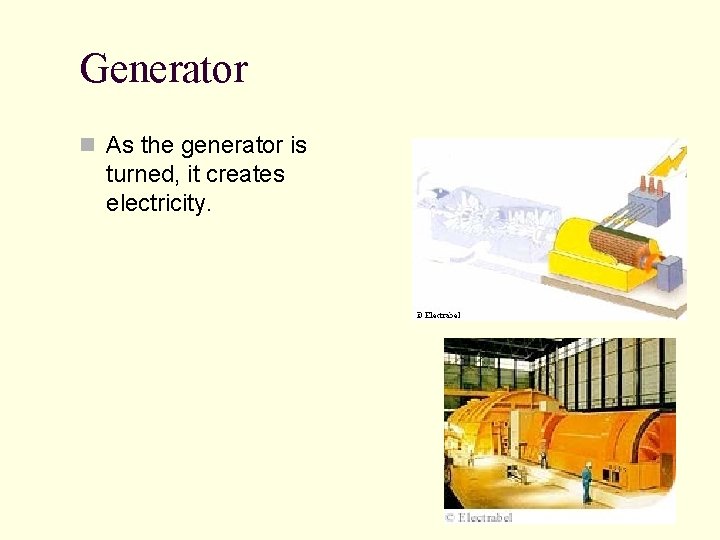
Generator n As the generator is turned, it creates electricity.
Heat From Fission
Fission Chain Reaction
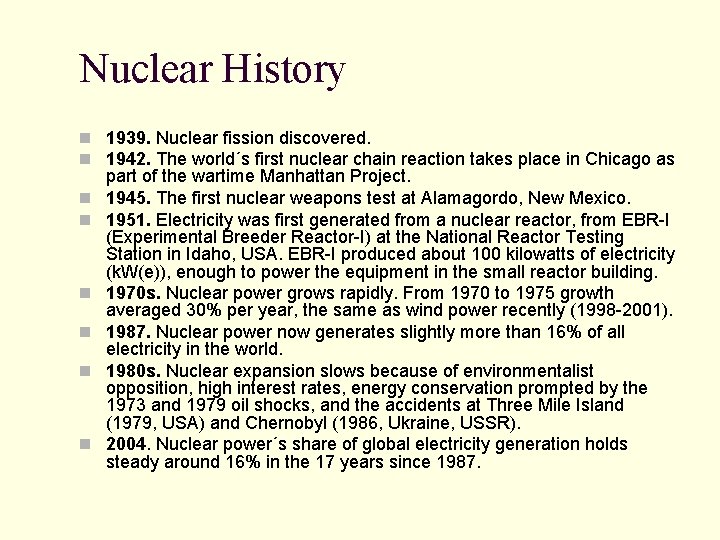
Nuclear History n 1939. Nuclear fission discovered. n 1942. The world´s first nuclear chain reaction takes place in Chicago as n n n part of the wartime Manhattan Project. 1945. The first nuclear weapons test at Alamagordo, New Mexico. 1951. Electricity was first generated from a nuclear reactor, from EBR-I (Experimental Breeder Reactor-I) at the National Reactor Testing Station in Idaho, USA. EBR-I produced about 100 kilowatts of electricity (k. W(e)), enough to power the equipment in the small reactor building. 1970 s. Nuclear power grows rapidly. From 1970 to 1975 growth averaged 30% per year, the same as wind power recently (1998 -2001). 1987. Nuclear power now generates slightly more than 16% of all electricity in the world. 1980 s. Nuclear expansion slows because of environmentalist opposition, high interest rates, energy conservation prompted by the 1973 and 1979 oil shocks, and the accidents at Three Mile Island (1979, USA) and Chernobyl (1986, Ukraine, USSR). 2004. Nuclear power´s share of global electricity generation holds steady around 16% in the 17 years since 1987.
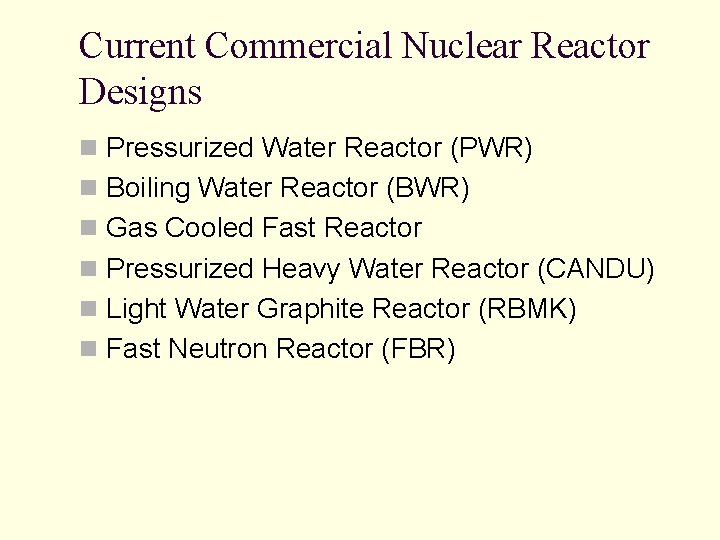
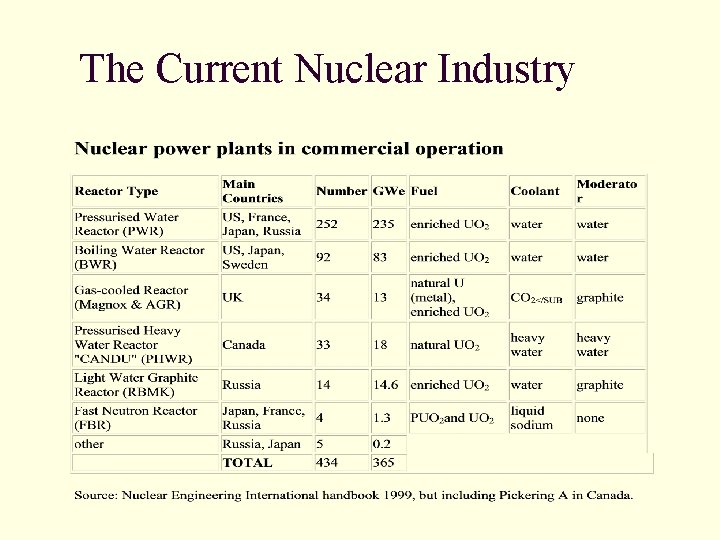
Current Commercial Nuclear Reactor Designs n Pressurized Water Reactor (PWR) n Boiling Water Reactor (BWR) n Gas Cooled Fast Reactor n Pressurized Heavy Water Reactor (CANDU) n Light Water Graphite Reactor (RBMK) n Fast Neutron Reactor (FBR)
The Current Nuclear Industry
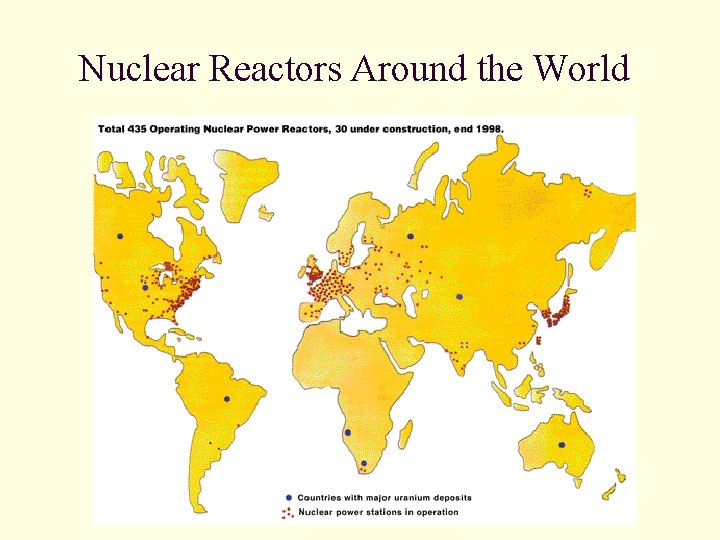
Nuclear Reactors Around the World
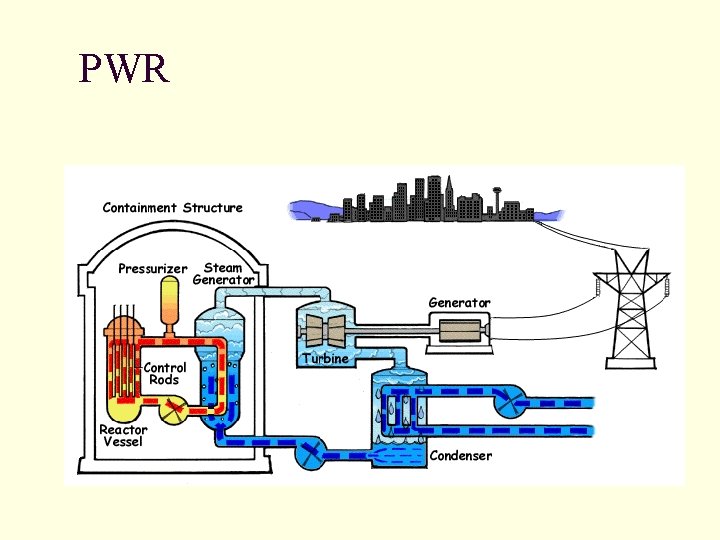
PWR
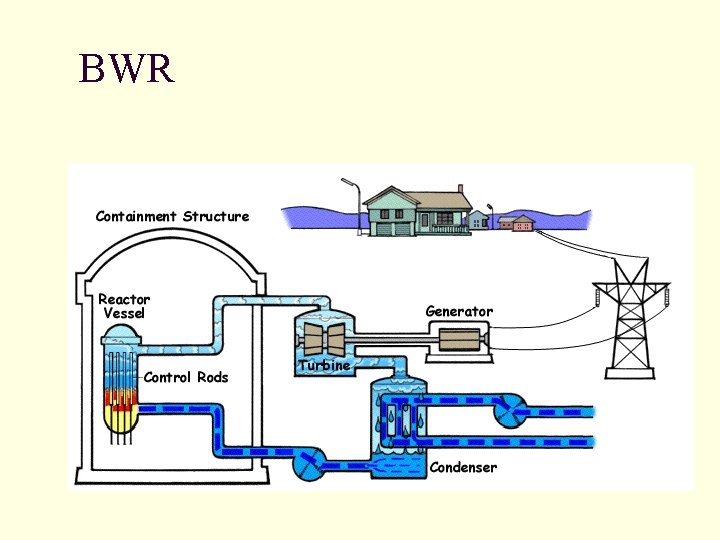
BWR
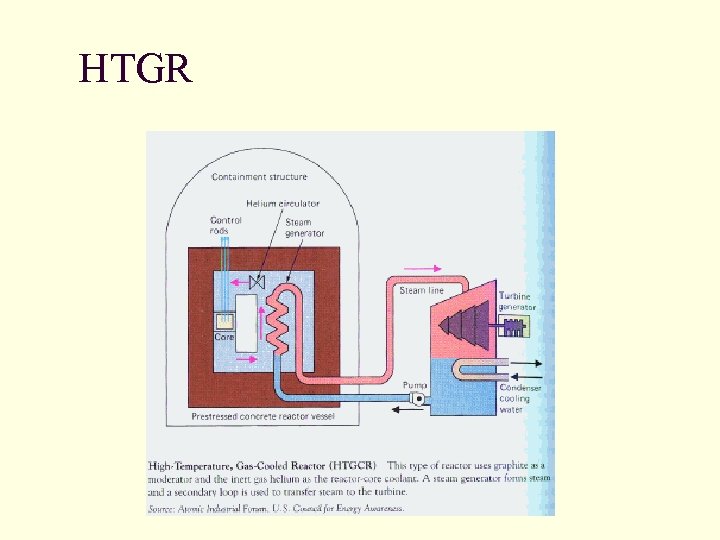
HTGR
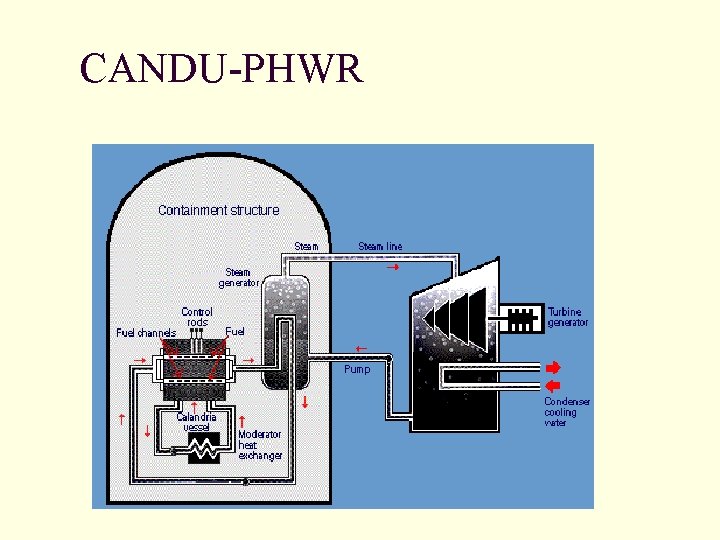
CANDU-PHWR
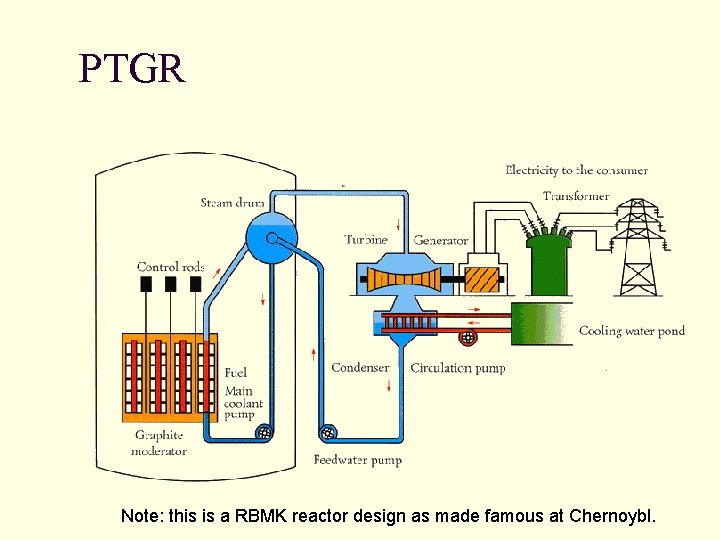
PTGR Note: this is a RBMK reactor design as made famous at Chernoybl.
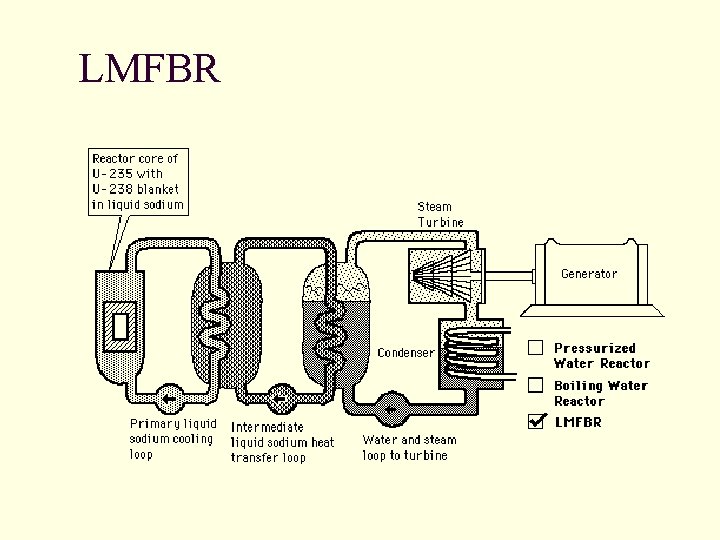
LMFBR
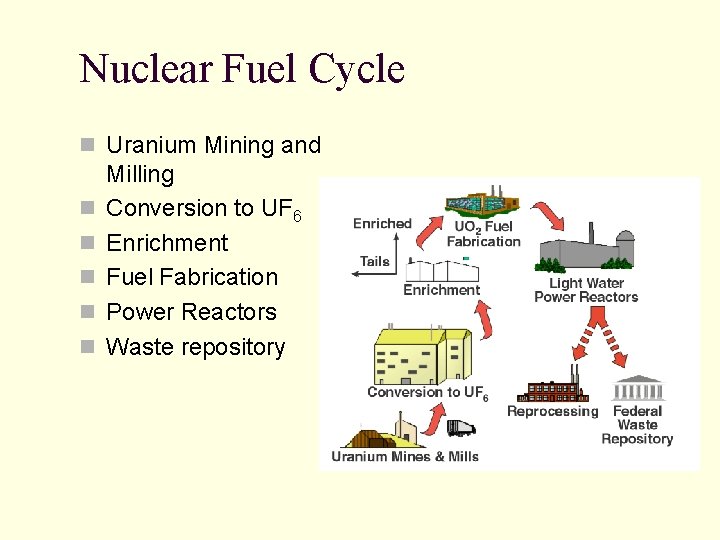
Nuclear Fuel Cycle n Uranium Mining and n n n Milling Conversion to UF 6 Enrichment Fuel Fabrication Power Reactors Waste repository
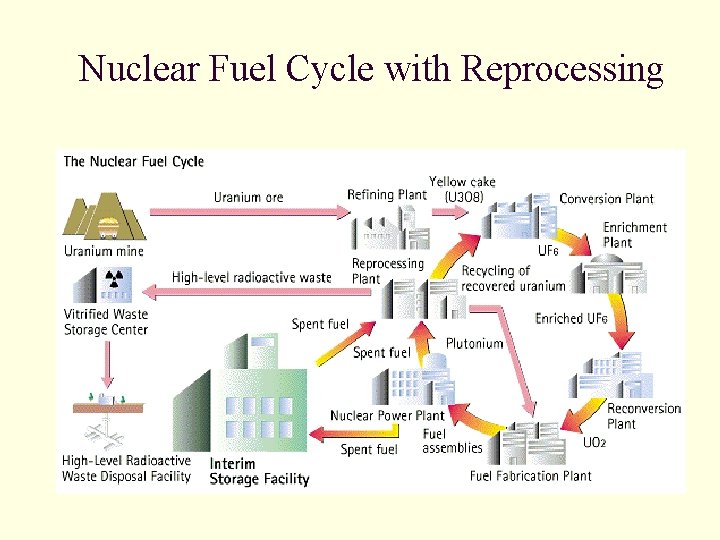
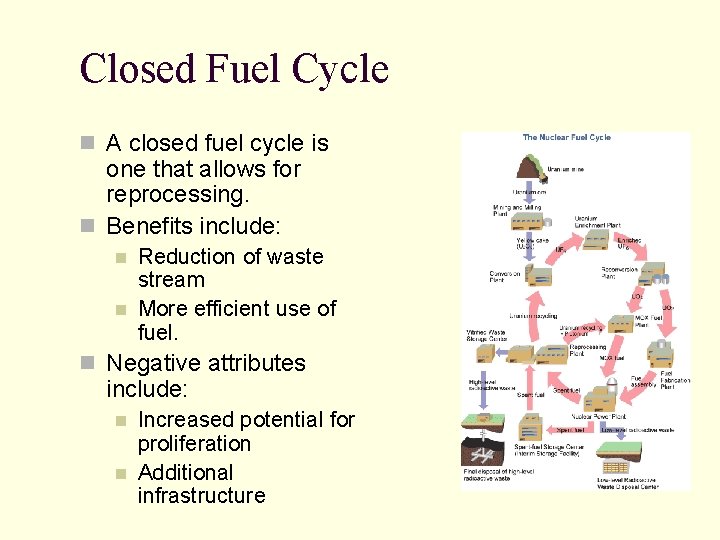
Nuclear Fuel Cycle with Reprocessing
Future Reactor Designs n Research is currently being conducted for design of the next generation of nuclear reactor designs. n The next generation designs focus on: Proliferation resistance of fuel n Passive safety systems n Improved fuel efficiency (includes breeding) n Minimizing nuclear waste n Improved plant efficiency (e. g. , Brayton cycle) n Hydrogen production n Economics n
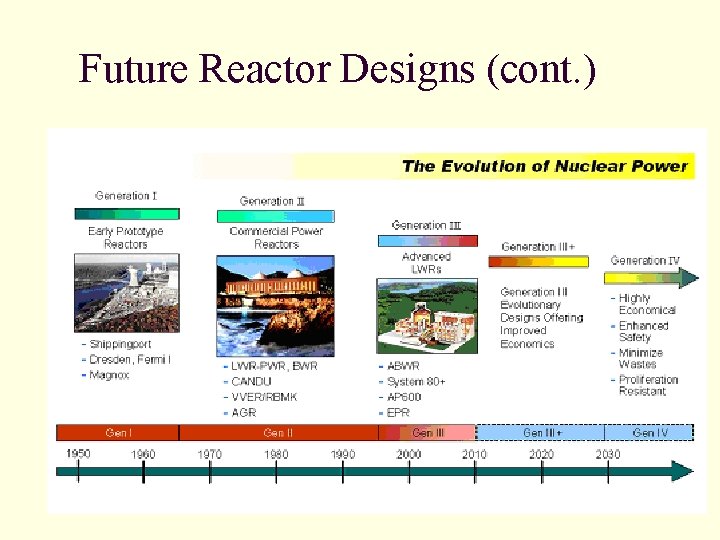
Future Reactor Designs (cont. )
Generation III Reactor Designs n Pebble Bed Reactor n Advanced Boiling Water Reactor (ABWR) n AP 600 n System 80+
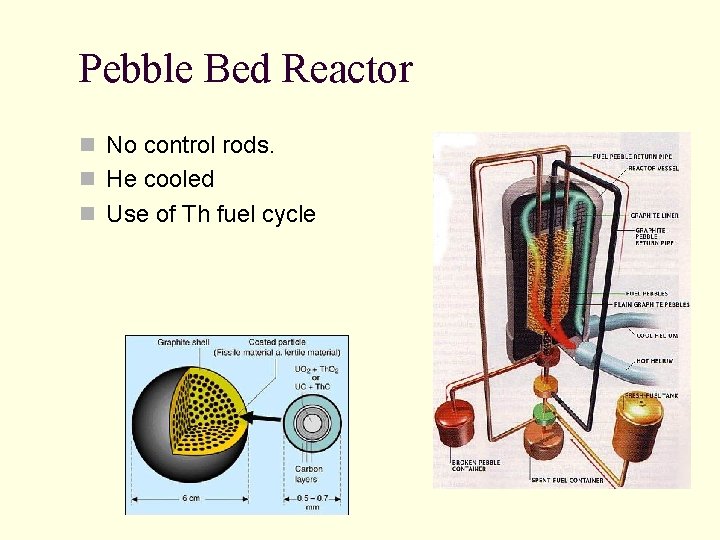
Pebble Bed Reactor n No control rods. n He cooled n Use of Th fuel cycle
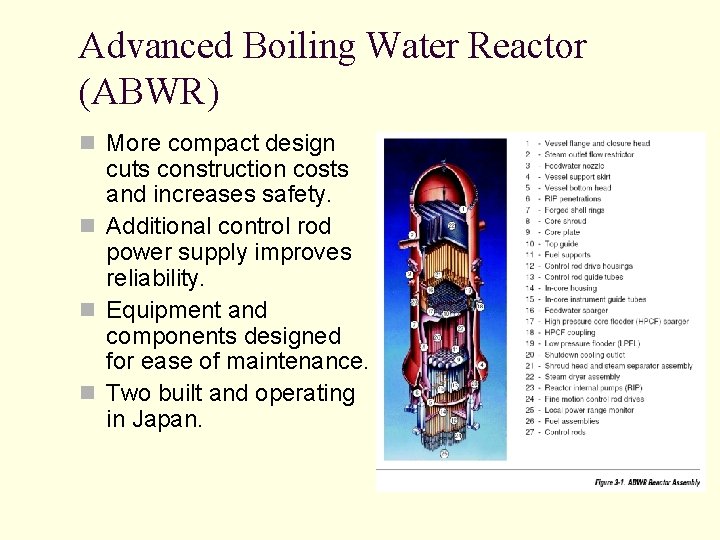
Advanced Boiling Water Reactor (ABWR) n More compact design cuts construction costs and increases safety. n Additional control rod power supply improves reliability. n Equipment and components designed for ease of maintenance. n Two built and operating in Japan.
Gen IV Reactors n Themes in Gen IV Reactors n Gas Cooled Fast Reactor (GFR) n Very High Temperature Reactor (VHTR) n Supercritical Water Cooled Reactor (SCWR) n Sodium Cooled Fast Reactor (SFR) n Lead Cooled Fast Reactor (LFR) n Molten Salt Reactor (MSR)
Themes in Gen IV Reactors n Hydrogen Production n Proliferation Resistance n Closed Fuel Cycle n Simplification n Increased safety
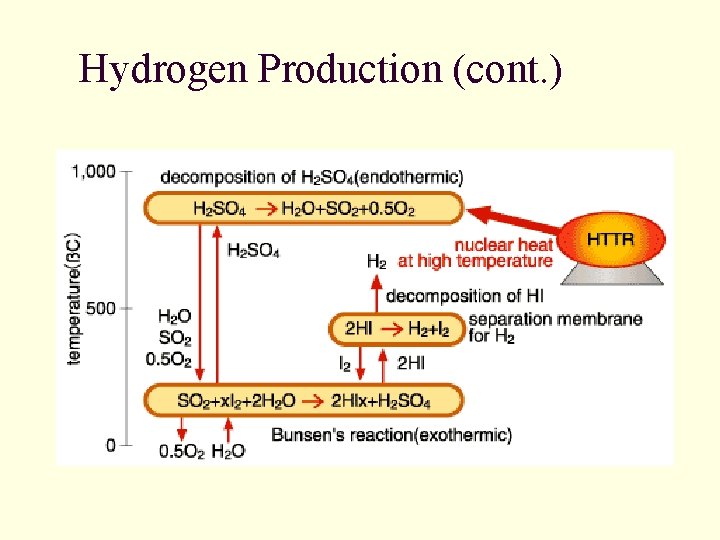
Hydrogen Production n Hydrogen is ready to play the lead in the next generation of energy production methods. n Nuclear heat sources (i. e. , a nuclear reactor) have been proposed to aid in the separation of H from H 20. n Hydrogen is thermochemically generated from water decomposed by nuclear heat at high temperature. n The IS process is named after the initials of each element used (iodine and sulfur).
Hydrogen Production (cont. )
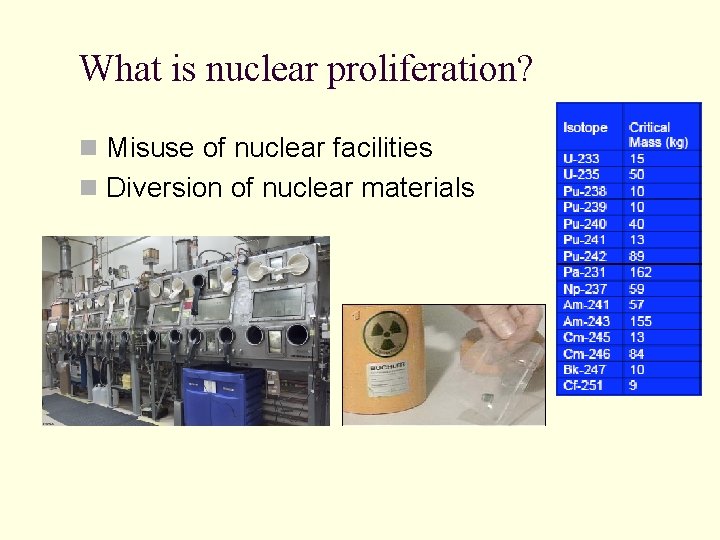
What is nuclear proliferation? n Misuse of nuclear facilities n Diversion of nuclear materials
Specific Generation IV Design Advantages Long fuel cycle - refueling 15 -20 years n Relative small capacity n Thorough fuel burnup n Fuel cycle variability n Actinide burning n Ability to burn weapons grade fuel n
Closed Fuel Cycle n A closed fuel cycle is one that allows for reprocessing. n Benefits include: n n Reduction of waste stream More efficient use of fuel. n Negative attributes include: n n Increased potential for proliferation Additional infrastructure
Simplification n Efforts are made to simplify the design of Gen IV reactors. This leads to: Reduced capitol costs n Reduced construction times n Increased safety (less things can fail) n
Increased Safety n Increased safety is always a priority. n Some examples of increased safety: n Natural circulation in systems n Reduction of piping n Incorporation of pumps within reactor vessel n Lower pressures in reactor vessel (liquid metal cooled reactors)
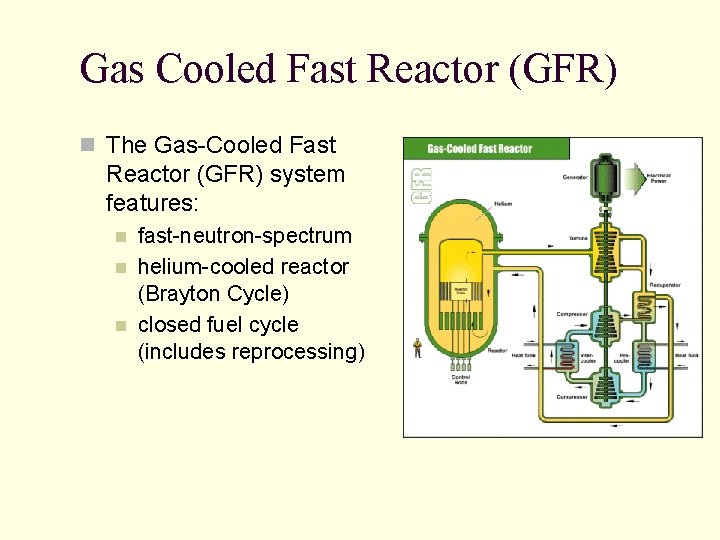
Gas Cooled Fast Reactor (GFR) n The Gas-Cooled Fast Reactor (GFR) system features: n n n fast-neutron-spectrum helium-cooled reactor (Brayton Cycle) closed fuel cycle (includes reprocessing)
Gas Cooled Fast Reactor (GFR) n Like thermal-spectrum, helium-cooled reactors, the high outlet temperature of the helium coolant makes it possible to: n n n deliver electricity produce hydrogen process heat with high efficiency. n The reference reactor is a 288 -MWe helium-cooled system operating with an outlet temperature of 850 degrees Celsius using a direct Brayton cycle gas turbine for high thermal efficiency.
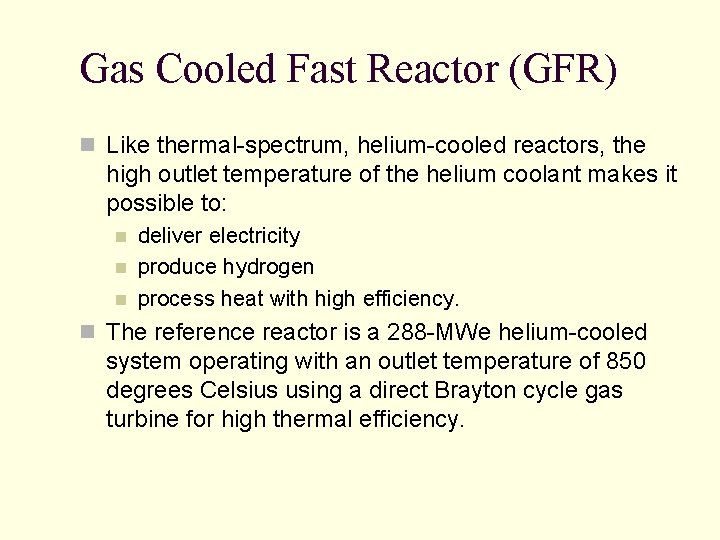
Very High Temperature Reactor (VHTR) n The Very-High- Temperature Reactor (VHTR) is n n graphite-moderated (thermal spectrum) helium-cooled reactor once-through uranium fuel cycle (no reprocessing) core outlet temperatures of 1, 000 ◦C
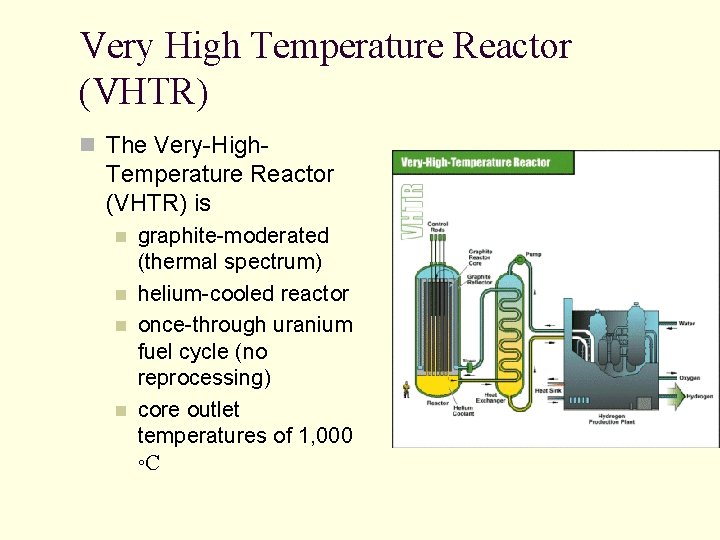
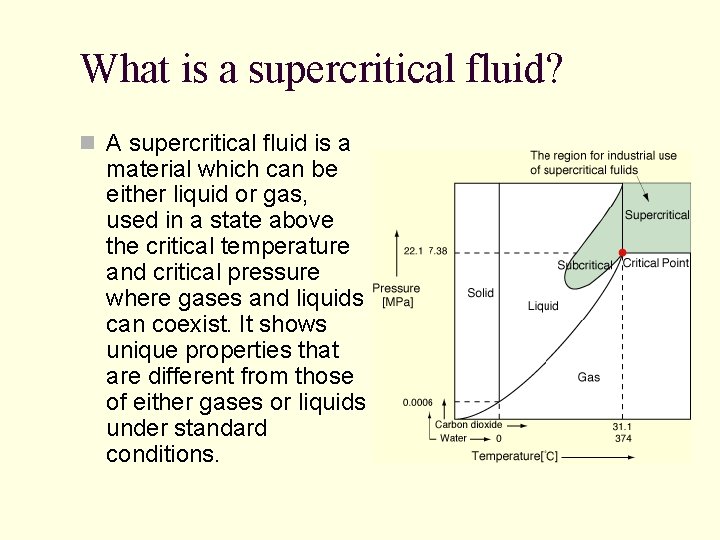
Supercritical Water Cooled Reactor (SCWR) n The Supercritical-Water- Cooled Reactor (SCWR) system: n n high-temperature high-pressure watercooled reactor that operates above thermodynamic critical point of water (374 degrees Celsius, 22. 1 MPa, or 705 degrees Fahrenheit, 3208 psia).
What is a supercritical fluid? n A supercritical fluid is a material which can be either liquid or gas, used in a state above the critical temperature and critical pressure where gases and liquids can coexist. It shows unique properties that are different from those of either gases or liquids under standard conditions.
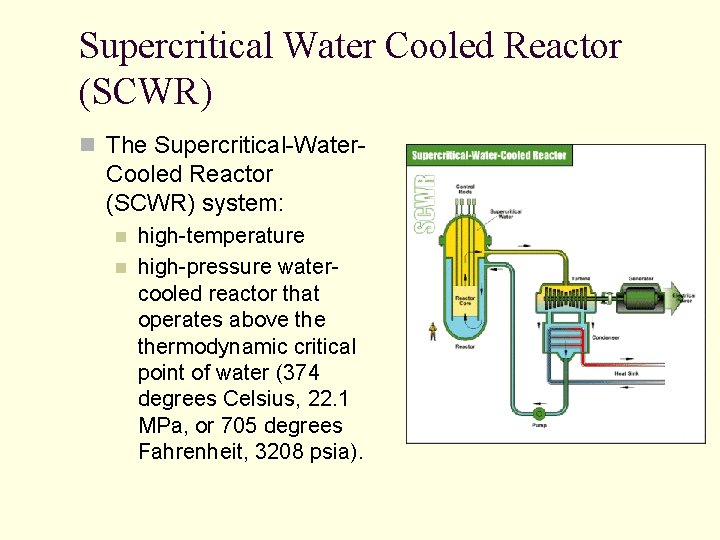
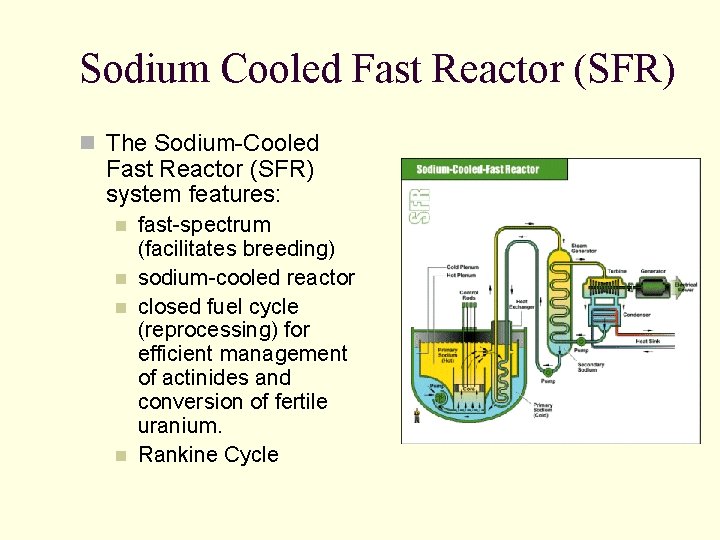
Sodium Cooled Fast Reactor (SFR) n The Sodium-Cooled Fast Reactor (SFR) system features: n n fast-spectrum (facilitates breeding) sodium-cooled reactor closed fuel cycle (reprocessing) for efficient management of actinides and conversion of fertile uranium. Rankine Cycle
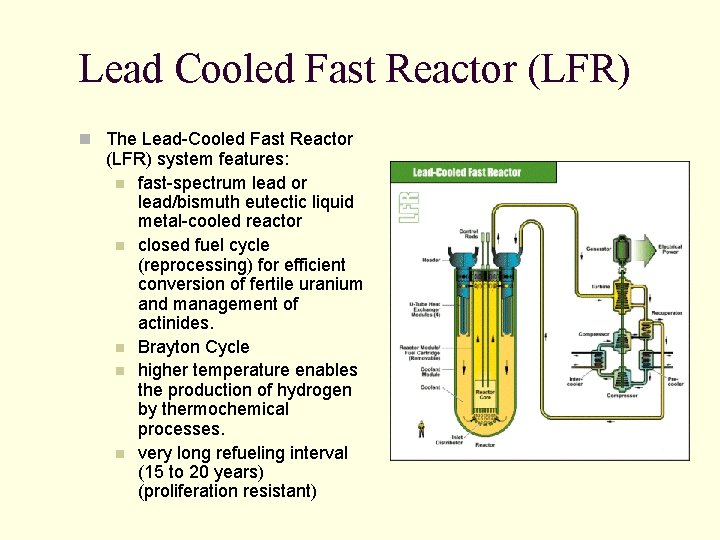
Lead Cooled Fast Reactor (LFR) n The Lead-Cooled Fast Reactor (LFR) system features: n fast-spectrum lead or lead/bismuth eutectic liquid metal-cooled reactor n closed fuel cycle (reprocessing) for efficient conversion of fertile uranium and management of actinides. n Brayton Cycle n higher temperature enables the production of hydrogen by thermochemical processes. n very long refueling interval (15 to 20 years) (proliferation resistant)
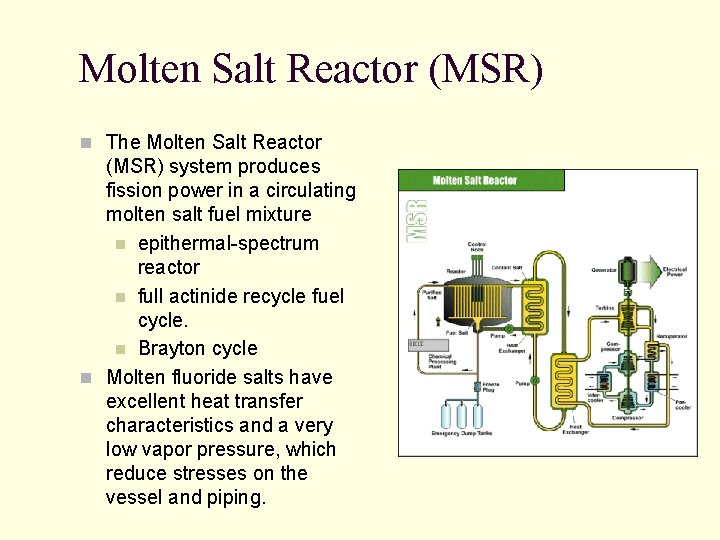
Molten Salt Reactor (MSR) n The Molten Salt Reactor (MSR) system produces fission power in a circulating molten salt fuel mixture n epithermal-spectrum reactor n full actinide recycle fuel cycle. n Brayton cycle n Molten fluoride salts have excellent heat transfer characteristics and a very low vapor pressure, which reduce stresses on the vessel and piping.
Policy Issues n Many policy issues exist that affect the viability of the future of nuclear power: Licensing n Risk insurance n Reprocessing of spent nuclear fuel n Nuclear waste repository n Next generation reactor research n Incorporation of hydrogen production into nuclear fuel cycle n University nuclear engineering programs n
Conclusions n So, what does the future hold? n n The demand for electrical power will continue to increase. The world reserves of fossil fuels are limited. Modern nuclear power plant designs are more inherently safe and may be constructed with less capital cost. Fossil fuel-based electricity is projected to account for more than 40% of global greenhouse gas emissions by 2020. n A 2003 study by MIT predicted that nuclear power growth of three fold will be necessary by 2050. n U. S. Government has voiced strong support for nuclear power production.