
Nuclear division Structure of DNA and RNA Deoxyribonucleic
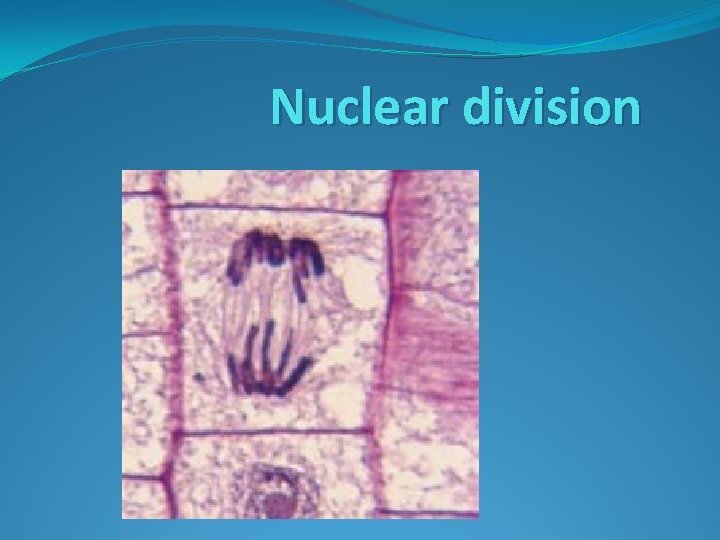
Nuclear division

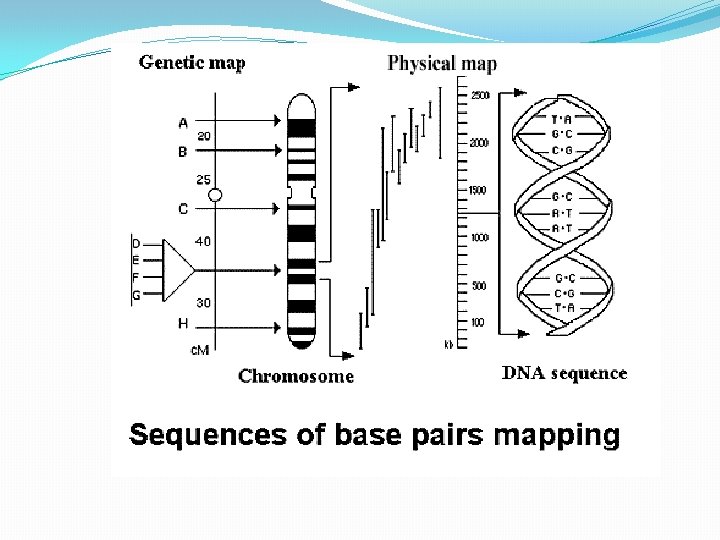
Structure of DNA and RNA �Deoxyribonucleic acid and Ribonucleic acid are Macromolecules (Large repeating structures) �Nucleotides- the rungs of the ladder are made up of 5 different bases A, T, G, C
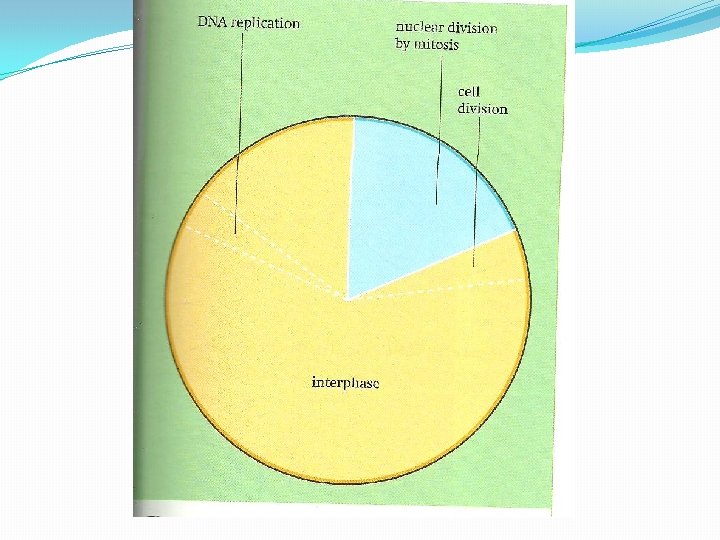

Nucleus contains chromosomes
Chromosomes �Humans have 23 pairs of chromosomes (46 in total) �A diploid number means pairs refered to as 2 N �A Haploid number means HALF the original number refered to as N �Chromosomes are often photographed and lined up in a karyotype.
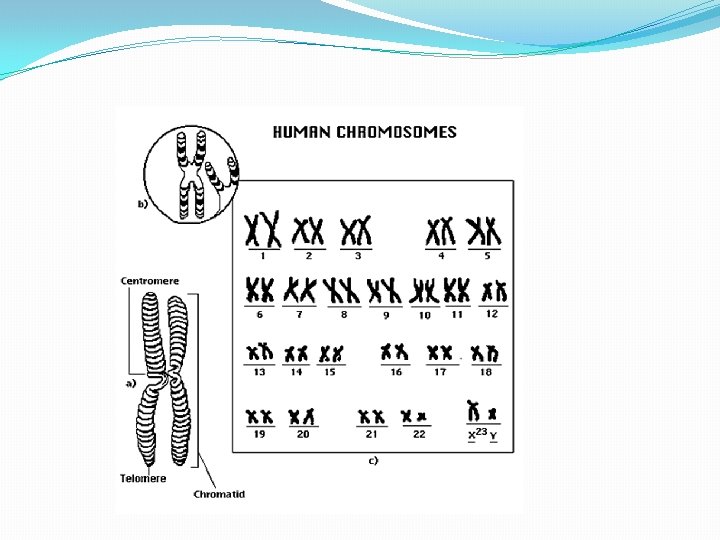
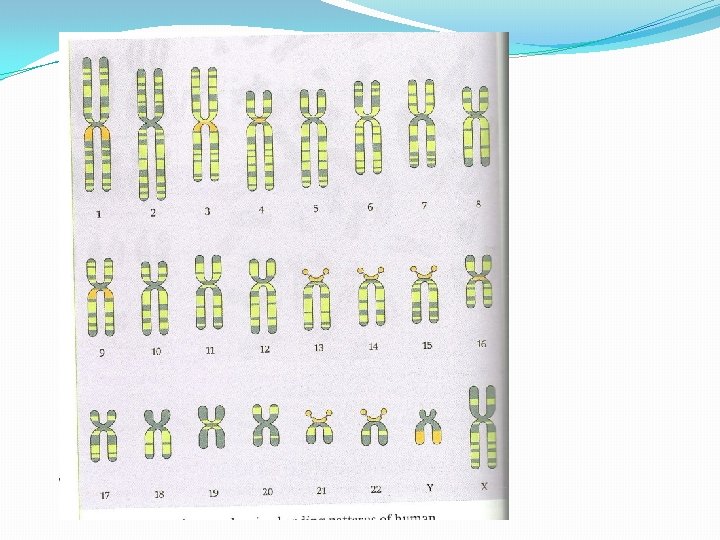
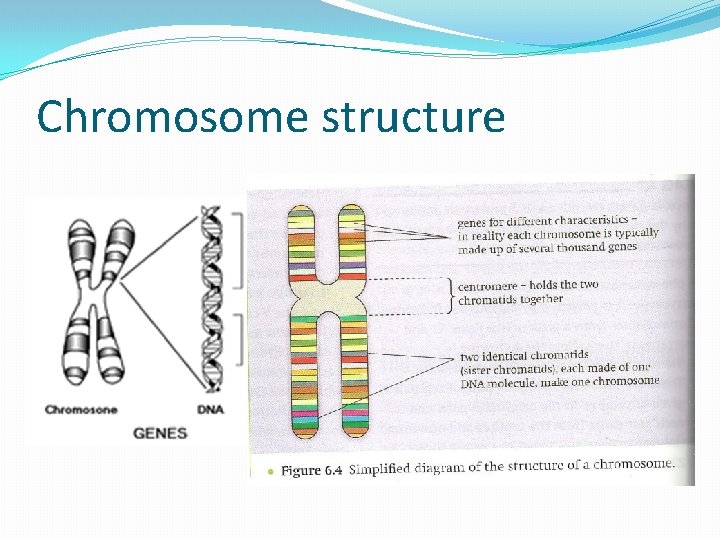
Chromosome structure
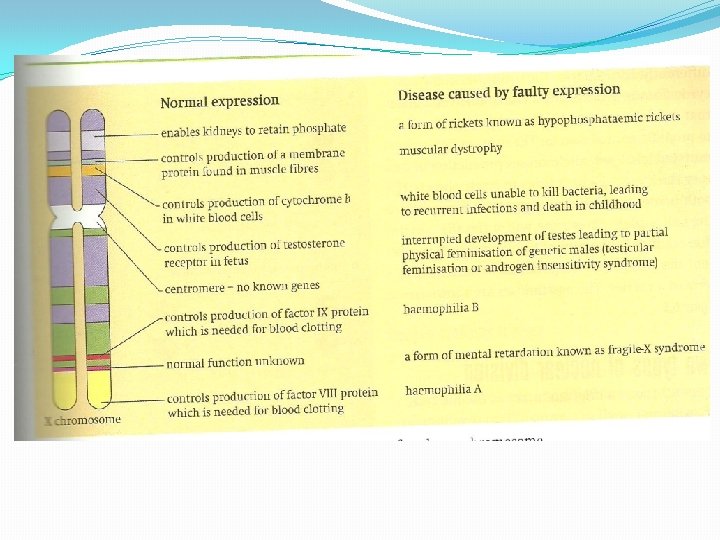
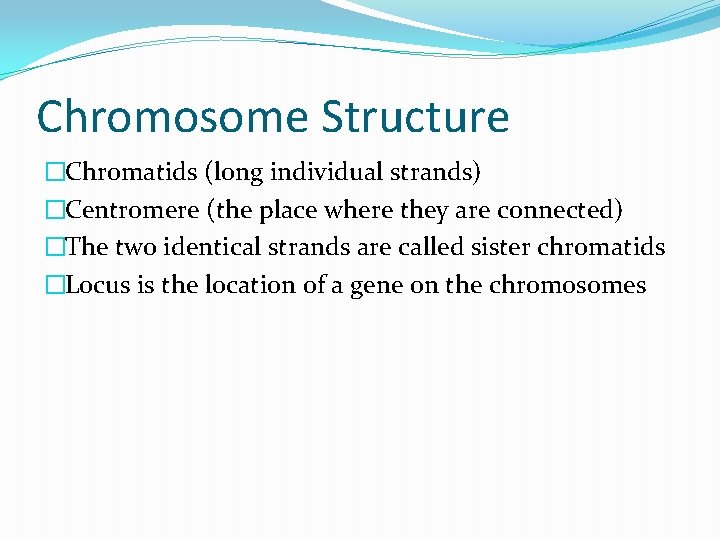
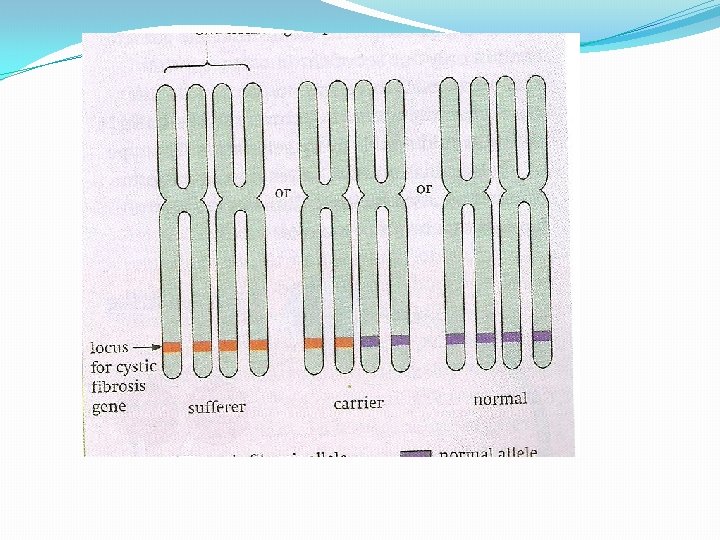
Chromosome Structure �Chromatids (long individual strands) �Centromere (the place where they are connected) �The two identical strands are called sister chromatids �Locus is the location of a gene on the chromosomes
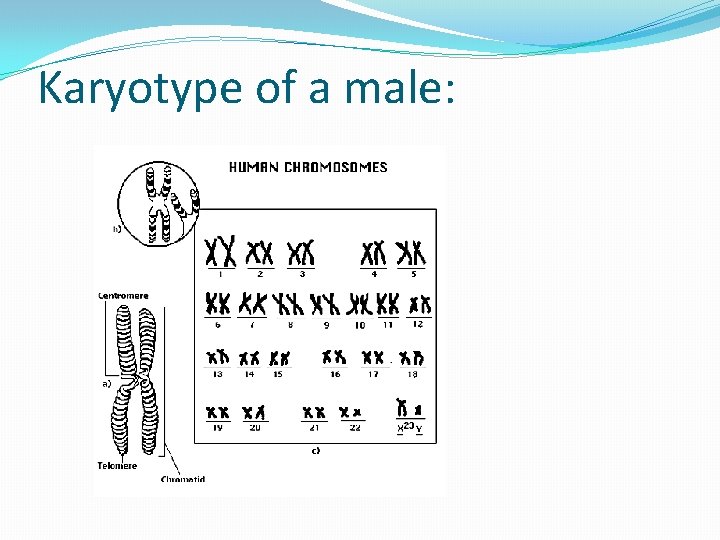
Karyotype of a male:
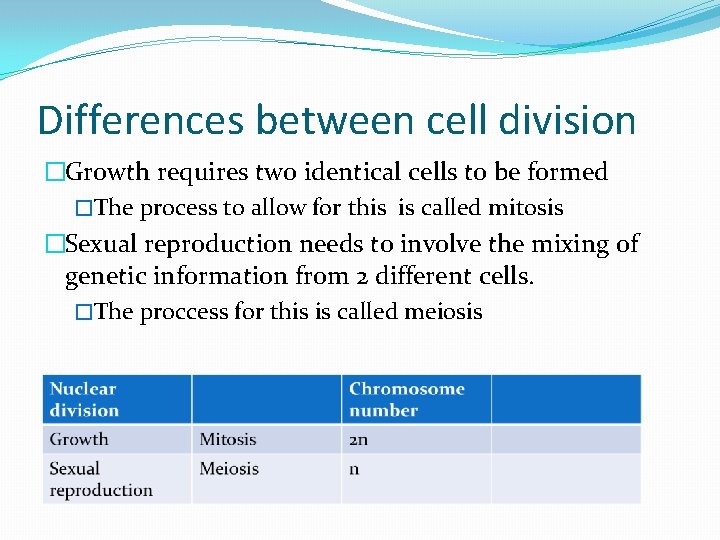
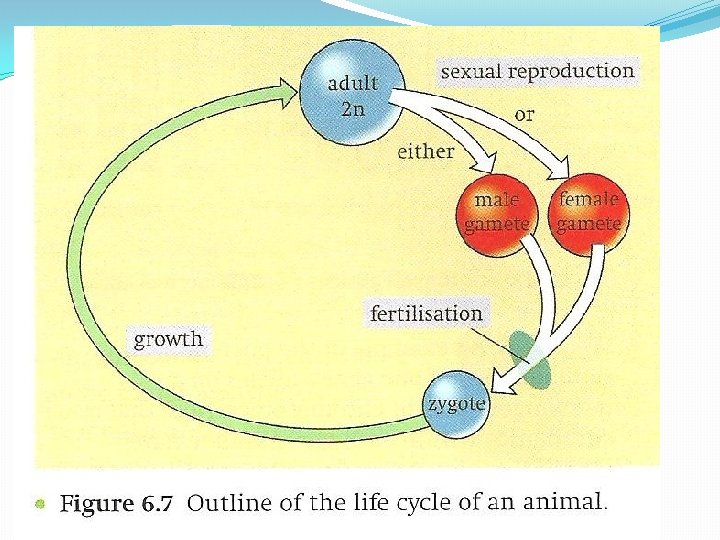
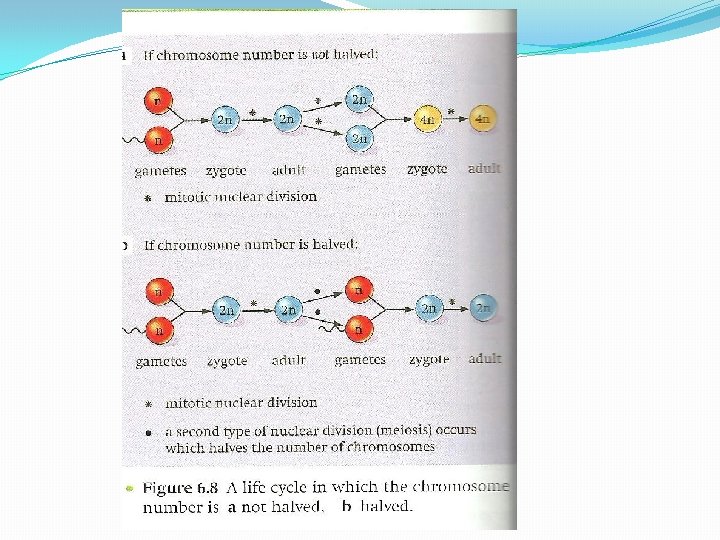
Differences between cell division �Growth requires two identical cells to be formed �The process to allow for this is called mitosis �Sexual reproduction needs to involve the mixing of genetic information from 2 different cells. �The proccess for this is called meiosis
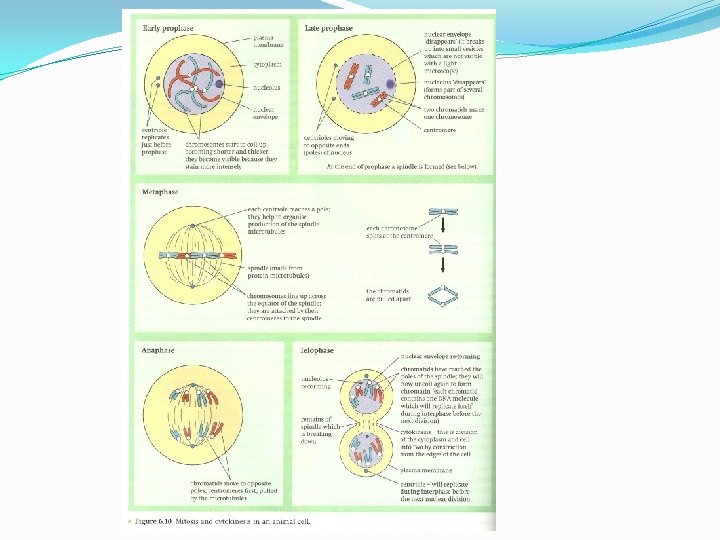
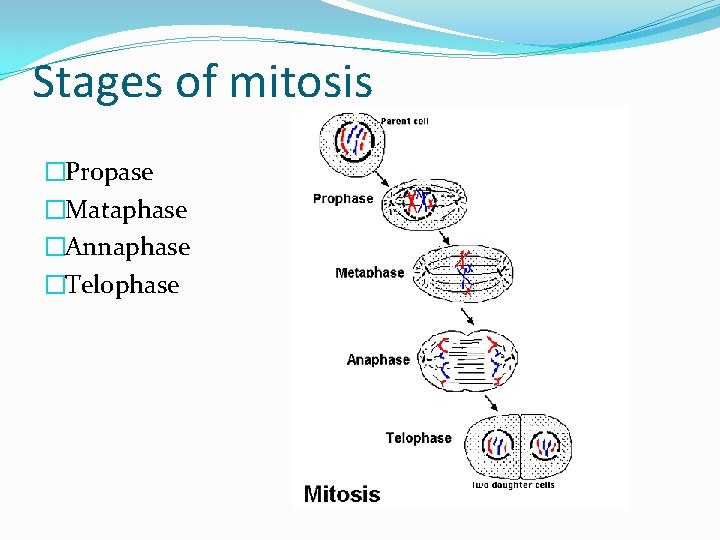
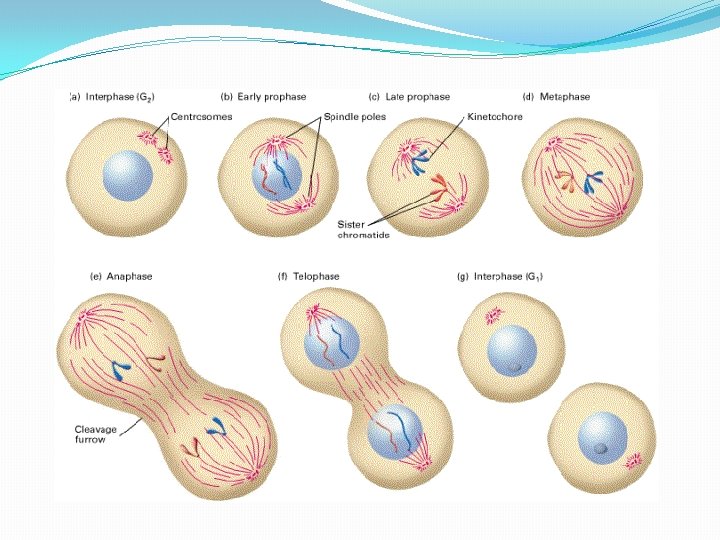
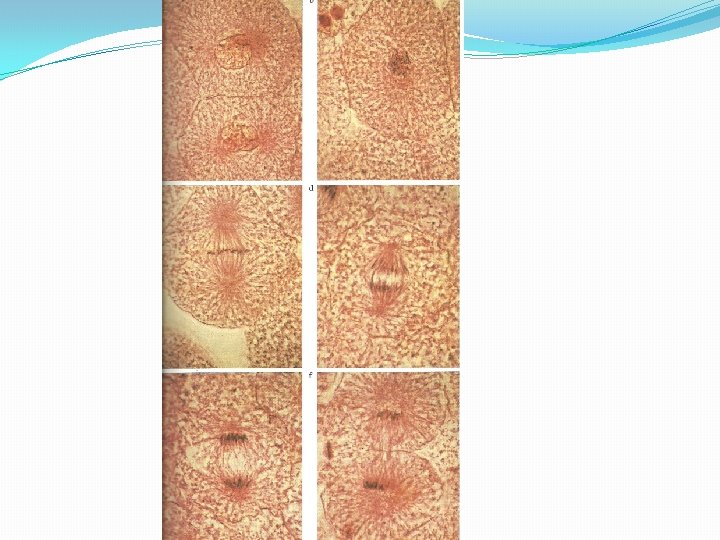
Stages of mitosis �Propase �Mataphase �Annaphase �Telophase
Cancer �Cancer is the result of a faulty gene replication �Cells reproduce at an accelerated rate because mitosis is uncontrolled. The ball of resulting cells is called a tumour. �Faulty gene replication is not particularly unusual, though the immune system will normally find and destroy
Causes of cancer �Carcinagens are chemicals which damage the DNA. The damaged section of the chromosome is called oncogenes �Ionising radiation DNA strands become damaged within the nucleus �Some viruses have been shown to cause cancers including burkitts lymphoma �Some cancers are hereditory, meaning that there is a genetic probability of developing cancers.
Movement of cancer �Benign tumours stay in the place they began, but growth can put pressure on nearby healthy cells, affecting their function. �Malignant tumours spread through the body and can damage other healthy tissues.
- Slides: 23