
Nuclear astrophysical reactions by unstable beams and Progress
Nuclear astrophysical reactions by unstable beams and Progress of BRIF and BRIFII 不稳定核束核天体物理反应 北京放射性核束装置的进展 Wei-ping Liu 柳卫平 wpliu@iris. ciae. ac. cn China Institute of Atomic Energy, CIAE 中国原子能科学研究院 6 th China Japan Joint Nuclear Physics Symposium 第六届中日核物理会议 May 16 -20, 2006 Shanghai 上海
Study of some key nuclear astrophysical reactions by unstable nuclear beams
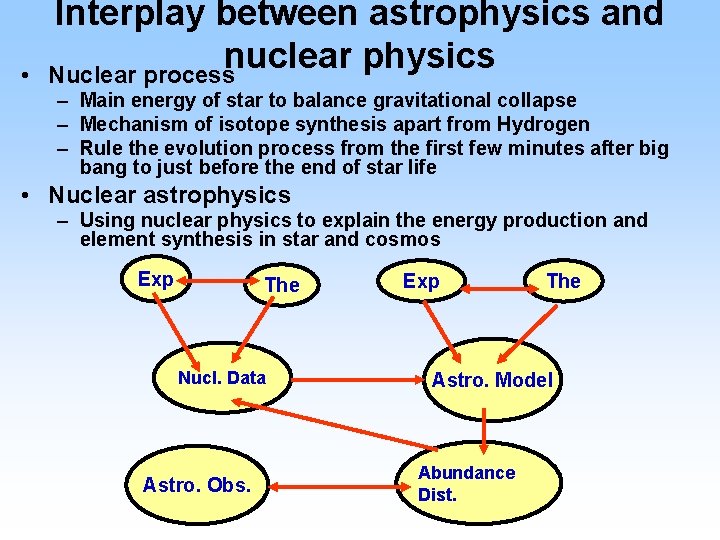
• Interplay between astrophysics and nuclear physics Nuclear process – Main energy of star to balance gravitational collapse – Mechanism of isotope synthesis apart from Hydrogen – Rule the evolution process from the first few minutes after big bang to just before the end of star life • Nuclear astrophysics – Using nuclear physics to explain the energy production and element synthesis in star and cosmos Exp The Nucl. Data Astro. Obs. Exp The Astro. Model Abundance Dist.

Nuclear astrophysics and physics of unstable nuclei • primordial and super novae high temperature and density environment, large amount of unstable nuclear involved into nuclear burning RIKEN RIBF proposal
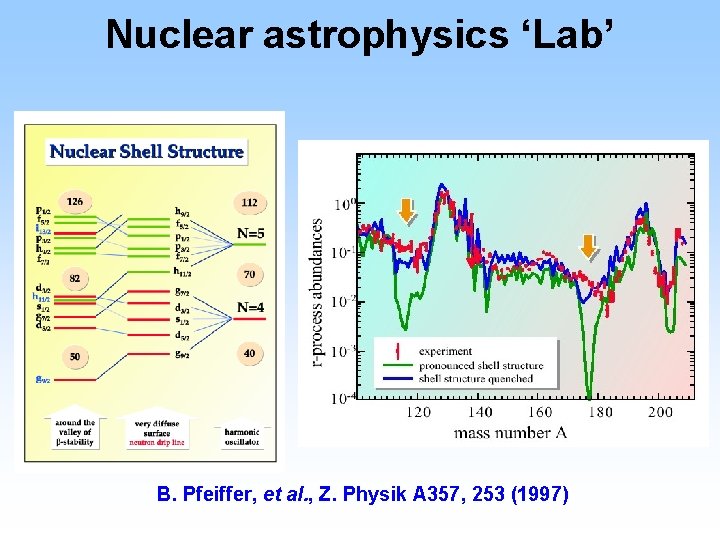
Nuclear astrophysics ‘Lab’ B. Pfeiffer, et al. , Z. Physik A 357, 253 (1997)
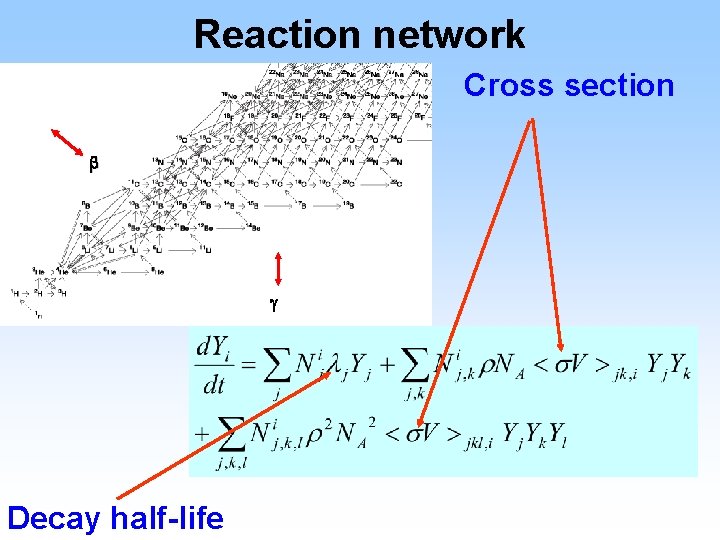
Reaction network Cross section b g Decay half-life

Challenge to experiment 11 C(p, )12 N • Gamow window • Extremely low energy • Vanishing low cross section
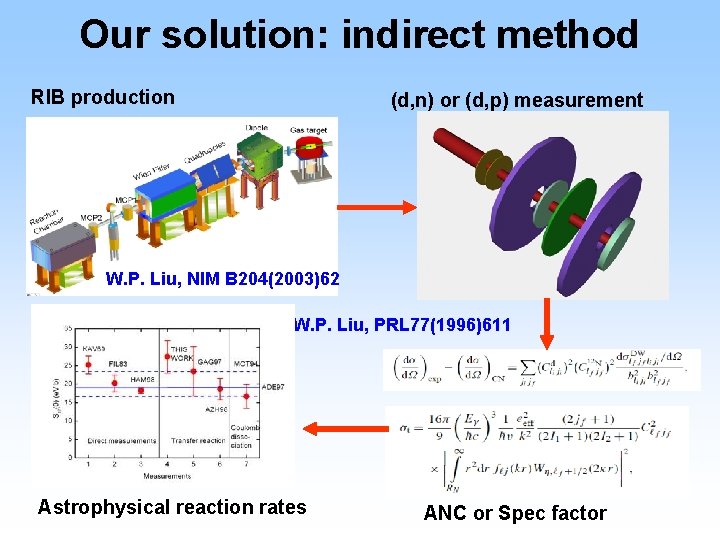
Our solution: indirect method RIB production (d, n) or (d, p) measurement W. P. Liu, NIM B 204(2003)62 W. P. Liu, PRL 77(1996)611 Astrophysical reaction rates ANC or Spec factor
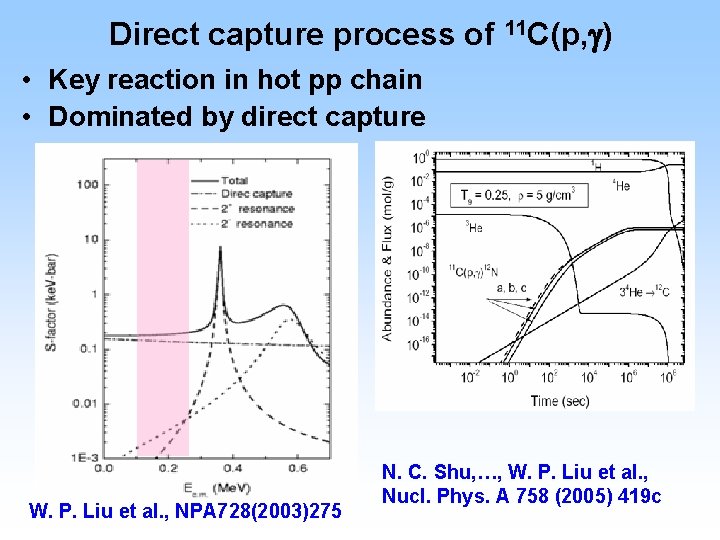
Direct capture process of 11 C(p, g) • Key reaction in hot pp chain • Dominated by direct capture W. P. Liu et al. , NPA 728(2003)275 N. C. Shu, …, W. P. Liu et al. , Nucl. Phys. A 758 (2005) 419 c
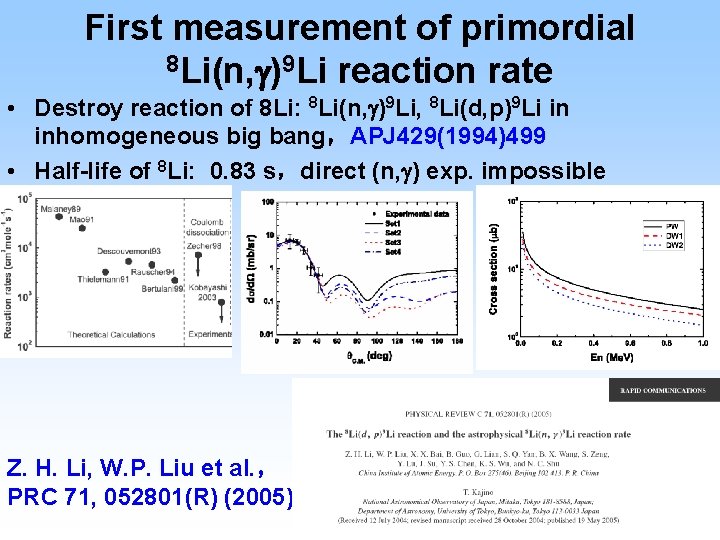
First measurement of primordial 8 Li(n, g)9 Li reaction rate • Destroy reaction of 8 Li: 8 Li(n, g)9 Li, 8 Li(d, p)9 Li in inhomogeneous big bang,APJ 429(1994)499 • Half-life of 8 Li: 0. 83 s,direct (n, g) exp. impossible Z. H. Li, W. P. Liu et al. , PRC 71, 052801(R) (2005)
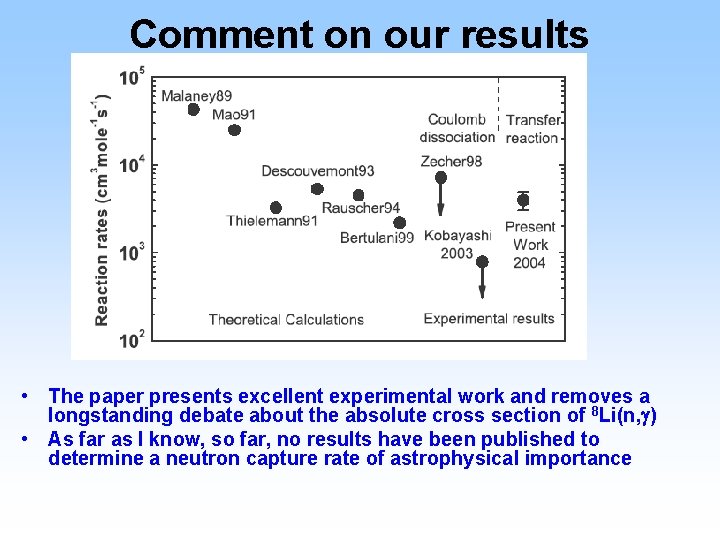
Comment on our results • The paper presents excellent experimental work and removes a longstanding debate about the absolute cross section of 8 Li(n, g) • As far as I know, so far, no results have been published to determine a neutron capture rate of astrophysical importance
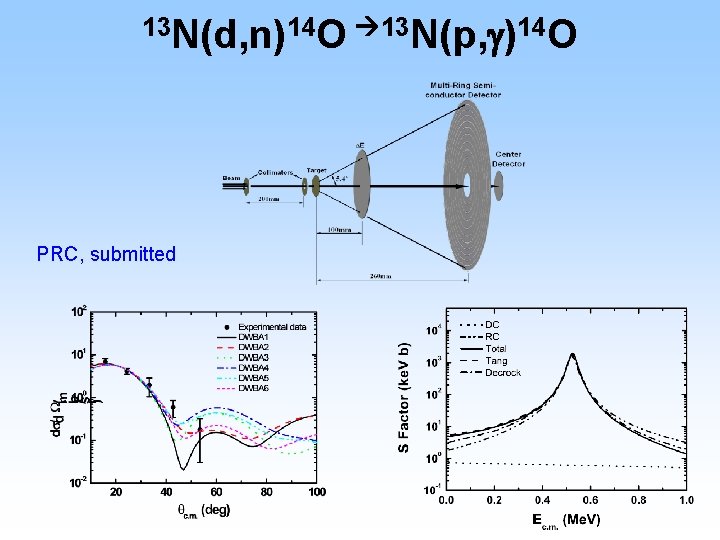
13 N(d, n)14 O 13 N(p, g)14 O PRC, submitted
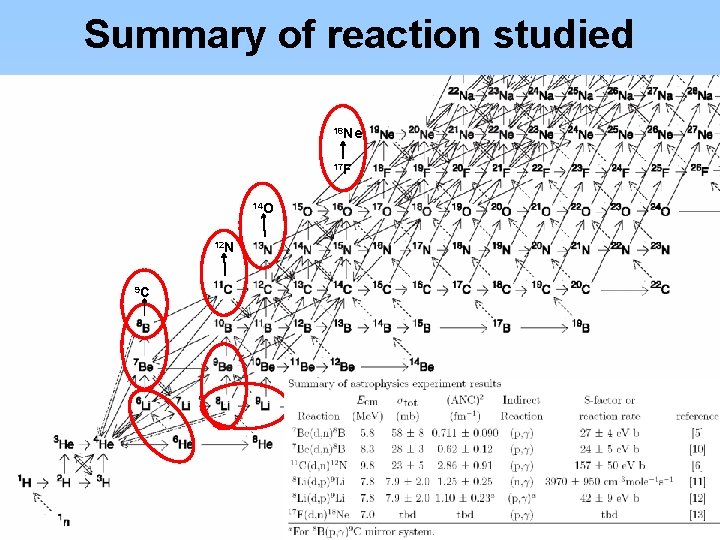
Summary of reaction studied 18 Ne 17 F 14 O 12 N 9 C

Opportunities from BRIF and BRIF II BRIF: Beijing Radioactive Ion Facility
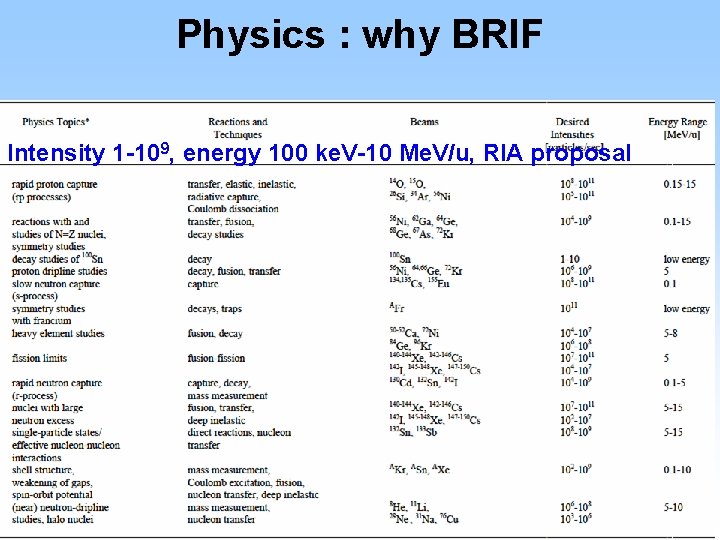
Physics : why BRIF Intensity 1 -109, energy 100 ke. V-10 Me. V/u, RIA proposal

The current Tandem lab • Beam type, only stable, no noble gas • Energy range, less than 14 Me. V/q • Instrumentation, no RMS, no ISOL • Beam time: 100 % overdue
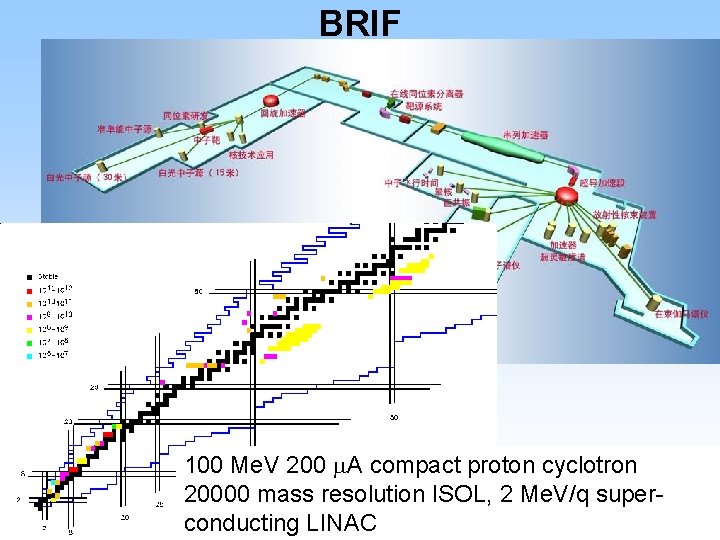
BRIF 100 Me. V 200 m. A compact proton cyclotron 20000 mass resolution ISOL, 2 Me. V/q superconducting LINAC
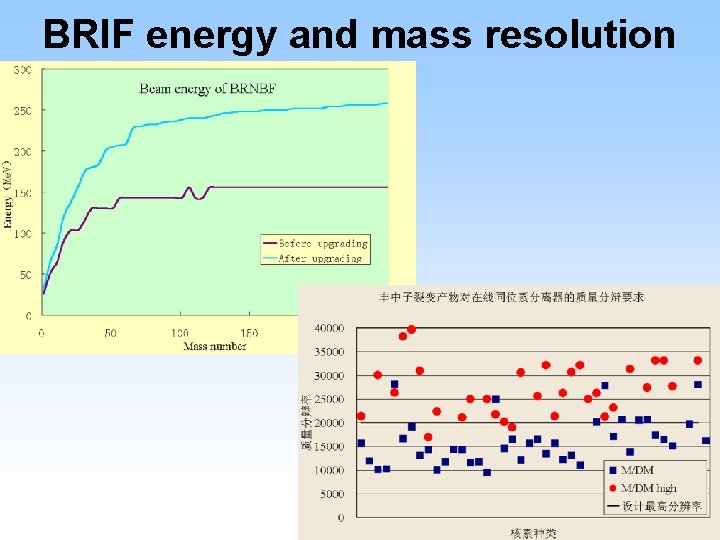
BRIF energy and mass resolution
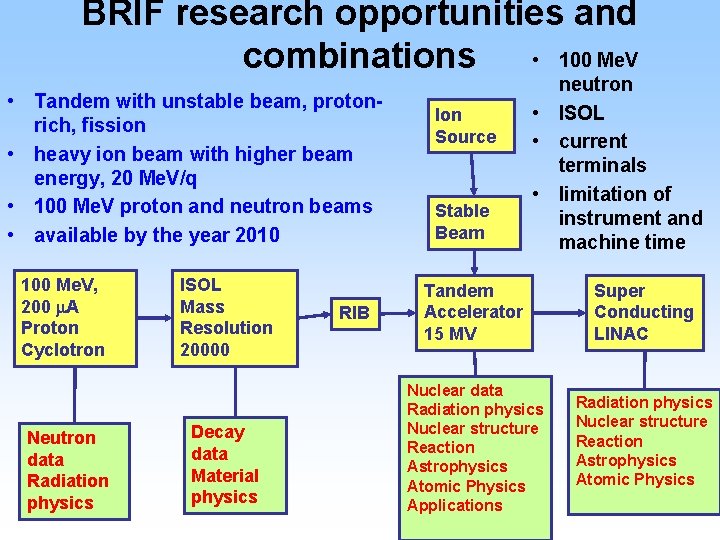
BRIF research opportunities and • 100 Me. V combinations • Tandem with unstable beam, protonrich, fission • heavy ion beam with higher beam energy, 20 Me. V/q • 100 Me. V proton and neutron beams • available by the year 2010 100 Me. V, 200 m. A Proton Cyclotron Neutron data Radiation physics ISOL Mass Resolution 20000 Decay data Material physics RIB Ion Source Stable Beam neutron • ISOL • current terminals • limitation of instrument and machine time Tandem Accelerator 15 MV Super Conducting LINAC Nuclear data Radiation physics Nuclear structure Reaction Astrophysics Atomic Physics Applications Radiation physics Nuclear structure Reaction Astrophysics Atomic Physics
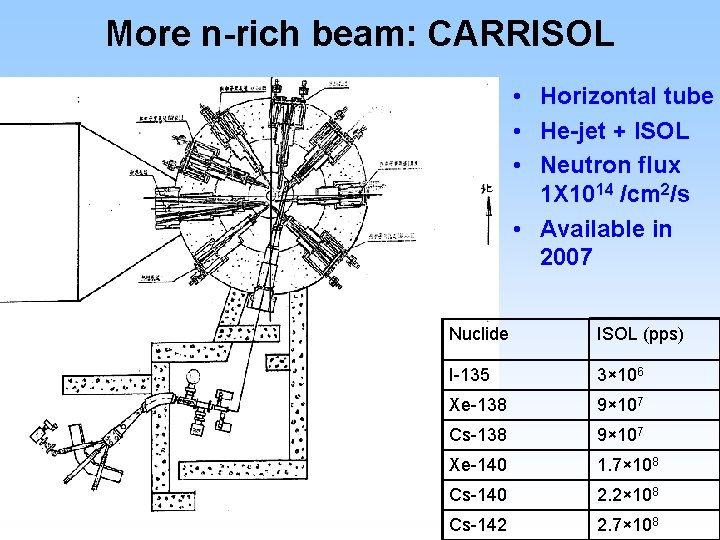
More n-rich beam: CARRISOL • Horizontal tube • He-jet + ISOL • Neutron flux 1 X 10¹⁴ /cm 2/s • Available in 2007 Nuclide ISOL (pps) I-135 3× 10⁶ Xe-138 9× 10⁷ Cs-138 9× 10⁷ Xe-140 1. 7× 10⁸ Cs-140 2. 2× 10⁸ Cs-142 2. 7× 10⁸
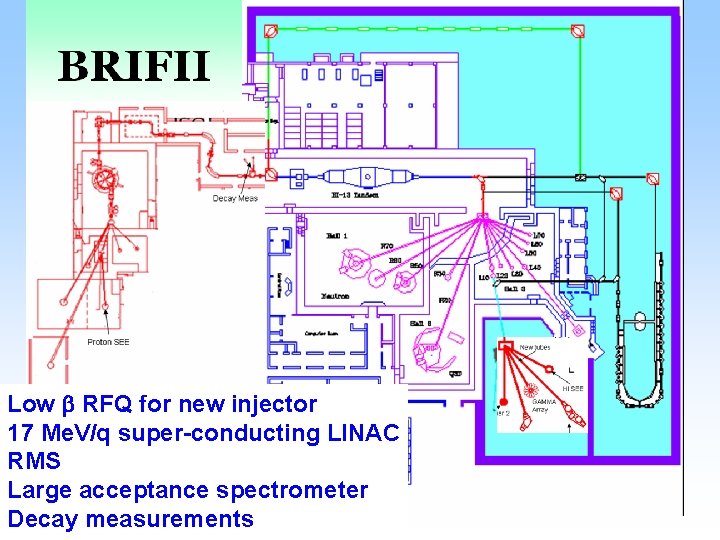
Low b RFQ for new injector 17 Me. V/q super-conducting LINAC RMS Large acceptance spectrometer Decay measurements
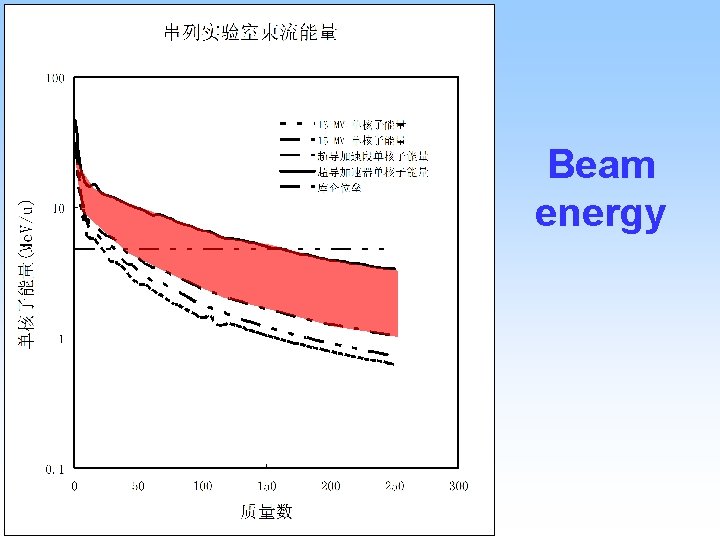
Beam energy
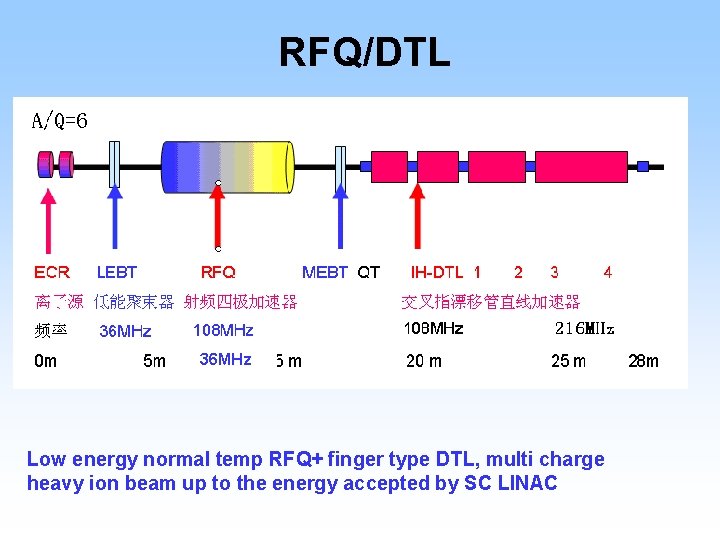
RFQ/DTL 36 MHz Low energy normal temp RFQ+ finger type DTL, multi charge heavy ion beam up to the energy accepted by SC LINAC

SC LINAC QWR • Energy gain 17 Me. V/q • 36 ¼ wave length QWR • 9 100 L LHe tank
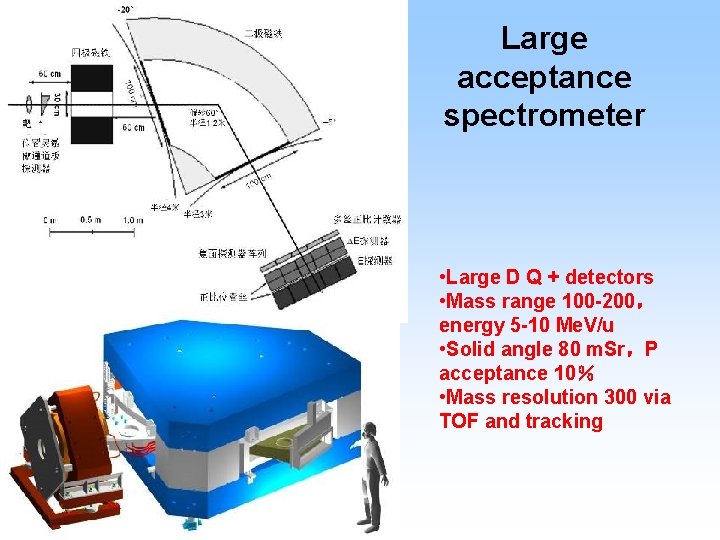
Large acceptance spectrometer • Large D Q + detectors • Mass range 100 -200, energy 5 -10 Me. V/u • Solid angle 80 m. Sr,P acceptance 10% • Mass resolution 300 via TOF and tracking
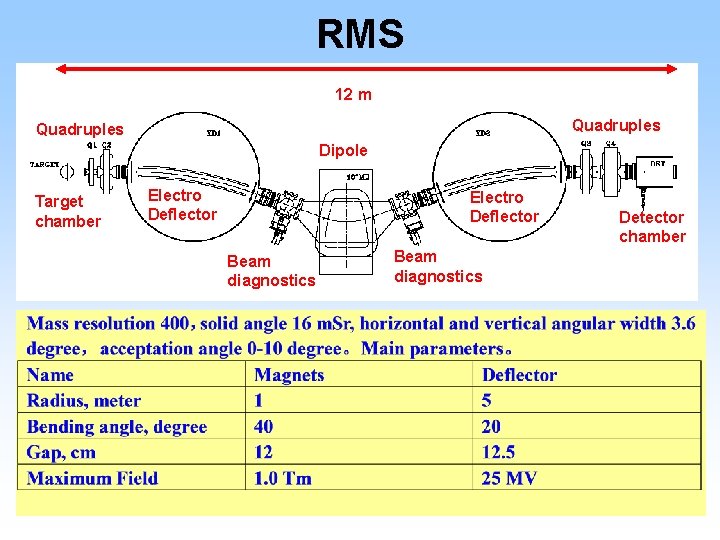
RMS 12 m Quadruples Dipole Target chamber Electro Deflector Beam diagnostics Detector chamber
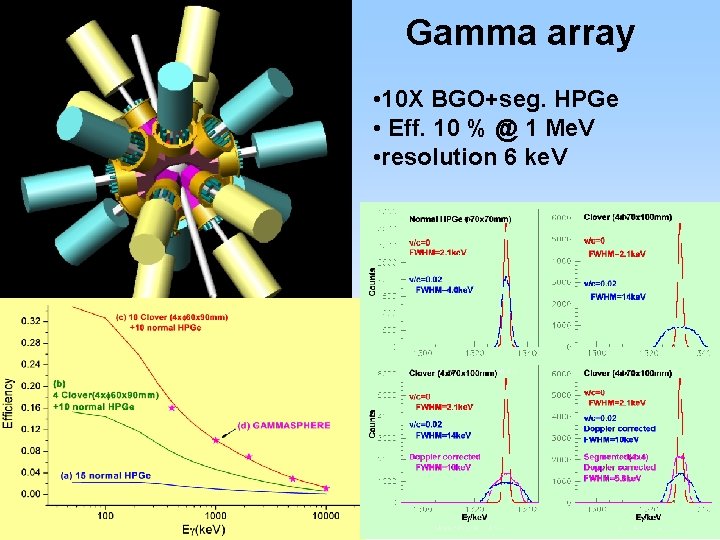
Gamma array • 10 X BGO+seg. HPGe • Eff. 10 % @ 1 Me. V • resolution 6 ke. V
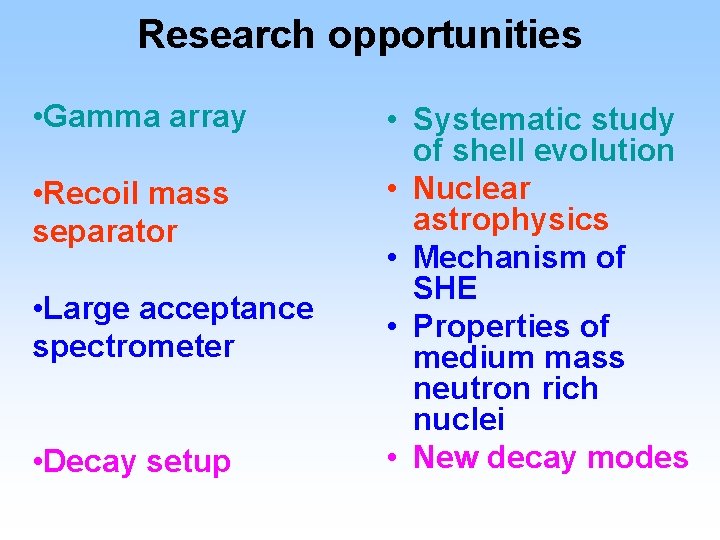
Research opportunities • Gamma array • Recoil mass separator • Large acceptance spectrometer • Decay setup • Systematic study of shell evolution • Nuclear astrophysics • Mechanism of SHE • Properties of medium mass neutron rich nuclei • New decay modes
Conclusion • BRIF and BRIFII will open up exciting research opportunities • With BRIFII: – – – new experimental terminals higher beam energy of 35 Me. V/q 100 % more beam time by separate operation Limit: overall instrumentation usage Available by the year of 2013 • Chances are still open, and we welcome contributions, suggestions and new proposals • We would like to collaborate with major domestic and foreign research groups and world labs to take their full research potential and to do cooperative jobs • Call for user communities to build machine and detector and physics task force with more flexible way • A nice play ground in Beijing to connect locations
- Slides: 29