
NUCAPS Training Resources and Development Brian Motta NOAANWS
NUCAPS Training Resources and Development Brian Motta NOAA/NWS Office of the Chief Learning Officer Forecast Decision Training Division
Outline 1) NUCAPS Severe Weather CONOPS Proposed 2) NUCAPS Initiative Team Formed – “Cold Air Aloft” Collaborations with SPo. RT, CIRA, GINA, & AAWU. 3) Hazardous Weather Testbed Evaluation of NUCAPSmodified Soundings during Experimental Warning Program (completed) 4) AWIPS 2 Implementation Fixes – Quality Flags, Fieldof-View, JPSS RR Automation, etc.
NUCAPS Severe Weather CONOPS Proposed • Dan Nietfeld, OAX SOO, proposed a NUCAPS severe weather conops about a year ago • A small team was formed to develop training and test the proposed CONOPS at the NOAA Hazardous Weather Testbed
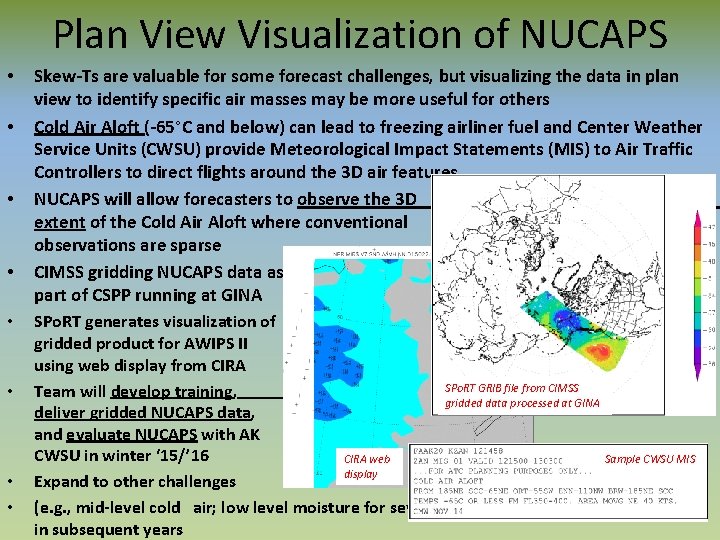
Plan View Visualization of NUCAPS • • Skew-Ts are valuable for some forecast challenges, but visualizing the data in plan view to identify specific air masses may be more useful for others Cold Air Aloft (-65°C and below) can lead to freezing airliner fuel and Center Weather Service Units (CWSU) provide Meteorological Impact Statements (MIS) to Air Traffic Controllers to direct flights around the 3 D air features NUCAPS will allow forecasters to observe the 3 D extent of the Cold Air Aloft where conventional observations are sparse CIMSS gridding NUCAPS data as part of CSPP running at GINA SPo. RT generates visualization of gridded product for AWIPS II using web display from CIRA SPo. RT GRIB file from CIMSS Team will develop training, gridded data processed at GINA deliver gridded NUCAPS data, and evaluate NUCAPS with AK CWSU in winter ‘ 15/’ 16 CIRA web Sample CWSU MIS display Expand to other challenges (e. g. , mid-level cold air; low level moisture for severe thunderstorms) in subsequent years
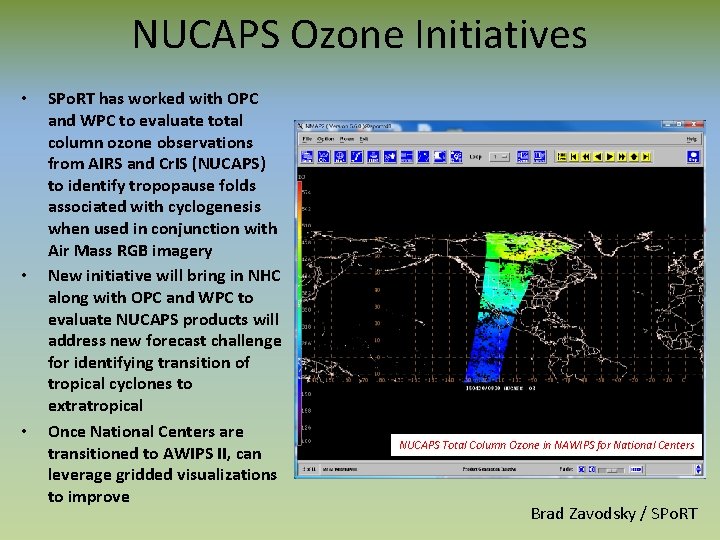
NUCAPS Ozone Initiatives • • • SPo. RT has worked with OPC and WPC to evaluate total column ozone observations from AIRS and Cr. IS (NUCAPS) to identify tropopause folds associated with cyclogenesis when used in conjunction with Air Mass RGB imagery New initiative will bring in NHC along with OPC and WPC to evaluate NUCAPS products will address new forecast challenge for identifying transition of tropical cyclones to extratropical Once National Centers are transitioned to AWIPS II, can leverage gridded visualizations to improve NUCAPS Total Column Ozone in NAWIPS for National Centers Brad Zavodsky / SPo. RT
NUCAPS Soundings in AWIPS Chris Barnet STC Antonia Gambocorta STC Scott Lindstrom UW CIMSS Bill Line OU CIMMS Brian Motta NWS HQ FDTD Dan Nietfeld NWS OAX
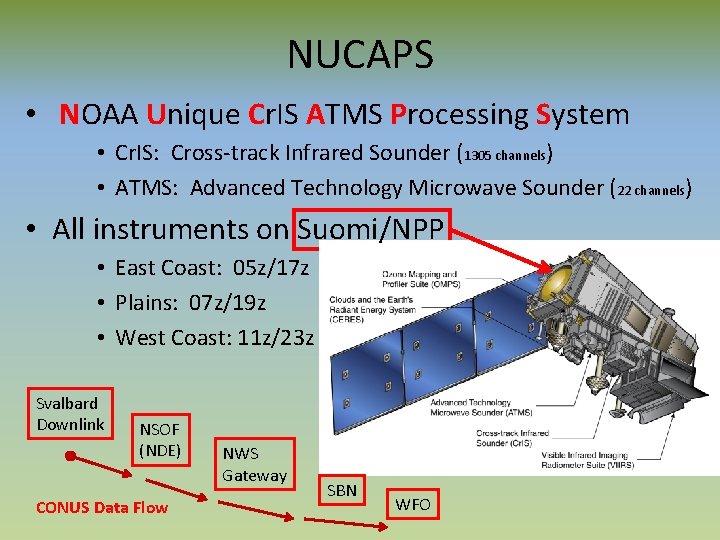
NUCAPS • NOAA Unique Cr. IS ATMS Processing System • Cr. IS: Cross-track Infrared Sounder (1305 channels) • ATMS: Advanced Technology Microwave Sounder (22 channels) • All instruments on Suomi/NPP • East Coast: 05 z/17 z • Plains: 07 z/19 z • West Coast: 11 z/23 z Svalbard Downlink NSOF (NDE) CONUS Data Flow NWS Gateway SBN WFO
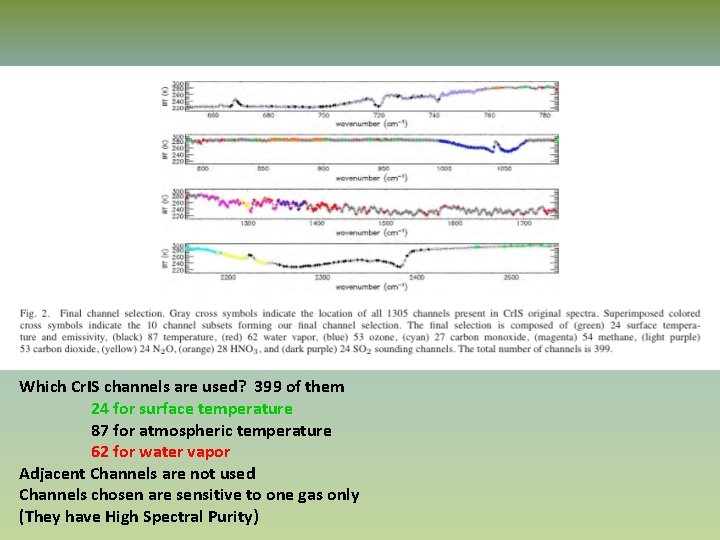
Which Cr. IS channels are used? 399 of them 24 for surface temperature 87 for atmospheric temperature 62 for water vapor Adjacent Channels are not used Channels chosen are sensitive to one gas only (They have High Spectral Purity)
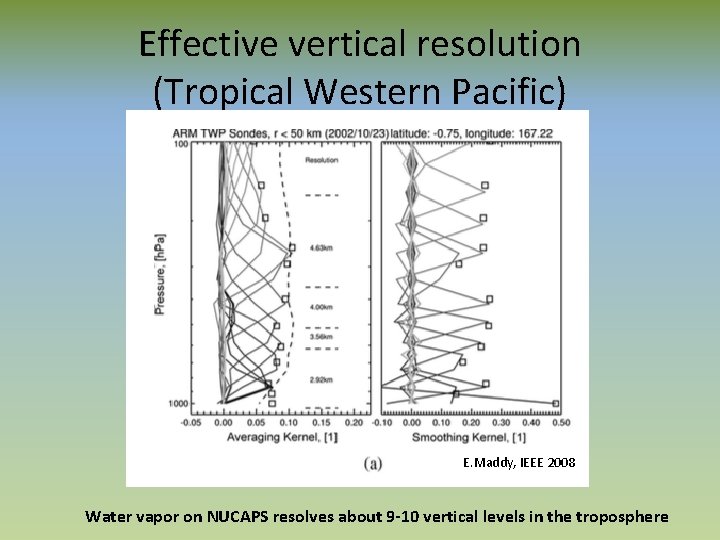
Effective vertical resolution (Tropical Western Pacific) E. Maddy, IEEE 2008 Water vapor on NUCAPS resolves about 9 -10 vertical levels in the troposphere
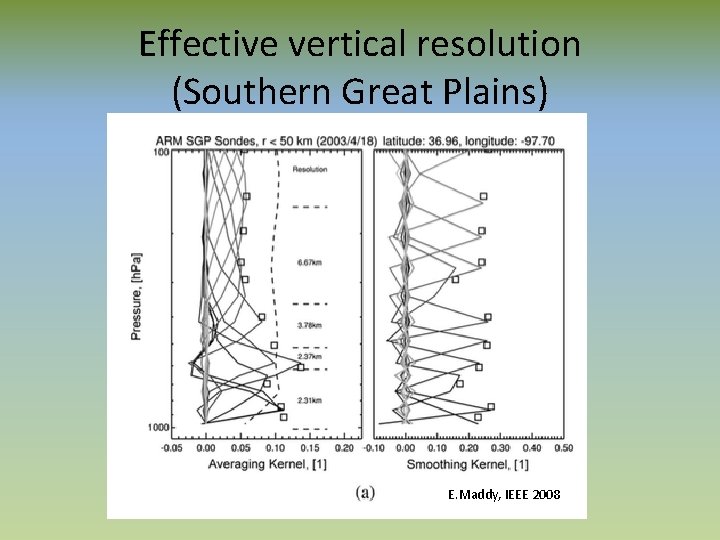
Effective vertical resolution (Southern Great Plains) E. Maddy, IEEE 2008
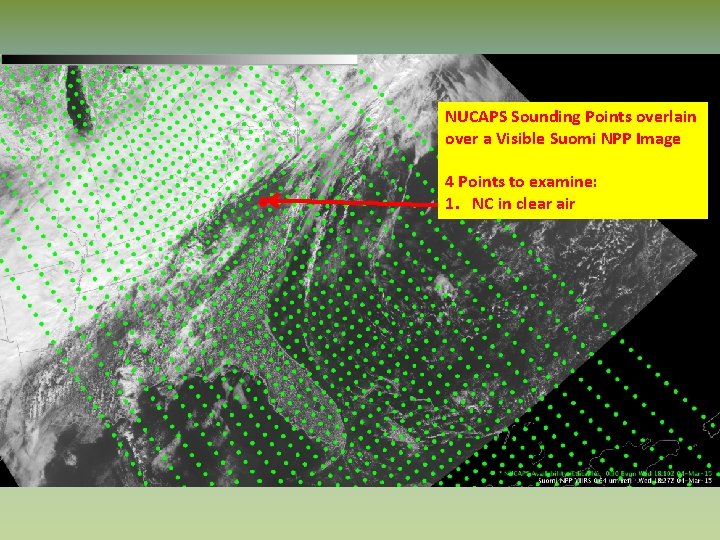
NUCAPS Sounding Points overlain over a Visible Suomi NPP Image 4 Points to examine: 1. NC in clear air
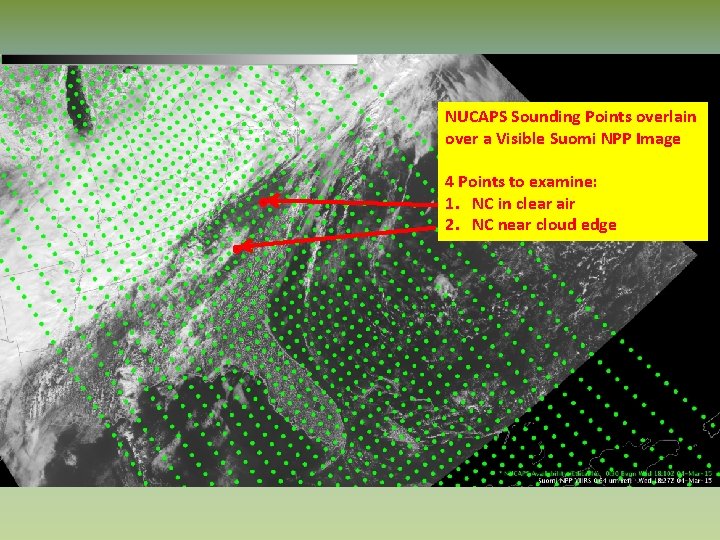
NUCAPS Sounding Points overlain over a Visible Suomi NPP Image 4 Points to examine: 1. NC in clear air 2. NC near cloud edge
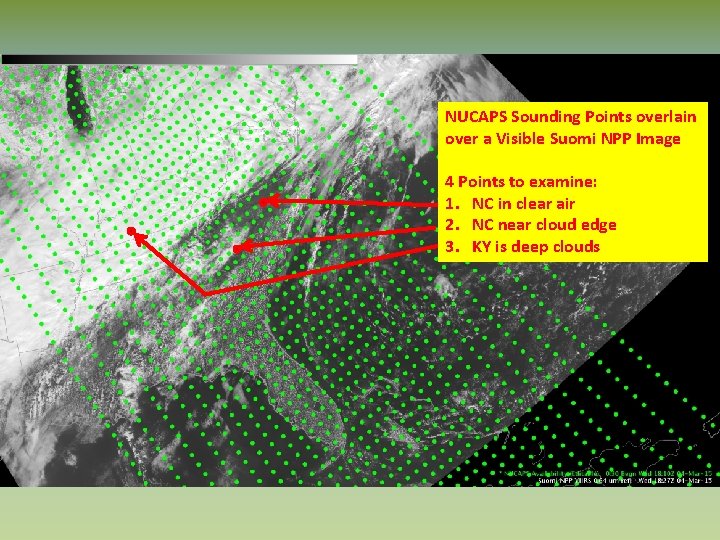
NUCAPS Sounding Points overlain over a Visible Suomi NPP Image 4 Points to examine: 1. NC in clear air 2. NC near cloud edge 3. KY is deep clouds
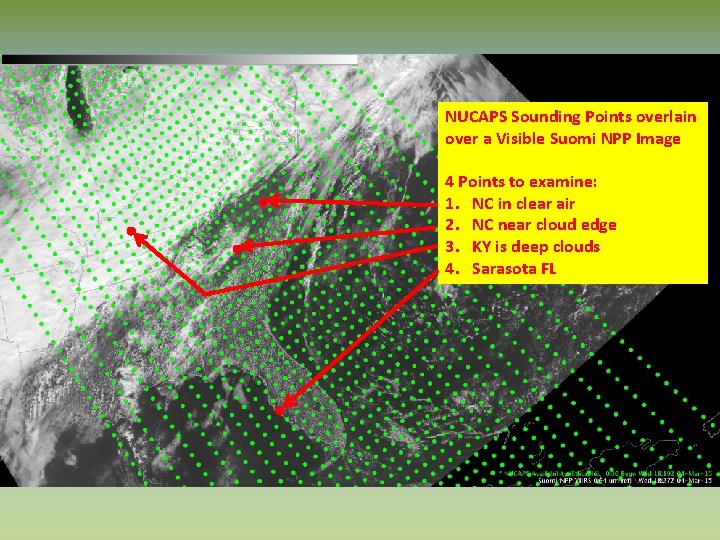
NUCAPS Sounding Points overlain over a Visible Suomi NPP Image 4 Points to examine: 1. NC in clear air 2. NC near cloud edge 3. KY is deep clouds 4. Sarasota FL
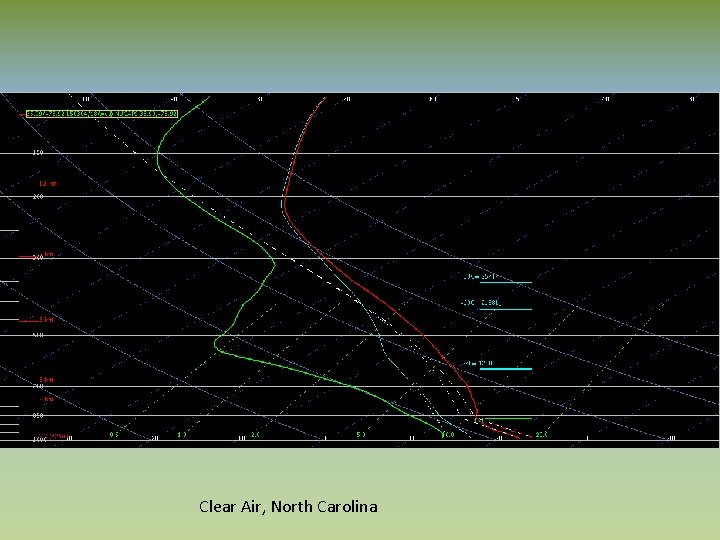
Clear Air, North Carolina
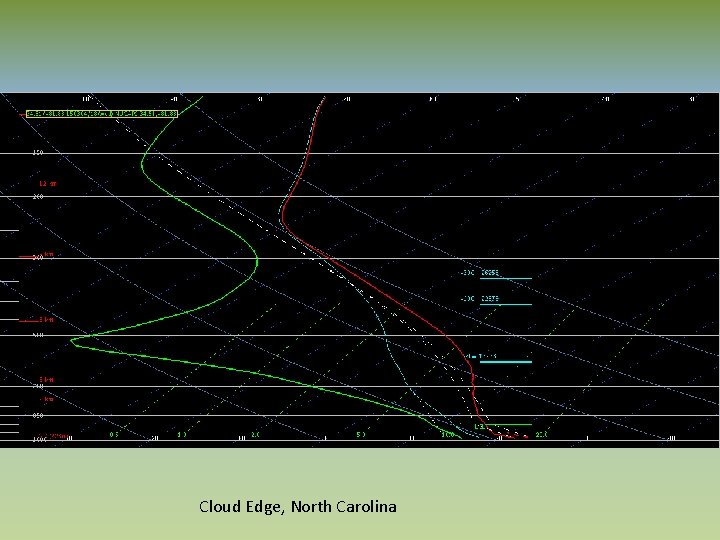
Cloud Edge, North Carolina
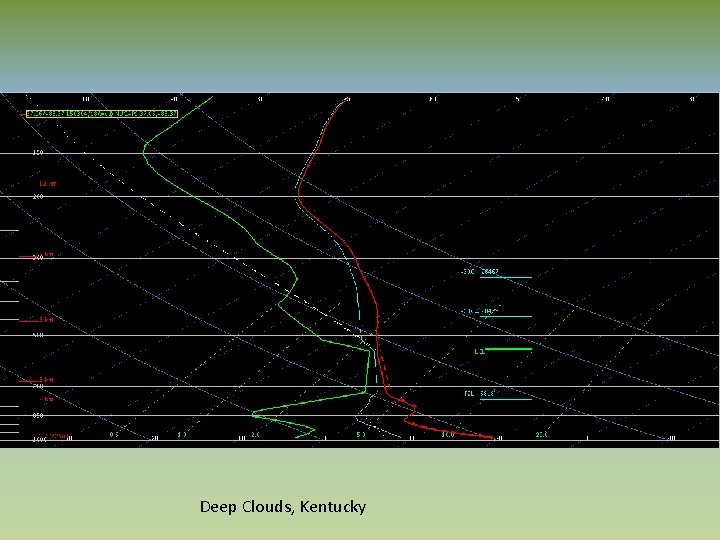
Deep Clouds, Kentucky
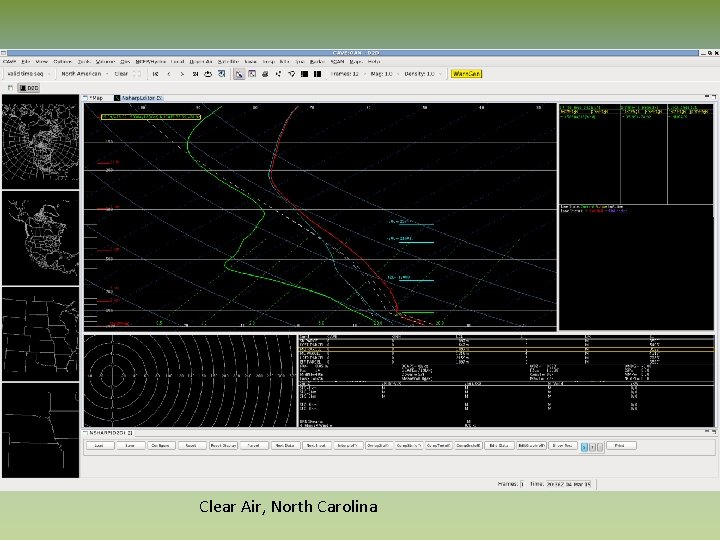
Clear Air, North Carolina
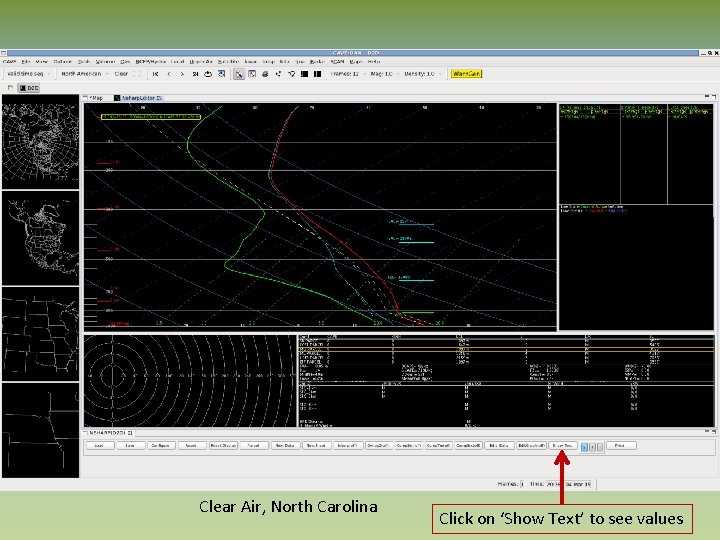
Clear Air, North Carolina Click on ‘Show Text’ to see values
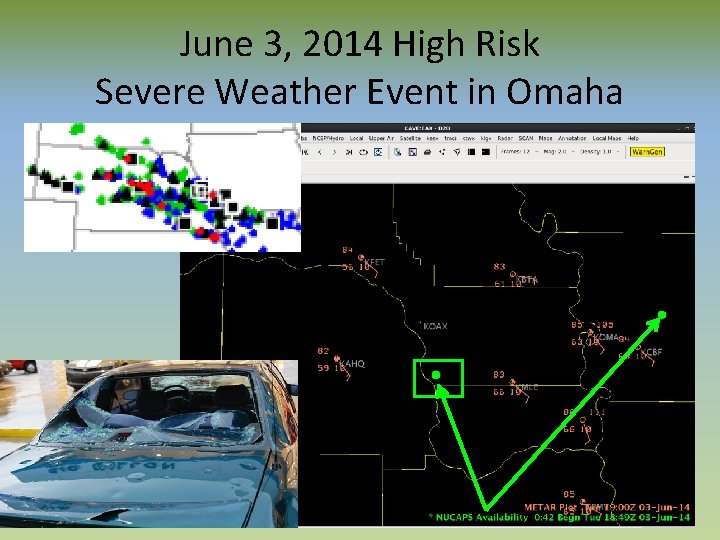
June 3, 2014 High Risk Severe Weather Event in Omaha
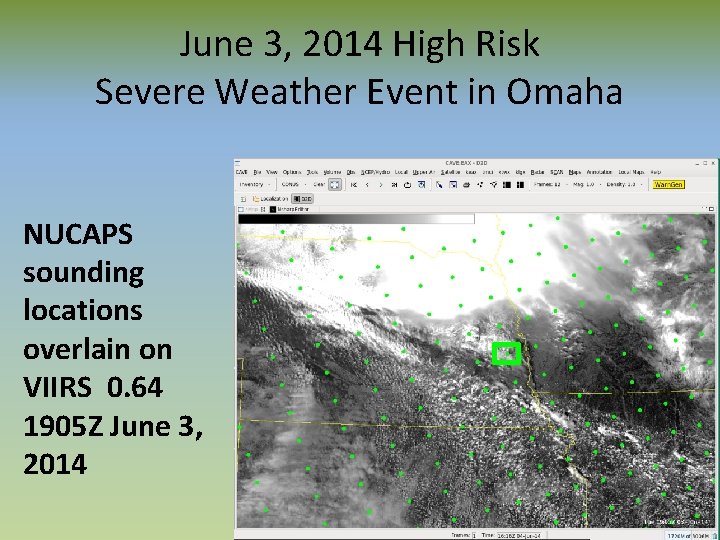
June 3, 2014 High Risk Severe Weather Event in Omaha NUCAPS sounding locations overlain on VIIRS 0. 64 1905 Z June 3, 2014
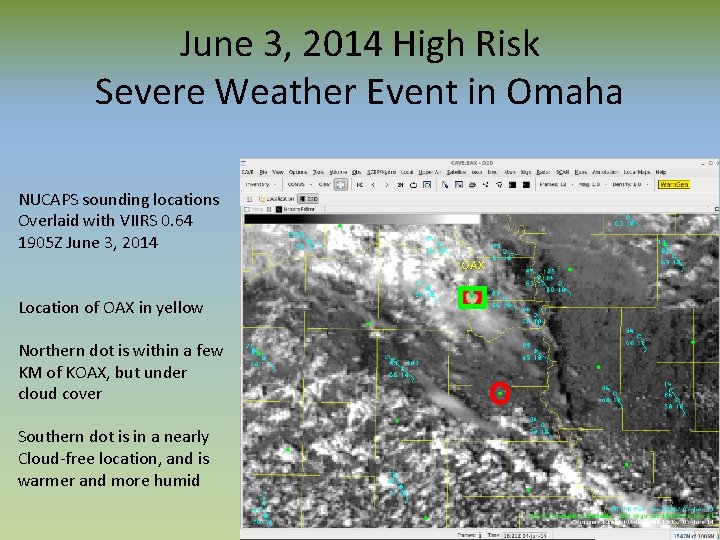
June 3, 2014 High Risk Severe Weather Event in Omaha NUCAPS sounding locations Overlaid with VIIRS 0. 64 1905 Z June 3, 2014 OAX Location of OAX in yellow Northern dot is within a few KM of KOAX, but under cloud cover Southern dot is in a nearly Cloud-free location, and is warmer and more humid
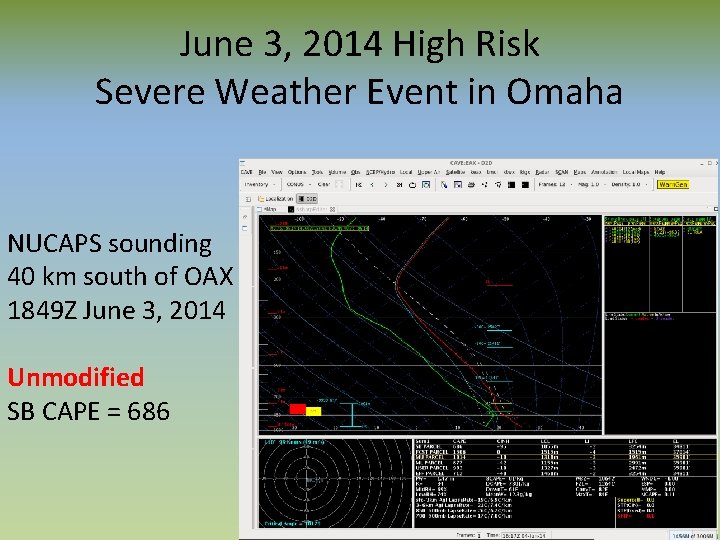
June 3, 2014 High Risk Severe Weather Event in Omaha NUCAPS sounding 40 km south of OAX 1849 Z June 3, 2014 Unmodified SB CAPE = 686
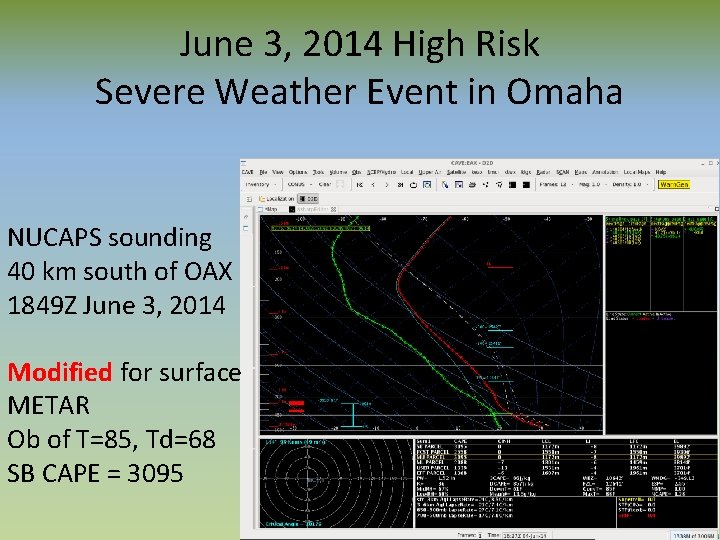
June 3, 2014 High Risk Severe Weather Event in Omaha NUCAPS sounding 40 km south of OAX 1849 Z June 3, 2014 Modified for surface METAR Ob of T=85, Td=68 SB CAPE = 3095
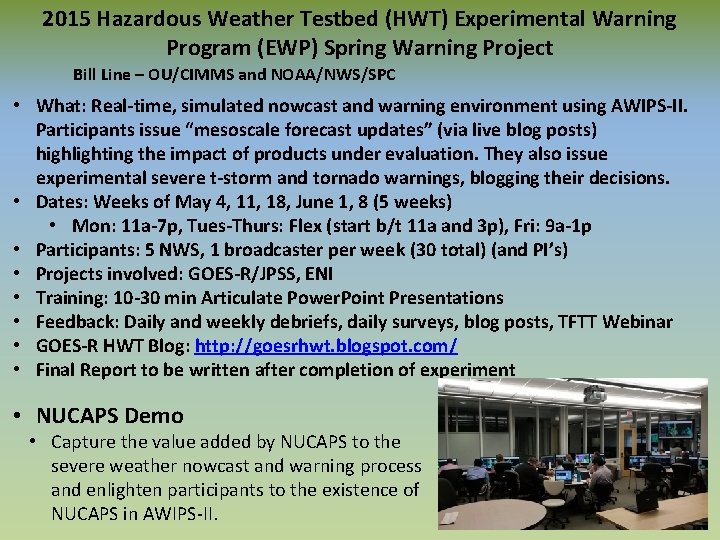
2015 Hazardous Weather Testbed (HWT) Experimental Warning Program (EWP) Spring Warning Project Bill Line – OU/CIMMS and NOAA/NWS/SPC • What: Real-time, simulated nowcast and warning environment using AWIPS-II. Participants issue “mesoscale forecast updates” (via live blog posts) highlighting the impact of products under evaluation. They also issue experimental severe t-storm and tornado warnings, blogging their decisions. • Dates: Weeks of May 4, 11, 18, June 1, 8 (5 weeks) • Mon: 11 a-7 p, Tues-Thurs: Flex (start b/t 11 a and 3 p), Fri: 9 a-1 p • Participants: 5 NWS, 1 broadcaster per week (30 total) (and PI’s) • Projects involved: GOES-R/JPSS, ENI • Training: 10 -30 min Articulate Power. Point Presentations • Feedback: Daily and weekly debriefs, daily surveys, blog posts, TFTT Webinar • GOES-R HWT Blog: http: //goesrhwt. blogspot. com/ • Final Report to be written after completion of experiment • NUCAPS Demo • Capture the value added by NUCAPS to the severe weather nowcast and warning process and enlighten participants to the existence of NUCAPS in AWIPS-II.
A lot of Feedback • ~50 NUCAPS related blog posts – – – http: //goesrhwt. blogspot. com/search/label/NUCAPS Comparisons with special midday RAOB soundings Comparisons with modified morning soundings Comparisons with NWP data Used to get an update on the current thermodynamic state of the atmosphere, filling both spatial and temporal gaps • Tales from the Testbed Webinars: – http: //hwt. nssl. noaa. gov/ewp/ • In general, forecasters have felt that, when modified, the profiles provide an adequate and useful representation of the current state of the atmosphere … • … leading them to see the value in having this information to fill the spatiotemporal gap that exists in observed sounding information.
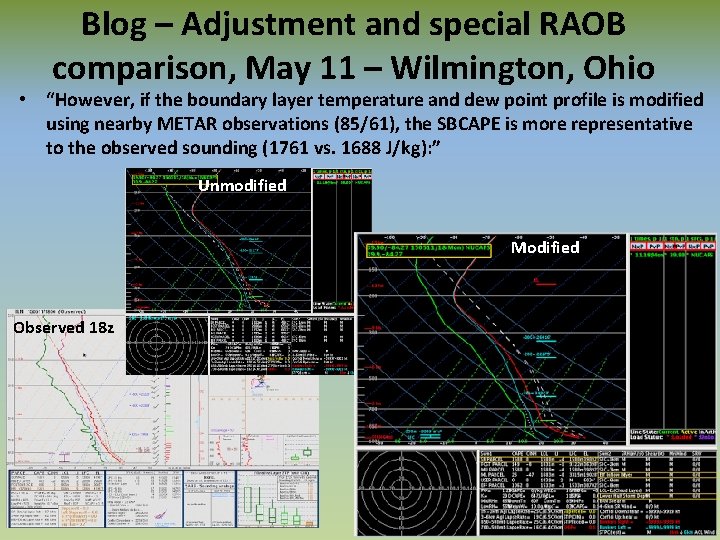
Blog – Adjustment and special RAOB comparison, May 11 – Wilmington, Ohio • “However, if the boundary layer temperature and dew point profile is modified using nearby METAR observations (85/61), the SBCAPE is more representative to the observed sounding (1761 vs. 1688 J/kg): ” Unmodified Modified Observed 18 z
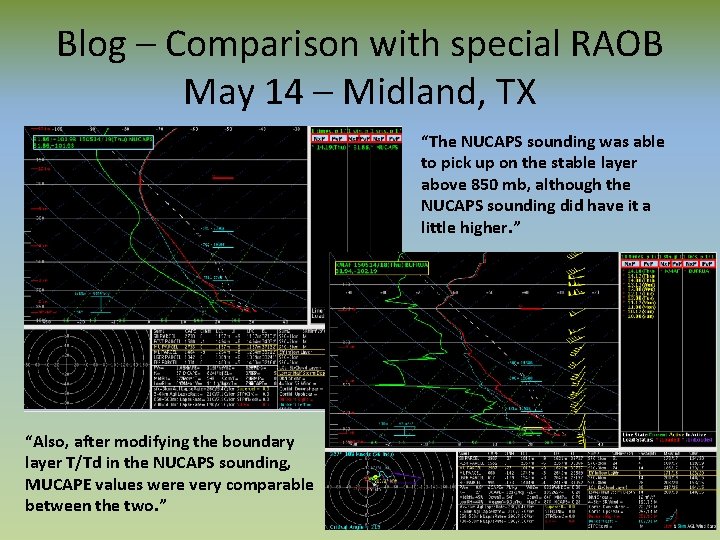
Blog – Comparison with special RAOB May 14 – Midland, TX “The NUCAPS sounding was able to pick up on the stable layer above 850 mb, although the NUCAPS sounding did have it a little higher. ” “Also, after modifying the boundary layer T/Td in the NUCAPS sounding, MUCAPE values were very comparable between the two. ”
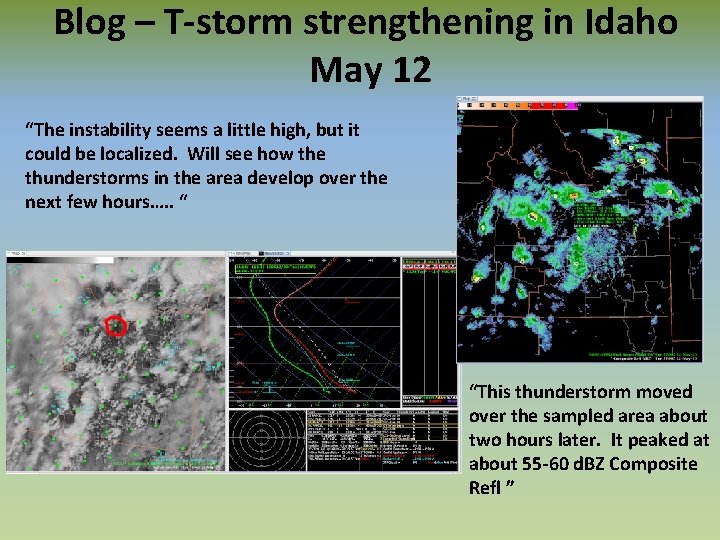
Blog – T-storm strengthening in Idaho May 12 “The instability seems a little high, but it could be localized. Will see how the thunderstorms in the area develop over the next few hours…. . “ “This thunderstorm moved over the sampled area about two hours later. It peaked at about 55 -60 d. BZ Composite Refl ”
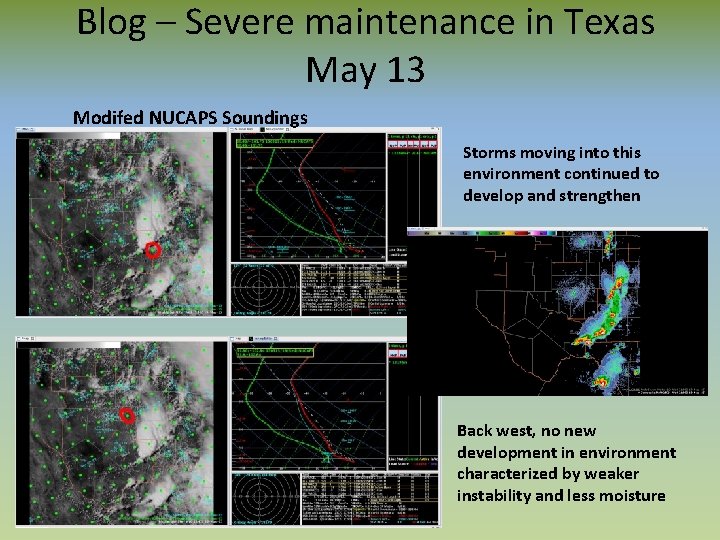
Blog – Severe maintenance in Texas May 13 Modifed NUCAPS Soundings Storms moving into this environment continued to develop and strengthen Back west, no new development in environment characterized by weaker instability and less moisture
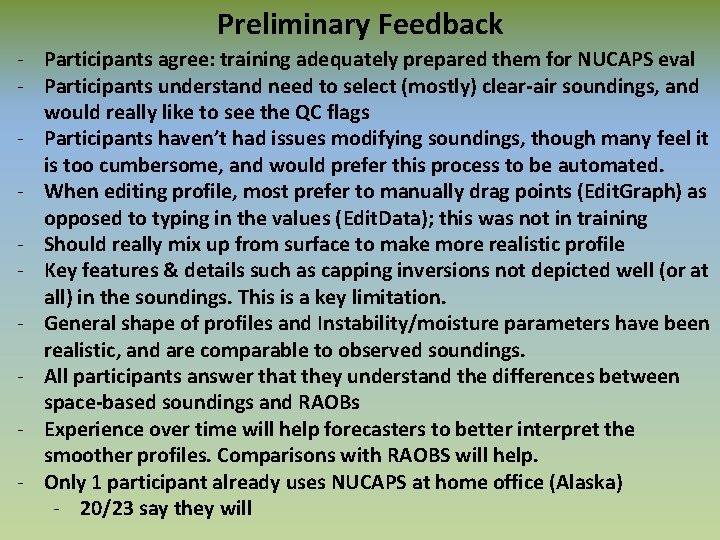
Preliminary Feedback - Participants agree: training adequately prepared them for NUCAPS eval - Participants understand need to select (mostly) clear-air soundings, and would really like to see the QC flags - Participants haven’t had issues modifying soundings, though many feel it is too cumbersome, and would prefer this process to be automated. - When editing profile, most prefer to manually drag points (Edit. Graph) as opposed to typing in the values (Edit. Data); this was not in training - Should really mix up from surface to make more realistic profile - Key features & details such as capping inversions not depicted well (or at all) in the soundings. This is a key limitation. - General shape of profiles and Instability/moisture parameters have been realistic, and are comparable to observed soundings. - All participants answer that they understand the differences between space-based soundings and RAOBs - Experience over time will help forecasters to better interpret the smoother profiles. Comparisons with RAOBS will help. - Only 1 participant already uses NUCAPS at home office (Alaska) - 20/23 say they will
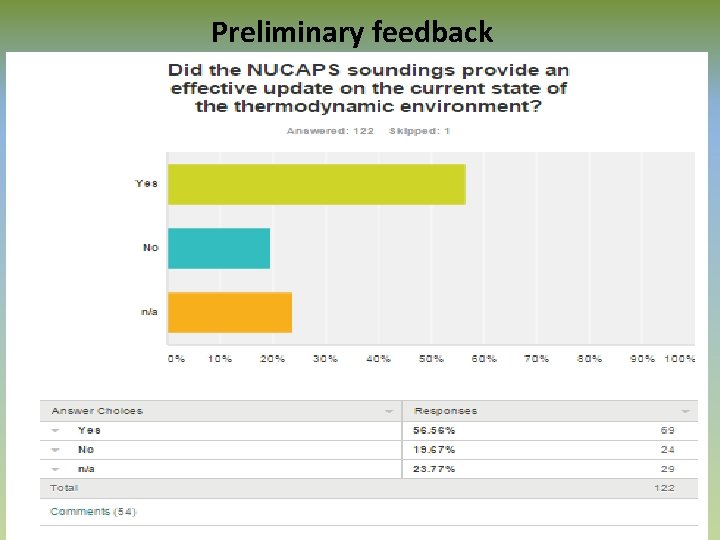
Preliminary feedback
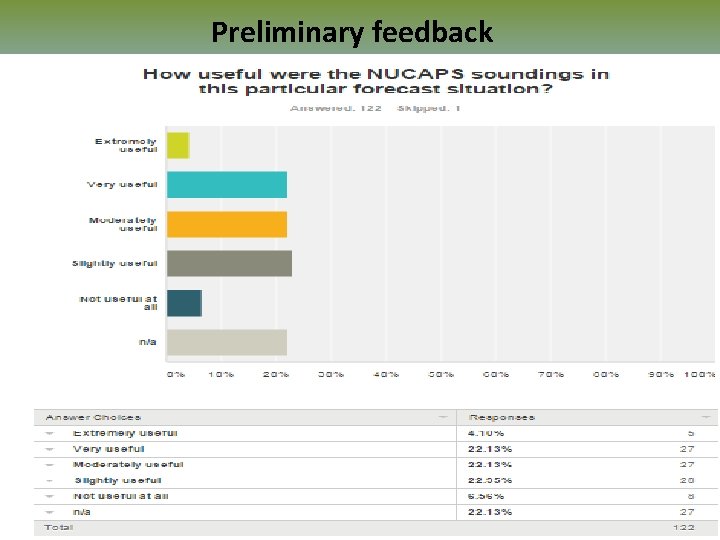
Preliminary feedback
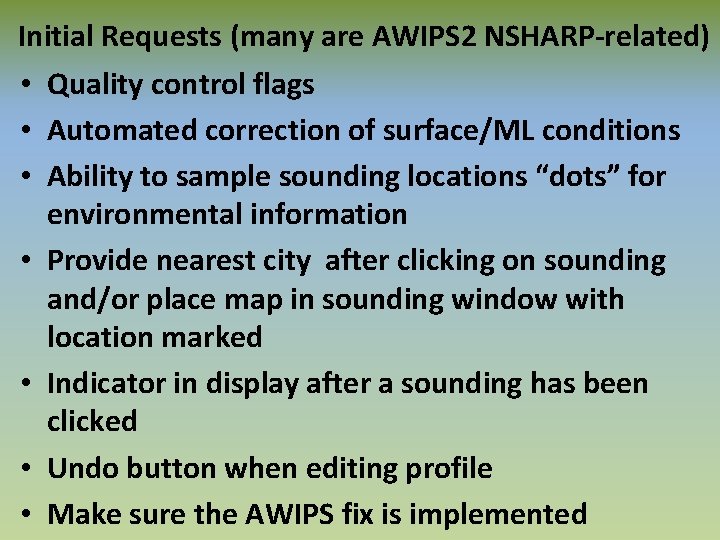
Initial Requests (many are AWIPS 2 NSHARP-related) • Quality control flags • Automated correction of surface/ML conditions • Ability to sample sounding locations “dots” for environmental information • Provide nearest city after clicking on sounding and/or place map in sounding window with location marked • Indicator in display after a sounding has been clicked • Undo button when editing profile • Make sure the AWIPS fix is implemented
THANK YOU www. weather. gov 35
- Slides: 35