
NUABuffalo Partnership Sessions Presenters Augusta Mann Nell Collier

NUA/Buffalo Partnership Sessions Presenters: Augusta Mann, Nell Collier, Camile Earle-Dennis Director: Mamie Merrifield
Main Goal of The Day
“Silent Walk”
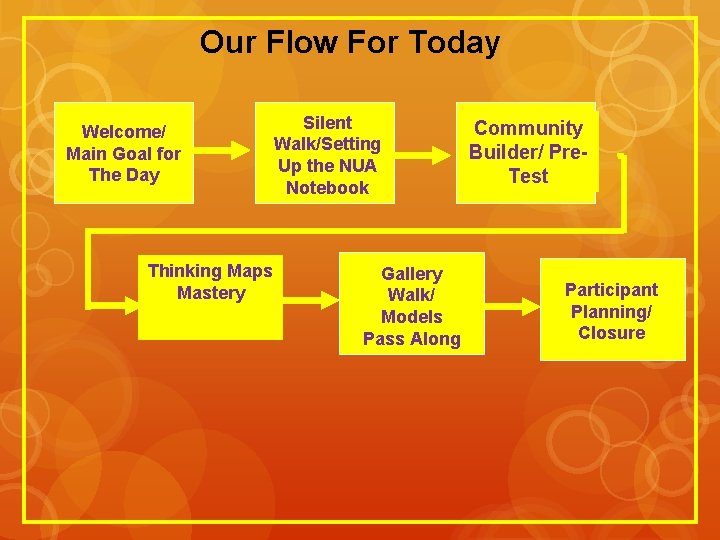
Our Flow For Today Welcome/ Main Goal for The Day Thinking Maps Mastery Silent Walk/Setting Up the NUA Notebook Gallery Walk/ Models Pass Along Community Builder/ Pre. Test Participant Planning/ Closure
Community Builder: RRRR Relay, Race for Review, and Retention
What Did You Know and When Did You Know It? Thinking Maps Pre-Test
Thinking Maps Mastery
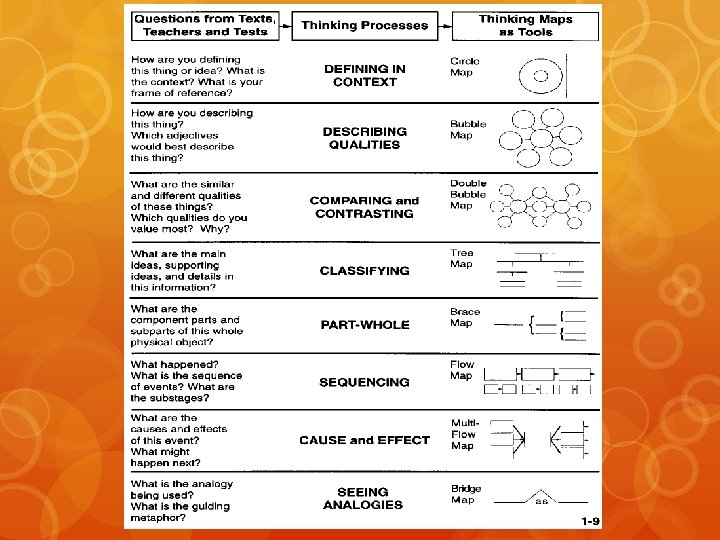
“Thinking Maps are visualverbal organizers that support the brain’s natural learning processes. ” - Dr. Yvette Jackson The Pedagogy of Confidence™
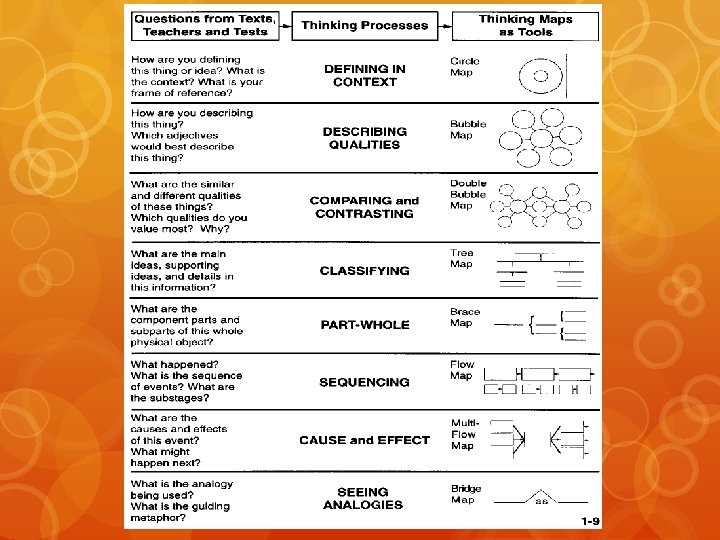
“Thinking Maps are based on the eight fundamental cognitive processes that form the core of cognition and learning: defining a concept [circle map], describing qualities or attributes [bubble map], comparing and contrasting [double bubble map], sequencing [flow map], classifying [tree map], part-whole relationships [brace map], cause and effect [multi-flow map], and seeing analogies [bridge map]. ” - Dr. Yvette Jackson The Pedagogy of Confidence™
Explicit Strategy Instruction Today I am going to teach you how to use a Flow Map. A Flow Map is used for sequencing. It is useful for identifying substages. This is the primitive for Flow Maps.
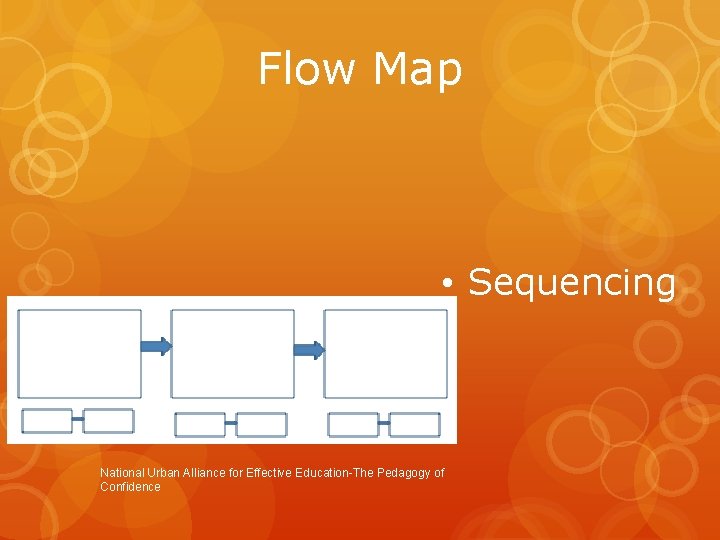
Flow Map • Sequencing National Urban Alliance for Effective Education-The Pedagogy of Confidence
NOTE MAKING GUIDE Notes: Page 59 For the FLOW MAP A Flow Map can be used to show sequences, steps, comparisons or degrees. The Flow Map can be drawn from left to right, in a cycle, or in a rising and falling action form as long as each box is connected to another using an arrow. What is the name of the event or sequence? What are the stages of each event? What prior knowledge and/or experiences influence your understanding about this processes or series of events? The sub-stages in the Flow Map must also be in a sequence, not just a list of details.
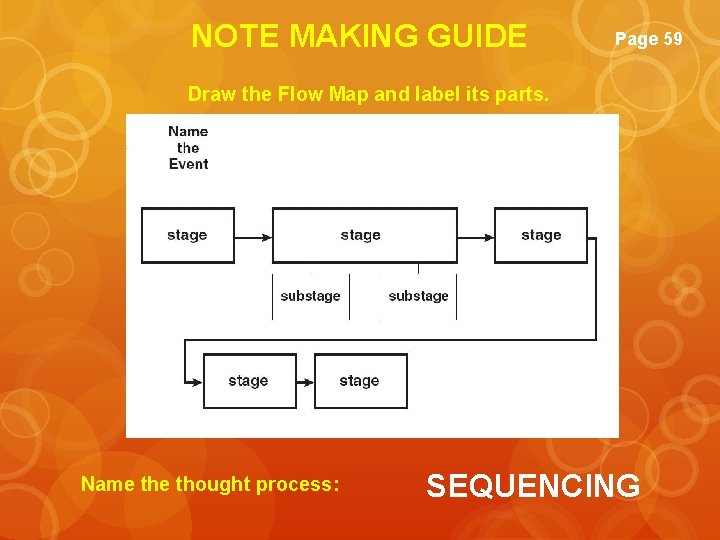
NOTE MAKING GUIDE Page 59 Draw the Flow Map and label its parts. Name thought process: SEQUENCING
Thought process: Sequencing When do you use sequencing in: READING? WRITING? SCIENCE? MATH? SOCIAL STUDIES? THE ARTS? In every instance, you could use a FLOW MAP
FLOW MAP: Civil Rights Movement sequence events on the time line
Explicit Strategy Instruction Today I am going to teach you how to use Frame of Reference. A Frame of Reference is used for exploring multiple perspectives, evaluating/questioning sources of information. It is also used to provide info about prior knowledge and to acknowledge the source(s) of that info. This is the primitive for a Frame of Reference:
FRAME OF REFERENCE
“The frame around the outside is used to generate discussion about the different experiences, perceptions, and points of view individuals have related to the concept. ” - Dr. Yvette Jackson
“… I have found that the most provocative question for developing the frame is to ask why or how the examples in the outside circle relate to or reflect the targeted concept in the central circle. This generates analytical thinking that assists in synthesizing ideas into definitions of or generalizations about the concept or theme of focus. ” - Dr. Yvette Jackson
Adding a Frame of Reference • How do you know what you know about this topic? • Did your information come from a specific source? • Is this information being influenced by a specific point of view? • Who could use this information? • Why is this information important?
FLOW MAP: Civil Rights Movement sequence events on the time line
FRAME OF REFERENCE Framing Question: What do you see as an impact of the Civil Rights Movement? DISCUSS in small Groups Write your responses
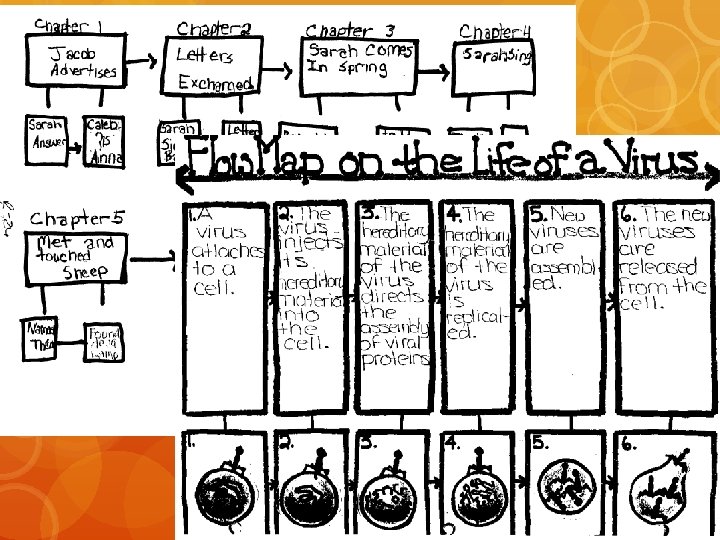
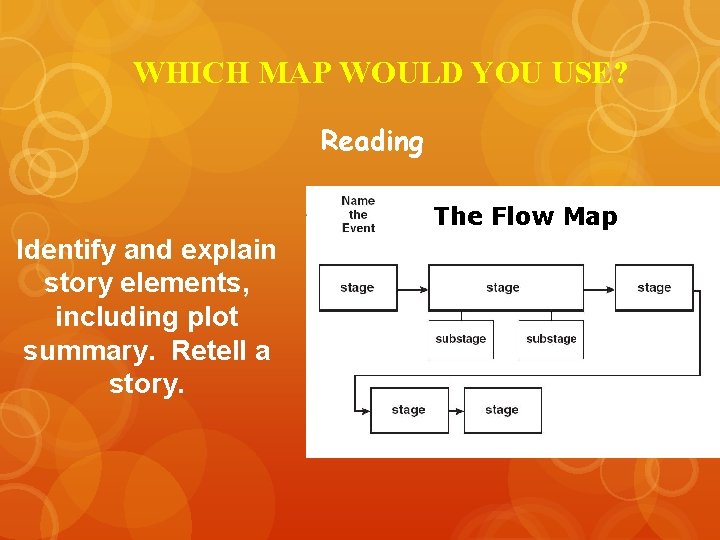
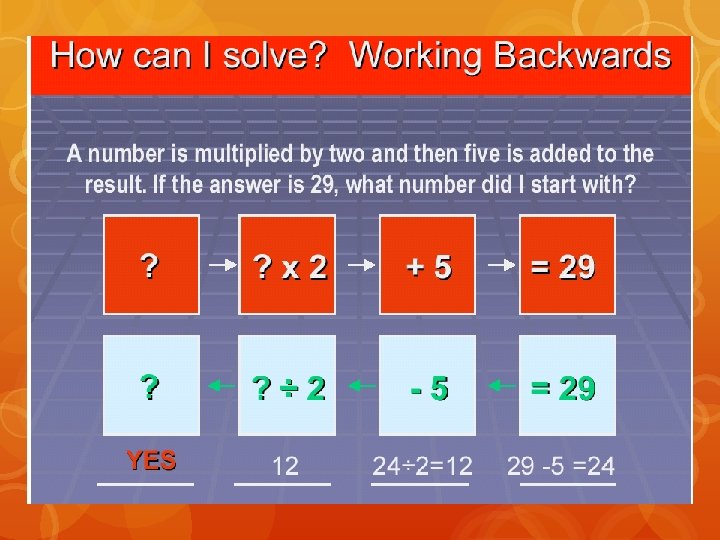
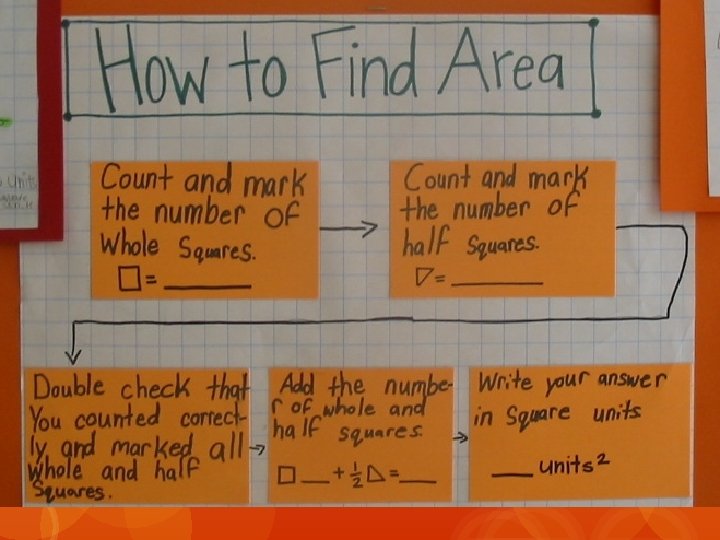
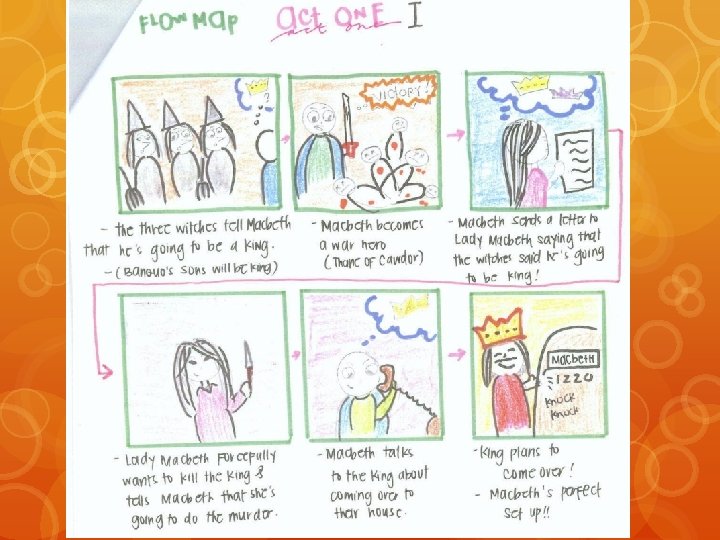
WHICH MAP WOULD YOU USE? Reading The Flow Map Identify and explain story elements, including plot summary. Retell a story.
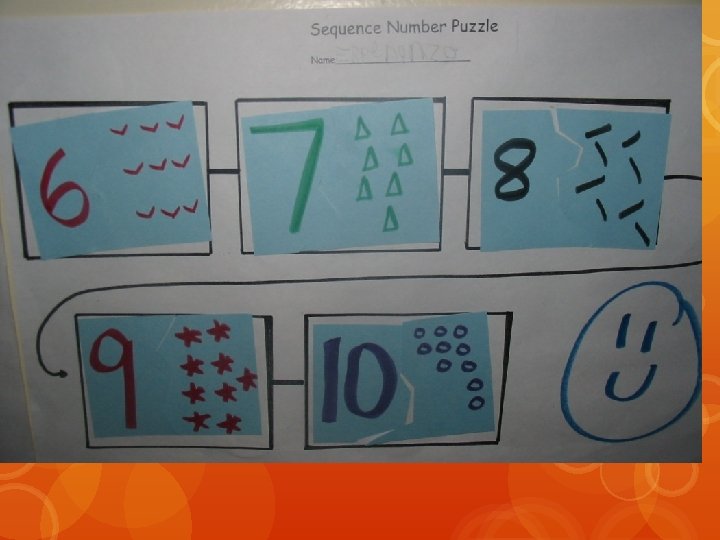
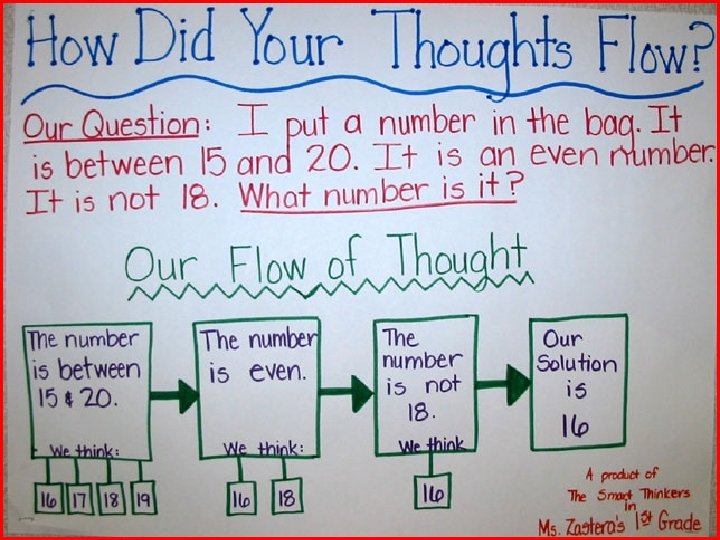
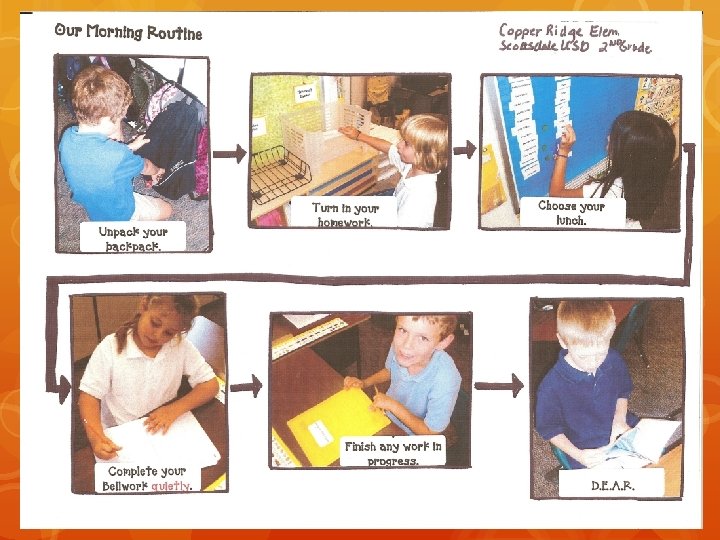
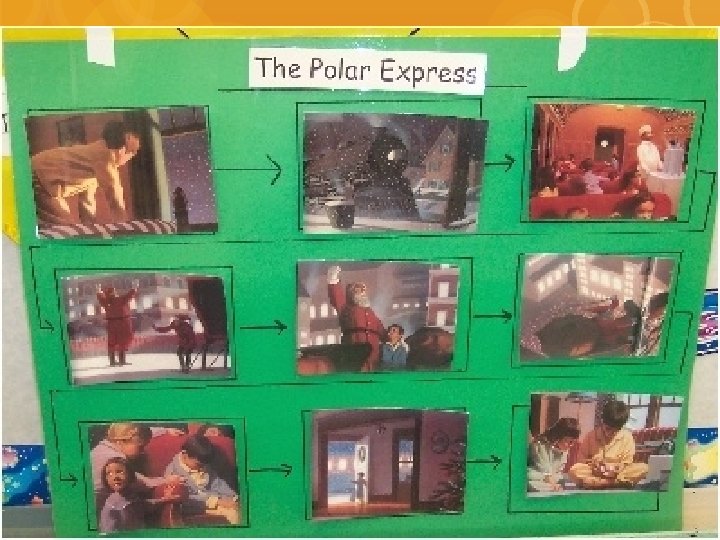
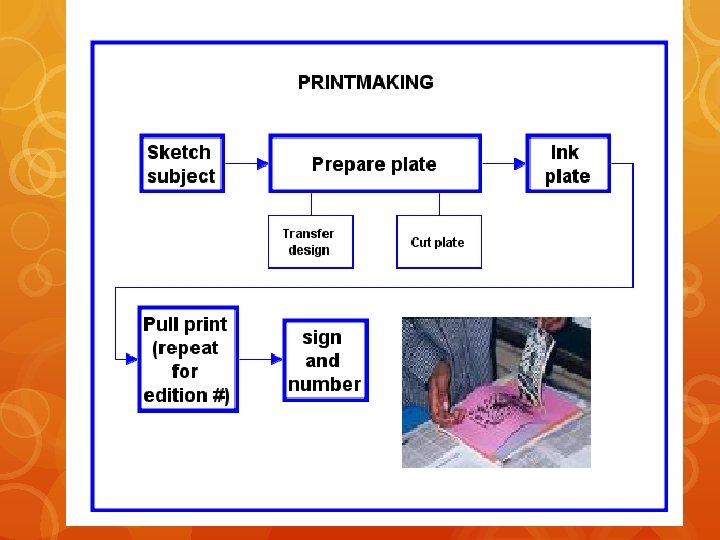
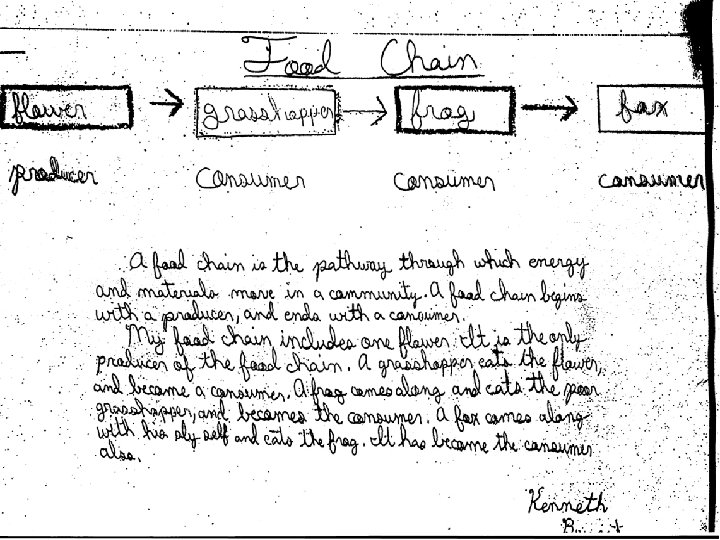
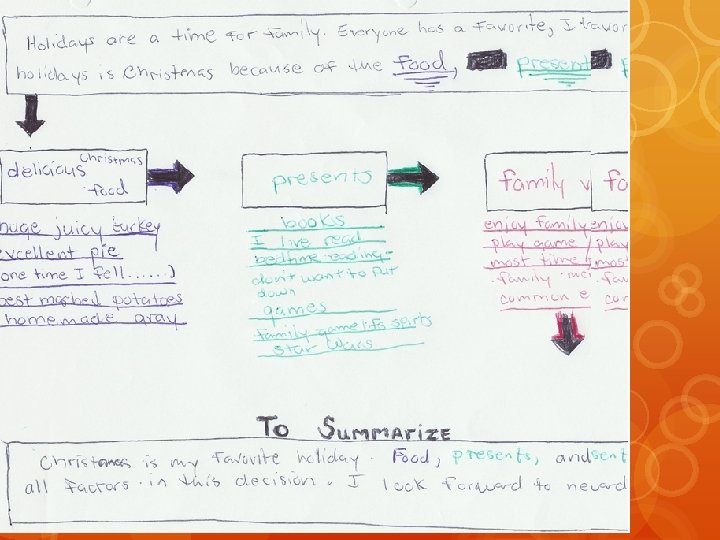
National Urban Alliance for Effective Education-The Pedagogy of Confidence
National Urban Alliance for Effective Education-The Pedagogy of Confidence
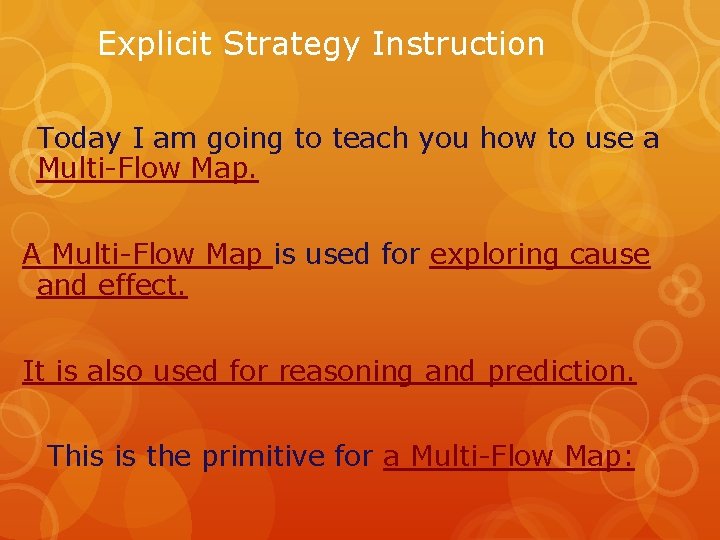
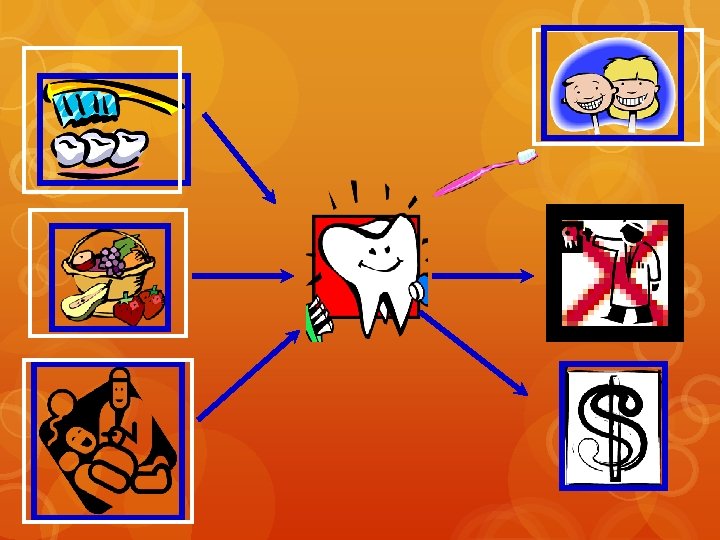
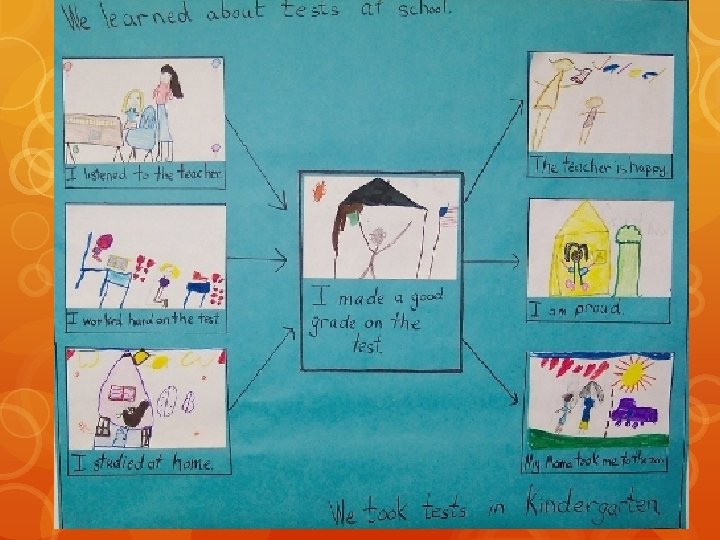
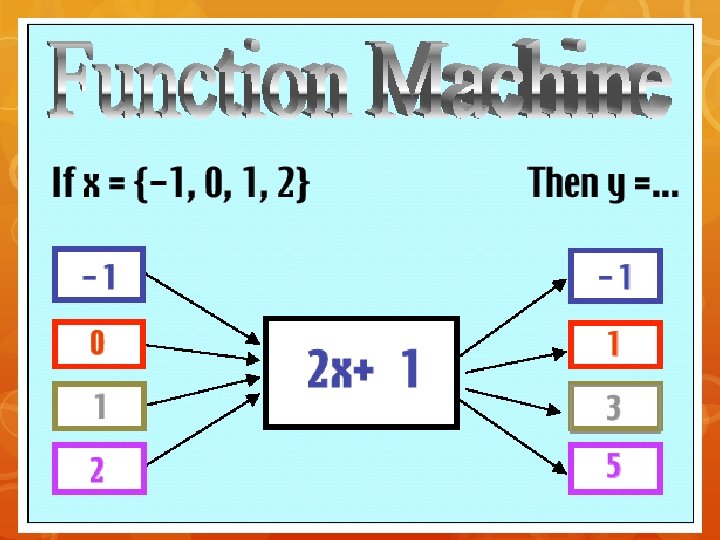
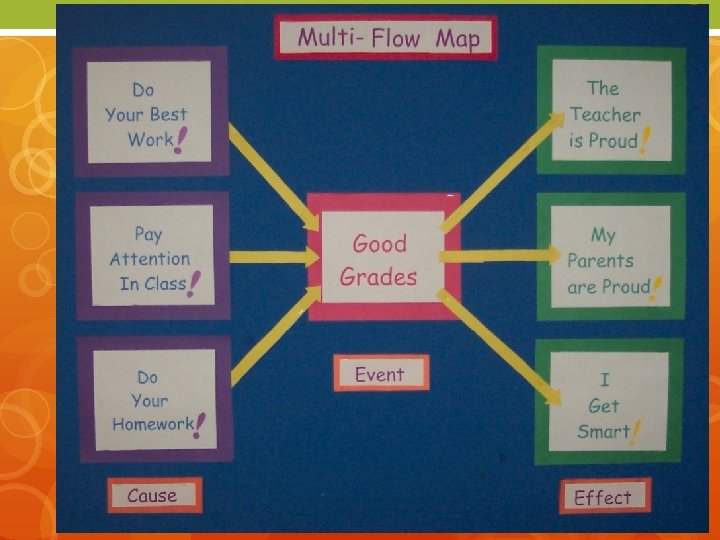
Explicit Strategy Instruction Today I am going to teach you how to use a Multi-Flow Map. A Multi-Flow Map is used for exploring cause and effect. It is also used for reasoning and prediction. This is the primitive for a Multi-Flow Map:
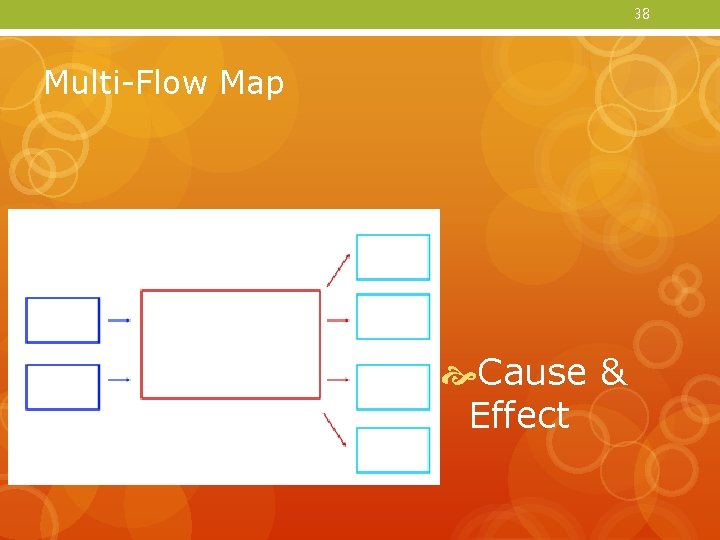
38 Multi-Flow Map Cause & Effect
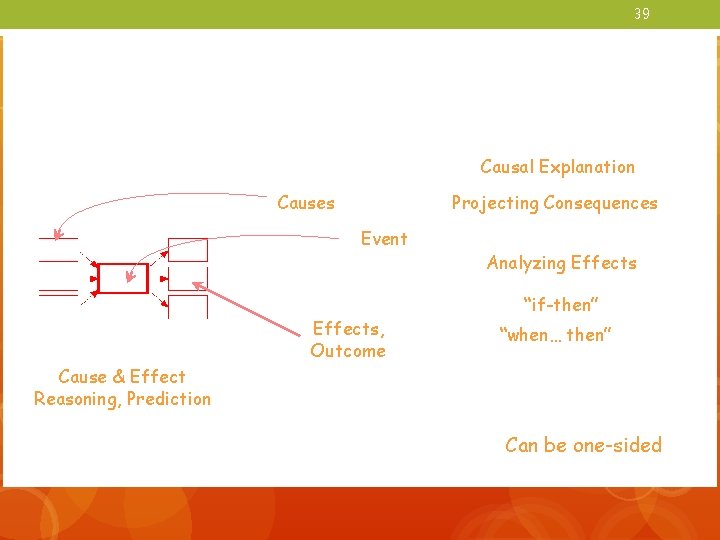
39 Notemaking Guide for Learning Thinking Maps Multi-Flow Map LOOKS LIKE: SEE SECTION 1: 1 -18 TO 1 -23 NOTES: Causes Projecting Consequences Event THINKING PROCESS: Causal Explanation Effects, Outcome Analyzing Effects “if-then” “when… then” Cause & Effect Reasoning, Prediction Can be one-sided
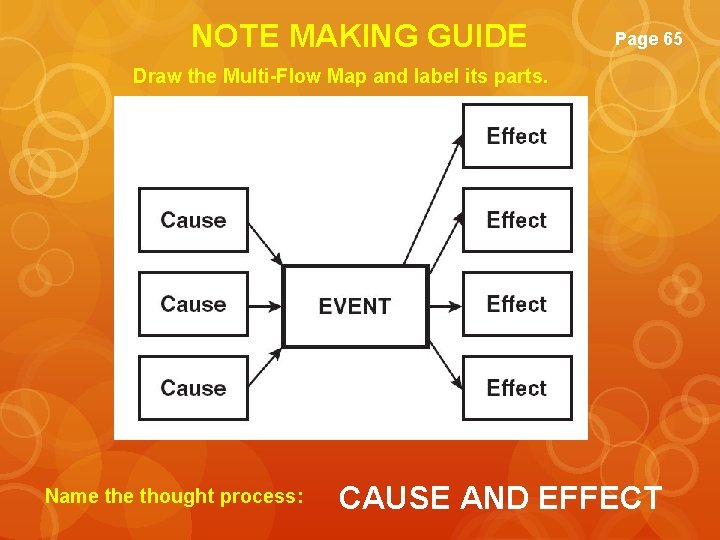
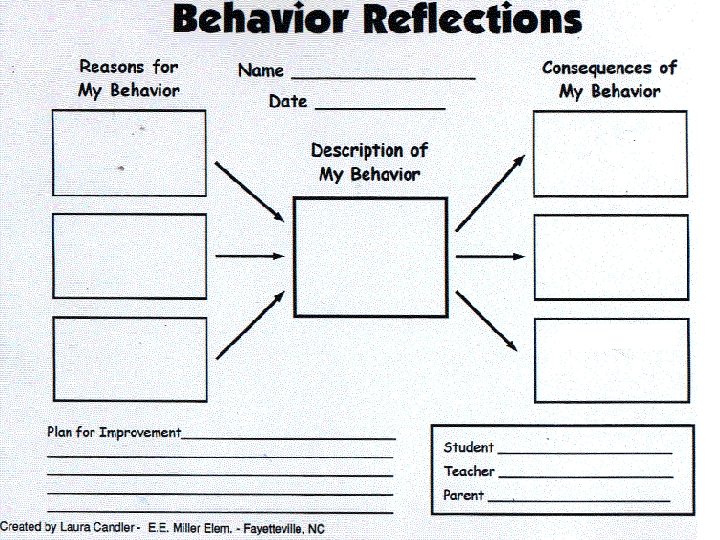
NOTE MAKING GUIDE Page 65 Draw the Multi-Flow Map and label its parts. Name thought process: CAUSE AND EFFECT
NOTE MAKING GUIDE Page 65 Notes: The Multi-Flow Map helps students identify the causes and effects of an event. When constructing the map, always focus first on the event. The causes and effects do not have to balance. Students may also construct a one-sided Multi-Flow. What are the causes and effects of this event? Where did you get your information? Did a specific time period influence the causes and/or effects? The event is the key to this map. It must be a “happening. ” The event should be “the flooding of the Nile” instead of just “the Nile. ”
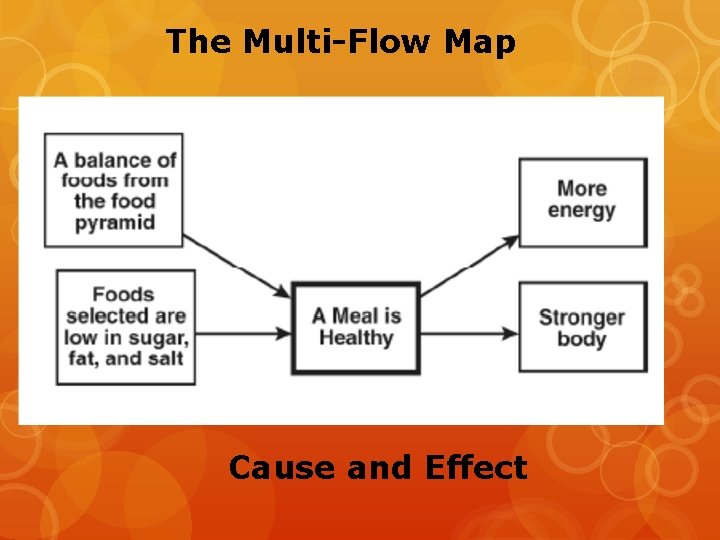
The Multi-Flow Map Cause and Effect
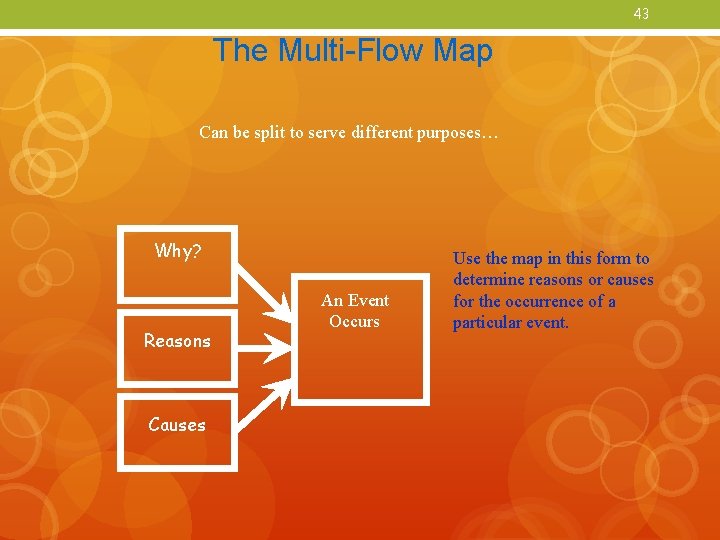
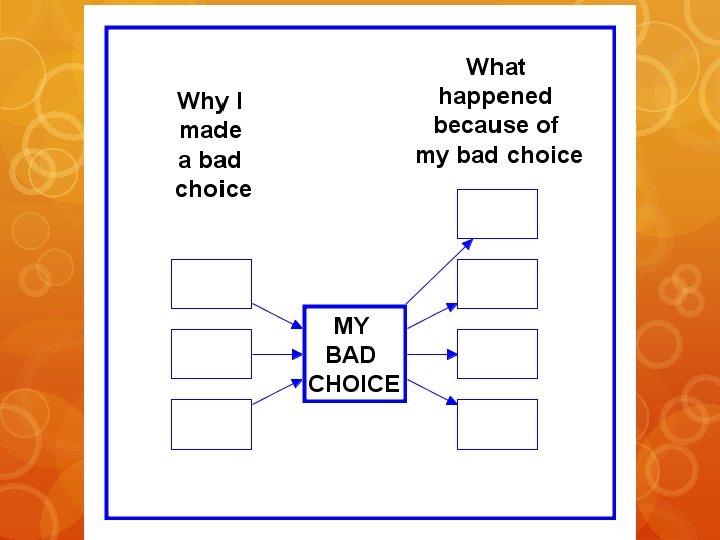
43 The Multi-Flow Map Can be split to serve different purposes… Why? Reasons Causes An Event Occurs Use the map in this form to determine reasons or causes for the occurrence of a particular event.
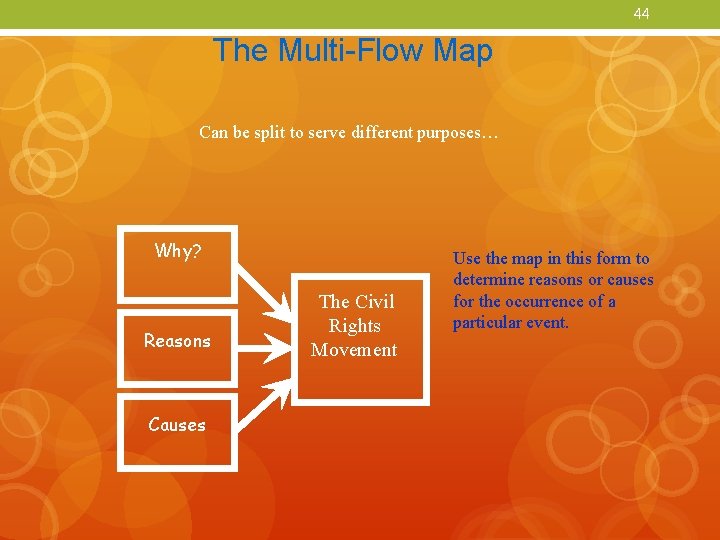
44 The Multi-Flow Map Can be split to serve different purposes… Why? Reasons Causes The Civil Rights Movement Use the map in this form to determine reasons or causes for the occurrence of a particular event.
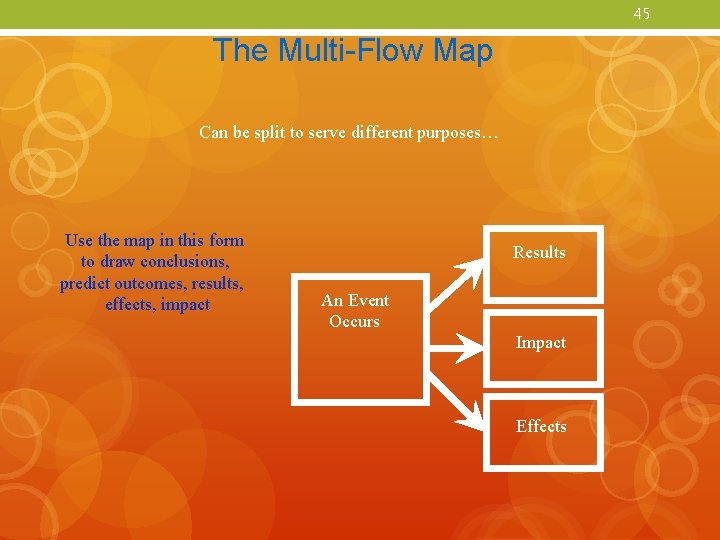
45 The Multi-Flow Map Can be split to serve different purposes… Use the map in this form to draw conclusions, predict outcomes, results, effects, impact Results An Event Occurs Impact Effects
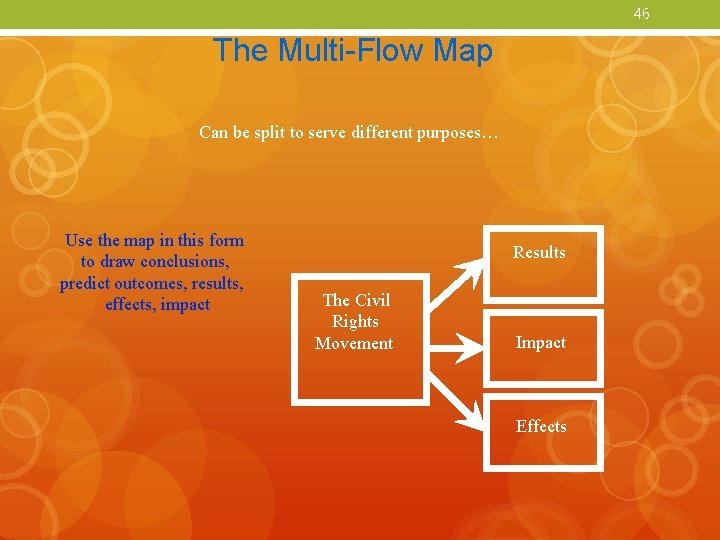
46 The Multi-Flow Map Can be split to serve different purposes… Use the map in this form to draw conclusions, predict outcomes, results, effects, impact Results The Civil Rights Movement Impact Effects
FRAME OF REFERENCE Framing Question: What are the causes and effects of the Civil Rights Movement? DISCUSS in small Groups Write your responses
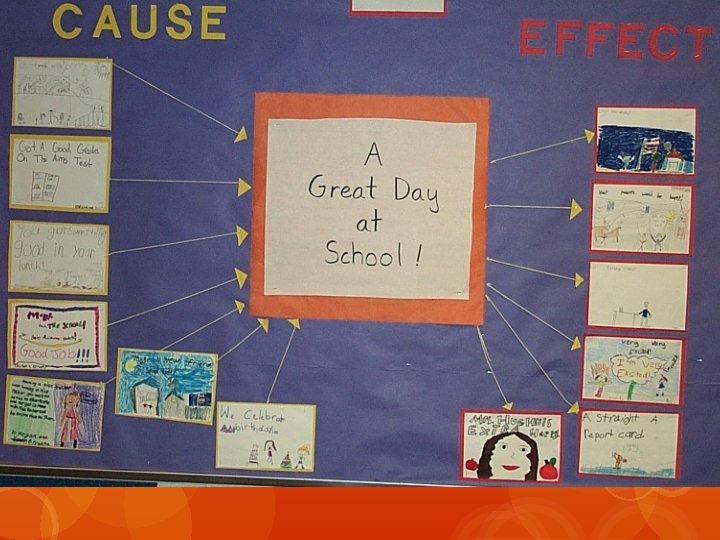
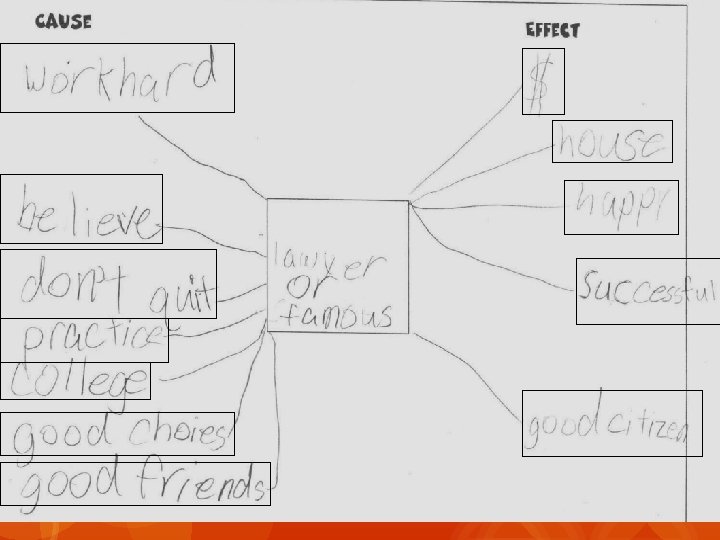
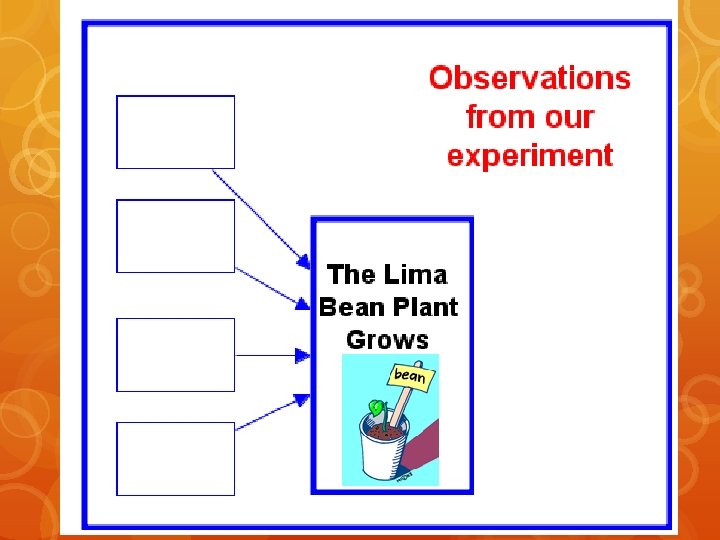
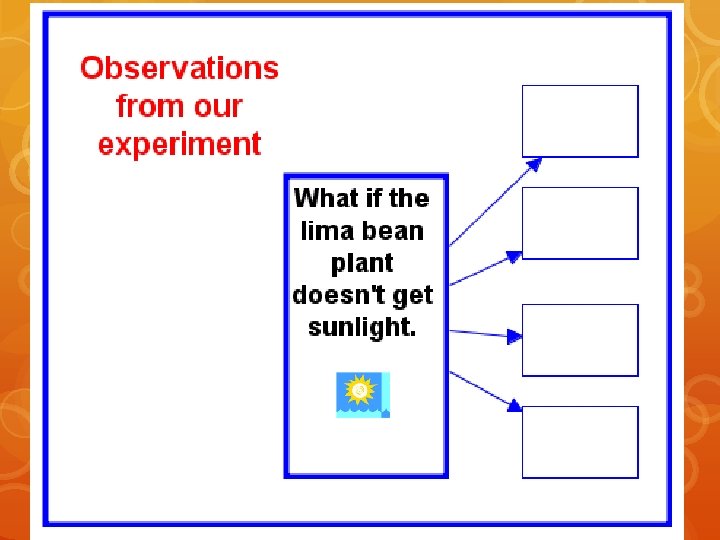
55
57

Flash Card Study

LUNCH
Explicit Strategy Instruction Today I am going to teach you how to use a Brace Map. A Brace Map is used for showing part to whole relationships. It is useful for identifying subparts of the whole physical OBJECT. This is the primitive for Brace Maps.
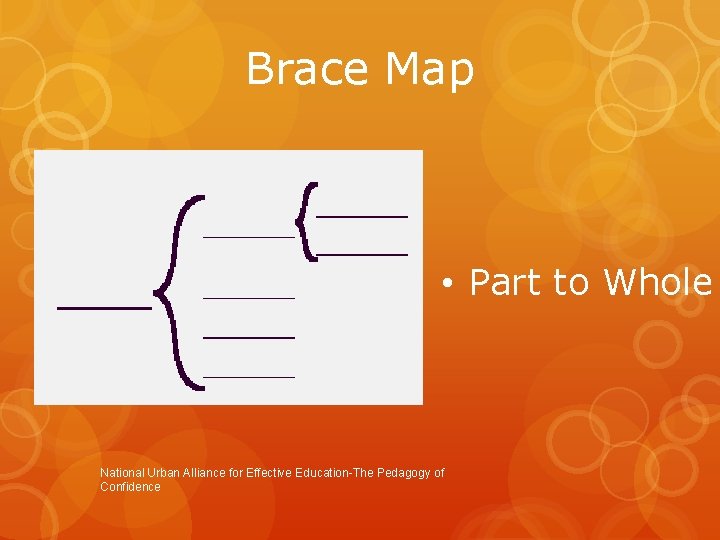
Brace Map • Part to Whole National Urban Alliance for Effective Education-The Pedagogy of Confidence
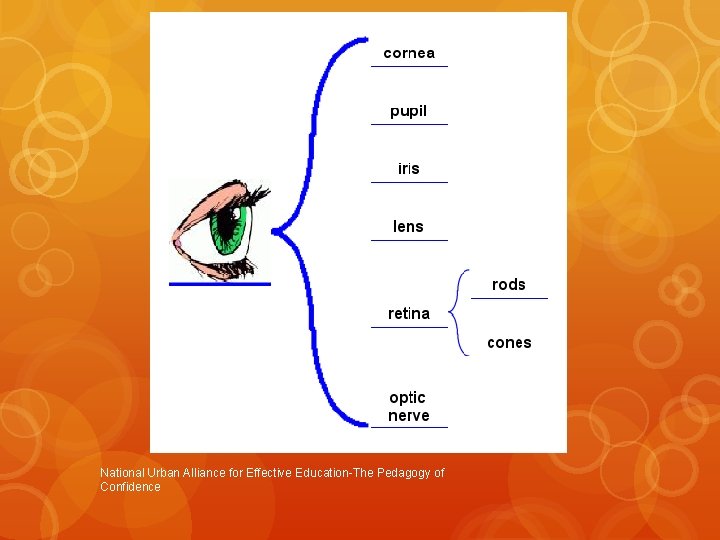
National Urban Alliance for Effective Education-The Pedagogy of Confidence
FRAME OF REFERENCE Framing Question: What are the main parts and subparts of the human eye? Here is a student response:
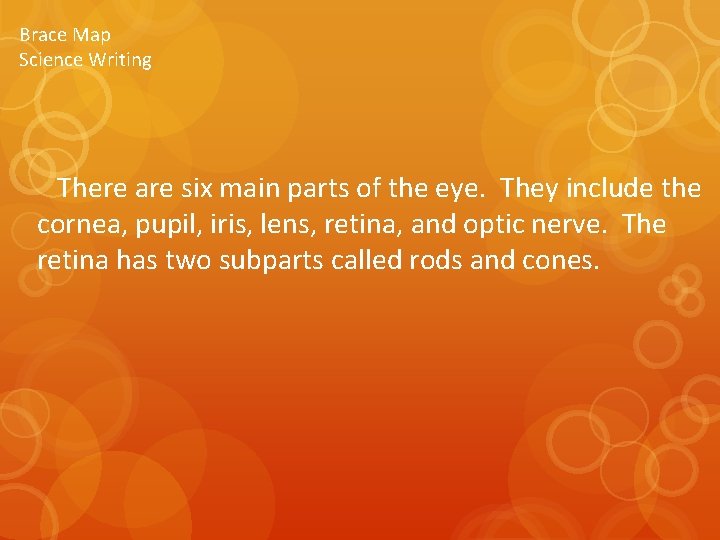
Brace Map Science Writing There are six main parts of the eye. They include the cornea, pupil, iris, lens, retina, and optic nerve. The retina has two subparts called rods and cones.
Now You Try
In small groups Create a Brace Map that depicts the part and subparts of the human body.
FRAME OF REFERENCE Framing Question: What are the main parts and subparts of the human body? Write your response and prepare to present your Maps and responses.
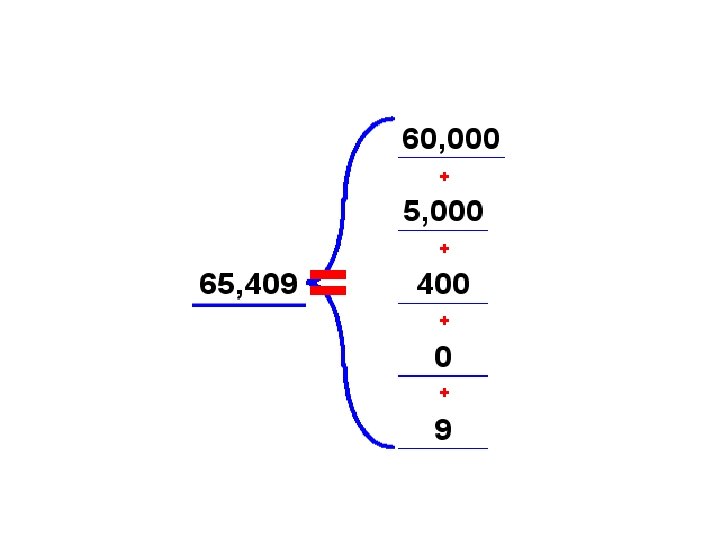
+ = + + + National Urban Alliance for Effective Education-The Pedagogy of Confidence
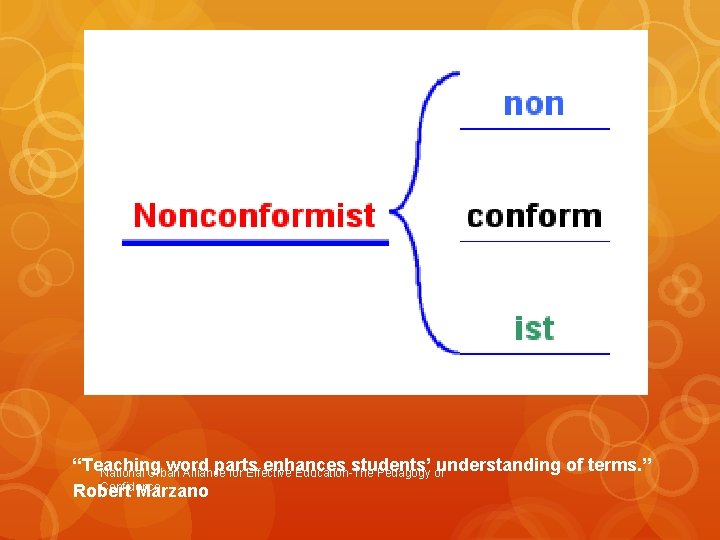
“Teaching word parts enhances students’ understanding of terms. ” National Urban Alliance for Effective Education-The Pedagogy of Confidence Robert Marzano
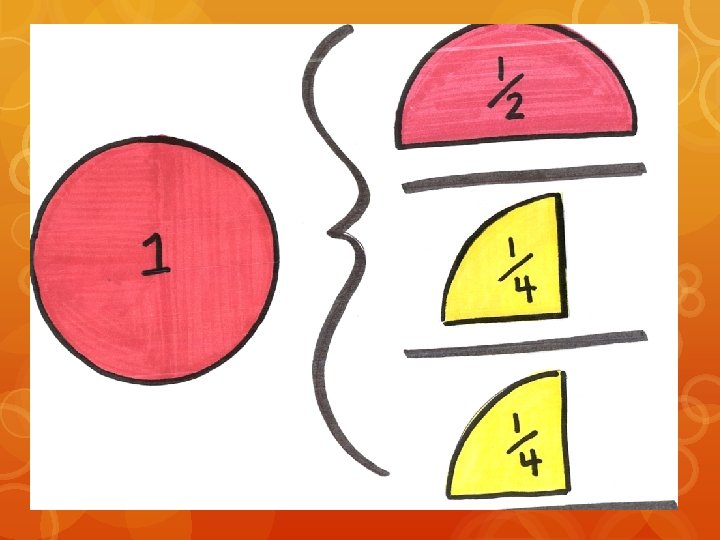
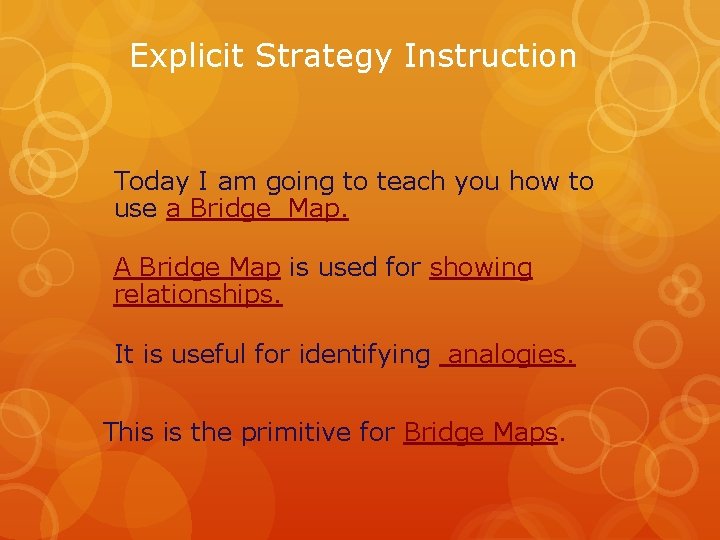
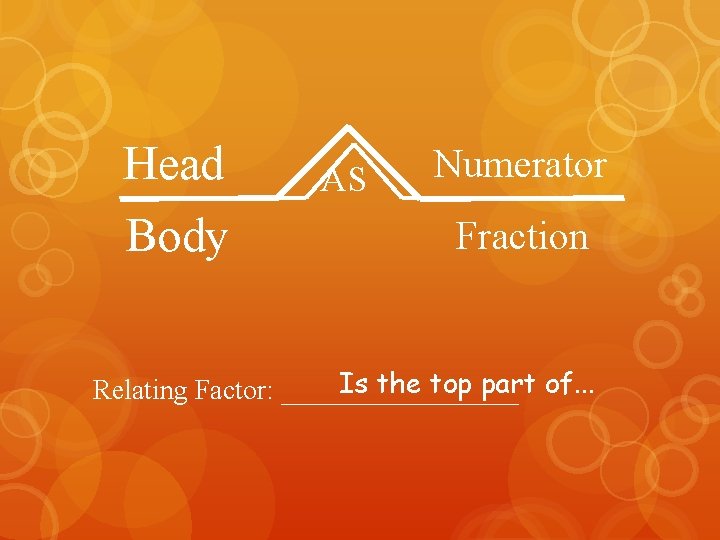
Explicit Strategy Instruction Today I am going to teach you how to use a Bridge Map. A Bridge Map is used for showing relationships. It is useful for identifying analogies. This is the primitive for Bridge Maps.
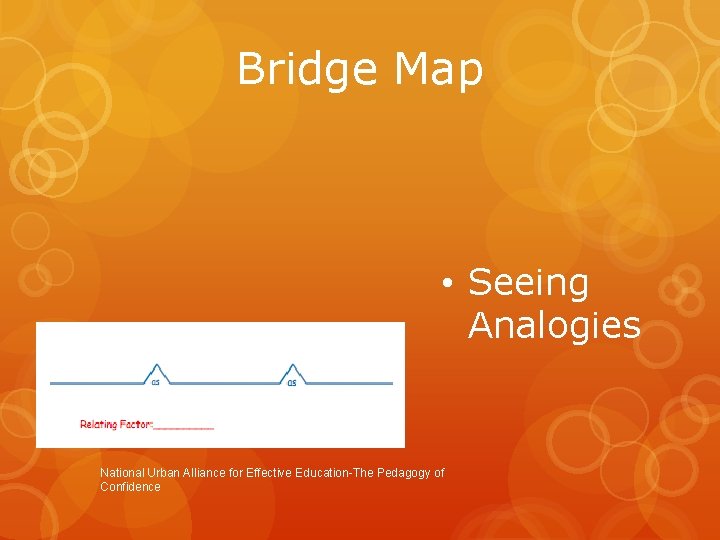
Bridge Map • Seeing Analogies National Urban Alliance for Effective Education-The Pedagogy of Confidence
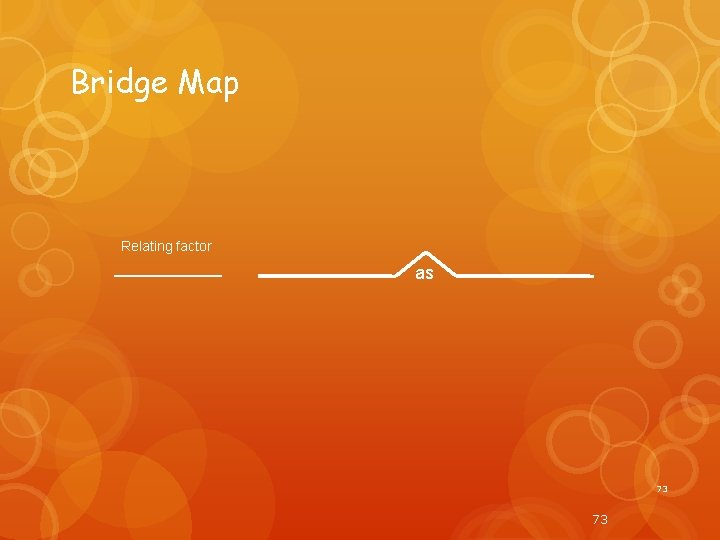
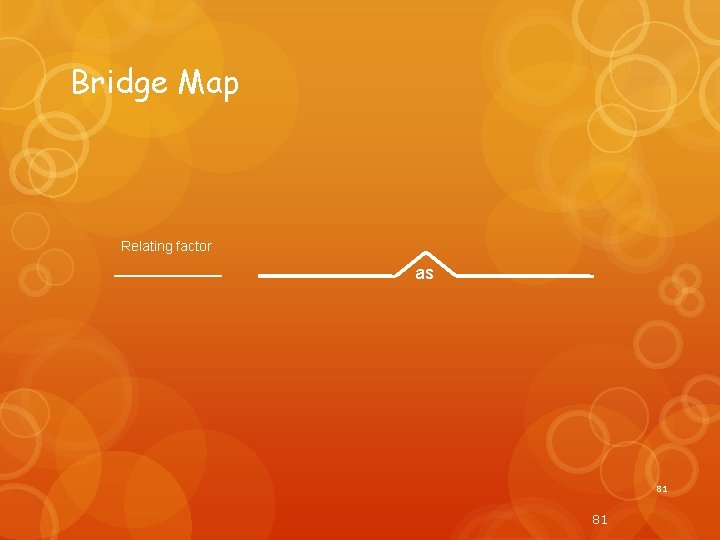
Bridge Map Relating factor as 73 73
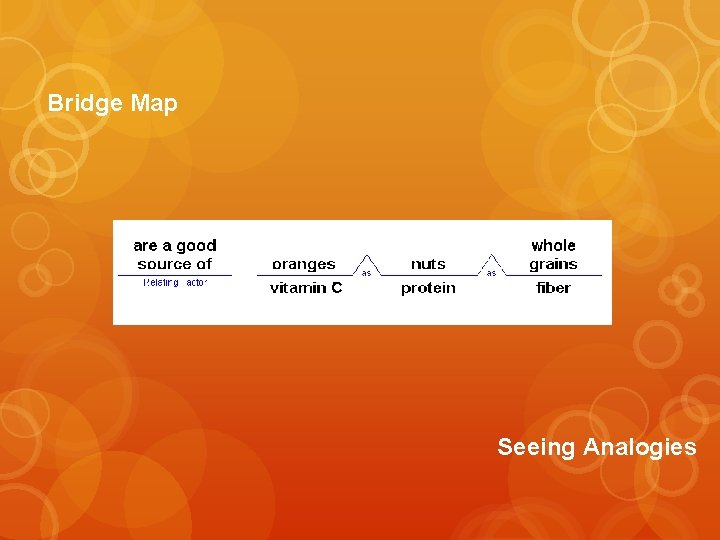
Bridge Map Seeing Analogies
Bridge Map Science Writing Many foods that we eat every day give us nutrition without us knowing it. Oranges are good sources of vitamin C. Also, nuts are excellent sources of protein. Whole grains give our bodies the fiber it needs. It is important to take care of our bodies with the food we eat.
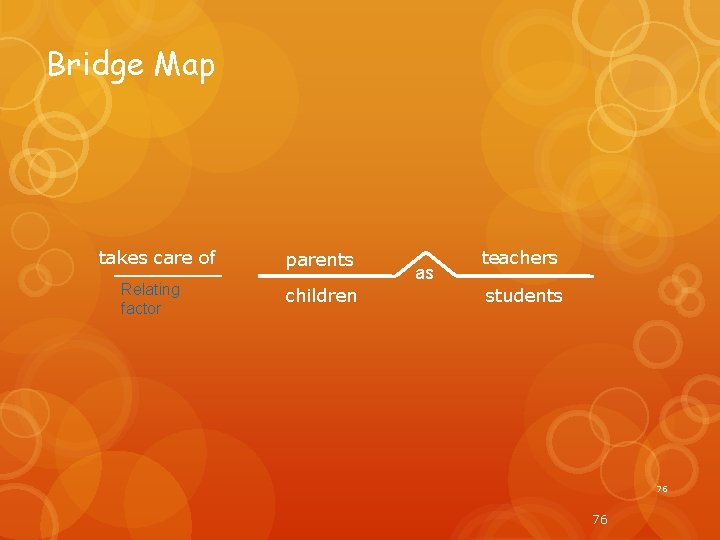
Bridge Map takes care of Relating factor parents children as teachers students 76 76
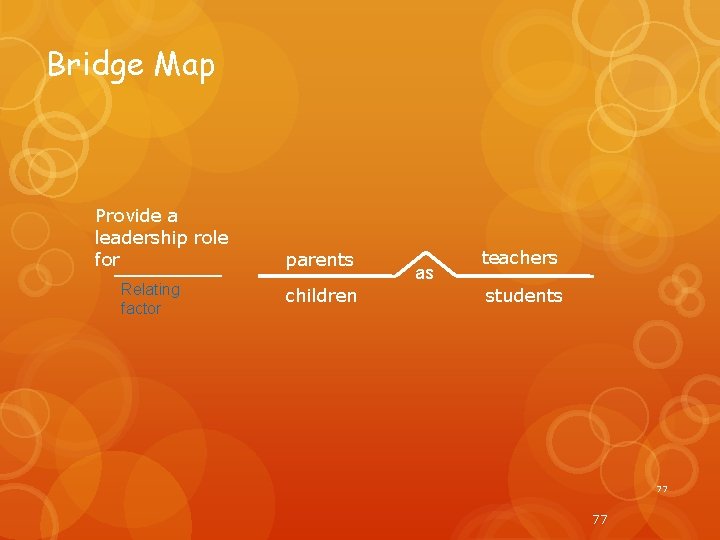
Bridge Map Provide a leadership role for Relating factor parents children as teachers students 77 77
FRAME OF REFERENCE Framing Question: How are you being prepared for future success? Write your response and prepare to present your responses.
Now You Try
In small groups Create a Bridge Map that includes a relating factor and framing question with response.
Bridge Map Relating factor as 81 81
FRAME OF REFERENCE Framing Question: What? Why? How? Write your response and prepare to present your Maps and responses.
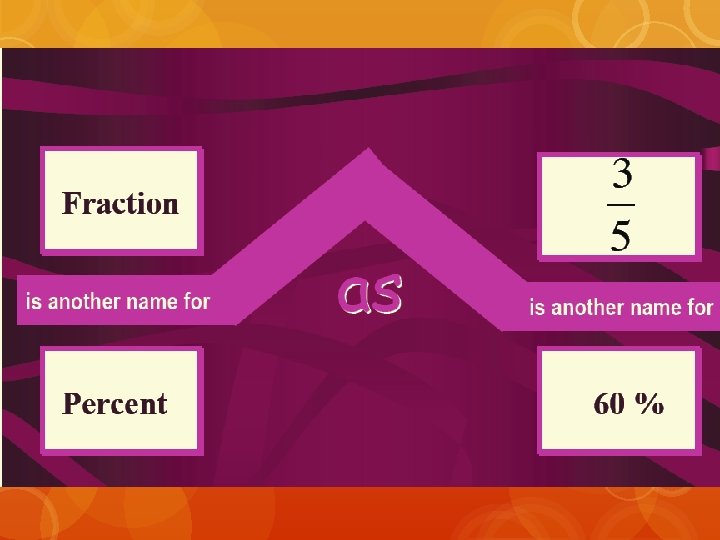
Head Body AS Numerator Fraction Is the top part of. . . Relating Factor: _________

Flash Card Study
Performance Activity In your small groups, create a pneumonic rhyme, song, or rap that will help you remember the key components of your assigned Maps: Drawing the Primitive Cognitive Thinking Process Framing Question

Quiz Show
Thinking Map Review
Explicit Strategy Instruction Today I am going to teach you how to use a Tree Map. A Tree Map is used for Classifying and Categorizing Here is the primitive for a Tree Map:
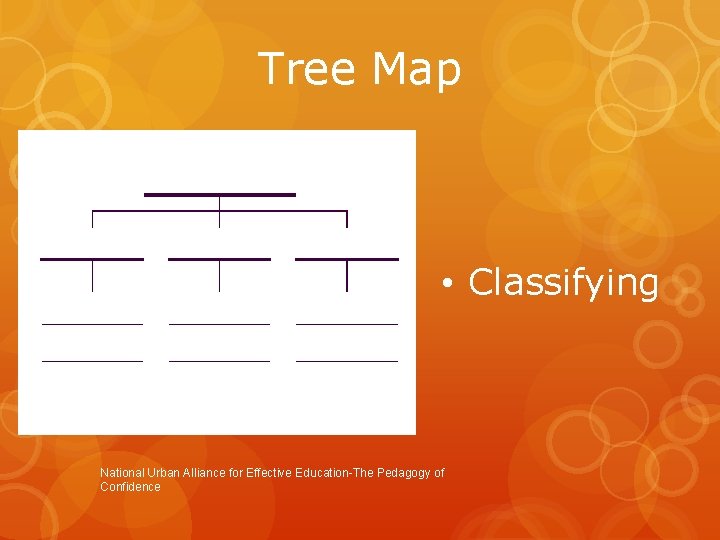
Tree Map • Classifying National Urban Alliance for Effective Education-The Pedagogy of Confidence
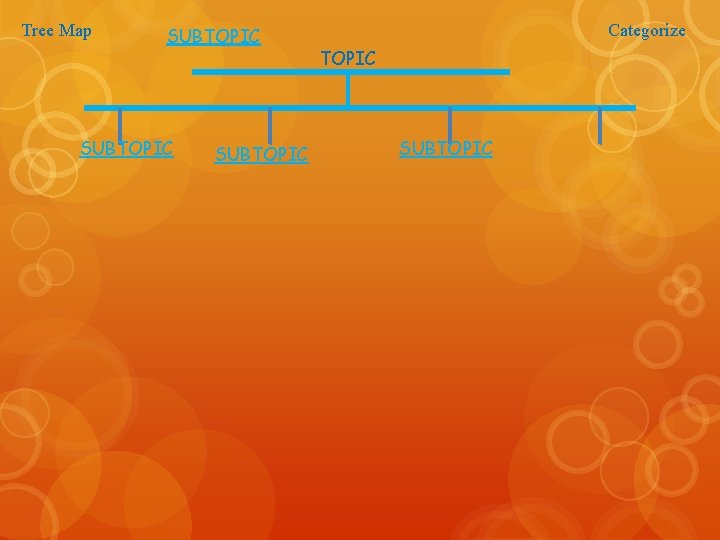
Tree Map SUBTOPIC Categorize TOPIC SUBTOPIC
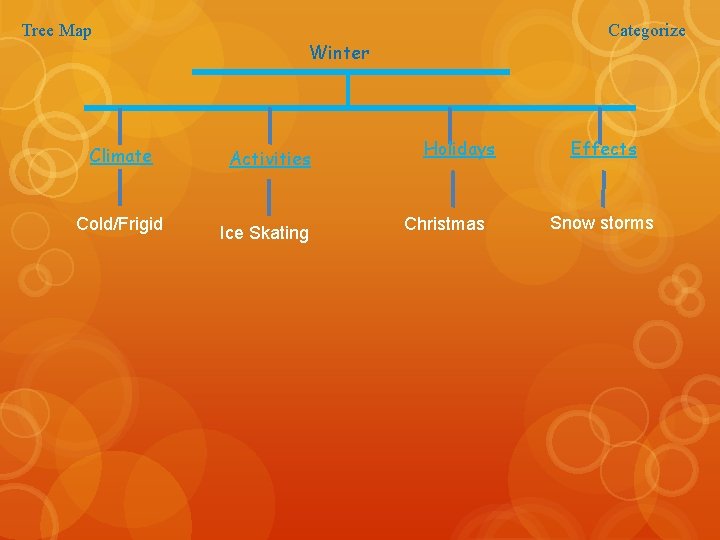
Tree Map Climate Cold/Frigid Categorize Winter Activities Ice Skating Holidays Christmas Effects Snow storms
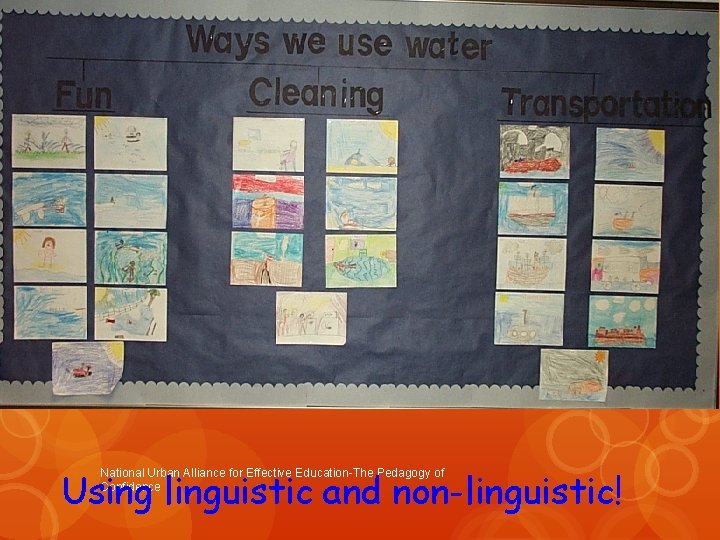
Using linguistic and non-linguistic! National Urban Alliance for Effective Education-The Pedagogy of Confidence
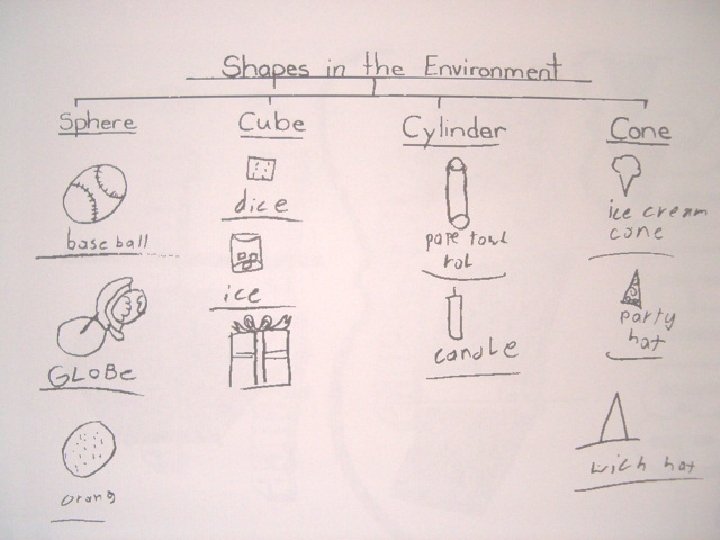
National Urban Alliance for Effective Education-The Pedagogy of Confidence
Explicit Strategy Instruction Today I am going to teach you how to use a Circle Map. A Circle Map is used for Defining and Brainstorming. It also helps in accessing prior knowledge.
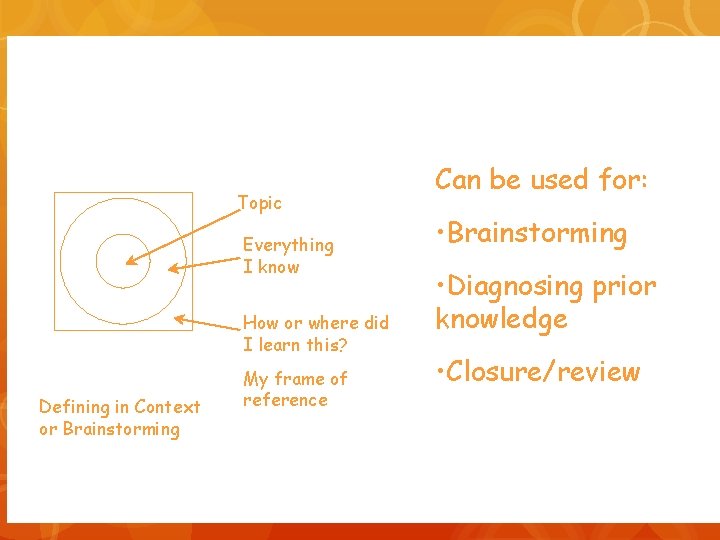
My Story: Define Yourself! Circle Map LOOKS LIKE: SEE SECTION 1: 1 -18 TO 1 -23 NOTES: Can Topic Everything I know How or where did I learn this? THINKING PROCESS: Defining in Context or Brainstorming My frame of reference be used for: • Brainstorming • Diagnosing prior knowledge • Closure/review
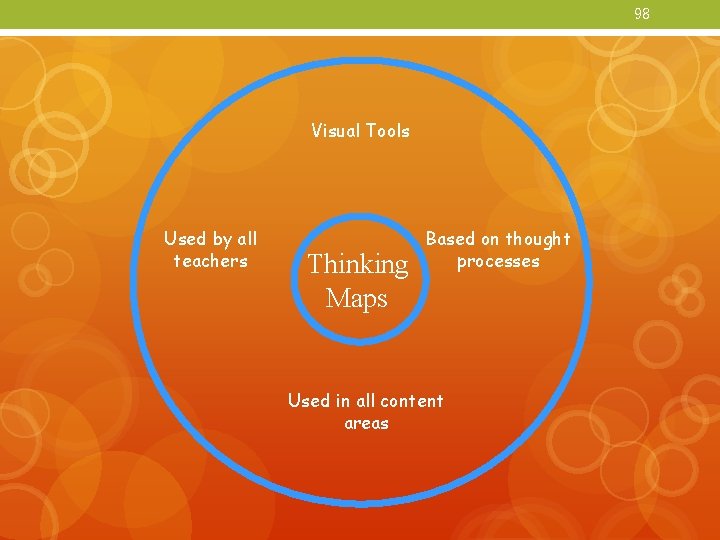
98 Visual Tools Used by all teachers Thinking Maps Based on thought processes Used in all content areas
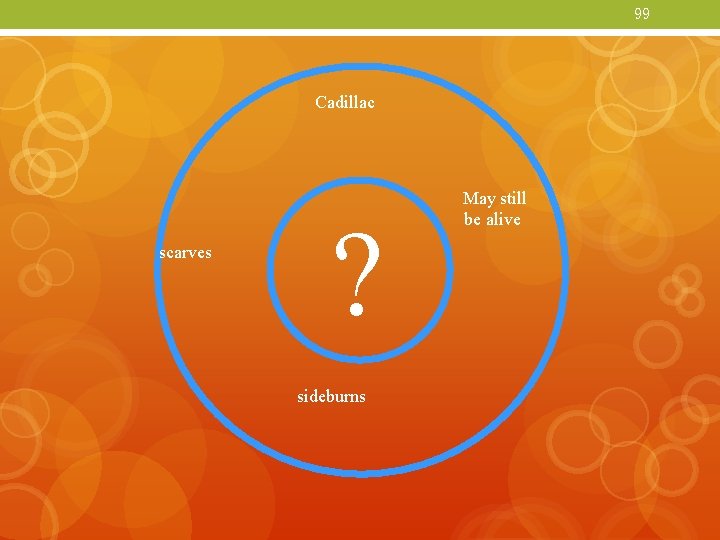
99 Cadillac scarves ? sideburns May still be alive
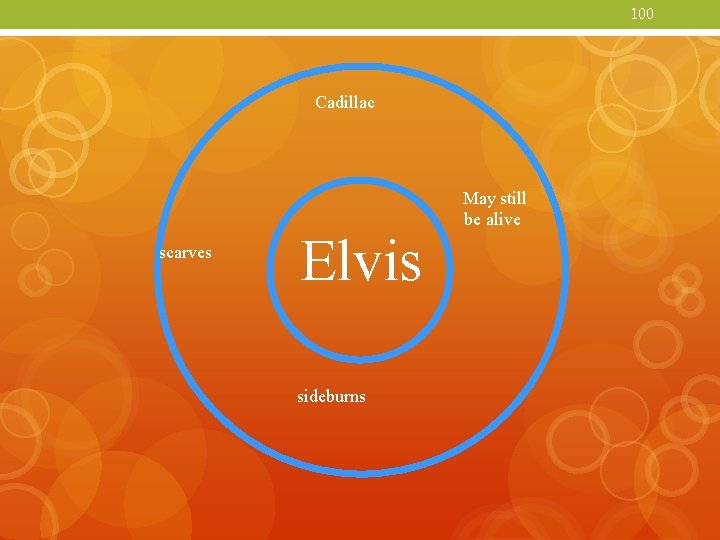
100 Cadillac scarves Elvis sideburns May still be alive
Explicit Strategy Instruction Today I am going to teach you how to use a Bubble Map. A Bubble Map is used for describing. It uses only adjectives or adverbs. This is the primitive for Bubble Maps.
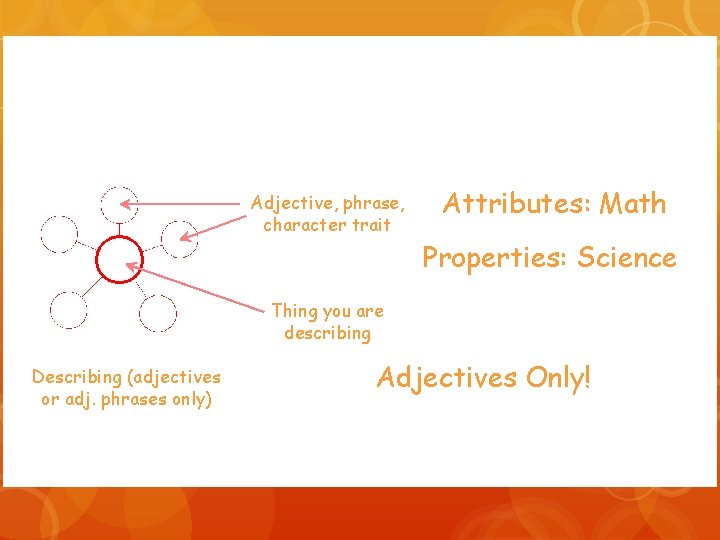
Notemaking Guide for Learning Thinking Maps Bubble Map LOOKS LIKE: SEE SECTION 1: 1 -18 TO 1 -23 NOTES: Adjective, phrase, character trait Attributes: Math Properties: Science Thing you are describing THINKING PROCESS: Describing (adjectives or adj. phrases only) Adjectives Only!
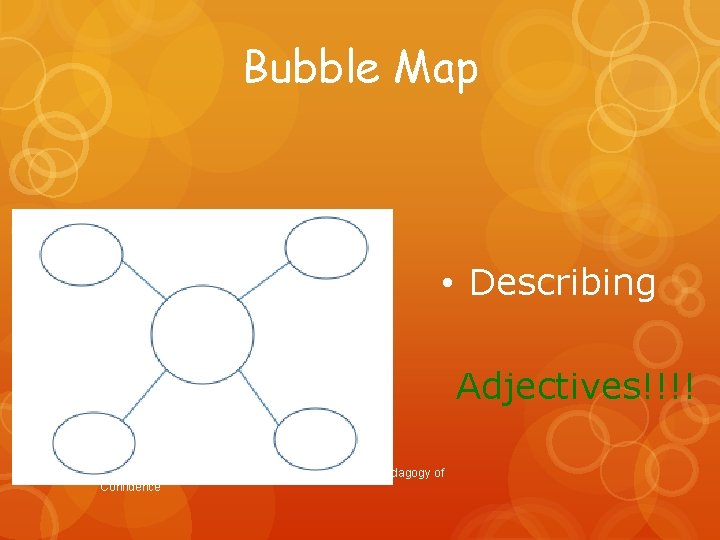
Bubble Map • Describing Adjectives!!!! National Urban Alliance for Effective Education-The Pedagogy of Confidence
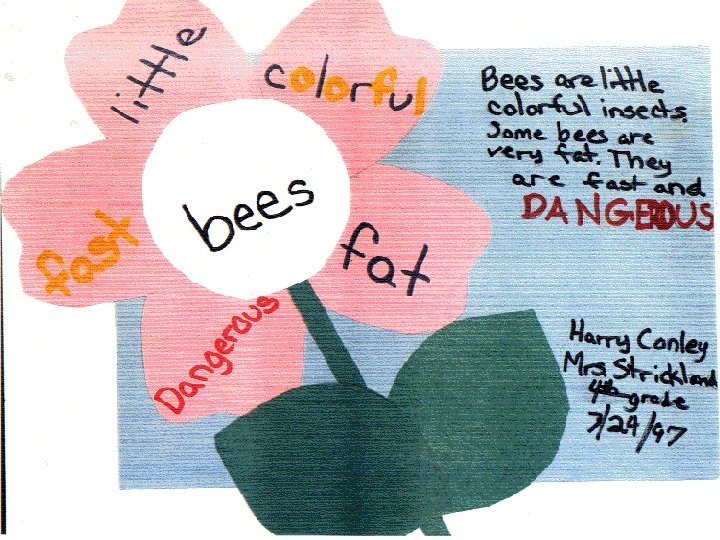
National Urban Alliance for Effective Education-The Pedagogy of Confidence
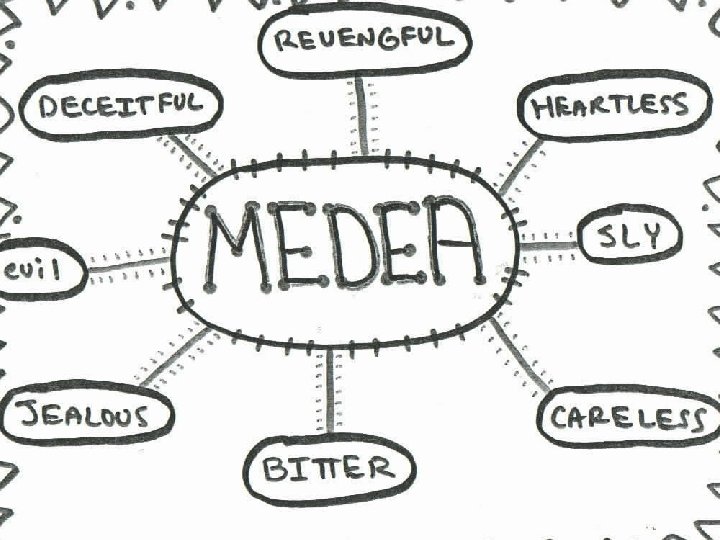
National Urban Alliance for Effective Education-The Pedagogy of Confidence
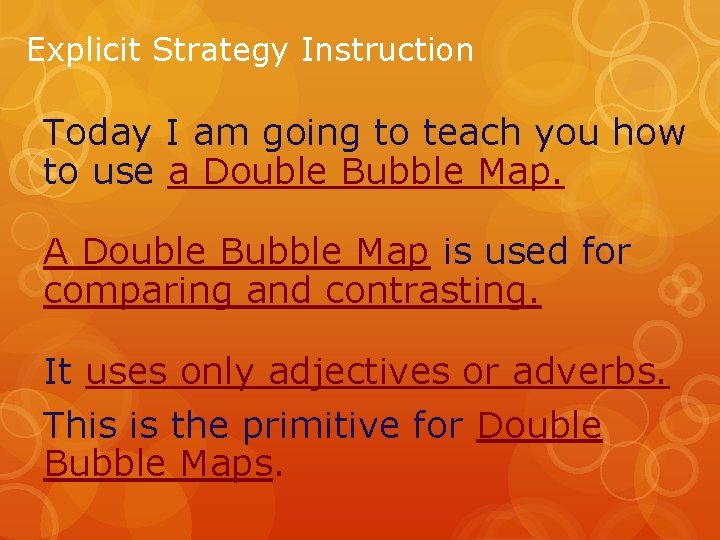
Explicit Strategy Instruction Today I am going to teach you how to use a Double Bubble Map. A Double Bubble Map is used for comparing and contrasting. It uses only adjectives or adverbs. This is the primitive for Double Bubble Maps.
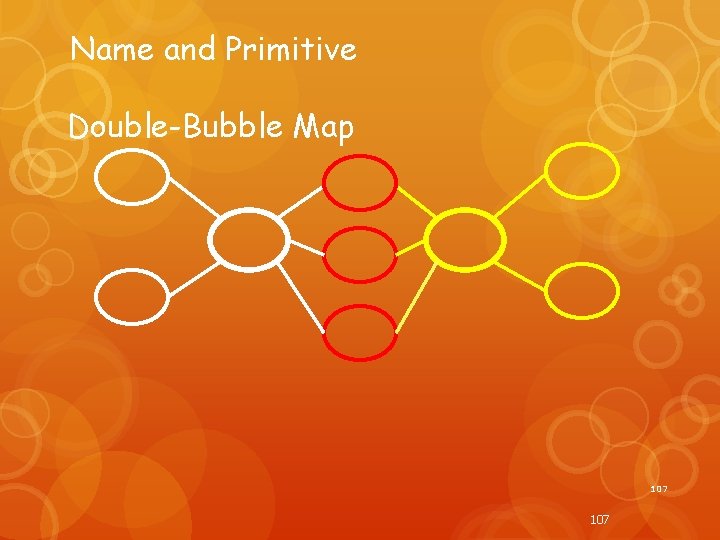
Name and Primitive Double-Bubble Map 107
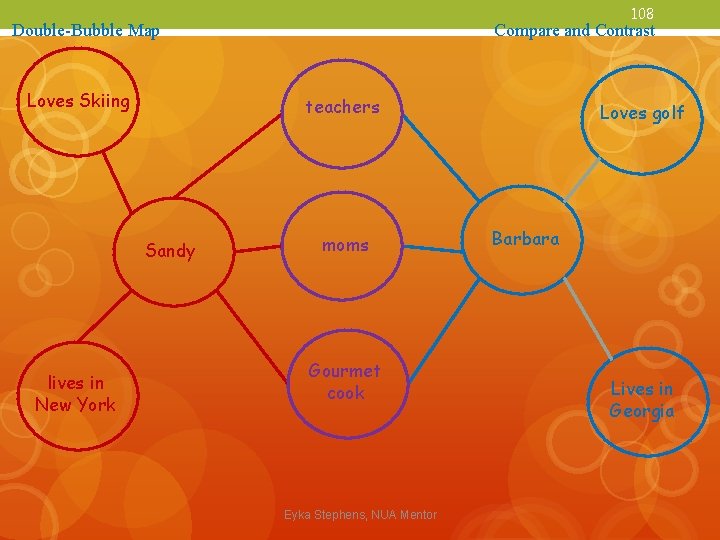
108 Double-Bubble Map Loves Skiing teachers Sandy lives in New York Compare and Contrast moms Gourmet cook Eyka Stephens, NUA Mentor Loves golf Barbara Lives in Georgia
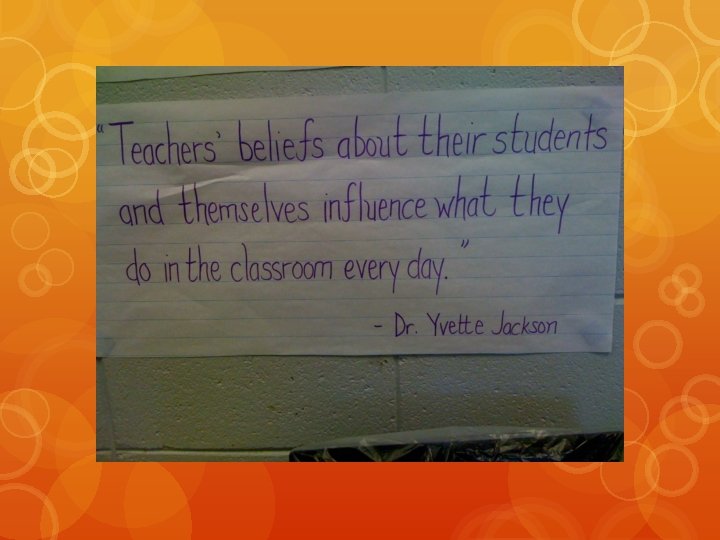
We are all students…

“[Our]…purpose…is to rekindle…[our]…belief in the vast capacity of…urban students and to restore…[our]…confidence in…[our]… own ability to inspire high intellectual performances by these students. ” - Dr. Yvette Jackson
I am the Decisive Element
MAKE A CHANGE “Things do not change, WE change! - Henry David Thoreau
“If a child can’t learn the way we teach, maybe we should teach the way they learn. ” - Ignacio Estrada
8 for 8 8 Cognitive Processes and 8 Cognitive Tools 116
Prompt Tell your partner one to two things that you heard today that you commit to integrating into your practice immediately.
BREAK to Gather Planning Materials
Group Planning Session
Affirmation I know you are the ones the children have been waiting for! Thank you for sharing your day. See you next month!
Reach out… Camile Earle-Dennis 305 -323 -8543 bridge_consultants@me. com 122
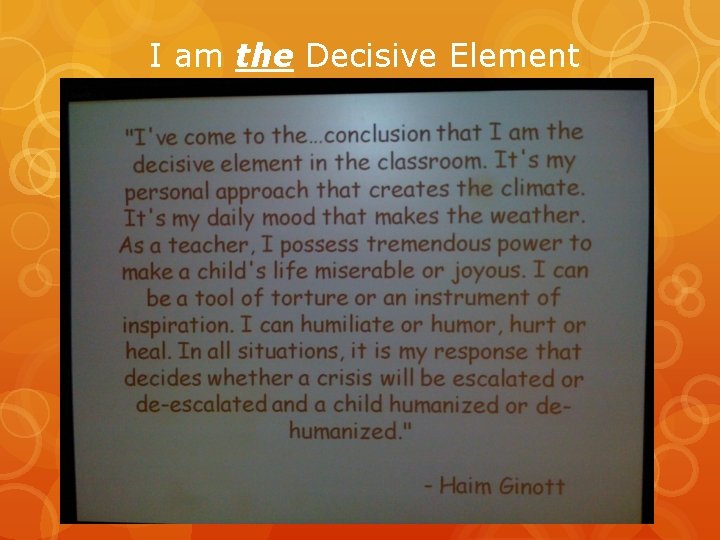
I am the Decisive Element
- Slides: 123