
NT Awake Proning Protocol for the NonIntubated Patient
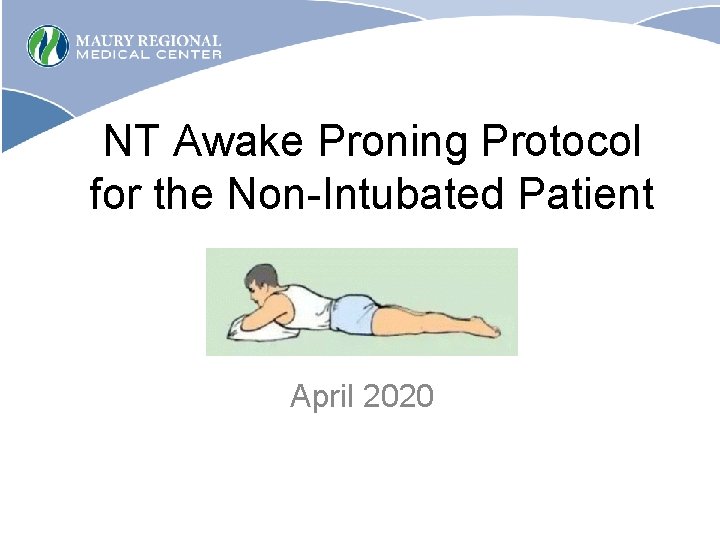
NT Awake Proning Protocol for the Non-Intubated Patient April 2020
• • Objectives Recognize the purpose and benefits of prone positioning Identify the appropriate patient population and eligibility requirements for prone positioning Understand the appropriate equipment needed and protocol/ procedures necessary to carry out awake prone positioning in the non-intubated patient Understand nursing considerations in care of the non-intubated prone positioned patient
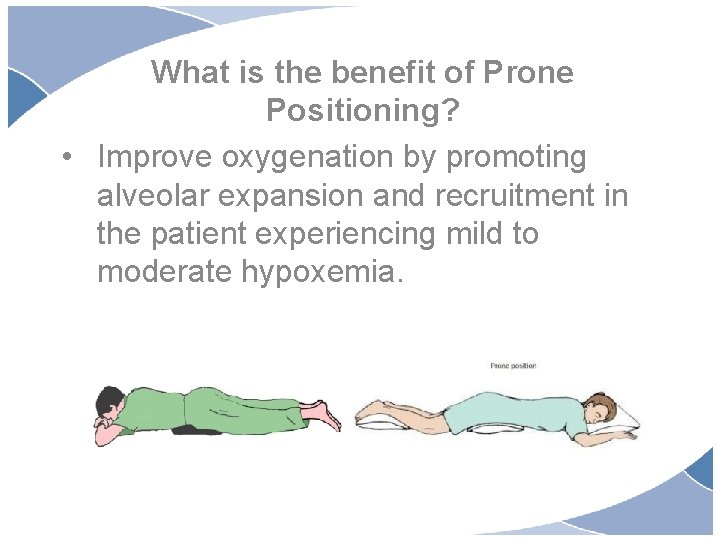
What is the benefit of Prone Positioning? • Improve oxygenation by promoting alveolar expansion and recruitment in the patient experiencing mild to moderate hypoxemia.
Who is eligible to participate in prone positioning? • COVID positive and PUIs (persons under investigation) • Patient with other respiratory illnesses • Awake with good mental status • Nasal cannula (regular or high-flow) or facemask (Maximum Flow rate of 40 L/min) • No vomiting within the preceding 24 hours
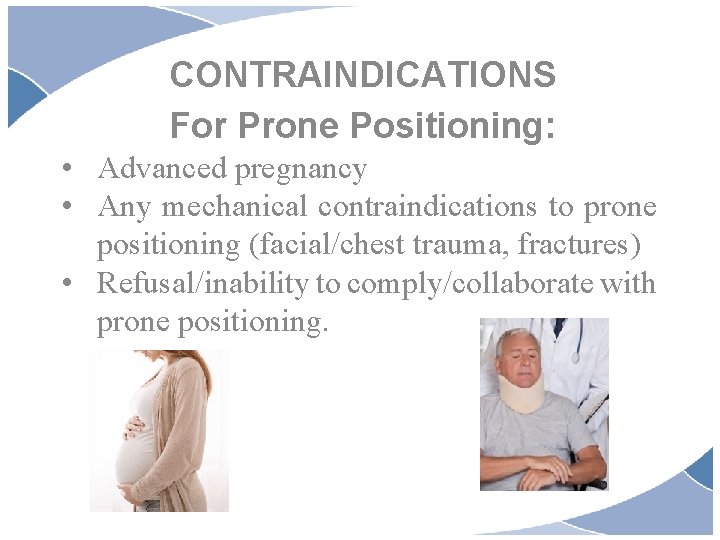
CONTRAINDICATIONS For Prone Positioning: • Advanced pregnancy • Any mechanical contraindications to prone positioning (facial/chest trauma, fractures) • Refusal/inability to comply/collaborate with prone positioning.
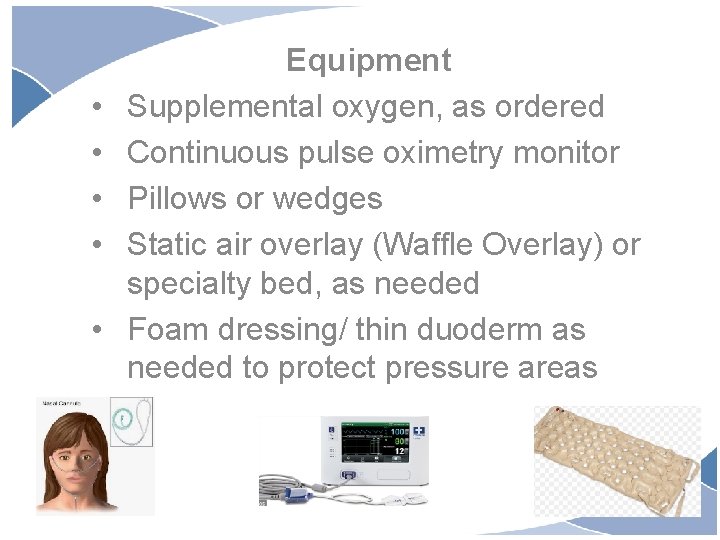
• • • Equipment Supplemental oxygen, as ordered Continuous pulse oximetry monitor Pillows or wedges Static air overlay (Waffle Overlay) or specialty bed, as needed Foam dressing/ thin duoderm as needed to protect pressure areas
1. 2. 3. 4. 5. 6. 7. PROTOCOL: Patient can prone themselves as desired by turning toward oxygen tubing onto their abdomen for as long as they can perform comfortably. The ideal time for prone position is at least sixteen (16) hours/day. Nurse can assist patient to turn if needed during bundled care time. Nurse should be wearing PPE (gown, surgical mask or N 95, face shield, gloves) Patient may prone using a pillow as head-rest. Swimming position is optional. Patient may stay proned if they fall asleep. Patient can supinate themselves when desired. Patient may try rotating between left or right lateral recumbent positions.
Initiation • RN will initiate prone positioning with the patient. NT will assist. • RN will monitor closely for the first hour and document patient tolerance. • The ideal time for prone position is at least sixteen (16) hours/day. • NT should document skin preventative measures.
Skin Considerations Consider placing patients with a Braden < 18 on a static overlay or specialty bed. Assess any potential pressure areas along bony prominences and apply prophylactic foam dressing, if indicated. Apply thin foam dressing under medical devices, especially on face. Align urinary catheter tubing toward the foot of the bed with the securement device in the middle of the leg. Positioning devices/pillows are needed to offload pressure points. Encourage microshifts of the head and body to relieve pressure in place of Q 2 hr turns.
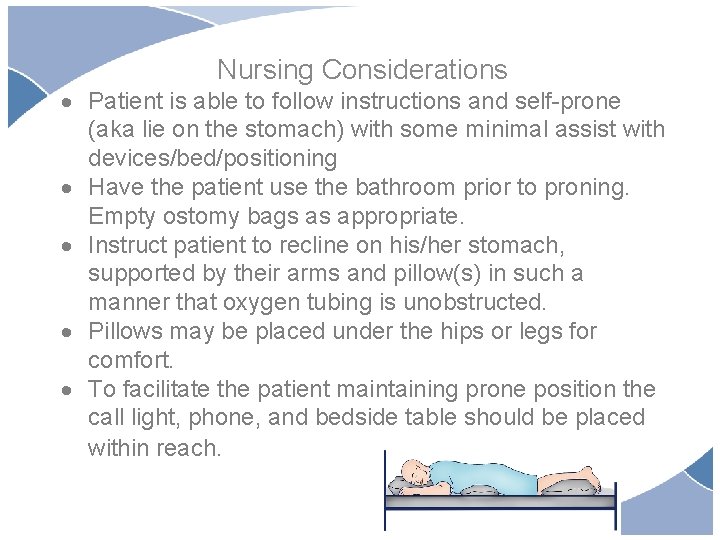
Nursing Considerations Patient is able to follow instructions and self-prone (aka lie on the stomach) with some minimal assist with devices/bed/positioning Have the patient use the bathroom prior to proning. Empty ostomy bags as appropriate. Instruct patient to recline on his/her stomach, supported by their arms and pillow(s) in such a manner that oxygen tubing is unobstructed. Pillows may be placed under the hips or legs for comfort. To facilitate the patient maintaining prone position the call light, phone, and bedside table should be placed within reach.
References www. NPIAP. com, Pressure Injury Prevention; PIP Tips for Prone Positioning (Retrieved 04/13/2020) Massachusetts General Hospital policy: Prone Positioning for the Non-Intubated Patients Guideline (04/022020)
- Slides: 11