
NSW Department of Education HSC hub Science Extension
NSW Department of Education HSC hub Science Extension – Influence of ethical thinking on scientific practice
NSW Department of Education Acknowledgement of Country I would like to pay my respect and acknowledge the traditional custodians of the land on which this meeting takes place, and also pay respect to Elders both past and present
NSW Department of Education Aboriginal and Torres Strait Islander peoples are advised that this video may contain the images, voices and names of people who have passed away
NSW Department of Education Science Extension Module 1 The influences on Science Inquiry question: What currently influences scientific thinking? • Students analyse the influence of ethical frameworks on scientific research over time, including but not limited to: − human experimentation − experimentation on animals − biobanks − use of research data
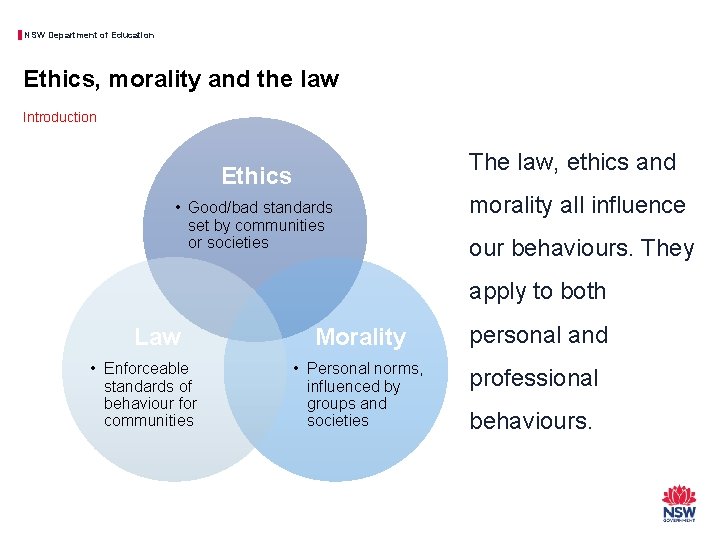
NSW Department of Education Ethics, morality and the law Introduction The law, ethics and Ethics • Good/bad standards set by communities or societies morality all influence our behaviours. They apply to both Law • Enforceable standards of behaviour for communities Morality personal and • Personal norms, influenced by groups and societies professional behaviours.
NSW Department of Education Ethics, morality and the law Introduction The only ethical principle which has made science possible is that the truth shall be told all the time. If we do not penalise false statements made in error, we open up the way, don't you see, for false statements by intention. And of course a false statement of fact, made deliberately, is the most serious crime a scientist can commit. C. P. Snow, The Search, Charles Scribner's Sons, New York, revised edition, 1959
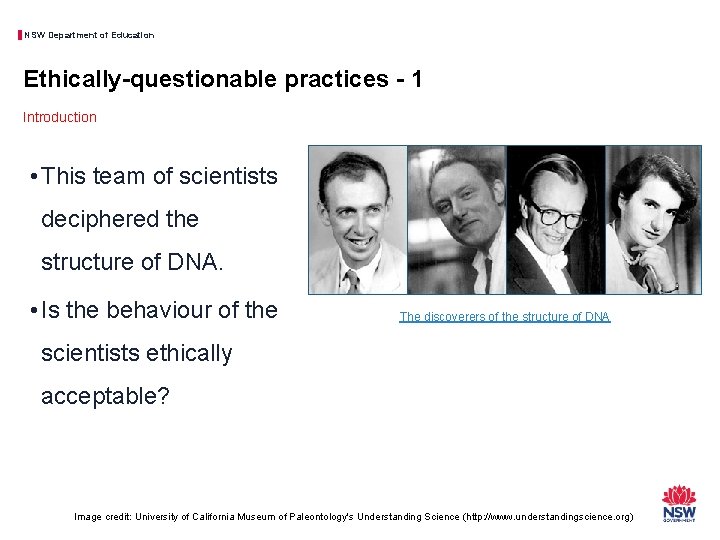
NSW Department of Education Ethically-questionable practices - 1 Introduction • This team of scientists deciphered the structure of DNA. • Is the behaviour of the The discoverers of the structure of DNA scientists ethically acceptable? Image credit: University of California Museum of Paleontology's Understanding Science (http: //www. understandingscience. org)
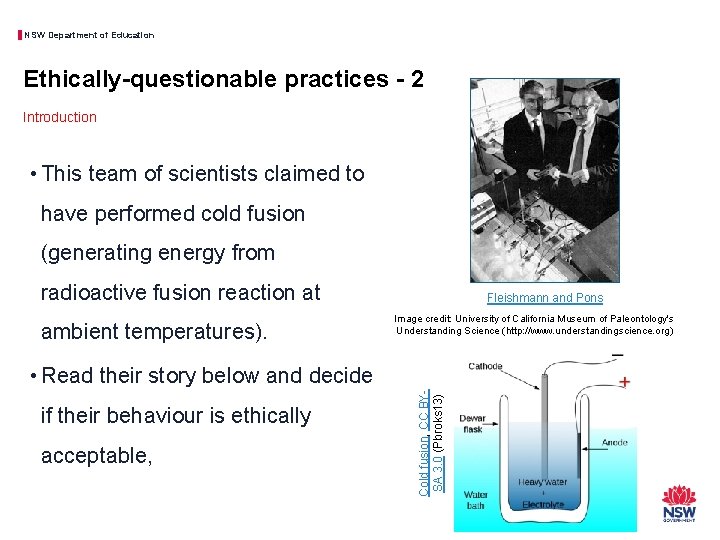
NSW Department of Education Ethically-questionable practices - 2 Introduction • This team of scientists claimed to have performed cold fusion (generating energy from radioactive fusion reaction at ambient temperatures). Fleishmann and Pons Image credit: University of California Museum of Paleontology's Understanding Science (http: //www. understandingscience. org) if their behaviour is ethically acceptable, Cold fusion, CC BYSA 3. 0 (Pbroks 13) • Read their story below and decide
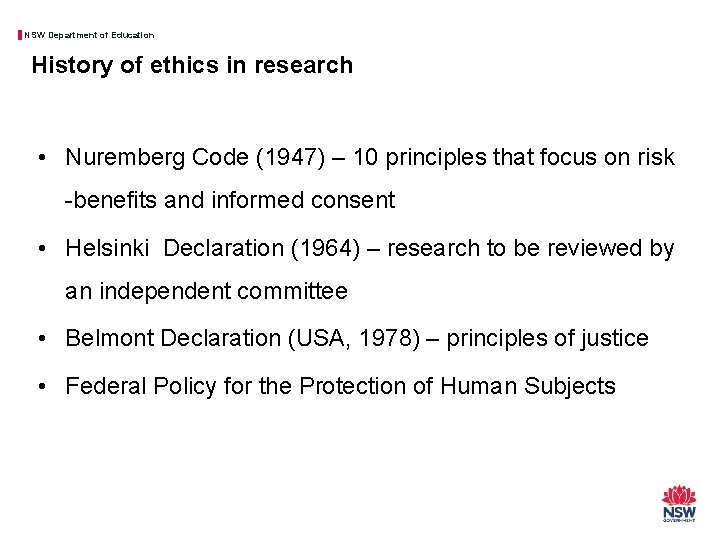
NSW Department of Education History of ethics in research • Nuremberg Code (1947) – 10 principles that focus on risk -benefits and informed consent • Helsinki Declaration (1964) – research to be reviewed by an independent committee • Belmont Declaration (USA, 1978) – principles of justice • Federal Policy for the Protection of Human Subjects
NSW Department of Education Scientific Ethics Introduction • Decision-making process for science • Developed by scientists, in consultation with the community
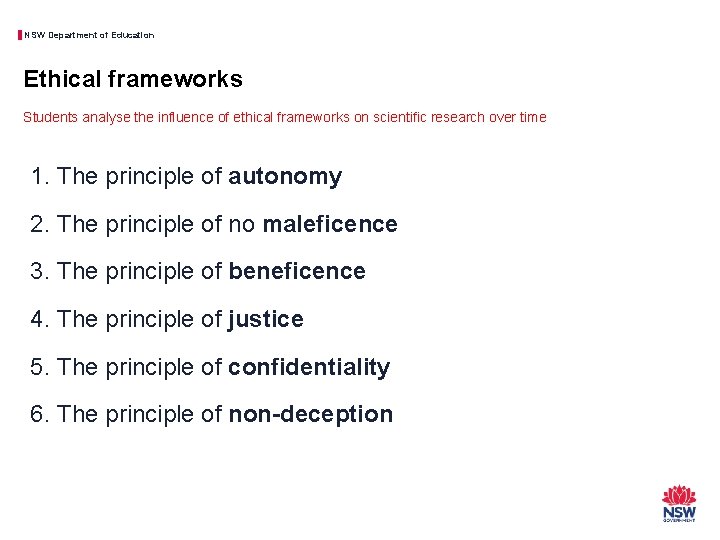
NSW Department of Education Ethical frameworks Students analyse the influence of ethical frameworks on scientific research over time 1. The principle of autonomy 2. The principle of no maleficence 3. The principle of beneficence 4. The principle of justice 5. The principle of confidentiality 6. The principle of non-deception
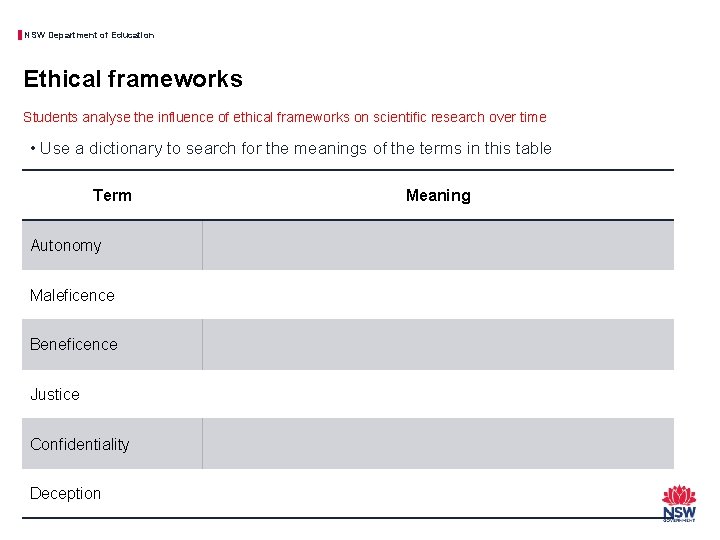
NSW Department of Education Ethical frameworks Students analyse the influence of ethical frameworks on scientific research over time • Use a dictionary to search for the meanings of the terms in this table Term Autonomy Maleficence Beneficence Justice Confidentiality Deception Meaning
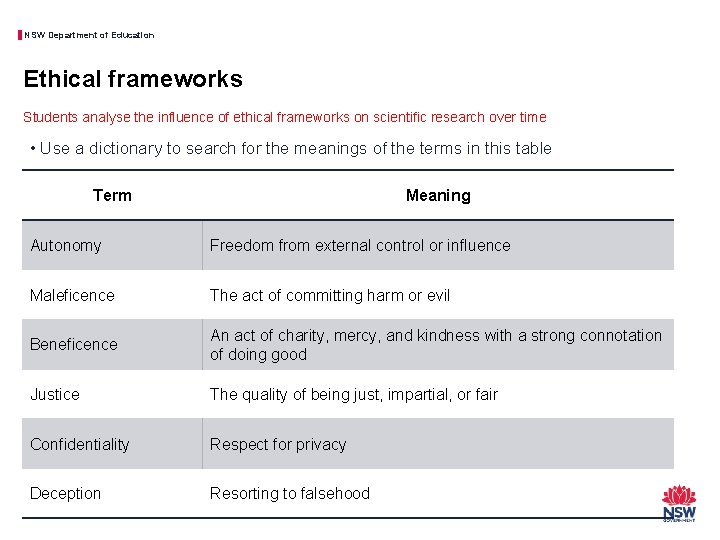
NSW Department of Education Ethical frameworks Students analyse the influence of ethical frameworks on scientific research over time • Use a dictionary to search for the meanings of the terms in this table Term Meaning Autonomy Freedom from external control or influence Maleficence The act of committing harm or evil Beneficence An act of charity, mercy, and kindness with a strong connotation of doing good Justice The quality of being just, impartial, or fair Confidentiality Respect for privacy Deception Resorting to falsehood
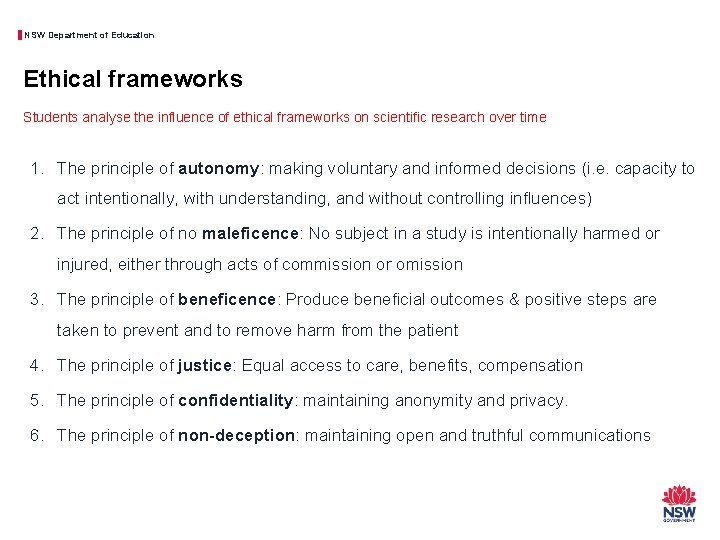
NSW Department of Education Ethical frameworks Students analyse the influence of ethical frameworks on scientific research over time 1. The principle of autonomy: making voluntary and informed decisions (i. e. capacity to act intentionally, with understanding, and without controlling influences) 2. The principle of no maleficence: No subject in a study is intentionally harmed or injured, either through acts of commission or omission 3. The principle of beneficence: Produce beneficial outcomes & positive steps are taken to prevent and to remove harm from the patient 4. The principle of justice: Equal access to care, benefits, compensation 5. The principle of confidentiality: maintaining anonymity and privacy. 6. The principle of non-deception: maintaining open and truthful communications
NSW Department of Education Human experimentation
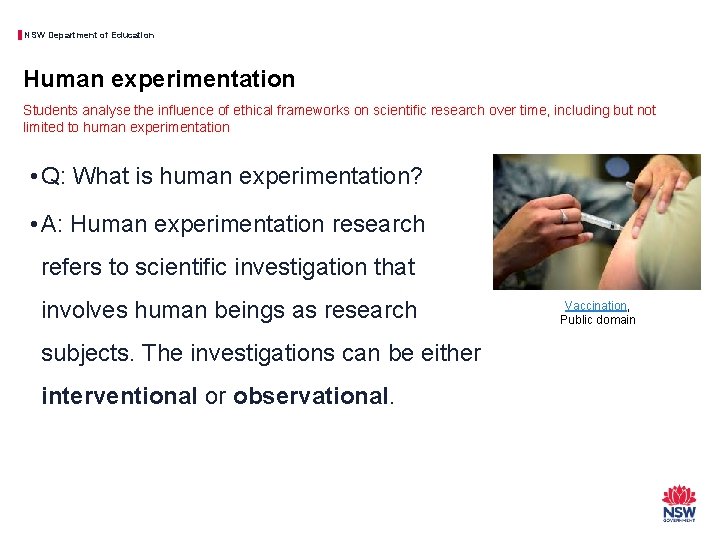
NSW Department of Education Human experimentation Students analyse the influence of ethical frameworks on scientific research over time, including but not limited to human experimentation • Q: What is human experimentation? • A: Human experimentation research refers to scientific investigation that involves human beings as research subjects. The investigations can be either interventional or observational. Vaccination, Public domain
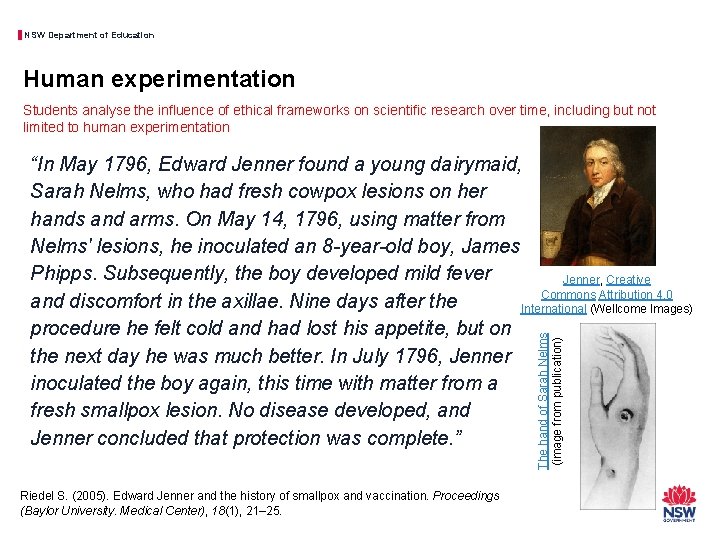
NSW Department of Education Human experimentation Students analyse the influence of ethical frameworks on scientific research over time, including but not limited to human experimentation The hand of Sarah Nelms (image from publication) “In May 1796, Edward Jenner found a young dairymaid, Sarah Nelms, who had fresh cowpox lesions on her hands and arms. On May 14, 1796, using matter from Nelms' lesions, he inoculated an 8 -year-old boy, James Phipps. Subsequently, the boy developed mild fever Jenner, Creative Commons Attribution 4. 0 and discomfort in the axillae. Nine days after the International (Wellcome Images) procedure he felt cold and had lost his appetite, but on the next day he was much better. In July 1796, Jenner inoculated the boy again, this time with matter from a fresh smallpox lesion. No disease developed, and Jenner concluded that protection was complete. ” Riedel S. (2005). Edward Jenner and the history of smallpox and vaccination. Proceedings (Baylor University. Medical Center), 18(1), 21– 25.
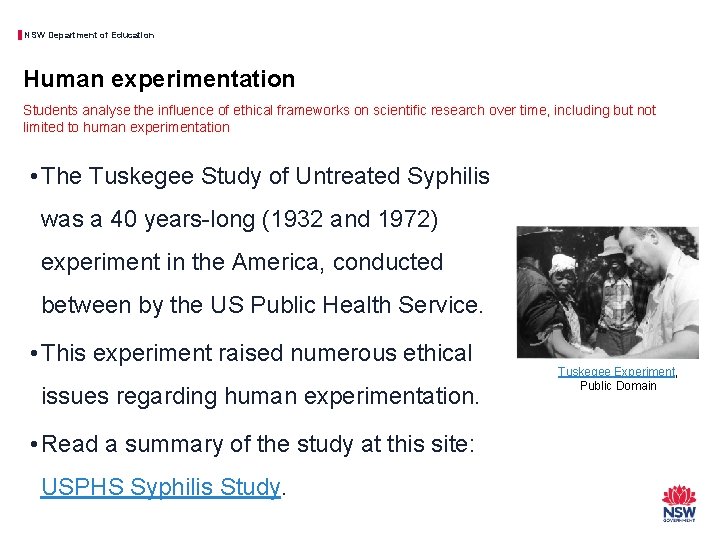
NSW Department of Education Human experimentation Students analyse the influence of ethical frameworks on scientific research over time, including but not limited to human experimentation • The Tuskegee Study of Untreated Syphilis was a 40 years-long (1932 and 1972) experiment in the America, conducted between by the US Public Health Service. • This experiment raised numerous ethical issues regarding human experimentation. • Read a summary of the study at this site: USPHS Syphilis Study. Tuskegee Experiment, Public Domain
NSW Department of Education Ethics of human research - Australia Students analyse the influence of ethical frameworks on scientific research over time, including but not limited to human experimentation • In Australia, the National Health and Medical Research Council develops the frameworks for research involving humans. This is called The National Statement on Ethical Conduct in Human Research (2007) (National Statement (2007). • The statement focuses on: − Research merit and integrity − Justice, including beneficence − Non-maleficence & Beneficence − Respect (for example - in decision making or providing consent)
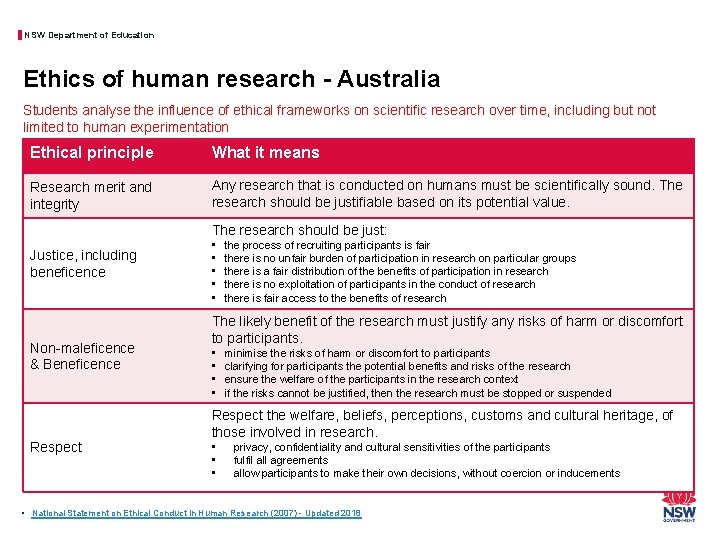
NSW Department of Education Ethics of human research - Australia Students analyse the influence of ethical frameworks on scientific research over time, including but not limited to human experimentation Ethical principle What it means Research merit and integrity Any research that is conducted on humans must be scientifically sound. The research should be justifiable based on its potential value. The research should be just: Justice, including beneficence Non-maleficence & Beneficence • • • the process of recruiting participants is fair there is no unfair burden of participation in research on particular groups there is a fair distribution of the benefits of participation in research there is no exploitation of participants in the conduct of research there is fair access to the benefits of research The likely benefit of the research must justify any risks of harm or discomfort to participants. • • minimise the risks of harm or discomfort to participants clarifying for participants the potential benefits and risks of the research ensure the welfare of the participants in the research context if the risks cannot be justified, then the research must be stopped or suspended Respect the welfare, beliefs, perceptions, customs and cultural heritage, of those involved in research. Respect • • • privacy, confidentiality and cultural sensitivities of the participants fulfil all agreements allow participants to make their own decisions, without coercion or inducements • National Statement on Ethical Conduct in Human Research (2007) - Updated 2018
NSW Department of Education Human Research Ethics Committees (HRECs) Students analyse the influence of ethical frameworks on scientific research over time, including but not limited to human experimentation • In Australia, at institutions that undertake human research, all research proposals must be approved by the HREC. Human research cannot be conducted without an ethics permit is not obtained. • HERCs consist of researchers, non-researchers and community members. • The HRECs evaluate applications based on: − How is the research question/theme identified or developed? − How do the research methods align with the research aims? − How will the researchers and the participants engage with one another? − How will the research data or information be collected, stored, and used? − How will the results or outcomes be communicated? − What will happen to the data and information upon completion of the project?
NSW Department of Education Animal experimentation
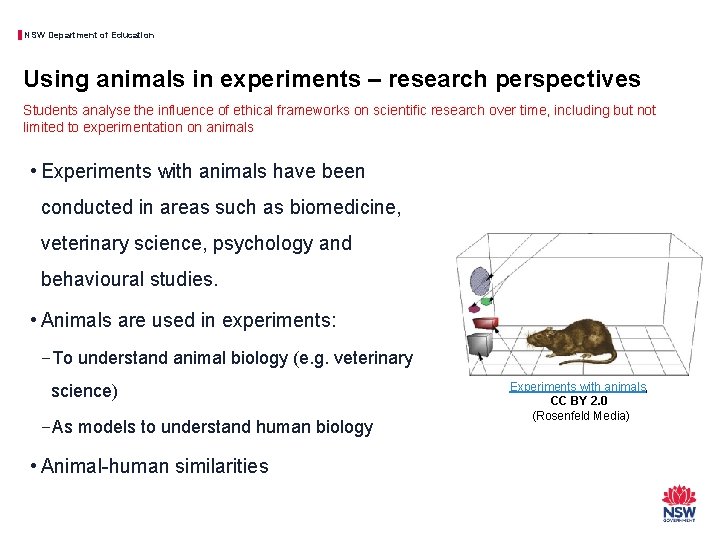
NSW Department of Education Using animals in experiments – research perspectives Students analyse the influence of ethical frameworks on scientific research over time, including but not limited to experimentation on animals • Experiments with animals have been conducted in areas such as biomedicine, veterinary science, psychology and behavioural studies. • Animals are used in experiments: −To understand animal biology (e. g. veterinary science) −As models to understand human biology • Animal-human similarities Experiments with animals, CC BY 2. 0 (Rosenfeld Media)
NSW Department of Education Using animals in experiments – biomedical research Students analyse the influence of ethical frameworks on scientific research over time, including but not limited to experimentation on animals • There are several reasons why animals are used for biomedical research: − Animals are biologically very similar to humans (mice and humans share more than 98% genetic similarity) − Animals are susceptible to many of the same health problems as humans – cancer, diabetes, heart disease, etc. − With a shorter life cycle than humans, animal models can be studied throughout their whole life span and across several generations. Why animal research? - Stanford
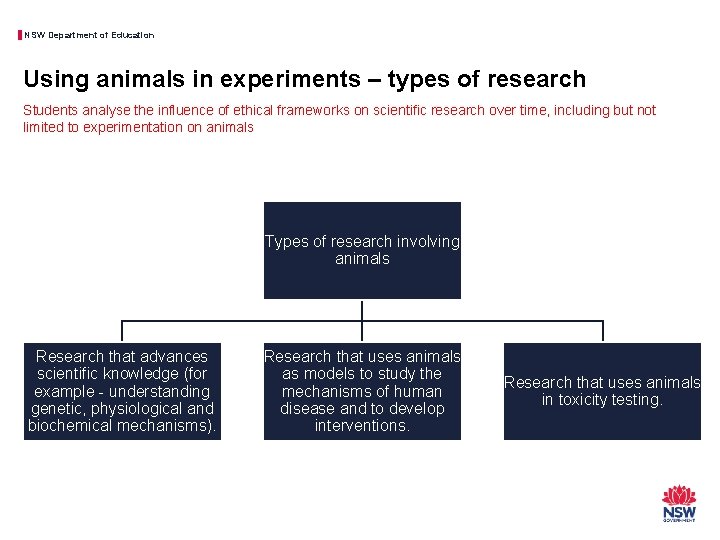
NSW Department of Education Using animals in experiments – types of research Students analyse the influence of ethical frameworks on scientific research over time, including but not limited to experimentation on animals Types of research involving animals Research that advances scientific knowledge (for example - understanding genetic, physiological and biochemical mechanisms). Research that uses animals as models to study the mechanisms of human disease and to develop interventions. Research that uses animals in toxicity testing.
NSW Department of Education Using animals in experiments – caring for animals Students analyse the influence of ethical frameworks on scientific research over time, including but not limited to experimentation on animals • The care of animals used in experiments is important both scientifically and ethically. • Uncared animals produce aberrant results. • The ethical framework regarding animal use in experiments applies to vertebrates.
NSW Department of Education Using animals in experiments – Animal Ethics Committees Students analyse the influence of ethical frameworks on scientific research over time, including but not limited to experimentation on animals • While human experimentation is regulated at a national level (NHMRC), animal experimentation is regulated at state level. • Animal Ethics Committees (AECs) issue permits for research involving animals
NSW Department of Education Using animals in experiments – 3 Rs Students analyse the influence of ethical frameworks on scientific research over time, including but not limited to experimentation on animals • Researchers should apply the 3 Rs rule when designing experiments involving animals: −The Replacement of animals with other methods (for example - cell cultures, tissue banks, abattoir materials). −The Reduction in the number of animals used. −The Refinement of techniques used to minimise the adverse impact on animals.
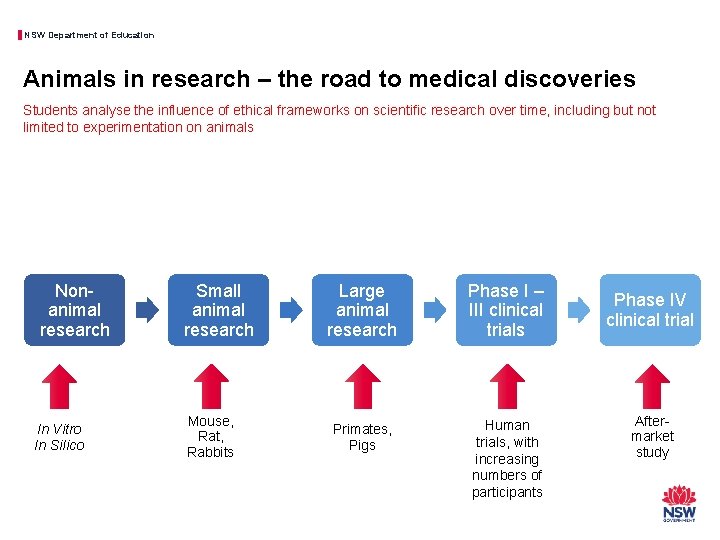
NSW Department of Education Animals in research – the road to medical discoveries Students analyse the influence of ethical frameworks on scientific research over time, including but not limited to experimentation on animals Nonanimal research In Vitro In Silico Small animal research Mouse, Rat, Rabbits Large animal research Phase I – III clinical trials Primates, Pigs Human trials, with increasing numbers of participants Phase IV clinical trial Aftermarket study
NSW Department of Education Biobanks
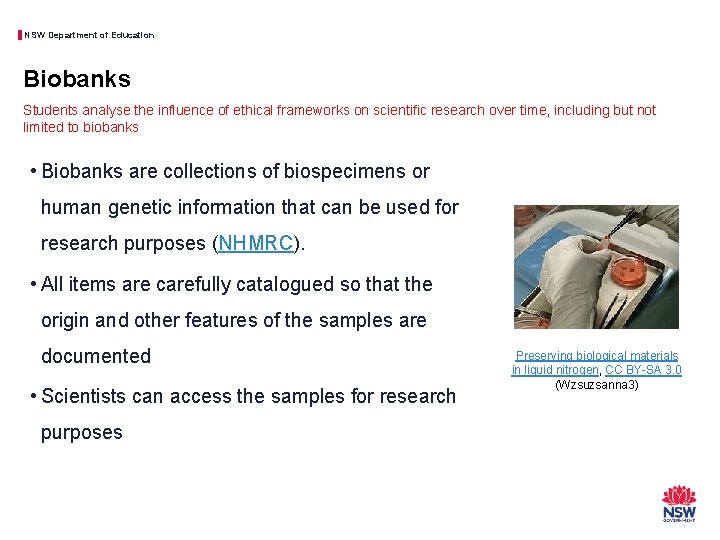
NSW Department of Education Biobanks Students analyse the influence of ethical frameworks on scientific research over time, including but not limited to biobanks • Biobanks are collections of biospecimens or human genetic information that can be used for research purposes (NHMRC). • All items are carefully catalogued so that the origin and other features of the samples are documented • Scientists can access the samples for research purposes Preserving biological materials in liquid nitrogen, CC BY-SA 3. 0 (Wzsuzsanna 3)
NSW Department of Education Biobanks – ethical issues Students analyse the influence of ethical frameworks on scientific research over time, including but not limited to biobanks • Some of the issues around the use of biobanks include: −Informed consent of the donors (no coercion) −Sensitive collection of samples from vulnerable donors (aged, disabled, young) −Privacy of personal and medical information −Commercialisation and sharing of benefits
NSW Department of Education Research data
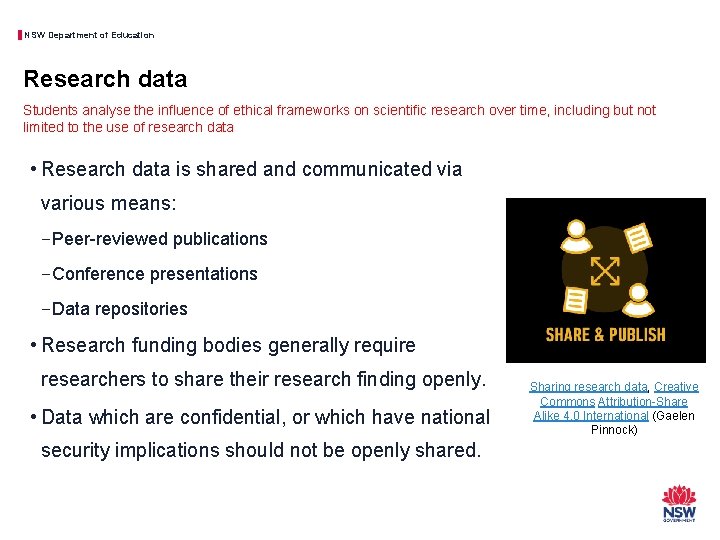
NSW Department of Education Research data Students analyse the influence of ethical frameworks on scientific research over time, including but not limited to the use of research data • Research data is shared and communicated via various means: −Peer-reviewed publications −Conference presentations −Data repositories • Research funding bodies generally require researchers to share their research finding openly. • Data which are confidential, or which have national security implications should not be openly shared. Sharing research data, Creative Commons Attribution-Share Alike 4. 0 International (Gaelen Pinnock)
NSW Department of Education Research data Students analyse the influence of ethical frameworks on scientific research over time, including but not limited to the use of research data • Data sharing is beneficial, as it: −Encourages further scientific enquiry and promotes innovation. −Leads to new collaborations between data users and data creators. −Maximises transparency and accountability. −Reduces the cost of duplicating data collection.
NSW Department of Education Research data Students analyse the influence of ethical frameworks on scientific research over time, including but not limited to the use of research data • The ethics of data sharing centres on the following questions: − What data or information are required to achieve the objectives of the project? − How and by whom will the data or information be generated, collected and accessed? − How and by whom will the data or information be used analysed? − Will the data or information be disclosed or shared and, if so, with whom? − How will the data or information be stored and disposed of? − What are the risks associated with the collection, use and management of data or information and how can they be minimised? − What is the likelihood and severity of any harm/s that might result?

NSW Department of Education Summary
NSW Department of Education Ethical principles of conducting scientific inquiries What are the general ethical principles that scientists must abide by? • Honestly reporting of scientific data; • Carefully recording and analysing experimental results to avoid error; • Openly sharing methods, data, and interpretations through publications and presentations; • Validating results through replication and collaboration with peers; • Properly crediting sources of information, data, and ideas; • Fulfilling moral obligations to society in general, and, in some disciplines, responsibly weighing the rights of human and animal subjects.
NSW Department of Education Case studies
NSW Department of Education Case 1 – The Tuskegee Study of Untreated Syphilis Question (Adapted from Resnick, D. B (2015). What is ethics in research and why is it important? ) • A major study to develop treatments for syphilis was carried out on unsuspecting civilians (1932 -1972). The subjects (participants) were mostly illiterate blacks from Tuskegee, Alabama (USA). 399 men with latent syphilis and a control group of 201 others who were free of the disease were told that they were being treated for “bad blood”. The men were monitored by health workers but only given placebos such as aspirin and mineral supplements, despite the fact penicillin became the recommended treatment for syphilis in 1947. Researchers convinced local physicians in Macon County not to treat the participants, and research was done at the Tuskegee Institute. By the time the study was terminated, 28 participants had perished from syphilis, 100 more had passed away from related complications, at least 40 spouses had been diagnosed with it and the disease had been passed to 19 children at birth.
NSW Department of Education Case 1 – The Tuskegee Study of Untreated Syphilis Answer • There was no informed consent. • The participants were not informed of all the known dangers. • The participants had to agree to an autopsy after their death to have their funeral costs covered. • Scientists denied treatment to some patients, so as to observe the individual dangers and fatal progression of the disease. • Participants were not given the cure, even when it was widely known and easily available. • The designers used a misleading advertisement: The researchers advertised for participants with the slogan; "Last Chance for Special Free Treatment". • The experiment was at the time seen as potentially beneficial for the humankind, but did not consider the harm caused to individuals and their families
NSW Department of Education Case 2 – Incomplete data collection Question (Adapted from Resnick, D. B (2015). What is ethics in research and why is it important? ) • The research protocol for a study of a drug on hypertension required the administration of the drug at different doses to 50 laboratory mice, with chemical and behavioural tests to determine the toxic effects of the drug. Tom had almost finished with the experiment for Dr Q. He had only five mice left to test. However, he wanted to finish his work in time to go on a holiday with his friends, who were leaving that night. He had injected the drug in all 50 mice but had not completed all the tests. He, therefore, decides to extrapolate from the 45 completed results to produce the five additional results.
NSW Department of Education Case 2 – Incomplete data collection Answer • Many different research ethics policies would hold that Tom has acted unethically by fabricating data (dishonesty). His actions would constitute a form of research misconduct, which is defined as "fabrication, falsification, or plagiarism" (or FFP). It is important to remember, however, that misconduct occurs when researchers intend to deceive: errors related to sloppiness, poor record keeping, miscalculations, bias, self-deception, and even negligence do not constitute misconduct. Also, reasonable disagreements about research methods, procedures, and interpretations do not constitute research misconduct.
NSW Department of Education Case 3 – reporting errors Question • Dr T has just discovered a mathematical error in his paper that has been accepted for publication in a journal. The error does not affect the overall results of his research, but it is potentially misleading. The journal has just gone to press, so it is too late to revise the error before it appears in print. To avoid embarrassment, Dr T decides to ignore the error.
NSW Department of Education Case 3 – reporting errors Answer • Dr T's error is not misconduct nor is his decision to take no action to correct the error (the critical consideration is that the error does not affect the findings reported in his paper). Dr T should tell the journal (and any co -authors) about the mistake and consider publishing a correction or errata. Failing to publish a correction would be unethical because it would violate norms relating to honesty and objectivity in research.
NSW Department of Education Case 4 – Research data Question (Adapted from Resnick, D. B (2015). What is ethics in research and why is it important? ) • Dr Wexford is the principal investigator of a large, epidemiological study on the health of 10, 000 agricultural workers. She has an impressive dataset that includes information on demographics, environmental exposures, diet, genetics, and various disease outcomes such as cancer, Parkinson’s disease (PD), and ALS. She has just published a paper on the relationship between pesticide exposure and PD in a prestigious journal. She is planning to publish many other papers from her dataset. She receives a request from another research team that wants access to her complete dataset. They are interested in examining the relationship between pesticide exposures and skin cancer. Dr Wexford was also planning to conduct a study on this topic. What is the ethicallyappropriate course of action for Dr Wexford?
NSW Department of Education Case 4 – Research data Answer • Some issues to consider: −Dr Wexford is ethically-obliged to share research data. −Dr Wexford may be required to share her data under the rules of her research grant or the research institution where she is working. −What happens if the other research group publishes papers with Dr Wexford’s data before she can do so? −How will the request affect Dr Wexford’s intellectual property ownership of data? ANSWER IS CONTINUED IN THE NEXT SLIDE
NSW Department of Education Case 4 – reporting errors Answer • Dr Wexford could agree to share the data, albeit under certain conditions. Some conditions that may be imposed on the use of her data could include: − Pre-defined uses of the data – the other research team states explicitly how Dr Wexford’s data will be used. − Publication plans – the other research team indicates any plans they may have to communicate their work (which involves the use of Dr Wexford’s data), such as journal publications, conference proceedings and storing data in repositories. − Authorship – the other research team agrees to include Dr Wexford and her team members in any publication arising from the use of her data. − Collaboration – the other research team and Dr Wexford agree to collaborate on subsequent research involving her data formally. − Intellectual property – this will require legal and binding agreements between the institutions involved. For example, the intellectual property arising from work conducted at Dr Wexford’s University may be owned by the institution. In such cases, intellectual property issues will be negotiated by Dr Wexford’s University and the other research team’s institution.
NSW Department of Education Case 5 – animal experiments You are a member of an Animal Ethics Committee. Evaluate the following research proposal. • A research group at your University has developed a possible treatment for prostate cancer. The group proposes to investigate the potential benefits of using nanotechnology to deliver an anti-cancer drug to prostate cancer tissues. To determine its efficacy, the researchers will carry out the investigation using mice. • The experimental design uses four groups of mice that have been genetically engineered to develop prostate cancer. Group 1 has 25 mice that will be injected with a predefined dose of therapeutic drug that is coupled to nanoparticles. Group 2 has 25 mice that will receive the same dose of the drug, but without the nanoparticles. Group 3 contains 25 mice that receive the nanoparticles, but no drugs. Group 4 includes 25 mice that will not receive any treatment (no therapeutic drug or nanoparticles but will be injected with normal saline solution). Throughout the experiment, the mice will receive water and food, as described in animal maintenance protocols. They will also be monitored for signs of disease or distress (such mice will be humanely euthanised). One week after receiving the treatments, all mice will be sacrificed by carbon dioxide asphyxiation and their prostate tissues examined for progression of the disease. Continued on the next slide
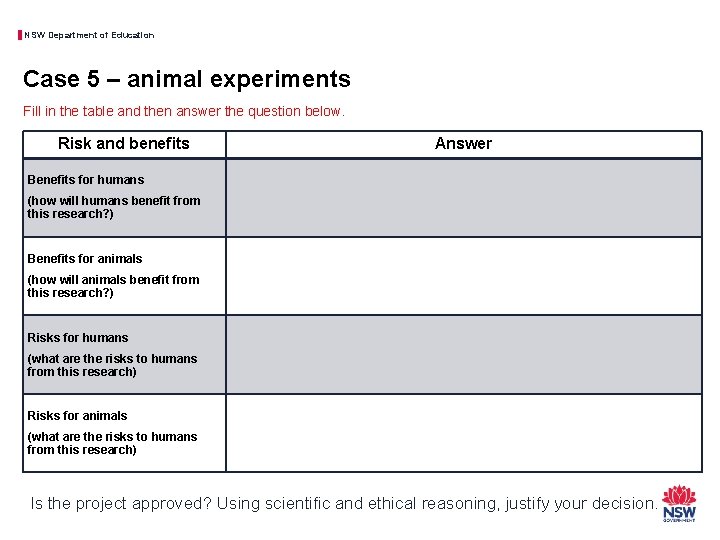
NSW Department of Education Case 5 – animal experiments Fill in the table and then answer the question below. Risk and benefits Answer Benefits for humans (how will humans benefit from this research? ) Benefits for animals (how will animals benefit from this research? ) Risks for humans (what are the risks to humans from this research) Risks for animals (what are the risks to humans from this research) Is the project approved? Using scientific and ethical reasoning, justify your decision.
NSW Department of Education Case 6 – animal experiments You are a member of an Animal Ethics Committee. Evaluate the following research proposal. • A research group at your University wants to determine the use of the drug ecstasy (methamphetamine) in parties. They propose to use rats, which will be maintained in a high-temperature enclosure (that mimics the high-temperature environments of party rooms). The rats can consume ecstasy solutions by pressing down on a lever in their cages. The rats will also be surgically-implanted with a catheter that allows the researchers to determine the quantity and frequency of ecstasy consumption. The experimental group consists of rats that will be maintained at 30 o. C, while the control group contains an identical number of rats which will be maintained at 23 o. C. All animals will be provided with food and water according to standard protocols. They will also be observed for distress (for example, hyperthermia – in which case, they will be humanely sacrificed). At the end of the experiment, all animals will be euthanised using standard procedures. Adapted from Cornish, JL, Clemens, KJ. Thompson, MR, Callaghan, PD, Dawson, B & Mc. Gregor, IS, High ambient temperature increases intravenous methamphetamine self-administration on fixed and progressive ratio schedules in rats J Psychopharmacol (2008) 22(1) 100 -110 Continued on the next slide
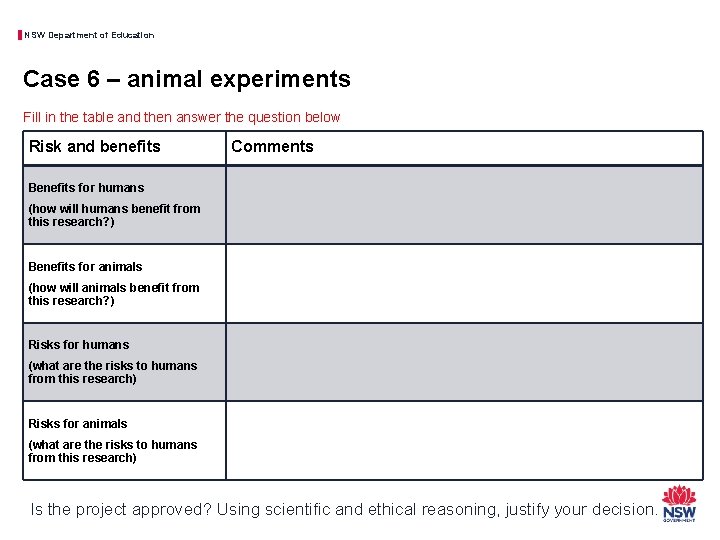
NSW Department of Education Case 6 – animal experiments Fill in the table and then answer the question below Risk and benefits Comments Benefits for humans (how will humans benefit from this research? ) Benefits for animals (how will animals benefit from this research? ) Risks for humans (what are the risks to humans from this research) Risks for animals (what are the risks to humans from this research) Is the project approved? Using scientific and ethical reasoning, justify your decision.
NSW Department of Education Acknowledgements • Science Extension © NSW Education Standards Authority (NESA) for and on behalf of the Crown in right of the State of New South Wales 2017. See the NESA website for additional copyright information.
NSW Department of Education © State of New South Wales (Department of Education), 2019 The copyright material published on this website is subject to the Copyright Act 1968 (Cth), and is owned by the NSW Department of Education or, where indicated, by a party other than the NSW Department of Education.
- Slides: 54