
NSS Physics Knowledge and Understanding Values and Attitudes
- Slides: 17
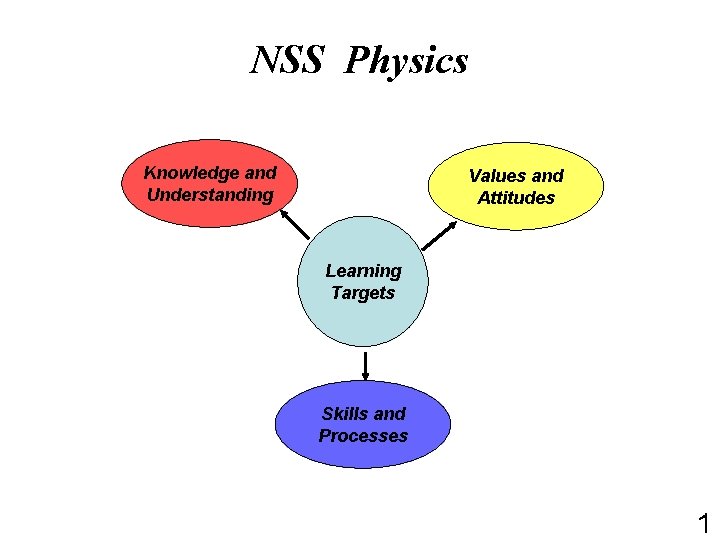
NSS Physics Knowledge and Understanding Values and Attitudes Learning Targets Skills and Processes 1
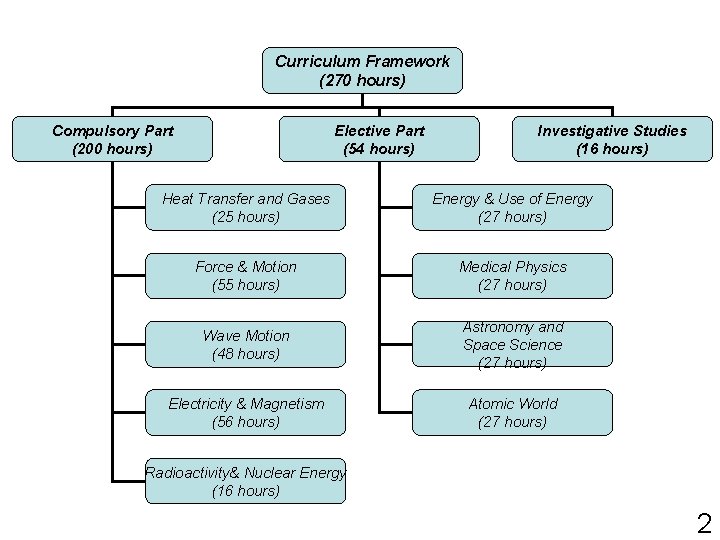
Curriculum Framework (270 hours) Compulsory Part (200 hours) Elective Part (54 hours) Investigative Studies (16 hours) Heat Transfer and Gases (25 hours) Energy & Use of Energy (27 hours) Force & Motion (55 hours) Medical Physics (27 hours) Wave Motion (48 hours) Astronomy and Space Science (27 hours) Electricity & Magnetism (56 hours) Atomic World (27 hours) Radioactivity& Nuclear Energy (16 hours) 2
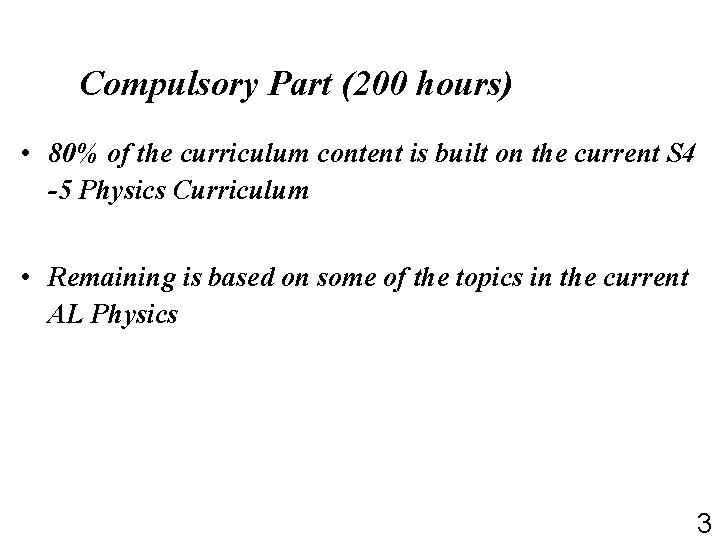
Compulsory Part (200 hours) • 80% of the curriculum content is built on the current S 4 -5 Physics Curriculum • Remaining is based on some of the topics in the current AL Physics 3
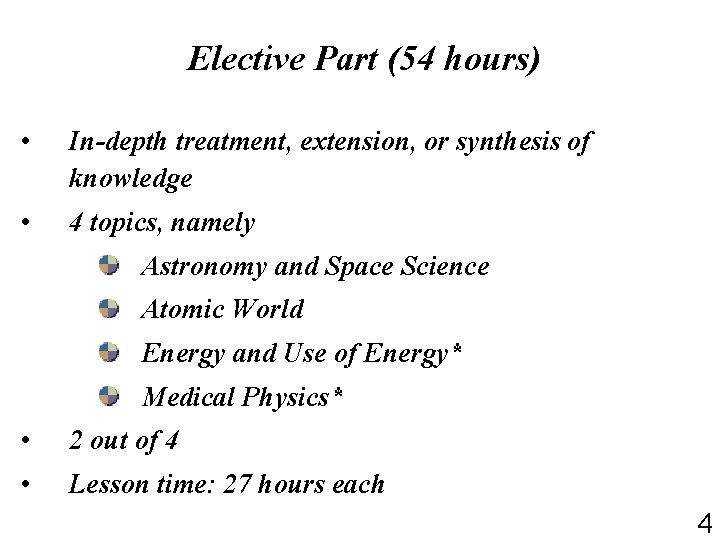
Elective Part (54 hours) • In-depth treatment, extension, or synthesis of knowledge • 4 topics, namely Astronomy and Space Science Atomic World Energy and Use of Energy* Medical Physics* • 2 out of 4 • Lesson time: 27 hours each 4
Investigative Study (I. S. ) • Students should conduct an investigation with a view to solving an authentic problem • 16 hours • I. S. is a collaborative (group-based) scientific experimental investigation 5
Investigative Study (I. S. ) (cont’d) Examples: • Building a box which has the best effect of keeping the temperature of an object or has the best cooling effect • Principle and application of a solar cell • Construction and testing of a wind turbine • Measuring the speed of a water rocket 6
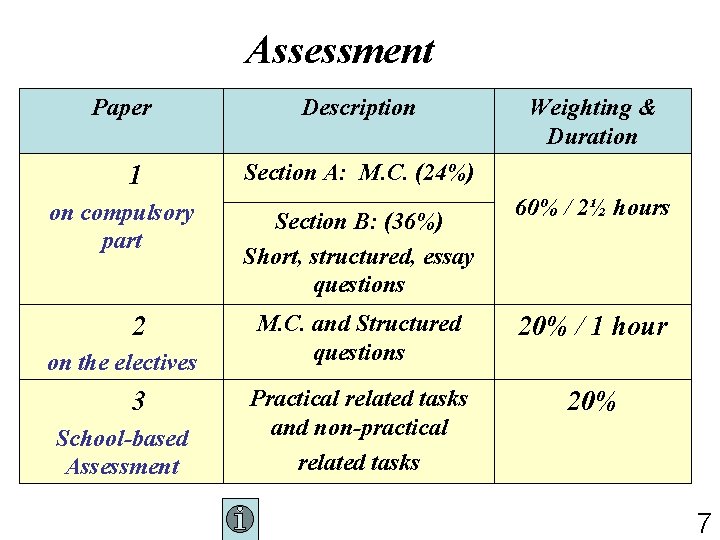
Assessment Paper 1 on compulsory part 2 on the electives 3 School-based Assessment Description Weighting & Duration Section A: M. C. (24%) Section B: (36%) Short, structured, essay questions 60% / 2½ hours M. C. and Structured questions 20% / 1 hour Practical related tasks and non-practical related tasks 20% 7
School-Based Assessment (1) Practical Related Assessments (60% of SBA) Area A : Performance in practical work Area B : Reporting of practical work I. S. : Investigative Study 8
School-Based Assessment (2) Non-Practical Related Assessments (40% of SBA) Note : In 2012 & 2013, only the SBA marks for practical related assessment are required to submit to HKEAA. Moreover, the marks of ‘Investigative Study’ are NOT required at this stage. 9
The End 10
School-Based Assessment Examples of assignments: • Read, analyse and report the works of some physicists in their contribution toward the understanding of the universe • Design a poster / pamphlet / web page advising on ways in which people can use energy more efficiently • Report scientific knowledge and concepts acquired after a visit to a power station or the HK Science Museum • Construct animation to illustrate the process of fission / fusion 11
12
13
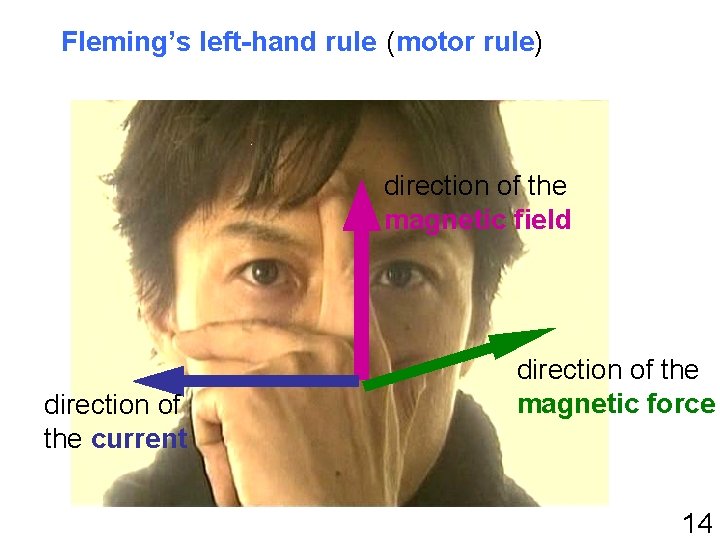
Fleming’s left-hand rule (motor rule) direction of the magnetic field direction of the current direction of the magnetic force 14
15
End of The End 16
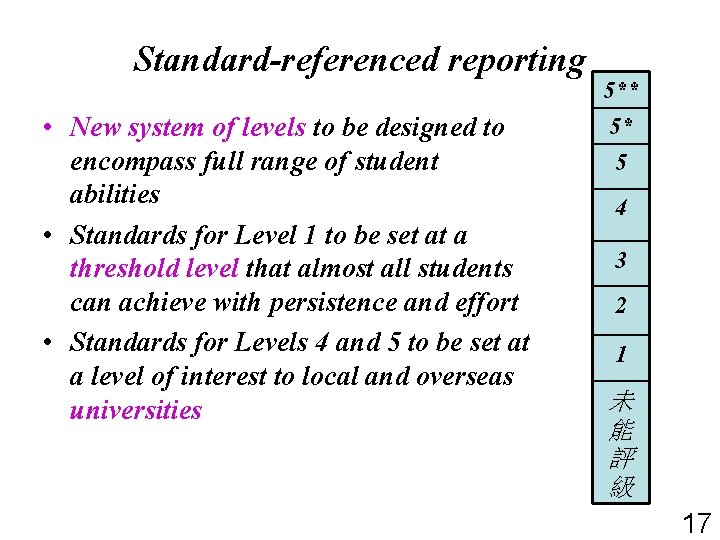
Standard-referenced reporting • New system of levels to be designed to encompass full range of student abilities • Standards for Level 1 to be set at a threshold level that almost all students can achieve with persistence and effort • Standards for Levels 4 and 5 to be set at a level of interest to local and overseas universities 5** 5* 5 4 3 2 1 未 能 評 級 17