
NS 3310 Physical Science Studies Rocks and Minerals


- Slides: 21
NS 3310 – Physical Science Studies Rocks and Minerals
Rocks Tell Stories • Limestone • Basalt • Breccia • Gneiss
Key Questions • What is a rock? • What is a mineral? • What different kinds of rocks are there? • How do rocks and minerals form? • How can you tell them apart? • Can one type of rock change into another type of rock? • Can you tell the story of a rock by “reading” its characteristics?
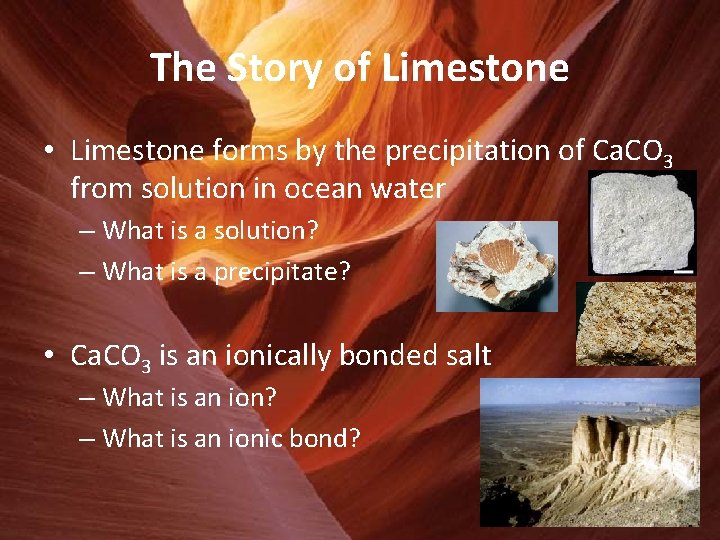
The Story of Limestone • Limestone forms by the precipitation of Ca. CO 3 from solution in ocean water – What is a solution? – What is a precipitate? • Ca. CO 3 is an ionically bonded salt – What is an ion? – What is an ionic bond?
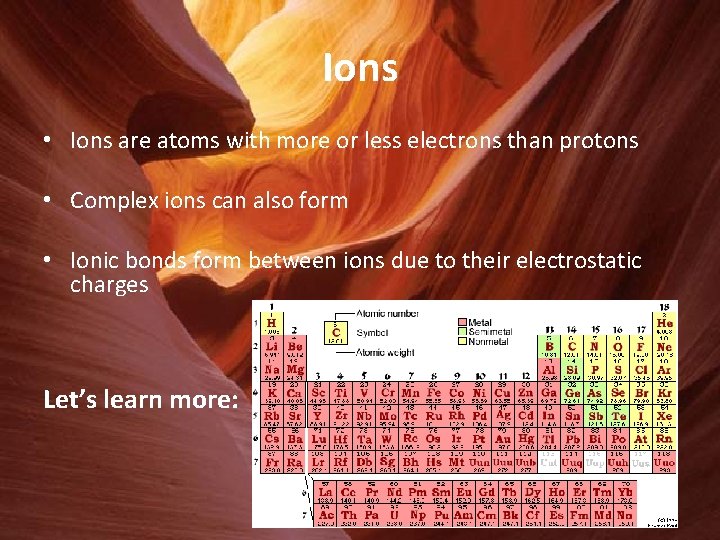
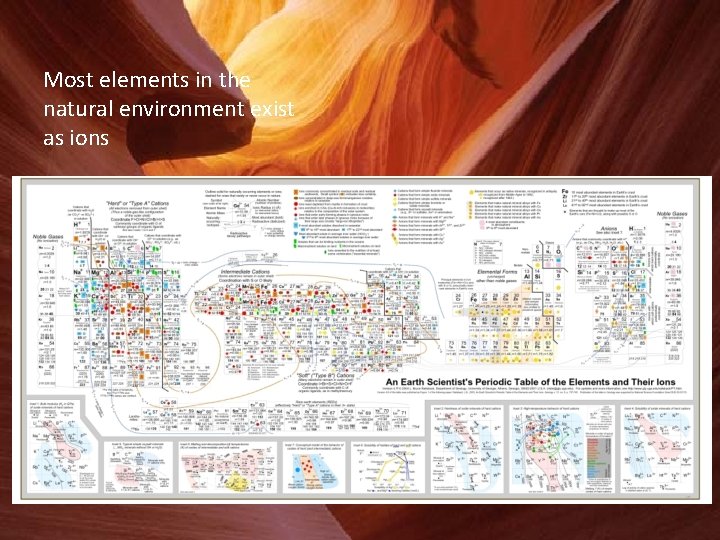
Ions • Ions are atoms with more or less electrons than protons • Complex ions can also form • Ionic bonds form between ions due to their electrostatic charges Let’s learn more:
Most elements in the natural environment exist as ions
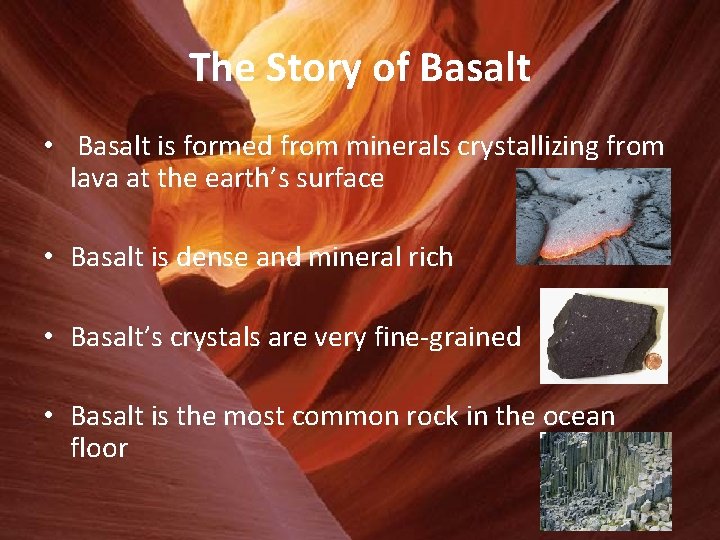
The Story of Basalt • Basalt is formed from minerals crystallizing from lava at the earth’s surface • Basalt is dense and mineral rich • Basalt’s crystals are very fine-grained • Basalt is the most common rock in the ocean floor
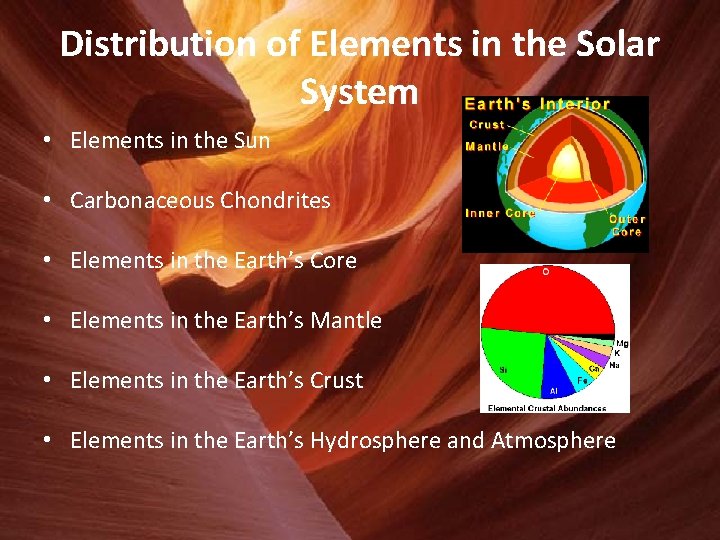
Distribution of Elements in the Solar System • Elements in the Sun • Carbonaceous Chondrites • Elements in the Earth’s Core • Elements in the Earth’s Mantle • Elements in the Earth’s Crust • Elements in the Earth’s Hydrosphere and Atmosphere
Minerals • Minerals are naturally occurring solids formed through geological processes that have a characteristic chemical composition, a highly ordered atomic structure, and specific physical properties • Chemical Composition – Elemental Minerals – Carbonate Minerals (and others with ionic bonds) – Silicate Minerals (and others with covalent bonds) • Physical Properties – – – – Crystal Structure Cleavage and Fracture Streak and Color Luster Hardness Specific Gravity Special Properties
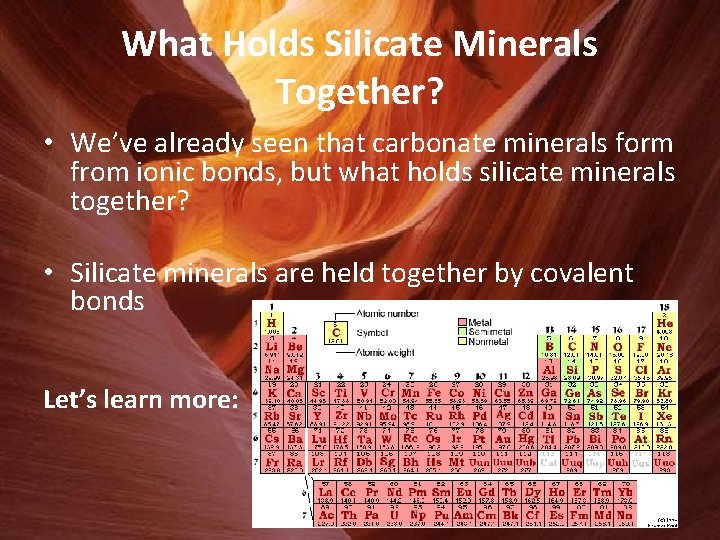
What Holds Silicate Minerals Together? • We’ve already seen that carbonate minerals form from ionic bonds, but what holds silicate minerals together? • Silicate minerals are held together by covalent bonds Let’s learn more:
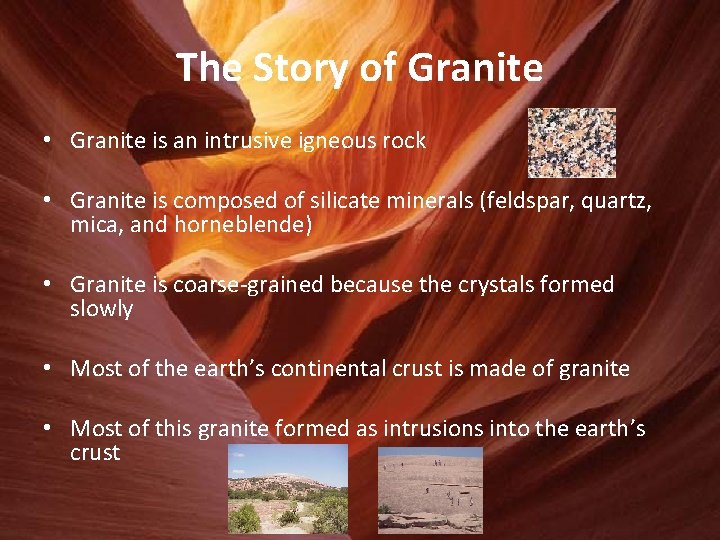
The Story of Granite • Granite is an intrusive igneous rock • Granite is composed of silicate minerals (feldspar, quartz, mica, and horneblende) • Granite is coarse-grained because the crystals formed slowly • Most of the earth’s continental crust is made of granite • Most of this granite formed as intrusions into the earth’s crust
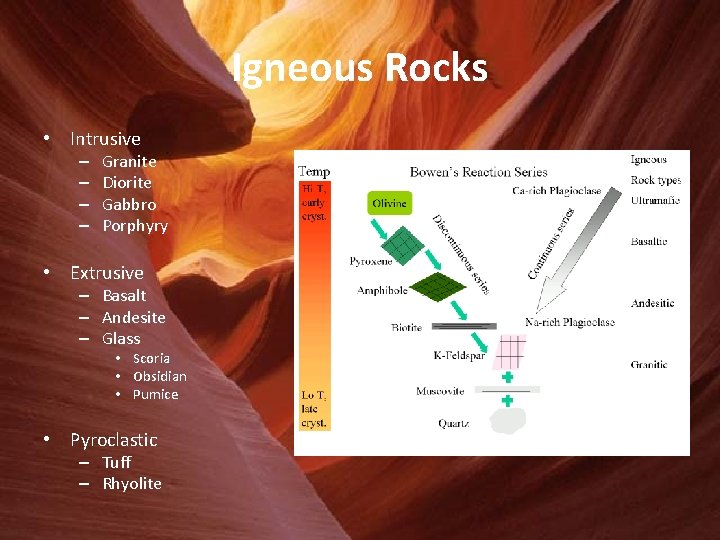
Igneous Rocks • Intrusive – – Granite Diorite Gabbro Porphyry • Extrusive – Basalt – Andesite – Glass • Scoria • Obsidian • Pumice • Pyroclastic – Tuff – Rhyolite
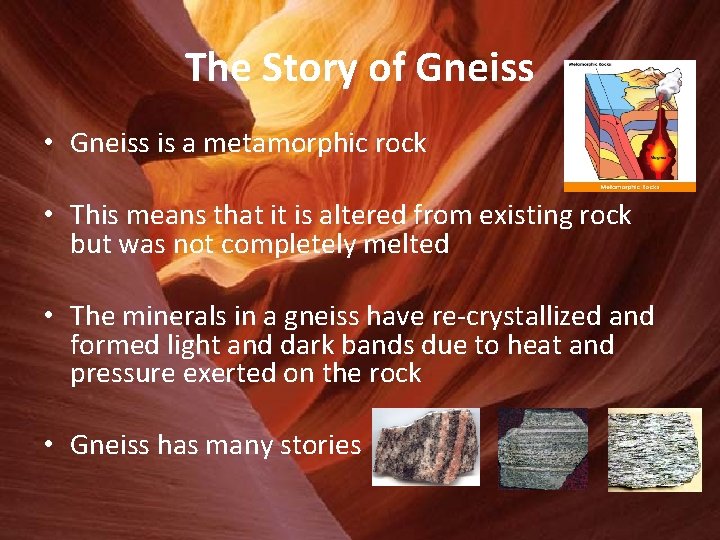
The Story of Gneiss • Gneiss is a metamorphic rock • This means that it is altered from existing rock but was not completely melted • The minerals in a gneiss have re-crystallized and formed light and dark bands due to heat and pressure exerted on the rock • Gneiss has many stories
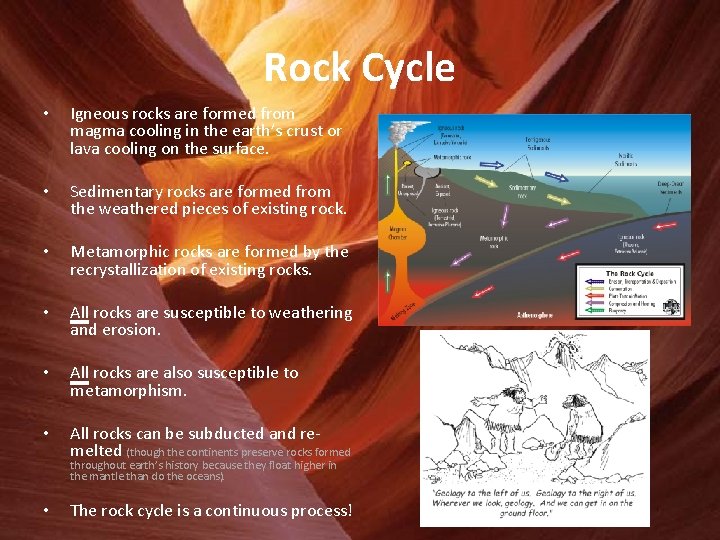
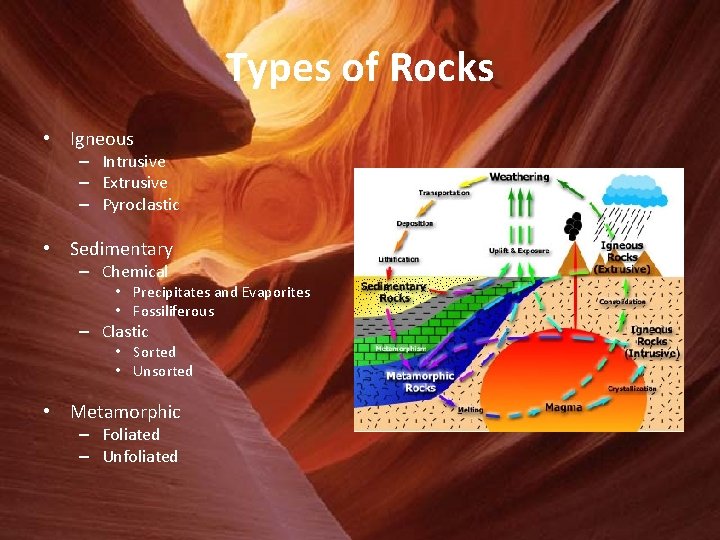
Rock Cycle • Igneous rocks are formed from magma cooling in the earth’s crust or lava cooling on the surface. • Sedimentary rocks are formed from the weathered pieces of existing rock. • Metamorphic rocks are formed by the recrystallization of existing rocks. • All rocks are susceptible to weathering and erosion. • All rocks are also susceptible to metamorphism. • All rocks can be subducted and remelted (though the continents preserve rocks formed throughout earth’s history because they float higher in the mantle than do the oceans). • The rock cycle is a continuous process!
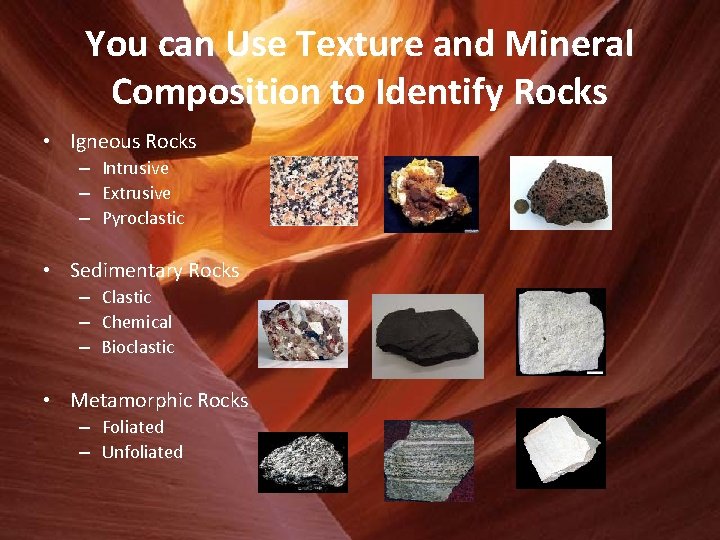
You can Use Texture and Mineral Composition to Identify Rocks • Igneous Rocks – Intrusive – Extrusive – Pyroclastic • Sedimentary Rocks – Clastic – Chemical – Bioclastic • Metamorphic Rocks – Foliated – Unfoliated
Types of Rocks • Igneous – Intrusive – Extrusive – Pyroclastic • Sedimentary – Chemical • Precipitates and Evaporites • Fossiliferous – Clastic • Sorted • Unsorted • Metamorphic – Foliated – Unfoliated
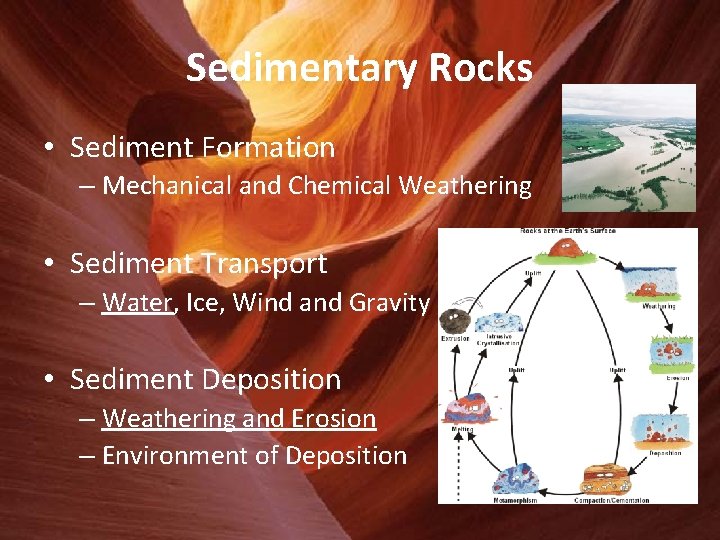
Sedimentary Rocks • Sediment Formation – Mechanical and Chemical Weathering • Sediment Transport – Water, Ice, Wind and Gravity • Sediment Deposition – Weathering and Erosion – Environment of Deposition
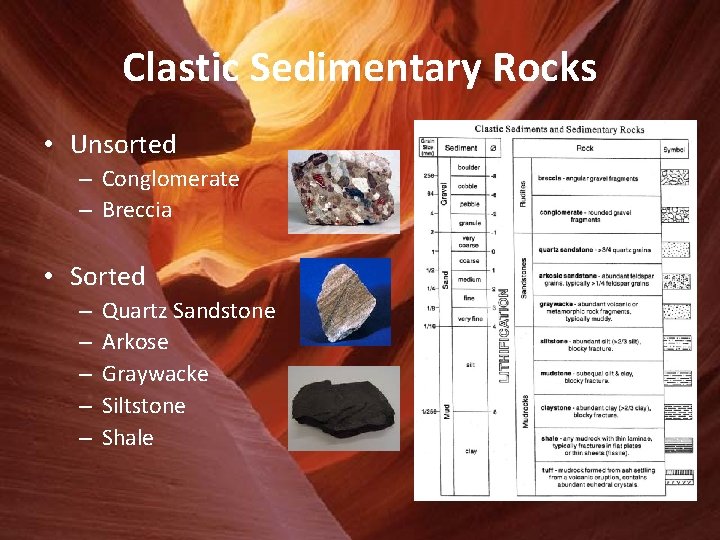
Clastic Sedimentary Rocks • Unsorted – Conglomerate – Breccia • Sorted – – – Quartz Sandstone Arkose Graywacke Siltstone Shale
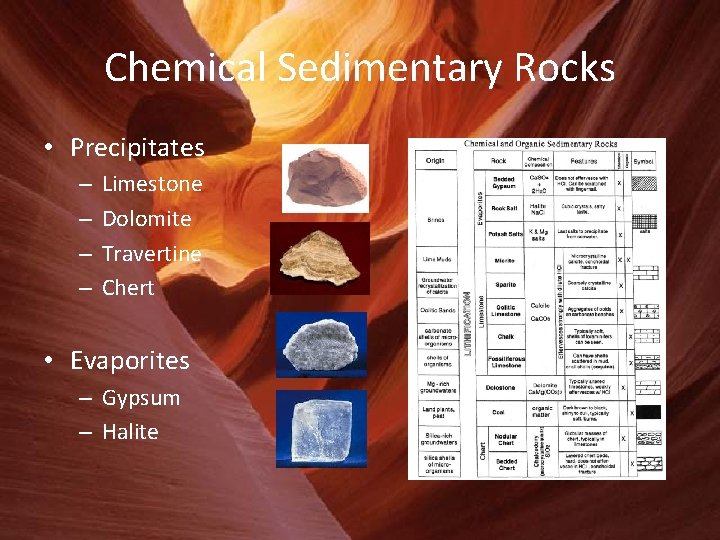
Chemical Sedimentary Rocks • Precipitates – – Limestone Dolomite Travertine Chert • Evaporites – Gypsum – Halite
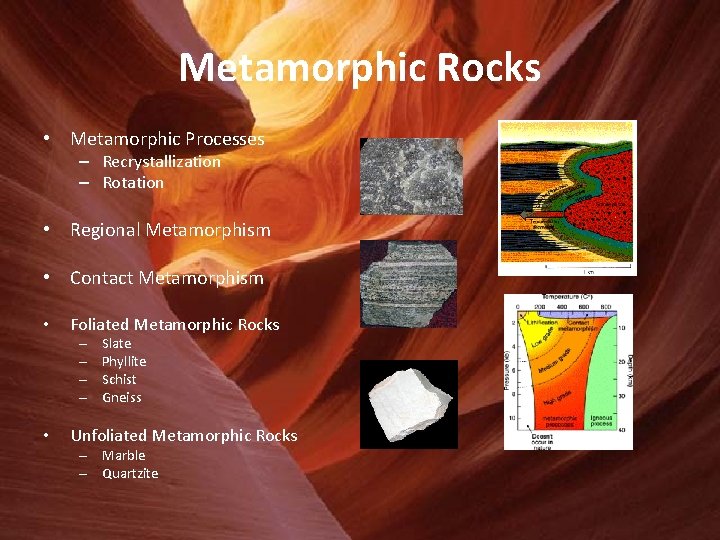
Metamorphic Rocks • Metamorphic Processes – Recrystallization – Rotation • Regional Metamorphism • Contact Metamorphism • Foliated Metamorphic Rocks – – • Slate Phyllite Schist Gneiss Unfoliated Metamorphic Rocks – Marble – Quartzite
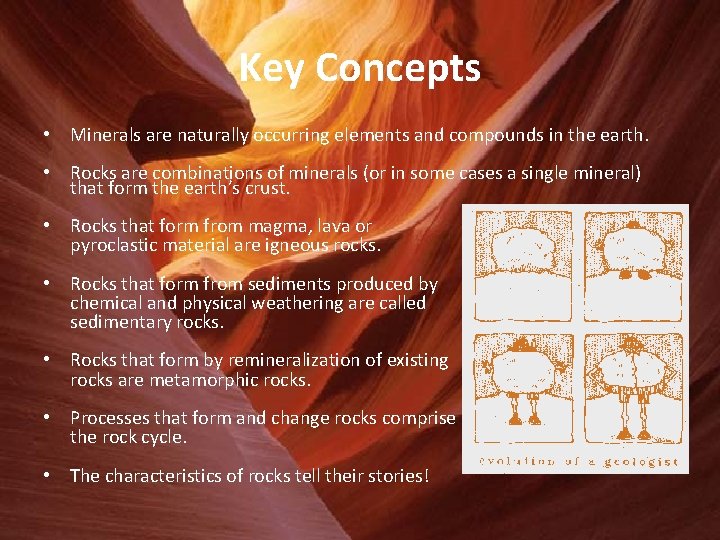
Key Concepts • Minerals are naturally occurring elements and compounds in the earth. • Rocks are combinations of minerals (or in some cases a single mineral) that form the earth’s crust. • Rocks that form from magma, lava or pyroclastic material are igneous rocks. • Rocks that form from sediments produced by chemical and physical weathering are called sedimentary rocks. • Rocks that form by remineralization of existing rocks are metamorphic rocks. • Processes that form and change rocks comprise the rock cycle. • The characteristics of rocks tell their stories!