
NS 1 Module 2020 2021 Dr Mohammad Odaibat
- NS 1 Module 2020 -2021 Dr. Mohammad Odaibat
Cerebrospinal Fluid (CSF) • Composition and formation • CSF is the 3 rd major fluid of the body • Adult volume 90 -150 m. L • Neonate volume 10 -60 m. L • CSF functions • Supplies nutrients to nervous tissues • Removes metabolic wastes • Protects / cushions against trauma
Cerebrospinal Fluid (CSF) Four • • major categories of disease Meningeal infections Subarachnoid hemorrhage CNS malignancy Demyelinating disease Indications for analysis • To confirm diagnosis of meningitis • Evaluate for intracranial hemorrhage • Diagnose malignancies, leukemia • Investigate central nervous system disorders
Sample collection and Processing of CSF samples • • Samples collection Sample transport and storage Gross description (Appearance) Counting cells Gram stainning and others Culturing using suitable media Other identification techniques
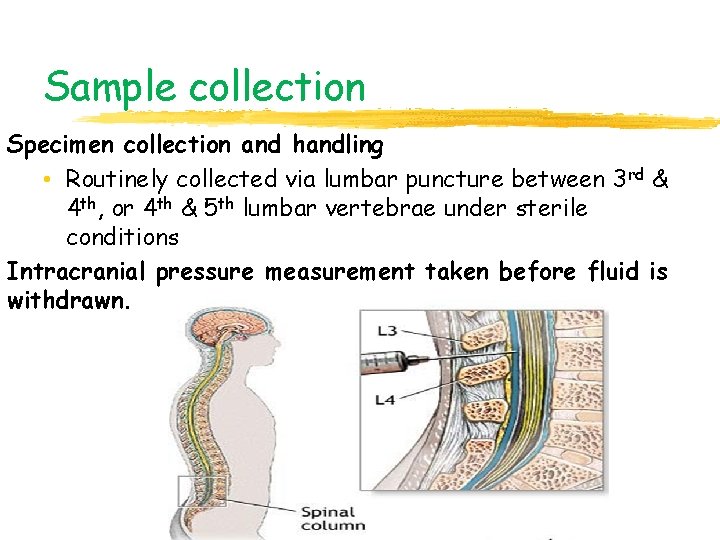
Sample collection Specimen collection and handling • Routinely collected via lumbar puncture between 3 rd & 4 th, or 4 th & 5 th lumbar vertebrae under sterile conditions Intracranial pressure measurement taken before fluid is withdrawn.
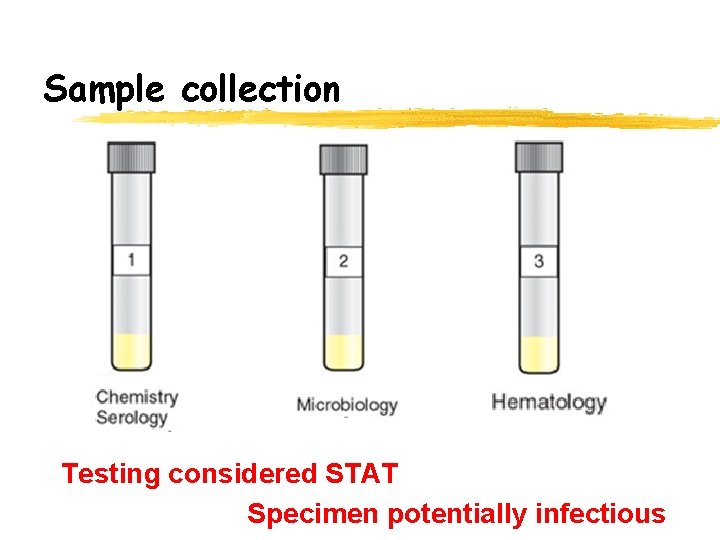
Sample collection Testing considered STAT Specimen potentially infectious
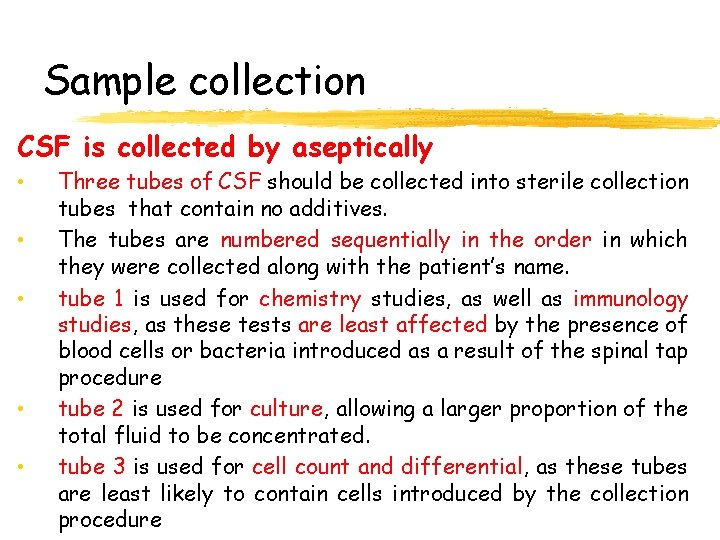
Sample collection CSF is collected by aseptically • • • Three tubes of CSF should be collected into sterile collection tubes that contain no additives. The tubes are numbered sequentially in the order in which they were collected along with the patient’s name. tube 1 is used for chemistry studies, as well as immunology studies, as these tests are least affected by the presence of blood cells or bacteria introduced as a result of the spinal tap procedure tube 2 is used for culture, allowing a larger proportion of the total fluid to be concentrated. tube 3 is used for cell count and differential, as these tubes are least likely to contain cells introduced by the collection procedure
Sample collection
Sample transport and storage • Specimens for microbiology studies should never be refrigerated; if not rapidly processed, CSF should be incubated (35° C) or left at room temperature (< 1 h). • • The CSF for viral studies may be refrigerated for as long as 24 hours after collection or frozen at − 70° C if a longer delay is anticipated (should never be frozen at temperatures above − 70° C). CSF specimen for hematology studies can be refrigerated. The CSF for chemistry and serology can be frozen (− 20° C). RBC lyse in 1 hour, WBC in 2 hrs.
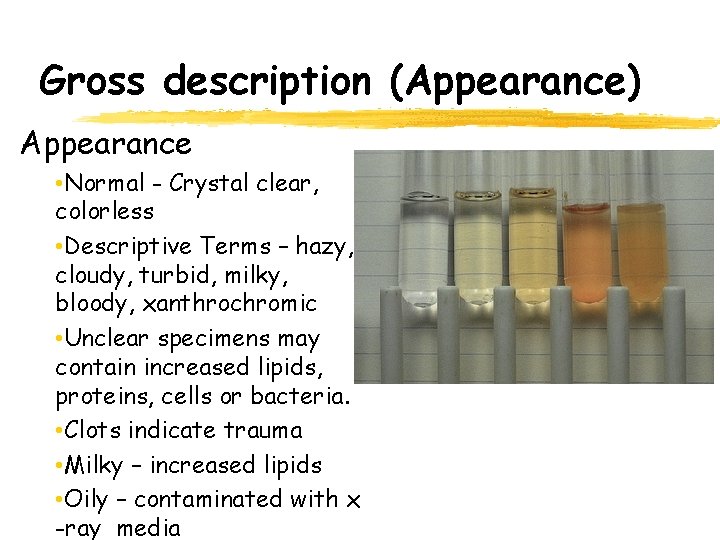
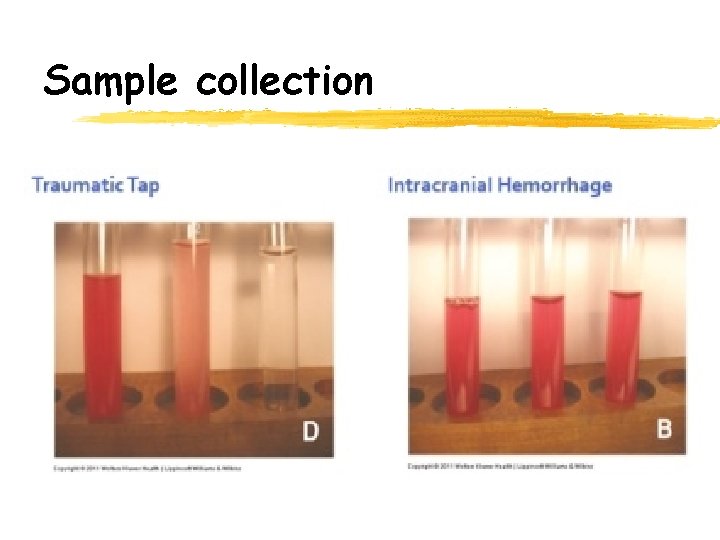
Gross description (Appearance) Appearance • Normal - Crystal clear, colorless • Descriptive Terms – hazy, cloudy, turbid, milky, bloody, xanthrochromic • Unclear specimens may contain increased lipids, proteins, cells or bacteria. • Clots indicate trauma • Milky – increased lipids • Oily – contaminated with x -ray media
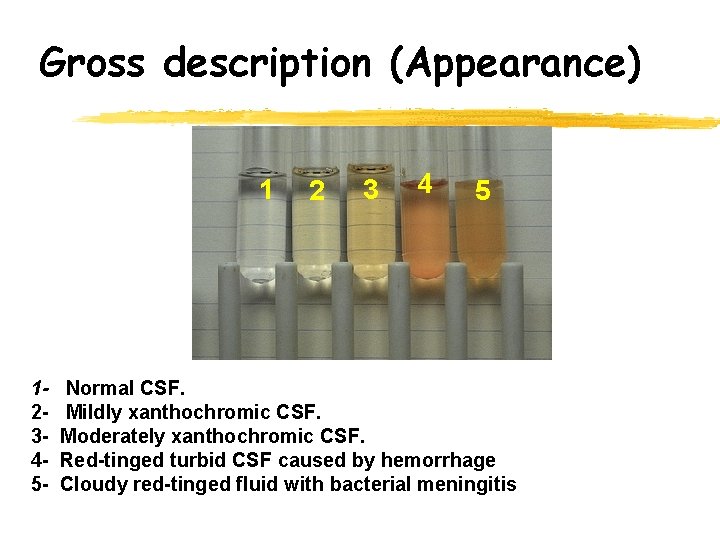
Gross description (Appearance) 1 12345 - 2 3 4 5 Normal CSF. Mildly xanthochromic CSF. Moderately xanthochromic CSF. Red-tinged turbid CSF caused by hemorrhage Cloudy red-tinged fluid with bacterial meningitis
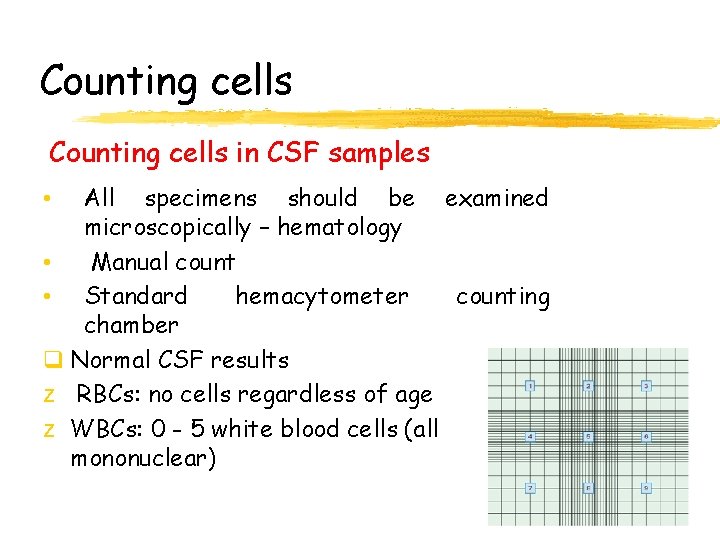
Counting cells in CSF samples All specimens should be examined microscopically – hematology • Manual count • Standard hemacytometer counting chamber q Normal CSF results z RBCs: no cells regardless of age z WBCs: 0 - 5 white blood cells (all mononuclear) •
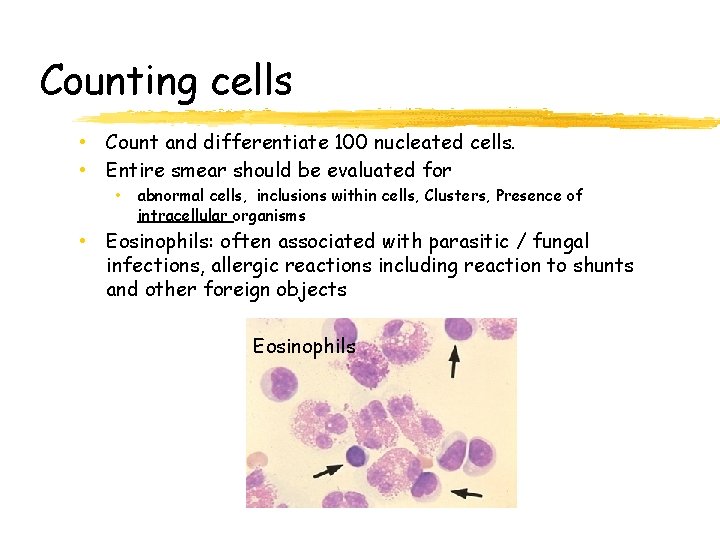
Counting cells • Count and differentiate 100 nucleated cells. • Entire smear should be evaluated for • abnormal cells, inclusions within cells, Clusters, Presence of intracellular organisms • Eosinophils: often associated with parasitic / fungal infections, allergic reactions including reaction to shunts and other foreign objects Eosinophils
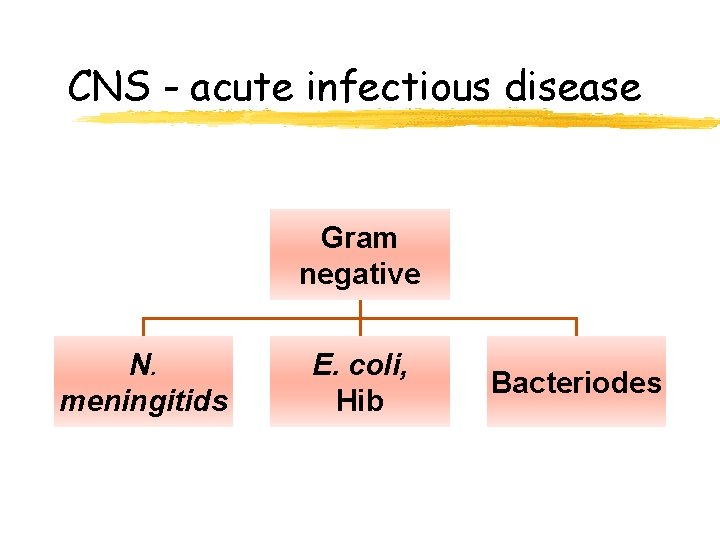
CNS - acute infectious disease Gram negative N. meningitids E. coli, Hib Bacteriodes
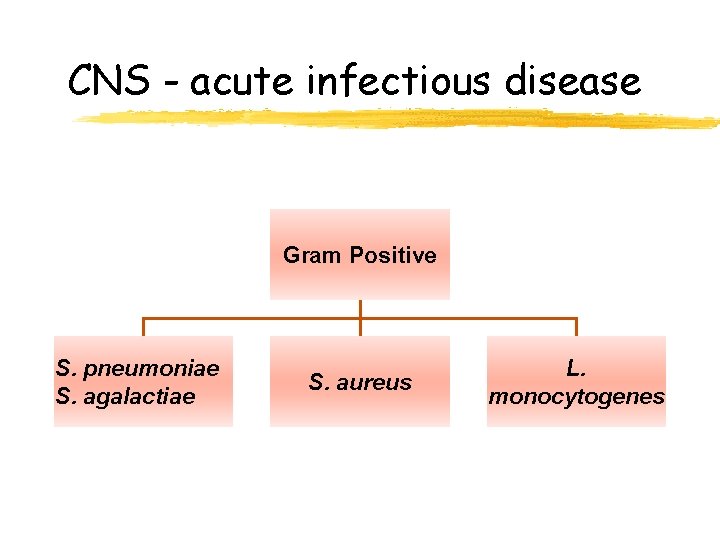
CNS - acute infectious disease Gram Positive S. pneumoniae S. agalactiae S. aureus L. monocytogenes
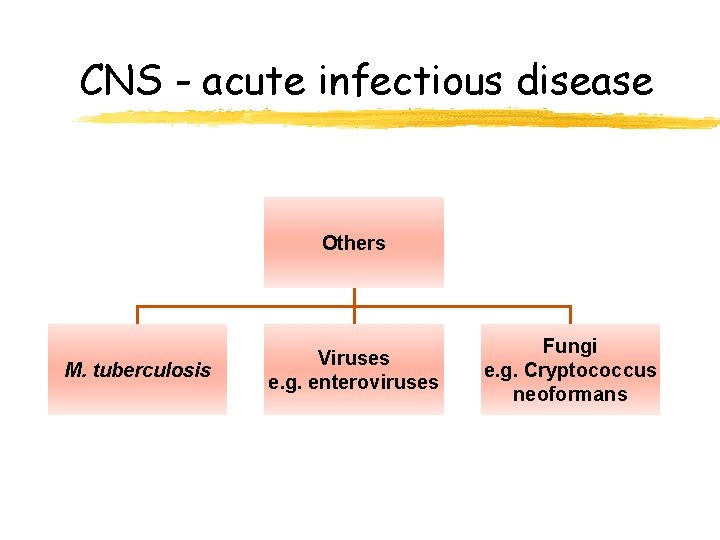
CNS - acute infectious disease Others M. tuberculosis Viruses e. g. enteroviruses Fungi e. g. Cryptococcus neoformans
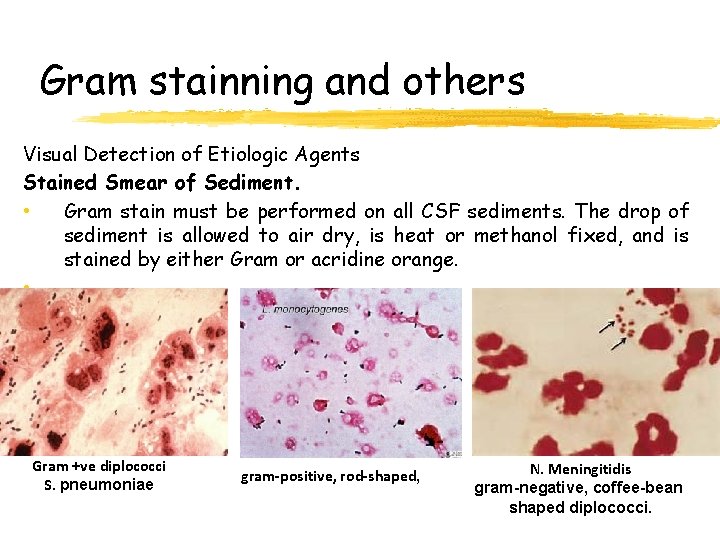
Gram stainning and others Visual Detection of Etiologic Agents Stained Smear of Sediment. • Gram stain must be performed on all CSF sediments. The drop of sediment is allowed to air dry, is heat or methanol fixed, and is stained by either Gram or acridine orange. • Gram +ve diplococci S. pneumoniae gram-positive, rod-shaped, N. Meningitidis gram-negative, coffee-bean shaped diplococci.
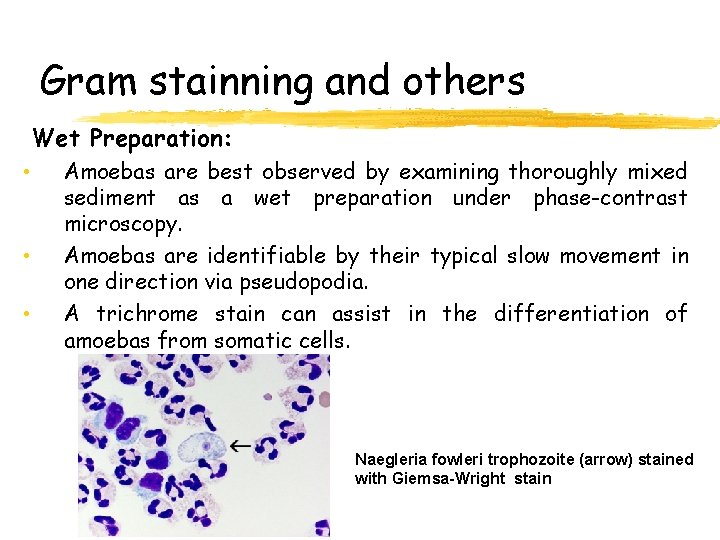
Gram stainning and others Wet Preparation: • • • Amoebas are best observed by examining thoroughly mixed sediment as a wet preparation under phase-contrast microscopy. Amoebas are identifiable by their typical slow movement in one direction via pseudopodia. A trichrome stain can assist in the differentiation of amoebas from somatic cells. Naegleria fowleri trophozoite (arrow) stained with Giemsa-Wright stain
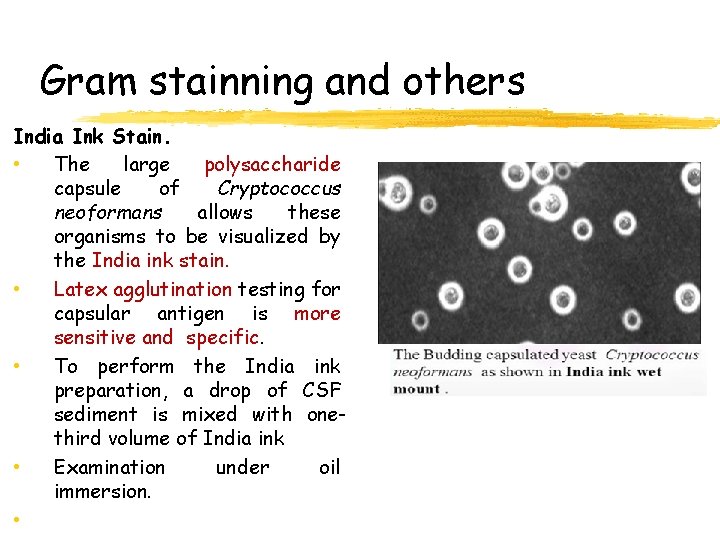
Gram stainning and others India Ink Stain. • The large polysaccharide capsule of Cryptococcus neoformans allows these organisms to be visualized by the India ink stain. • Latex agglutination testing for capsular antigen is more sensitive and specific. • To perform the India ink preparation, a drop of CSF sediment is mixed with onethird volume of India ink • Examination under oil immersion. •
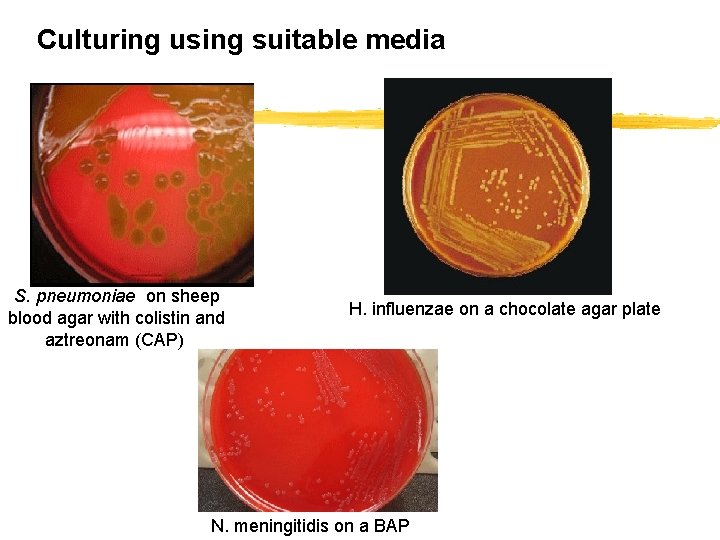
Culturing using suitable media S. pneumoniae on sheep blood agar with colistin and aztreonam (CAP) H. influenzae on a chocolate agar plate N. meningitidis on a BAP
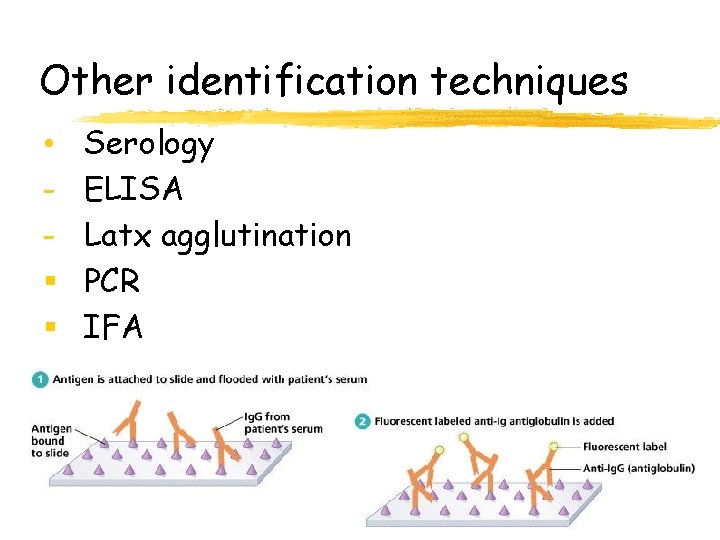
Other identification techniques • § § Serology ELISA Latx agglutination PCR IFA
Notes • • The volume of CSF is critical for detecting certain microorganisms, such as mycobacteria and fungi. A minimum of 5 to 10 m. L is recommended for detecting these agents by centrifugation and subsequent culture. When the laboratory receives an inadequate volume of CSF , the physician should be consulted regarding the order of priority for laboratory tests. Processing too little specimen lowers the sensitivity of laboratory tests, which may lead to falsenegative results.
- Slides: 22