
NRG Oncology Semiannual Meeting A Randomized Phase III

- Slides: 10
NRG Oncology Semiannual Meeting A Randomized Phase III Trial of Induction/Consolidation Atezolizumab + SBRT versus SBRT Alone in High risk, Early Stage NSCLC SWOG/NRG S 1914 Charles B. Simone, II, MD July 17, 2020
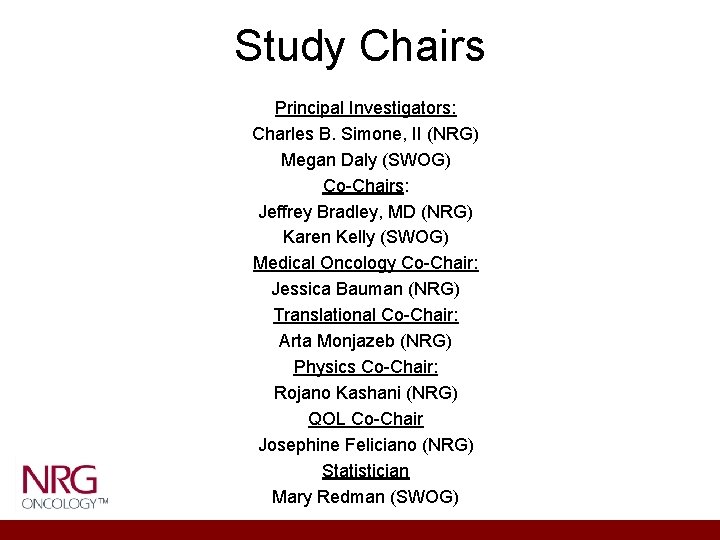
Study Chairs Principal Investigators: Charles B. Simone, II (NRG) Megan Daly (SWOG) Co-Chairs: Jeffrey Bradley, MD (NRG) Karen Kelly (SWOG) Medical Oncology Co-Chair: Jessica Bauman (NRG) Translational Co-Chair: Arta Monjazeb (NRG) Physics Co-Chair: Rojano Kashani (NRG) QOL Co-Chair Josephine Feliciano (NRG) Statistician Mary Redman (SWOG)
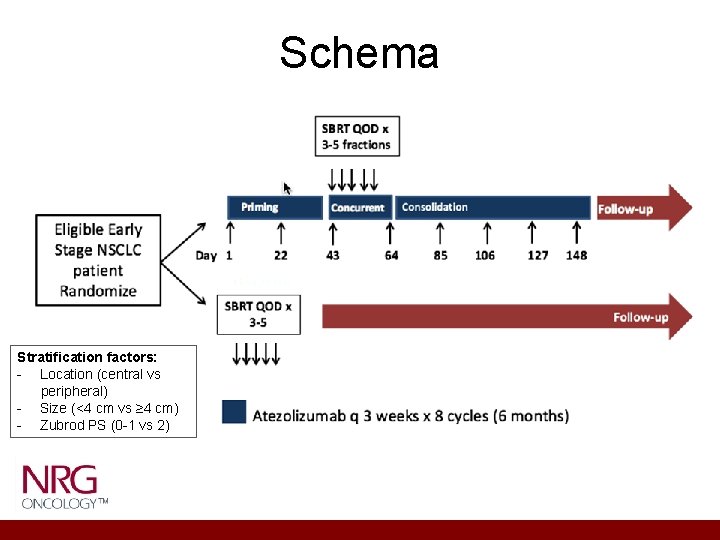
Schema Stratification factors: - Location (central vs peripheral) - Size (<4 cm vs ≥ 4 cm) - Zubrod PS (0 -1 vs 2)
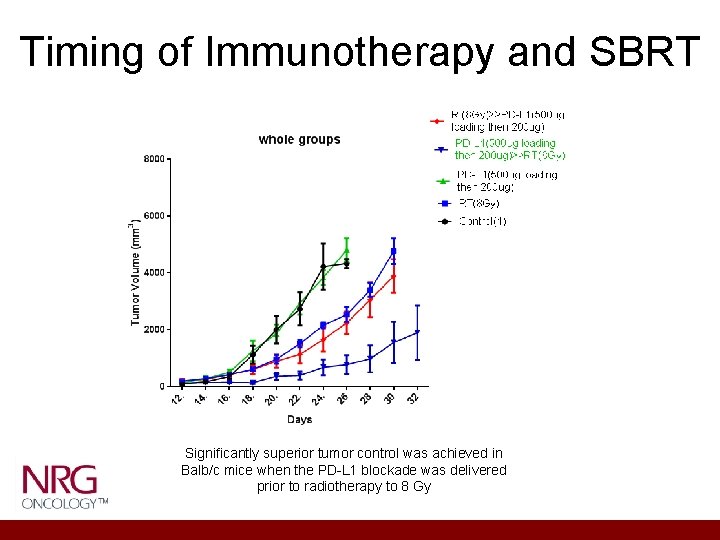
Timing of Immunotherapy and SBRT Significantly superior tumor control was achieved in Balb/c mice when the PD-L 1 blockade was delivered prior to radiotherapy to 8 Gy
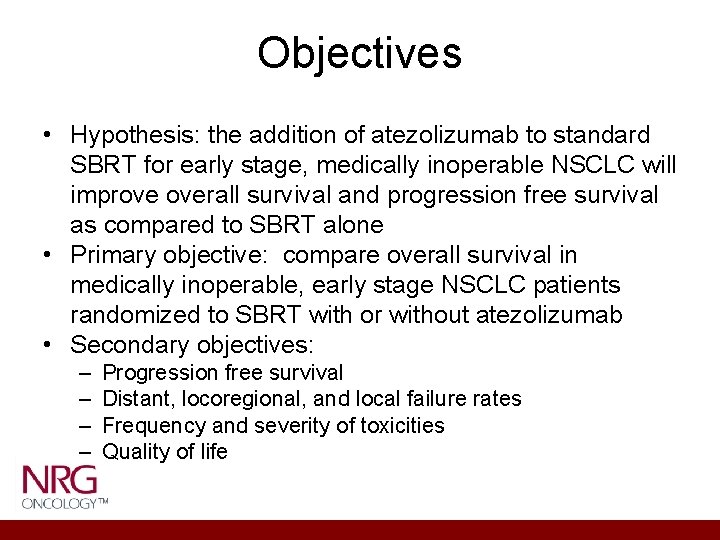
Objectives • Hypothesis: the addition of atezolizumab to standard SBRT for early stage, medically inoperable NSCLC will improve overall survival and progression free survival as compared to SBRT alone • Primary objective: compare overall survival in medically inoperable, early stage NSCLC patients randomized to SBRT with or without atezolizumab • Secondary objectives: – – Progression free survival Distant, locoregional, and local failure rates Frequency and severity of toxicities Quality of life
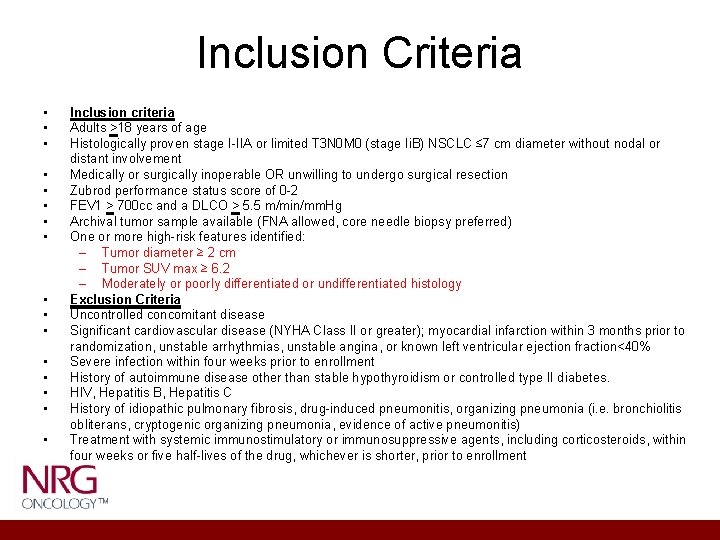
Inclusion Criteria • • • • Inclusion criteria Adults >18 years of age Histologically proven stage I-IIA or limited T 3 N 0 M 0 (stage Ii. B) NSCLC ≤ 7 cm diameter without nodal or distant involvement Medically or surgically inoperable OR unwilling to undergo surgical resection Zubrod performance status score of 0 -2 FEV 1 > 700 cc and a DLCO > 5. 5 m/min/mm. Hg Archival tumor sample available (FNA allowed, core needle biopsy preferred) One or more high-risk features identified: – Tumor diameter ≥ 2 cm – Tumor SUV max ≥ 6. 2 – Moderately or poorly differentiated or undifferentiated histology Exclusion Criteria Uncontrolled concomitant disease Significant cardiovascular disease (NYHA Class II or greater); myocardial infarction within 3 months prior to randomization, unstable arrhythmias, unstable angina, or known left ventricular ejection fraction<40% Severe infection within four weeks prior to enrollment History of autoimmune disease other than stable hypothyroidism or controlled type II diabetes. HIV, Hepatitis B, Hepatitis C History of idiopathic pulmonary fibrosis, drug-induced pneumonitis, organizing pneumonia (i. e. bronchiolitis obliterans, cryptogenic organizing pneumonia, evidence of active pneumonitis) Treatment with systemic immunostimulatory or immunosuppressive agents, including corticosteroids, within four weeks or five half-lives of the drug, whichever is shorter, prior to enrollment
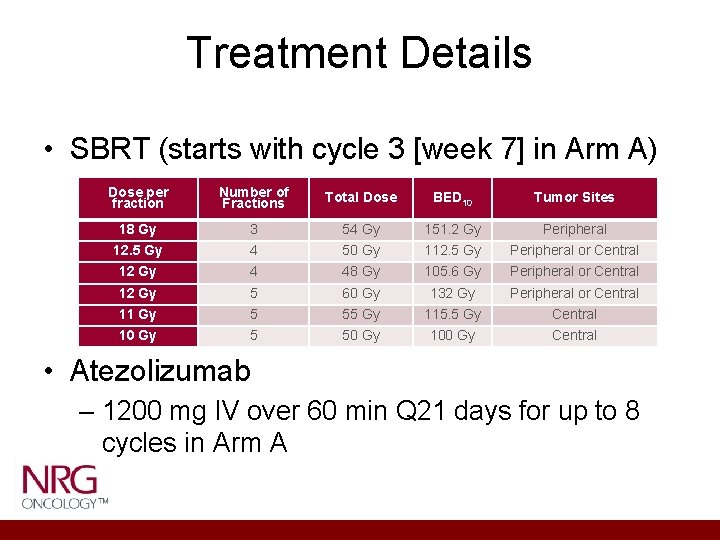
Treatment Details • SBRT (starts with cycle 3 [week 7] in Arm A) Dose per fraction Number of Fractions Total Dose BED 10 Tumor Sites 18 Gy 3 54 Gy 151. 2 Gy Peripheral 12. 5 Gy 4 50 Gy 112. 5 Gy Peripheral or Central 12 Gy 4 48 Gy 105. 6 Gy Peripheral or Central 12 Gy 5 60 Gy 132 Gy Peripheral or Central 11 Gy 5 55 Gy 115. 5 Gy Central 10 Gy 5 50 Gy 100 Gy Central • Atezolizumab – 1200 mg IV over 60 min Q 21 days for up to 8 cycles in Arm A
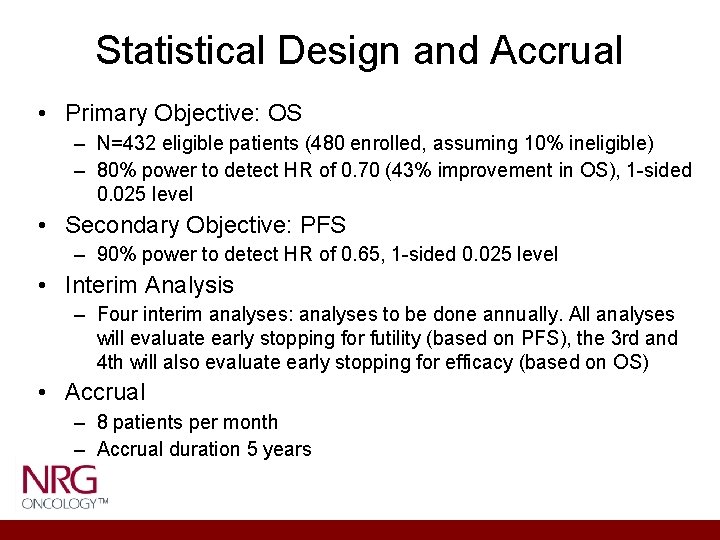
Statistical Design and Accrual • Primary Objective: OS – N=432 eligible patients (480 enrolled, assuming 10% ineligible) – 80% power to detect HR of 0. 70 (43% improvement in OS), 1 -sided 0. 025 level • Secondary Objective: PFS – 90% power to detect HR of 0. 65, 1 -sided 0. 025 level • Interim Analysis – Four interim analyses: analyses to be done annually. All analyses will evaluate early stopping for futility (based on PFS), the 3 rd and 4 th will also evaluate early stopping for efficacy (based on OS) • Accrual – 8 patients per month – Accrual duration 5 years
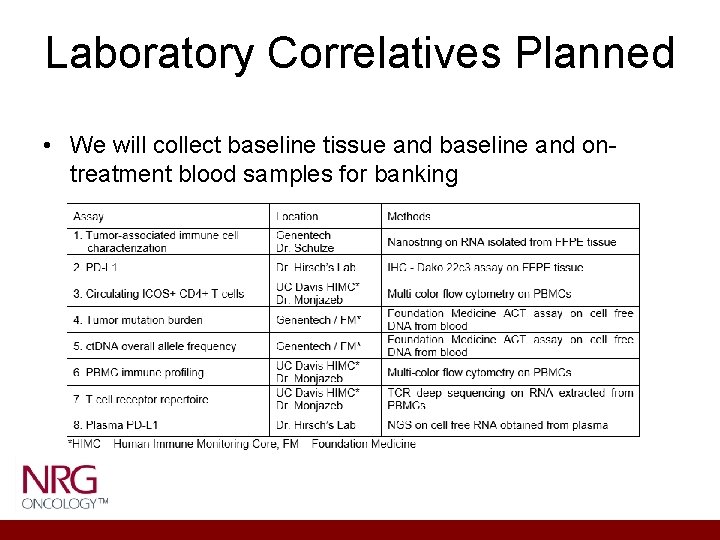
Laboratory Correlatives Planned • We will collect baseline tissue and baseline and ontreatment blood samples for banking
Status • Study activation date: 5/28/20 • Accrue!!!