
NRCS Soil Updates State Technical Committee Presentation Kim


- Slides: 24
NRCS Soil Updates State Technical Committee Presentation Kim Mc. Cracken State Soil Scientist September 23, 2014
NRCS Soil Updates Two concurrent efforts to update soil data and information • “Seamless” soil map from coast to coast • Continued research, analysis and modeling to improve our understanding of use and limitations based on soil properties – focus on key soil interpretations
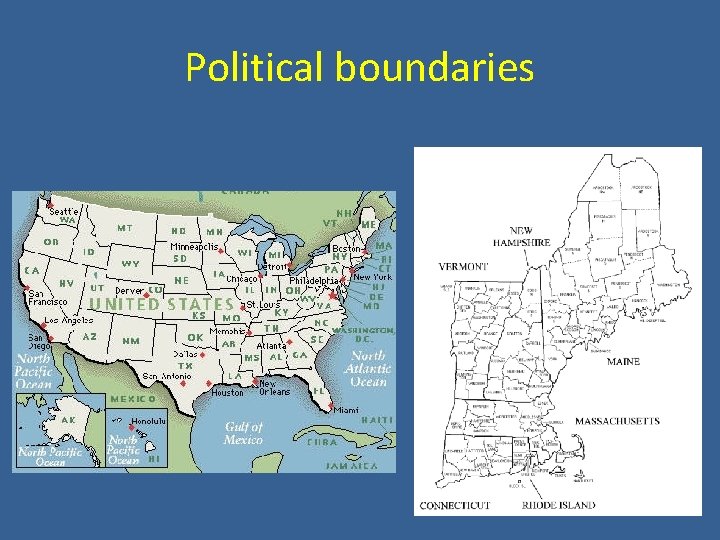
Political boundaries
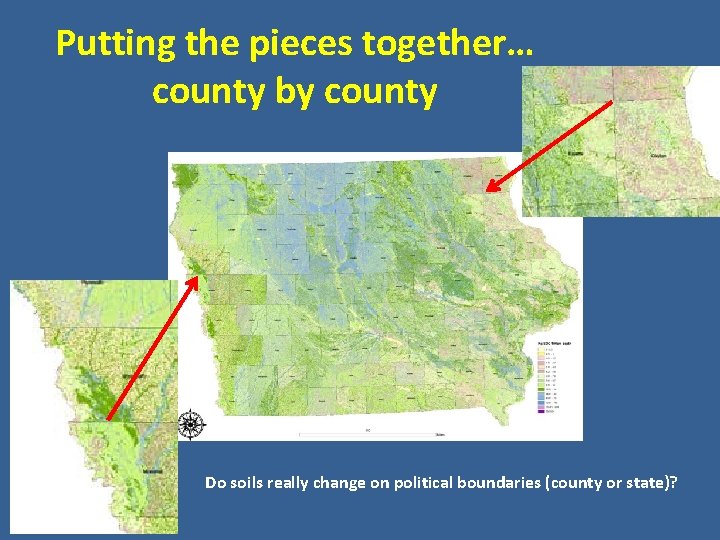
Soil Survey Completion Dates Soils have been mapped and data collected/analyzed over 60 + year span. Different staff, technology and resources.
Putting the pieces together… county by county Do soils really change on political boundaries (county or state)?
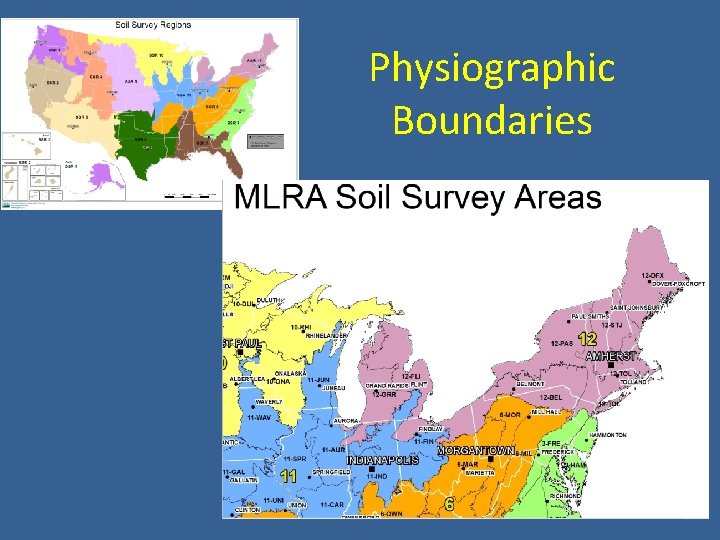
Physiographic Boundaries
Changing the lines • Not happening in the near future • Gradual updates over time will improve spatial joins • Access to Li. DAR data had greatly improved our ability to read the landscape and estimate where to draw “the line”
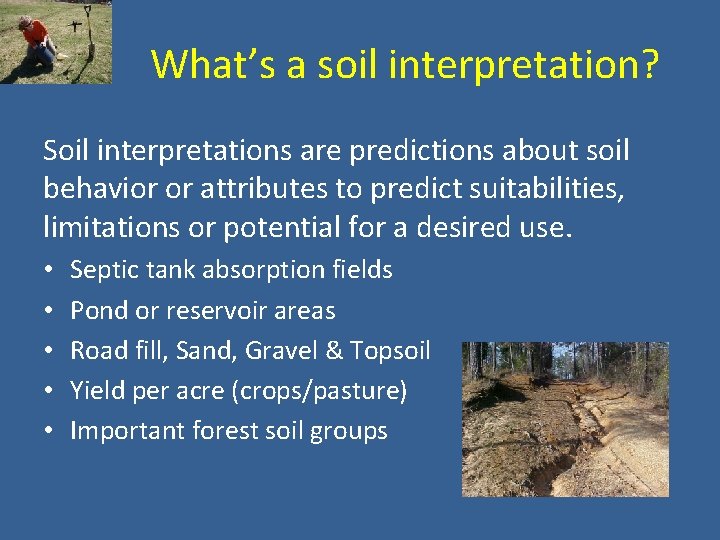
What’s a soil interpretation? Soil interpretations are predictions about soil behavior or attributes to predict suitabilities, limitations or potential for a desired use. • • • Septic tank absorption fields Pond or reservoir areas Road fill, Sand, Gravel & Topsoil Yield per acre (crops/pasture) Important forest soil groups
Why are updates needed? • Updates are needed to reflect the latest research findings and improved modeling capabilities and to provide nationwide consistency. • The current work updated all HSGs, T and K Factors nationwide
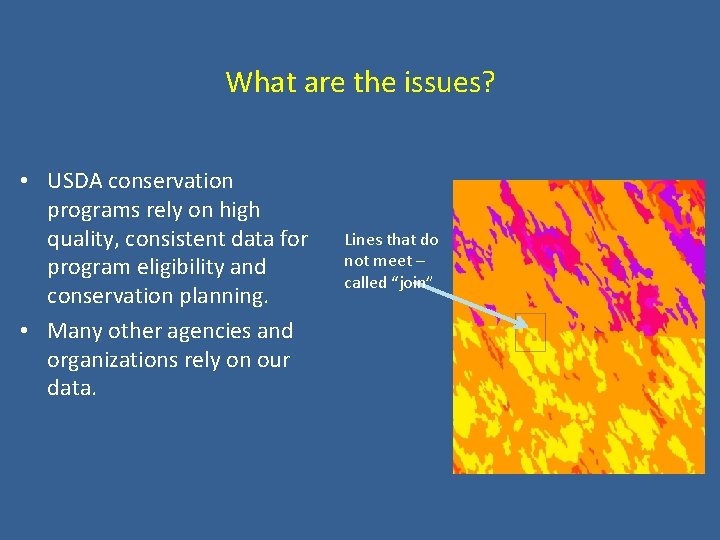
What are the issues? • USDA conservation programs rely on high quality, consistent data for program eligibility and conservation planning. • Many other agencies and organizations rely on our data. Lines that do not meet – called “join”
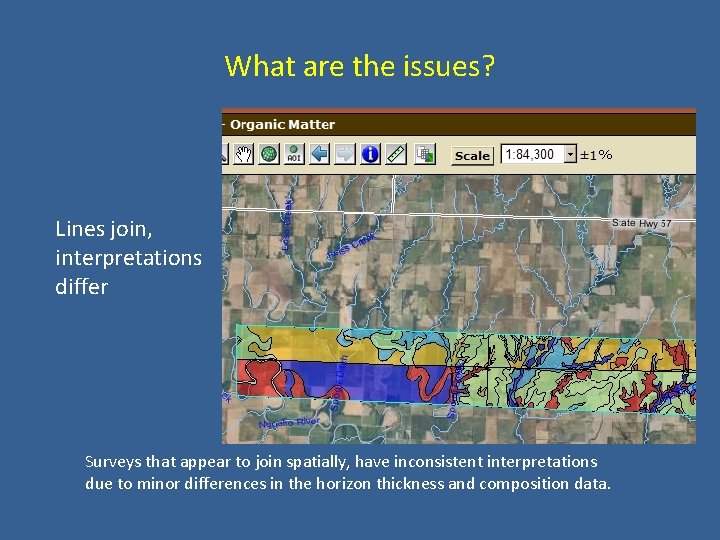
What are the issues? Lines join, interpretations differ Surveys that appear to join spatially, have inconsistent interpretations due to minor differences in the horizon thickness and composition data.
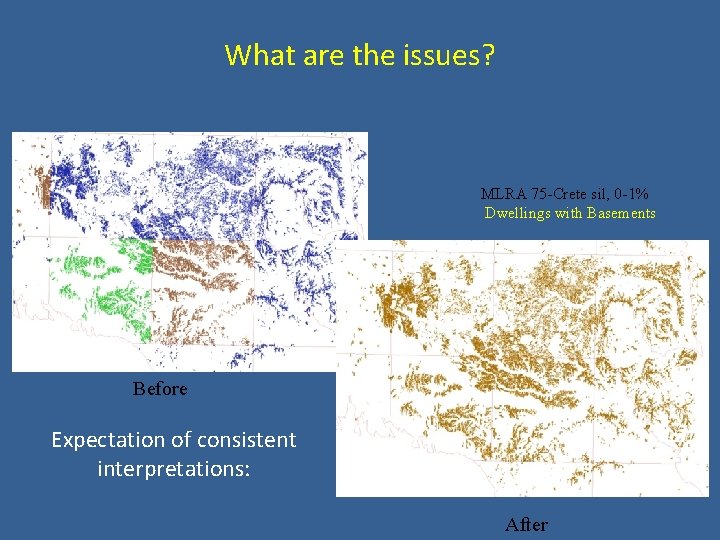
What are the issues? MLRA 75 -Crete sil, 0 -1% Dwellings with Basements Before Expectation of consistent interpretations: After
Updated Soil Interpretations • K - relative susceptibility of the soil to sheet and rill erosion • T - the maximum amount of annual sheet and rill erosion that permits the fertility and productive capacity of the soil to be maintained indefinitely • Hydrologic soil groups - group of soils having similar runoff potential under similar storm and cover conditions
How will the changes affect Conservation Compliance? • USDA Highly Erodible Land (HEL) determinations will continue to use historic data. • The T and K Factors in effect when an NRCS approved Conservation Plan was developed will continue to be used until the Plan is significantly revised. • When an existing NRCS approved Conservation Plan is significantly revised, or when a new Plan is developed, the updated HSG, T and K Factors will be used.
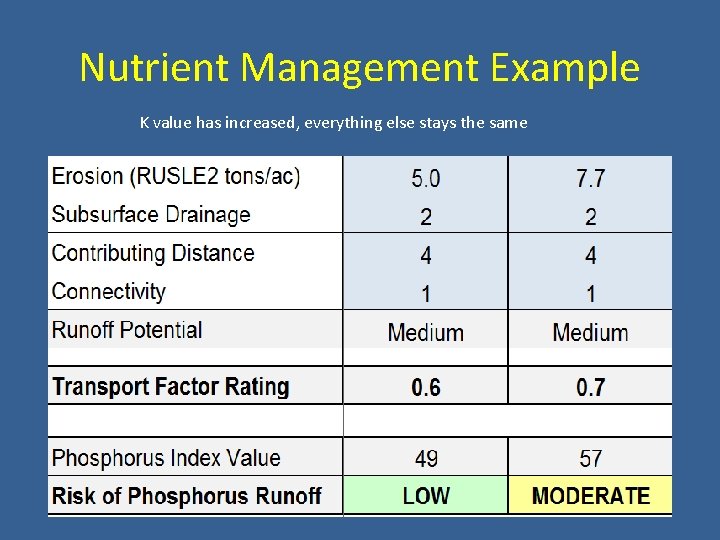
How will the changes affect nutrient management plans? • For nutrient management, if the K value increases, calculated soil loss (tons/ac per year) using RUSLE 2 will increase. • P runoff risk may increase if calculated soil loss increases and everything else stays the same. • P application rates may be more restrictive.
Nutrient Management Example K value has increased, everything else stays the same
Words of Caution • The soil has not changed! • We’re using nationally derived models to update interpretations • If you use this information in your work, please let me know if you have issues with the new data/interps
What’s next? • This was just a quick overview. There’s more info in the handout • The new data will be available from the National Office for use on 10/1/2014. • At the State Level we will be updating tools and will provide additional information in the coming months.
Contact info If you have questions or want more in-depth information: Kim Mc. Cracken State Soil Scientist Durham State Office kim. mccracken@nh. usda. gov 603 -868 -7581
K Factor • An index which quantifies the relative susceptibility of the soil to sheet and rill erosion. K Factor is • Soil properties affecting K Factor include texture, organic matter content, structure, infiltration, and permeability.
T Factor • the maximum amount of annual sheet and rill erosion that permits the fertility and productive capacity of the soil to be maintained indefinitely. • T Factor values range from 1 ton per acre per year for the most fragile soils, to 5 tons per acre per year for soils that can sustain more erosion without losing significant productive potential. • Soil properties affecting T Factor include texture, permeability, available water capacity, and depth to restrictive layers such as rock, clay or gravel.
Hydrologic Soil Groups • group of soils having similar runoff potential under similar storm and cover conditions. • Soil properties that influence runoff potential include depth to seasonal high water table, saturated hydraulic conductivity (Ksat), and depth to a layer with a very slow water transmission rate
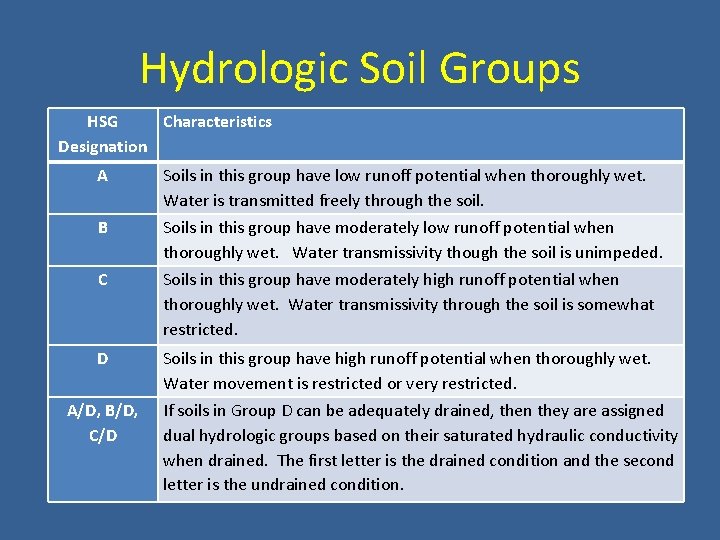
Hydrologic Soil Groups HSG Characteristics Designation A Soils in this group have low runoff potential when thoroughly wet. Water is transmitted freely through the soil. B Soils in this group have moderately low runoff potential when thoroughly wet. Water transmissivity though the soil is unimpeded. C Soils in this group have moderately high runoff potential when thoroughly wet. Water transmissivity through the soil is somewhat restricted. D Soils in this group have high runoff potential when thoroughly wet. Water movement is restricted or very restricted. A/D, B/D, C/D If soils in Group D can be adequately drained, then they are assigned dual hydrologic groups based on their saturated hydraulic conductivity when drained. The first letter is the drained condition and the second letter is the undrained condition.