
NPS AUV Workbench Rehearsal Reality Replay for Underwater
NPS AUV Workbench: Rehearsal, Reality, Replay for Underwater Vehicle Operations Don Brutzman Naval Postgraduate School (NPS) Center for Autonomous Underwater Vehicle (AUV) Research Modeling, Virtual Environments & Simulation (MOVES) Institute 4 November 2004 1
Naval Postgraduate School (NPS) • U. S. Navy’s University • Numerous curricula, most sciences & engineering 2 -year masters degrees with thesis § Ph. D. research § • Joint, allied and civil-service students, faculty USN, USMC, USAF: § International student officers: § Faculty § ~1300 ~350 ~300 • Research efforts significant § FY 2004 reimbursables: $100 M 2
Topics • • • Why modeling & simulation? AUV Workbench Components Sonar Visualization Technologies: X 3 D, XML, XMSF Demonstrations, Looking ahead Acronyms! 3
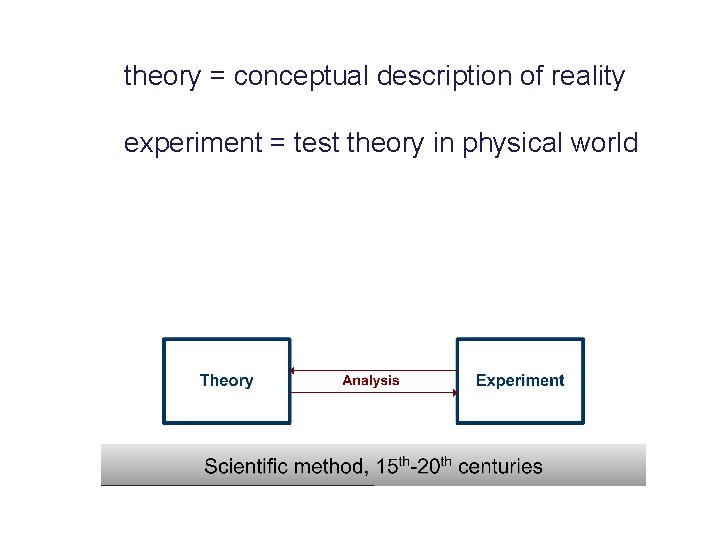
theory = conceptual description of reality experiment = test theory in physical world Scientific method, 15 th-20 th centuries 4
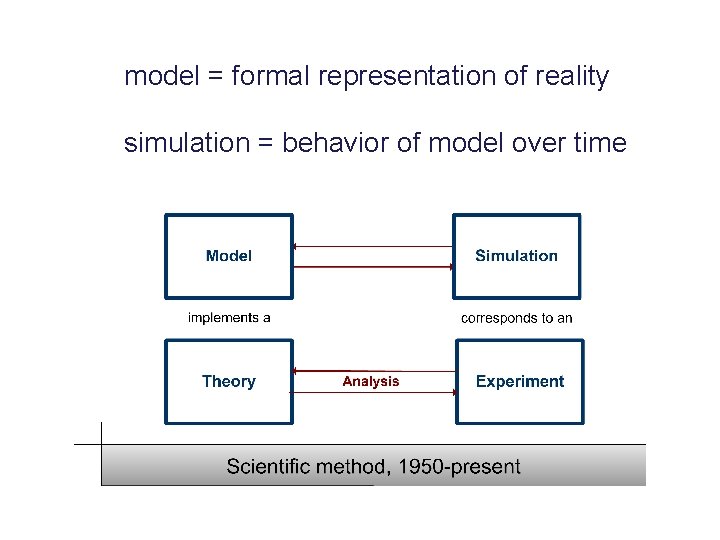
model = formal representation of reality Scientific method, 1950 -present simulation = behavior of model over time Scientific method, 1950 -present 5
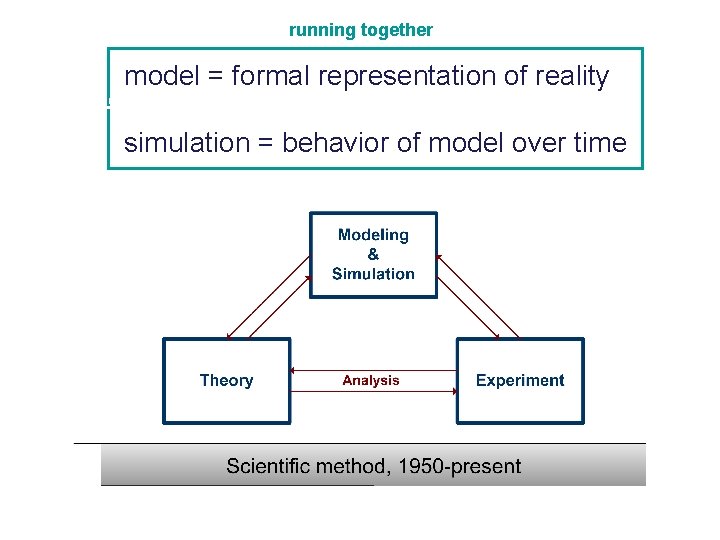
running together model = formal representation of reality Scientific method, 1950 -present simulation = behavior of model over time Scientific method, 1950 -present 6
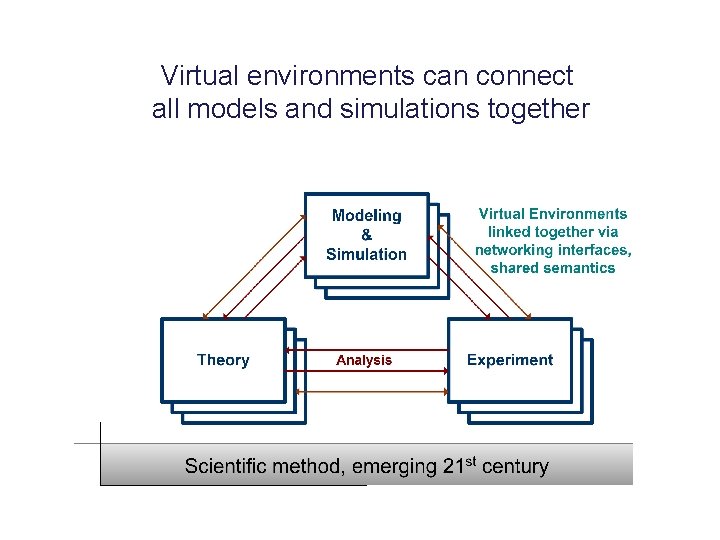
Virtual environments can connect all models and simulations together Scientific method, emerging 21 st century Scientific emerging 21 st century 7
AUV Workbench Project Description • • Open source, Java, XML, X 3 D graphics Mission planning Robot mission execution Hydrodynamics response Sonar modeling 3 D visualization Compressed radio frequency (RF) and acoustic communications 8
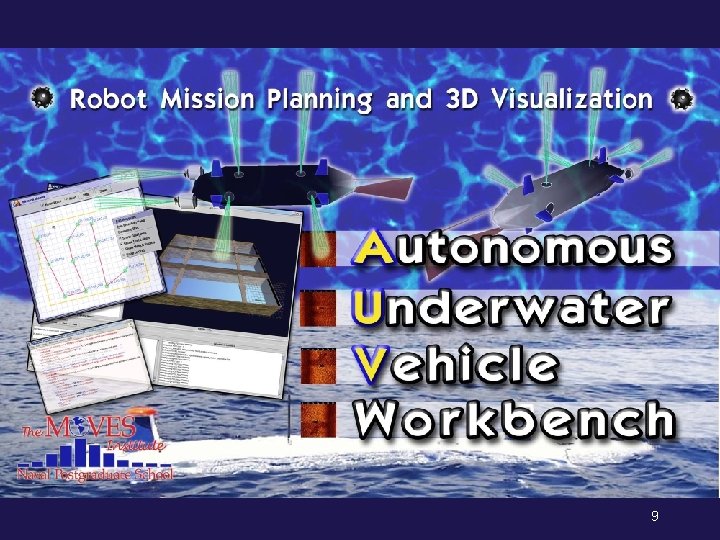
AUV Workbench poster, I/ITSEC 2003 9
Our 3 R’s: rehearsal, reality, replay • Same needs and capabilities for each: mission, visualization, data support, etc. • Refining AUV workbench to support each § caveat: ongoing work in progress • 10 years of effort now coming to fruition § integrating great variety of successful work • Collaboration is welcome 10
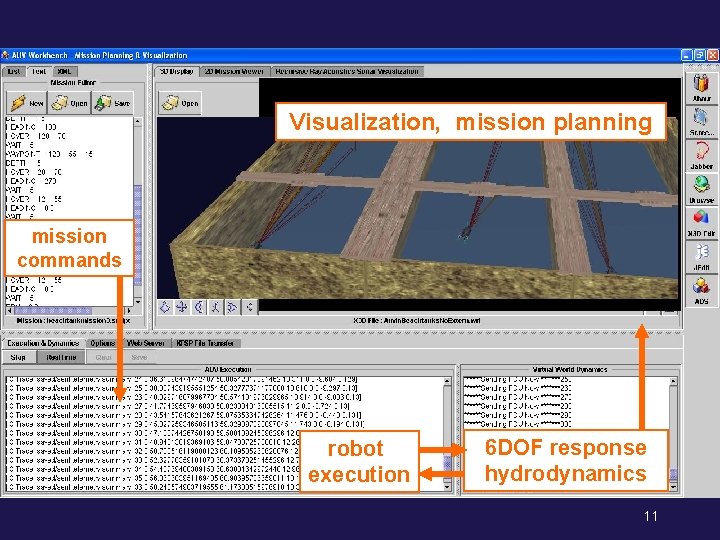
AUV Workbench windows Visualization, mission planning mission commands robot execution 6 DOF response hydrodynamics 11
Rehearsal • Prepare missions, either manually or automatically via other software tools • Test robot software’s ability to perform commands • Test again with physics “in the loop” Hydrodynamics and control are critical, difficult § Sonar, environmental modeling § • Repeat until robust, with cautious respect § “Simulation is doomed to success” – G. Bekey 12
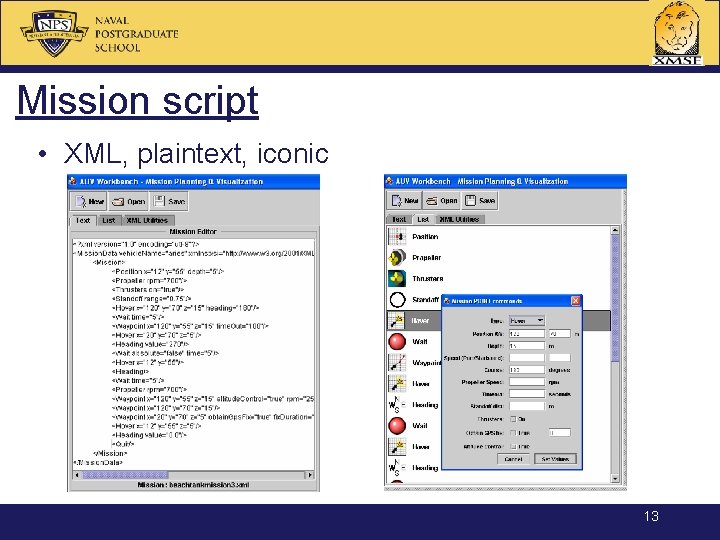
Mission script • XML, plaintext, iconic 13
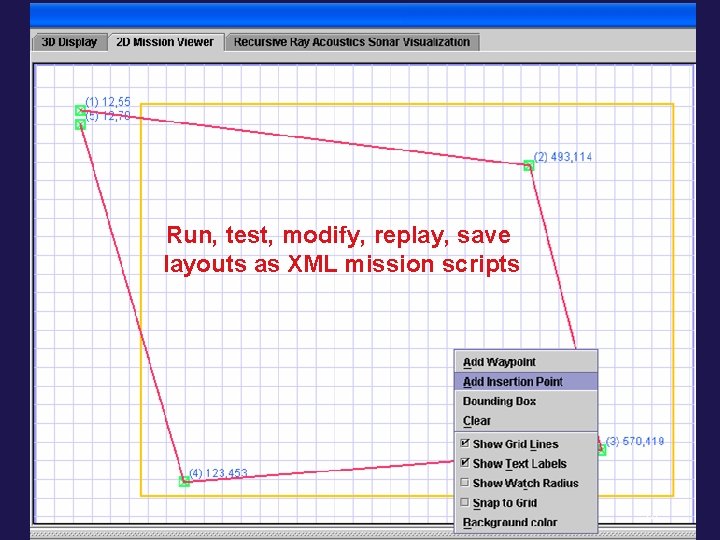
AUV Workbench 2 D Mission Viewer Run, test, modify, replay, save layouts as XML mission scripts 14
Reality: real-time mission support • Monitor mission progress • Task-level control using same mission vocabulary • Visualize and supervise operations § caveat, again: work in progress • Integrate acoustic and RF communications • Chat for distributed collaboration among participants, both human and robotic 15
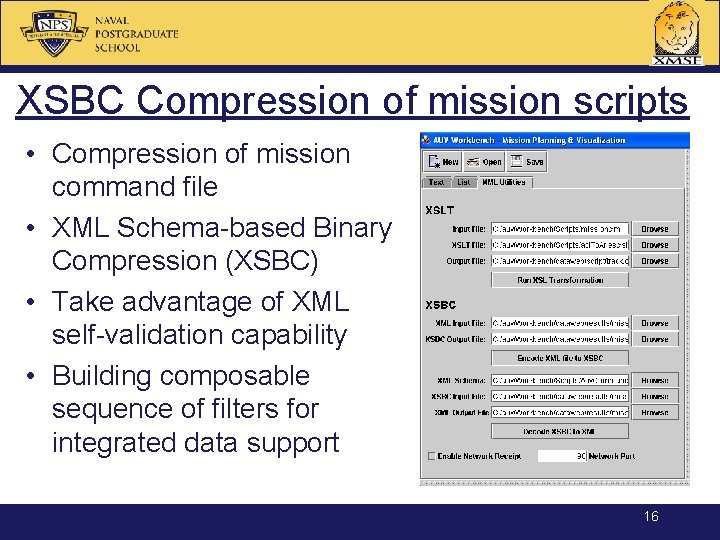
XSBC Compression of mission scripts • Compression of mission command file • XML Schema-based Binary Compression (XSBC) • Take advantage of XML self-validation capability • Building composable sequence of filters for integrated data support 16
Replay: post-mission support • Automatic archiving of mission to server § Built into workbench • Integration and compression of all relevant data into single compressed XML file Metadata for mission § Many pieces: ordered mission, commands, telemetry, coefficients, contacts, etc. § Autonomous Vehicle Control Language (AVCL) is Ph. D. work by LCDR Duane Davis § 17
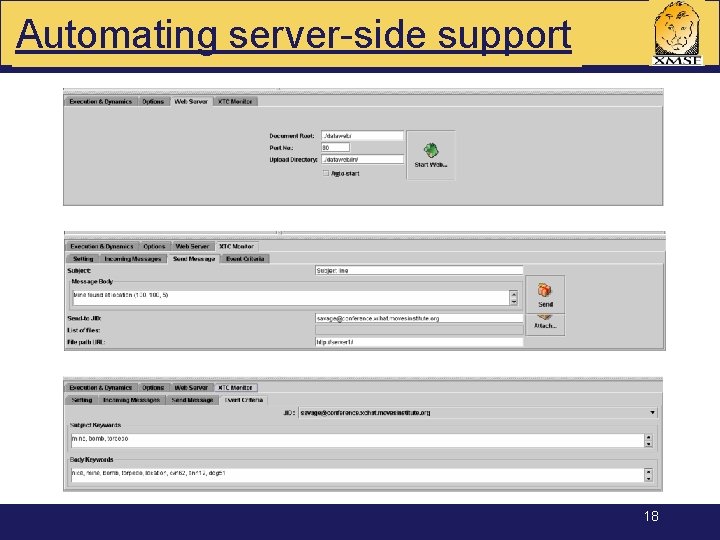
Automating server-side support 18
Physical modeling • Control algorithms and 6 degree-of-freedom (6 DOF) hydrodynamics response • Sonar propagation, attenuation • Collision detection Direct vehicle contact and sensor contact § Separate use of same X 3 D graphics models § • Visualization greatly aids understanding § provides good “forcing function” for integration 19
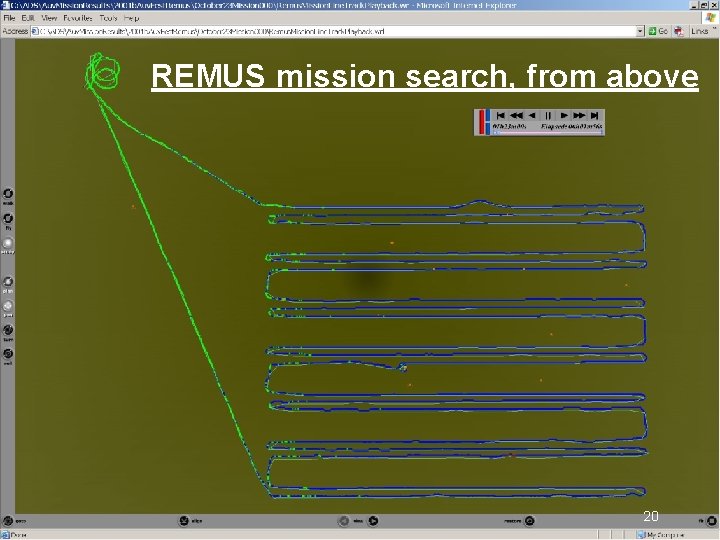
REMUS mission search, from above 20
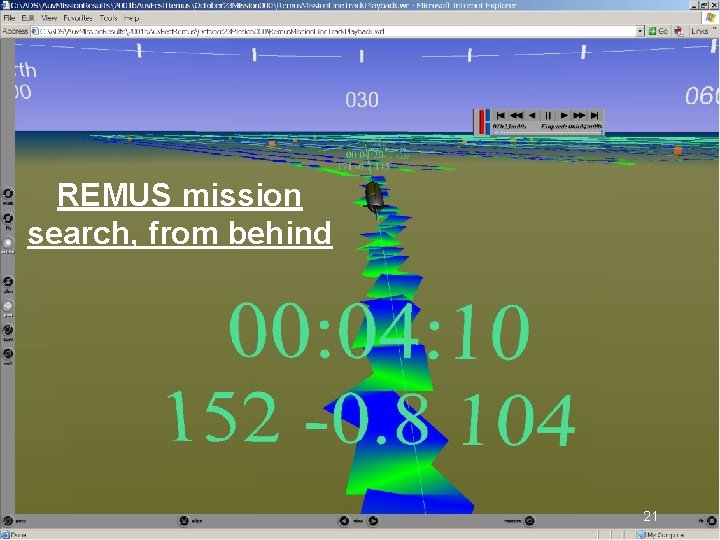
REMUS mission search, from behind 21
sonar-vis Project Description • Visualize multipath 3 D sonar propagation Situational awareness, sensitivity analysis § Multiple models: path, transmission loss, PD. . . § Operator familiarization, training, experience § • Enhance TDAs for at-sea operators Reachback using Web services messaging, accessing both computational and data assets § Open source open standards: Java, X 3 D, XML § 22
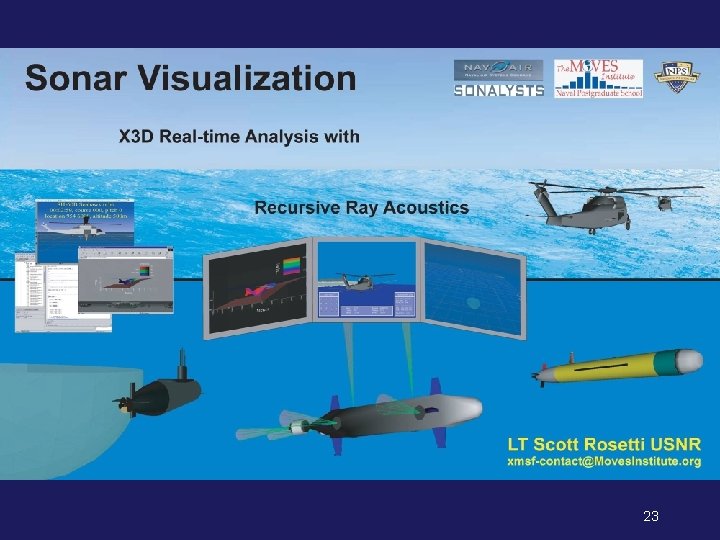
Sonar Visualization poster, I/ITSEC 2003 23
Goal Outcomes: sonar-vis project • Sonar and battlespace visualization • Link aircraft, ship and HPCC computing FNMOC, possibly Maui HPCC § Similar interfaces, with/without connectivity § “Tactical Supercomputing” refrigerator box § • Support Common Undersea Picture (CUP) Candidate technologies for spiral development § Have started usw-xml working group for USN § 24
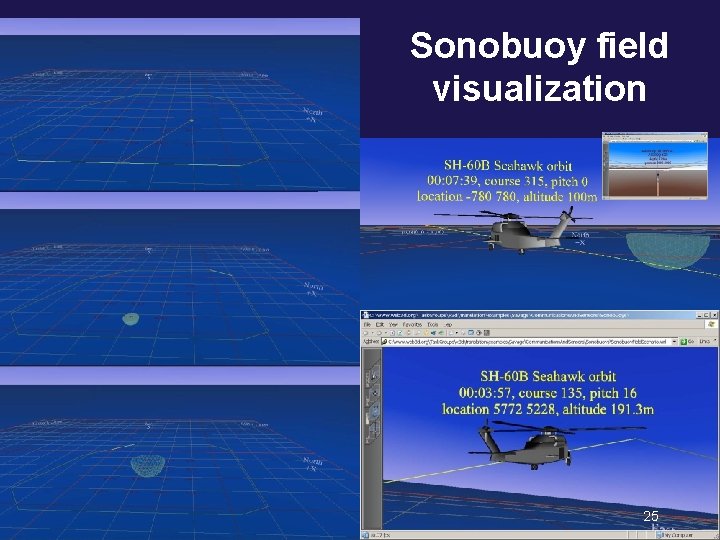
Sonobuoy field visualization 25
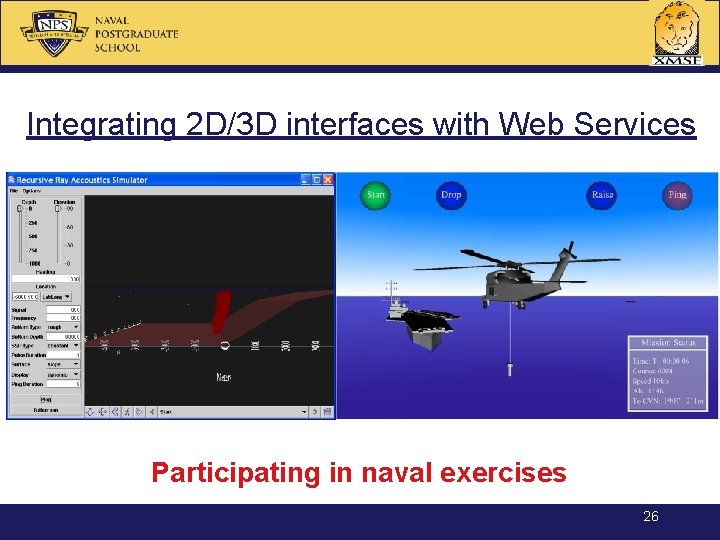
Integrating 2 D/3 D interfaces with Web Services Participating in naval exercises 26
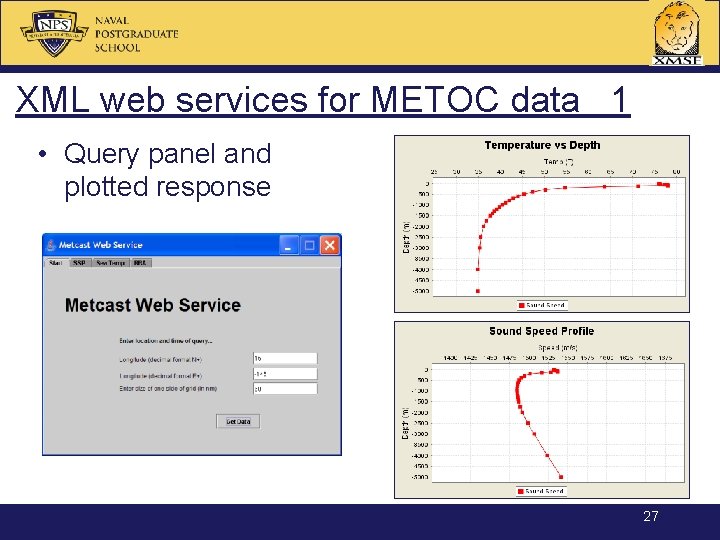
XML web services for METOC data 1 • Query panel and plotted response 27
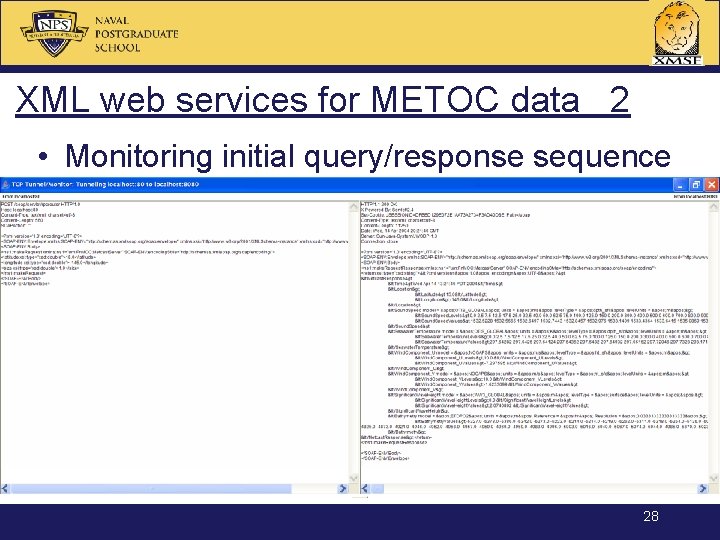
XML web services for METOC data 2 • Monitoring initial query/response sequence 28
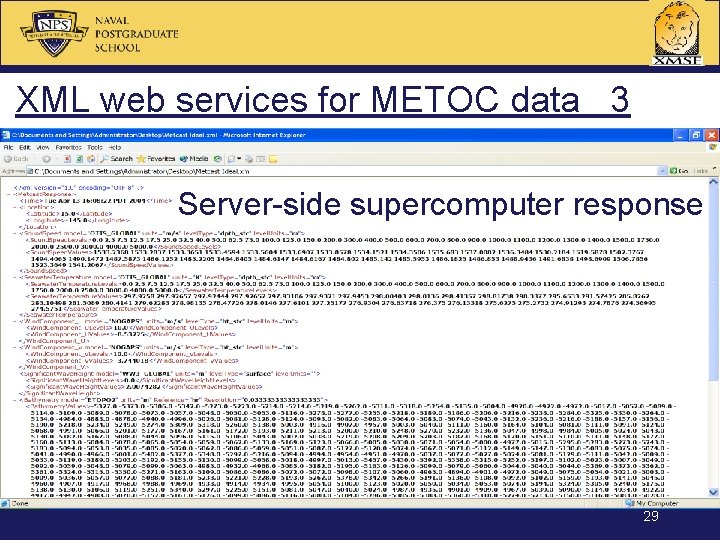
XML web services for METOC data 3 Server-side supercomputer response 29
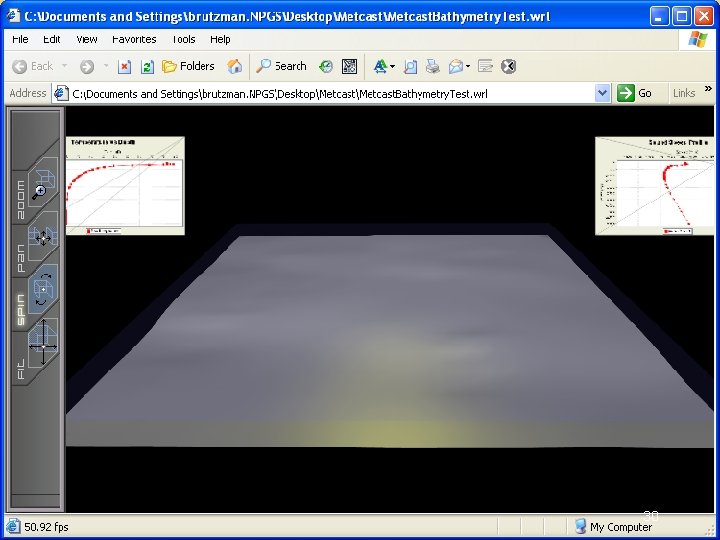
XML web services for METOC data 4 30
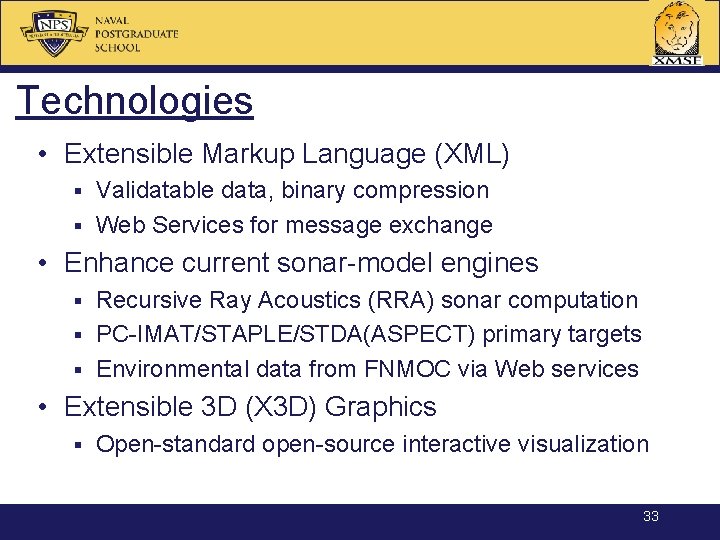
Technologies • Extensible Markup Language (XML) Validatable data, binary compression § Web Services for message exchange § • Enhance current sonar-model engines Recursive Ray Acoustics (RRA) sonar computation § PC-IMAT/STAPLE/STDA(ASPECT) primary targets § Environmental data from FNMOC via Web services § • Extensible 3 D (X 3 D) Graphics § Open-standard open-source interactive visualization 33
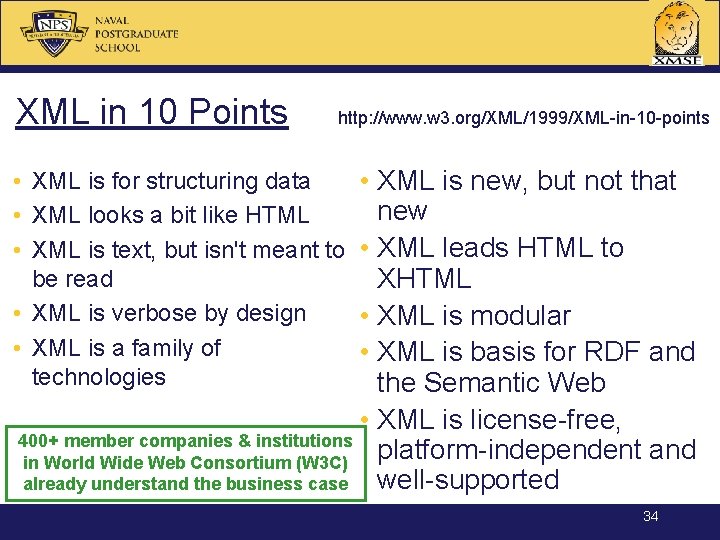
XML in 10 Points http: //www. w 3. org/XML/1999/XML-in-10 -points • XML is new, but not that new • XML leads HTML to XHTML • XML is modular • XML is basis for RDF and the Semantic Web • XML is license-free, 400+ member companies & institutions platform-independent and in World Wide Web Consortium (W 3 C) well-supported already understand the business case • XML is for structuring data • XML looks a bit like HTML • XML is text, but isn't meant to be read • XML is verbose by design • XML is a family of technologies 34
Extensible Modeling & Simulation Framework (XMSF) • Web services for all manner of M&S • A composable set of standards, profiles, and recommended practices for web-based M&S • Foundational precepts: Internet network technologies, Extensible Markup Language (XML)-based languages, and service-oriented architectures for simple messaging • Enable a new generation of distributed M&S applications to emerge, develop, interoperate with tactical systems • Many easily repeatable exemplars using Web Services http: //www. Moves. Institute. org/xmsf 35
What is 3 D? • 2½D works for chart-oriented displays • 3 D gives “fly-thru” freedom of viewpoint View physically based propagation paths § View depth separation § View bottom, surface interactions § View multiple overlapping sensors § • Augment (not replace) existing displays 36
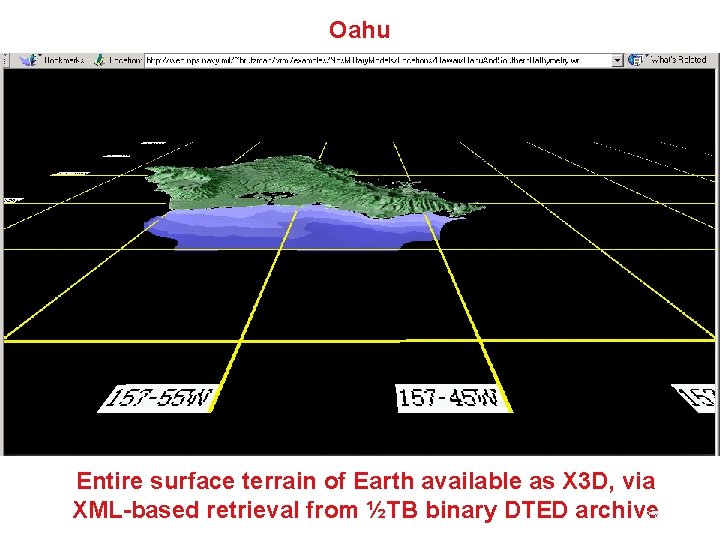
Oahu 3 D model Entire surface terrain of Earth available as X 3 D, via XML-based retrieval from ½TB binary DTED archive 37
What is X 3 D? • Extensible 3 D (X 3 D) Graphics Virtual Reality Modeling Language (VRML) updated § Third-generation ISO specification § Compatible XML. x 3 d and Classic VRML. wrl encodings § • Deliverables § § § Specification updates, with compatible XML tagset Multiple implementations, including open-source Scene Access Interface (SAI) strongly typed API Conformance suite and examples Authoring capability: X 3 D-Edit, using XML for XML… 38
Further X 3 D motivations • Authoring is hard, “Content is King” § X 3 D is not competing with specialty formats, instead provide common interoperability/interchange § Strong validation checks eliminate most authoring errors before content escapes § Plays well with next-generation Web languages “ 3 D hardware problem” is already solved 39
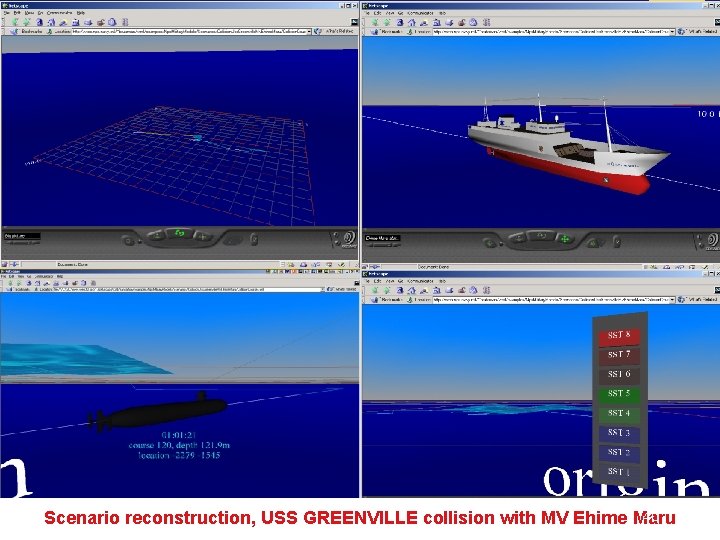
3 D model library: collision USS GREENEVILLE 40 Scenario reconstruction, USS GREENVILLE collision with MV Ehime Maru
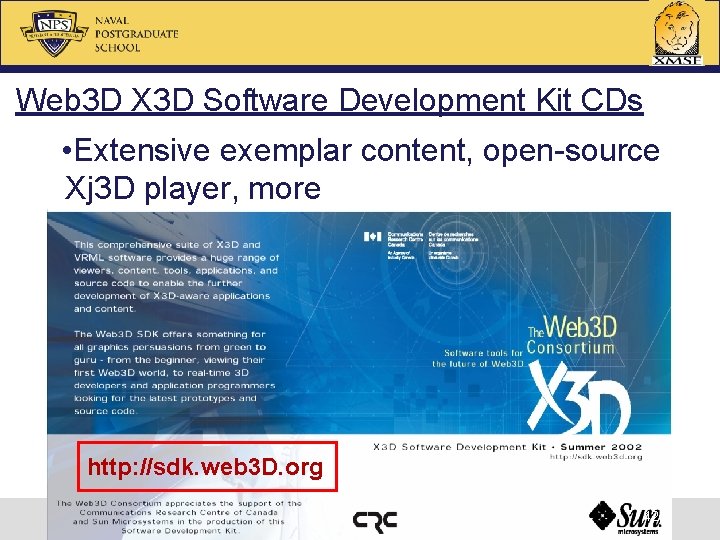
Web 3 D X 3 D Software Development Kit CDs • Extensive exemplar content, open-source Xj 3 D player, more http: //sdk. web 3 D. org 42
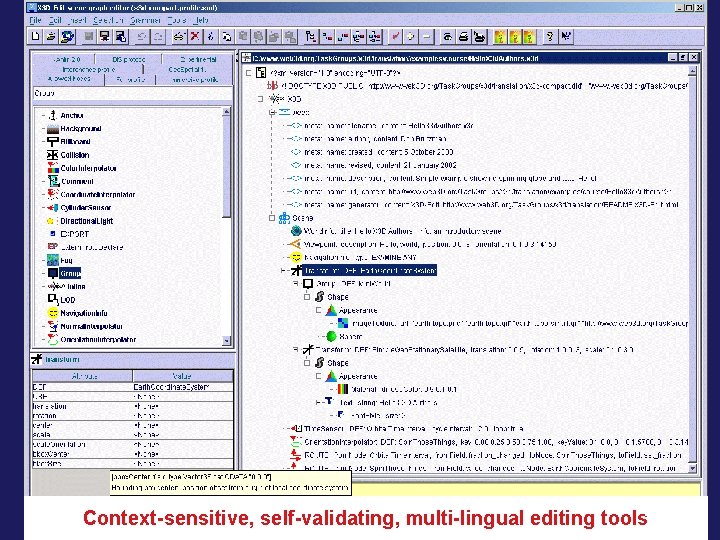
X 3 D-Edit complete interface Context-sensitive, self-validating, multi-lingual editing tools 43
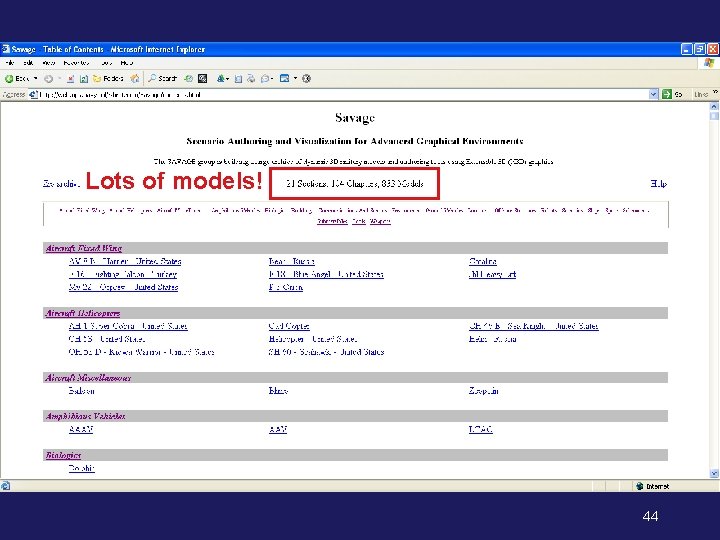
SAVAGE 3 D Model Archive Lots of models! 44
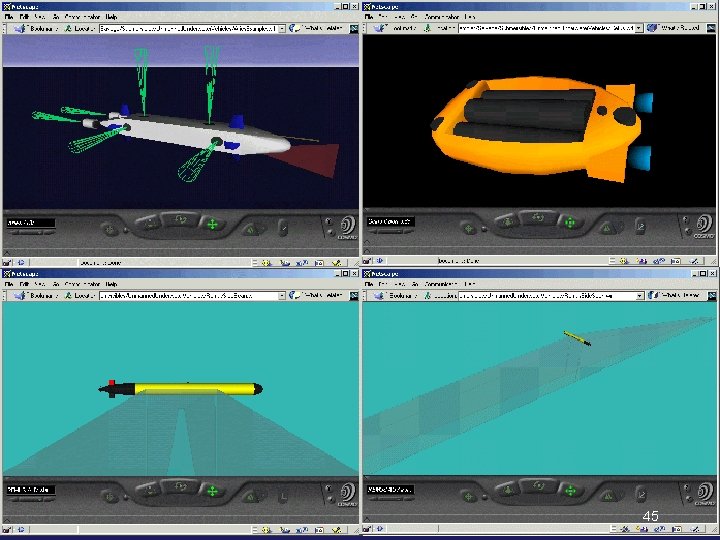
Numerous underwater vehicle models 45
Looking ahead: more technologies • XML Tactical Chat (XTC) • XML Schema-based Binary Compression (XSBC) better than zip, adds validation § Adding Forward Error Correction (FEC) • Tactical supercomputing 46
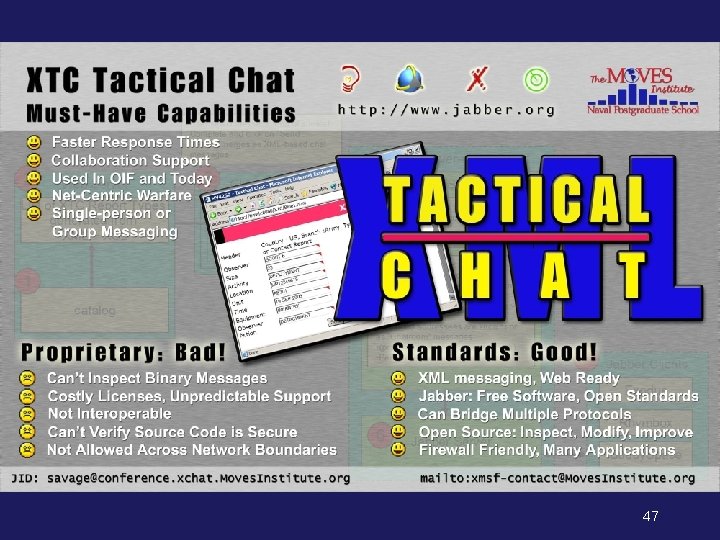
XML Tactical Chat (XTC), I/ITSEC 2003 poster 47
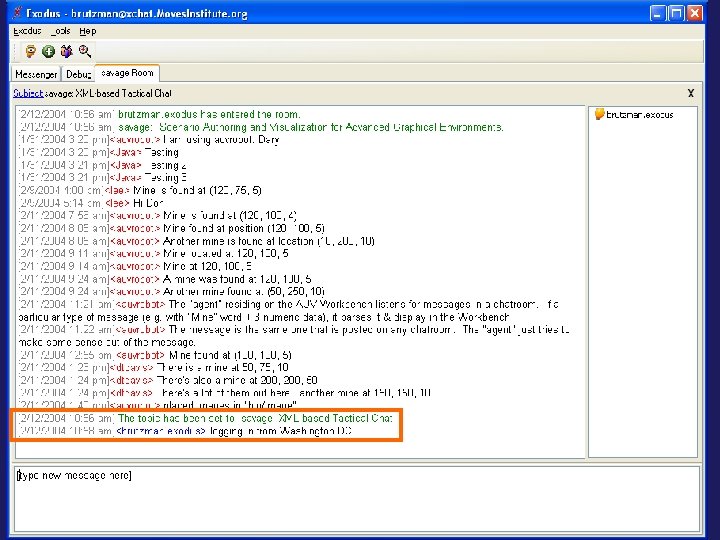
Chat log window 48
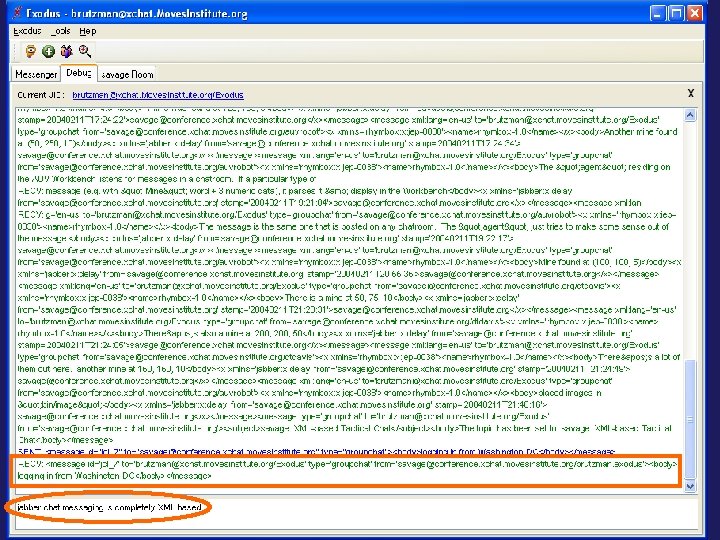
Chat log debug mode shows underlying XML 49
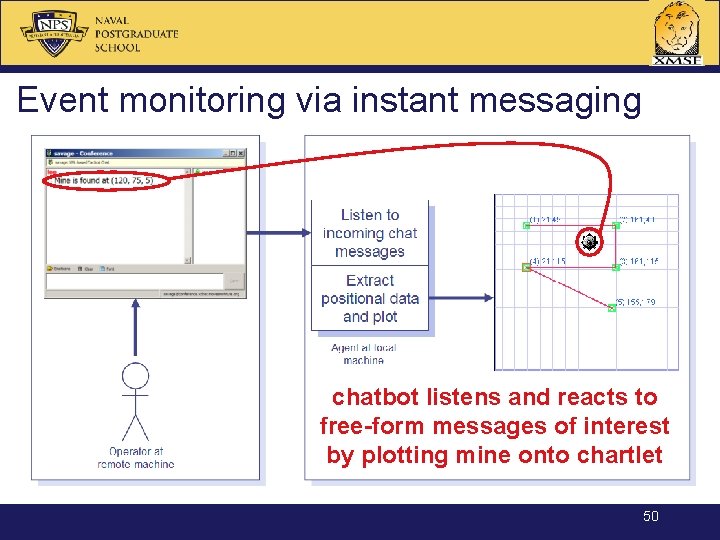
Event monitoring via instant messaging chatbot listens and reacts to free-form messages of interest by plotting mine onto chartlet 50
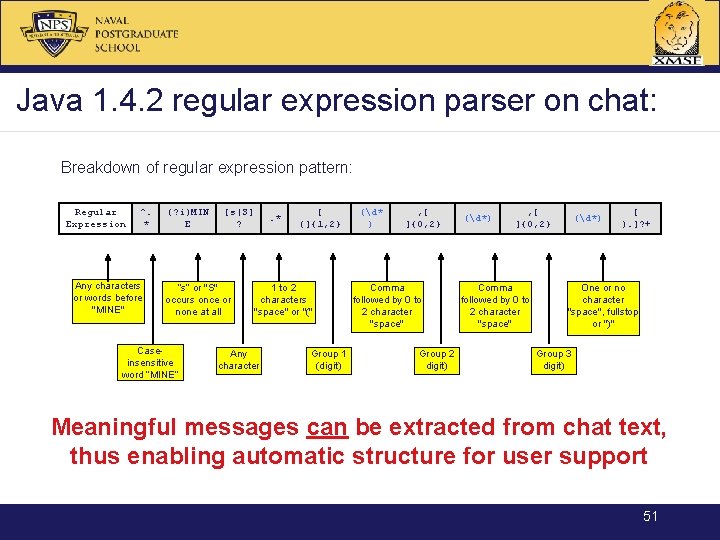
Java 1. 4. 2 regular expression parser on chat: Breakdown of regular expression pattern: Regular Expression ^. * Any characters or words before "MINE" (? i)MIN E [s|S] ? “s” or "S" occurs once or none at all Caseinsensitive word “MINE” . * [ (]{1, 2} 1 to 2 characters "space" or "(" Any character Group 1 (digit) (d* ) , [ ]{0, 2} Comma followed by 0 to 2 character "space" Group 2 digit) (d*) , [ ]{0, 2} Comma followed by 0 to 2 character "space" (d*) [ ). ]? + One or no character "space", fullstop or ")" Group 3 digit) Meaningful messages can be extracted from chat text, thus enabling automatic structure for user support 51
XML Schema-based Binary Compression (XSBC) • • • XML encoding for validation benefits XML schema contains adequate information Tokenization of elements, attributes Strong data typing of value payloads Lossless More efficient than compressed numeric text 52
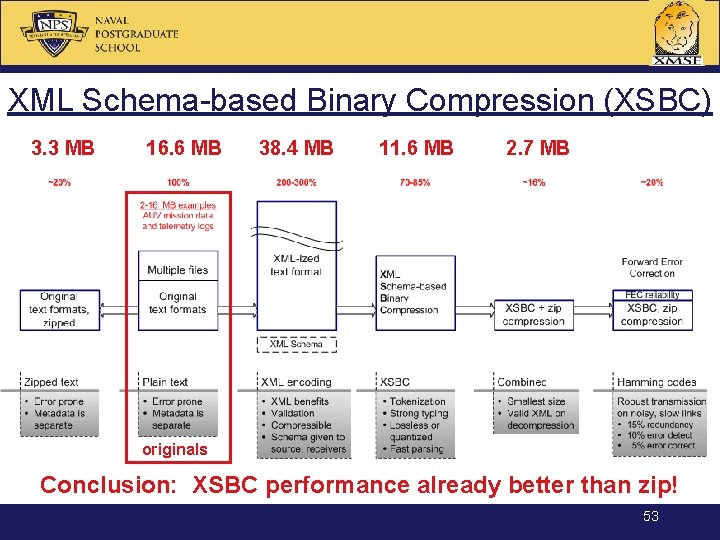
XML Schema-based Binary Compression (XSBC) 3. 3 MB 16. 6 MB 38. 4 MB 11. 6 MB 2. 7 MB originals Conclusion: XSBC performance already better than zip! 53
Forward error correction (FEC) • Added redundancy allows receiver-side detection & correction of message errors Many military channels are noisy RF links § Avoids “retry until you die” on acoustic links § Big help on long-latency, low-bandwidth links! § • Hamming FEC is one technique of several § Re-exploring Stephen Reimers 1995 thesis “Towards Internet Protocol (IP) over Seawater” 54
Tactical supercomputing • Linux clusters can create new resources 5 off-the-shelf new PC boxes + disk storage § $10 K = 10 processors = 10 Gigaflop § Refrigerator-rack footprint easily fits shipboard § Industry can provide even higher capabilities § • Exploring intermediate-level resources for previously supercomputer-level problems § Consistent access via grid/web services 55
Demonstrations at I/ITSEC 2004 • Interservice Industry Training Simulation Education Conference (I/ITSEC) § December 6 -9, Orlando Florida • Multiple demonstrations across show floor X 3 D, XMSF, XSBC, XTC, C 2 IEDM § Multiple government, industry partners § multiple domains & locations connected: supercomputer, underwater/airborne robots in Monterey, George Mason University Fairfax VA, NUWC Newport RI, etc. § • http: //www. iitsec. org 56
Summary • Significant collected AUV capabilities § • • Support rehearsal, reality, replay Integrated as tactical application Open standards: XMSF, X 3 D, chat, etc. Open source + commercial compatibility Improved messaging, net-centric exemplar Collaboration and questions welcome 57
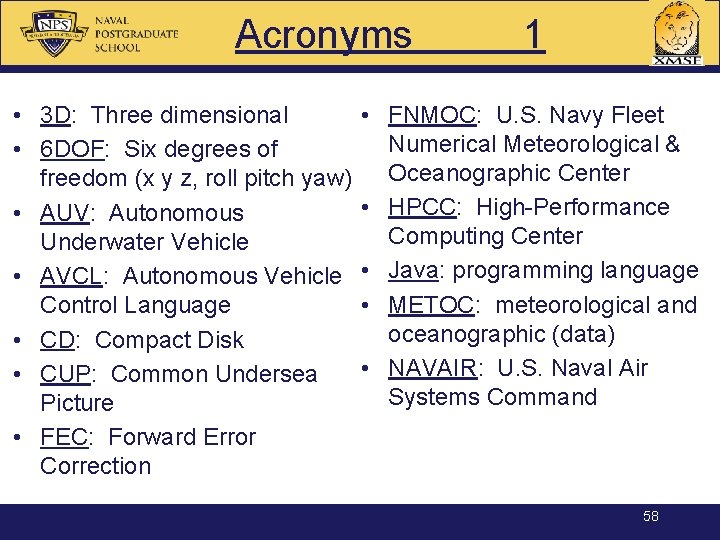
Acronyms • 3 D: Three dimensional • 6 DOF: Six degrees of freedom (x y z, roll pitch yaw) • AUV: Autonomous Underwater Vehicle • AVCL: Autonomous Vehicle Control Language • CD: Compact Disk • CUP: Common Undersea Picture • FEC: Forward Error Correction 1 • FNMOC: U. S. Navy Fleet Numerical Meteorological & Oceanographic Center • HPCC: High-Performance Computing Center • Java: programming language • METOC: meteorological and oceanographic (data) • NAVAIR: U. S. Naval Air Systems Command 58
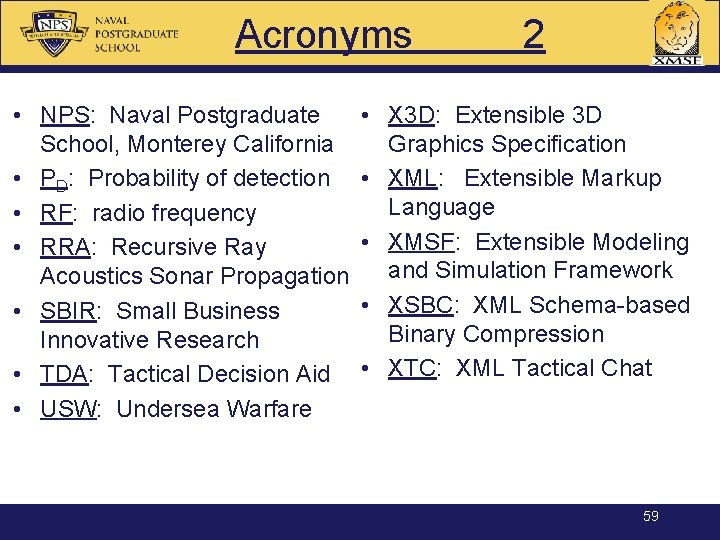
Acronyms • NPS: Naval Postgraduate School, Monterey California • PD: Probability of detection • RF: radio frequency • RRA: Recursive Ray Acoustics Sonar Propagation • SBIR: Small Business Innovative Research • TDA: Tactical Decision Aid • USW: Undersea Warfare 2 • X 3 D: Extensible 3 D Graphics Specification • XML: Extensible Markup Language • XMSF: Extensible Modeling and Simulation Framework • XSBC: XML Schema-based Binary Compression • XTC: XML Tactical Chat 59
Contact Don Brutzman brutzman@nps. edu http: //web. nps. navy. mil/~brutzman Code USW/Br, Naval Postgraduate School Monterey California 93943 -5000 USA 1. 831. 656. 2149 voice 1. 831. 656. 7599 fax 60
- Slides: 57