
NPcomplete Languages Costas Busch LSU 1 Polynomial Time
NP-complete Languages Costas Busch - LSU 1
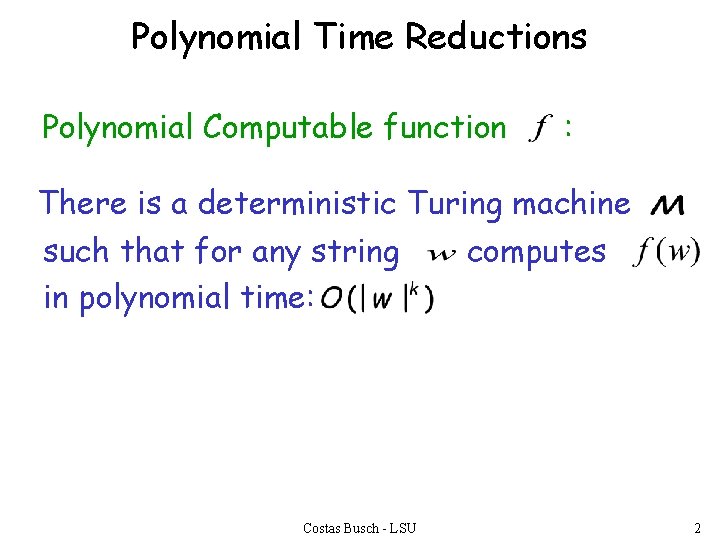
Polynomial Time Reductions Polynomial Computable function : There is a deterministic Turing machine such that for any string computes in polynomial time: Costas Busch - LSU 2
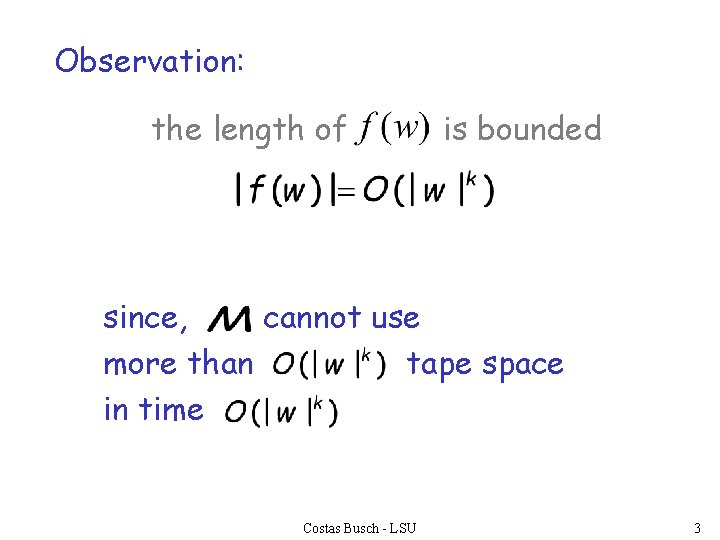
Observation: the length of is bounded since, cannot use more than tape space in time Costas Busch - LSU 3
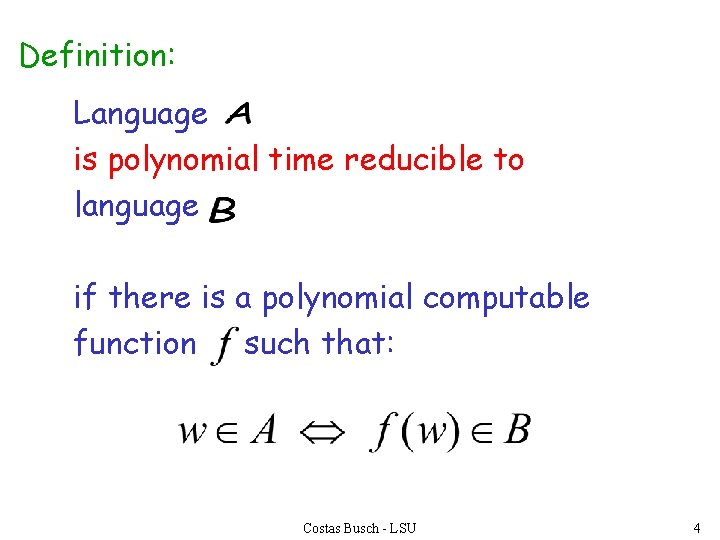
Definition: Language is polynomial time reducible to language if there is a polynomial computable function such that: Costas Busch - LSU 4
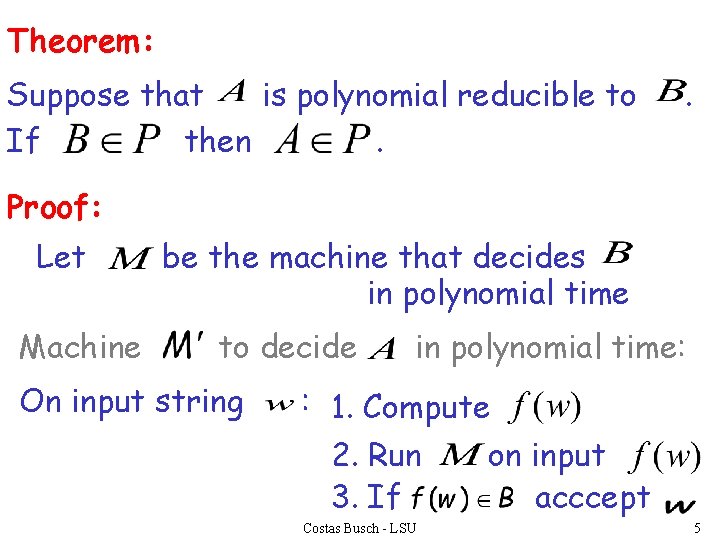
Theorem: Suppose that is polynomial reducible to If then. . Proof: Let Machine be the machine that decides in polynomial time to decide On input string in polynomial time: : 1. Compute 2. Run on input 3. If acccept Costas Busch - LSU 5
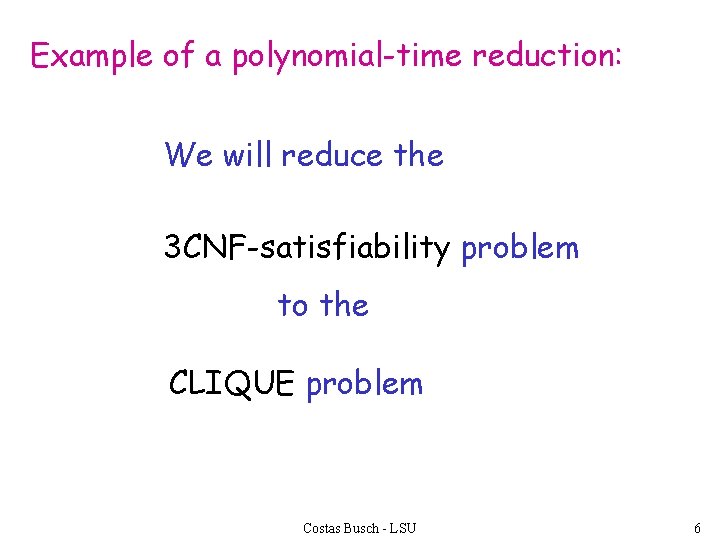
Example of a polynomial-time reduction: We will reduce the 3 CNF-satisfiability problem to the CLIQUE problem Costas Busch - LSU 6
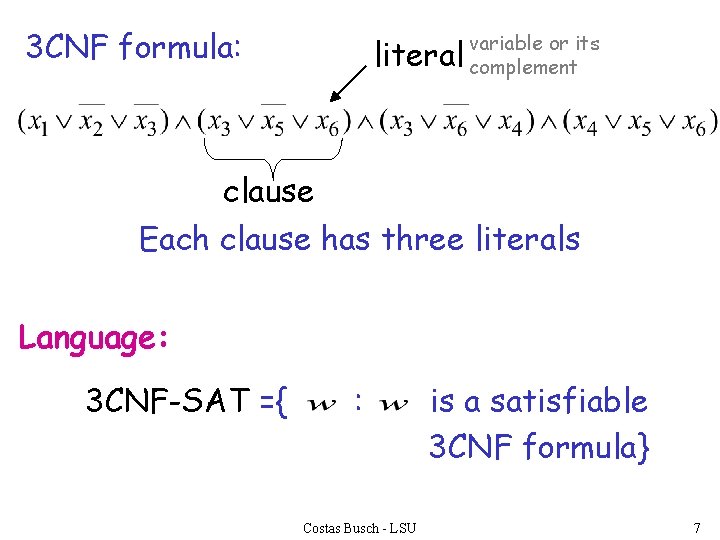
3 CNF formula: literal variable or its complement clause Each clause has three literals Language: 3 CNF-SAT ={ : Costas Busch - LSU is a satisfiable 3 CNF formula} 7
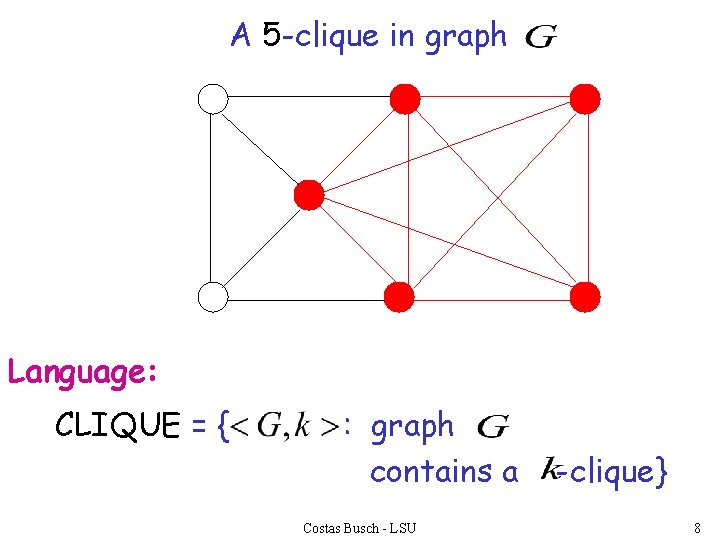
A 5 -clique in graph Language: CLIQUE = { : graph contains a Costas Busch - LSU -clique} 8
Theorem: Proof: 3 CNF-SAT is polynomial time reducible to CLIQUE give a polynomial time reduction of one problem to the other Transformula to graph Costas Busch - LSU 9
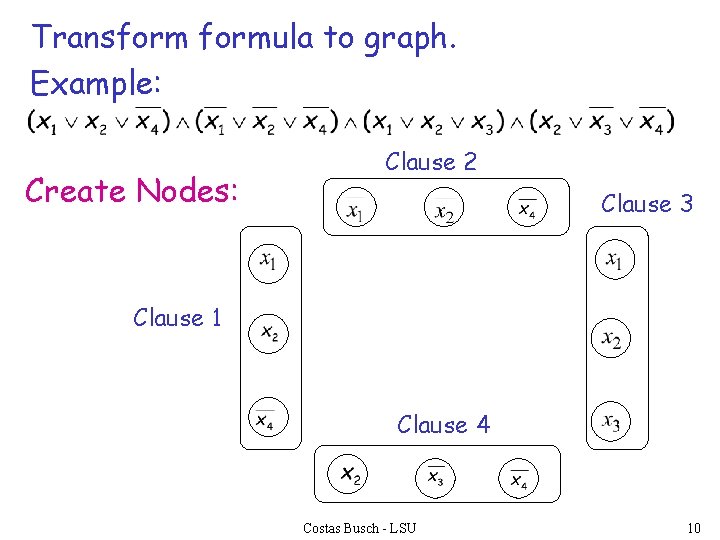
Transformula to graph. Example: Create Nodes: Clause 2 Clause 3 Clause 1 Clause 4 Costas Busch - LSU 10
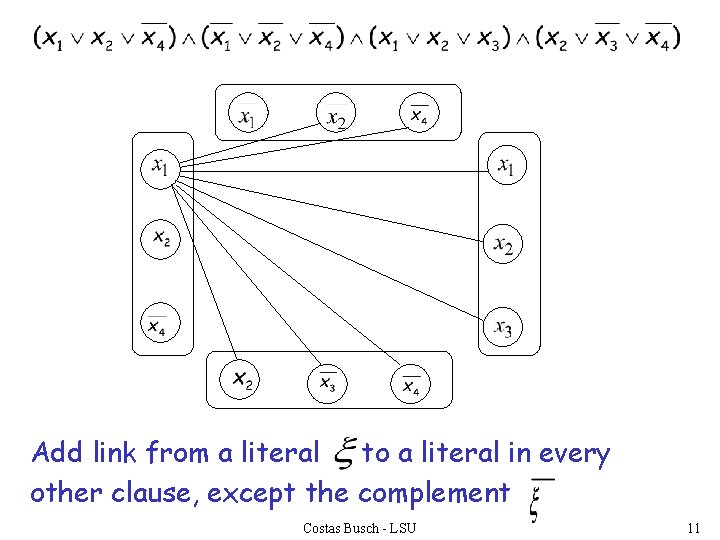
Add link from a literal to a literal in every other clause, except the complement Costas Busch - LSU 11
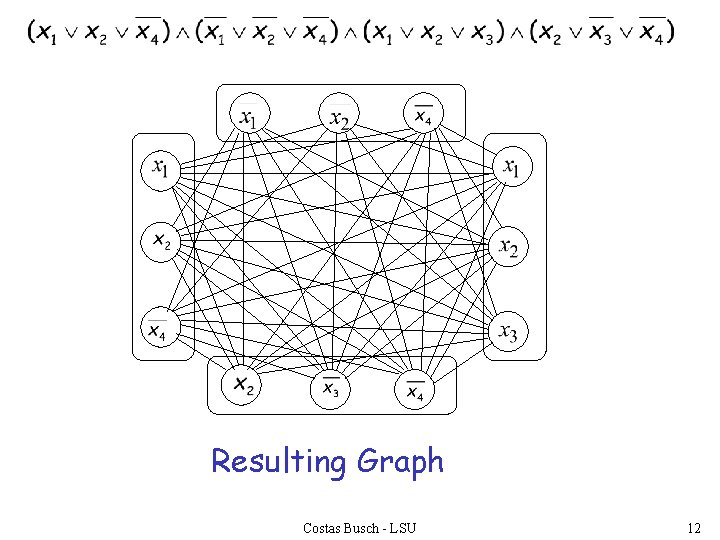
Resulting Graph Costas Busch - LSU 12
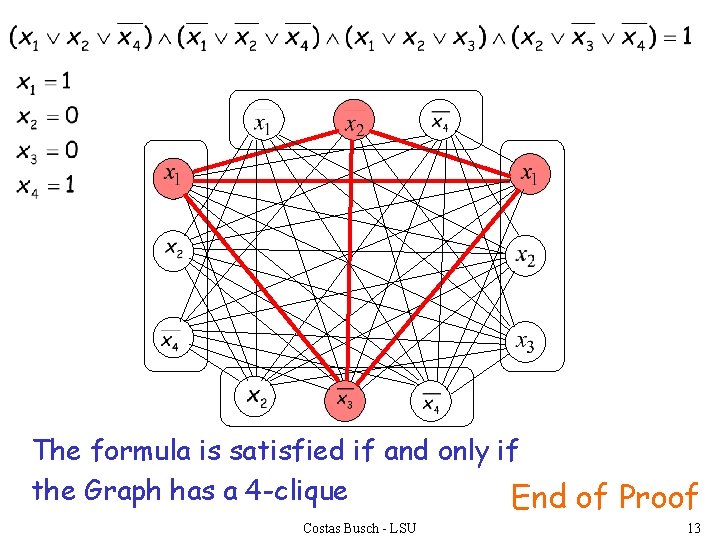
The formula is satisfied if and only if the Graph has a 4 -clique End of Proof Costas Busch - LSU 13
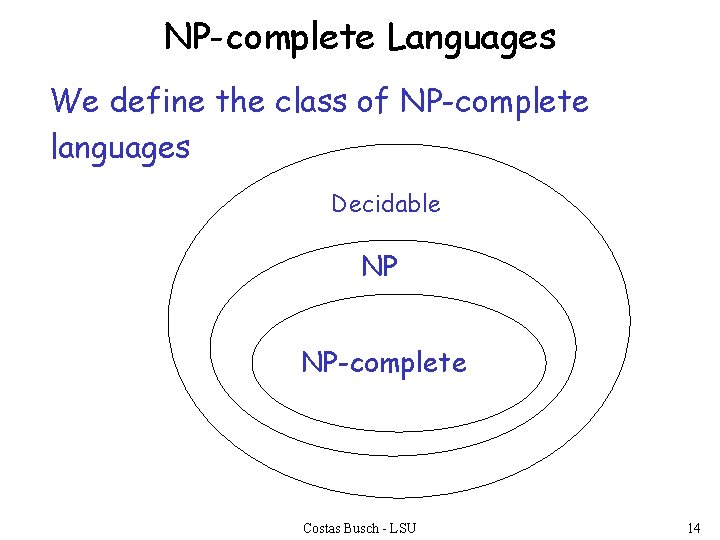
NP-complete Languages We define the class of NP-complete languages Decidable NP NP-complete Costas Busch - LSU 14
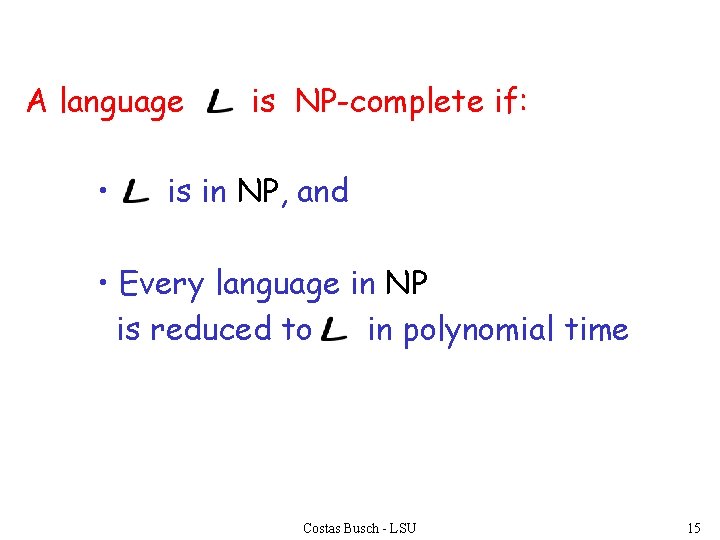
A language • is NP-complete if: is in NP, and • Every language in NP in polynomial time is reduced to Costas Busch - LSU 15
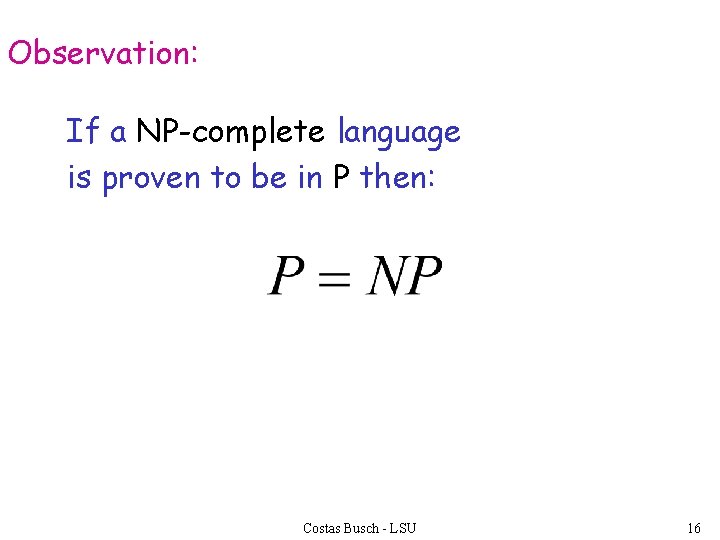
Observation: If a NP-complete language is proven to be in P then: Costas Busch - LSU 16
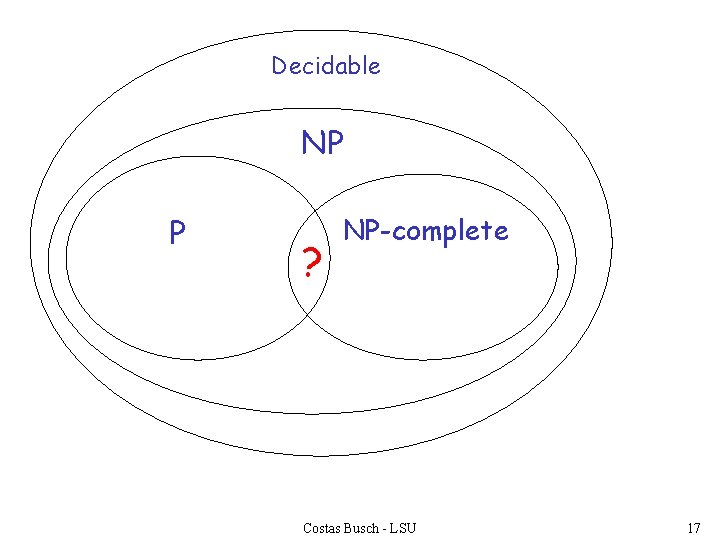
Decidable NP P ? NP-complete Costas Busch - LSU 17
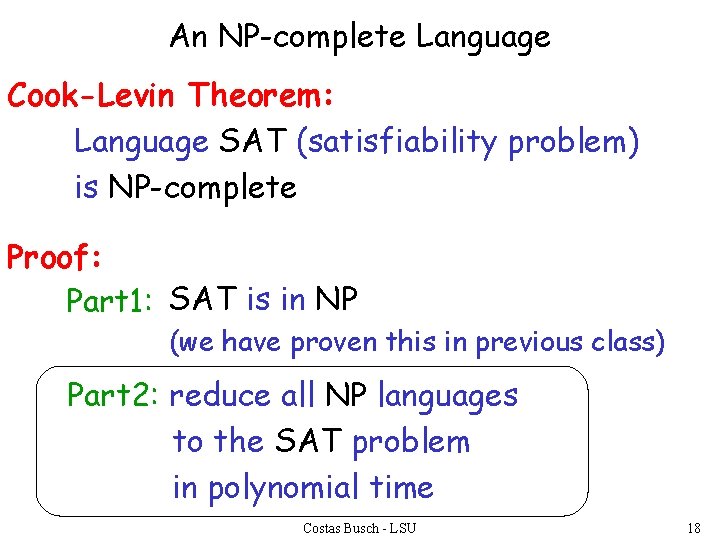
An NP-complete Language Cook-Levin Theorem: Language SAT (satisfiability problem) is NP-complete Proof: Part 1: SAT is in NP (we have proven this in previous class) Part 2: reduce all NP languages to the SAT problem in polynomial time Costas Busch - LSU 18
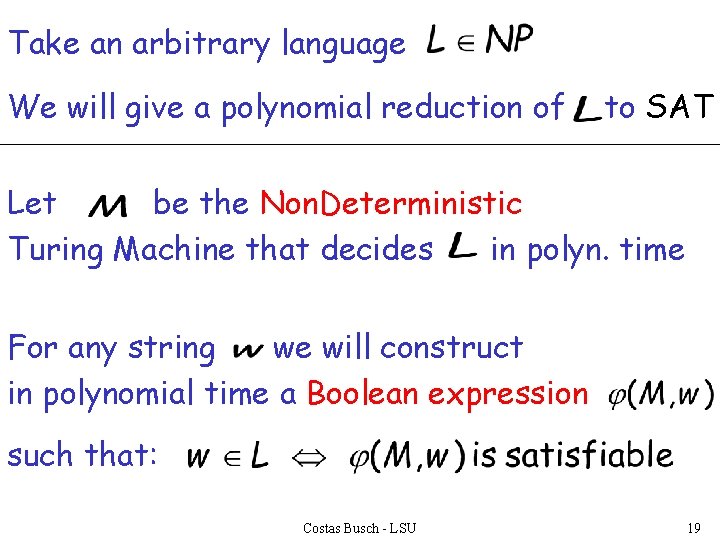
Take an arbitrary language We will give a polynomial reduction of to SAT Let be the Non. Deterministic Turing Machine that decides in polyn. time For any string we will construct in polynomial time a Boolean expression such that: Costas Busch - LSU 19
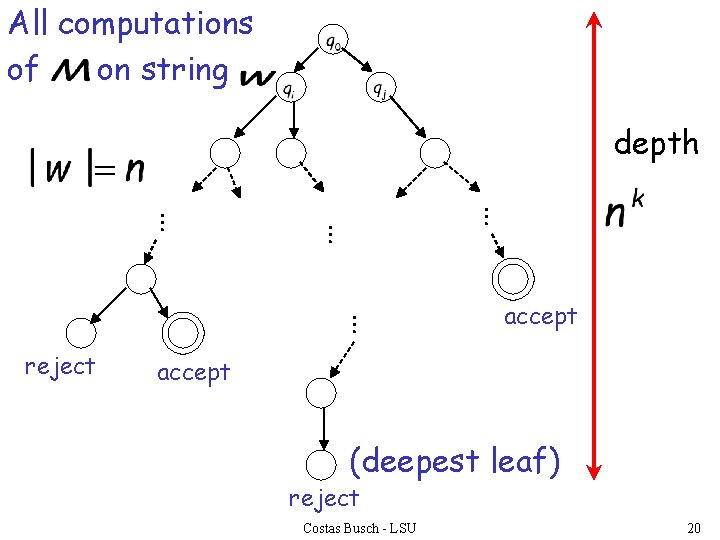
All computations of on string depth … … reject accept (deepest leaf) reject Costas Busch - LSU 20
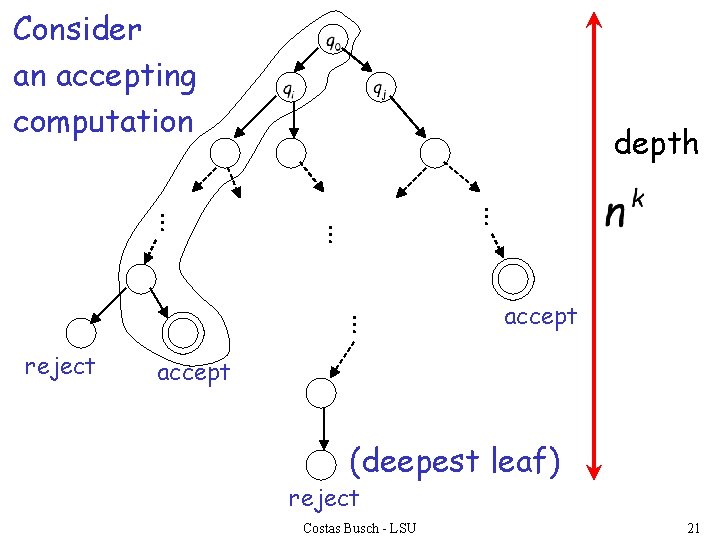
Consider an accepting computation depth … … reject accept (deepest leaf) reject Costas Busch - LSU 21
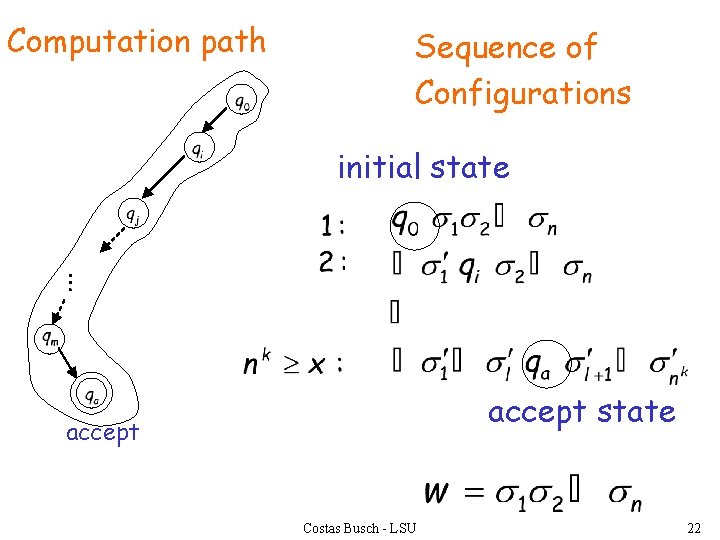
Computation path Sequence of Configurations initial state … accept state accept Costas Busch - LSU 22
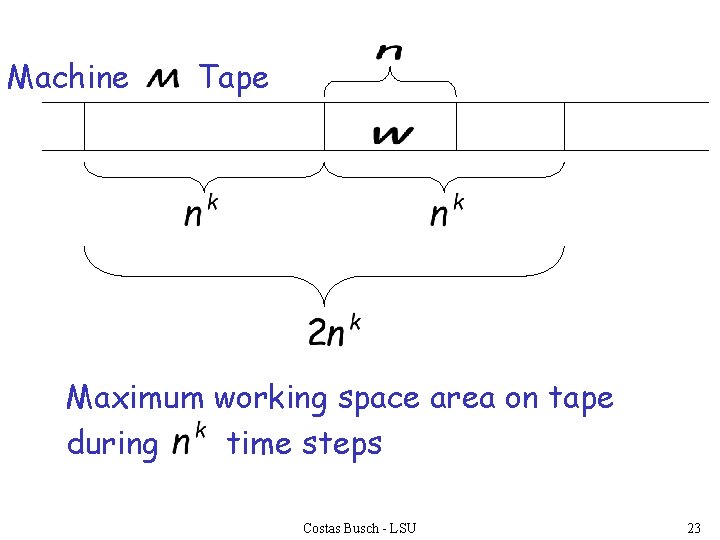
Machine Tape Maximum working space area on tape during time steps Costas Busch - LSU 23
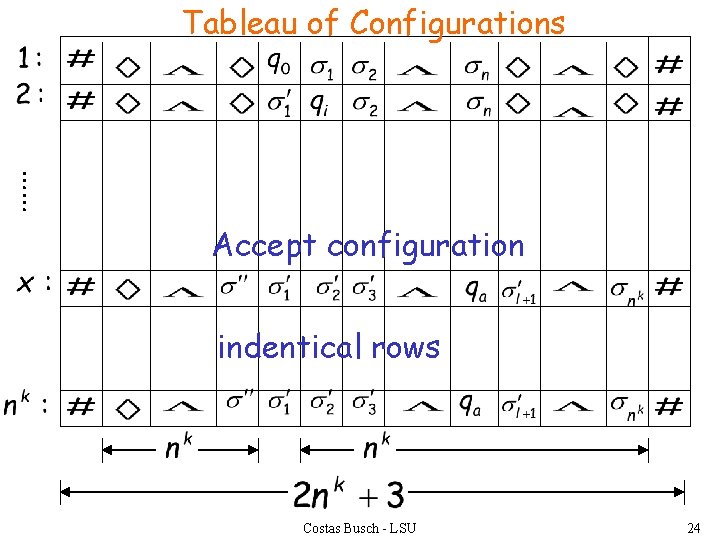
Tableau of Configurations …… Accept configuration indentical rows Costas Busch - LSU 24
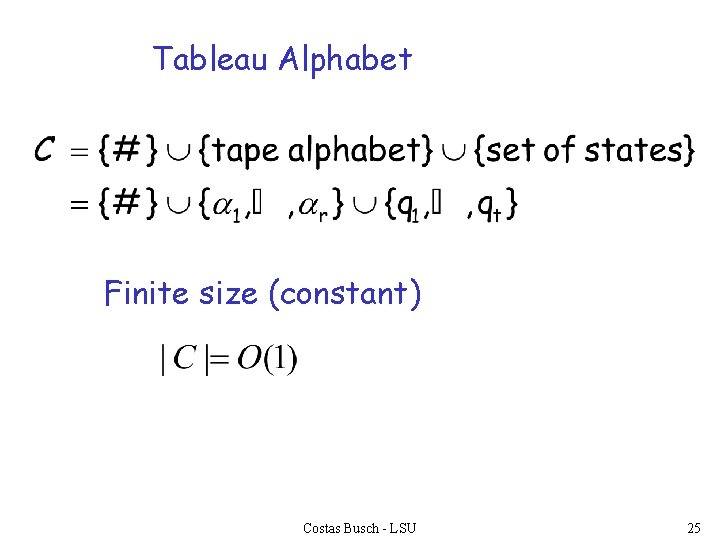
Tableau Alphabet Finite size (constant) Costas Busch - LSU 25

For every cell position and for every symbol in tableau alphabet Define variable Such that if cell Then Else contains symbol Costas Busch - LSU 26
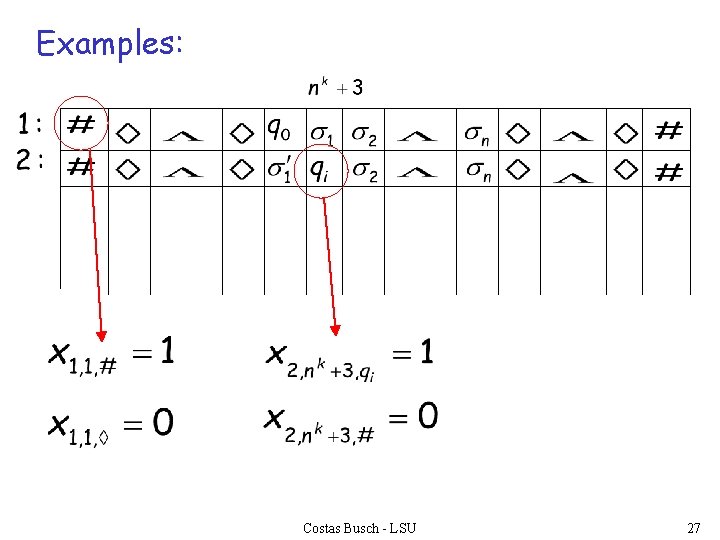
Examples: Costas Busch - LSU 27
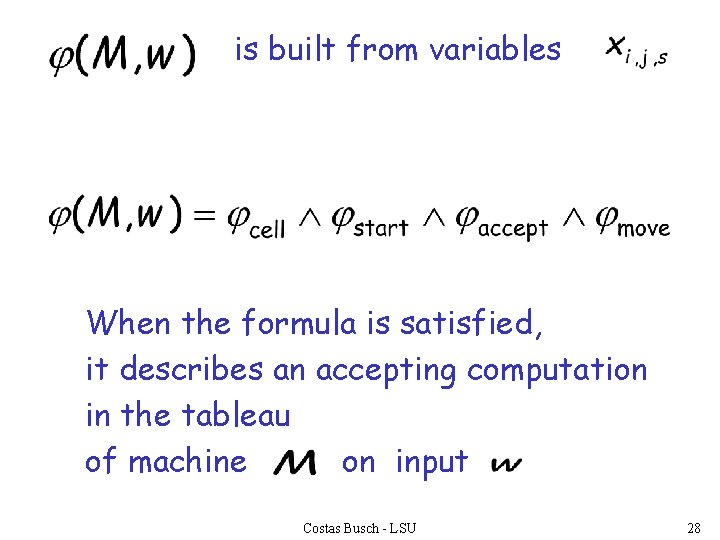
is built from variables When the formula is satisfied, it describes an accepting computation in the tableau of machine on input Costas Busch - LSU 28
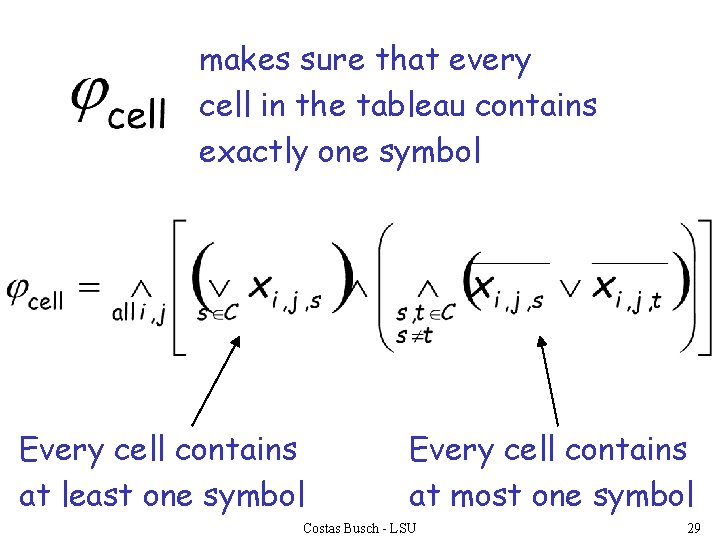
makes sure that every cell in the tableau contains exactly one symbol Every cell contains at least one symbol Every cell contains at most one symbol Costas Busch - LSU 29
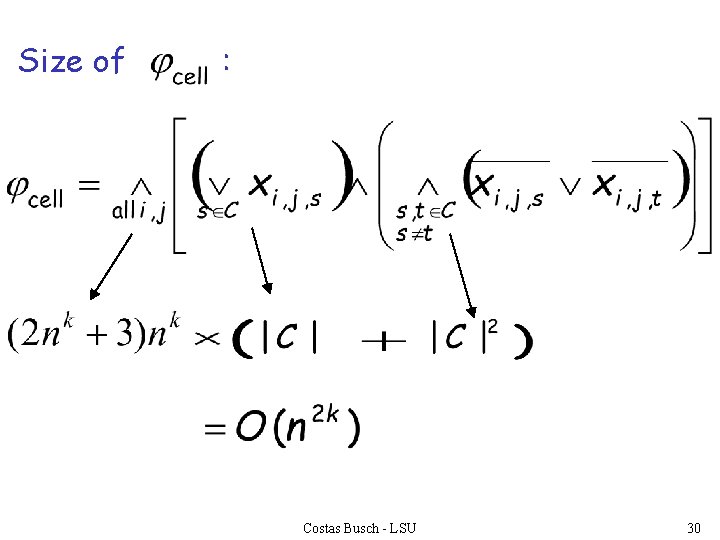
Size of : Costas Busch - LSU 30
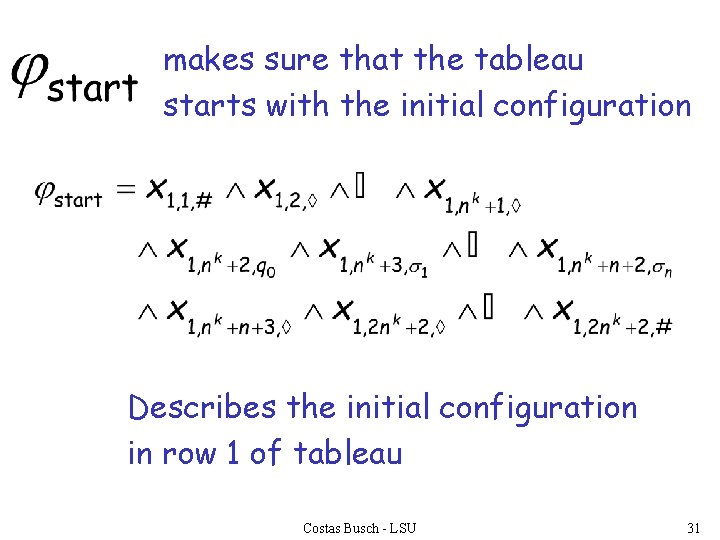
makes sure that the tableau starts with the initial configuration Describes the initial configuration in row 1 of tableau Costas Busch - LSU 31
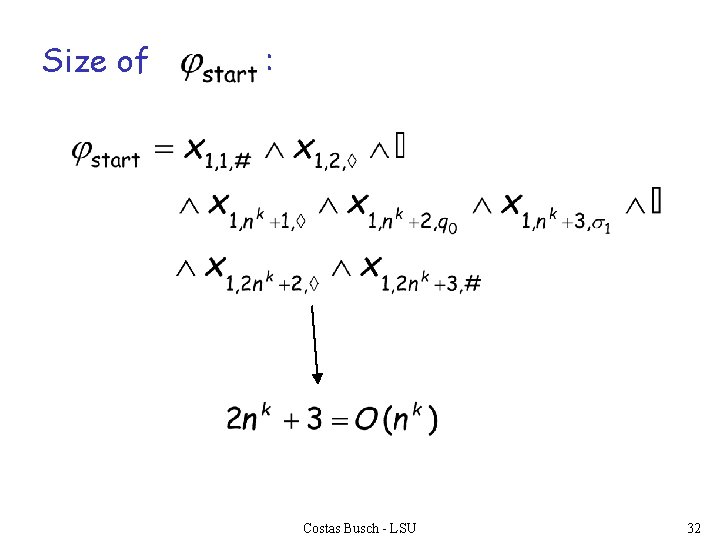
Size of : Costas Busch - LSU 32
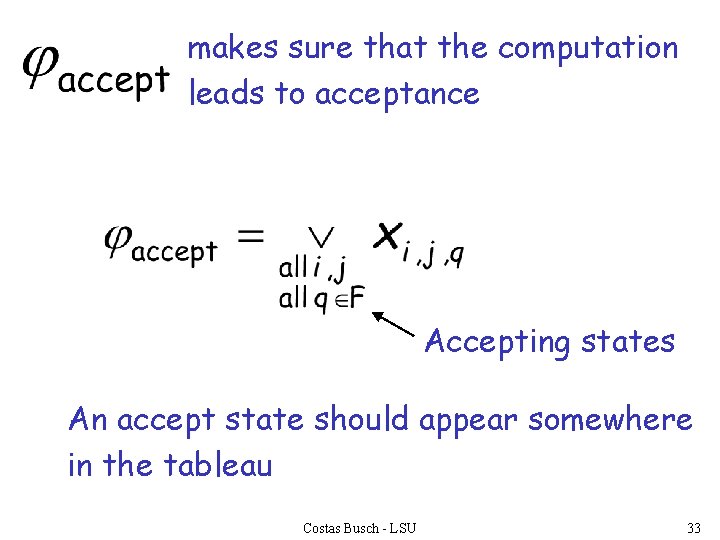
makes sure that the computation leads to acceptance Accepting states An accept state should appear somewhere in the tableau Costas Busch - LSU 33
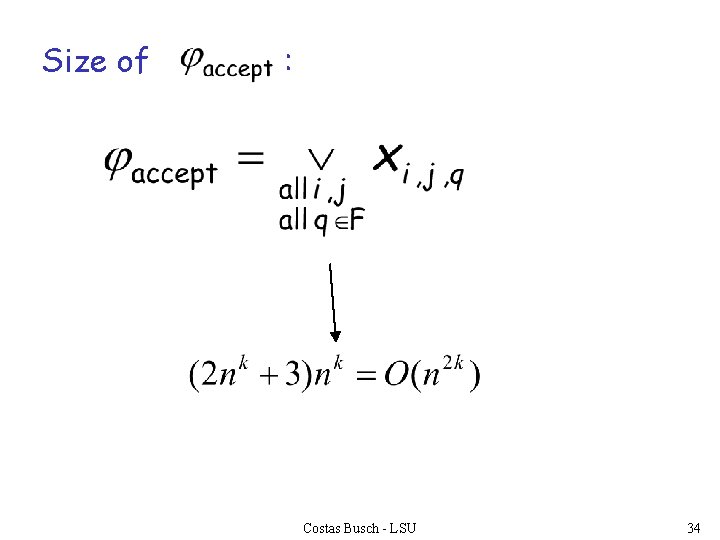
Size of : Costas Busch - LSU 34
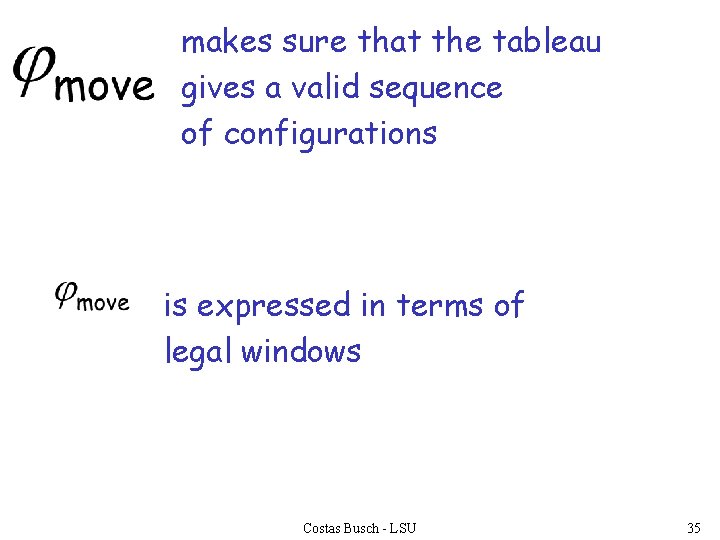
makes sure that the tableau gives a valid sequence of configurations is expressed in terms of legal windows Costas Busch - LSU 35
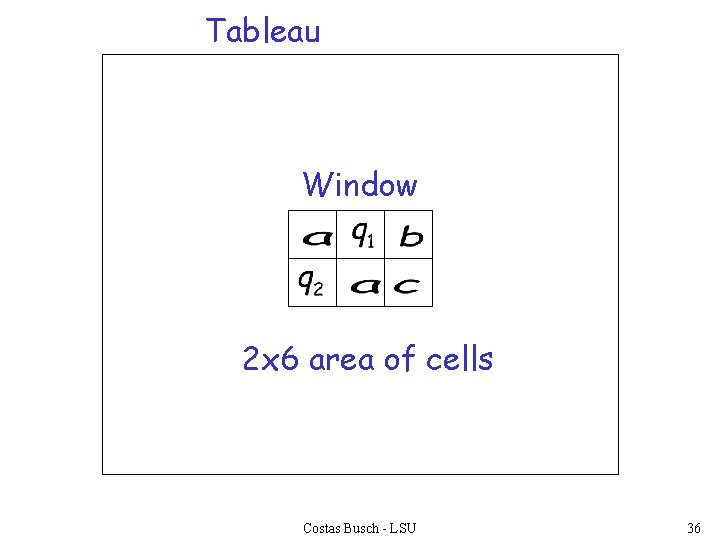
Tableau Window 2 x 6 area of cells Costas Busch - LSU 36
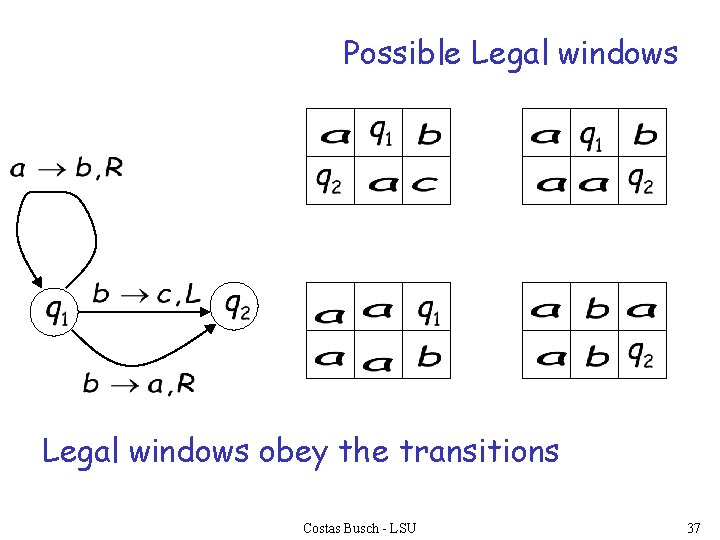
Possible Legal windows obey the transitions Costas Busch - LSU 37
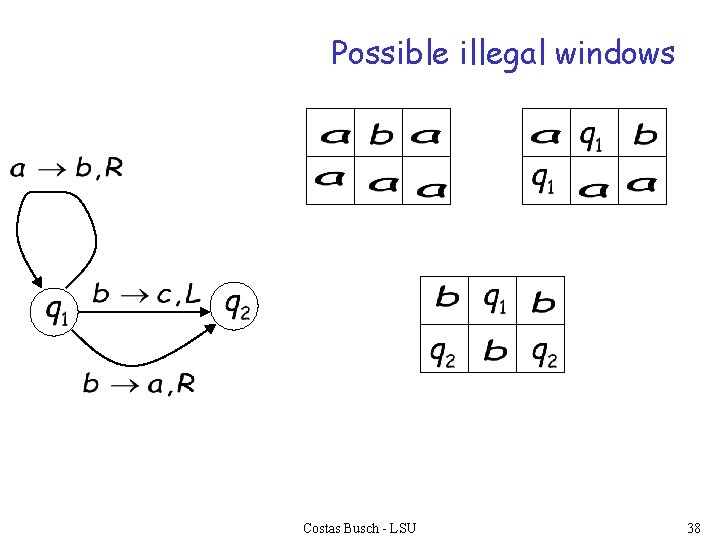
Possible illegal windows Costas Busch - LSU 38
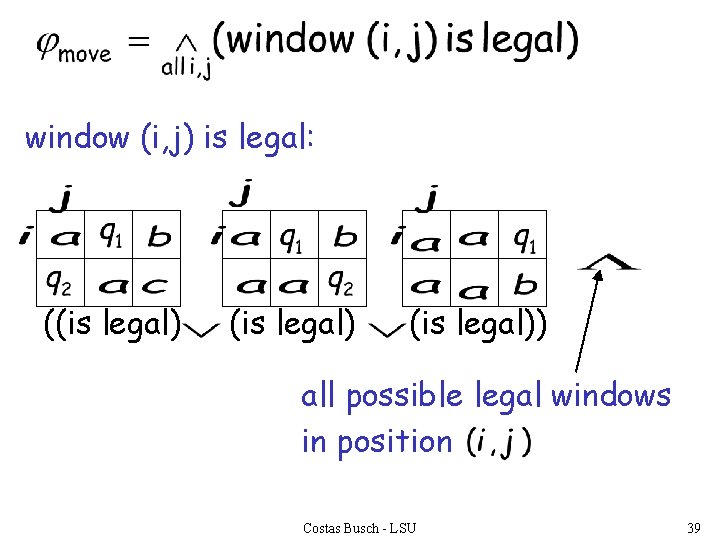
window (i, j) is legal: ((is legal)) all possible legal windows in position Costas Busch - LSU 39
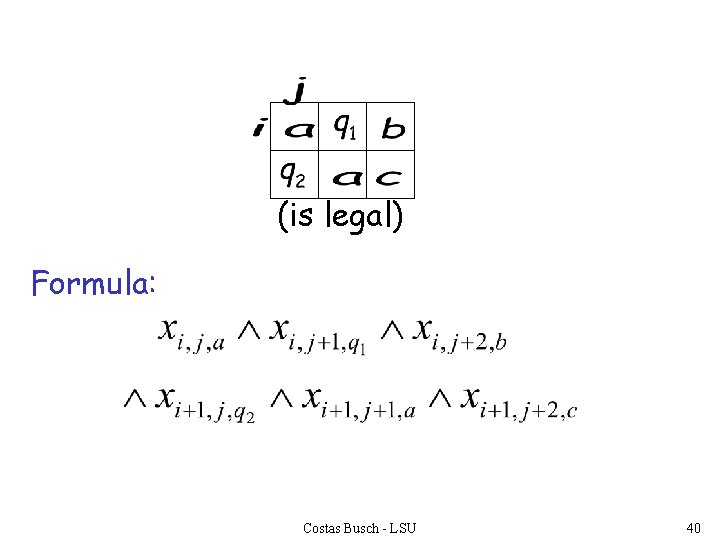
(is legal) Formula: Costas Busch - LSU 40
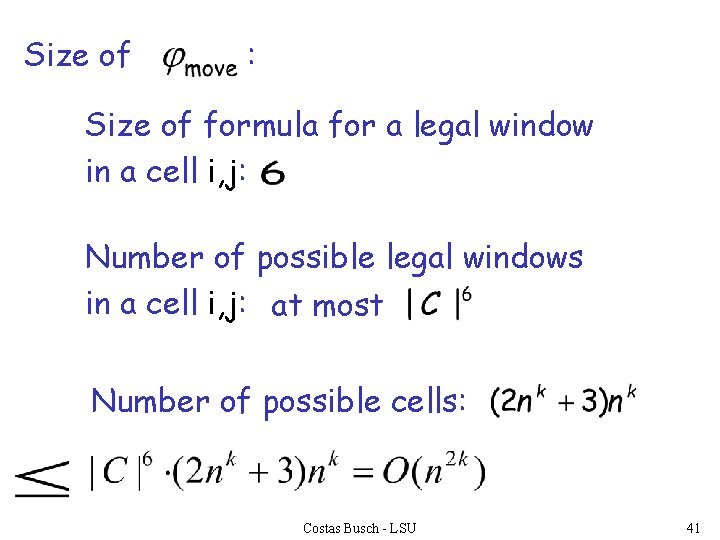
Size of : Size of formula for a legal window in a cell i, j: Number of possible legal windows in a cell i, j: at most Number of possible cells: Costas Busch - LSU 41
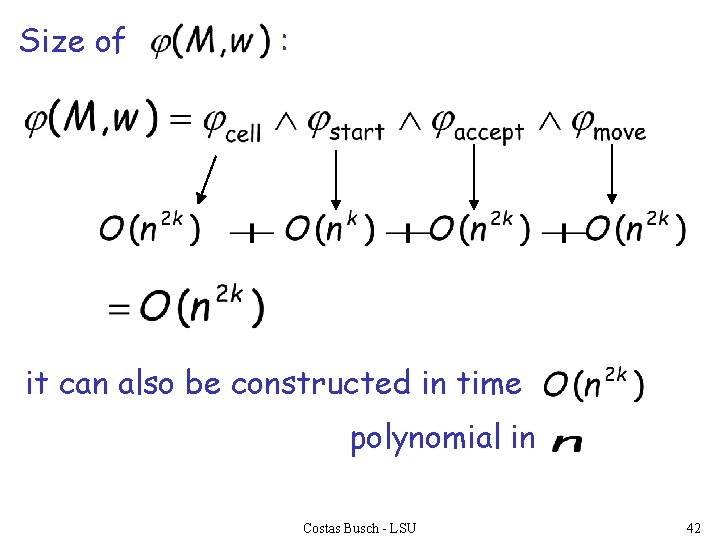
Size of : it can also be constructed in time polynomial in Costas Busch - LSU 42
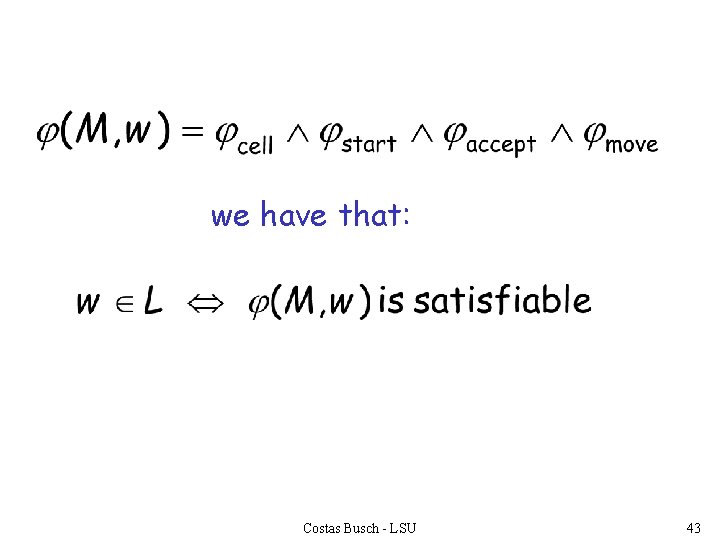
we have that: Costas Busch - LSU 43
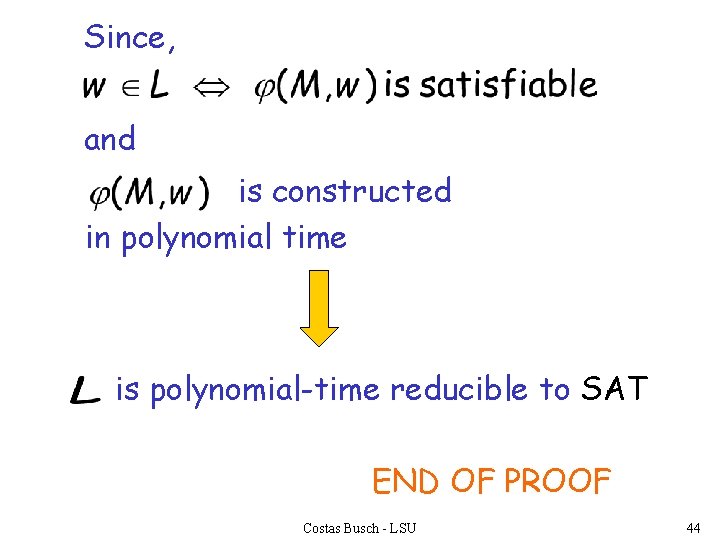
Since, and is constructed in polynomial time is polynomial-time reducible to SAT END OF PROOF Costas Busch - LSU 44
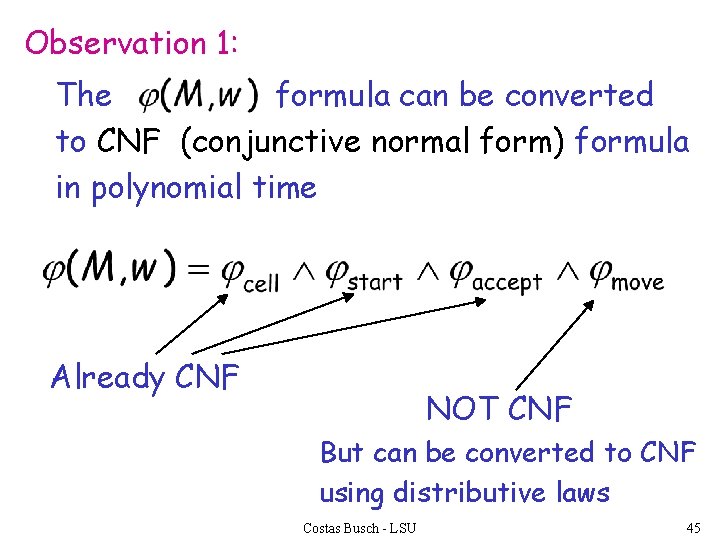
Observation 1: The formula can be converted to CNF (conjunctive normal form) formula in polynomial time Already CNF NOT CNF But can be converted to CNF using distributive laws Costas Busch - LSU 45
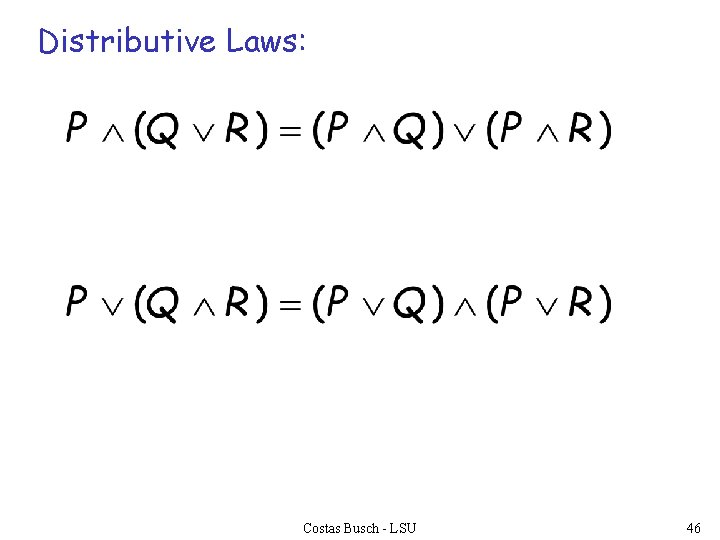
Distributive Laws: Costas Busch - LSU 46
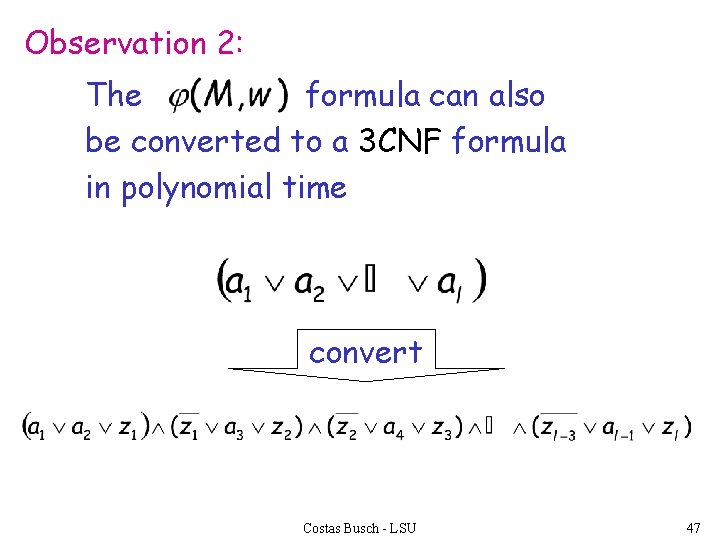
Observation 2: The formula can also be converted to a 3 CNF formula in polynomial time convert Costas Busch - LSU 47
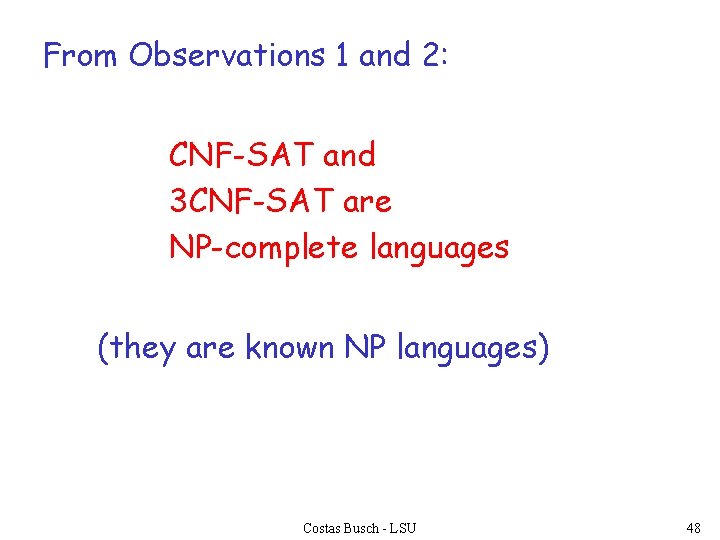
From Observations 1 and 2: CNF-SAT and 3 CNF-SAT are NP-complete languages (they are known NP languages) Costas Busch - LSU 48
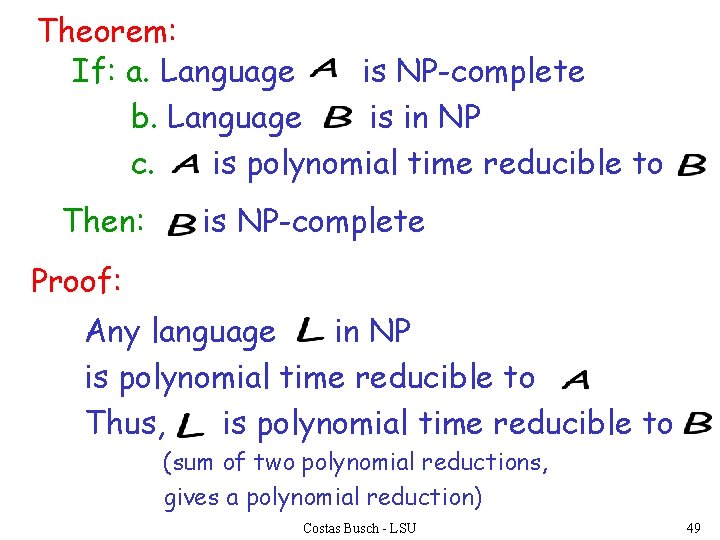
Theorem: If: a. Language is NP-complete b. Language is in NP c. is polynomial time reducible to Then: is NP-complete Proof: Any language in NP is polynomial time reducible to. Thus, is polynomial time reducible to (sum of two polynomial reductions, gives a polynomial reduction) Costas Busch - LSU 49
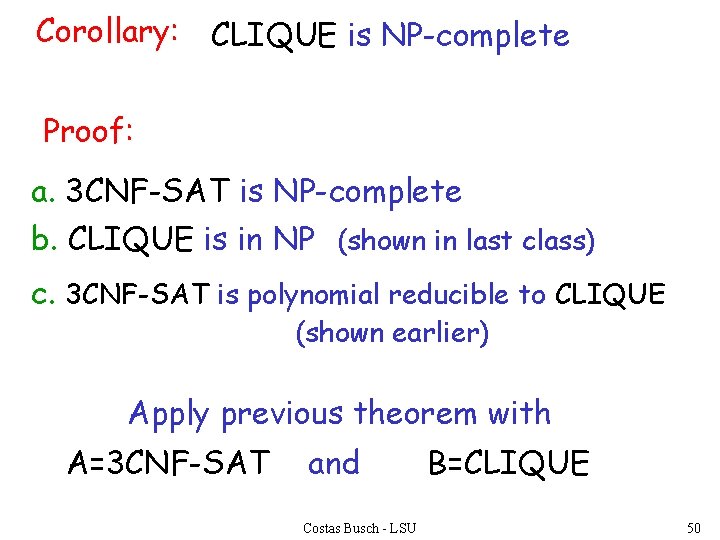
Corollary: CLIQUE is NP-complete Proof: a. 3 CNF-SAT is NP-complete b. CLIQUE is in NP (shown in last class) c. 3 CNF-SAT is polynomial reducible to CLIQUE (shown earlier) Apply previous theorem with A=3 CNF-SAT and Costas Busch - LSU B=CLIQUE 50
- Slides: 50