
NOx SOx NOx REDUCTION OF NOx SOx EMISSION


- Slides: 26
NOx SOx NOx REDUCTION OF NOx & SOx EMISSION WITH ALTERNATIVE FUEL UTILIZATION IN CEMENT INDUSTRY
FOCUS AREA Aim of this presentation is to focus on following: q Reduction and Control of NOx q Reduction and Control of SOx
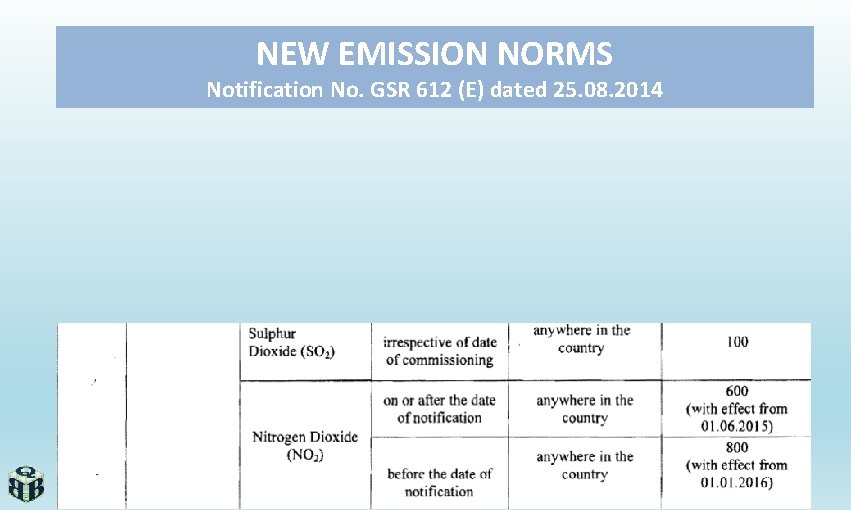
NEW EMISSION NORMS Notification No. GSR 612 (E) dated 25. 08. 2014
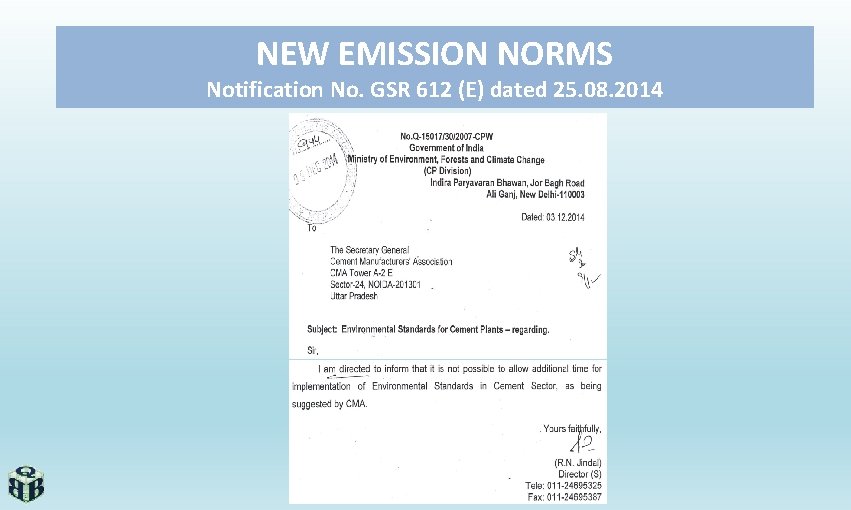
NEW EMISSION NORMS Notification No. GSR 612 (E) dated 25. 08. 2014
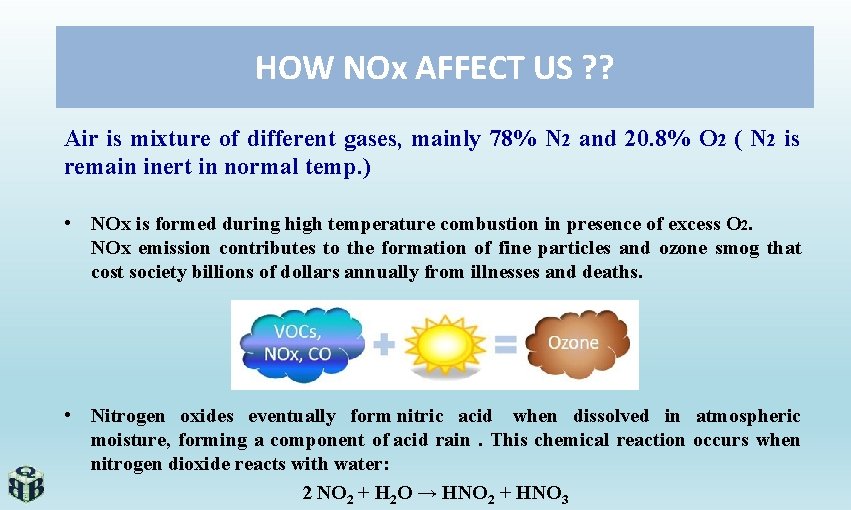
HOW NOx AFFECT US ? ? Air is mixture of different gases, mainly 78% N 2 and 20. 8% O 2 ( N 2 is remain inert in normal temp. ) • NOx is formed during high temperature combustion in presence of excess O 2. NOx emission contributes to the formation of fine particles and ozone smog that cost society billions of dollars annually from illnesses and deaths. • Nitrogen oxides eventually form nitric acid when dissolved in atmospheric moisture, forming a component of acid rain. This chemical reaction occurs when nitrogen dioxide reacts with water: 2 NO 2 + H 2 O → HNO 2 + HNO 3
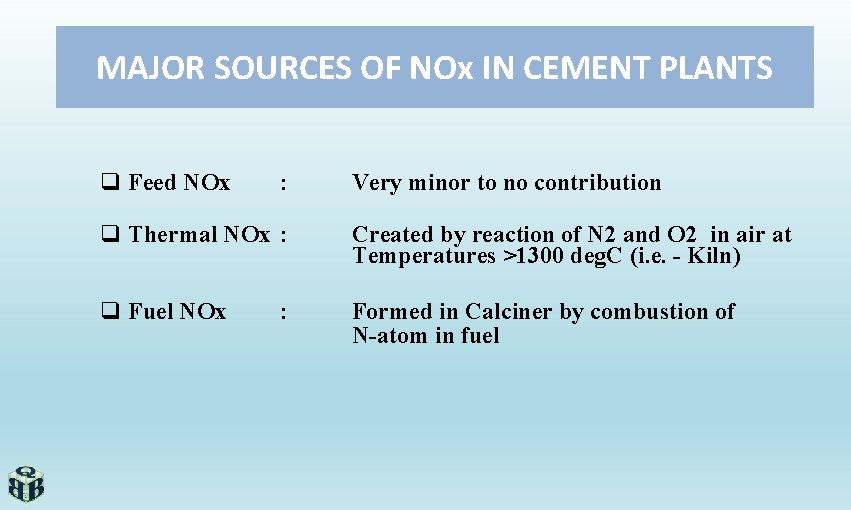
MAJOR SOURCES OF NOx IN CEMENT PLANTS q Feed NOx : Very minor to no contribution q Thermal NOx : Created by reaction of N 2 and O 2 in air at Temperatures >1300 deg. C (i. e. - Kiln) q Fuel NOx Formed in Calciner by combustion of N-atom in fuel :
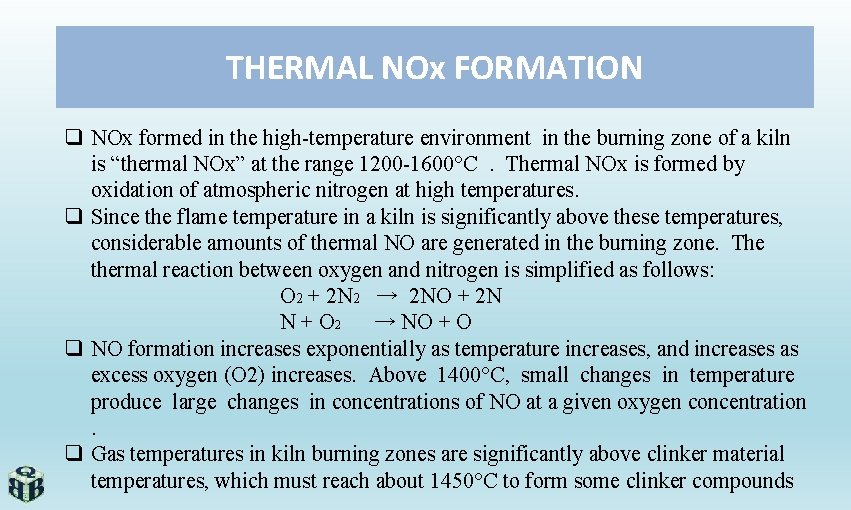
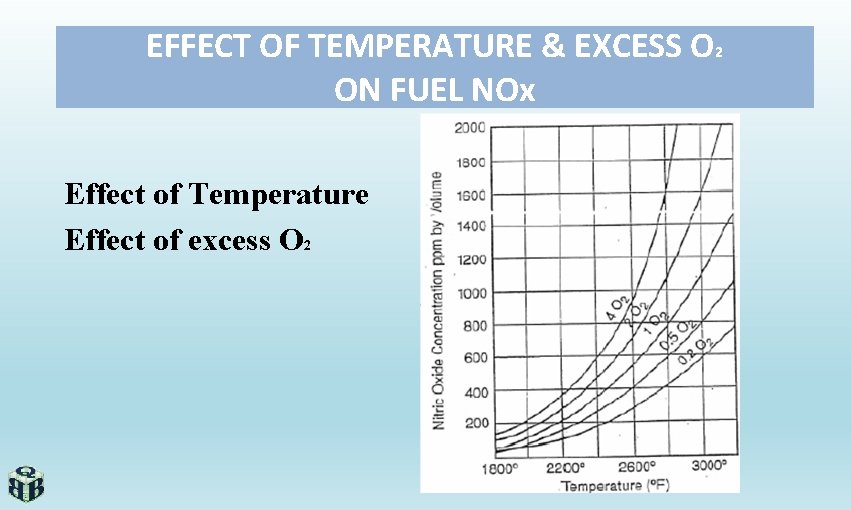
THERMAL NOx FORMATION q NOx formed in the high-temperature environment in the burning zone of a kiln is “thermal NOx” at the range 1200 -1600°C. Thermal NOx is formed by oxidation of atmospheric nitrogen at high temperatures. q Since the flame temperature in a kiln is significantly above these temperatures, considerable amounts of thermal NO are generated in the burning zone. The thermal reaction between oxygen and nitrogen is simplified as follows: O 2 + 2 N 2 → 2 NO + 2 N N + O 2 → NO + O q NO formation increases exponentially as temperature increases, and increases as excess oxygen (O 2) increases. Above 1400°C, small changes in temperature produce large changes in concentrations of NO at a given oxygen concentration. q Gas temperatures in kiln burning zones are significantly above clinker material temperatures, which must reach about 1450°C to form some clinker compounds
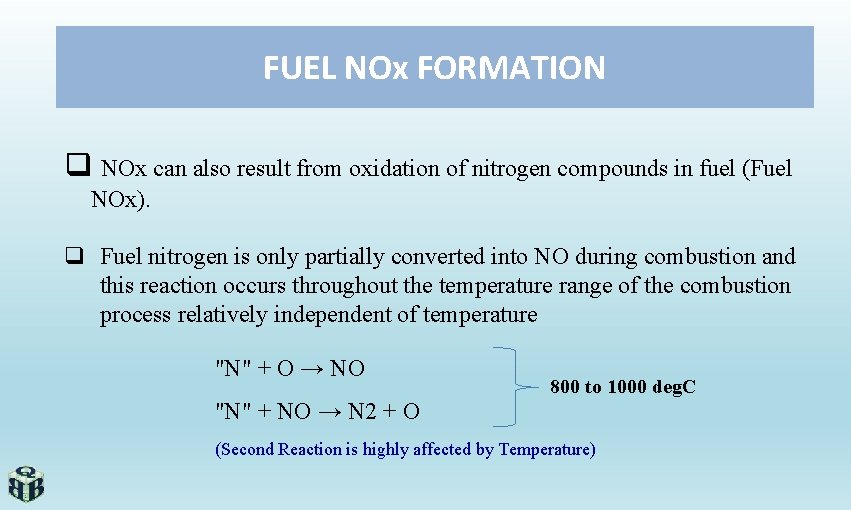
FUEL NOx FORMATION q NOx can also result from oxidation of nitrogen compounds in fuel (Fuel NOx). q Fuel nitrogen is only partially converted into NO during combustion and this reaction occurs throughout the temperature range of the combustion process relatively independent of temperature "N" + O → NO 800 to 1000 deg. C "N" + NO → N 2 + O (Second Reaction is highly affected by Temperature)
EFFECT OF TEMPERATURE & EXCESS O 2 ON FUEL NOx Effect of Temperature Effect of excess O 2
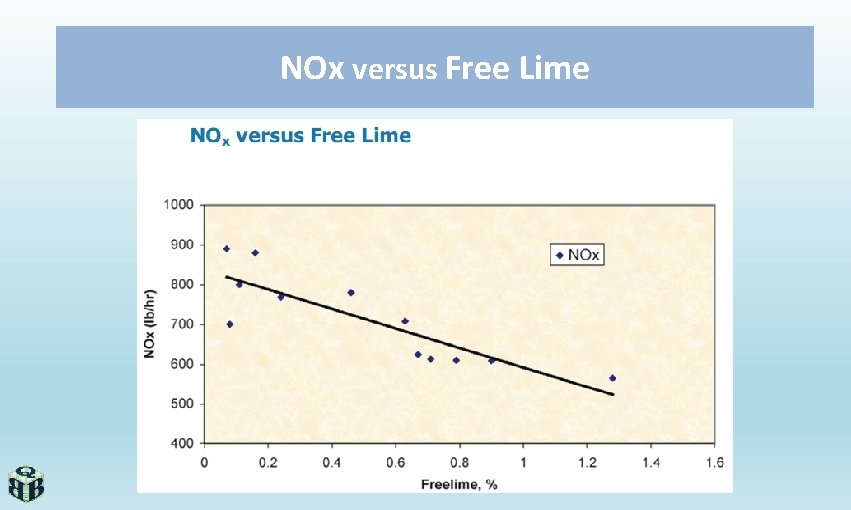
NOx versus Free Lime
NOx CONTROL STRATEGY q Process Optimization q Modifications / Hardware Change q Selective Catalytic & Non-Catalytic Reduction
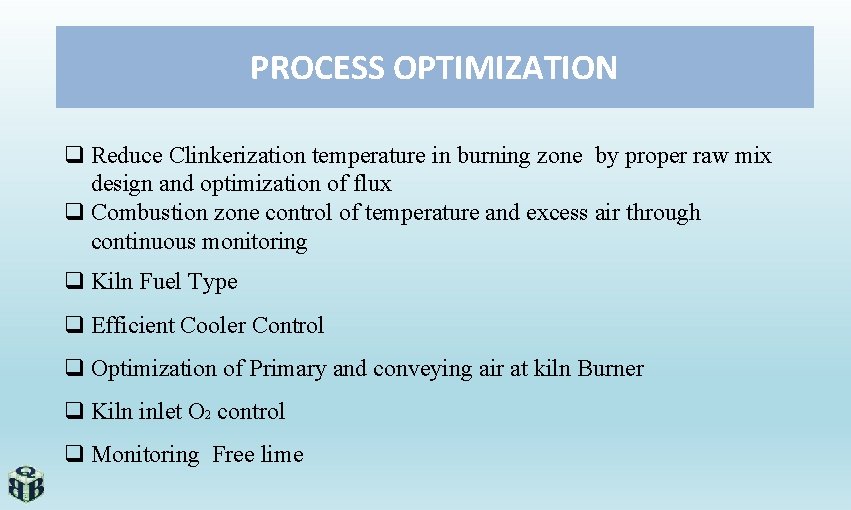
PROCESS OPTIMIZATION q Reduce Clinkerization temperature in burning zone by proper raw mix design and optimization of flux q Combustion zone control of temperature and excess air through continuous monitoring q Kiln Fuel Type q Efficient Cooler Control q Optimization of Primary and conveying air at kiln Burner q Kiln inlet O 2 control q Monitoring Free lime
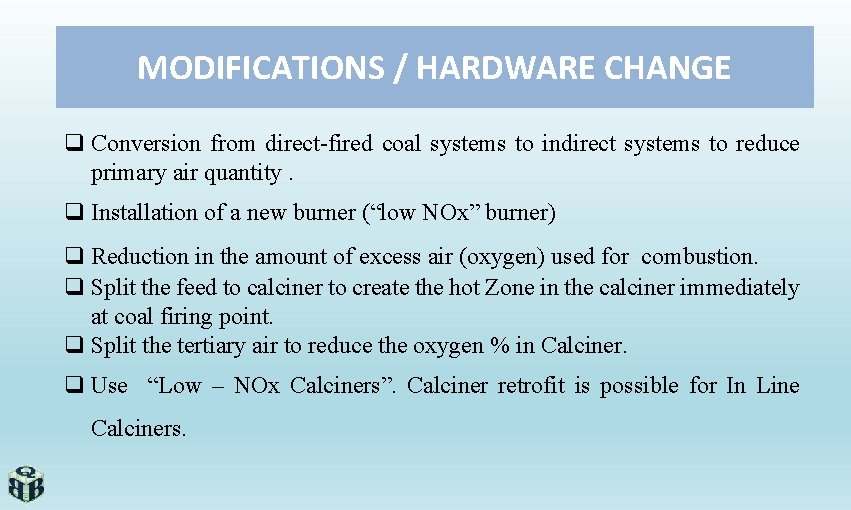
MODIFICATIONS / HARDWARE CHANGE q Conversion from direct-fired coal systems to indirect systems to reduce primary air quantity. q Installation of a new burner (“low NOx” burner) q Reduction in the amount of excess air (oxygen) used for combustion. q Split the feed to calciner to create the hot Zone in the calciner immediately at coal firing point. q Split the tertiary air to reduce the oxygen % in Calciner. q Use “Low – NOx Calciners”. Calciner retrofit is possible for In Line Calciners.
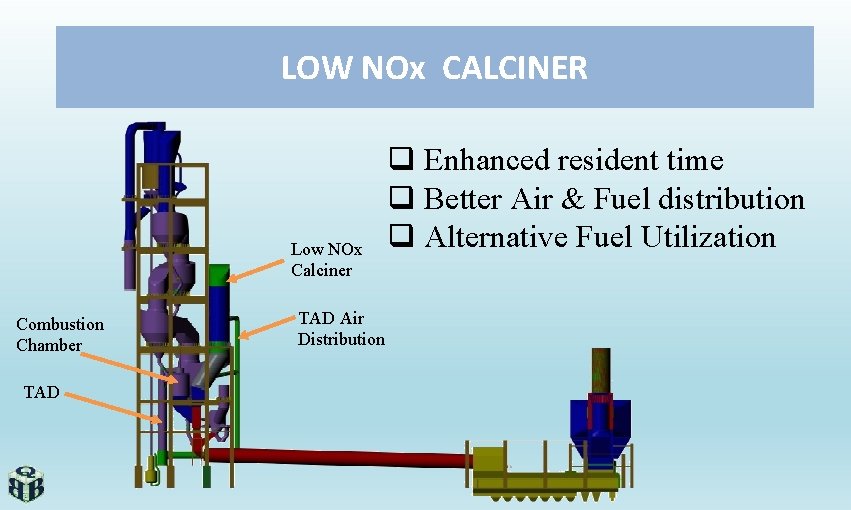
LOW NOx CALCINER Low NOx Calciner Combustion Chamber TAD Air Distribution q Enhanced resident time q Better Air & Fuel distribution q Alternative Fuel Utilization
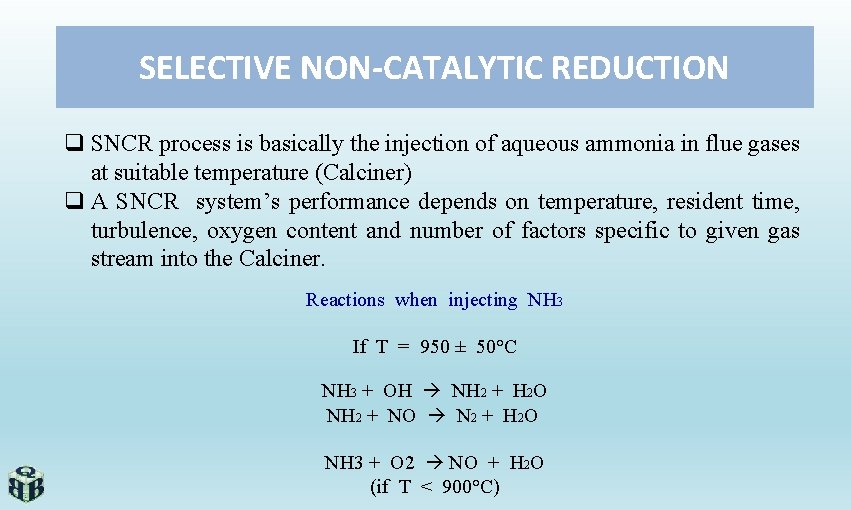
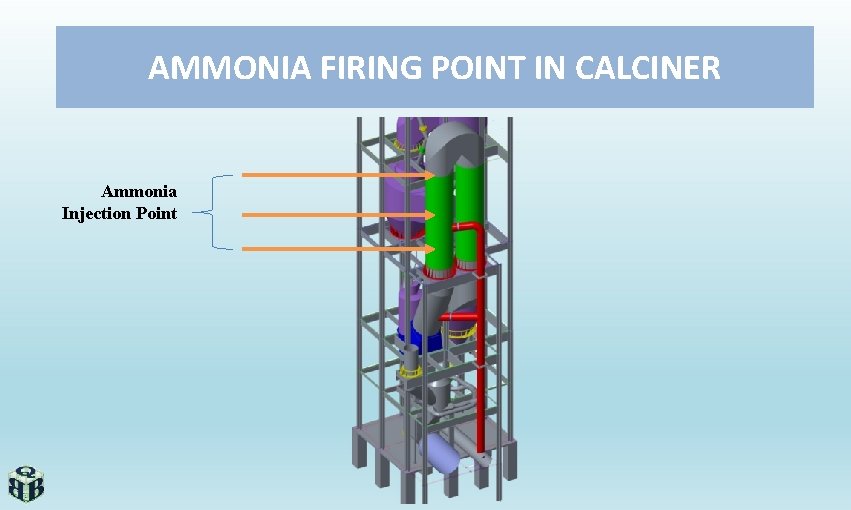
SELECTIVE NON-CATALYTIC REDUCTION q SNCR process is basically the injection of aqueous ammonia in flue gases at suitable temperature (Calciner) q A SNCR system’s performance depends on temperature, resident time, turbulence, oxygen content and number of factors specific to given gas stream into the Calciner. Reactions when injecting NH 3 If T = 950 ± 50°C NH 3 + OH NH 2 + H 2 O NH 2 + NO N 2 + H 2 O NH 3 + O 2 NO + H 2 O (if T < 900°C)
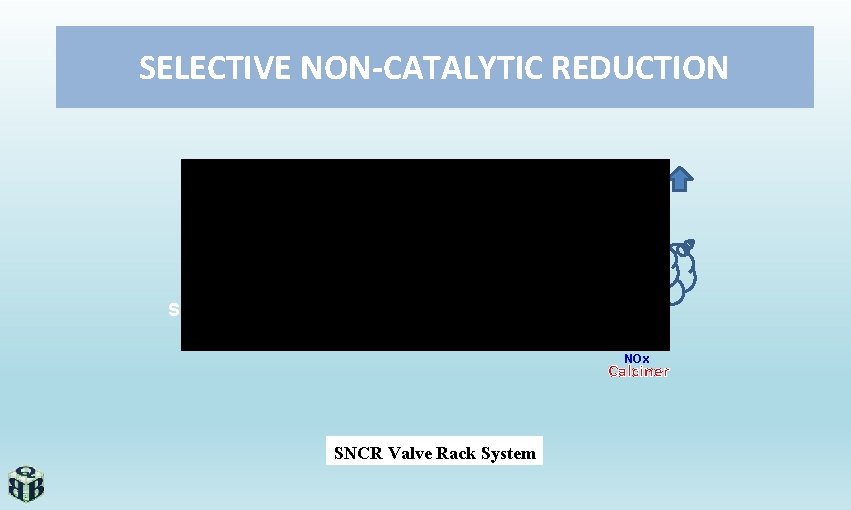
SELECTIVE NON-CATALYTIC REDUCTION N 2 H 2 O NH 3 Spray NH 3 Solution Tank NOx Calciner SNCR Valve Rack System
AMMONIA FIRING POINT IN CALCINER Ammonia Injection Point
FACTORS AFFECTING SNCR OPERATIONAL COST q Baseline NOx Level q Desired Final NOx Level q Local Market/Transportation Costs for Ammonia q Ammonia Utilization
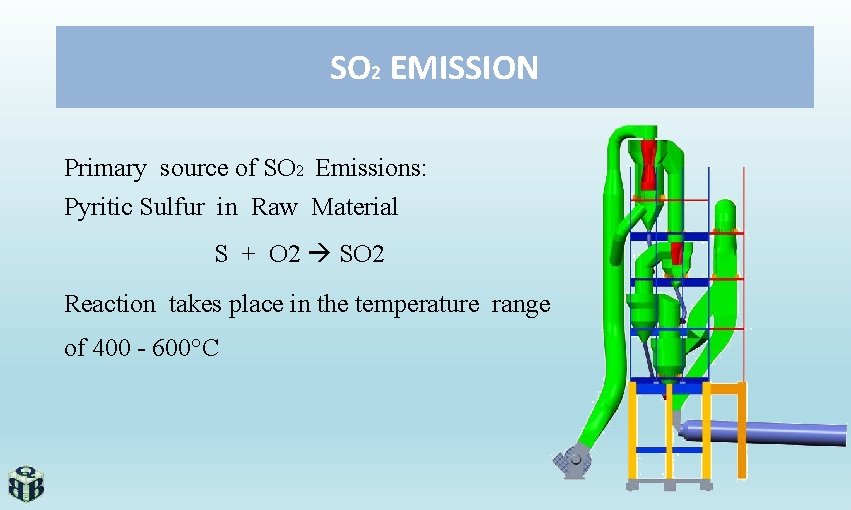
SO 2 EMISSION Primary source of SO 2 Emissions: Pyritic Sulfur in Raw Material S + O 2 SO 2 Reaction takes place in the temperature range of 400 - 600°C
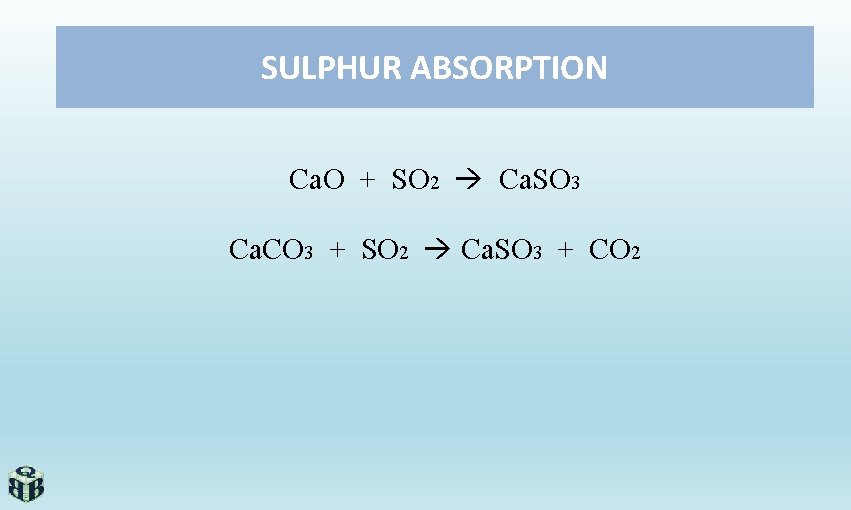
SULPHUR ABSORPTION Ca. O + SO 2 Ca. SO 3 Ca. CO 3 + SO 2 Ca. SO 3 + CO 2
REAL TIME TESTING FOR NOx REDUCTION AND CONTROL Situation at every plant is different therefore, we recommend: FIRST PHASE SECOND PHASE : Real Time Test : Complete SNCR Installation
REAL TIME TESTING FOR NOx REDUCTION AND CONTROL WHAT WE DO FOR REAL TIME TEST ? ? q Specific study for controlling NOx on real time basis for 2 to 4 days with our Ready Portable SNCR System. q Continuous monitoring of NOx & SOx during the test. q Quantity of Aqueous Ammonia is continuously regulated and monitored.
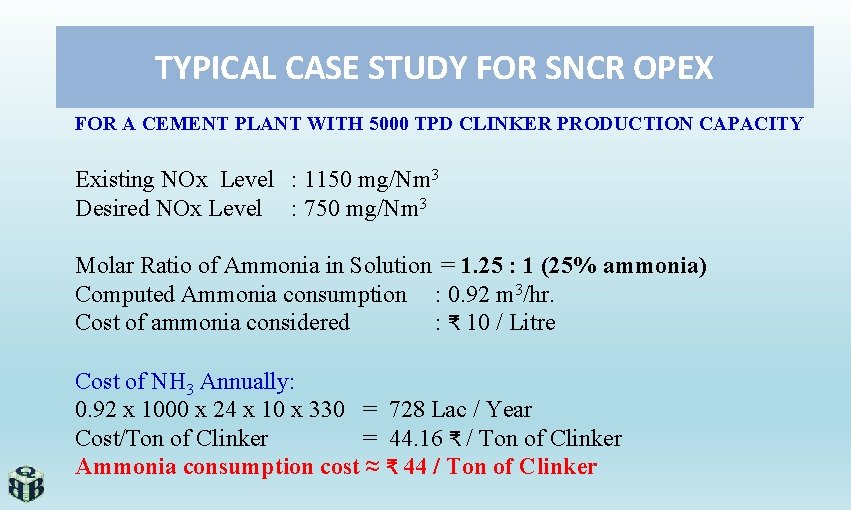
TYPICAL CASE STUDY FOR SNCR OPEX FOR A CEMENT PLANT WITH 5000 TPD CLINKER PRODUCTION CAPACITY Existing NOx Level : 1150 mg/Nm 3 Desired NOx Level : 750 mg/Nm 3 Molar Ratio of Ammonia in Solution = 1. 25 : 1 (25% ammonia) Computed Ammonia consumption : 0. 92 m 3/hr. Cost of ammonia considered : ₹ 10 / Litre Cost of NH 3 Annually: 0. 92 x 1000 x 24 x 10 x 330 = 728 Lac / Year Cost/Ton of Clinker = 44. 16 ₹ / Ton of Clinker Ammonia consumption cost ≈ ₹ 44 / Ton of Clinker
COMPANIES WE HAVE WORKED WITH Green Island Cement
OUR ASSOCIATES EURO KILNS ALL KIND OF KILN MECH. WORKS CEMCON SWITZERLAND
THANK YOU