
Nova System Architecture Metadata Database Modules are stateless

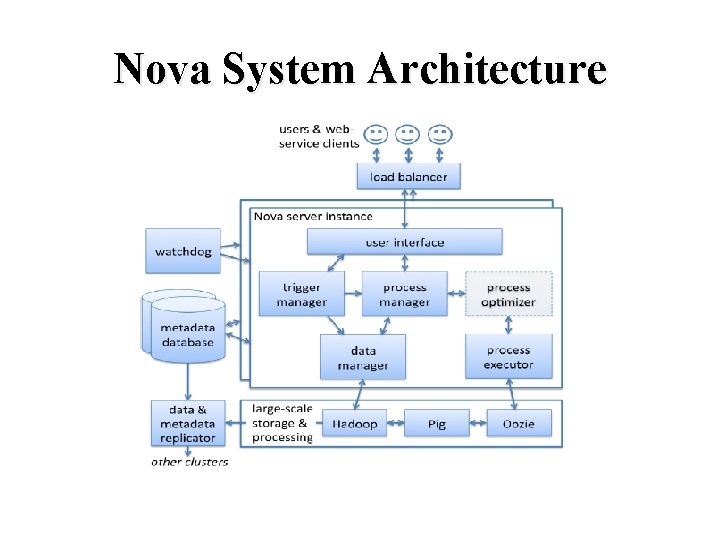
Nova System Architecture
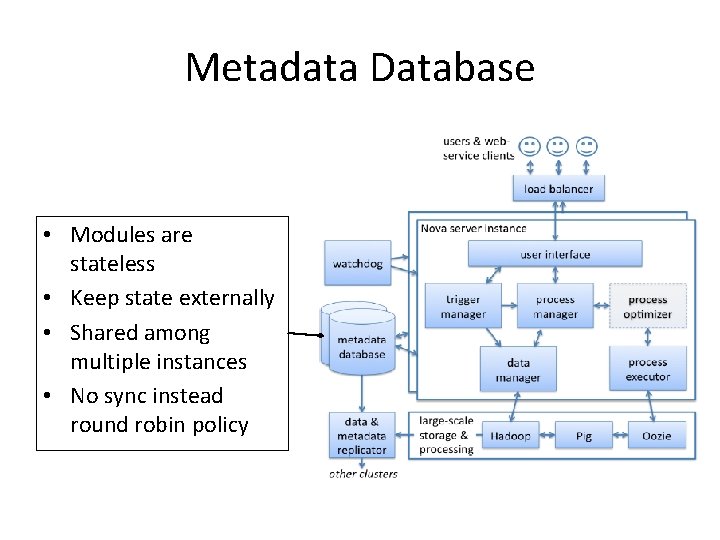
Metadata Database • Modules are stateless • Keep state externally • Shared among multiple instances • No sync instead round robin policy
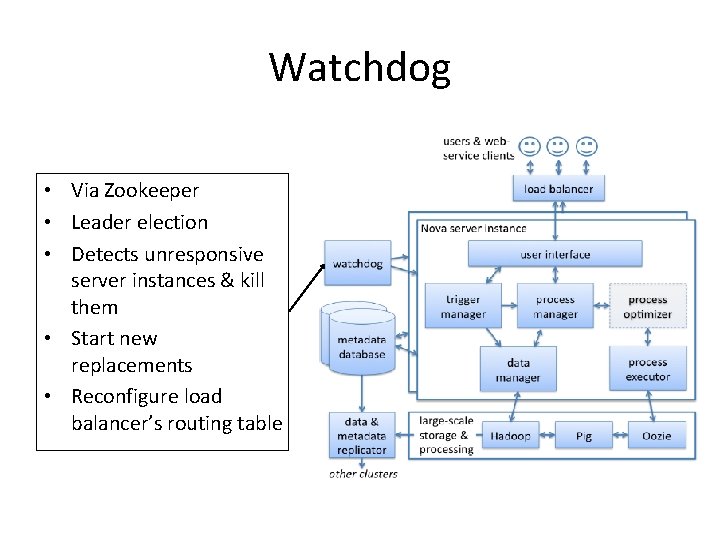
Watchdog • Via Zookeeper • Leader election • Detects unresponsive server instances & kill them • Start new replacements • Reconfigure load balancer’s routing table
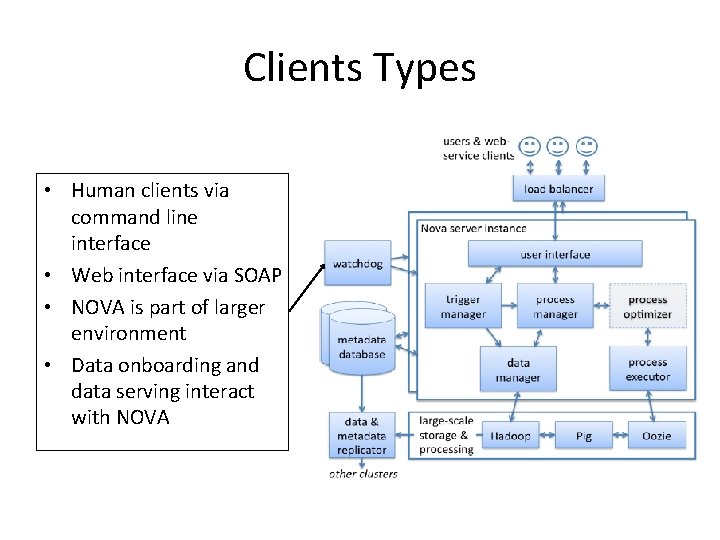
Clients Types • Human clients via command line interface • Web interface via SOAP • NOVA is part of larger environment • Data onboarding and data serving interact with NOVA
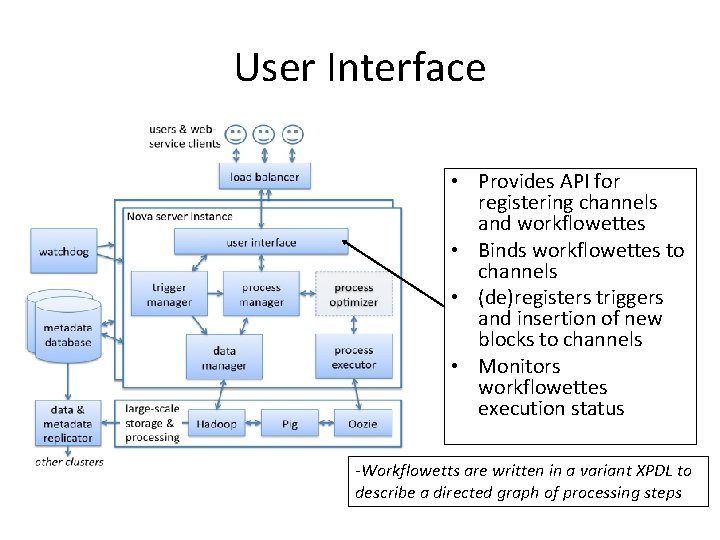
User Interface • Provides API for registering channels and workflowettes • Binds workflowettes to channels • (de)registers triggers and insertion of new blocks to channels • Monitors workflowettes execution status -Workflowetts are written in a variant XPDL to describe a directed graph of processing steps
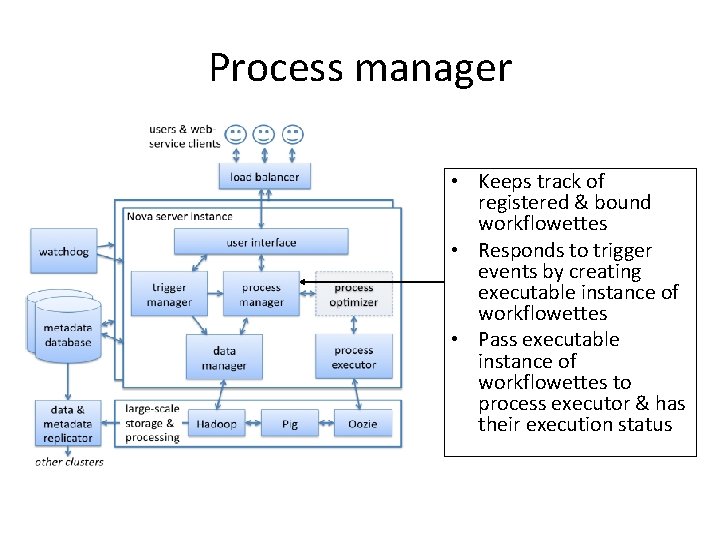
Process manager • Keeps track of registered & bound workflowettes • Responds to trigger events by creating executable instance of workflowettes • Pass executable instance of workflowettes to process executor & has their execution status
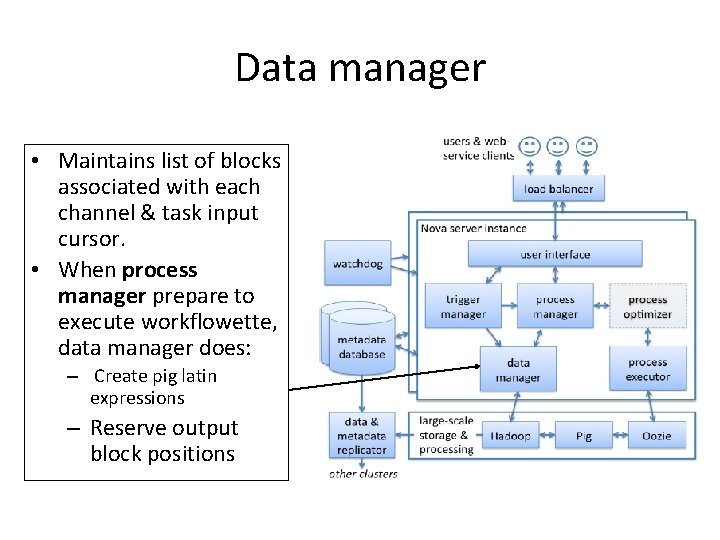
Data manager • Maintains list of blocks associated with each channel & task input cursor. • When process manager prepare to execute workflowette, data manager does: – Create pig latin expressions – Reserve output block positions
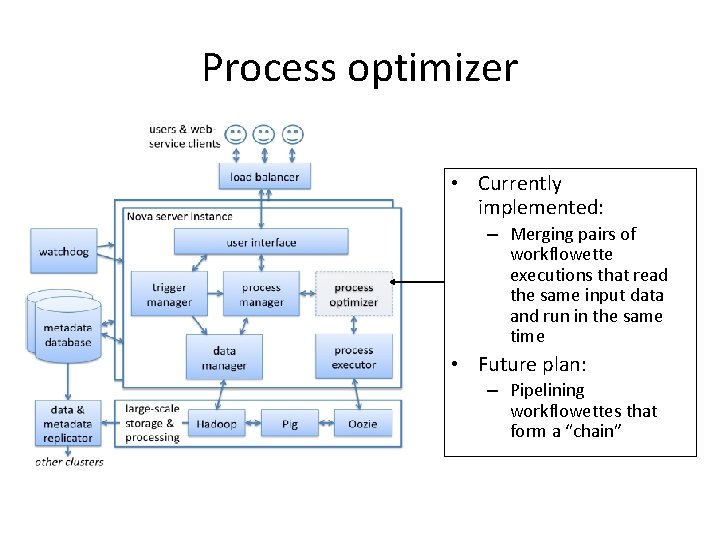
Process optimizer • Currently implemented: – Merging pairs of workflowette executions that read the same input data and run in the same time • Future plan: – Pipelining workflowettes that form a “chain”
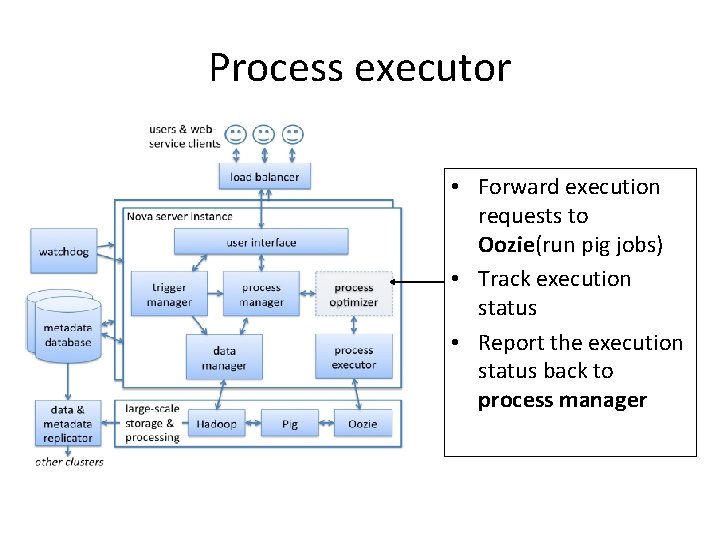
Process executor • Forward execution requests to Oozie(run pig jobs) • Track execution status • Report the execution status back to process manager
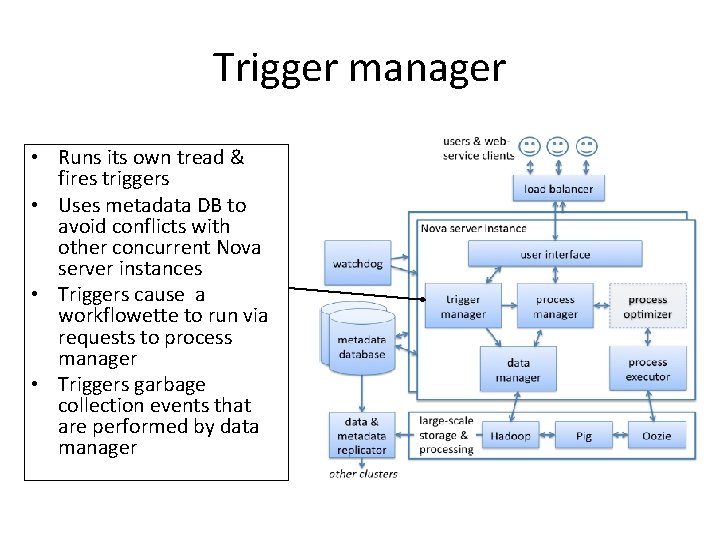
Trigger manager • Runs its own tread & fires triggers • Uses metadata DB to avoid conflicts with other concurrent Nova server instances • Triggers cause a workflowette to run via requests to process manager • Triggers garbage collection events that are performed by data manager
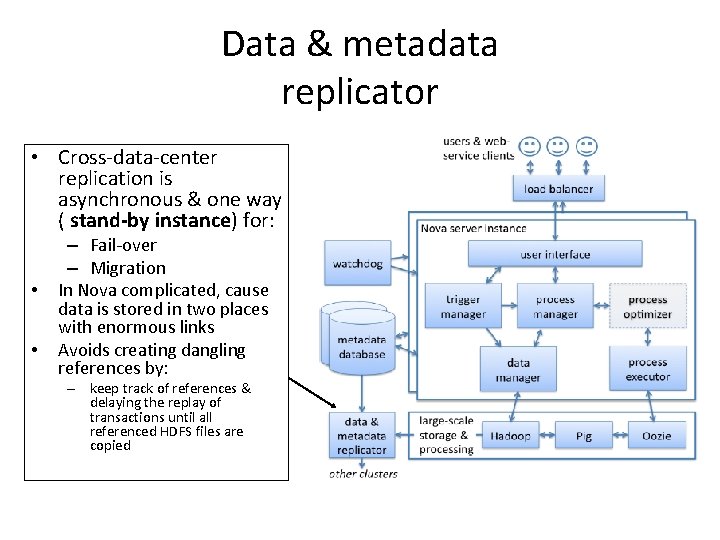
Data & metadata replicator • Cross-data-center replication is asynchronous & one way ( stand-by instance) for: • • – Fail-over – Migration In Nova complicated, cause data is stored in two places with enormous links Avoids creating dangling references by: – keep track of references & delaying the replay of transactions until all referenced HDFS files are copied
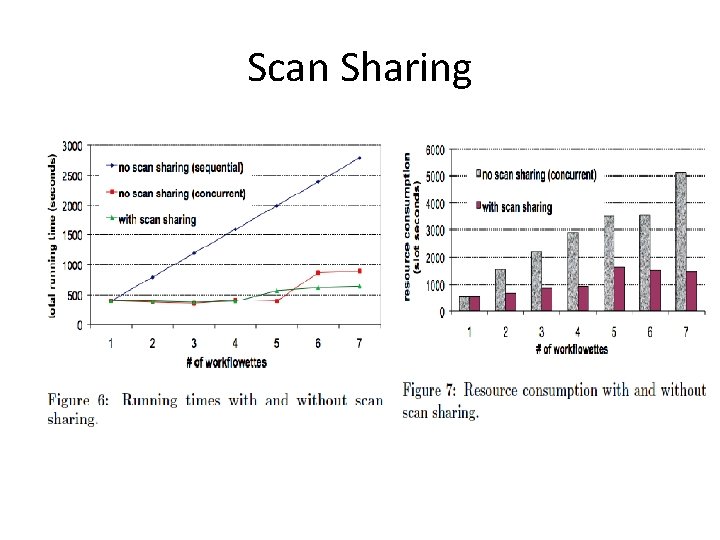
Scan sharing • Workflowettes scheduled independently, but often multiple workflowette executions that read same data are triggered almost in the same time. • “Load” operation is used once across different workflowettes. • Merging is governed in XML workflowette by : – “ Mergeable ” annotation – “ Maximam queue time “ • Only workflowettes that use ALL consumption mode are supported.
Experiments • Incremental Processing: – Merge overhead • Different block sizes – Incremental Vs. non-incremental Join • Scan Sharing
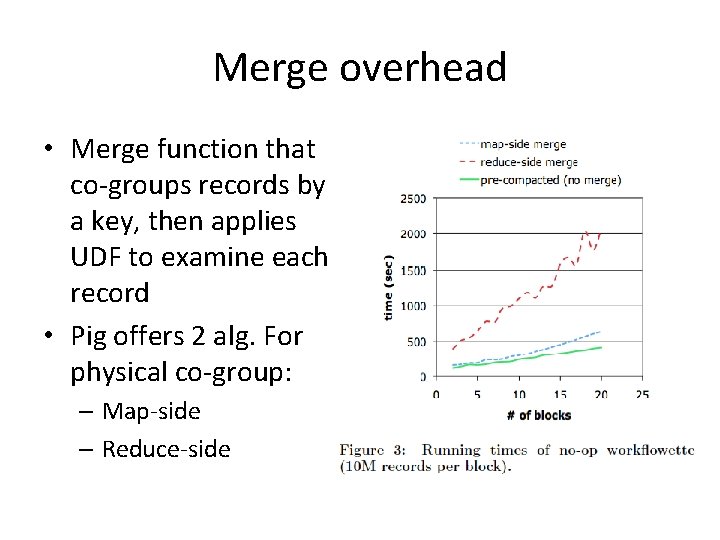
Merge overhead • Merge function that co-groups records by a key, then applies UDF to examine each record • Pig offers 2 alg. For physical co-group: – Map-side – Reduce-side
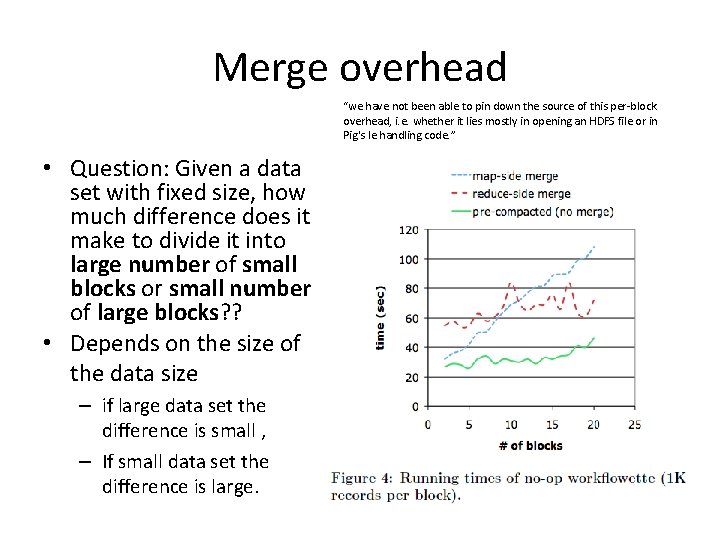
Merge overhead “we have not been able to pin down the source of this per-block overhead, i. e. whether it lies mostly in opening an HDFS file or in Pig's le handling code. ” • Question: Given a data set with fixed size, how much difference does it make to divide it into large number of small blocks or small number of large blocks? ? • Depends on the size of the data size – if large data set the difference is small , – If small data set the difference is large.
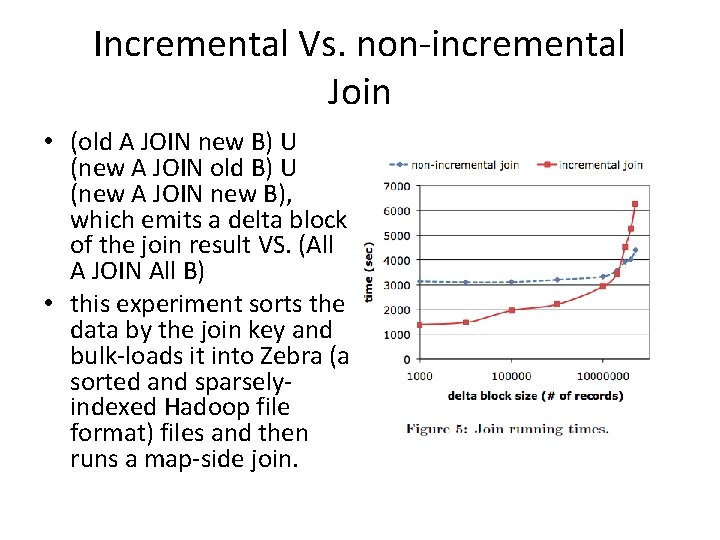
Incremental Vs. non-incremental Join • (old A JOIN new B) U (new A JOIN old B) U (new A JOIN new B), which emits a delta block of the join result VS. (All A JOIN All B) • this experiment sorts the data by the join key and bulk-loads it into Zebra (a sorted and sparselyindexed Hadoop file format) files and then runs a map-side join.
Scan Sharing
Thank you!! Questions? ?
- Slides: 19