
Nouns Pronouns ACT Practice Question Skill Identifying nouns

- Slides: 12
Nouns & Pronouns
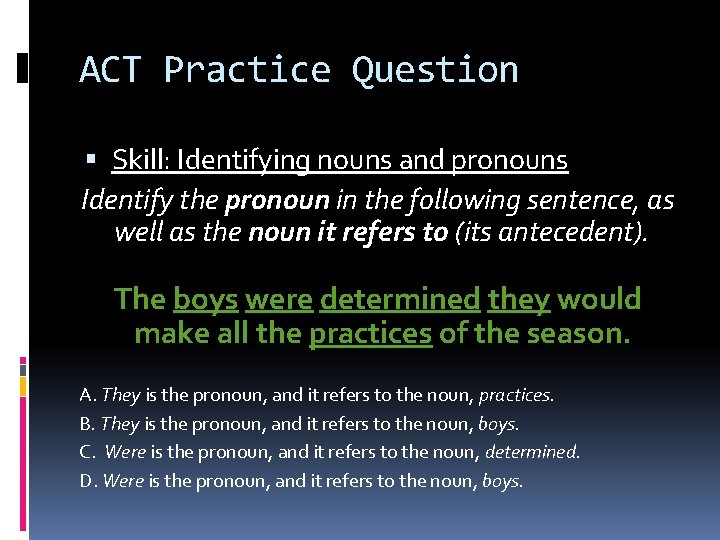
ACT Practice Question Skill: Identifying nouns and pronouns Identify the pronoun in the following sentence, as well as the noun it refers to (its antecedent). The boys were determined they would make all the practices of the season. A. They is the pronoun, and it refers to the noun, practices. B. They is the pronoun, and it refers to the noun, boys. C. Were is the pronoun, and it refers to the noun, determined. D. Were is the pronoun, and it refers to the noun, boys.
Watch and Learn. . . Nouns and Pronouns
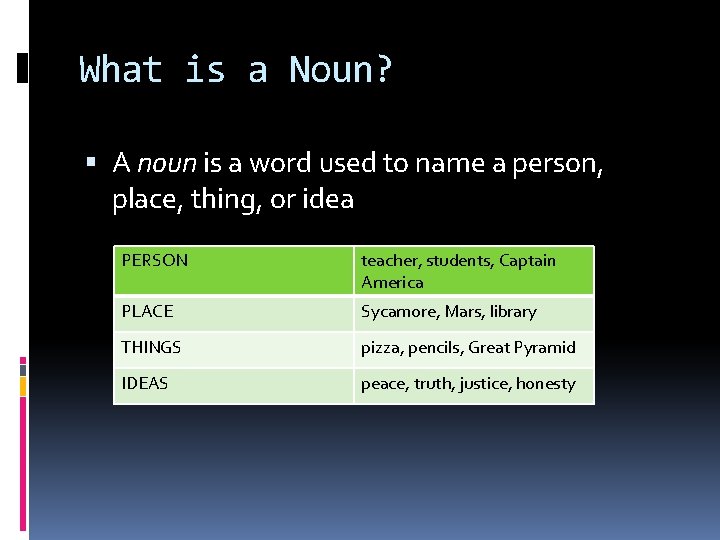
What is a Noun? A noun is a word used to name a person, place, thing, or idea PERSON teacher, students, Captain America PLACE Sycamore, Mars, library THINGS pizza, pencils, Great Pyramid IDEAS peace, truth, justice, honesty
Nouns Can Be Proper or Common. . . A proper noun names a particular person, place, thing or idea ALWAYS CAPITALIZED EX: Barack Obama, Mount Everest, Sycamore A common noun names any one of a group of persons, places, things or ideas. usually not capitalized EX: president, mountain, city
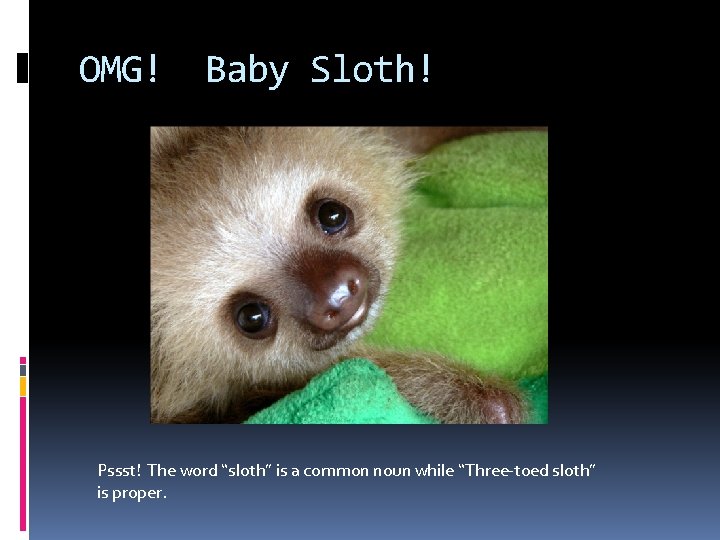
OMG! Baby Sloth! Pssst! The word “sloth” is a common noun while “Three-toed sloth” is proper.
What About Pronouns? A pronoun is a word used in place of one or more nouns or pronouns. EX: Where is Austin? He said he would be here on time. Austin = Proper Noun He / he = pronouns taking the place of “Austin”
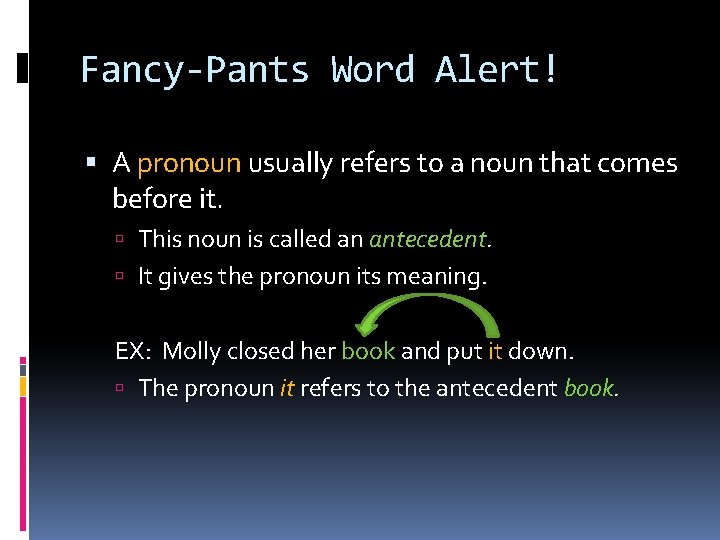
Fancy-Pants Word Alert! A pronoun usually refers to a noun that comes before it. This noun is called an antecedent. It gives the pronoun its meaning. EX: Molly closed her book and put it down. The pronoun it refers to the antecedent book.
Wait! There’s a Catch!
Pronoun + Antecedent = <3 Pronouns and their antecedents must always agree with each other in terms of number. So, if you have a plural (more than one) pronoun, you will have a plural (more than one) antecedent. EX: Last Saturday, the girls decided they would all go to the dance together.
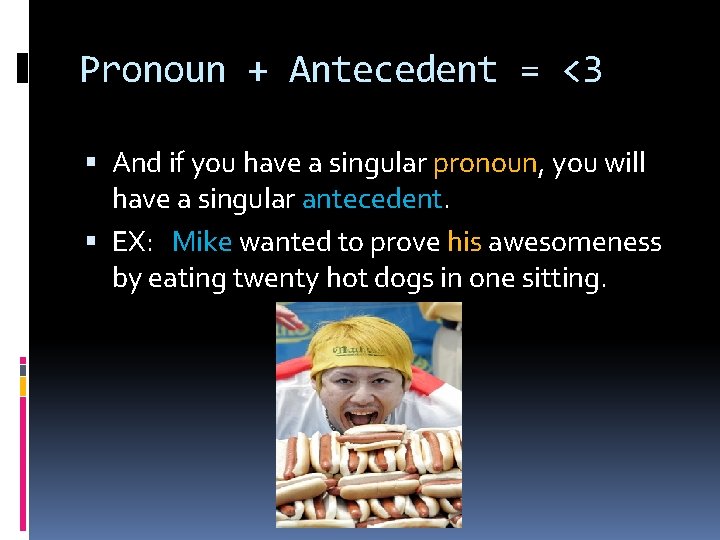
Pronoun + Antecedent = <3 And if you have a singular pronoun, you will have a singular antecedent. EX: Mike wanted to prove his awesomeness by eating twenty hot dogs in one sitting.
So many, many pronouns There actually a bunch of different types of pronouns: Personal Reflexive and Intensive Relative Interrogative Demonstrative Indefinite