
Nouns Nouns A noun is a word used

- Slides: 28
Nouns
Nouns • A noun is a word used to name a person, place, thing, or idea. • Person – architect • Place – neighborhood • Thing – money • Idea – courage
NOUNS • There are two basic kinds of nouns: • proper nouns • common nouns
COMMON NOUNS • Common nouns name any person, place, thing, or idea. • They can be either concrete or abstract
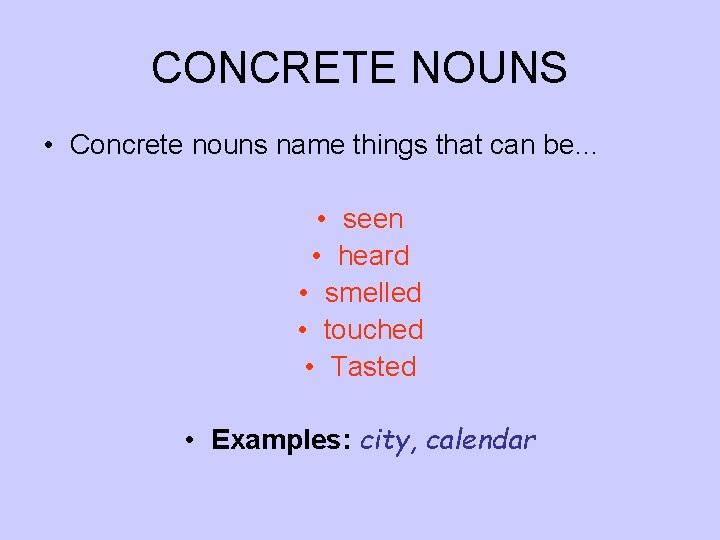
CONCRETE NOUNS • Concrete nouns name things that can be… • seen • heard • smelled • touched • Tasted • Examples: city, calendar
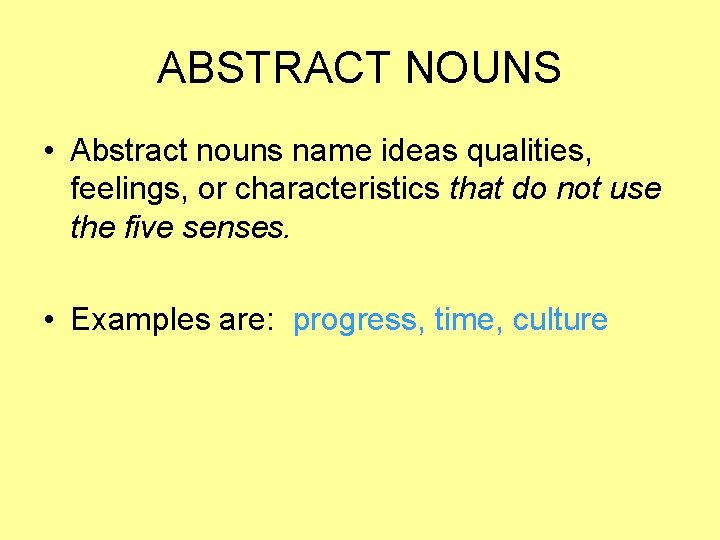
ABSTRACT NOUNS • Abstract nouns name ideas qualities, feelings, or characteristics that do not use the five senses. • Examples are: progress, time, culture
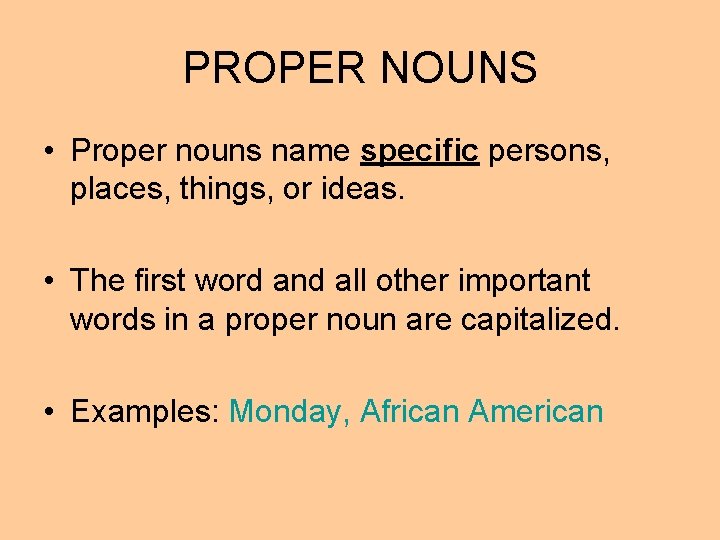
PROPER NOUNS • Proper nouns name specific persons, places, things, or ideas. • The first word and all other important words in a proper noun are capitalized. • Examples: Monday, African American
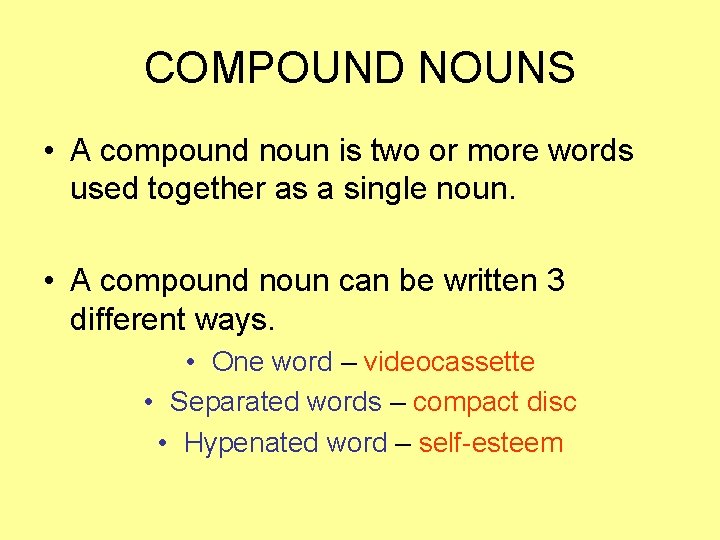
COMPOUND NOUNS • A compound noun is two or more words used together as a single noun. • A compound noun can be written 3 different ways. • One word – videocassette • Separated words – compact disc • Hypenated word – self-esteem
COLLECTIVE NOUNS • A collective noun is a word that names a group. • Examples: committee, flock, team, troop
Every collective noun can have either a singular meaning or a plural meaning. • When speaking about a group as a unit, the noun has a singular meaning. A collective noun stands for more than one without adding an “s” to the ending. • Example: • The entire audience applauds the performance. (singular) • The committee argue with one another over the rules. (plural)
The “IT/THEY” rule • If you can substitute the word “it” for the collective noun (and any words that describe it), the collective noun is singular. • If you can substitute “they”, the collective noun is plural. • Example: The family eat their sandwiches. • It eat their sandwiches. (incorrect) • They eat their sandwiches. (correct/plural)
POSSESSIVE NOUNS • Possessive nouns show ownership or relationship. • Possessive nouns function as adjectives when they modify a noun. • Example: The duck’s feathers are colorful. duck’s modifies feathers I held Corey’s camera. Corey’s modifies camera
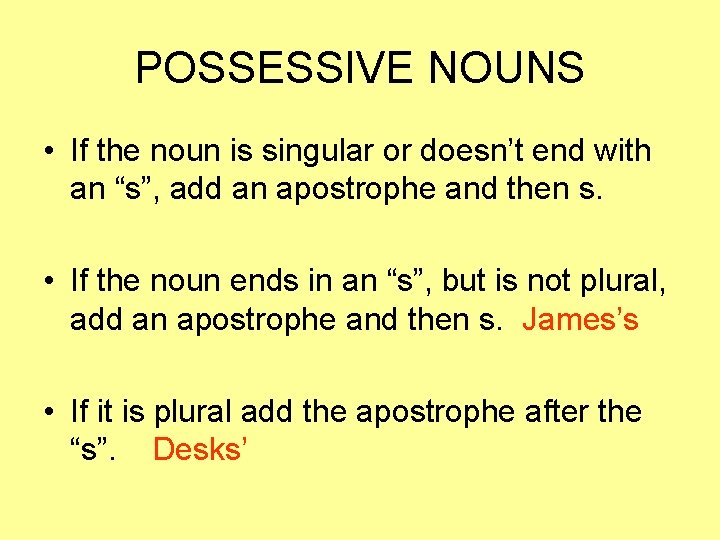
POSSESSIVE NOUNS • If the noun is singular or doesn’t end with an “s”, add an apostrophe and then s. • If the noun ends in an “s”, but is not plural, add an apostrophe and then s. James’s • If it is plural add the apostrophe after the “s”. Desks’
• Review
• _____ name specific people, places, things, or ideas. • proper nouns
• A(n) _____ is a noun that names ideas, qualities, or feelings. • abstract noun
• The two basic kinds of nouns are _____ and _____. • common, proper
• A(n) ____ is a word used to name any person, place, thing, or idea. • common noun
Tell whether the following is common or proper. If it is common, tell whether it is concrete or abstract. • people • Common, concrete
Tell whether the following is common or proper. If it is common, tell whether it is concrete or abstract. • The Republic of Congo • proper
Tell whether the following is common or proper. If it is common, tell whether it is concrete or abstract. • pleasure • common, abstract
Tell whether the following is common or proper. If it is common, tell whether it is concrete or abstract. • Rain • common, concrete
Tell whether the following is common or proper. If it is common, tell whether it is concrete or abstract. • imagination • common, abstract
The three ways a compound noun can be written are… • One word • Separated • Hyphenated
Find the compound nouns in the following sentences • We always celebrate St. Patrick’s Day at our high school. • St. Patrick’s Day, high school • I have eaten meatloaf at Mel’s Diner many times. • Meatloaf, Mel’s Diner
class • A) compound, concrete • B) common, abstract • C) common, collective • D) proper, collective • C) common, collective
stream • A) common, concrete • B) common, abstract • C) common, compound • D) common, collective • A) common, concrete
victory • A) compound, common • B) common, abstract • C) collective, abstract • D) common, collective • B) common, abstract