
NOTICE This presentation which you are about to

NOTICE This presentation which you are about to hear and the information contained in these slides (collectively the “materials”) are the confidential and proprietary property of Midwest Employers Casualty Company (“MECC”) and its third party presenters. These materials are protected by U. S. Copyright Law and may also be protected under other applicable laws or treaties. These materials may NOT be printed, copied, reproduced, distributed, displayed or otherwise published, in whole or in part, without the express written permission of MECC and/or the applicable third party presenter. You may not alter or remove any trademark, copyright or notice. Copyright © 2012 MECC All rights reserved
Addiction Issues and Narcotic Tapering in Catastrophic Chronic Pain Patients Dr. Fernando Branco Medical Director Midwest Employers Casualty Company a W. R. Berkley Company April 28 th, 2016
Today’s Presenter Dr. Fernando Branco • 30 years experience in rehabilitation and pain management • Board certified in physical medicine and rehabilitation, pain management and addiction medicine • Member of the American Pain Society, American Board of Pain Medicine • Extensive research on spinal cord injury and sexual dysfunction, exercise physiology, pain medicine
Conundrums of Chronic Pain Care • Avoid use of Narcotics • Functional Restoration • Return to Work • Treat Psychological and Physical Problems • Avoid Overuse of Interventional Treatments • More Deaths from prescription drugs than illicit drugs, Fort Lauderdale had more Pain Clinics than Mc. Donald’s
PAIN • Can’t see it • Can’t measure it • Can’t diagnose it on x-ray or MRI • 75% of general population will have abnormal MRIs – bulging or herniated discs or narrowing…. . and NO PAIN

Pain Cycles
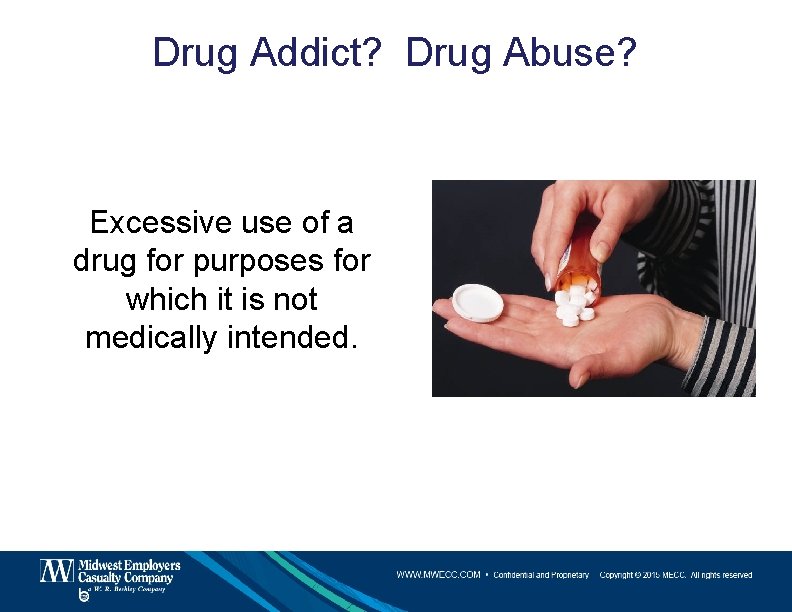
Drug Addict? Drug Abuse? Excessive use of a drug for purposes for which it is not medically intended.
The Risk of Addiction • Known risk factors for addiction to any substance are good predictors for opioid abuse 1. 2. 3. 4. 5. Past cocaine use, h/o of alcohol or cannabis use Lifetime history of substance use disorder Family history of substance abuse, history of legal problems and drug and alcohol abuse Tobacco dependence History of severe depression and anxiety Ives et al 2006; Reid et al 2002; Michna et al 2004; Akbik et al 2006
Addiction is • A primary, chronic, neurobiological disease with genetic, psychosocial and environmental factors influencing its development and manifestations Savage SR et al JPain Symptom Manage 2003 • A clinical syndrome: – Loss of control – Compulsive use – Continued use despite harm – Craving
Pseudoaddiction • • • Opiophobia Overestimate potency and duration of action Fear of being scammed Fear of addiction potential New Heroine epidemic Morgan J 1985 Smith 1989
Yellow Flags • • Complaints of more medications needed Drug hoarding Requesting specific pain medications Openly acquiring similar medications from other providers • Occasional unsanctioned dose escalation • Nonadherence to other recommendations for pain therapy Passik SD Mayo Clinic Proc 2009
Red Flags • Deterioration in functioning at work and socially • Illegal activities – selling, forging, buying from nonmedical sources • Injecting and snorting medication • Multiple episodes of “lost” or “stolen” scripts • Resistance to change therapy despite adverse effects • Refusal to comply with random drug screens • Concurrent abuse of alcohol or illicit drugs • Use of multiple physicians and pharmacies Passik SD Mayo Clinic Proc 2009
Narcotic Cycle Patients need higher doses to achieve results = TOLERANCE Eventually lack of pain relief may lead to steady increases in amount and types of pain medication Long term use of narcotics leads to “OPIOD INDUCED ABNORMAL PAIN SENSITIVITY”
Eliminate production of your own body’s ENDORPHINS Shut the endorphin system down Lead to HYPERalgesia and HYPERsensitivity to pain
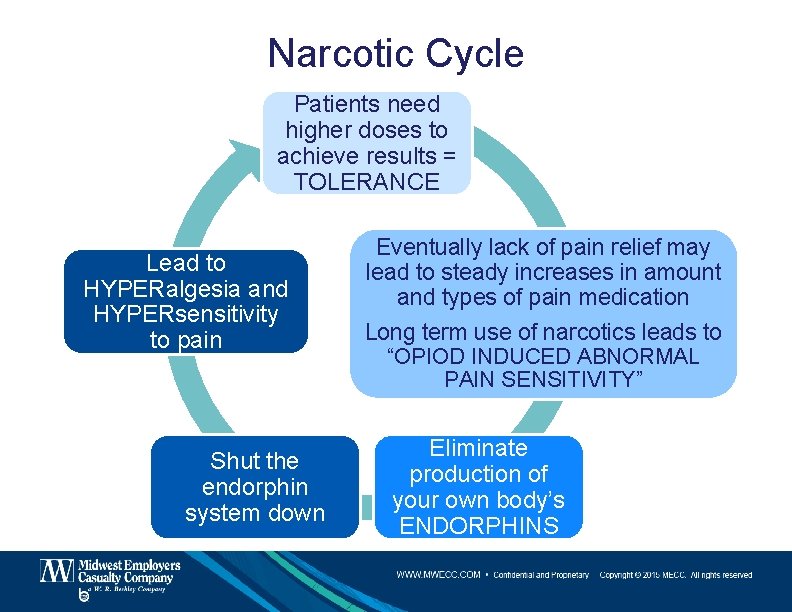
Narcotic Cycle Patients need higher doses to achieve results = TOLERANCE Lead to HYPERalgesia and HYPERsensitivity to pain Shut the endorphin system down Eventually lack of pain relief may lead to steady increases in amount and types of pain medication Long term use of narcotics leads to “OPIOD INDUCED ABNORMAL PAIN SENSITIVITY” Eliminate production of your own body’s ENDORPHINS
Publications Opioid-induced hyperalgesia: pathophysiology & clinical implications: Journal of Opioid Management 2008 Opioid induced abnormal pain sensitivity – Current Pain Headache Report 2006 Adverse effects of chronic opioid therapy for chronic musculoskeletal pain – National Rev of Rheumatology 2010 Hyperalgesia in opioid-managed chronic pain and opioid -dependent patients – Journal of Pain 2009
Serious Side Effects • Narcotics slow down the action of the bowel / intestines resulting in severe constipation almost always requiring another medication to help relieve this symptom • Urinary retention or Urinary Incontinence • Hypogonadism – decreased sex drive, erectile dysfunction – often requires need for additional meds
Serious Side Effects • Testosterone therapy • Hypopituitarism - sex hormone abnormalities (FSH/LH) male and female, Growth Hormone (increased weight, decrease in muscle mass), Adrenal (Fatigue), TSH (weight gain, hair loss, fatigue, intolerance to cold)
What is the Solution?
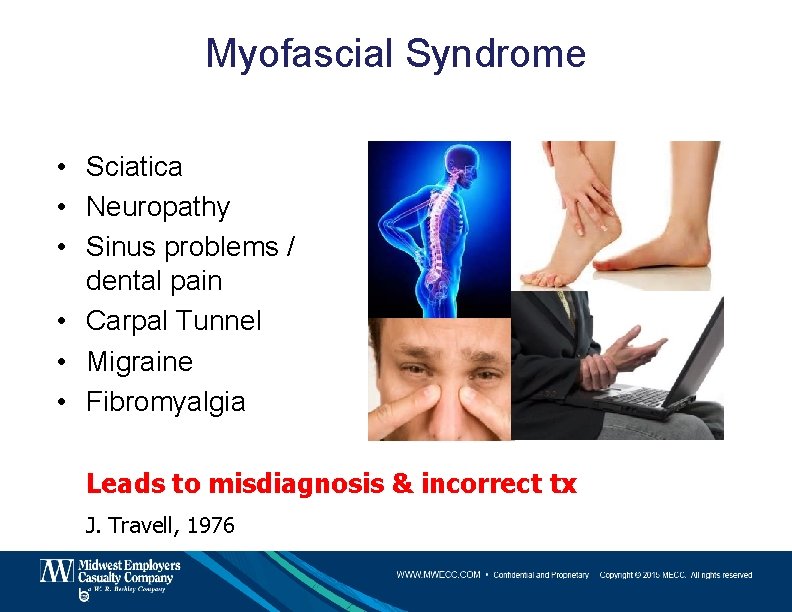
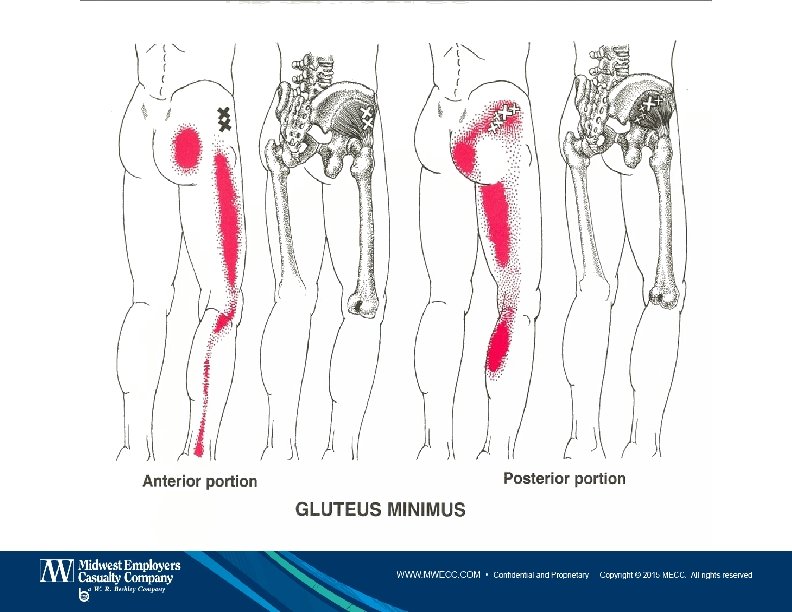
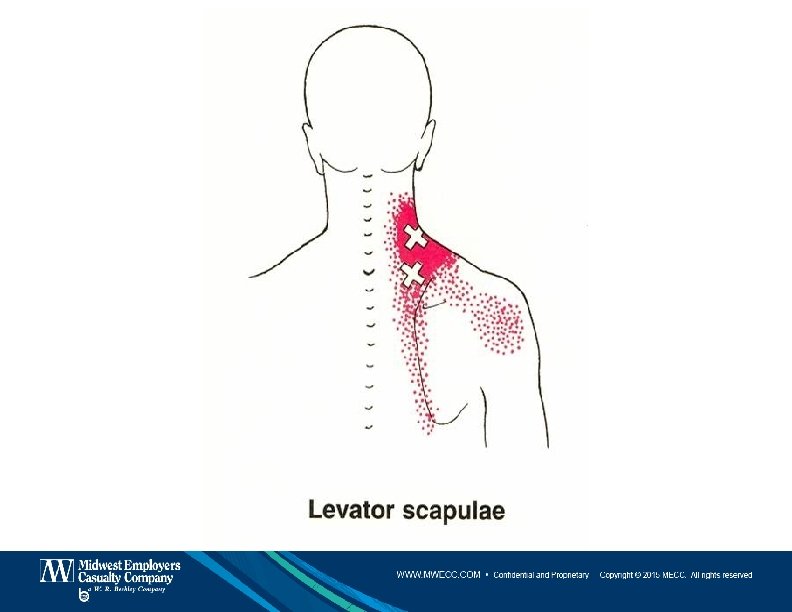
Myofascial Syndrome • Sciatica • Neuropathy • Sinus problems / dental pain • Carpal Tunnel • Migraine • Fibromyalgia Leads to misdiagnosis & incorrect tx J. Travell, 1976
Goals of Treatment • Improve quality of life • Restore optimum levels of function • Reduce or eliminate pain • Reduce or eliminate addictive pain medications • Enable become independent of the healthcare system (related to pain) • Reduce costs
Effective Treatment • Return to the basics: – Physical and Psychological Rehabilitation – Physical Medicine – True Multidisciplinary Approach • What is the definition of insanity? "The definition of insanity is doing the same thing over and expecting a different result. “ Benjamin Franklin, Albert Einstein, Chinese Anonymous
Outpatient Detoxification • Office/Outpatient drug detox program • Comprehensive Pain Management Program • Patient Type: – On lower opioid dose, simpler medication plan (1 -2 meds), more gradual wean – Motivated – Low psychosocial issues – Community social support for plan
Outpatient Detoxification • Weaning Process – Speed of weaning: dose decrease by 20 -25% every 10 -14 days – Urinary drug screen – Medications for withdrawal – Follow-up daily if possible or available by phone – Cognitive behavioral therapy daily or by phone
Inpatient Detoxification • Multidisciplinary Inpatient • Highly supervised Programs • Patient Type – – On high doses of opioids over 200 MED Needs more rapid detox Not motivated or resistant to weaning High psychosocial issues; history of psychiatric diagnosis, prior failed detox – Triple Diagnosis – Poor community social support for plan
Inpatient Detoxification • Weaning Process – Speed of weaning: dose decrease by 20 -25% every 3 days – Monitoring: Urinary drug screen, pain behaviors, drug use and seeking, functional status – Support: Meds for withdrawal (temporary), physical rehabilitation (functional approach), follow-up every day, available by phone daily, proactive check-in, onsite problem resolution; aggressive physical rehabilitation to separate physical from drug issues; multiple modalities to treat withdrawal
Replacement Therapies • • Patient will need detoxification sooner or later Methadone Buprenorphine products Patient Characteristics – – – On high doses of opioids predominantly Indicated for addiction; very limited as a pain “solution” Motivated to wean off current meds Low to medium psychosocial issues Good community social support for plan
Replacement Therapies • Detoxification Process – Relatively fast, subsequent taper is slow – Functional restoration, cognitive behavioral therapies, support groups (AA, NA) – Lower risk of abuse if no other meds prescribed – Pain complaints likely to continue – Inpatient or outpatient detoxification will be needed
Rapid Detoxification • Indications: None - Very risky (high death rate) from “coma” detoxification - Does not treat root pain problem - Severe withdrawals - Immediately resumes use of narcotics.

Thank You!!! Questions? I am all ears!
- Slides: 32