
NoteTaking Skills Improve Your Notetaking Skills and Improve



- Slides: 16
Note-Taking Skills Improve Your Note-taking Skills and Improve Your Grades!
What’s the Big Deal About Note-taking? • Has a big impact in college and in the workplace • Could be the difference between an “A” and a “B” or between passing and failing • Needed for assigned readings as well as in-class lectures • Should be clear, concise, and complete • Saves hours of re-reading and re-learning before exams • Answers many questions before emailing your professor Note-taking Skills 2
In-Class Activity Take out a piece of paper and write down: • Your experiences with note-taking • What steps do you follow? • Do you try to write every word? • Do you try to copy every bullet point from PPTs? What do you think is essential to be an expert note-taker? Note-taking Skills 3
Let’s Talk About Notes! • Active listening improves note-taking • It is a process that begins before class and ends after finals • Organization impacts learning and retention • Multiple methods – pick what works for you • Can be a visual aid as you work through challenging concepts • Will increase your probability of success in the classroom Just the Facts – Take Note! Note-taking Skills 4
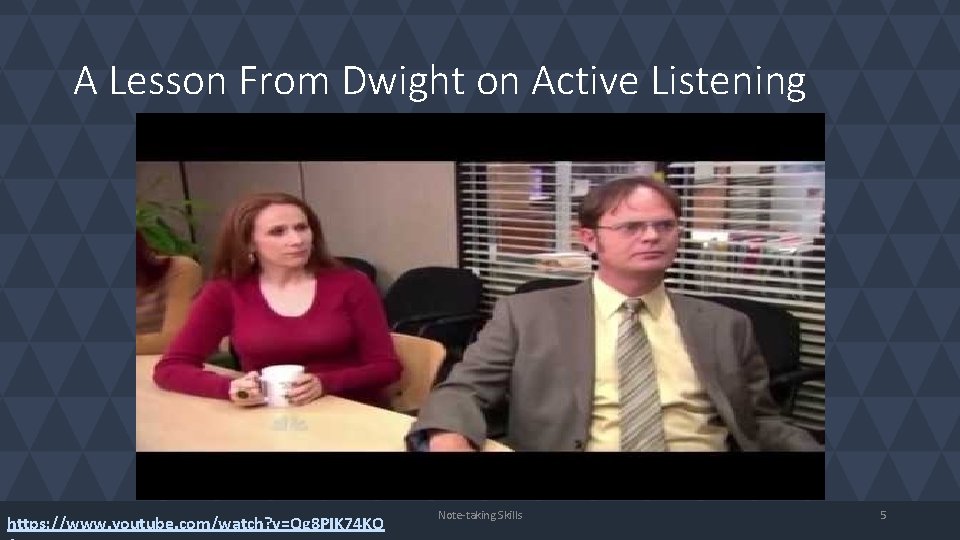
A Lesson From Dwight on Active Listening https: //www. youtube. com/watch? v=Qg 8 PIK 74 KO Note-taking Skills 5
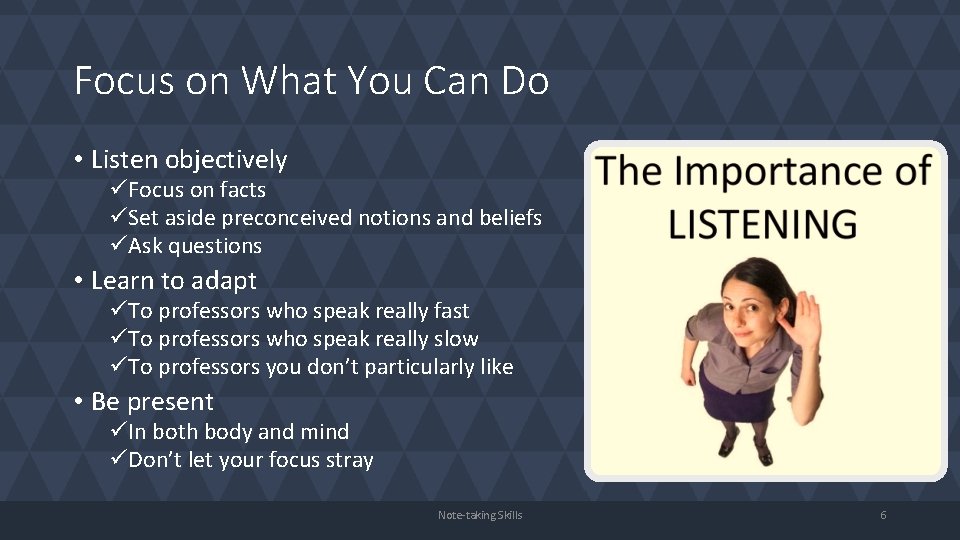
Focus on What You Can Do • Listen objectively üFocus on facts üSet aside preconceived notions and beliefs üAsk questions • Learn to adapt üTo professors who speak really fast üTo professors who speak really slow üTo professors you don’t particularly like • Be present üIn both body and mind üDon’t let your focus stray Note-taking Skills 6
I’m Focused – Now What Do I Do? Step 1: 1. Do the assigned reading prior to class 2. Take notes on what you read and what you don’t understand 3. Have a dictionary handy – old school or app Note-taking Skills 7
Still Focused – What Next? Step 2 1. Get comfortable and prepared – pen/pencil, paper, highlighter, eraser 2. “Don’t get it right, get it written” – recognize what is important to write down 3. Be organized – use dates, page numbers, headings, etc 4. Go back and fill in the blanks – re-reading and reviewing is essential! Note-taking Skills 8
Anything Else? Step 3 1. Review – re-read, review, study 2. Use memory devices – mnemonics, songs, rhymes, and visualization 3. Read, Listen, Write, Review Note-taking Skills 9
Quick Recap • Specific, concrete ideas • Verbal and unspoken “clues” • Listen for repetition • Tone and gestures • Signal words/phrases • Reviews and summaries • Brief is better • Accurate and consistent abbreviations/symbols • Use your own words • Write legibly • Date and number pages • Eliminate distractions • Choose seat strategically • Review notes daily • Be present – mind and body • Get a note-taking buddy • Do not panic Note-taking Skills 10
Note-taking Methods Pick what works for you and develop your system Note-taking Skills 11
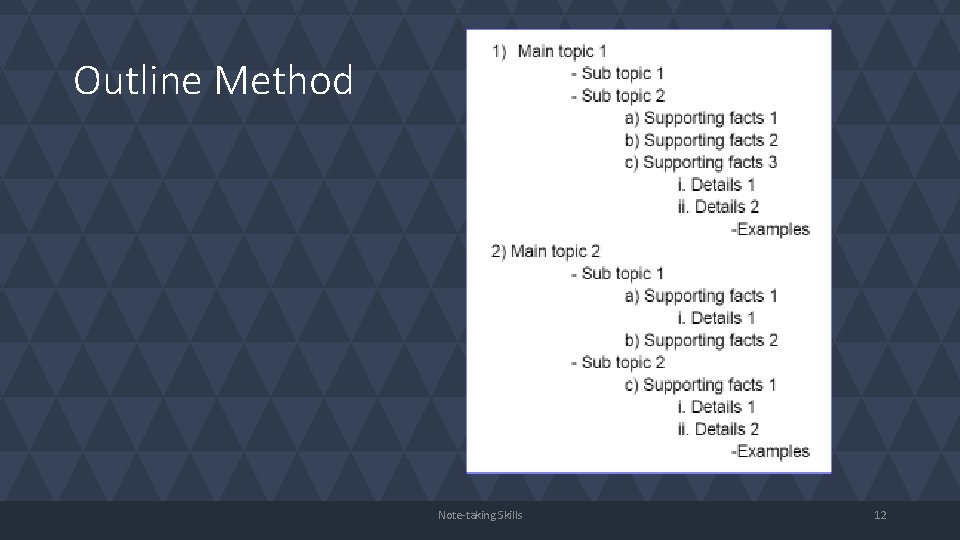
Outline Method Note-taking Skills 12
Cornell Method Note-taking Skills 13
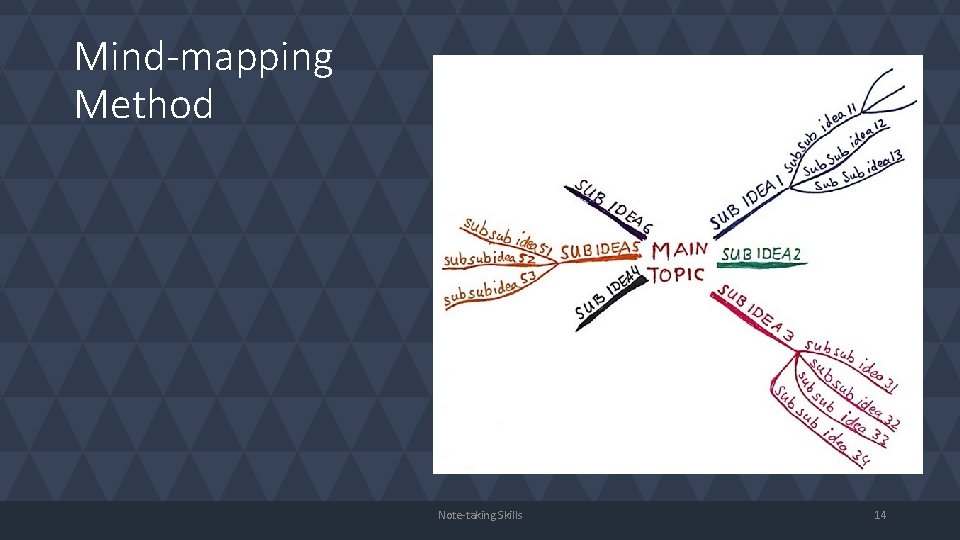
Mind-mapping Method Note-taking Skills 14
Are You a Doodler? Here’s a 4 th Option! https: //www. youtube. com/watch? v=7 fx 0 Qc. Hyr. Fk Note-taking Skills 15
Let’s Test Drive These New Skills - Choose Your Method https: //www. youtube. com/watch? v=f. LJsdqxn. Zb 0 Note-taking Skills 16