
Notes Transcription DNA vs RNA Terms to Know
- Slides: 25
Notes: Transcription DNA vs. RNA
Terms to Know § DNA: The instructions for all cell activity § RNA: The messaging system that takes the instructions from DNA and makes proteins for the cell. § Gene: are coded DNA instructions that control the production of proteins. § Codon: three consecutive nucleotides on m. RNA that specify a particular amino acid.
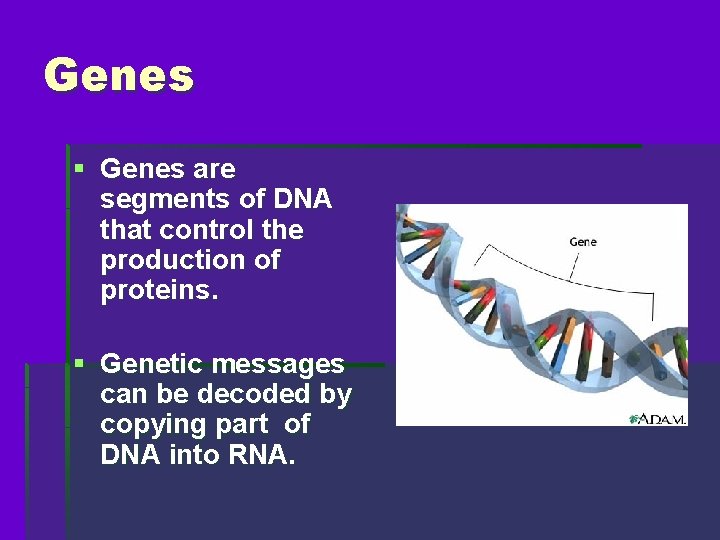
Genes § Genes are segments of DNA that control the production of proteins. § Genetic messages can be decoded by copying part of DNA into RNA.
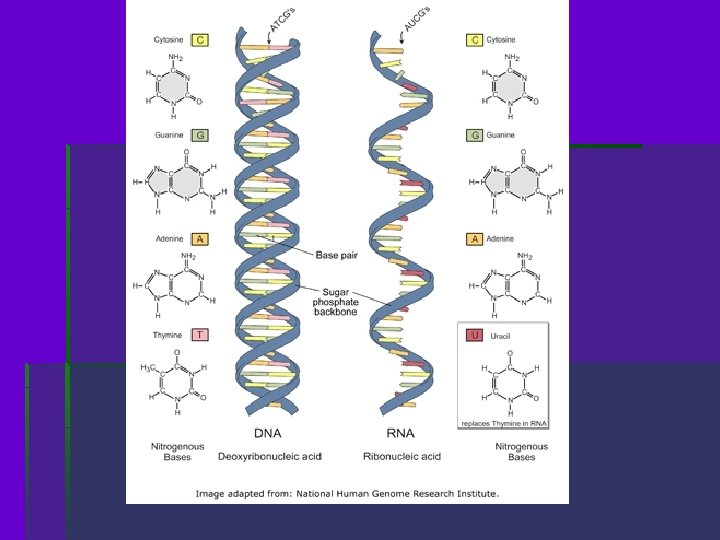
The Structure of RNA § RNA consists of a long chain of nucleotides. § Each nucleotide is made up of a 5 carbon sugar, a phosphate group, and a nitrogenous base.
DNA vs. RNA § There are three main differences between RNA and DNA: § The sugar in RNA is ribose instead of deoxyribose. § RNA is generally single-stranded. § RNA contains uracil in place of thymine.
Types of RNA § There are three main types of RNA: § messenger RNA § ribosomal RNA § transfer RNA
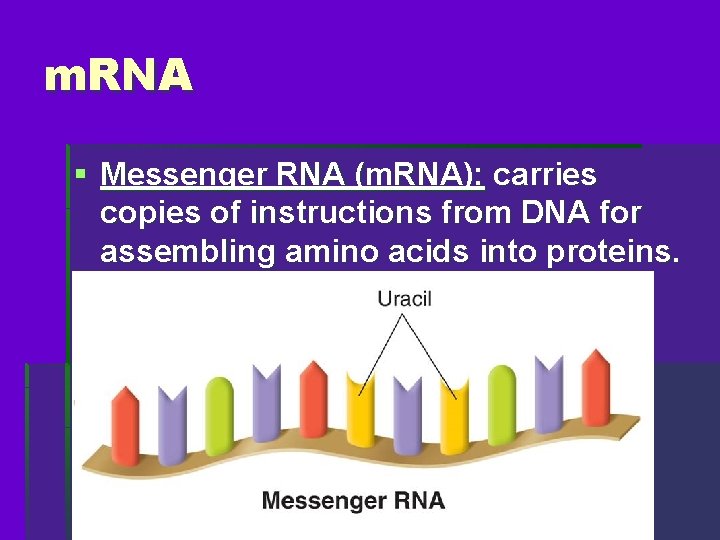
m. RNA § Messenger RNA (m. RNA): carries copies of instructions from DNA for assembling amino acids into proteins.
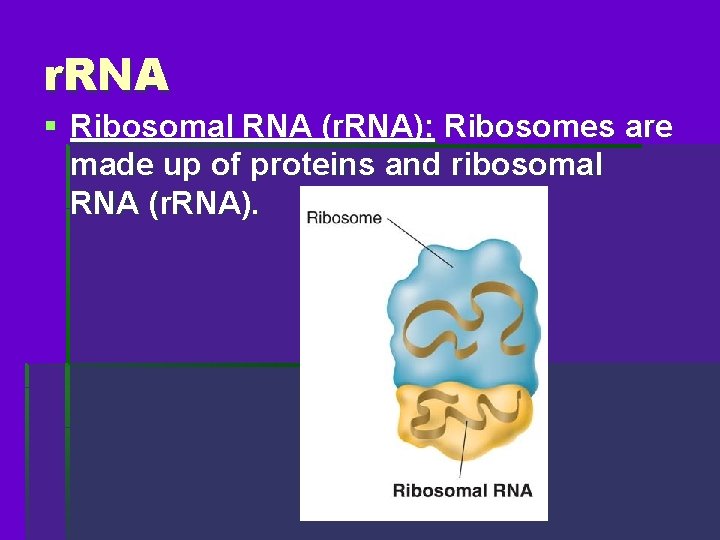
r. RNA § Ribosomal RNA (r. RNA): Ribosomes are made up of proteins and ribosomal RNA (r. RNA).
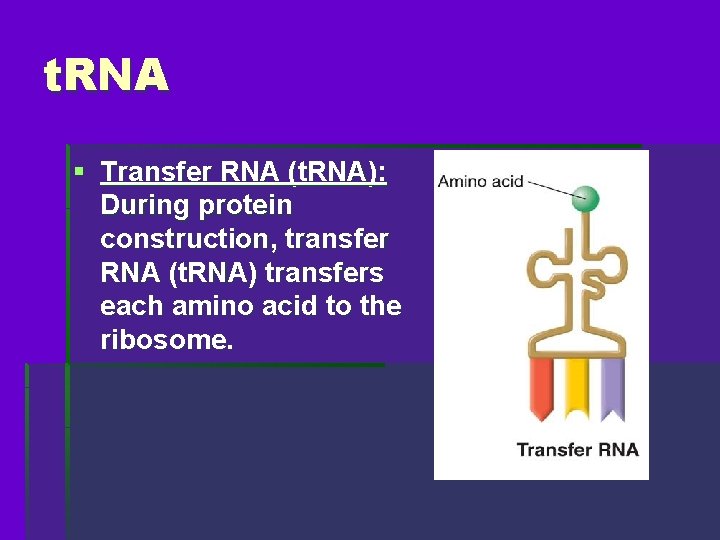
t. RNA § Transfer RNA (t. RNA): During protein construction, transfer RNA (t. RNA) transfers each amino acid to the ribosome.
Transcription: DNA to m. RNA
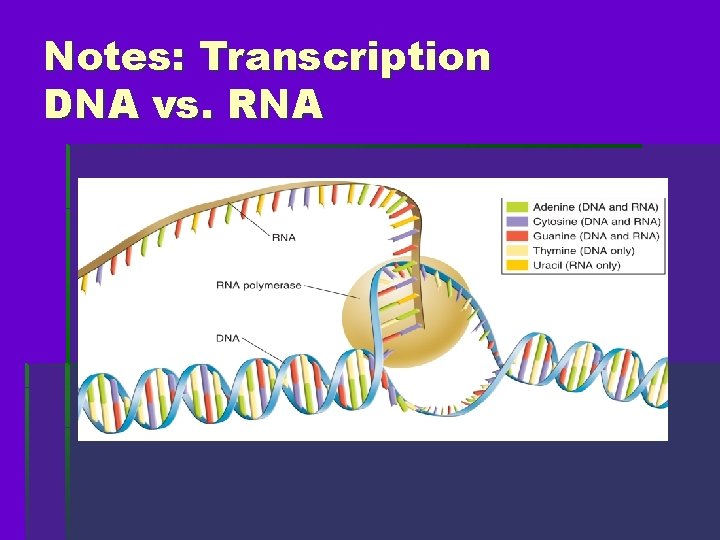
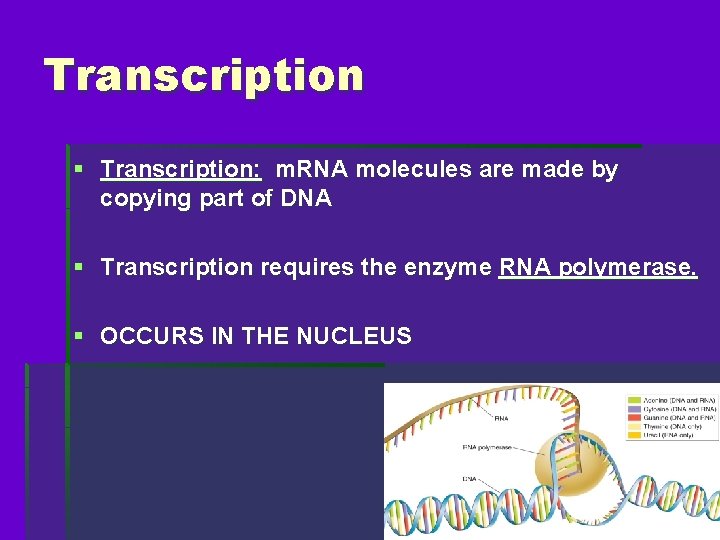
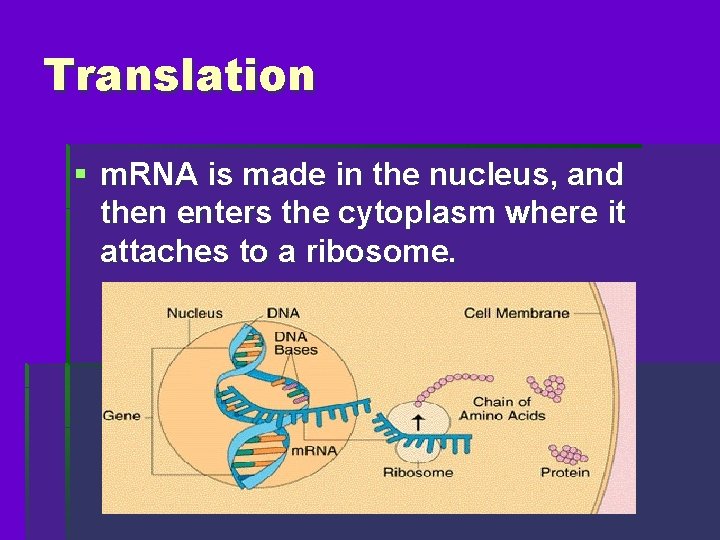
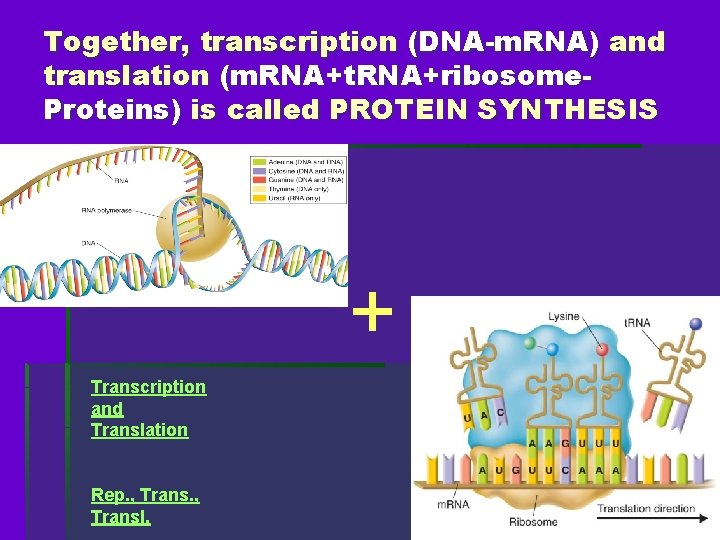
Transcription § Transcription: m. RNA molecules are made by copying part of DNA § Transcription requires the enzyme RNA polymerase. § OCCURS IN THE NUCLEUS
Transcription: The process § RNA polymerase binds to DNA and separates the DNA strands. § RNA polymerase then uses one strand of DNA as a template from which nucleotides are assembled into a strand of m. RNA.
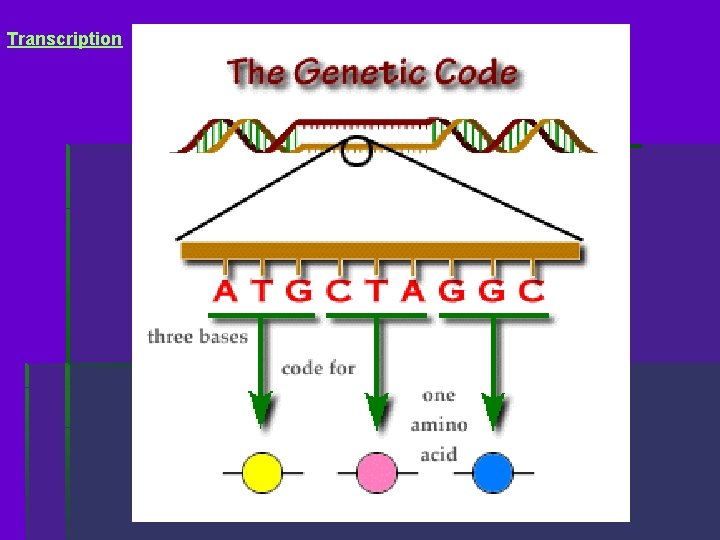
The Genetic Code § The genetic code is the “language” of m. RNA instructions. § The code is written using four “letters” (the bases: A, U, C, and G). § Codon: three consecutive nucleotides on m. RNA that specify a particular amino acid.
Transcription
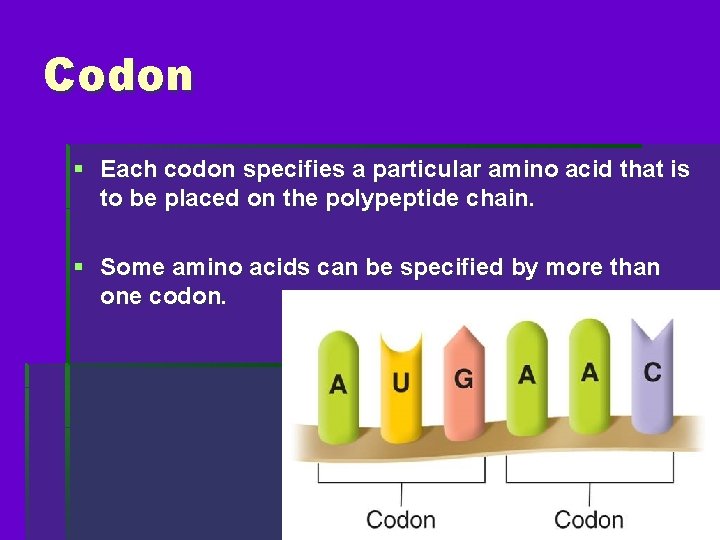
Codon § Each codon specifies a particular amino acid that is to be placed on the polypeptide chain. § Some amino acids can be specified by more than one codon.
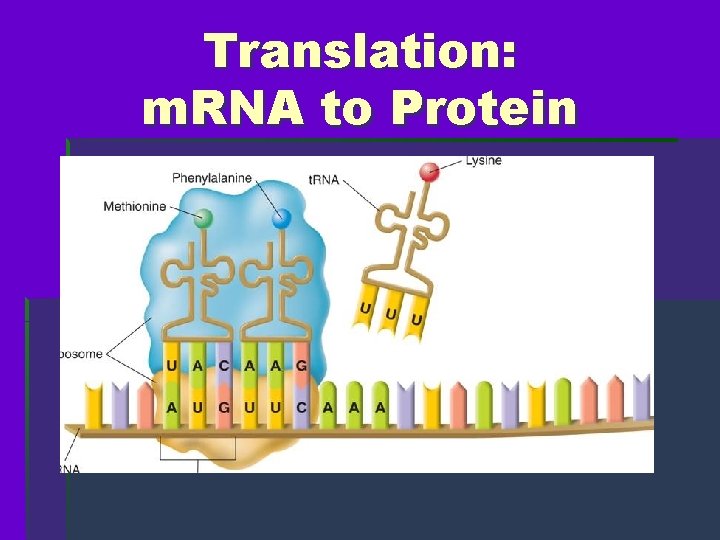
Translation: m. RNA to Protein
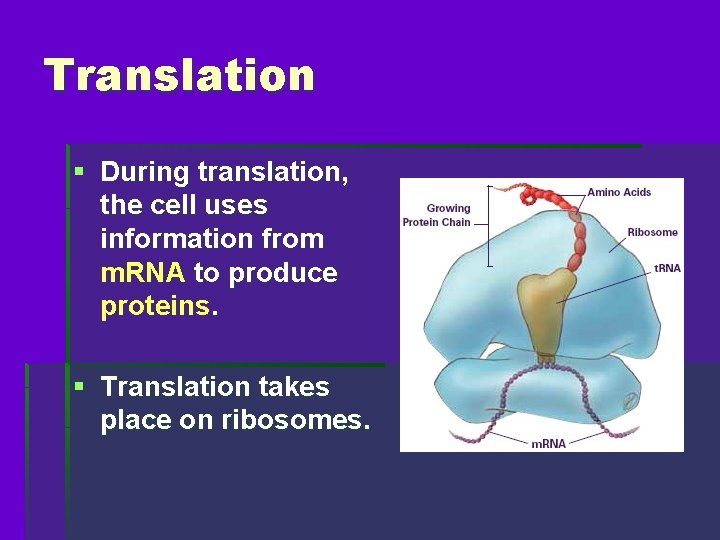
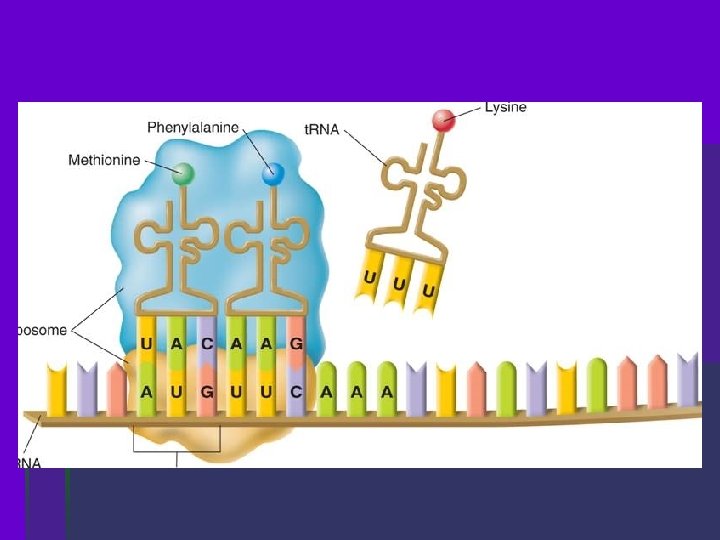
Translation § During translation, the cell uses information from m. RNA to produce proteins. § Translation takes place on ribosomes.
Translation § m. RNA is made in the nucleus, and then enters the cytoplasm where it attaches to a ribosome.
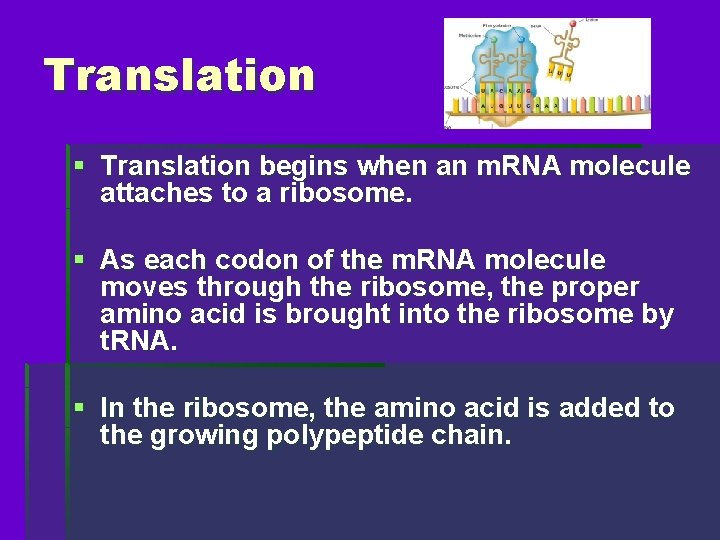
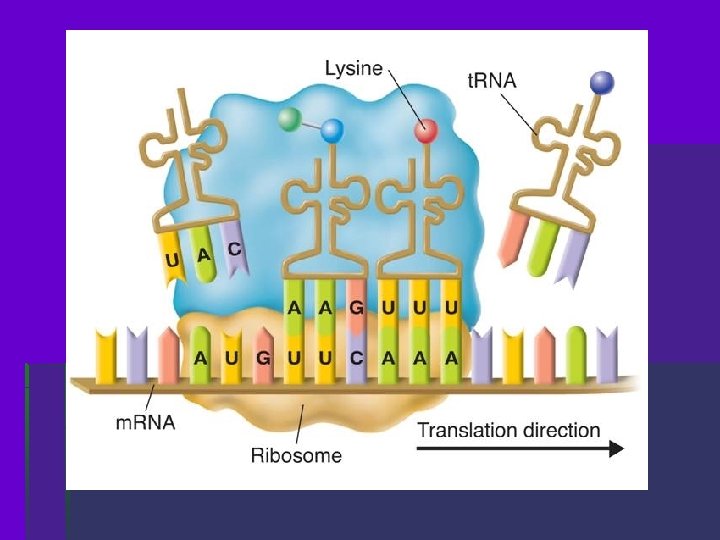
Translation § Translation begins when an m. RNA molecule attaches to a ribosome. § As each codon of the m. RNA molecule moves through the ribosome, the proper amino acid is brought into the ribosome by t. RNA. § In the ribosome, the amino acid is added to the growing polypeptide chain.
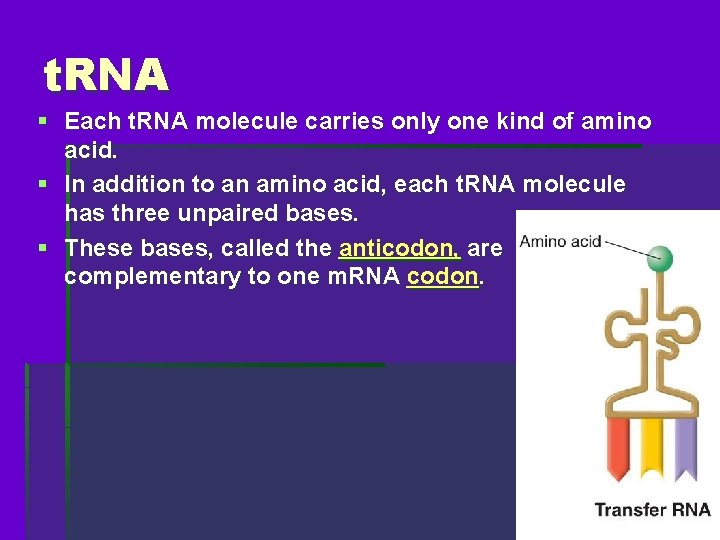
t. RNA § Each t. RNA molecule carries only one kind of amino acid. § In addition to an amino acid, each t. RNA molecule has three unpaired bases. § These bases, called the anticodon, are complementary to one m. RNA codon.
Translation § The ribosome binds new t. RNA molecules and amino acids as it moves along the m. RNA. § Eventually, a chain of amino acids form which will become a protein Translation. High School Students
Together, transcription (DNA-m. RNA) and translation (m. RNA+t. RNA+ribosome. Proteins) is called PROTEIN SYNTHESIS + Transcription and Translation Rep. , Transl. +