
Notes The War Plans Everyone thought the war
- Slides: 15
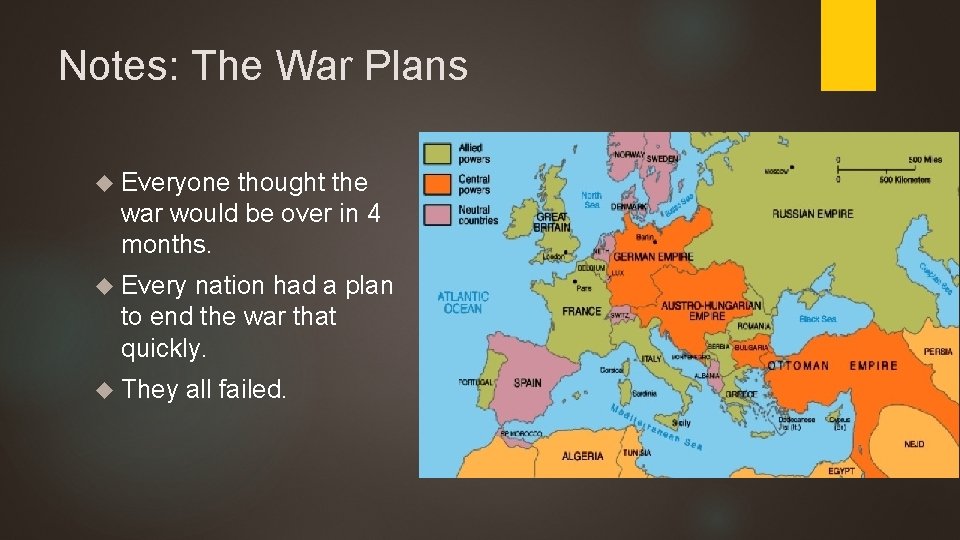
Notes: The War Plans Everyone thought the war would be over in 4 months. Every nation had a plan to end the war that quickly. They all failed.
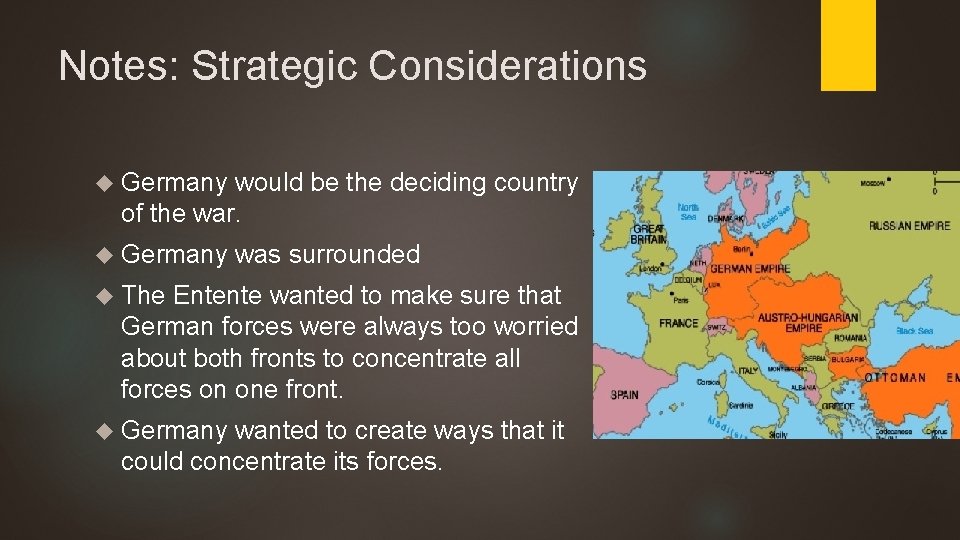
Notes: Strategic Considerations Germany would be the deciding country of the war. Germany was surrounded The Entente wanted to make sure that German forces were always too worried about both fronts to concentrate all forces on one front. Germany wanted to create ways that it could concentrate its forces.
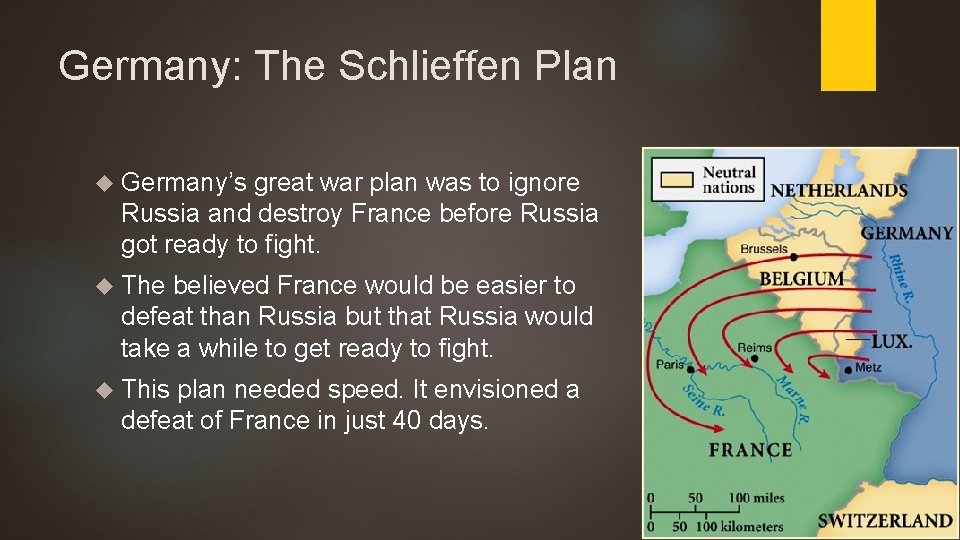
Germany: The Schlieffen Plan Germany’s great war plan was to ignore Russia and destroy France before Russia got ready to fight. The believed France would be easier to defeat than Russia but that Russia would take a while to get ready to fight. This plan needed speed. It envisioned a defeat of France in just 40 days.
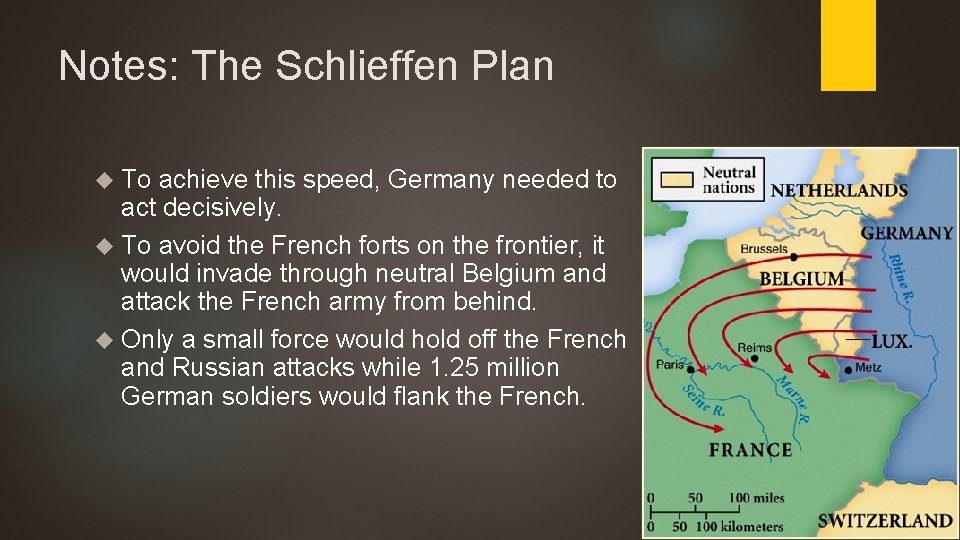
Notes: The Schlieffen Plan To achieve this speed, Germany needed to act decisively. To avoid the French forts on the frontier, it would invade through neutral Belgium and attack the French army from behind. Only a small force would hold off the French and Russian attacks while 1. 25 million German soldiers would flank the French.
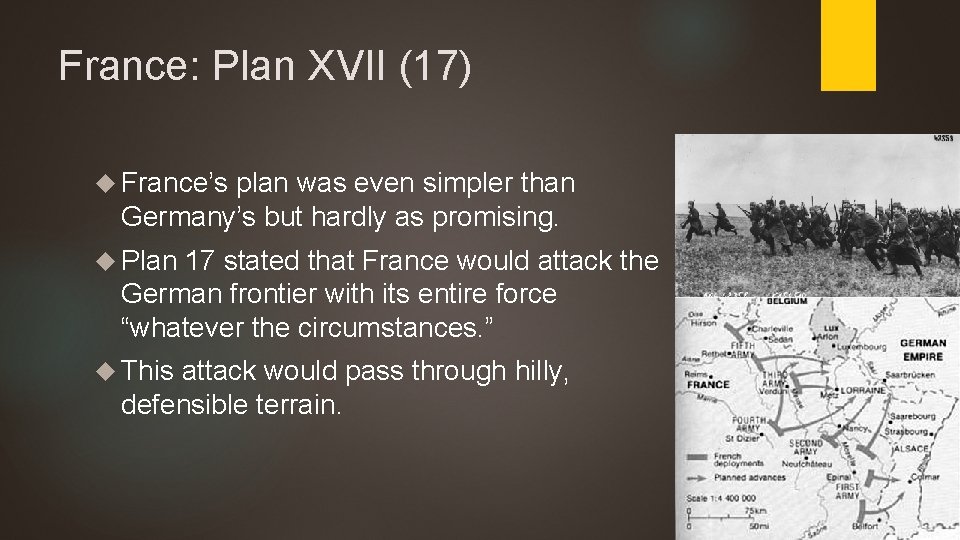
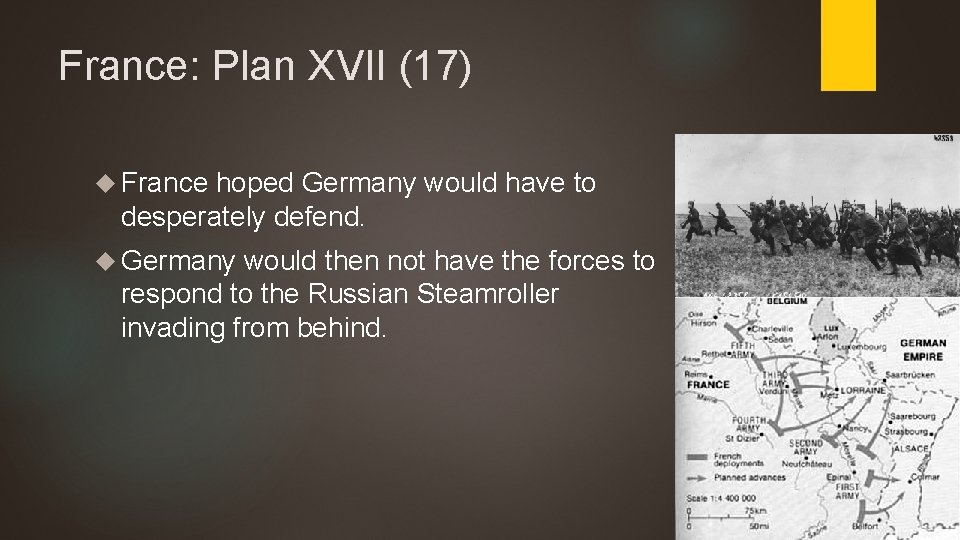
France: Plan XVII (17) France’s plan was even simpler than Germany’s but hardly as promising. Plan 17 stated that France would attack the German frontier with its entire force “whatever the circumstances. ” This attack would pass through hilly, defensible terrain.
France: Plan XVII (17) France hoped Germany would have to desperately defend. Germany would then not have the forces to respond to the Russian Steamroller invading from behind.
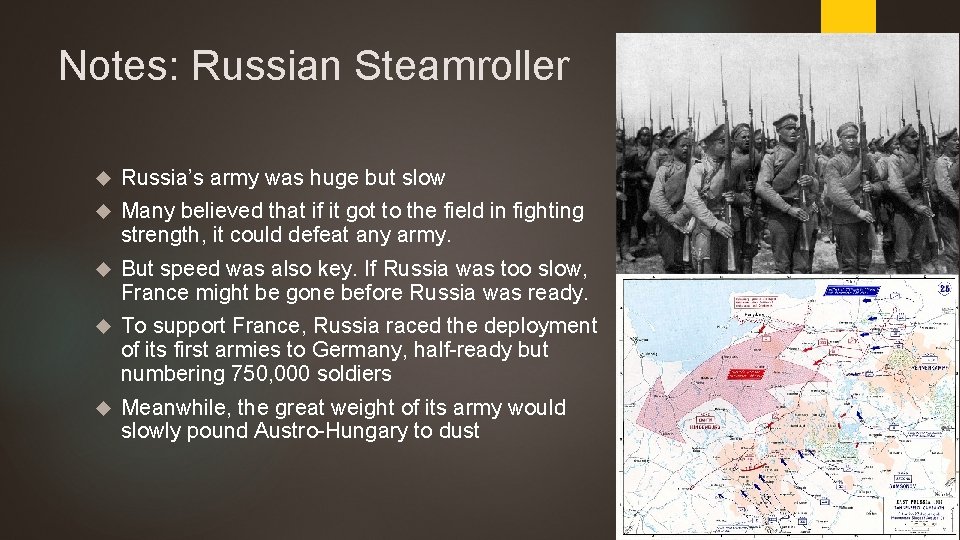
Notes: Russian Steamroller Russia’s army was huge but slow Many believed that if it got to the field in fighting strength, it could defeat any army. But speed was also key. If Russia was too slow, France might be gone before Russia was ready. To support France, Russia raced the deployment of its first armies to Germany, half-ready but numbering 750, 000 soldiers Meanwhile, the great weight of its army would slowly pound Austro-Hungary to dust
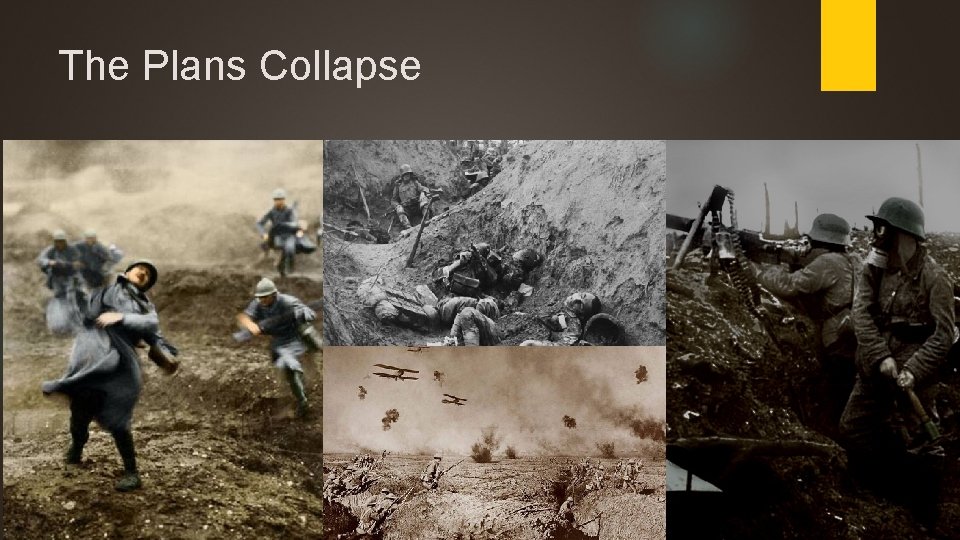
The Plans Collapse
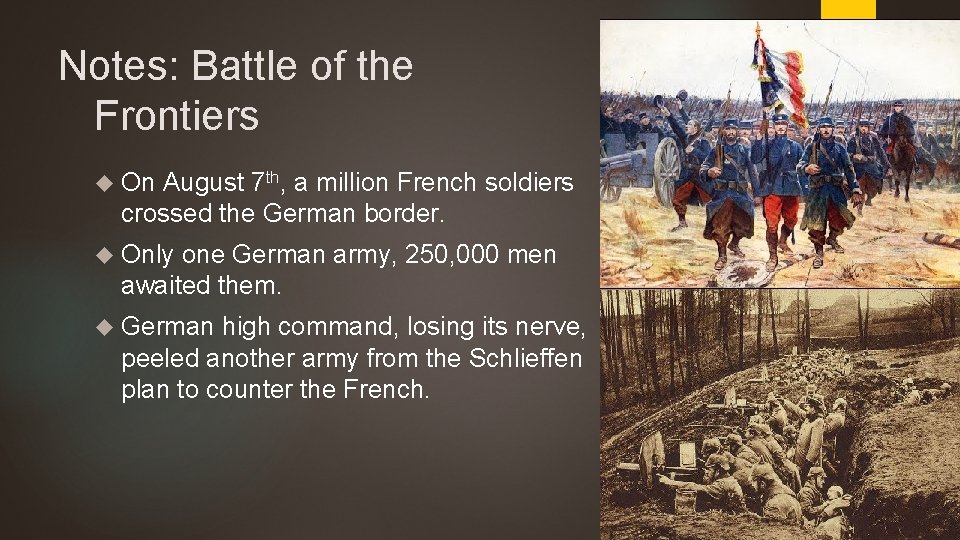
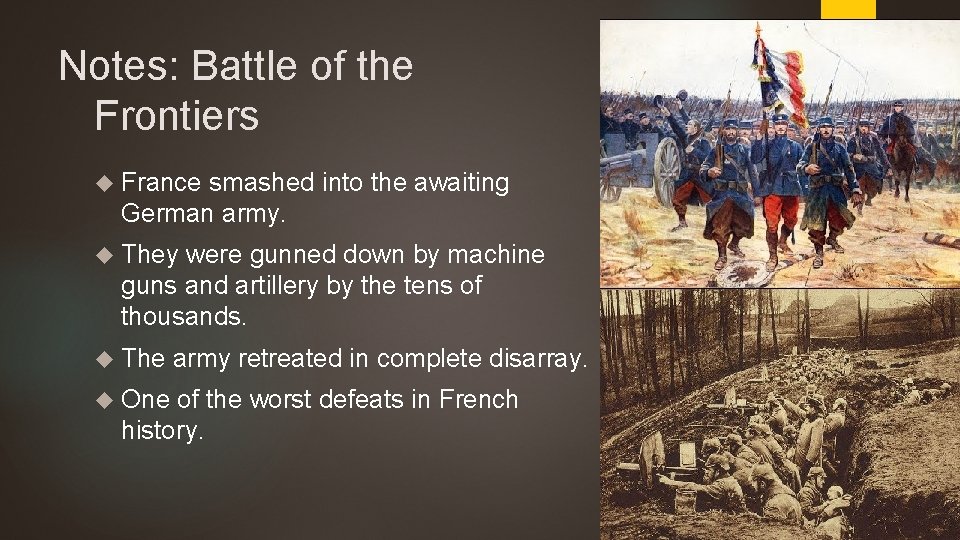
Notes: Battle of the Frontiers On August 7 th, a million French soldiers crossed the German border. Only one German army, 250, 000 men awaited them. German high command, losing its nerve, peeled another army from the Schlieffen plan to counter the French.
Notes: Battle of the Frontiers France smashed into the awaiting German army. They were gunned down by machine guns and artillery by the tens of thousands. The One army retreated in complete disarray. of the worst defeats in French history.
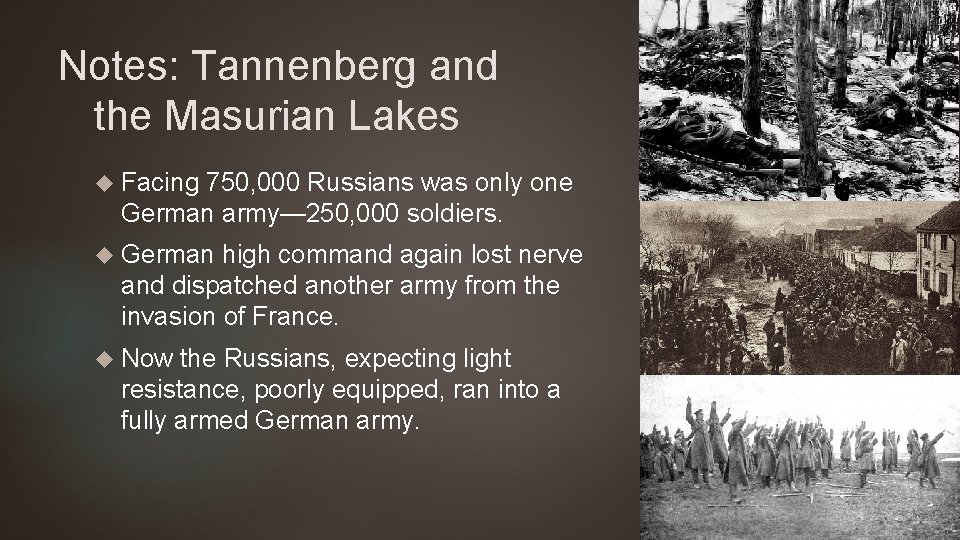
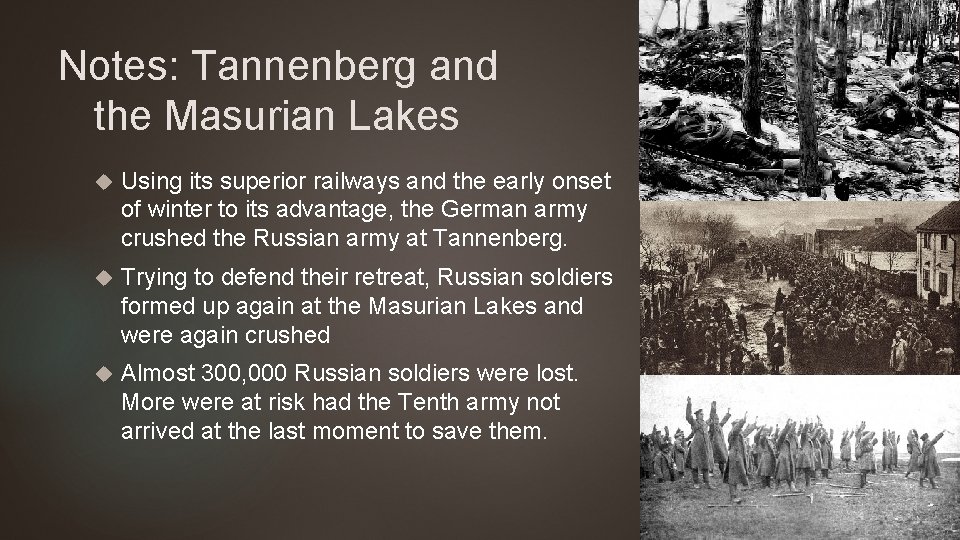
Notes: Tannenberg and the Masurian Lakes Facing 750, 000 Russians was only one German army— 250, 000 soldiers. German high command again lost nerve and dispatched another army from the invasion of France. Now the Russians, expecting light resistance, poorly equipped, ran into a fully armed German army.
Notes: Tannenberg and the Masurian Lakes Using its superior railways and the early onset of winter to its advantage, the German army crushed the Russian army at Tannenberg. Trying to defend their retreat, Russian soldiers formed up again at the Masurian Lakes and were again crushed Almost 300, 000 Russian soldiers were lost. More were at risk had the Tenth army not arrived at the last moment to save them.
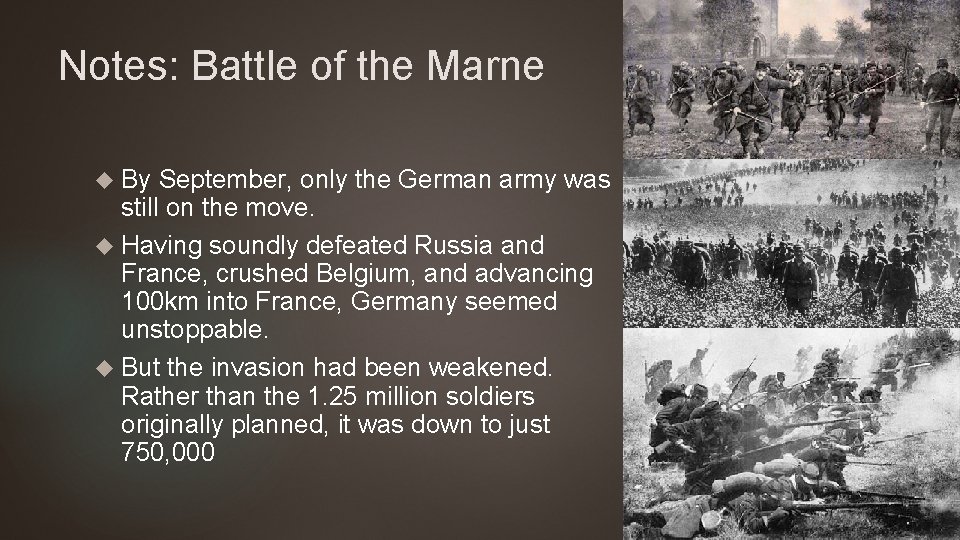
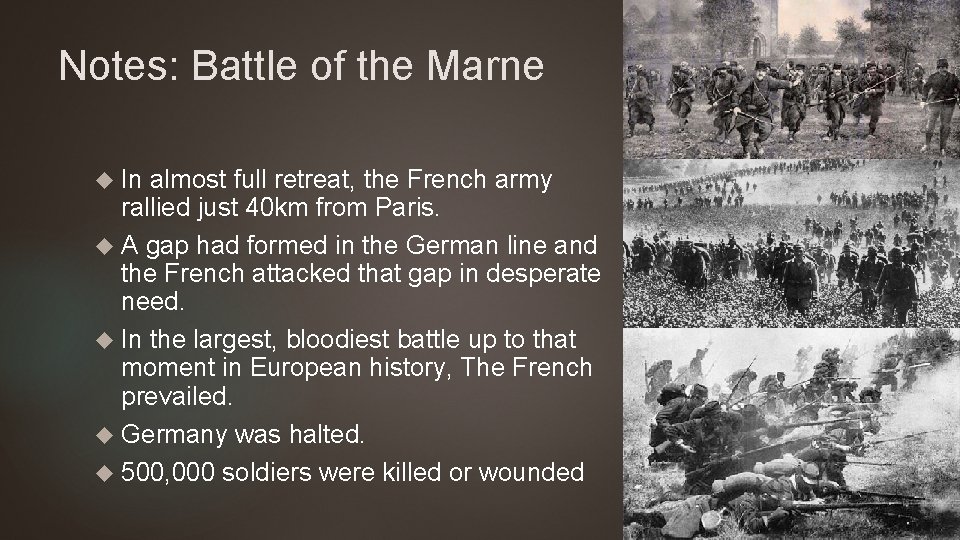
Notes: Battle of the Marne By September, only the German army was still on the move. Having soundly defeated Russia and France, crushed Belgium, and advancing 100 km into France, Germany seemed unstoppable. But the invasion had been weakened. Rather than the 1. 25 million soldiers originally planned, it was down to just 750, 000
Notes: Battle of the Marne In almost full retreat, the French army rallied just 40 km from Paris. A gap had formed in the German line and the French attacked that gap in desperate need. In the largest, bloodiest battle up to that moment in European history, The French prevailed. Germany was halted. 500, 000 soldiers were killed or wounded
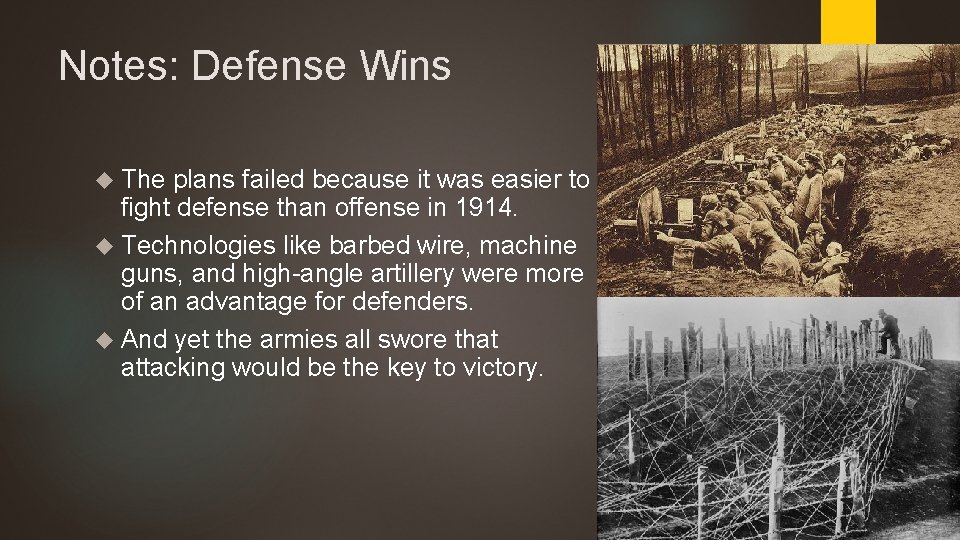
Notes: Defense Wins The plans failed because it was easier to fight defense than offense in 1914. Technologies like barbed wire, machine guns, and high-angle artillery were more of an advantage for defenders. And yet the armies all swore that attacking would be the key to victory.