
NOTES STAR LIFE CYCLES30 3 A stars color

- Slides: 17
NOTES: STAR LIFE CYCLES(30. 3)
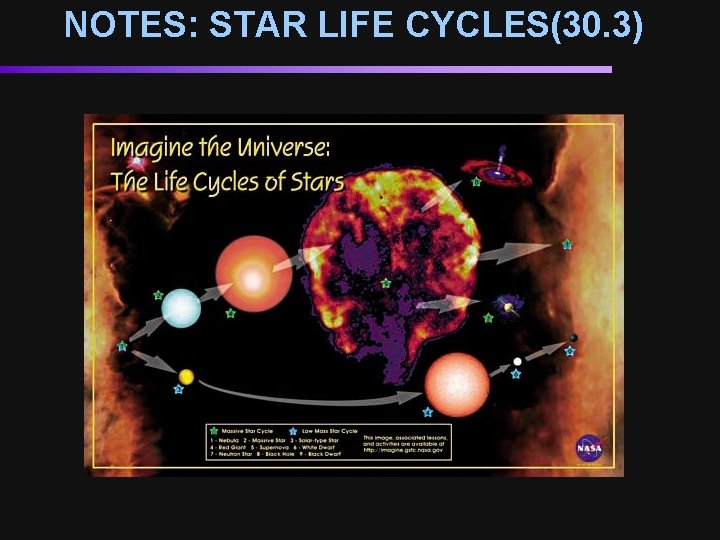
A star’s color and brightness depends on its stage in development, and the elements that are present inside.
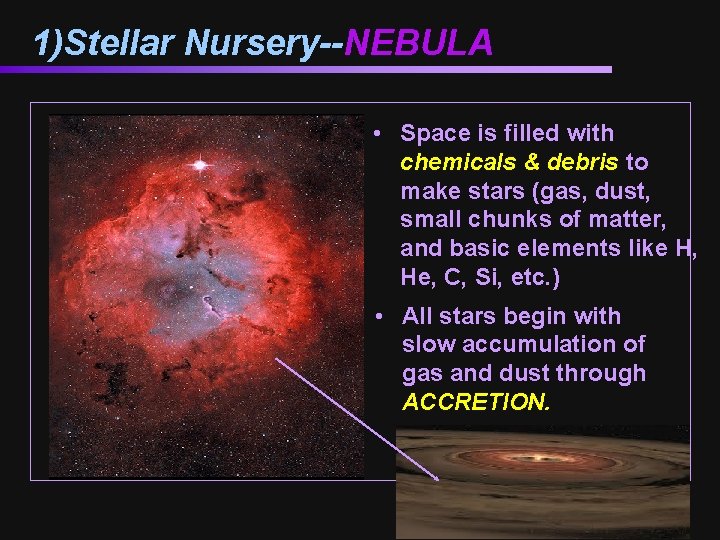
1)Stellar Nursery--NEBULA • Space is filled with chemicals & debris to make stars (gas, dust, small chunks of matter, and basic elements like H, He, C, Si, etc. ) • All stars begin with slow accumulation of gas and dust through ACCRETION.
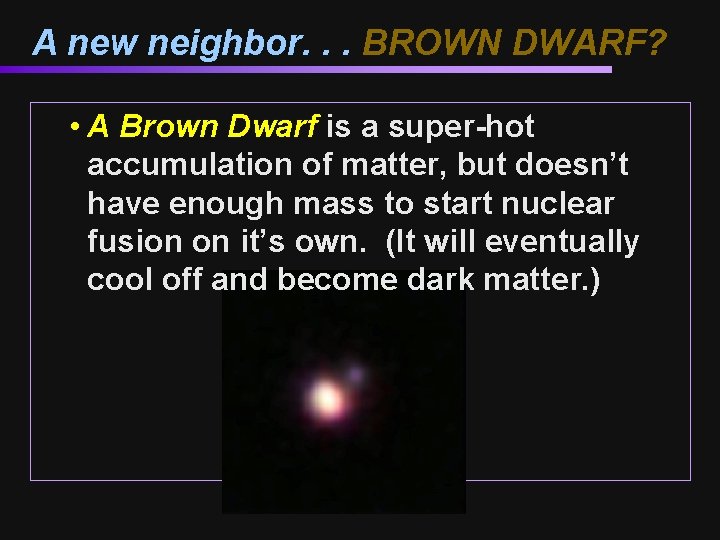
A new neighbor. . . BROWN DWARF? • A Brown Dwarf is a super-hot accumulation of matter, but doesn’t have enough mass to start nuclear fusion on it’s own. (It will eventually cool off and become dark matter. )
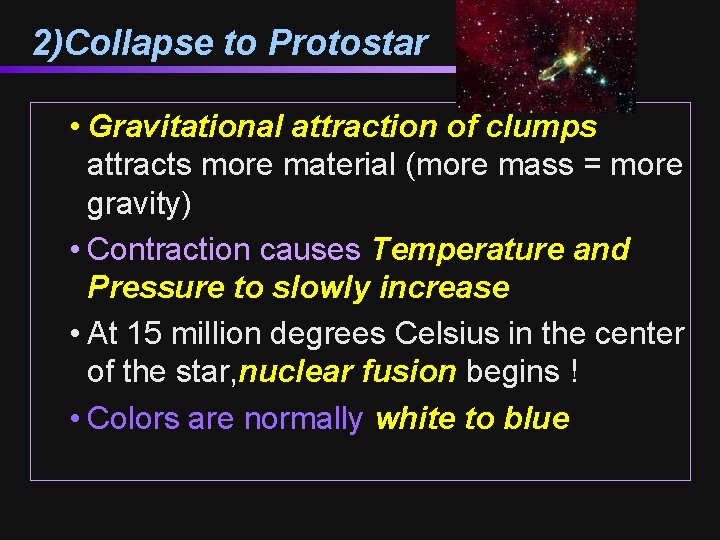
2)Collapse to Protostar • Gravitational attraction of clumps attracts more material (more mass = more gravity) • Contraction causes Temperature and Pressure to slowly increase • At 15 million degrees Celsius in the center of the star, nuclear fusion begins ! • Colors are normally white to blue
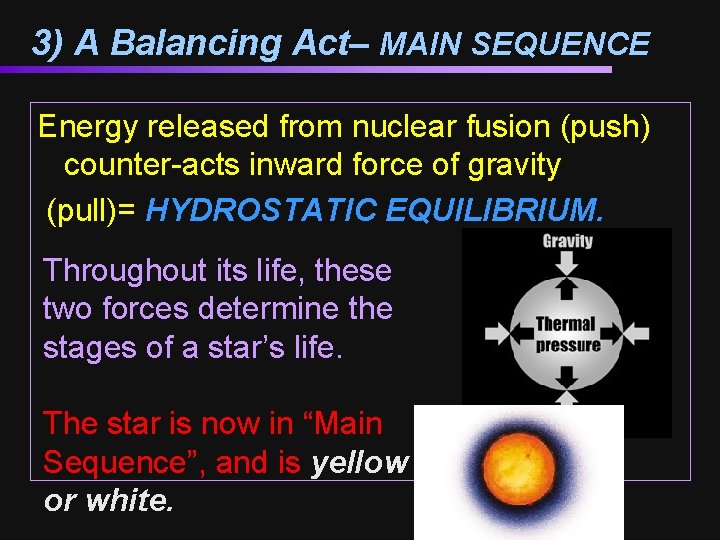
3) A Balancing Act– MAIN SEQUENCE Energy released from nuclear fusion (push) counter-acts inward force of gravity (pull)= HYDROSTATIC EQUILIBRIUM. Throughout its life, these two forces determine the stages of a star’s life. The star is now in “Main Sequence”, and is yellow or white.
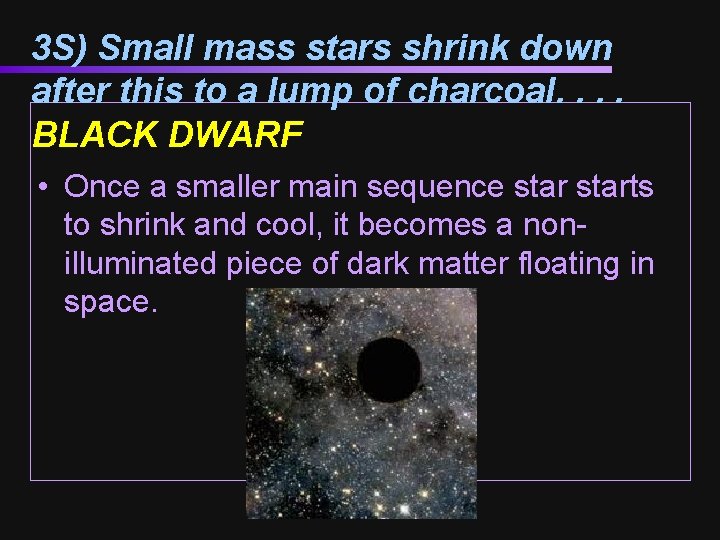
3 S) Small mass stars shrink down after this to a lump of charcoal. . BLACK DWARF • Once a smaller main sequence starts to shrink and cool, it becomes a nonilluminated piece of dark matter floating in space.
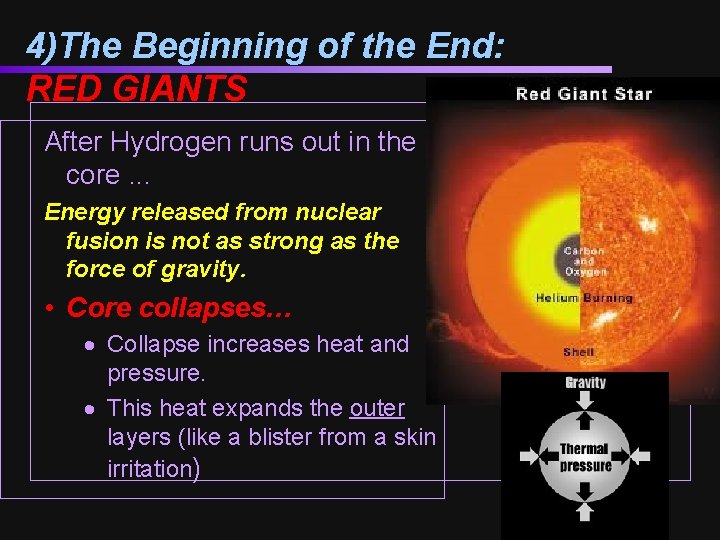
4)The Beginning of the End: RED GIANTS After Hydrogen runs out in the core. . . Energy released from nuclear fusion is not as strong as the force of gravity. • Core collapses… · Collapse increases heat and pressure. · This heat expands the outer layers (like a blister from a skin irritation)
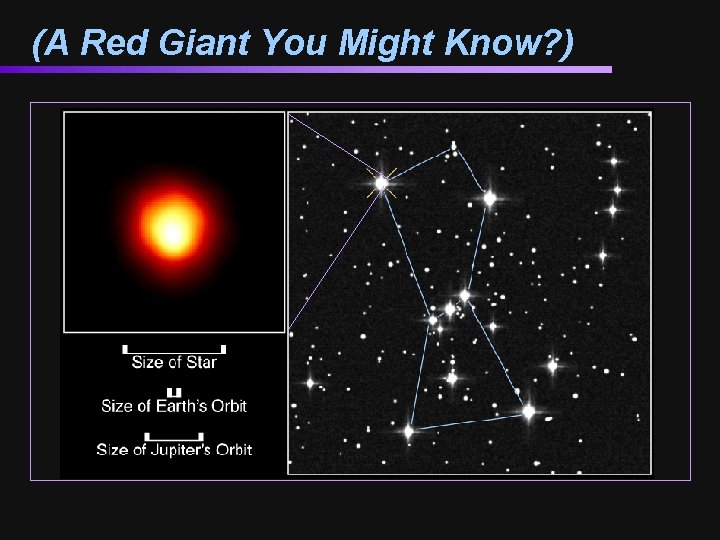
(A Red Giant You Might Know? )
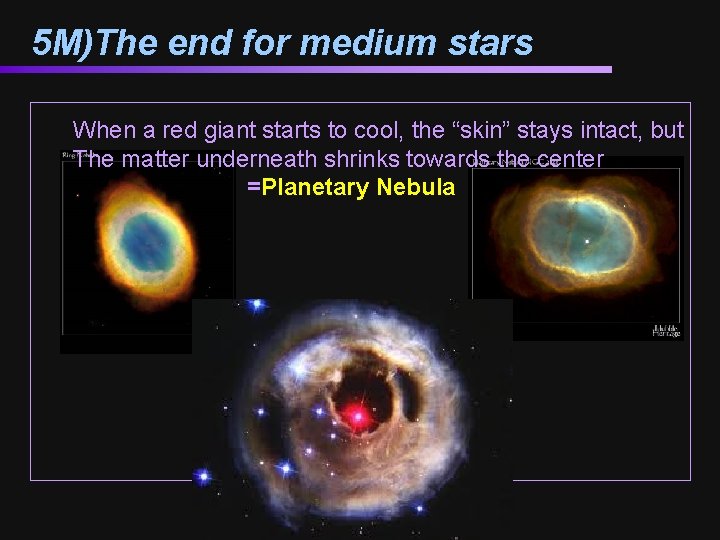
5 M)The end for medium stars When a red giant starts to cool, the “skin” stays intact, but The matter underneath shrinks towards the center =Planetary Nebula
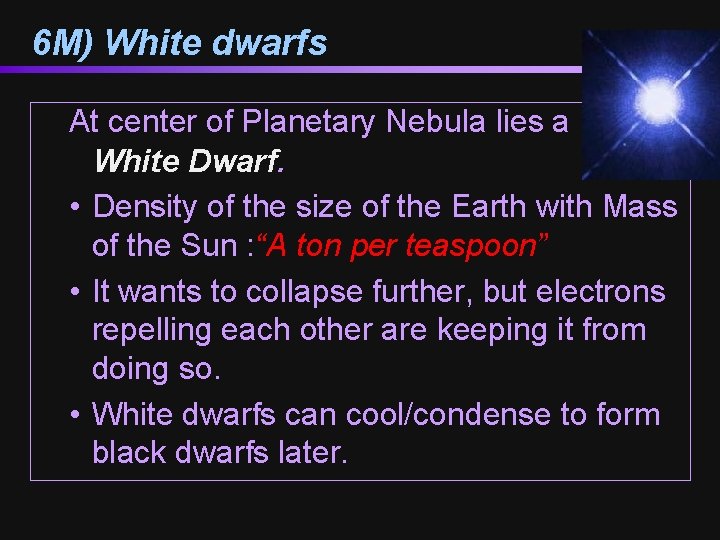
6 M) White dwarfs At center of Planetary Nebula lies a White Dwarf. • Density of the size of the Earth with Mass of the Sun : “A ton per teaspoon” • It wants to collapse further, but electrons repelling each other are keeping it from doing so. • White dwarfs can cool/condense to form black dwarfs later.
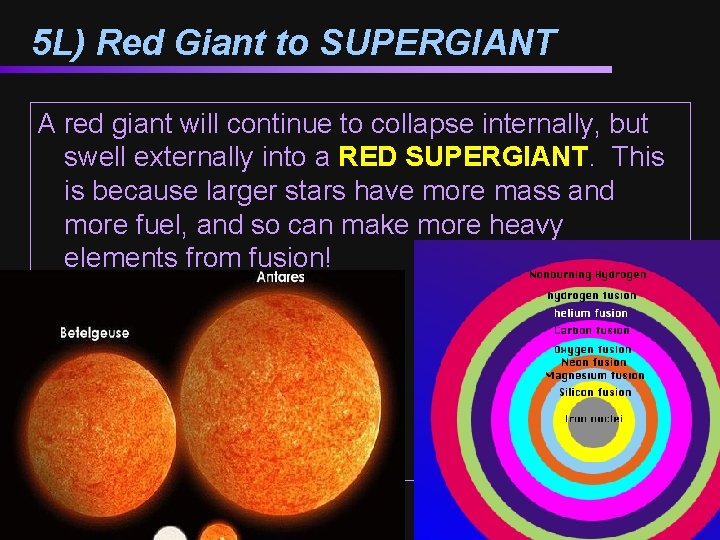
5 L) Red Giant to SUPERGIANT A red giant will continue to collapse internally, but swell externally into a RED SUPERGIANT. This is because larger stars have more mass and more fuel, and so can make more heavy elements from fusion!
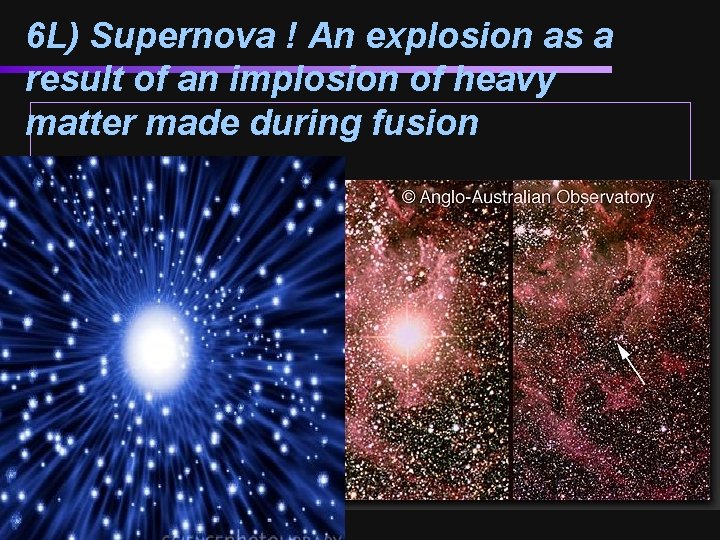
6 L) Supernova ! An explosion as a result of an implosion of heavy matter made during fusion
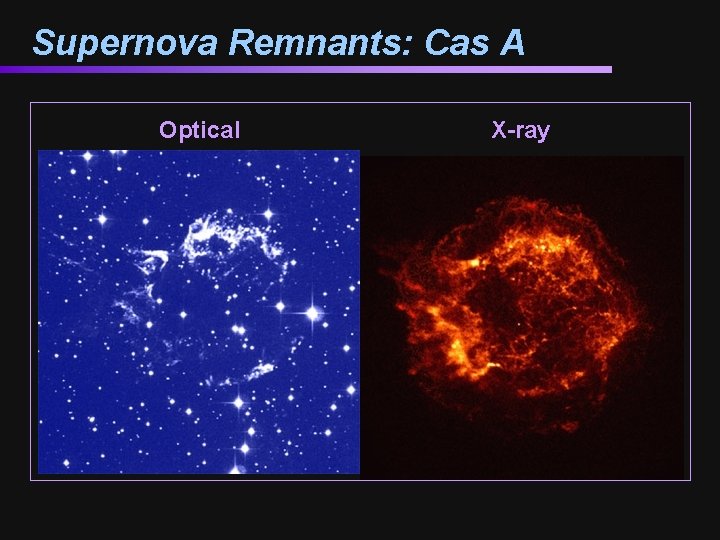
Supernova Remnants: Cas A Optical X-ray
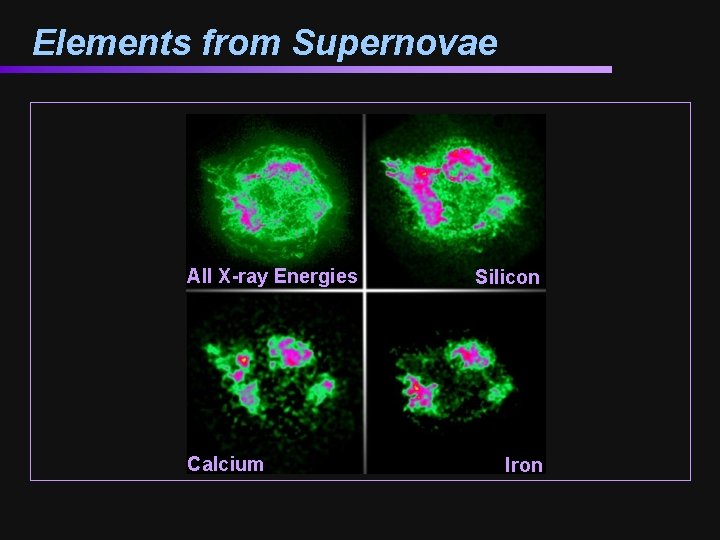
Elements from Supernovae All X-ray Energies Calcium Silicon Iron
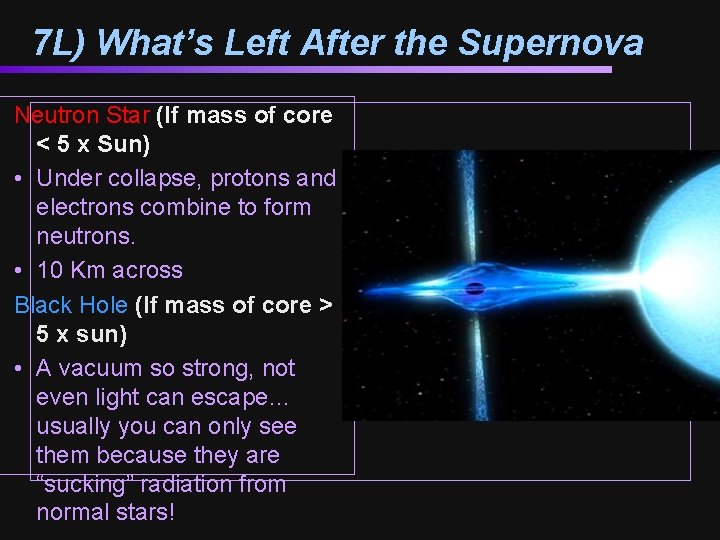
7 L) What’s Left After the Supernova Neutron Star (If mass of core < 5 x Sun) • Under collapse, protons and electrons combine to form neutrons. • 10 Km across Black Hole (If mass of core > 5 x sun) • A vacuum so strong, not even light can escape… usually you can only see them because they are “sucking” radiation from normal stars!
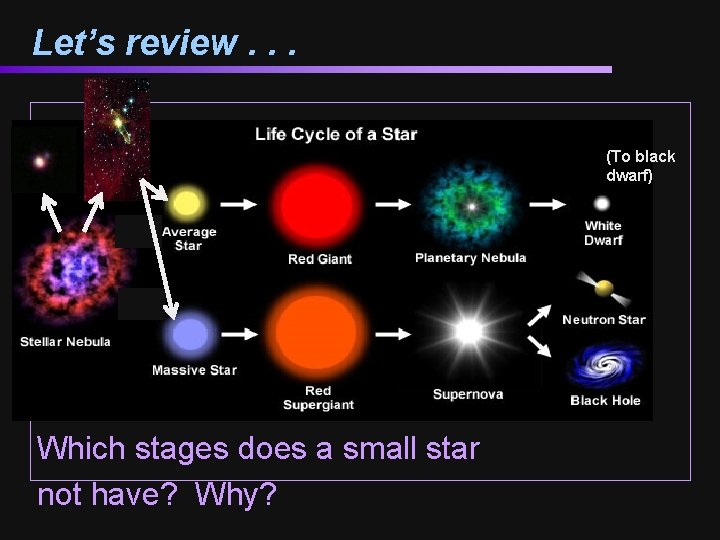
Let’s review. . . (To black dwarf) Which stages does a small star not have? Why?