
Notes Pg 4 Asexual vs Sexual Reproduction EQ
- Slides: 31
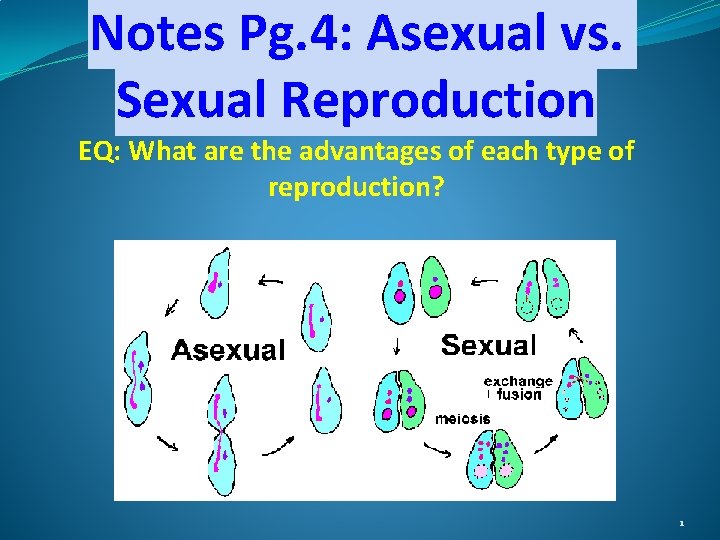
Notes Pg. 4: Asexual vs. Sexual Reproduction EQ: What are the advantages of each type of reproduction? 1
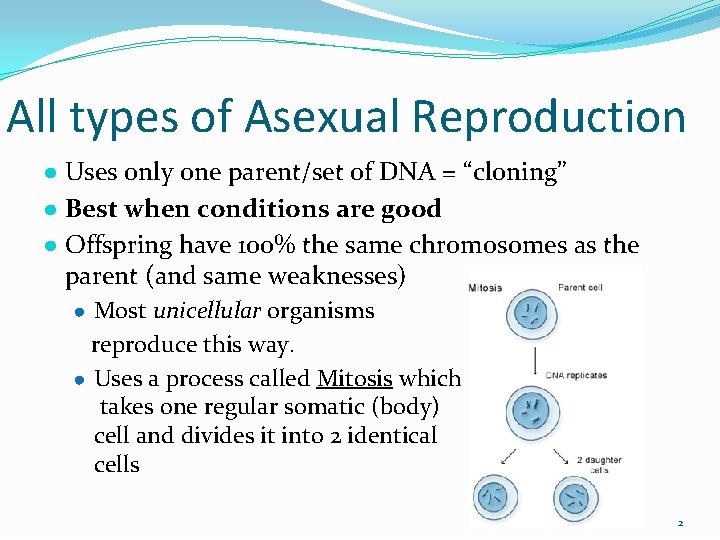
All types of Asexual Reproduction ● Uses only one parent/set of DNA = “cloning” ● Best when conditions are good ● Offspring have 100% the same chromosomes as the parent (and same weaknesses) ● Most unicellular organisms reproduce this way. ● Uses a process called Mitosis which takes one regular somatic (body) cell and divides it into 2 identical cells 2
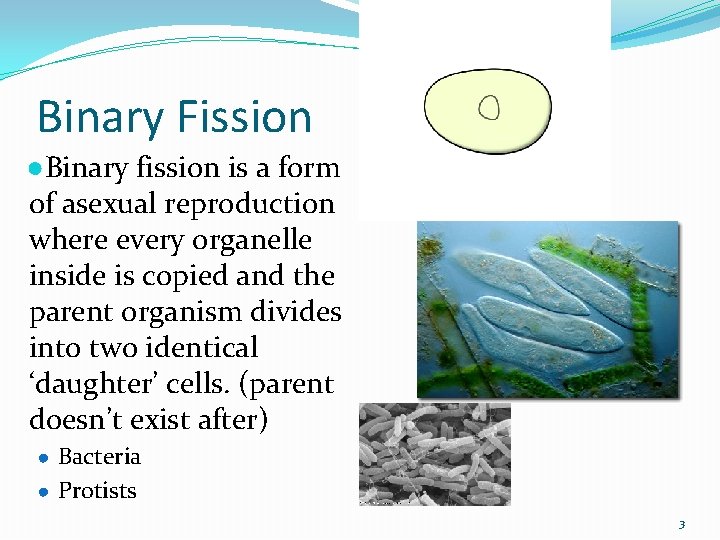
Binary Fission ●Binary fission is a form of asexual reproduction where every organelle inside is copied and the parent organism divides into two identical ‘daughter’ cells. (parent doesn’t exist after) ● Bacteria ● Protists 3
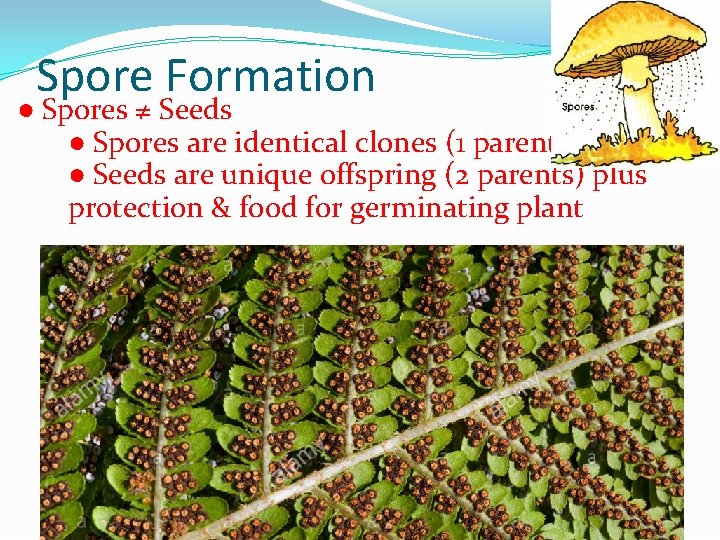
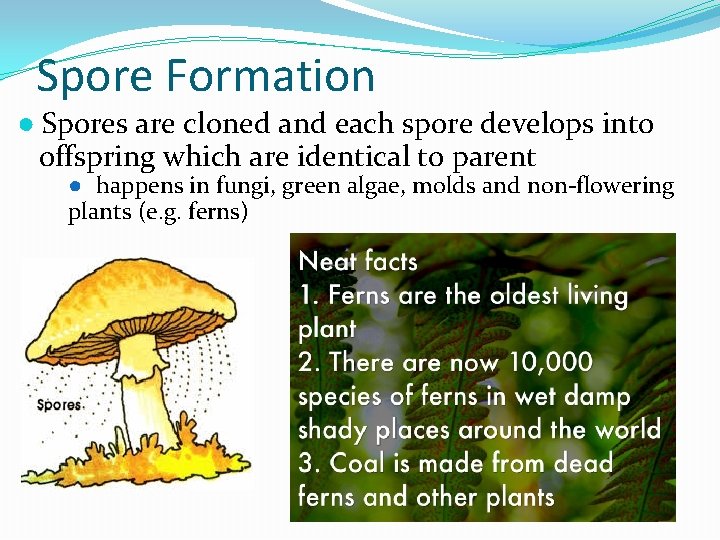
Spore Formation ● Spores ≠ Seeds ● Spores are identical clones (1 parent) ● Seeds are unique offspring (2 parents) plus protection & food for germinating plant
Spore Formation ● Spores are cloned and each spore develops into offspring which are identical to parent ● happens in fungi, green algae, molds and non-flowering plants (e. g. ferns)
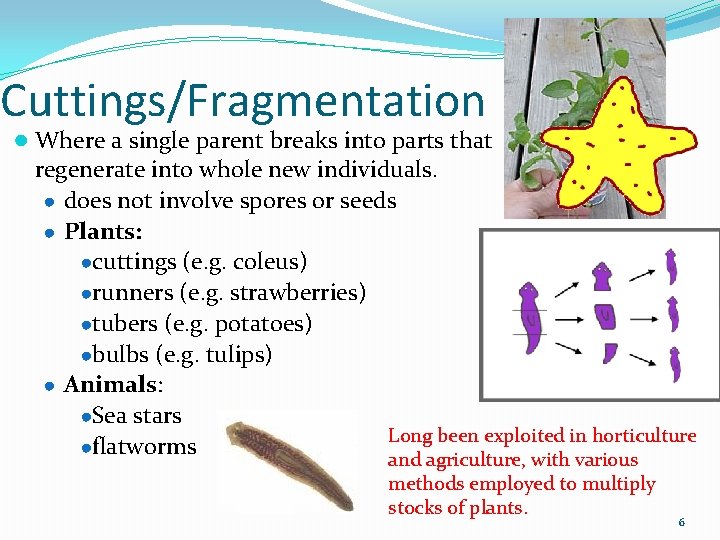
Cuttings/Fragmentation ● Where a single parent breaks into parts that regenerate into whole new individuals. ● does not involve spores or seeds ● Plants: ●cuttings (e. g. coleus) ●runners (e. g. strawberries) ●tubers (e. g. potatoes) ●bulbs (e. g. tulips) ● Animals: ●Sea stars Long been exploited in horticulture ●flatworms and agriculture, with various methods employed to multiply stocks of plants. 6
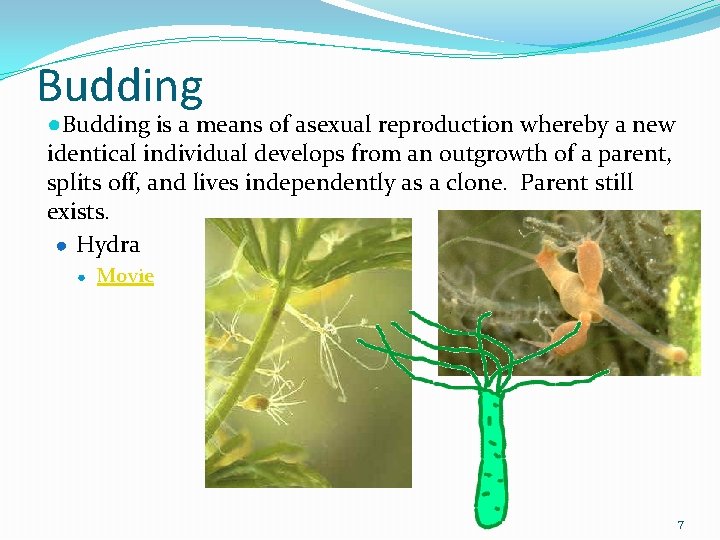
Budding ●Budding is a means of asexual reproduction whereby a new identical individual develops from an outgrowth of a parent, splits off, and lives independently as a clone. Parent still exists. ● Hydra ● Movie 7
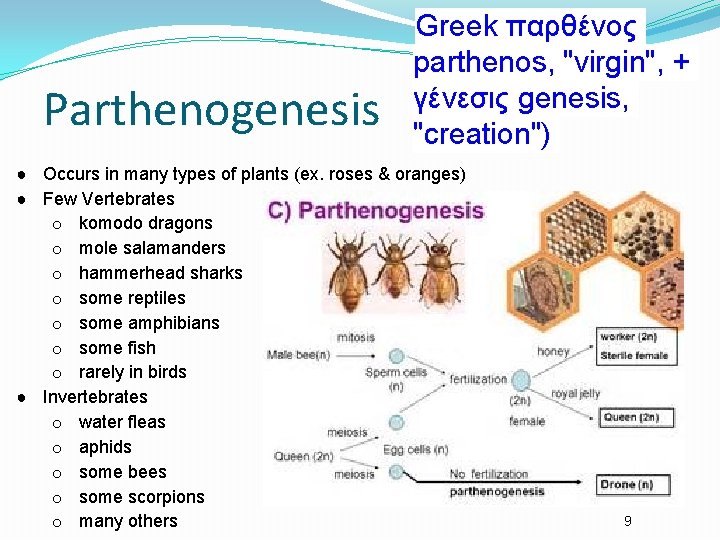
Parthenogenesis Greek παρθένος parthenos, "virgin", + γένεσις genesis, "creation") A natural form of asexual reproduction in which eggs (usually only for sexual reproduction) are produced by a female but where growth and development of embryos occur without fertilization by a male. It is more accurately defined as an incomplete form of sexual reproduction. This is because it involves the production, activation, and development of a female egg which is a specialized reproductive cell. While there is still only one parent, the offspring are NOT clones! They are made by a limited recombination of the mother’s genes. Some species that normally reproduce sexually will sometimes reproduce asexually, either for lack of males, for population sex control, or in some cases because of an abundance of resources (when times are good). 8
Parthenogenesis Greek παρθένος parthenos, "virgin", + γένεσις genesis, "creation") ● Occurs in many types of plants (ex. roses & oranges) ● Few Vertebrates o komodo dragons o mole salamanders o hammerhead sharks o some reptiles o some amphibians o some fish o rarely in birds ● Invertebrates o water fleas o aphids o some bees o some scorpions o many others 9
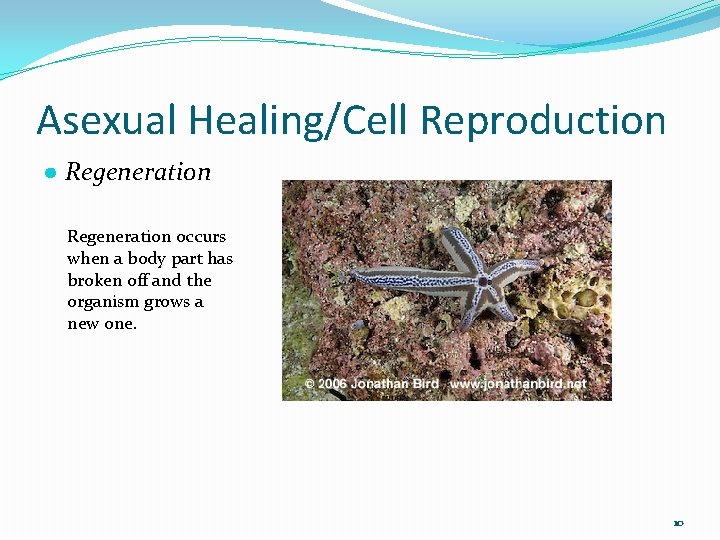
Asexual Healing/Cell Reproduction ● Regeneration occurs when a body part has broken off and the organism grows a new one. 10
Sexual Reproduction No, sex isn’t just for humans. Or even animals. 11
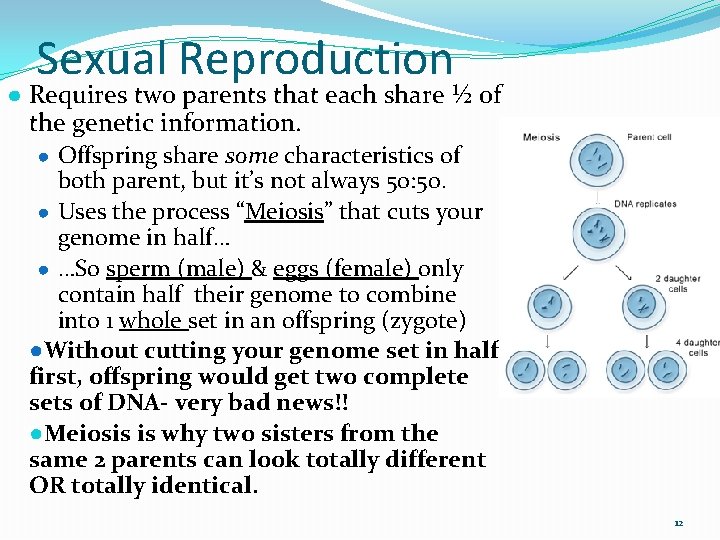
Sexual Reproduction ● Requires two parents that each share ½ of the genetic information. ● Offspring share some characteristics of both parent, but it’s not always 50: 50. ● Uses the process “Meiosis” that cuts your genome in half… ● …So sperm (male) & eggs (female) only contain half their genome to combine into 1 whole set in an offspring (zygote) ●Without cutting your genome set in half first, offspring would get two complete sets of DNA- very bad news!! ●Meiosis is why two sisters from the same 2 parents can look totally different OR totally identical. 12
Answer the True or False on your paper as we go through the next slides. Read carefully… 13
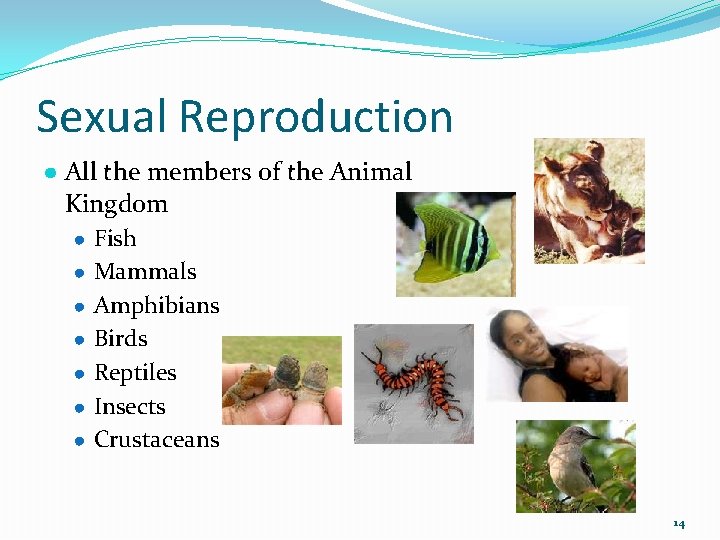
Sexual Reproduction ● All the members of the Animal Kingdom ● Fish ● Mammals ● Amphibians ● Birds ● Reptiles ● Insects ● Crustaceans 14
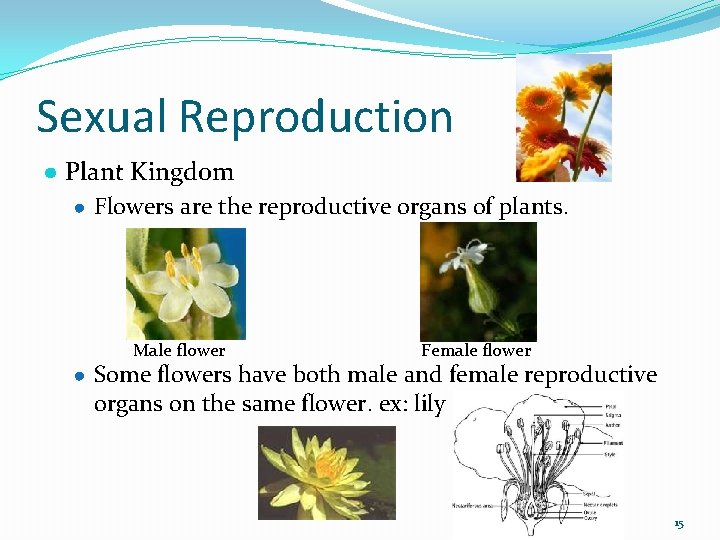
Sexual Reproduction ● Plant Kingdom ● Flowers are the reproductive organs of plants. Male flower Female flower ● Some flowers have both male and female reproductive organs on the same flower. ex: lily 15
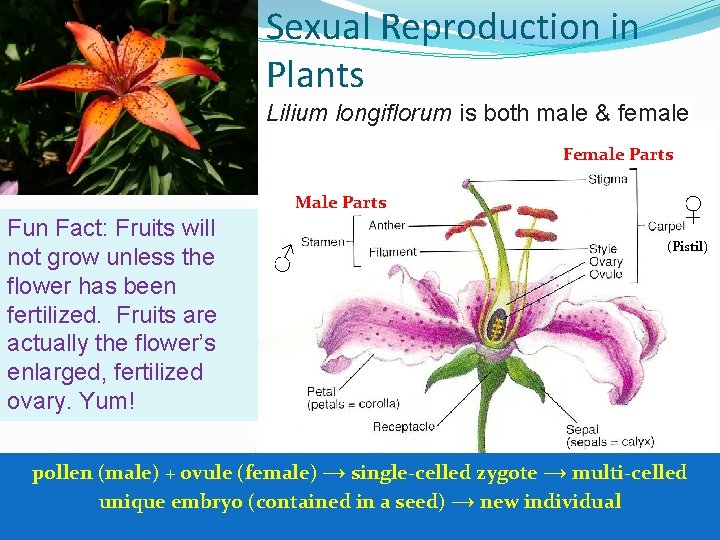
Sexual Reproduction in Plants Lilium longiflorum is both male & female Female Parts Male Parts Fun Fact: Fruits will not grow unless the flower has been fertilized. Fruits are actually the flower’s enlarged, fertilized ovary. Yum! ♂ ♀ (Pistil) pollen (male) + ovule (female) → single-celled zygote → multi-celled unique embryo (contained in a seed) → new individual
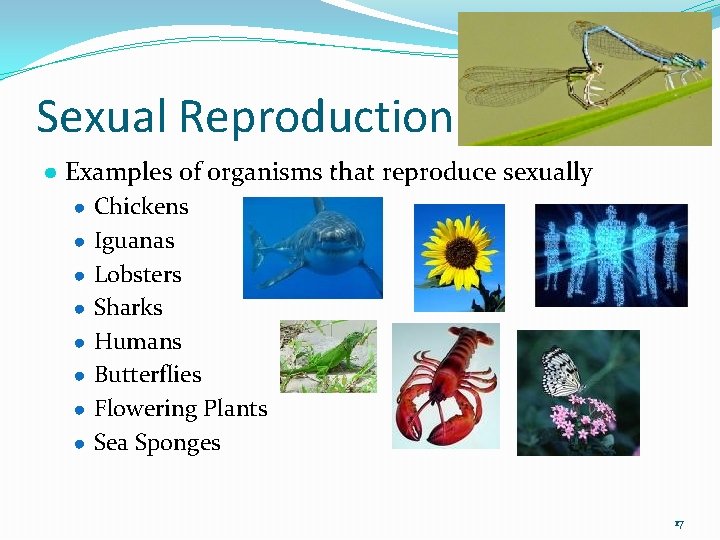
Sexual Reproduction ● Examples of organisms that reproduce sexually ● Chickens ● Iguanas ● Lobsters ● Sharks ● Humans ● Butterflies ● Flowering Plants ● Sea Sponges 17
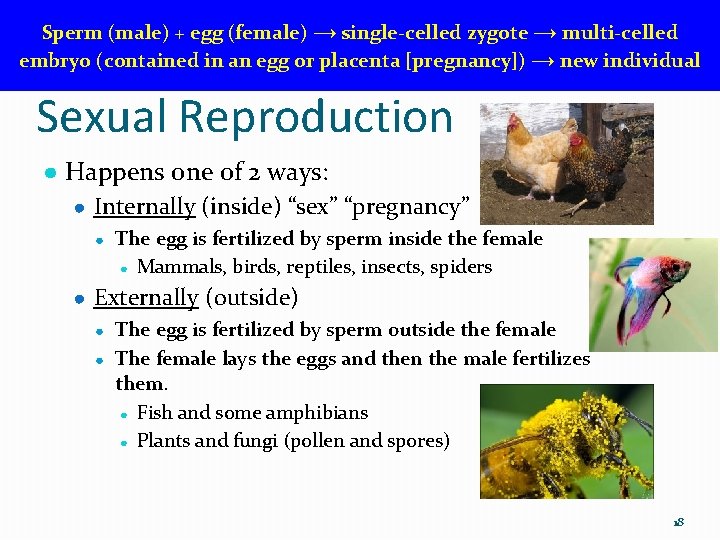
Sperm (male) + egg (female) → single-celled zygote → multi-celled embryo (contained in an egg or placenta [pregnancy]) → new individual Sexual Reproduction ● Happens one of 2 ways: ● Internally (inside) “sex” “pregnancy” ● The egg is fertilized by sperm inside the female ● Mammals, birds, reptiles, insects, spiders ● Externally (outside) ● The egg is fertilized by sperm outside the female ● The female lays the eggs and then the male fertilizes them. ● Fish and some amphibians ● Plants and fungi (pollen and spores) 18
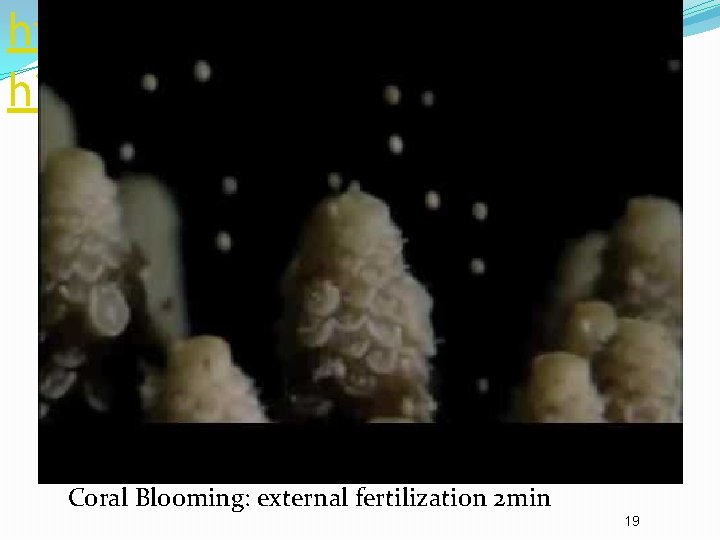
https: //www. youtube. com/watc h? v=wsa. Z 8 -I 7 akg Coral Blooming: external fertilization 2 min 19
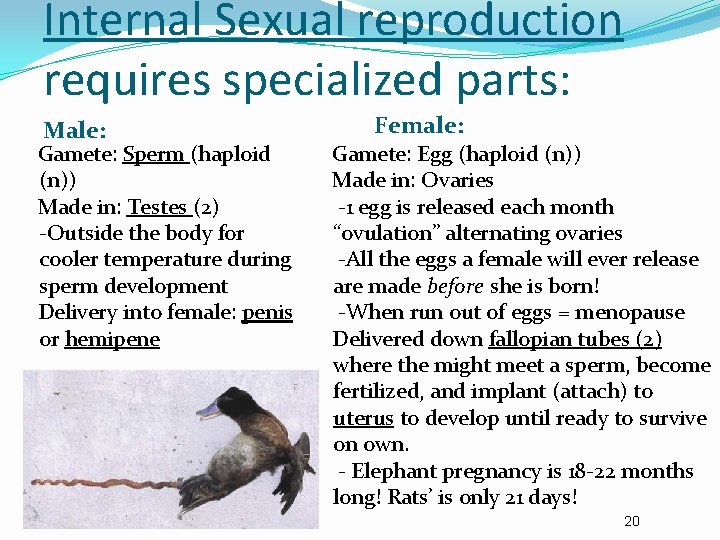
Internal Sexual reproduction requires specialized parts: Male: Gamete: Sperm (haploid (n)) Made in: Testes (2) -Outside the body for cooler temperature during sperm development Delivery into female: penis or hemipene Female: Gamete: Egg (haploid (n)) Made in: Ovaries -1 egg is released each month “ovulation” alternating ovaries -All the eggs a female will ever release are made before she is born! -When run out of eggs = menopause Delivered down fallopian tubes (2) where the might meet a sperm, become fertilized, and implant (attach) to uterus to develop until ready to survive on own. - Elephant pregnancy is 18 -22 months long! Rats’ is only 21 days! 20
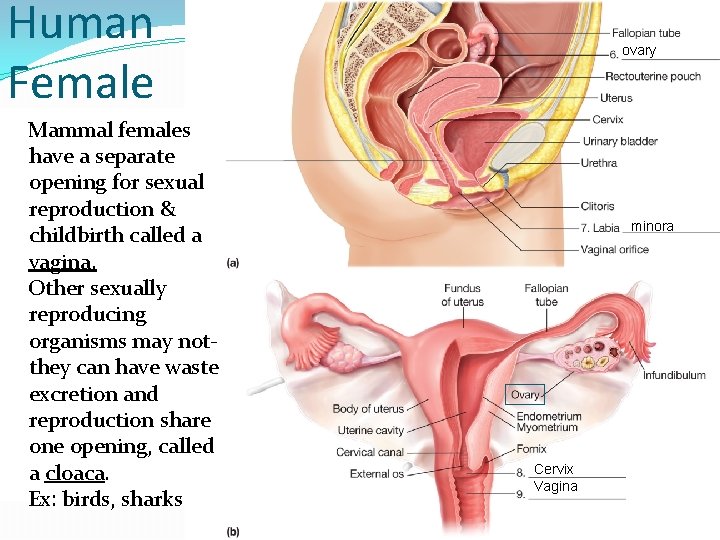
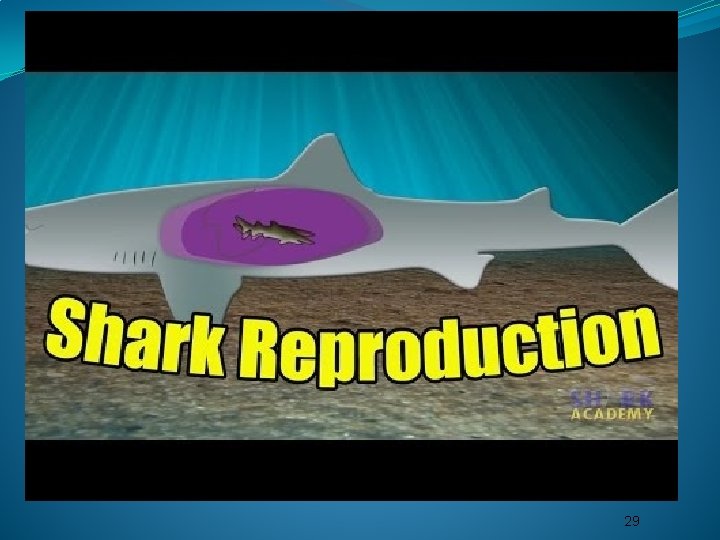
Human Female Mammal females have a separate opening for sexual reproduction & childbirth called a vagina. Other sexually reproducing organisms may notthey can have waste excretion and reproduction share one opening, called a cloaca. Ex: birds, sharks ovary Female minora Cervix Vagina 21
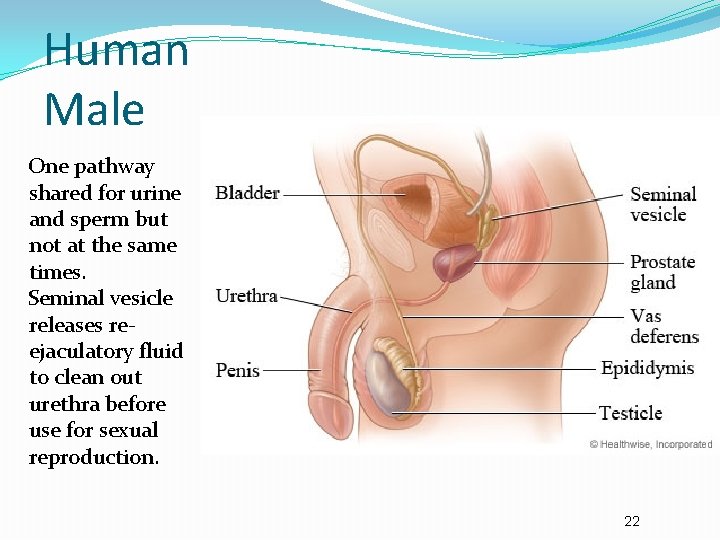
Human Male One pathway shared for urine and sperm but not at the same times. Seminal vesicle releases reejaculatory fluid to clean out urethra before use for sexual reproduction. 22
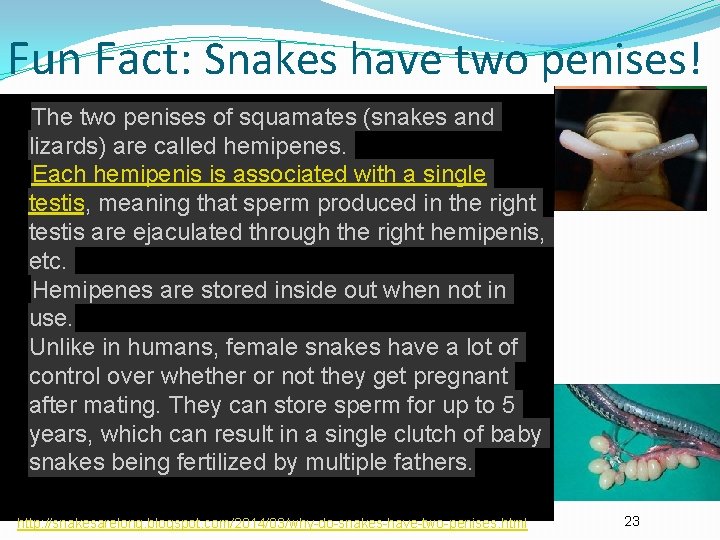
Fun Fact: Snakes have two penises! The two penises of squamates (snakes and lizards) are called hemipenes. Each hemipenis is associated with a single testis, meaning that sperm produced in the right testis are ejaculated through the right hemipenis, etc. Hemipenes are stored inside out when not in use. Unlike in humans, female snakes have a lot of control over whether or not they get pregnant after mating. They can store sperm for up to 5 years, which can result in a single clutch of baby snakes being fertilized by multiple fathers. http: //snakesarelong. blogspot. com/2014/03/why-do-snakes-have-two-penises. html 23
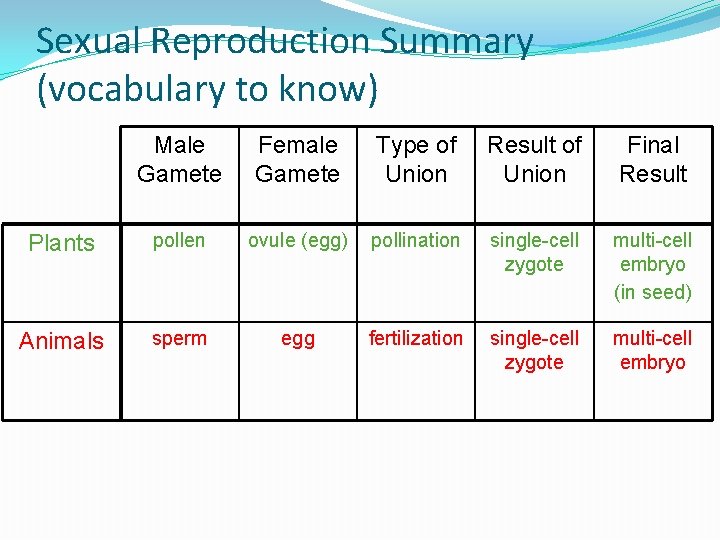
Sexual Reproduction Summary (vocabulary to know) Male Gamete Female Gamete Type of Union Result of Union Final Result Plants pollen ovule (egg) pollination single-cell zygote multi-cell embryo (in seed) Animals sperm egg fertilization single-cell zygote multi-cell embryo
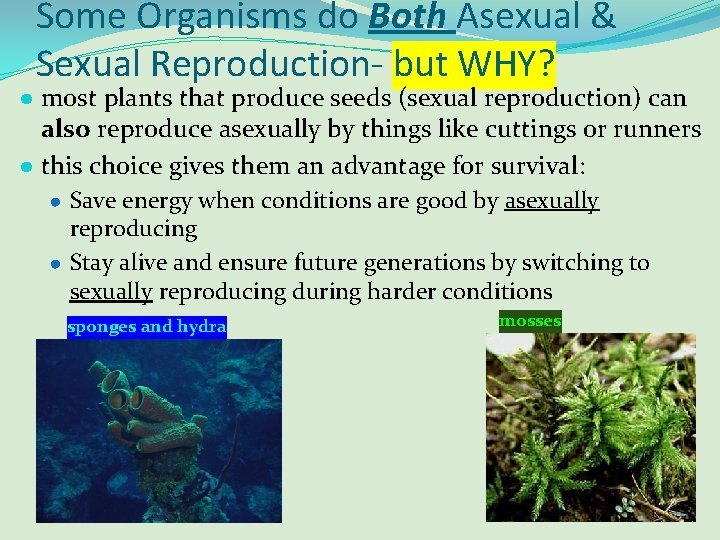
Some Organisms do Both Asexual & Sexual Reproduction- but WHY? ● most plants that produce seeds (sexual reproduction) can also reproduce asexually by things like cuttings or runners ● this choice gives them an advantage for survival: ● Save energy when conditions are good by asexually reproducing ● Stay alive and ensure future generations by switching to sexually reproducing during harder conditions sponges and hydra mosses
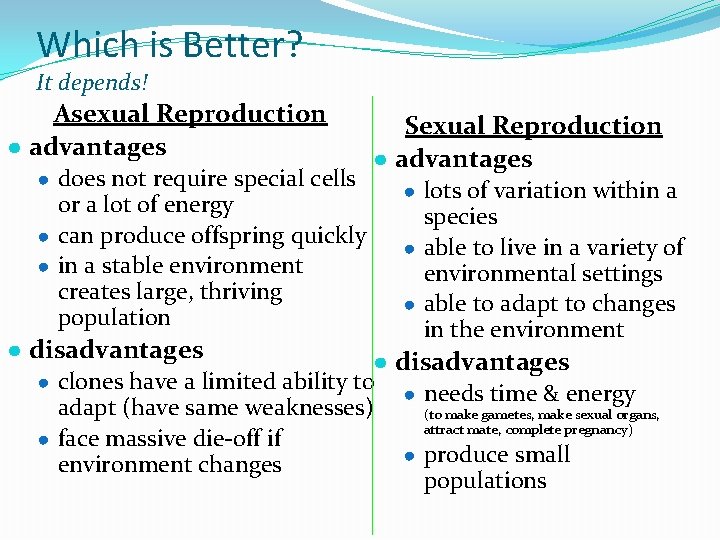
Which is Better? It depends! Asexual Reproduction ● advantages ● does not require special cells or a lot of energy ● can produce offspring quickly ● in a stable environment creates large, thriving population Sexual Reproduction ● advantages ● lots of variation within a species ● able to live in a variety of environmental settings ● able to adapt to changes in the environment ● disadvantages ● clones have a limited ability to ● needs time & energy adapt (have same weaknesses) (to make gametes, make sexual organs, attract mate, complete pregnancy) ● face massive die-off if ● produce small environment changes populations
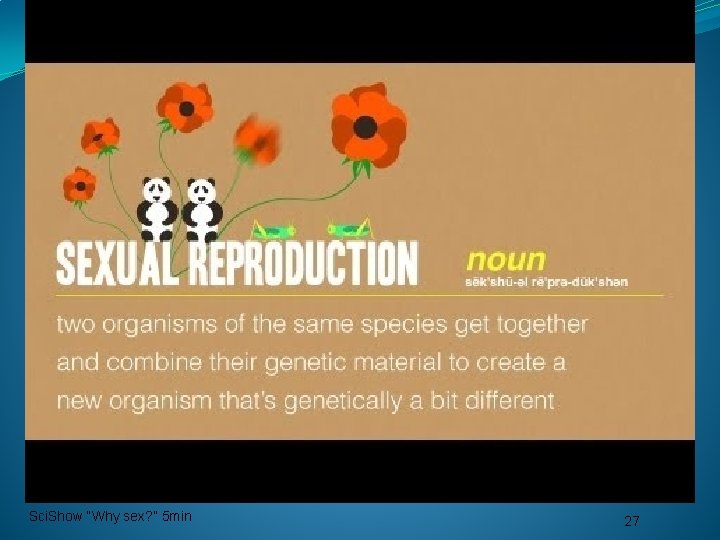
Sci. Show “Why sex? ” 5 min 27
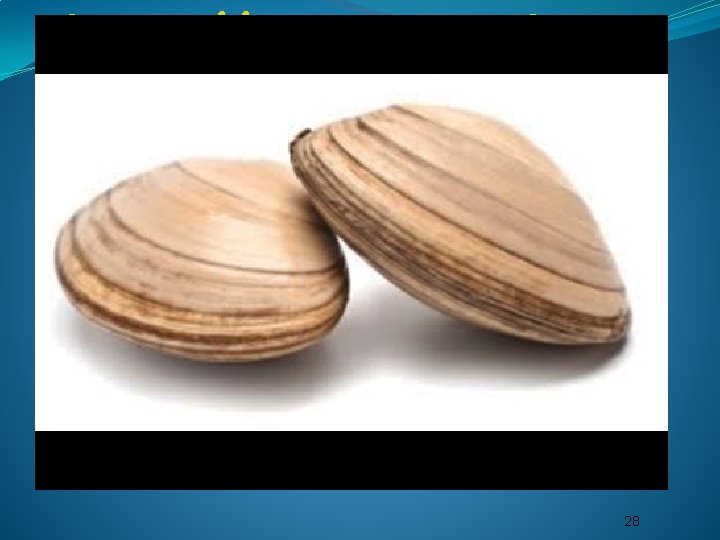
https: //www. youtube. co m/watch? v=M 0 lj. Vw. Ox. L 5 k Clam reproduction 28
29
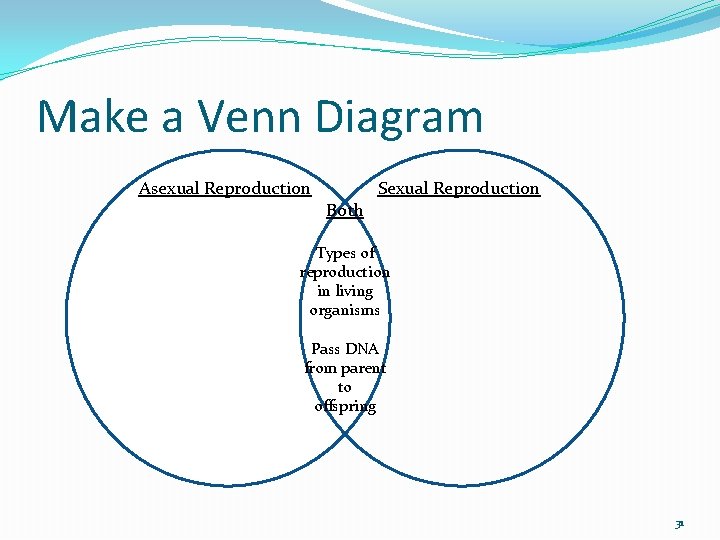
Summarize ● Make a large venn diagram comparing and contrasting asexual and sexual reproduction on the back of your notes WS 30
Make a Venn Diagram Asexual Reproduction Sexual Reproduction Both Types of reproduction in living organisms Pass DNA from parent to offspring 31